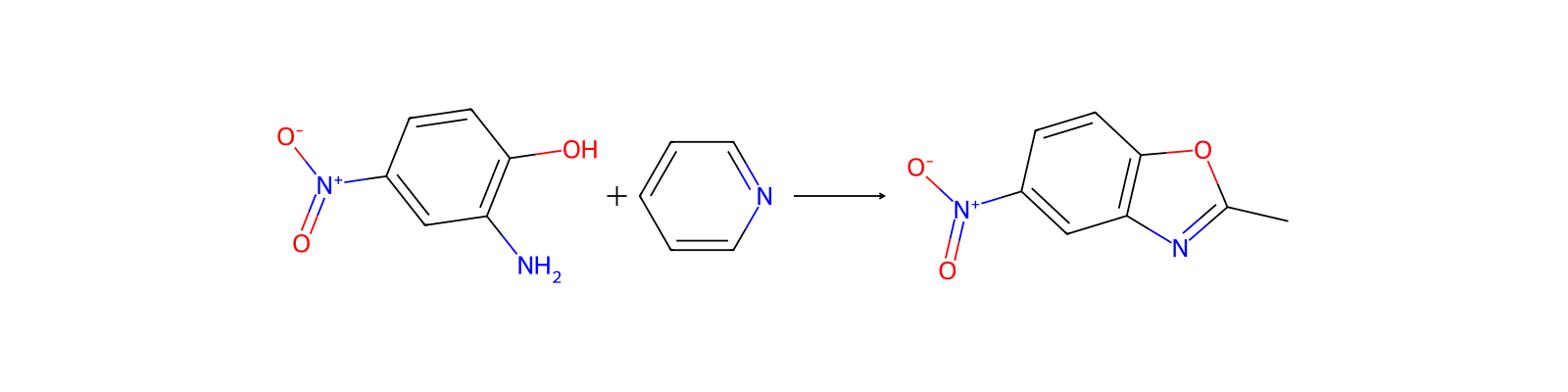
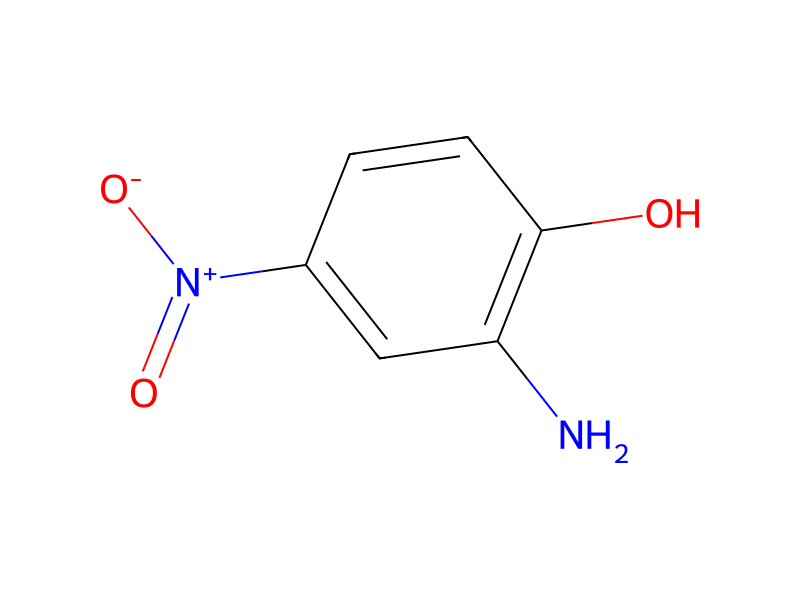
基本情報
- 標準SMILES
Nc1cc([N+](=O)[O-])ccc1O- InChIKey
VLZVIIYRNMWPSN-UHFFFAOYSA-N- 分子式
- C6H6N2O3
- 平均分子量
- 154.12 g/mol
- 単同位体質量
- 154.03784205
概要
2-amino-4-nitrophenol appears as orange prisms or yellow powder. No odor. (NTP, 1992)
名称と識別子
- 優先名称
- 2-Amino-4-Nitrophenol
- IUPAC
- 2-amino-4-nitrophenol
- 現地名
- 2-アミノ-4-ニトロフェノール
- 英語名
- 2-Amino-4-nitrophenol
- 分子式
- C6H6N2O3
- 分子量
- 154.12
名称と別名
2-AMINO-4-NITROPHENOL99-57-02-Hydroxy-5-nitroaniline4-Nitro-2-aminophenolPhenol, 2-amino-4-nitro-p-Nitro-o-aminophenolRodol 424-Nitro-2-aminofenol1-Amino-2-hydroxy-5-nitrobenzene1-Hydroxy-2-amino-4-nitrobenzene3-Amino-4-hydroxynitrobenzeneNCI-C55958
名称をさらに表示
2-アミノ-4-ニトロフェノール4-ニトロ-2-アミノフェノール2-ヒドロキシ-5-ニトロアニリンウルソール4GL5-ニトロ-2-ヒドロキシアニリン4ニトロアミノフェノ-ル4ニトロ2アミノフェノルアミノ-ニトロフェノール2‐アミノ‐4‐ニトロフェノール4-NAProdol42ci76530NSC 4664Ursol 4GLc.i.76530p-nitroaminofenol
5-Nitro-2-hydroxyanilineC.I. 76530DTXSID6020062CI 76530G501UCI6T94-nitro-2-amino-1-hydroxybenzeneNSC-4664DTXCID0062
データベース識別子
- CAS
99-57-0- PubChem CID
- 3613389
- DTXSID
DTXSID6020062- ChEMBL
CHEMBL316992- ChEBI
CHEBI:82383- UNII
- G501UCI6T9
- EC Number
- 202-767-9
- Nikkaji
- J3.994B
物性
構造計算による物性
- XLogP
- 1.5
- 極性表面積
- 92.1 Ų
- 水素結合供与体数
- 2
- 水素結合受容体数
- 4
- 回転可能結合数
- 0
- 重原子数
- 11
- 形式電荷
- 0
- 複雑度
- 156
実験および物理化学的性質
Chemical ClassesNitrogen Compounds -> Nitrophenols
CosmeticsCosmetic ingredients (2-Amino-4-Nitrophenol) -> CIR (Cosmetic Ingredient Review)
SpringerMaterials PropertiesDiffusion
LogP
log Kow = 1.26
1.13
Color/Form
Orange prisms from water
Yellow-brown leaflets containing water of crystallization
Yellow-brown to orange prisms
Solubility
less than 1 mg/mL at 68 °F (NTP, 1992)
Soluble in ethanol, diethyl ether, acetic acid, warm benzene
Soluble in acetone
In water, 925 mg/L at 23 °C
Flash Point100 °C
DecompositionWhen heated to decomposition it emits toxic fumes of /nitrogen oxides./
Melting Point
293 to 297 °F (anhydrous) (NTP, 1992)
80-90 °C /Monohydrate/; 143-145 °C /Anhydrous/
Vapor Pressure0.0000352 [mmHg]
Physical Description
2-amino-4-nitrophenol appears as orange prisms or yellow powder. No odor. (NTP, 1992)
Yellow-brown or orange solid; [HSDB] Gold colored powder; [MSDSonline]
Dissociation ConstantspKa1 = 3.1 /amine/; pKa2 = 7.6 /phenol/ at 25 °C
物理化学的性質
- 融点
- 140 · 140-143 °C (lit.)
- 沸点
- 322.46 °C · 322.46°C (rough estimate)
- 比重(密度)
- 1.3617 · 1.3617 (estimate)
- 蒸気圧
- 0.005 Pa · 0.005Pa at 25℃
- 屈折率
- 1.689 · 1.6890 (rough estimate)
- 闪点
- 100 °C · 100 °C
- 貯蔵温度
- Refrigerator, Under Inert Atmosphere
- 溶解性
- DMSO(微量)、メタノール(微量)
- 外見
- 個体
- 酸解離定数(Pka)
- 6.82 · 6.82±0.22(Predicted)
- 色
- ダークイエローからブラウン
- 水溶解度
- わずかに溶ける
- BRN
- 776533 · 776533
- Henry's Law Constant
- 4.5 · 4.5×106 mol/(m3Pa) at 25℃, HSDB (2015)
- 化粧品成分の機能
- ヘアカラーリング
- InChI
- 1S/C6H6N2O3/c7-5-3-4(8(10)11)1-2-6(5)9/h1-3,9H,7H2
- InChIKey
- VLZVIIYRNMWPSN-UHFFFAOYSA-N
- SMILES
- Nc1cc(ccc1O)[N+]([O-])=O
- LogP
- 1.26 · 1.26
- CAS データベース
- 99 · 99-57-0(CAS DataBase Reference)
- EPAの化学物質情報
- 2 · 2-Amino-4-nitrophenol (99-57-0)
化学的性質
化学的特性OCHRE CRYSTALLINE POWDER
安全と法規制
GHS分類
GHS Classification
This chemical does not meet GHS hazard criteria for < 0.1% (1 of 2184) of reports.
Warning
H302 (97.8%): Harmful if swallowed [Warning Acute toxicity, oral]
P203, P261, P264, P264+P265, P270, P271, P280, P301+P317, P302+P352, P304+P340, P305+P351+P338, P317, P318, P319, P321, P330, P332+P317, P337+P317, P362+P364, P403+P233, P405, and P501 (click each P-code to see the statement)
Aggregated GHS information provided per 2184 reports by companies from 18 notifications to the ECHA C&L Inventory. Each notification may be associated with multiple companies.
Warning
危険有害性情報
Regulatory Information
Chemical: Phenol, 2-amino-4-nitro-
Status: Active Update: 17-12-2018 https://echa.europa.eu/registration-dossier/-/registered-dossier/8646
Phenol, 2-amino-4-nitro-: Does not have an individual approval but may be used as a component in a product covered by a group standard. It is not approved for use as a chemical in its own right.
Other Safety InformationIMAP assessments - Phenol, 2-amino-4-nitro-: Human health tier II assessment
DOT LabelPoison
Fire HazardsFlash point data for this chemical are not available. It is probably combustible. (NTP, 1992)
Health HazardsSYMPTOMS: Symptoms of exposure to this chemical may include irritation of the skin and eyes.
Hazards Summary
Moderate irritant in rabbit eye; Causes somnolence and ataxia in lethal-dose studies of rats; Causes renal tubular changes in 13 week feeding studies of rats; A tumorigen and mutagen; [RTECS] A skin, eye, and respiratory tract irritant; [CAMEO]
Reactive GroupNitro, Nitroso, Nitrate, and Nitrite Compounds, Organic
Special ReportsDHHS/NTP; Toxicology & Carcinogenesis Studies of 2-Amino-4-nitrophenol in F344/N Rats and B6C3F1 Mice (Gavage Studies) Technical Report Series No. 339 (1988) NIH Publication No. 88-2595
Reactivity Profile
Oxidation of this chemical may occur in the presence of air and violent decomposition may occur if it is allowed to dry out completely at elevated temperatures. It is stable when stored protected from light and under nitrogen for two weeks at temperatures up to 140 °F, and storage under nitrogen for up to 24 weeks at room temperature (77 °F) should produce no loss of stability. This chemical is incompatible with acids, acid chlorides, acid anhydrides, chloroformates and strong oxidizing agents. It is also incompatible with iron. (NTP, 1992)
Air and Water ReactionsInsoluble in water.
Hazard Classes and Categories
Acute Tox. 4 (97.8%)
Acute toxicity - category 4
安全と保護具
Fire FightingFires involving this material can be controlled with a dry chemical, carbon dioxide or Halon extinguisher. A water spray may also be used. (NTP, 1992)
First Aid
EYES: First check the victim for contact lenses and remove if present. Flush victim's eyes with water or normal saline solution for 20 to 30 minutes while simultaneously calling a hospital or poison control center. Do not put any ointments, oils, or medication in the victim's eyes without specific instructions from a physician. IMMEDIATELY transport the victim after flushing eyes to a hospital even if no symptoms (such as redness or irritation) develop.
Nonfire Spill Response
SMALL SPILLS AND LEAKAGE: Should a spill occur while you are handling this chemical, FIRST REMOVE ALL SOURCES OF IGNITION, then you should dampen the solid spill material with 60-70% ethanol and transfer the dampened material to a suitable container. Use absorbent paper dampened with 60-70% ethanol to pick up any remaining material. Seal the absorbent paper, and any of your clothes, which may be contaminated, in a vapor-tight plastic bag for eventual disposal. Solvent wash all contaminated surfaces with 60-70% ethanol followed by washing with a soap and water solution. Do not reenter the contaminated area until the Safety Officer (or other responsible person) has verified that the area has been properly cleaned.
Disposal Methods
SRP: The most favorable course of action is to use an alternative chemical product with less inherent propensity for occupational exposure or environmental contamination. Recycle any unused portion of the material for its approved use or return it to the manufacturer or supplier. Ultimate disposal of the chemical must consider: the material's impact on air quality; potential migration in soil or water; effects on animal, aquatic, and plant life; and conformance with environmental and public health regulations.
Isolation and EvacuationExcerpt from ERG Guide 154 [Substances - Toxic and/or Corrosive (Non-Combustible)]:
Personal Protective Equipment (PPE)MINIMUM PROTECTIVE CLOTHING: If Tyvek-type disposable protective clothing is not worn during handling of this chemical, wear disposable Tyvek-type sleeves taped to your gloves.
毒性情報
Environmental Fate
TERRESTRIAL FATE: Based on a classification scheme(1), an estimated Koc value of 120(SRC), determined from a log Kow of 1.26(2) and a regression-derived equation(3), indicates that 2-amino-4-nitrophenol is expected to have high mobility in soil(SRC). The pKa of the phenol group on 2-amino-4-nitrophenol is 7.6(4), indicating that this compound will partially exist in the anion form in the environment and anions generally do not adsorb more strongly to soils containing organic carbon and clay than their neutral counterparts(5). Volatilization of 2-amino-4-nitrophenol from moist soil surfaces is not expected to be an important fate process(SRC) given an estimated Henry's Law constant of 2.2X10⁻¹² atm-cu m/mole(SRC), using a fragment constant estimation method(6). 2-Amino-4-nitrophenol is not expected to volatilize from dry soil surfaces(SRC) based upon an estimated vapor pressure of 3.5X10⁻⁵ mm Hg(SRC), determined from a fragment constant method(7). Incomplete data are available regarding the biodegradation of 2-amino-4-nitrophenol in water; however, Nocardia v. was not able to use this compound as a carbon source under aerobic conditions(8).
AQUATIC FATE: Based on a classification scheme(1), an estimated Koc value of 120(SRC), determined from a log Kow of 1.26(2) and a regression-derived equation(3), indicates that 2-amino-4-nitrophenol is not expected to adsorb to suspended solids and sediment(SRC). Volatilization from water surfaces is not expected(3) based upon an estimated Henry's Law constant of 2.2X10⁻¹² atm-cu m/mole(SRC), developed using a fragment constant estimation method(4). According to a classification scheme(5), an estimated BCF of 3.6(SRC), from its log Kow(2) and a regression-derived equation(6), suggests the potential for bioconcentration in aquatic organisms is low(SRC). Incomplete data are available regarding the biodegradation of 2-amino-4-nitrophenol in water; however, Nocardia v. was not able to use this compound as a carbon source under aerobic conditions(7).
ATMOSPHERIC FATE: According to a model of gas/particle partitioning of semivolatile organic compounds in the atmosphere(1), 2-amino-4-nitrophenol, which has an estimated vapor pressure of 3.5X10⁻⁵ mm Hg at 25 °C(SRC), determined from a fragment constant method(2), will exist in both the vapor and particulate phases in the ambient atmosphere. Vapor-phase 2-amino-4-nitrophenol is degraded in the atmosphere by reaction with photochemically-produced hydroxyl radicals(SRC); the half-life for this reaction in air is estimated to be 2.3 days(SRC), calculated from its rate constant of 7.0X10⁻¹² cu cm/molecule-sec at 25 °C(SRC) that was derived using a structure estimation method(3). 2-Amino-4-nitrophenol may also react with nitrate radicals in the atmosphere(4). Particulate-phase 2-amino-4-nitrophenol may be removed from the air by wet or dry deposition(SRC). Ultraviolet spectra of 2-amino-4-nitrophenol show maxima at 308 and 370 nm(5), indicating that this compound absorbs light at environmental wavelengths; therefore it may be susceptible to direct photolysis by sunlight(SRC).
Adverse EffectsNeurotoxin - Other CNS neurotoxin
Toxicity Summary
Safe in the present practices of use and concentration. Ingredient, concentration, and use information are available in documents discoverable at https://cir-reports.cir-safety.org
IDENTIFICATION AND USE: 2-Amino-4-nitrophenol is an orange prismatic solid. It can also be found as a yellow brown leaflets or yellow prisms. It is soluble in ethanol, diethyl ether, acetic acid and warm benzene. It is soluble in acetone and water. This chemical is used in the production of mordant and acid dyes. It is also used as an antioxidant and light stabilizer in butyl rubbers, and as a catalyst in the production of hexadiene. It was also formerly used in hair dyes. HUMAN EXPOSURE AND TOXICITY: Individuals may be exposed to this chemical through inhalation and dermal contact where the material is used or produced. The general population may be exposed to this chemical via inhalation and dermal contact with consumer products containing 2-amino-4-nitrophenol. There is inadequate evidence fo the carcinogenicity of this chemical in humans. ANIMAL STUDIES: 2-Amino-4-nitrophenol produced allergic contact dermatitis in guinea pigs. There is limited evidence for the carcinogenicity of this compound in experimental animals. The chemical induced sister chromatid exchange and chromosomal aberrations in Chinese hamster ovary cells. Neither micronuclei, chromosomal aberrations or dominant lethal effects were induced in rodents exposed in vivo. 2-Amino-4-nitrophenol was mutagenic in Salmonella typhimurium strains TA98 and TA100 with metabolic activation. It was not mutagenic in Salmonella typhimurium strains TA1535 or TA1537.
Ongoing Test Status
The following link will take the user to the National Toxicology Program (NTP) Test Agent Search Results page, which tabulates all of the "Standard Toxicology & Carcinogenesis Studies", "Developmental Studies", and "Genetic Toxicity Studies" performed with this chemical. Clicking on the "Testing Status" link will take the user to the status (i.e., in review, in progress, in preparation, on test, completed, etc.) and results of all the studies that the NTP has done on this chemical. [http://ntp-apps.niehs.nih.gov/ntp_tox/index.cfm?fuseaction=ntpsearch.searchresults&searchterm=99-57-0]
Soil Adsorption/Mobility
The Koc of 2-amino-4-nitrophenol is estimated as 120(SRC), using a log Kow of 1.26(1) and a regression-derived equation(2). According to a classification scheme(3), this estimated Koc value suggests that 2-amino-4-nitrophenol is expected to have high mobility in soil. The pKa of the phenol group on 2-amino-4-nitrophenol is 7.6(4), indicating that this compound will partially exist in the anion form in the environment and anions generally do not adsorb more strongly to soils containing organic carbon and clay than their neutral counterparts(5). However, anilines are expected to bind strongly to humus or organic matter in soils due to the high reactivity of the aromatic amino group(6,7), suggesting that mobility may be much lower in some soils(SRC).
Artificial Pollution Sources2-Amino-4-nitrophenol's production and subsequent use in the production of mordant and acid dyes(1) and hair dyes(2) may result in its release to the environment through various waste streams.
Environmental Biodegradation2-Amino-4-nitrophenol (0.025% w/v) was not used as a carbon source for Nocardia v. when measured for visible growth over a period of 16 days at 30 °C(1).
Carcinogen Classification
2-Amino-4-nitrophenol
Group 3: Not classifiable as to its carcinogenicity to humans
Volume 57: (1993) Occupational Exposures of Hairdressers and Barbers and Personal Use of Hair Colourants; Some Hair Dyes, Cosmetic Colourants, Industrial Dyestuffs and Aromatic Amines
1993
1992
2-Amino-4-Nitrophenol
Environmental Bioconcentration
An estimated BCF of 3.6 was calculated for 2-amino-4-nitrophenol (SRC), using a log Kow of 1.26(1) and a regression-derived equation(2). According to a classification scheme(3), this BCF suggests the potential for bioconcentration in aquatic organisms is low.
Volatilization from Water/Soil
The Henry's Law constant for 2-amino-4-nitrophenol is estimated as 2.2X10⁻¹² atm-cu m/mole(SRC) using a fragment constant estimation method(1). This Henry's Law constant indicates that 2-amino-4-nitrophenol is expected to be essentially nonvolatile from water surfaces(2). 2-amino-4-nitrophenol's Henry's Law constant indicates that volatilization from moist soil surfaces may not occur(SRC). 2-Amino-4-nitrophenol is not expected to volatilize from dry soil surfaces(SRC) based upon an estimated vapor pressure of 3.5X10⁻⁵ mm Hg(SRC), determined from a fragment constant method(3).
Non-Human Toxicity Excerpts
/LABORATORY ANIMALS: Acute Exposure/ This study tested 33 dyes in guinea pigs using a modified Buehler and Klecak method for open epicutaneous testing. The dyes were tested at an induction concentration of 10% and challenge concentrations of 10.0%, 5.0%, and 2.5%. Nine of the 33 dyes tested /including 2-amino-4-nitrophenol/ produced positive allergic reactions in the guinea pig model ... . When eight of the nine positive dyes were retested using a 1% induction concentration, five dyes /including 2-amino-4-nitrophenol/ produced allergic contact dermatitis at a 1% challenge concentration., /2-Amino-4-nitrophenol did not produce allergic contact dermatitis at /a 0.5% challenge concentration ...
/LABORATORY ANIMALS: Chronic Exposure or Carcinogenicity/ This compound was tested (by gavage) at doses up to 250 mg/kg bw for two years in F344 rats and B6C3F1 mice. The incidence of tumors in mice was not increased, but in male rats there was a low but still significant (p=0.035) incidence of renal tubular-cell adenomas. Nephropathy was also observed in the male rats.
/LABORATORY ANIMALS: Chronic Exposure or Carcinogenicity/ ...Under the conditions of these 2-year gavage studies, there was some evidence of carcinogenic activity of 2-amino-4-nitrophenol for male F344/N rats, as shown by increased incidences of renal cortical (tubular cell) adenomas. The incidences of renal tubular cell hyperplasia were also increased in male rats exposed to 2-amino-4-nitrophenol. The survival of male rats that received 2-amino-4-nitrophenol was reduced compared with survival of vehicle control male rats. There was no evidence of carcinogenic activity of 2-amino-4-nitrophenol for female F344/N rats or for male or female B6C3F1 mice that received 125 or 250 mg/kg/day.
/LABORATORY ANIMALS: Developmental or Reproductive Toxicity/ Two-generation reproduction ... studies were conducted in Sprague-Dawley rats receiving topical applications of six oxidative hair-coloring formulations /including/ ... 2-amino-4-nitrophenol ... The dye solutions were mixed with an equal volume of 6% hydrogen peroxide prior to application. In the reproduction study the samples were applied topically twice weekly throughout the growth, mating, gestation and lactation phases of the F0 parents to the weaning of the F1a and F2b litters. Fertility, gestation and fetal viability indices and body weights were evaluated ... and these were compared with the values for the three concurrent control groups. ... In the reproduction phase the application of hair dyes had no adverse effect on the fertility of the males or females, or on gestation, lactation and weaning indices. The average number weaned per litter and the mean body weights of the weanlings were comparable among the treated and control groups. ...
For more Non-Human Toxicity Excerpts (Complete) data for 2-AMINO-4-NITROPHENOL (7 total), please visit the HSDB record page.
Evidence for Carcinogenicity
Evaluation: There is inadequate evidence in humans for the carcinogenicity of 2-amino-4-nitrophenol. There is limited evidence in experimental animals for the carcinogenicity of 2-amino-4-nitrophenol. Overall evaluation: 2-Amino-4-nitrophenol is not classifiable as to its carcinogenicity to humans (Group 3).
安全データ
- wgk
- 2
- tsca
- TSCA listed
- rtecs
- SJ6300000
- ridadr
- 2811
- hs_code
- 29071990
- risk_code
- 36/37/38-68-43-40-20/21/22
- 化審法
- (3)-788
- hazard_code
- Xi,Xn
- hazard_note
- Irritant
- safety_code
- 26-45-36/37/39-36
- Hazard Classifications
- Eye Irrit. 2Skin Irrit. 2STOT SE 3
- ストレージクラス
- 11 - Combustible Solids
- 有毒物質データの
- 99-57-0(Hazardous Substances Data)
化学と産業
薬理情報
Mechanism of Action
Two hair dye components, carcinogenic 4-nitro-2-aminophenol and 5-nitro-2-aminophenol, induced Cu(II)-dependent DNA cleavage frequently at thymine and guanine residues in DNA fragments obtained from the c-Ha-ras-1 protooncogene. When the p53 tumor suppressor gene was used, 4-nitro-2-aminophenol caused Cu(II)-dependent piperidine-labile sites at poly G sequences. In the presence of Cu(II), both components increased 8-oxo-7,8-dihydro-2'-deoxyguanosine formation in DNA. The inhibitory effects of catalase and bathocuproine on DNA damage suggest the involvement of H2O2 and Cu(I). It is speculated that nitro-2-aminophenols undergo Cu(II)-mediated autoxidation to generate active oxygen species causing DNA damage which leads to their carcinogenesis.
Biological Half-LifeIt had an elimination half-time from the plasma /of ICR mice/ of 46 hr ... .
Metabolism/Metabolites
A liquid chromatography-tandem mass spectrometry (LC-MS-MS) analysis of biological fluids (blood, urine, gastric content, and bile) collected at autopsy in a case of suspected 2,4-dinitrophenol (DNP) fatal poisoning allowed the determination of DNP and its known metabolites (2-amino-4-nitrophenol and nitro-4-aminophenol). The tentative identification of three conjugated metabolites (DNP glucuronide, DNP sulfate, and 2-amino-4-nitrophenol glucuronide) could be made on the basis of their pseudomolecular ion, isotopic and fragmentation patterns, and retention characteristics. Another DNP metabolite reported in the literature, 2,4-diaminophenol, was not detected in the samples. Postmortem blood concentrations were 48.4 mg/L for DNP and 1.2 mg/L for 2-amino-4-nitrophenol. ...
YIELDS 2,4-DIAMINOPHENOL PROBABLY IN RATS. /FROM TABLE/
2-Amino-4-nitrophenol was the predominant metabolite formed enzymatically by nitroreduction following oral administration of 2,4-dinitrophenol (22.5 mg/kg bw) to ICR mice.
Absorption, Distribution and Excretion
Percutaneous absorption through the skin of Sprague-Dawley rats of each sex was examined following application of two hair dye formulations: formulation 1 contained 1.54% 14C-2-amino-4-nitrophenol; formulation 2 contained 0.77% 14C-2-amino-4-nitrophenol, 1,4-diaminobenzene (1,4-phenylenediamine), 2,4-diaminoanisole, oleic acid and isopropanol and was mixed with equal amt of a 6% hydrogen peroxide soln. After 1 and 5 days, 0.21 and 0.36% of the radiolabel administered in formulation 1 and 1.12 and 1.67% of that administered in formulation 2 had been absorbed (calculated as combined radiolabel in urine, feces, expired air and carcass, without treated skin area). Absorbed material was excreted predominantly in the urine within 24 hr after the initial application ... .
Five days after oral administration by gavage of 2 mL (14)C-2-amino-4-nitrophenol (0.2% in saline), 68.3% + 9.4 (SD) of the radiolabel had been excreted in the urine and 25.4% + 6.9% in the feces. Within 3 hr, about 4% of the radiolabel was eliminated in the bile. Following subcutaneous injection of the same dose, 89% of the dose was eliminated after 1 day, predominantly in the urine ... (/It was/ noted that metabolites were not identified in the urine, bile or feces in either study.)
Percutaneous absorption of (14)C-2-amino-4-nitrophenol (specific radioactivity 10 mCi/mmol (65 uCi/mg); purity, 98%) was studied in vitro by partitioning between excised human abdominal skin preparations and water. 2-Amino-4-nitrophenol appeared to bind to skin components ... .
用途と製造
Uses
CIR ingredient: 2-Amino-4-Nitrophenol
Used as a intermediate for mordant and acid dyes; as a component of hair dyes; as an antioxidant and light stabilizer in butyl rubbers; and as a catalyst in the manufacture of hexadiene; [HSDB]
Dressing Hair [Category: Other]
The major use of this compound is in the production of mordant and acid dyes. 2-Amino-4-nitrophenol also has found limited use as an antioxidant and light stabilizer in butyl rubbers and as a catalyst in the manufacture of hexadiene.
CHEM INT FOR DYES (EG, CI MORDANT BROWNS 1 AND 33; CI PIGMENT YELLOW 65); COMPONENT OF PERMANENT & SEMI-PERMANENT HAIR DYE PRODUCTS /SRP: FORMER/
...in the production of mordant and acid dyes /SRP: FORMER/ ... also has found limited use as an antioxidant and light stabilizer in butyl rubbers and as a catalyst in the manufacture of hexadiene.
U.S. Imports
(1977) 1.04X10+7 GRAMS (PRINCPL CUSTMS DISTS)
(1979) 1.35X10+7 GRAMS (PRINCPL CUSTMS DISTS)
Methods of Manufacturing
From dinitrophenol.
... Produced commercially by the partial reduction of 2,4-dinitrophenol; this may be achieved electrolytically with vanadium or chemically with polysulfide, sodium hydrosulfide, or hydrazine and copper. Alternatively, 2-acetamidophenol or 2-methylbenzoxazole may be nitrated in sulfuric acid to yield a mixture of 4- and 5-nitro derivatives that are then separated and hydrolyzed with sodium hydroxide
Formulations/Preparations
2-Amino-4-nitrophenol is available commercially with the following specifications: Purity, 96% (min); ash, 0.1% (max); iron, 100 ppm (mg/kg) (max); lead, 5 ppm (mg/kg) (max); arsenic, 2 ppm (mg/kg) (max). It is available in research quantities at purities from 90->99%.
General Manufacturing Information
Phenol, 2-amino-4-nitro-: ACTIVE
Cosmetic Ingredient Review Expert Panel ... concluded that 2-amino-4-nitrophenol ... were safe as hair dye ingredients in the current practices of use and concentration
応用分野
用途有機合成原料、アゾ系染料の中間体。
使用2-Amino-4-nitrophenol is used in preparing some mordant dyes and in some hair dyes.
一般的な説明Orange prisms or yellow powder. No odor.
調製方法
純化方法Crystallise the phenol from water. [Beilstein 13 IV 896.]
上流・下流製品情報
上流原料
下流製品
サプライヤー30 社
宁波君龙新材料有限公司0574 88552216 19032109277 · [email protected]
武汉欣扬瑞和化学科技有限公司153-07155313 15307155313 · [email protected]
武汉欣扬瑞和化学科技有限公司18171205315; 18171205315 · [email protected]
上海辅欣医药科技有限公司+86-021-021-50872116 · [email protected]
江苏艾康生物医药研发有限公司025-5885952 15955137747 · [email protected]
上海健超生物科技有限公司15021035486 18081542813 · [email protected]
北京京土恒盛化工科技有限公司00-13911456598 13911456598 · [email protected]
上海麦克林生化科技股份有限公司15221275939 15221275939 · [email protected]
常州安奈凯医药科技有限公司+86-0519-8359-8696 · [email protected]
艾吉析科技(上海)有限公司17721401538;17717235263 17721401538 · [email protected]
上海阿拉丁生化科技股份有限公司6206333 13167063860 · [email protected]
湖北美钡新材料有限公司18271819653 · [email protected]
陕西缔都医药化工有限公司+86-29-81139210 +86-17392587031 · [email protected]
上海源叶生物科技有限公司13636370518 · [email protected]
上海巍涛化工有限公司02150630626 17717886015 · [email protected]
成都康巴斯生物科技有限公司18582381569 · [email protected]
河南中梵实业发展有限公司+86-18906033525 · [email protected]
毕升化学(上海)有限公司19852830193 19852830193 · [email protected]
上海吉至生化科技有限公司021-4009004166/18616739031 18616739031 · [email protected]
XIAMEN AMITY INDUSTRY AND TRADE CO., LTD.+8618950047208 · [email protected]
湖北中隆康盛精细化工有限公司027-027-83850178 18162590268 · [email protected]
SUZHOU SENFEIDA CHEMICAL CO.,LTD+86-0512-83500002 +86-15195660023 · [email protected]
梯尔希(南京)药物研发有限公司18012923235 18012923235 · [email protected]
湖北拓源精细化工有限公司027-84700466 13260688474 · [email protected]
上海先臣化工有限公司+86-021-64606569 +86-18049800532 · [email protected]
上海宝杨宝欣生物科技有限公司021-56698539 19921169802 · [email protected]
湖北奕化新材料科技有限公司17754433341 18086038039
武汉欣扬瑞和化学科技有限公司027-18120580375 18120580375 · [email protected]
上海珅桔化工有限公司13167128868 13248068001 · [email protected]
山东彬睿特新材料有限公司0533-2866658 15615638350 · [email protected]
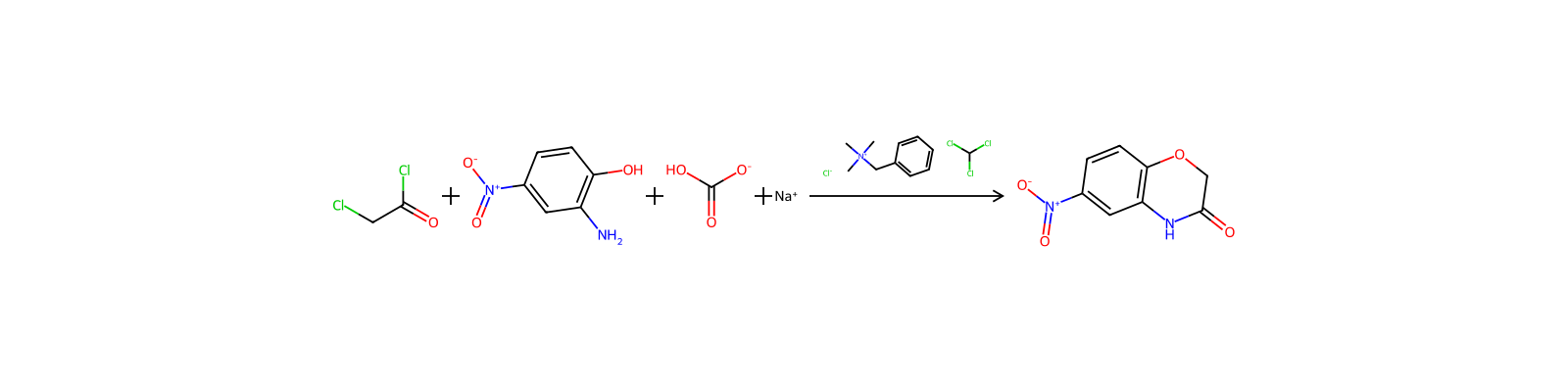
関連反応
133 件






関連ノート
読み込み中…