
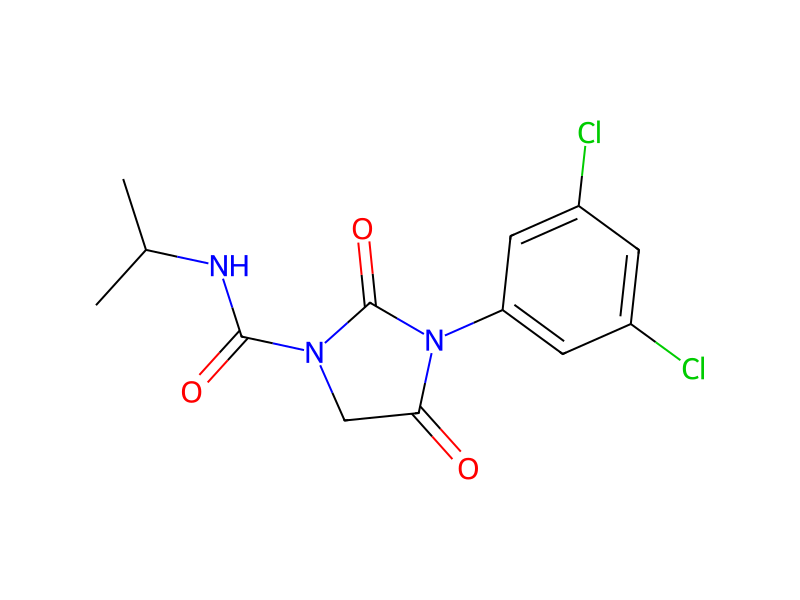
基本情報
- 標準SMILES
CC(C)NC(=O)N1CC(=O)N(c2cc(Cl)cc(Cl)c2)C1=O- InChIKey
ONUFESLQCSAYKA-UHFFFAOYSA-N- 分子式
- C13H13Cl2N3O3
- 平均分子量
- 330.16 g/mol
- 単同位体質量
- 329.0333967
名称と識別子
- 優先名称
- Iprodione
- IUPAC
- 3-(3,5-dichlorophenyl)-2,4-dioxo-N-propan-2-ylimidazolidine-1-carboxamide
- 現地名
- 3-(3,5-ジクロロフェニル)-N-イソプロピル-2,4-ジオキソ-1-イミダゾリジンカルボアミド
- 英語名
- Iprodione
- 分子式
- C13H13Cl2N3O3
- 分子量
- 330.17
名称と別名
IPRODIONE36734-19-7RovralGlycopheneGlycophenPromidioneIprodialKidanRovral floChipco 26019Rovral PMRovrol
名称をさらに表示
キプコ26019ロブラール3-(3,5-ジクロロフェニル)-N-イソプロピル-2,4-ジオキソイミダゾリジン-1-カルボアミド1-イソプロピルカルバモイル-3-(3,5-ジクロロフェニル)-2,4-イミダゾリジンジオン3-(3,5-ジクロロフェニル)-N-イソプロピル-2,4-ジオキソイミダゾリジン-1-カルボキサミド3-(3,5-ジクロロフェニル)-N-(1-メチルエチル)-2,4-ジオキソ-1-イミダゾリジンカルボキサミドプロミジオンロブラールフロアブルN-イソプロピル-3-(3,5-ジクロロフェニル)-2,4-ジオキソ-1-イミダゾリジンカルボアミドロブラールフロイプロジオングリコフェン3-(3,5-ジクロロフェニル)-N-イソプロピル-2,4-ジオキソ-1-イミダゾリジンカルボアミドN-イソプロピル-3-(3,5-ジクロロフェニル)-2,4-ジオキソイミダゾリジン-1-カルボキサミドイプロジオン標準品イプロジオン標準液Nイソプロピル3(3,5ジクロロフェニル)2,4ジオキソイミダゾリジン1カルボキサミド3-(3,5-ジクロロフェニル)-N-イソプロピル-2,4-ジオキソイミダゾリジン-1-カルボキサミド (イプロジオン)3-(3,5-ジクロロフェニル)-N-イソプロピル-2,4-ジオキソイミダゾリジン-1-カルボキサミド (別名 イプロジオン)イプロジオン STANDARDIPRODION3-(3,5-dichlorophenyl)-1-iso-propylcarbamoylhydantionROVER330.16
AnforRovral 50WP3-(3,5-Dichlorophenyl)-N-(1-methylethyl)-2,4-dioxo-1-imidazolidinecarboxamide3-(3,5-Dichlorophenyl)-N-isopropyl-2,4-dioxoimidazolidine-1-carboxamideNRC 910glycophen anphorLFA 2043RP 26019
データベース識別子
- CAS
36734-19-7- PubChem CID
- 37517
- DTXSID
DTXSID3024154- ChEMBL
CHEMBL1862887- ChEBI
CHEBI:28909- UNII
- S3AYV2A6EU
- EC Number
- 253-178-9
- Nikkaji
- J3.500I
物性
構造計算による物性
- XLogP
- 3.1
- 極性表面積
- 69.7 Ų
- 水素結合供与体数
- 1
- 水素結合受容体数
- 3
- 回転可能結合数
- 2
- 重原子数
- 21
- 形式電荷
- 0
- 複雑度
- 448
実験および物理化学的性質
LogP
log Kow = 3.00
3.00
OdorOdorless
Color/Form
Colorless crystals
White crystals
Solubility
Solubility at 20 °C (g/l): ethanol 25; methanol 25; acetone 300; dichloromethane 500; dimethylformamide 500
Solubility (20 °C): 300 g/l acetophenone, anisole; 500 g/l 1-methyl-2-pyrrolidone
Solubility: acetonitrile 150, toluene 150, benzene 200 (all in g/l at 20 °C)
In water, 13.9 mg/l @ 25 °C.
0.0139 mg/mL at 25 °C
CorrosivityNon-corrosive to metals
Flash Point>100 °C
Decomposition
DT50 1-7 days (pH 7), <1 hr (pH 9). Aqueous solns degraded by uv light.
When heated to decomposition it emits very toxic fumes of /nitrogen oxides & hydrogen chloride/.
Melting Point
approx 136 °C
136 °C
Vapor Pressure3.75X10-9 mm Hg @ 25 °C
Henry's Law ConstantHenry's Law constant = 3.12X10⁻⁹ atm-cu m/mole @ 25 °C
Physical Description
Colorless odorless solid; [Merck Index] White powder; [MSDSonline]
Solid
Stability/Shelf LifeRelatively stable to acid media, but decomposed in alkaline media.
物理化学的性質
- 融点
- 130 · 130-134 °C(lit.)
- 比重(密度)
- 1.6223 · 1.6223 (rough estimate)
- 蒸気圧
- 5 x · 5 x 10-7 Pa (25 °C)
- 屈折率
- 1.614 · 1.6140 (estimate)
- 闪点
- 2 °C · 2 °C
- 貯蔵温度
- Sealed in dry,Room Temperature
- 溶解性
- 100 mg/mL · DMSO: 100 mg/mL (302.87 mM)
- 酸解離定数(Pka)
- 9.19 · 9.19±0.20(Predicted)
- 外見
- Solid
- 色
- White to off-white
- 水溶解度
- 0.0013 g/100mL · 0.0013g/100mL
- Merck
- 13 · 13,5096
- BRN
- 895003 · 895003
- Henry's Law Constant
- 7.1 · 7.1×102 mol/(m3Pa) at 25℃, Barcelo and Hennion (1997)
- 主な用途
- 農業洗浄剤化粧品環境食品および飲料パーソナルケア
- InChI
- 1S/C13H13Cl2N3O3/c1-7(2)16-12(20)17-6-11(19)18(13(17)21)10-4-8(14)3-9(15)5-10/h3-5,7H,6H2,1-2H3,(H,16,20)
- InChIKey
- ONUFESLQCSAYKA-UHFFFAOYSA-N
- SMILES
- CC(C)NC(=O)N1CC(=O)N(C1=O)c2cc(Cl)cc(Cl)c2
- LogP
- 3 · 3.000
- CAS データベース
- 36734 · 36734-19-7(CAS DataBase Reference)
- NISTの化学物質情報
- Iprodione(36734-19-7)
- EPAの化学物質情報
- Iprodione (36734-19-7)
安全と法規制
GHS分類
GHS Classification
Warning
H351: Suspected of causing cancer [Warning Carcinogenicity];H400: Very toxic to aquatic life [Warning Hazardous to the aquatic environment, acute hazard];H410: Very toxic to aquatic life with long lasting effects [Warning Hazardous to the aquatic environment, long-term hazard]
P203, P273, P280, P318, P391, P405, and P501 (click each P-code to see the statement)
Danger
危険有害性情報
Regulatory Information
Hazard Traits - Carcinogenicity;Authoritative List - Prop 65;Report - regardless of intended function of ingredient in the product
Commission Regulation No 844/2012
Iprodione is listed in the dataset of EPA Human Health Benchmarks for Pesticides under the Safe Drinking Water Act (40 eCFR 141)
03/31/EC, Reg. (EU) 2016/950, Reg. (EU) 2017/1511, Reg. (EU) 2017/2091, Reg. (EU) No 540/2011, Reg. (EU) No 823/2012
Iprodione: Does not have an individual approval but may be used under an appropriate group standard
Other Safety Information
IMAP assessments - 1-Imidazolidinecarboxamide, 3-(3,5-dichlorophenyl)-N-(1-methylethyl)-2,4-dioxo-: Environment tier I assessment;IMAP assessments - 1-Imidazolidinecarboxamide, 3-(3,5-dichlorophenyl)-N-(1-methylethyl)-2,4-dioxo-: Human health tier I assessment
Hazards SummaryMay cause irritation; [MSDSonline] Oral LD50 (mouse) = 1870-2670 mg/kg; [Ullmann]
FIFRA Requirements
As the federal pesticide law FIFRA directs, EPA is conducting a comprehensive review of older pesticides to consider their health and environmental effects and make decisions about their future use. Under this pesticide reregistration program, EPA examines health and safety data for pesticide active ingredients initially registered before November 1, 1984, and determines whether they are eligible for reregistration. In addition, all pesticides must meet the new safety standard of the Food Quality Protection Act of 1996. Pesticides for which EPA had not issued Registration Standards prior to the effective date of FIFRA, as amended in 1988, were divided into three lists based upon their potential for human exposure and other factors, with List B containing pesticides of greater concern and List D pesticides of less concern. Iprodione is found on List B. Case No: 2335; Pesticide type: Fungicide; Case Status: OPP is reviewing data from the pesticide's producers regarding its human health and/or environmental effects, or OPP is determining the pesticide's eligibility for reregistration and developing the Reregistration Eligibility Decision (RED) document.; Active ingredient (AI): 3-(3-5-Dichlorophenyl-N-(1-methylethyl)-2,4-dioxo- 1-imidazolidinecarboxamide; Data Call-in (DCI) Date(s): 09/23/91, 03/03/95, 10/13/95; AI Status: The producers of the pesticide has made commitments to conduct the studies and pay the fees required for reregistration, and are meeting those commitments in a timely manner.
Tolerances are established for the combined residues of the fungicide iprodione [3-(3,5-dichlorophenyl)- N-(1-methylethyl)-2,4-dioxo-1-imidazolidinecarboxamide], its isomer 3-(1-methylethyl)-N-(3,5-dichlorophenyl)-2,4-dioxo-1-imidazolidinecarboxamide, and its metabolite 3-(3,5-dichlorophenyl)-2,4-dioxo-1-imidazolidine-carboxamide in or on the following raw agricultural commodities: almonds (hulls); almonds (nutmeat); apricots; beans (dried, vine hay); beans (dry); beans (forage); beans (succulent); blueberries; boysenberries; broccoli; caneberries; carrots; cherries, sour; cherries, sweet, (pre and post-H); cottonseed; currants; garlic; ginseng; ginsend, dried; grapes; kiwi fruit; lettuce; nectarines (pre- and post-H); onions (dry bulb); peaches (pre- and post-H); peanuts; peanut forage; peanut hay; plums (pre- and post-H); potatoes; prunes; raisins; rasberries; rice bran; rice grain; rice hulls; rice straw; and strawberries.
Tolerances are established for the combined residues of the fungicide iprodione [3-(3,5-dichlorophenyl)-N-(1-methylethyl)-2,4-dioxo-1-imidazolidinecarboxamide], its isomer 3-(1-methylethyl)-N-(3,5-dichlorophenyl)-2,4-dioxo-1-imidazolidinecarboxamide, and its metabolite 3-(3,5-dichlorophenyl)-2,4-dioxo-1-imidazolidine-carboxamide and [N-(3,5-dichloro-4-hydroxyphenyl)-ureido-carboxamide], all expressed as iprodione equivalents in or on the following raw agricultural commodities of animal origin: cattle, fat;; cattle, kidney; cattle, liver; cattle, meat;; cattle, mbyp (except kidney and liver);; eggs; goats, fat;; goats, kidney; goats, liver; goats, meat;; goat, mbyp (except kidney and liver);; hogs, fat;; hogs, kidney; hogs, liver; hogs, meat;; hogs, mbyp (except kidney and liver);; horses, fat;; horses, kidney; horses, liver; horses, meat;; horses, mbyp (except kidney and liver);; milk;; poultry, fat; poultry, liver; poultry, meat; poultry, mbyp (except liver); sheep, fat;; sheep, kidney; sheep, liver; sheep, meat;; sheep mbyp (except kidney and liver).
Tolerances with regional registration, as defined in 180.1(n), are established for the combined residues of the fungicide iprodione [3-(3,5-dichlorophenyl)-N-(1-methylethyl)-2,4-dioxo-1-imidazolidinecarboxamide], its isomer 3-(1-methylethyl)-N-(3,5-dichlorophenyl)-2,4-dioxo-1-imidazolidinecarboxamide, and its metabolite 3-(3,5-dichlorophenyl)- 2,4-dioxo-1-imidazolidinecarboxamide in or on the following raw agricultural commodity: Chinese mustard.
Hazard Classes and Categories
Acute Tox. 3 (15.3%);Carc. 2 (100%);Aquatic Acute 1 (100%);Aquatic Chronic 1 (100%)
Carcinogenicity - category 2;Hazardous to the aquatic environment (acute) - category 1;Hazardous to the aquatic environment (chronic) - category 1
Serious eye damage/eye irritation - Category 2B;Carcinogenicity - Category 2;Reproductive toxicity - Category 2;Specific target organ toxicity - Single exposure - Category 2 (nervous system);Specific target organ toxicity - Repeated exposure - Category 2 (hematopoietic system);Hazardous to the aquatic environment (Acute) - Category 1;Hazardous to the aquatic environment (Long-term) - Category 1
Carc. 2;Aquatic Acute 1;Aquatic Chronic 1
State Drinking Water Guidelines(FL) FLORIDA 280 ug/l
安全と保護具
Storage ConditionsDo not contaminate water, food, or feed by storage ... of this chemical.
Disposal Methods
SRP: At the time of review, criteria for land treatment or burial (sanitary landfill) disposal practices are subject to significant revision. Prior to implementing land disposal of waste residue (including waste sludge), consult with environmental regulatory agencies for guidance on acceptable disposal practices.
Do not contaminate water, food, or feed by ... disposal of this chemical.
Allowable Tolerances
Tolerances are established for the combined residues of the fungicide iprodione [3-(3,5-dichlorophenyl)- N-(1-methylethyl)-2,4-dioxo-1-imidazolidinecarboxamide], its isomer 3-(1-methylethyl)-N-(3,5-dichlorophenyl)-2,4-dioxo-1-imidazolidinecarboxamide, and its metabolite 3-(3,5-dichlorophenyl)-2,4-dioxo-1-imidazolidine-carboxamide in or on the following raw agricultural commodities: almonds (hulls), 2.0 ppm; almonds (nutmeat), 0.3 ppm; apricots, 20.0 ppm; beans (dried, vine hay), 90.0 ppm; beans (dry), 2.0 ppm; beans (forage), 90.0 ppm; beans (succulent), 2.0 ppm; blueberries, 15.0 ppm; boysenberries, 15.0 ppm; broccoli, 25.0 pm; caneberries, 25.0 ppm; carrots, 5.0 ppm; cherries, sour, 20.0 ppm; cherries, sweet, (pre and post-H), 20.0 ppm; cottonseed, 0.10 ppm; currants, 15.0 ppm; garlic, 0.1 ppm; ginseng, 2.0 ppm; ginsend, dried, 4.0 ppm; grapes, 60.0 ppm; kiwi fruit, 10.0 ppm; lettuce, 25.0 ppm; nectarines (pre- and post-H), 20.0 ppm; onions (dry bulb), 0.5 ppm; peaches (pre- and post-H), 20.0 ppm; peanuts, 0.5 ppm; peanut forage, 150.0 ppm; peanut hay, 150.0 ppm; plums (pre- and post-H), 20.0 ppm; potatoes, 0.5 ppm; prunes, 20.0 ppm; raisins, 300.0 ppm; rasberries, 15.0 ppm; rice bran, 30.0 ppm; rice grain, 10.0 ppm; rice hulls, 50.0 ppm; rice straw, 20.0 ppm; and strawberries, 15.0 ppm.
Tolerances are established for the combined residues of the fungicide iprodione [3-(3,5-dichlorophenyl)-N-(1-methylethyl)-2,4-dioxo-1-imidazolidinecarboxamide], its isomer 3-(1-methylethyl)-N-(3,5-dichlorophenyl)-2,4-dioxo-1-imidazolidinecarboxamide, and its metabolite 3-(3,5-dichlorophenyl)-2,4-dioxo-1-imidazolidine-carboxamide and [N-(3,5-dichloro-4-hydroxyphenyl)-ureido-carboxamide], all expressed as iprodione equivalents in or on the following raw agricultural commodities of animal origin: cattle, fat, 0.5 ppm; cattle, kidney, 3.0 ppm; cattle, liver, 3.0 ppm; cattle, meat, 0.5 ppm; cattle, mbyp (except kidney and liver), 0.5 ppm; eggs, 1.5 ppm; goats, fat, 0.5 ppm; goats, kidney, 3.0 ppm; goats, liver, 3.0 ppm; goats, meat, 0.5 ppm; goat, mbyp (except kidney and liver), 0.5 ppm; hogs, fat, 0.5 ppm; hogs, kidney, 3.0 ppm; hogs, liver, 3.0 ppm; hogs, meat, 0.5 ppm; hogs, mbyp (except kidney and liver), 0.5 ppm; horses, fat, 0.5 ppm; horses, kidney, 3.0 ppm; horses, liver, 3.0 ppm; horses, meat, 0.5 ppm; horses, mbyp (except kidney and liver), 0.5 ppm; milk, 0.5 ppm; poultry, fat, 3.5 ppm; poultry, liver, 5.0 ppm; poultry, meat, 1.0 ppm; poultry, mbyp (except liver), 1.0 ppm; sheep, fat, 0.5 ppm; sheep, kidney, 3.0 ppm; sheep, liver, 3.0 ppm; sheep, meat, 0.5 ppm; sheep mbyp (except kidney and liver), 0.5 ppm.
Tolerances with regional registration, as defined in 180.1(n), are established for the combined residues of the fungicide iprodione [3-(3,5-dichlorophenyl)-N-(1-methylethyl)-2,4-dioxo-1-imidazolidinecarboxamide], its isomer 3-(1-methylethyl)-N-(3,5-dichlorophenyl)-2,4-dioxo-1-imidazolidinecarboxamide, and its metabolite 3-(3,5-dichlorophenyl)- 2,4-dioxo-1-imidazolidinecarboxamide in or on the following raw agricultural commodity: Chinese mustard, 15.0 ppm.
毒性情報
Target OrgansHematologic;Reproductive
Ecotoxicity Values
LD50 Colinus virginianus (Bobwhite quail) oral >2000 mg/kg
LD50 Anas platyrhynchos (Mallard) oral 10,400 mg/kg
LC50 Rainbow trout 4.1 mg/l/96 hr /Conditions of bioassay not specified/
LC50 Bluegill sunfish 3.7 mg/l/96 hr /Conditions of bioassay not specified/
Environmental Fate
TERRESTRIAL FATE: Based on a classification scheme(1), a Koc value of 700(2) indicates that iprodione is expected to have low mobility in soil(SRC). Volatilization of iprodione from moist soil surfaces is not expected to be an important fate process(SRC) given a Henry's Law constant of 3.12X10⁻⁹ atm-cu m/mole(3). Iprodione is not expected to volatilize from dry soil surfaces(SRC) based upon a vapor pressure of 3.75X10⁻⁹ mm Hg(4). Iprodione degraded with an observed half-life of 14 to 30 days in aerobic sandy loam soil that was incubated in the dark at 25 degrees C and 75% of 0.33 bar moisture for 276 days(5). The US Dept of Agric's Pesticide Properties Database lists a soil half-life of 14 days for iprodione(2) however, in acclimated soil, the half-life can be as low as 2 days(6); in non-acclimated soil, the half-life can be >35 days(6). Hydrolysis is probably important in moist alkaline soils; the aqueous hydrolysis half-lives of iprodione (at 25 °C) at respective pHs of 3, 5, 7, and 9 are 545.2, 37.4, 1.1, and 0.015 days(7).
TERRESTRIAL FATE: In laboratory studies using Woodstown loamy sand and Lodi loam soils, initial applications of iprodione (1.5-6 ug/g) were reduced to trace levels (<0.05 ug/g) within 8 to 48 weeks(1); the initial half-life in the Lodi loam soil at 21-28 °C, was approximately 1-2 weeks(1). In field plot studies, when iprodione was applied to previously untreated plots, about 3% of initial dose remained after 77 days(2); in plots treated once before, <1% remained after 18 days(2); in plots treated twice, <1% remained after 10 days(2). In additional studies, degradation of iprodione in soil was found to increase with increase in pH and with successive iprodione treatments(3); for example, times for 50% degradation following first, second and third applications were about 30, 12, and 4 days(3); time for 90% loss from previously untreated soils ranged from 22 to 93 days while soils treated once ranged from 16 to 28 days(3). 3,5-Dichloroaniline was identified as an important degradation product of iprodione in soil(4). In a New Zealand study, degradation rates of iprodione were found to increase with successive treatments(5); in untreated soils, 50% disappearance required >35 days while only 3.5 and 2 days were required for the 2nd and 3rd treatments(5).
TERRESTRIAL FATE: In a study conducted in San Juan Bautista, California, iprodione was applied eight times to carrots at one pound active ingredient/acre/application(1). Iprodione showed a half-life of seven days in the 0-15 cm soil layer of the silt loam soil with degradation products found in the soil up to 30 cm deep, but not below this. In a study conducted in North Carolina, using the same application rate, the observed half-life was less than three days in the 0-15 cm soil depth of a loamy sand soil. No degradation products or iprodione were detected below 15 cm. The soil pH's in the field studies varied from slightly acidic (pH 6.2-6.8) in North Carolina to slightly basic (pH 7.9-8.0) in California. Based on the studies, pH alone was not a good predictor of the relative rates of degradation of iprodione (< 4 days in NC, 7 days in CA). However, degradation products indicative of hydrolysis were detected suggesting that hydrolysis may be an important route of degradation in the field(1). In another study, an investigation of the leachability of pesticides applied to a golf course was conducted using lysimeters at actual golf courses(2). At a fairway consisting of Korean lawn grass grown over volcanic ash soil, iprodione was applied at 1.5 g/l/sq m. Leachate was collected 40 cm below the surface and analyzed over a 37 day period. At the end of 37 days, a total of 0.2% of the applied iprodione had leached through the fairway soil profile(2). Iprodione's degradation in a soil environment was also studied in five vineyard soils over a 77 day period (3). Iprodione was applied at 4 mg of active ingredient/kg of soil in an aqueous solution on three separate occasions for each soil. Overall, iprodione behaved similarly in each soil even though they each had different characteristics (e.g. texture ranged from sandy-loam to clay-loam). On the first application, it took 35 days to reach 90% degradation, while on the second application, it took 21 days to reach 90% degrada
AQUATIC FATE: Based on a classification scheme(1), a Koc value of 700(2) indicates that iprodione is expected to slightly adsorb to suspended solids and sediment(SRC). Volatilization from water surfaces is not expected(3) based upon a Henry's Law constant of 3.12X10⁻⁹ atm-cu m/mole(4). According to a classification scheme(5), an estimated BCF of 41(SRC), from a log Kow of 3.00(6) and a regression-derived equation(7), suggests the potential for bioconcentration in aquatic organisms is moderate(SRC). Aerobic aquatic metabolism is an important route of degradation for iprodione(8). It degraded with a half-life of 3 to 7 days in a flooded silt loam sediment system incubated in the dark. However, the water used in the experiment was at pH 8.5 suggesting that hydrolysis was a major contributor to iprodione degradation(8,9). The hydrolysis half-lives of iprodione (at 25 °C) at respective pHs of 3, 5, 7, and 9 are 545.2, 37.4, 1.1, and 0.015 days(9).
ATMOSPHERIC FATE: According to a model of gas/particle partitioning of semivolatile organic compounds in the atmosphere(1), iprodione, which has a vapor pressure of the 3.75X10⁻⁹ mm Hg at 25 °C(2), is expected to exist solely in the particulate phase in the ambient atmosphere. Particulate-phase iprodione may be removed from the air by wet and dry deposition(SRC).
Food Survey Values
Iprodione is one of many pesticides that has been detected in U.S. foods by the US Food and Drug Admin's regulatory monitoring of domestic foods for fiscal years 1983-1986(1) and 1978-1982(6); frequencies of occurrence and concns were not reported(1,6). In a US monitoring survey of 6970 produce samples (fruits and vegetables) collected between 1989 and 1991, iprodione was detected (detection limit of 2.0 ppm) in only two samples(2); the concn in the samples (one grape and one lettuce sample) was not reported(2). During a 5 yr study conducted during 1981-1986, the Los Angeles District Office of the FDA analyzed 19,851 samples of domestic and imported food for pesticide residues(3-4); iprodione was detected in 111 samples at concns ranging from 0.05 to >2.0 ppm(3-4); most detections were in the range from 0.5-2.0 ppm(3-4). In 1989 monitoring conducted by the California Dept of Food and Agric, iprodione was not detected (detection limit of 2.0 ppm) in 40 almond or 29 lettuce samples(5); however, it was detected in 2 peach and one prune samples(5).
During the 27 month period between January 1st 1992, and March 31st 1994, Agriculture and Agri-Food Canada analyzed 21,982 samples of fruit and vegetable commodities for pesticide residues. Iprodione was detected in cherries (0.5 ppm), grapes (0.1 ppm), nectarines (< 0.05 ppm), peaches (< 0.05 ppm), and raspberries (< 0.05 ppm)(1). Eight adult foods consumed in relatively large quantities by infants/children were selected from the domestic and import monitoring for 1985-1991 in the United States(2). These foods included apple juice, apples, bananas, grape juice, milk, orange juice, oranges, and pears. Of the 10,000 samples analyzed, only two imported foods, these being pears, had detectable quantities of iprodione at a maximum concentration of 0.22 ppm(2). From 1992-1993, the U.S. Food and Drug Administration(FDA) conducted a statistically based study of pesticide residues in domestic and imported pears and tomatoes(3). Iprodione was detected in one pear sample (concentration not reported). The concentration of various pesticides was determined on fruits, vegetables, and milk products in New York State(4). Iprodione detected in two peaches ranging from 0.003-0.006 ppm (total number of samples not indicated). In 1995, fruits and vegetable samples (397) were collected from eight local markets in Egypt and examined for 52 pesticides(5). Iprodione was detected three times in tomatoes maintain concentration from 0.05-0.22 ppm (0.11 ppm mean).
Average Daily Intake
Based upon results of the FDA's pesticide residue monitoring program for fiscal year 1988, the avg daily intake of iprodione for various age groups were as follows(1): 6-11 month old: 0.0017 ug/kg body wt/day; 14-16 yr-old males: 0.0013ug/kg body wt/day; 60-65 yr old females: 0.0014 ug/kg body wt/day(1). In September of 1998, the EPA estimated that the exposure of iprodione through the consumption of red meat was 0.002668 ug/kg/day, for poultry was 0.001999 ug/kg/day, and for total dairy was 0.004552 ug/kg/day(2). The estimated exposure for the consumption of grapes, wine and sherry, was 0.0000114 ug/kg/day(2). From June 1984 to April 1986, a U.S. National Total Diet Study was performed that determined the average daily intake of iprodione for infants aged 6-11 months and 2 years was 0.1 and 2.6 ng/kg body weight/day, respectively(3). For males aged 14-16, 25-30 and 60-65 yrs of age the average daily intake was 2.1, 1.8, and 1.3 ng/kg body weight/day, respectively, while for women aged 14-16, 25-30, and 60-65 yrs of age, the average daily intake was 0.4,0.4, and 0.3 ng/kg body weight/day, respectively(3). From July 1986 to April 1991, a U.S. National Total Diet Study was performed that determined the average daily intake of iprodione for infants aged 6-11 months and 2 years was 2.7 and 3.3 ng/kg body weight/day, respectively(4). For males aged 14-16, 25-30 and 60-65 yrs of age the average daily intake was 1.1, 0.9, and 1.4 ng/kg body weight/day, respectively, while for women aged 14-16, 25-30, and 60-65 yrs of age, the average daily intake was 0.7, 1.4, and 1.7 ng/kg body weight/day, respectively(4).
EPA IRIS Information
Iprodione
Hematologic;Reproductive
4 x 10 ^-2 mg/kg-day
Soil Adsorption/Mobility
The Koc for iprodione is 700(1). According to a classification scheme(2), this Koc value suggests that iprodione is expected to have low mobility in soil. In one study, an investigation of the leachability of pesticides applied to a golf course was conducted using lysimeters at actual golf courses(3). At a fairway consisting of Korean lawn grass grown over volcanic ash soil, iprodione was applied at 1.5 g/l/sq m. Leachate was collected 40 cm below the surface and analyzed over a 37 day period. At the end of 37 days, a total of 0.2% of the applied iprodione had leached through the fairway soil profile(3).
Atmospheric Concentrations
Thirty-nine kinds of pesticides were monitored in Kitakyushu city, Japan using a high-volume air sampler(1). After sampling about 700 cu m of air during summer and spring months, iprodione was not detected at a detection limit of 0.2 ng/cu m.
Human Toxicity ExcerptsNo human poisonings have been reported.
Artificial Pollution SourcesIprodione's production and use as a fungicide(1,2) is expected to result in its direct release to the environment(SRC).
Environmental Biodegradation
In 28-day incubation studies using a vegetable-growing clay loam soil, degradation of iprodione was >50% in non-sterile and <20% in sterile (autoclaved) soil(1); the results suggest that microbes were responsible for the primary disappearance in the soil(1). Similar results were found in another study in which degradation was much slower in soils treated with sodium azide, gamma irradiation, chloramphenicol or cycloheximide as compared to non-sterile soil(2).
AEROBIC: Iprodione degraded with an observed half-life of 14 to 30 days in aerobic sandy loam soil that was incubated in the dark at 25 degrees C and 75% of 0.33 bar moisture for 276 days. Aerobic aquatic metabolism is also an important route of degradation for iprodione. It degraded with a half-life of 3 to 7 days in a flooded silt loam sediment system incubated in the dark. It could be expected that degradation in soils with pH's at or above 7 would be more rapid than in acidic soils due to chemical hydrolysis. The study of iprodione degradation in the sandy loam soil was conducted in slightly acidic to neutral conditions (pH 5.75-6.92) and it appears reasonable to conclude that the degradation was primarily due to metabolism and not chemical hydrolysis. In the aquatic study using flooded silt loam sediment, however, the sediment was at pH 6.64 and the water at 8.5 suggesting that hydrolysis could have played a major role in the decomposition of iprodione(1).
ANAEROBIC: Iprodione degraded with an observed half-life of 7-14 days in anaerobic silt loam sediment(1). As discussed in the abiotic section, iprodione undergoes chemical hydrolysis. As such, it could be expected that degradation in sediments with pH's at or above 7 would be more rapid than in acidic environments due to this additional route of degradation. In the anaerobic study, the sediment was at pH 6.4 and the water at 7.4 suggesting that hydrolysis could have played a major role in the decomposition of iprodione(1).
Carcinogen ClassificationNo indication of carcinogenicity to humans (not listed by IARC).
法規制情報
Regulatory Information
Hazard Traits - Carcinogenicity;Authoritative List - Prop 65;Report - regardless of intended function of ingredient in the product
Commission Regulation No 844/2012
Iprodione is listed in the dataset of EPA Human Health Benchmarks for Pesticides under the Safe Drinking Water Act (40 eCFR 141)
03/31/EC, Reg. (EU) 2016/950, Reg. (EU) 2017/1511, Reg. (EU) 2017/2091, Reg. (EU) No 540/2011, Reg. (EU) No 823/2012
Iprodione: Does not have an individual approval but may be used under an appropriate group standard
FIFRA Requirements
As the federal pesticide law FIFRA directs, EPA is conducting a comprehensive review of older pesticides to consider their health and environmental effects and make decisions about their future use. Under this pesticide reregistration program, EPA examines health and safety data for pesticide active ingredients initially registered before November 1, 1984, and determines whether they are eligible for reregistration. In addition, all pesticides must meet the new safety standard of the Food Quality Protection Act of 1996. Pesticides for which EPA had not issued Registration Standards prior to the effective date of FIFRA, as amended in 1988, were divided into three lists based upon their potential for human exposure and other factors, with List B containing pesticides of greater concern and List D pesticides of less concern. Iprodione is found on List B. Case No: 2335; Pesticide type: Fungicide; Case Status: OPP is reviewing data from the pesticide's producers regarding its human health and/or environmental effects, or OPP is determining the pesticide's eligibility for reregistration and developing the Reregistration Eligibility Decision (RED) document.; Active ingredient (AI): 3-(3-5-Dichlorophenyl-N-(1-methylethyl)-2,4-dioxo- 1-imidazolidinecarboxamide; Data Call-in (DCI) Date(s): 09/23/91, 03/03/95, 10/13/95; AI Status: The producers of the pesticide has made commitments to conduct the studies and pay the fees required for reregistration, and are meeting those commitments in a timely manner.
Tolerances are established for the combined residues of the fungicide iprodione [3-(3,5-dichlorophenyl)- N-(1-methylethyl)-2,4-dioxo-1-imidazolidinecarboxamide], its isomer 3-(1-methylethyl)-N-(3,5-dichlorophenyl)-2,4-dioxo-1-imidazolidinecarboxamide, and its metabolite 3-(3,5-dichlorophenyl)-2,4-dioxo-1-imidazolidine-carboxamide in or on the following raw agricultural commodities: almonds (hulls); almonds (nutmeat); apricots; beans (dried, vine hay); beans (dry); beans (forage); beans (succulent); blueberries; boysenberries; broccoli; caneberries; carrots; cherries, sour; cherries, sweet, (pre and post-H); cottonseed; currants; garlic; ginseng; ginsend, dried; grapes; kiwi fruit; lettuce; nectarines (pre- and post-H); onions (dry bulb); peaches (pre- and post-H); peanuts; peanut forage; peanut hay; plums (pre- and post-H); potatoes; prunes; raisins; rasberries; rice bran; rice grain; rice hulls; rice straw; and strawberries.
Tolerances are established for the combined residues of the fungicide iprodione [3-(3,5-dichlorophenyl)-N-(1-methylethyl)-2,4-dioxo-1-imidazolidinecarboxamide], its isomer 3-(1-methylethyl)-N-(3,5-dichlorophenyl)-2,4-dioxo-1-imidazolidinecarboxamide, and its metabolite 3-(3,5-dichlorophenyl)-2,4-dioxo-1-imidazolidine-carboxamide and [N-(3,5-dichloro-4-hydroxyphenyl)-ureido-carboxamide], all expressed as iprodione equivalents in or on the following raw agricultural commodities of animal origin: cattle, fat;; cattle, kidney; cattle, liver; cattle, meat;; cattle, mbyp (except kidney and liver);; eggs; goats, fat;; goats, kidney; goats, liver; goats, meat;; goat, mbyp (except kidney and liver);; hogs, fat;; hogs, kidney; hogs, liver; hogs, meat;; hogs, mbyp (except kidney and liver);; horses, fat;; horses, kidney; horses, liver; horses, meat;; horses, mbyp (except kidney and liver);; milk;; poultry, fat; poultry, liver; poultry, meat; poultry, mbyp (except liver); sheep, fat;; sheep, kidney; sheep, liver; sheep, meat;; sheep mbyp (except kidney and liver).
Tolerances with regional registration, as defined in 180.1(n), are established for the combined residues of the fungicide iprodione [3-(3,5-dichlorophenyl)-N-(1-methylethyl)-2,4-dioxo-1-imidazolidinecarboxamide], its isomer 3-(1-methylethyl)-N-(3,5-dichlorophenyl)-2,4-dioxo-1-imidazolidinecarboxamide, and its metabolite 3-(3,5-dichlorophenyl)- 2,4-dioxo-1-imidazolidinecarboxamide in or on the following raw agricultural commodity: Chinese mustard.
State Drinking Water Guidelines(FL) FLORIDA 280 ug/l
安全データ
- wgk
- 3
- rtecs
- NI8870000
- ridadr
- UN 3077 9/PG 3
- 毒性
- LD50 in mice, rats (g/kg): 4, 3.5 orally (Lacroix, 1980)
- PRTR法
- 第1種指定化学物質
- hs_code
- 29332900
- risk_code
- 40-50/53-36-20/21/22-11
- 安衛法
- 57,57-2
- 消防法
- 危-4-1-S-II
- hazard_code
- Xn,N,F
- safety_code
- 36/37-60-61-36-26-16
- 毒劇物取締法
- II
- Hazard Classifications
- Aquatic Acute 1Aquatic Chronic 1Carc. 2
- ストレージクラス
- 11 - Combustible Solids
- 有毒物質データの
- 36734-19-7(Hazardous Substances Data)
化学と産業
薬理情報
Mechanism of ActionInhibits germination of spores and growth of fungal mycelium.
Metabolism/MetabolitesRapidly metabolized in plants to 3,5-dichloroaniline, following root uptake.
MeSH Pharmacological ClassificationChemicals that kill or inhibit the growth of fungi in agricultural applications, on wood, plastics, or other materials, in swimming pools, etc.
Cellular LocationsMembrane
用途と製造
Uses
Used as a fungicide; as a post-harvest dip; as a seed treatment; as a dip or spray at planting; [HSDB]
Farming (Pesticides) [Category: Industry]
For Iprodione (USEPA/OPP Pesticide Code: 109801) ACTIVE products with label matches. /SRP: Registered for use in the U.S. but approved pesticide uses may change periodically and so federal, state and local authorities must be consulted for currently approved uses./
Can also be used as a post-harvest dip, as a seed treatment, or as a dip or spray at planting.
Fungicide
This is a man-made compound that is used as a pesticide.
Consumption PatternsUse of iprodione (pounds per year) for the following crops: almonds (75,000 to 205,000); grapes (80,000 to 125,000); peaches (50,000 to 65,000); potatoes (55,000 to 215,000); rice (65,000 to 145,000).
Formulations/Preparations
USEPA/OPP Pesticide Code 109801; Trade Names: Iprodine; Glycophene; Chipco 26019; Anfor; RP-26019; Rovral.
Wettable powder; suspension concentrate; hot fogging concentrate; dustable powder; ULV liquid
Mixed formulations: (iprodione +) carbendazim; fenpropimorph
Flowable
Technical grade active ingredient: 95%; Liquid soluble concentrate (14 and 41.6 percent active ingredient); wettable powder (33.3 and 50 percent active ingredient); Dry flowable (50 percent active ingredient); Flowable concentrates (41.6 percent active ingredient); Emulsifiable concentrate (19.65, 23.3, and 50 percent active ingredient); Granular (1.02 and 1.3 percent active ingredient).
Use Classification
Environmental transformation -> Pesticides (parent, predecessor)
Fungicides
General Manufacturing InformationCompatible with most other pesticides.
応用分野
解説イプロジオン (化学式:C13H13C12N3O3) とは、殺菌剤に分類され、糸状菌や細菌など植物病原菌の有害作用から農作物等を守る用途で使用される農薬の成分です。 ジカルボキシイミド系の殺菌剤であり、農薬の作用機構による分類では、シグナム伝達のグループに該当します。細胞壁合成阻害作用という菌体の伸長を阻害する効果を持ち、菌体を異常に膨潤化させて細菌細胞を破裂させる作用により殺菌作用が得られます。 イプロジオンは持続効果が長い点が特徴です。さらに、各種耐性菌にも効果を発揮し、耐性菌が問題になっているキュウリやイチゴなど多くの農作物の灰色かび病、果樹類などの斑点落葉病、黒斑病、灰星病などにも高い効果を発揮します。 常温常圧では無臭で白色粉末状の個体として存在し、主に水に溶かして使用します。
用途イプロジオン試験用標準品。
用途農業用、園芸用殺菌剤。
使用Iprodione is a non-systemic fungicide that exhibits both protectant and eradicant activities against the spores and mycelium of a number of parasitic fungi. It is effective against Alternaria, Botrytis, Corticium, Fusarium, Helminthosporium, Monilinia, Phoma, Pleiochaeta, Rhizoctonia and Sclerotinia, etc. in nut crops, fruit trees (stone and pome fruit), vines, berries, vegetables, cereals, oilseed rape, cotton and ornamentals. Iprodione also controls various summer and winter turf diseases.
使用用途イプロジオンは野菜・果樹の病気予防・治療を目的として使用されます。効果のある菌は、アルタナリア属菌、ボトリチス属菌、スクレロチニア属菌、モニリア属菌やヘルミントスポリウム属菌、カーブラリア属菌です。使用方法は大きく分類して3種類あります。 1. 農作物に散布する 1つ目は、イプロジオンを成分とする殺菌剤を、水に希釈して散布する方法です。この方法は生育初期から生育後期にかけておこないます。 2. 種子にまぶす 2つ目は、イプロジオンを成分とする殺菌剤を、種子にまぶして使用する方法です。殺菌剤の種類にもよりますが、種子の重量の0.5%の薬剤を種子に紛衣して使用する登録が多いです。 3. くん煙させる 3つ目は、イプロジオンを成分とする殺菌剤を、くん煙させて使用する方法です。この方法は、温室やビニールハウスなどの密閉できる場所でのみ使用できる方法です。
調製方法
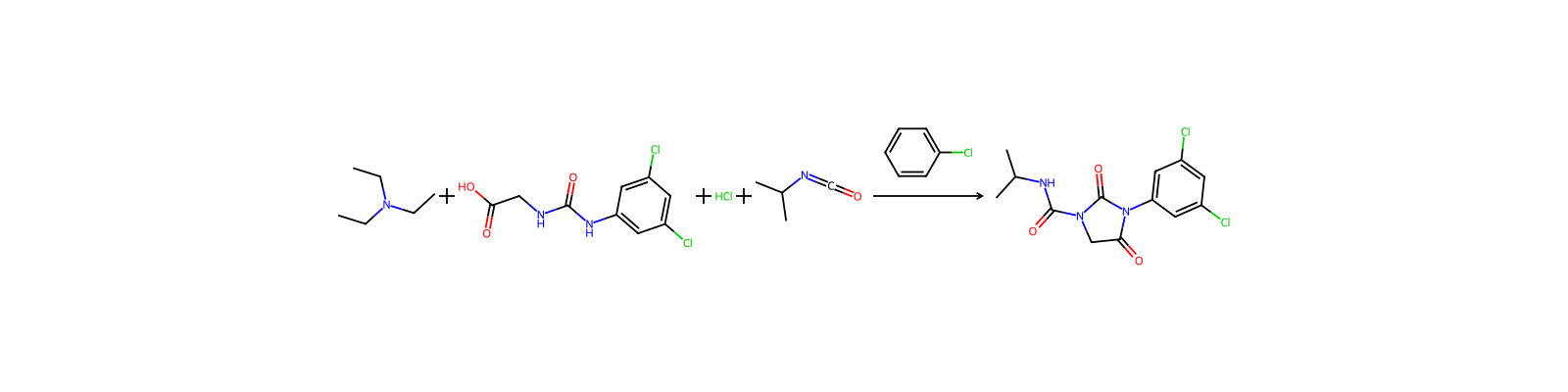
The synthesis uses 3,5-dichloroaniline which is coupled with glycine and phosgene. The urea substructure is formed by reaction with isopropylamine and phosgene. Many fungicide mixtures with Iprodione are on the market.
上流・下流製品情報
上流原料
サプライヤー50 社
北京华美互利生物化工010-56205725 · [email protected]
湖北永阔科技有限公司027-59223108 15972152991 · [email protected]
湖北博杰生物科技有限公司0713-2060728 15629612610
上海阿拉丁生化科技股份有限公司400-6206333 13167063860 · [email protected]
Shandong chuangyingchemical Co., Ltd.18853181302 · [email protected]
盐城通铭生物科技有限公司15195160625 · [email protected]
江西瑞威尔生物科技有限公司18502728206 · [email protected]
安耐吉化学&3A(安徽泽升科技股份有限公司)400-0056266 · [email protected]
梯希爱(上海)化工贸易有限公司021-61109150 · [email protected]
湖北魏氏化学试剂股份有限公司027-59102966 18717199209 · [email protected]
西安泽邦生物科技有限公司[email protected]
武汉丰泰威远科技有限公司+86-27-8746-5837 +86-18627785180 · [email protected]
武汉丰泰威远科技有限公司027-87465837 19945049750 · [email protected]
佛山宝诺生物科技有限公司0757-85921206 18520245316 · [email protected]
四川库利南科技有限公司400-1166-196 18981987031 · [email protected]
天津希恩思生化科技有限公司400 638 7771 · [email protected]
Xiamen AmoyChem Co., Ltd+86-86-5926051114 · [email protected]
斯百全化学(上海)有限公司021-021-021-67601398-809-809-809 15221380277 · [email protected]
艾科试剂4008-755-333 18080918076 · [email protected]
成都思天德生物科技有限公司028-83243028 19136088901 · [email protected]
深圳振强药物研发有限公司0755-66853366 13670046396 · [email protected]
湖北薪和化工有限公司027-83258456 15392830626 · [email protected]
南京生利德生物科技有限公司025-57798810 18652991625 · [email protected]
湖北威德利化学试剂有限公司186-02735115 18602735115 · [email protected]
上海将来实业股份有限公司400-0066400 13621662912 · [email protected]
HBCChem, Inc.+1-510-219-6317 · [email protected]
天津普西唐生物医药科技有限公司010-60605840 · [email protected]
上海御略医药科技有限公司021-60345187 13671753212 · [email protected]
陕西缔都医药化工有限公司029-81024372 17792795018 · [email protected]
凯试(上海)科技有限公司021-50135380 · [email protected]
Sigma-Aldrich西格玛奥德里奇(上海)贸易有限公司021-61415566 800-8193336 · [email protected]
天津阿尔塔科技有限公司022-6537-8550 15522853686 · [email protected]
TargetMol中国(陶术生物)021-021-33632979 15002134094 · [email protected]
上海陶术生物科技股份有限公司+1-781-999-5354; +1-00000000000 · [email protected]
九鼎化学(上海)科技有限公司4009209199 · [email protected]
湖北威德利化学试剂有限公司18327179646 · [email protected]
湖北玖丰隆化工有限公司13277936479 · [email protected]
郑州阿尔法化工有限公司0371-53765687 18937137882 · [email protected]
南京艾比克斯生化科技有限公司025-87193546 18652950785 · [email protected]
上海西陇生化科技有限公司021-52907766-8042
上海源叶生物科技有限公司13636370518 · [email protected]
湖北威德利化学试剂有限公司15871722230 · [email protected]
武汉市承天精细化工有限公司18164098996 · [email protected]
山东西亚化学有限公司4009903999 13395398332 · [email protected]
河北贞佳新材料有限公司0319-5925599 13315915972
湖北威德利化学试剂有限公司13429867250 13429867250
南京罗迈美生物科技有限公司[email protected]
上海新平精细化学品有限公司18221735425 · [email protected]
深圳市森迪生物科技有限公司18126413629 0755-23311925 2355327053 · [email protected]
上海依赫生物科技有限公司021-68882955 17721395025 · [email protected]
補足説明
定義ChEBI: An imidazolidine-2,4-dione in which the nitrogen at position 1 is substituted by an N-(isopropyl)carboxamide group while that at position 3 is substituted by a 3,5-dichlorophenyl group. A contact fungicide, it blocks the growth of the fu gal mycelium and inhibits the germination of fungal spores. It is used on fruit and vegetable crops affected by various fungal diseases. It is also used as a nematicide.
関連反応
5 件



関連ノート
読み込み中…