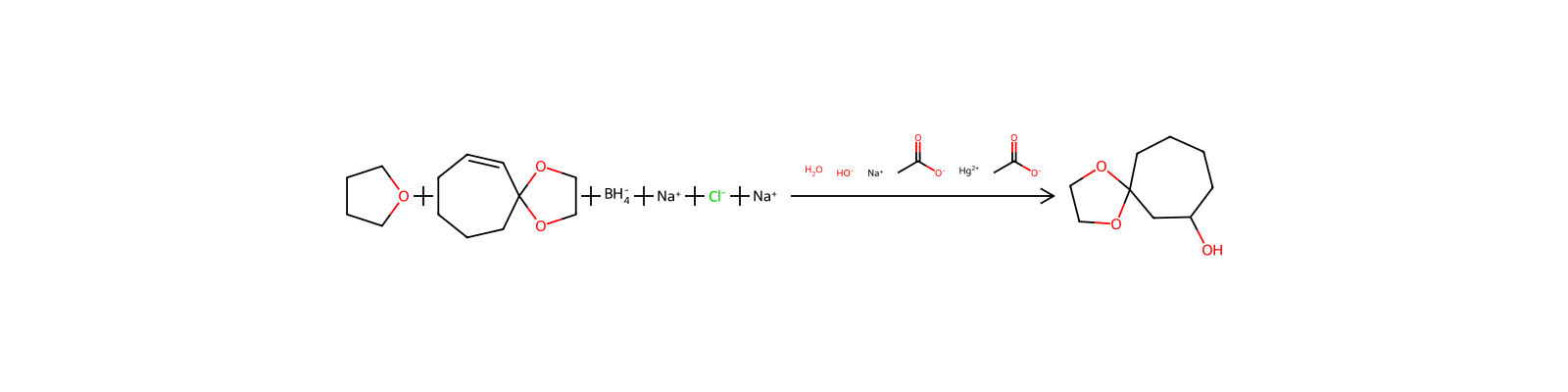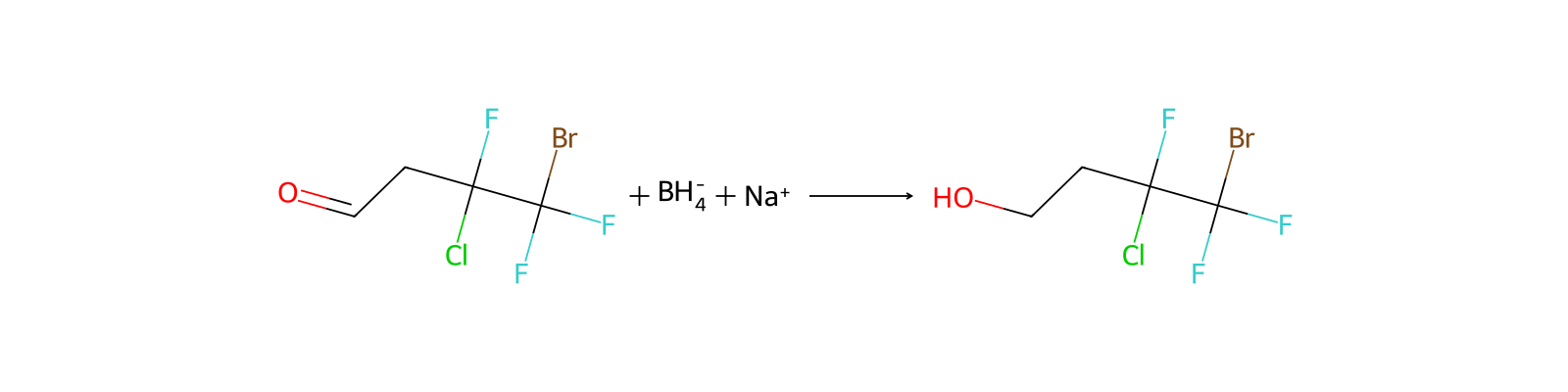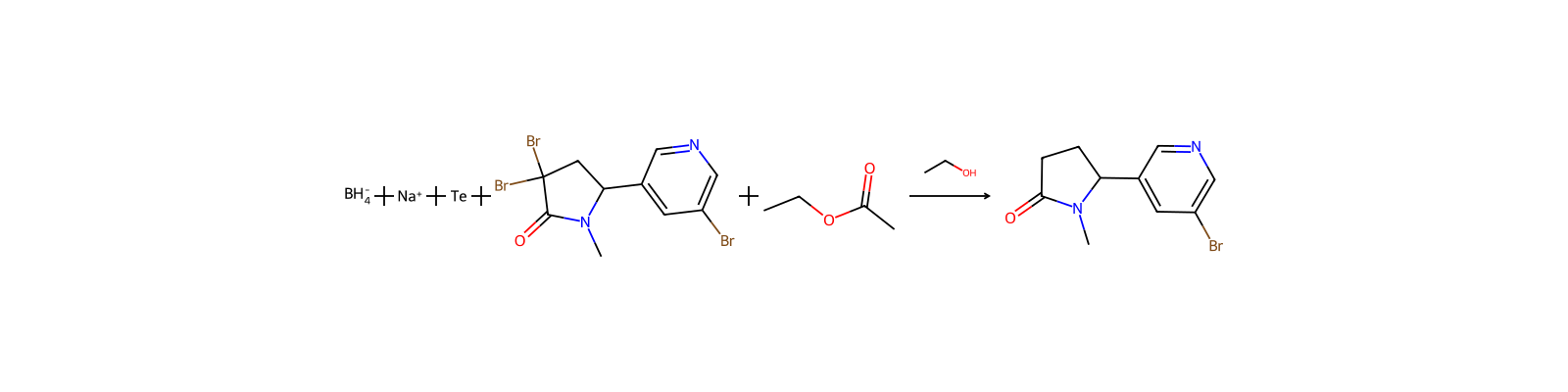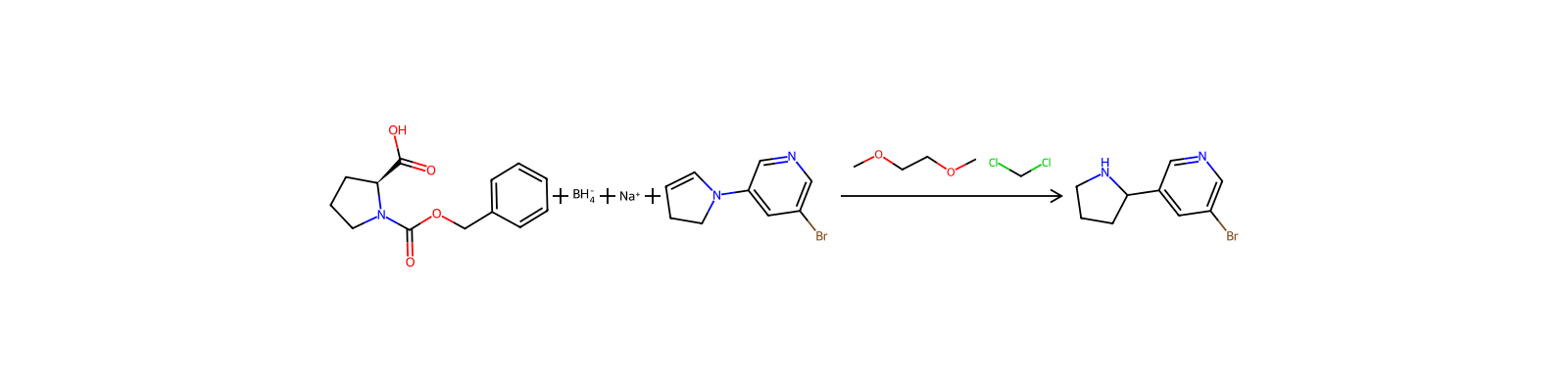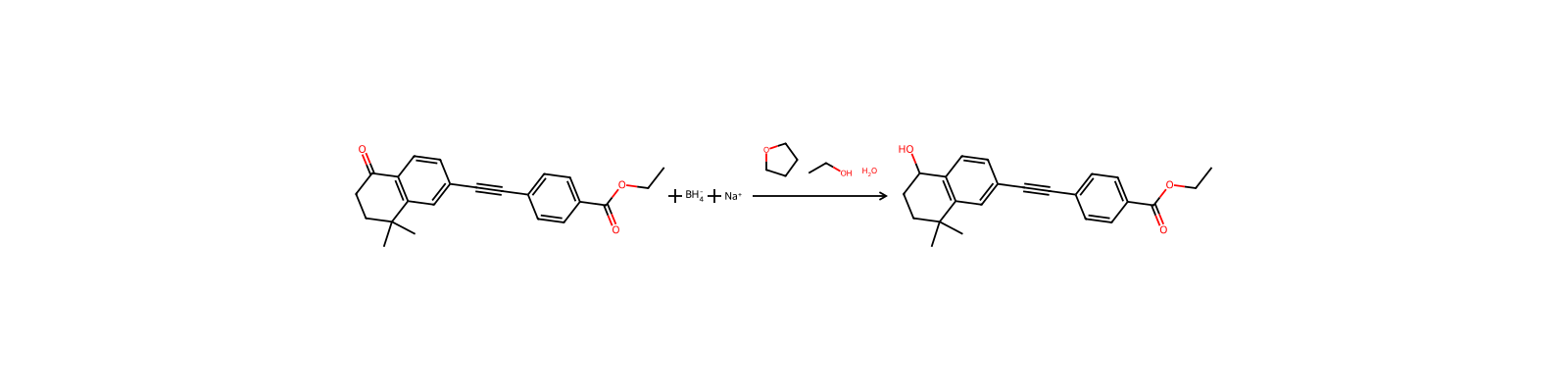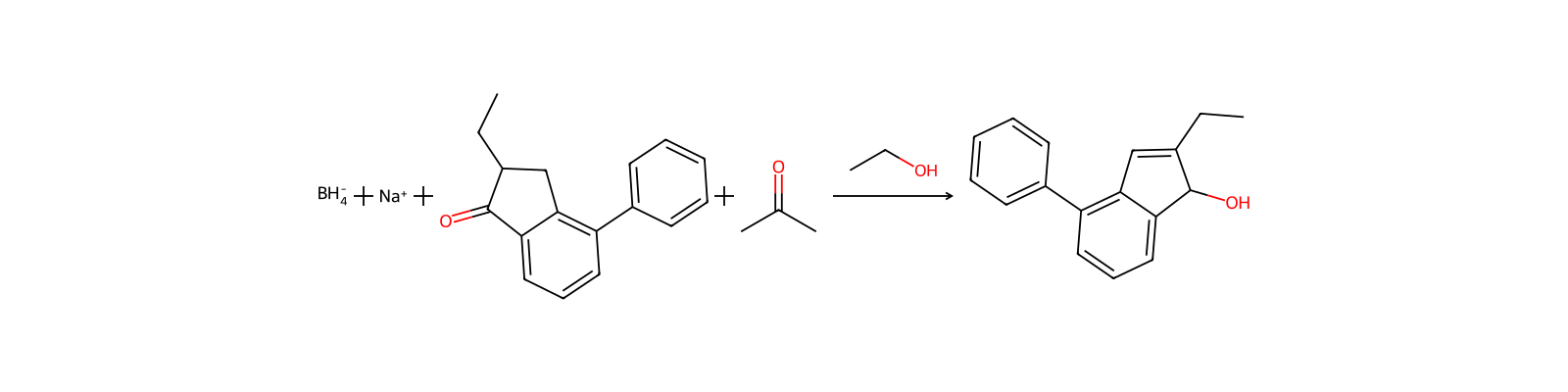
HRID 861反応物として
Sodium borohydride

16940-66-2[BH4-].[Na+]YOQDYZUWIQVZSF-UHFFFAOYSA-NSodium borohydride is a white to grayish crystalline powder. It is decomposed by water to form sodium hydroxide, a corrosive material, and hydrogen, a flammable gas. The heat of this reaction may be sufficient to ignite the hydrogen. The material itself is easily ignited and burns vigorously once ignited. It is used to make other chemicals, treat waste water, and for many other uses.
16940-66-2DTXSID80893977CHEBI:50985Metals -> Metal Hydrides
Reactive agents - 1st degree
1.074 at 68 °F (USCG, 1999) - Denser than water; will sink
1.074 g/cu cm (anhydrous material)
1.07 g/cm³
1.07 @25 °C
White to gray-white microcystalline powder or lumps
White cubic crystals, hygroscopic
Soluble in "Cellosolve" ether
Soluble in ammonia, amines, pyridine, dimethyl ether of diethylene glycol; insoluble in other ethers, hydrocarbons, alkyl chlorides
Solubility (wt/wt) in liquid ammonia, 104% at 25 °C; in ethylenediamine, 22% at 75 °C; in morpholine, 1.4% at 25 °C; in pyridine, 3.1% at 25 °C; in methanol, 16.4% at 20 °C (reacts); in ethanol, 4.0% at 20 °C (reacts slowly); in tetrahydrofuran, 0.1% at 20 °C; in diglyime, 5.5% at 20 °C; in dimethylformamide, 18.0% at 20 °C
Solubility (wt/wt) in water: 55% at 25 °C; 88.5% at 60 °C
Solubility in water, g/100ml at 25 °C: 55
When heated to decomposition emits toxic fumes of /sodium oxides/.
Solutions are rapidly decomposed by boiling.
>250 °C
Sodium borohydride is a white to grayish crystalline powder. It is decomposed by water to form sodium hydroxide, a corrosive material, and hydrogen, a flammable gas. The heat of this reaction may be sufficient to ignite the hydrogen. The material itself is easily ignited and burns vigorously once ignited. It is used to make other chemicals, treat waste water, and for many other uses.
Dry Powder; Liquid; Dry Powder
Gray to white crystals or powder; [HSDB]
WHITE CRYSTALLINE POWDER.
Anhydrous material is stable in dry air to 300 °C; decomposes slowly at 400 °C and rapidly at 500 °C
Aqueous solutions are most stable in the presence of small amounts of sodium hydroxide (0.2% for a nearly saturated solution containing 44% sodium borohydride) and can be kept for several days.
Hygroscopic, cubic crystals forming a dihydrate, mp 36-37 °C; anhydrous material is stable in dry air to 300 °C; decomposes slowly at 400 °C and rapidly at 500 °C
Aqueous solutions are most stable in the presence of small amounts of NaOH (0.2% for a nearly saturated solution containing 44% NaBH4) and can be kept for several days; solutions are rapidly decomposed by boiling
Standard enthalpy of formation: -188.6 kJ/mol (crystal); Molar heat capacity 86.8 J/mol K at 25 °C (crystal)
Decomposes on heating to constituent elements
化学的特性Sodium Borohydride is a white, odorless powder or pellet. It is used for bleaching wood pulp, as a blowing agent for plastics, and as a reducing agent for aldehydes and ketones.
安全情報は参考情報です。供給元の安全データシート(SDS)、適用法令、専門家による評価に代わるものではありません。
This chemical does not meet GHS hazard criteria for 0.4% (3 of 671) of reports.
Danger
H260 (86.7%): In contact with water releases flammable gases which may ignite spontaneously [Danger Substances and mixtures which in contact with water, emit flammable gases]
P203, P223, P231+P232, P260, P261, P262, P264, P264+P265, P270, P271, P280, P301+P316, P301+P330+P331, P302+P335+P334, P302+P352, P302+P361+P354, P304+P340, P305+P354+P338, P316, P317, P318, P321, P330, P361+P364, P363, P370+P378, P402+P404, P405, and P501 (click each P-code to see the statement)
Aggregated GHS information provided per 671 reports by companies from 41 notifications to the ECHA C&L Inventory. Each notification may be associated with multiple companies.
Danger
Chemical: Borate(1-), tetrahydro-, sodium
Borate(1-), tetrahydro-, sodium (1:1) is listed on the EPA's Chemical Data Reporting (CDR) system. Manufacturers and importers of Borate(1-), tetrahydro-, sodium (1:1) are required to report information about their production and use of this chemical to the EPA under the Toxic Substances Control Act (TSCA). (40 eCFR Part 711)
REACH registered substance: Sodium tetrahydroborate (EC: 241-004-4)
Borate(1-), tetrahydro-, sodium: HSNO Approval: HSR001294 Approved with controls
The New Jersey Worker and Community Right to Know Act requires public and private employers to provide information about hazardous substances at their workplaces. (N.J.S.A. 34:5A-1 et. seq.)
Behavior in Fire: Decomposes and produces highly flammable hydrogen gas. (USCG, 1999)
· Produce flammable gases on contact with water.
Combustible. Risk of fire and explosion on contact with acids, alcohol, oxidizing agents or water.
Moderate, when exposed to heat or flame or by chemical reaction with oxidizers.
Supports combustion
Solid irritates skin. If ingested can form large volume of gas and lead to a gas embolism. (USCG, 1999)
· Inhalation or contact with vapors, substance or decomposition products may cause severe injury or death.
SODIUM BOROHYDRIDE is a powerful reducing agent. A chemical base. Absorbs moisture readily forming caustic solution. which attacks aluminum and zinc. A violent polymerization of acetaldehyde results from the reactions of acetaldehyde with alkaline materials such as sodium hydroxide. Calcium oxide or sodium hydroxide react with phosphorus pentaoxide extremely violently when initiated by local heating [Mellor 8 Supp.3:406 (1971]. Using potassium hydroxide to dry impure tetrahydrofuran, which contains peroxides, may be hazardous. Explosions have occurred in the past. Sodium hydroxide behaves in a similar way as potassium hydroxide [NSC Newsletter, Chem. Soc. 1967]. Ignition occurs if a mixture of the hydride and sulfuric acid is not cooled. Contact of glycerol and sodium borohydride leads to ignition, other glycols and methanol are exothermic but do not ignite.
Decomposes on heating and on contact with acids, powdered metals, water and moisture. This produces flammable/explosive gas (hydrogen - see ICSC 0001). The substance is a strong reducing agent. It reacts violently with oxidants. This generates fire and explosion hazard.
Excerpt from ERG Guide 138 [Substances - Water-Reactive (Emitting Flammable Gases)]:
Use dry sand, dry powder. NO water. NO foam. NO carbon dioxide.
Fresh air, rest. Refer immediately for medical attention.
First rinse with plenty of water for at least 15 minutes, then remove contaminated clothes and rinse again. Refer for medical attention .
Rinse with plenty of water for several minutes (remove contact lenses if easily possible). Refer immediately for medical attention.
Rinse mouth. Give one or two glasses of water to drink. Do NOT induce vomiting. Refer immediately for medical attention.
· CALL 911. Then call emergency response telephone number on shipping paper. If shipping paper not available or no answer, refer to appropriate telephone number listed on the inside back cover.
· ELIMINATE all ignition sources (no smoking, flares, sparks or flames) from immediate area.
INGESTION: do NOT induce vomiting; give dilute vinegar, lemon juice, milk, or olive oil; call a doctor.
General First Aid:
Fire extinguishing agents: graphite, limestone, soda ash, sodium chloride powders
Fire extinguishing agents not to be used: Water, carbon dioxide, or halogenated extinguishing agents.
If material on fire or involved in fire: Do not use water. Use graphite, soda ash, powdered sodium chloride, or suitable dry powder.
SRP: The most favorable course of action is to use an alternative chemical product with less inherent propensity for occupational exposure or environmental contamination. Recycle any unused portion of the material for its approved use or return it to the manufacturer or supplier. Ultimate disposal of the chemical must consider: the material's impact on air quality; potential migration in soil or water; effects on animal, aquatic, and plant life; and conformance with environmental and public health regulations.
Remove all ignition sources. Personal protection: chemical protection suit and particulate filter respirator adapted to the airborne concentration of the substance. Sweep spilled substance into covered dry, plastic containers. Carefully collect remainder. Then store and dispose of according to local regulations.
Obvious industrial hygiene recommendations /include/ (1) sodium borohydride is flammable and exothermic in presence of moisture and should be handled with special care to prevent serious burns, and (2) measures should be taken to prevent workers from ocular, cutaneous, or inhalation exposures ...
SRP: Contaminated protective clothing should be segregated in such a manner so that there is no direct personal contact by personnel who handle, dispose, or clean the clothing. Quality assurance to ascertain the completeness of the cleaning procedures should be implemented before the decontaminated protective clothing is returned for reuse by the workers. Contaminated clothing should not be taken home at end of shift, but should remain at employee's place of work for cleaning.
SRP: The scientific literature for the use of contact lenses in industry is conflicting. The benefit or detrimental effects of wearing contact lenses depend not only upon the substance, but also on factors including the form of the substance, characteristics and duration of the exposure, the uses of other eye protection equipment, and the hygiene of the lenses. However, there may be individual substances whose irritating or corrosive properties are such that the wearing of contact lenses would be harmful to the eye. In those specific cases, contact lenses should not be worn. In any event, the usual eye protection equipment should be worn even when contact lenses are in place.
If material not on fire and not involved in fire: Do not use water. Keep sparks, flames, and other sources of ignition away. Keep out of water sources and sewers. Keep material dry. Do not attempt to sweep up dry material.
For more Preventive Measures (Complete) data for SODIUM BOROHYDRIDE (8 total), please visit the HSDB record page.
Burning sensation. Cough. Sore throat. Laboured breathing. Shortness of breath.
Redness. Pain. Skin burns.
Redness. Pain. Severe deep burns.
Burning sensation in the throat and chest. Abdominal pain. Vomiting. Shock or collapse.
/LABORATORY ANIMALS: Acute Exposure/ By dermal application to the moist back of rabbits 6 of 10 died when 400 mg was applied in 2 doses in the same area; however, when the same application was made in different areas, no deaths resulted. ... Sodium borohydride on dry skin ... produced no signs of irritation.
/LABORATORY ANIMALS: Acute Exposure/ When instilled into the eye of rabbits, 1 mg sodium borohydride produced irreversible damage ...
Inorganic boron compounds (with the exception of hydroboranes) are expected to be nonvolatile and will exist solely in the particulate phase in the ambient atmosphere. Particulate-phase boron compounds will be removed from the atmosphere by wet and dry deposition. The chemistry of boron is dominated by its tendency to form stable bonds with electronegative atoms, especially oxygen. Reduced boron compounds (halides, hydrides, alkyls and aryls) tend to oxidize and hydrolyze readily, and would be expected to be converted into various boron-oxide compounds in the environment. Inorganic boron compounds are nonvolatile and would not be expected to volatilize from moist or dry soil surfaces. Since the adsorption of boron is expected to be most significant for soils that contain high concentrations of amorphous aluminum and iron oxides and hydroxides, sediments with these characteristics may also strongly adsorb boron compounds. (SRC)
Maintain an open airway and assist ventilation if nescessary. treat coma, seizures, hypotension, and renal failure if they occur. There is no specific antidote. Administer activated charcoal (although boric acid is not well absorbed). Consider gastric lavage for large ingestions. /Boric acid, Borates, and Boron/
Hemodialysis is effective and is indicated after massive ingestions and for supportive care of renal failure. Peritoneal dialysishas not proved effective in enhancing elimination in infants. /Boric acid, Borates, and Boron/
In acute poisonings, if a large amount has been ingested and the patient is seen within one hour of exposure, gastrointestinal decontamination should be considered ... .It is important to keep in mind that vomiting and diarrhea are common, and severe poisoning may be associated with seizures. Therefore induction of emesis by syrup of ipecac is probably contraindicated in these exposures. Catharsis is not indicated if diarrhea is present. /Boric acid and Borates/
If ingestion of borate has been massive (several grams), or has extended over several days, administer intravenous glucose and electrolyte solutions to sustain urinary excretion of borate. Monitor fluid balance and serum electrolytes (including bicarbonate capacity ) regularly. Monitor cardiac status by ECG. Test the urine for proteins and cells to detect renal injury, and monitor serum concentration of borate. Metabolic acidosis may be treated with sodium bicarbonate. If shock develops, it may be necessary to infuse plasma or whole blood. Administer oxygen continuously. If oliguria (less than 25 to 30 mL urine per hour) occurs, intravenous fluids must be slowed or stopped to avoid overloading the circulation. Such patients should be referred to a center capable of providing intensive care for critically ill patients. /Boric acid and Borates/
For more Antidote and Emergency Treatment (Complete) data for SODIUM BOROHYDRIDE (7 total), please visit the HSDB record page.
LD50 Rat oral 160 mg/kg bw
LD50 Rat ip 18 mg/kg
(CA) CALIFORNIA 1000 ug/L /Boron/
(NH) NEW HAMPSHIRE 630 ug/L /Boron/
(ME) MAINE 1,400 ug/L /Boron/
(MN) MINNESOTA 1,000 ug/L /Boron/
(WI) WISCONSIN 960 ug/L /Boron/
Used as a reducing agent, a foaming agent, a bleaching agent (wood pulp), and a blowing agent (plastics); Used in the recycling of gold and platinum; [HSDB]
Metal Preparation and Pouring [Category: Foundry]
Reducing agent for aldehydes, ketones and Schiff bases in nonaqueous solvents. Also reduces acids, esters, acid chlorides, disulfides, nitriles, and inorganic anions. Further used to generate diborane, as foaming agent, as scavenger for traces of aldehyde, ketones and peroxides in organic chemicals.
Source of hydrogen & other borohydrides; bleacher of wood pulp; blowing agent for plastics
Recycling of gold and platinum group metals, inorganic and organometallic reductions, /SRP: analytical reagent/.
Prepared from methyl borate and sodium hydride at elevated temperatures.
Manufactured from sodium hydride & trimethyl borate in a mineral oil medium at 275 °C
Commercial sodium borohydride is 97+% pure
Grades of purity: 95-98% minimum purity, dry powder, pellets, 12% solution in 43% aqueous sodium hydroxide.
Pharmaceutical and Medicine Manufacturing
Borate(1-), tetrahydro-, sodium (1:1): ACTIVE
解説NaBH4(37.83).水素化ホウ素ナトリウムともいう.アルカリ水素化ホウ素の代表的な化合物.乾燥空気中で安定な白色の結晶.エーテルに不溶,水に可溶.溶液は還元剤および H- イオン源として合成に多く用いられる.酸と反応するとジボランを生じる.森北出版「化学辞典(第2版)
用途原子吸光分析における水素化物発生剤(還元剤)。
用途非水溶液中でアルデヒド、けとん、あるいはSCHIFF塩基の還元剤、酸、エステル、酸クロライド、ジスルフィド、ニトリル、無機兄恩類を還元する。ジボランを発生して発泡剤や、無機化合物中の微量のアルデヒド、ケトン、過酸化物の捕捉剤として利用する。
用途アミノ酸自動分析用調製液製造原料、還元剤。
一般的な説明Sodium borohydride is a white to grayish crystalline powder. Sodium borohydride is decomposed by water to form sodium hydroxide, a corrosive material, and hydrogen, a flammable gas. The heat of this reaction may be sufficient to ignite the hydrogen. The material itself is easily ignited and burns vigorously once ignited. Sodium borohydride is used to make other chemicals, treat waste water, and for many other uses.
製造方法Sodium borohydride is prepared by reacting sodium hydride with trimethyl borate at about 250°C: 4 NaH + B(OCH3)3 → NaBH3 + 3NaOCH3Also, sodium borohydride can be made by passing diborane, B2H6, through a solution of sodium methylate, NaOCH3 , in methanol: 2B2H6 + 3NaOCH3→ 3NaBH3 + B(OCH3)3Alternatively, diborane may be be passed through a solution of sodium tetramethoxyborohydride at low temperatures: 3 NaB(OCH3)3 + 2B2H6 → 3NaBH3 + 4B(OCH3)3.
Sodium bisulfate is a by-product of sodium sulfate manufacture. One process involves reacting sulfuric acid with sodium nitrate at high temperature to form nitric acid and sodium bisulfate: NaNO3 + H2SO3 → NaHSO4 + HNO3(g)In the above reaction, nitric acid is obtained as vapor. It is purged from the system and collected in water to obtain nitric acid solution of desired concentration. Sodium bisulfate is separated by fractional crystallization.
合成方法NaHとホウ酸トリメチルの反応でつくる
純化方法After adding NaBH4 (10g) to freshly distilled diglyme (120mL) in a dry three-necked flask fitted with a stirrer, nitrogen inlet and outlet, the mixture is stirred for 30minutes at 50o until almost all of the solid has dissolved. Stirring is stopped, and, after the solid has settled, the supernatant liquid is forced under N2 pressure through a sintered-glass filter into a dry flask. [The residue is centrifuged to obtain more of the solution which is added to the bulk.] The solution is cooled slowly to 0o and then decanted from the white needles that separated. The crystals are dried by evacuating for 4hours to give anhydrous NaBH4. Alternatively, after the filtration at 50o the solution is heated at 80o for 2hours to give a white precipitate of substantially anhydrous NaBH4 which is collected on a sintered-glass filter under N2, then evacuated at 60o for 2hours [Brown et al. J Am Chem Soc 77 6209 1955]. NaBH4 has also been crystallised from isopropylamine by dissolving it in the solvent at reflux, cooling, filtering and allowing the solution to stand in a filter flask connected to a Dry-ice/acetone trap. After most of the solvent has passed over into the cold trap, crystals are removed with forceps, washed with dry diethyl ether and dried under vacuum. [Kim & Itoh J Phys Chem 91 126 1987.] Somewhat less pure crystals were obtained more rapidly by using Soxhlet extraction with only a small amount of solvent and extracting for about 8hours. The crystals that formed in the flask are filtered off, then washed and dried as before. [Stockmayer et al. J Am Chem Soc 77 1980 1955.] Other solvents used for crystallisation include water and liquid ammonia.
定義本品は、次の化学式で表される無機塩である。
定義ChEBI: Sodium borohydride is an inorganic sodium salt and a metal tetrahydridoborate.