ホームMCPワークベンチSkills
ホームワークベンチ通知マイページ
llms.txt · MCPガイドプライバシーポリシー · 利用規約 · サポートv1.8.0
  1. ホーム
  2. /化合物

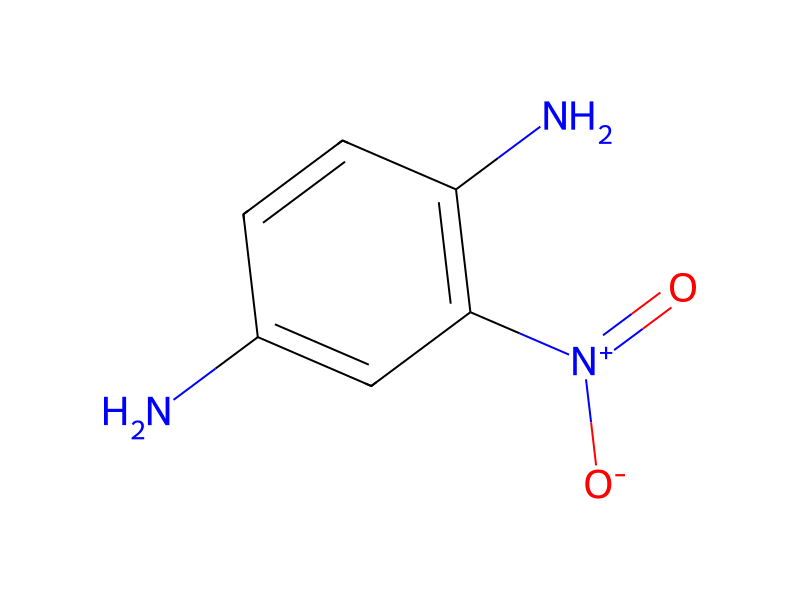
2-ニトロ-1,4-フェニレンジアミン

2-Nitro-4-phenylenediamine

HCID 4338370
ノートを作成反応を作成見積依頼を出す
印刷プレビュー

データを補完しています。しばらくしてからページを更新すると最新の内容を表示できます
基本情報概要名称と識別子物性安全と法規制化学と産業関連反応化合物ノート
部分構造検索類似構造を探す

基本情報

CAS
183870-67-9
標準SMILES
Nc1ccc(N)c([N+](=O)[O-])c1
InChIKey
HVHNMNGARPCGGD-UHFFFAOYSA-N
分子式
C6H7N3O2
平均分子量
153.14 g/mol
単同位体質量
153.05382646

概要

Almost black needles with dark-green luster or black powder. (NTP, 1992)

名称と識別子

優先名称
2-Nitro-4-phenylenediamine
IUPAC
2-nitrobenzene-1,4-diamine
現地名
2-ニトロ-1,4-フェニレンジアミン
英語名
1,4-Diamino-2-nitrobenzene
分子式
C6H7N3O2
分子量
153.14

名称と別名

2-Nitro-4-phenylenediamineRefChem:887005307-14-22-Nitro-1,4-phenylenediamine2-nitrobenzene-1,4-diamine2-NITRO-P-PHENYLENEDIAMINE1,4-Diamino-2-nitrobenzene1,4-Benzenediamine, 2-nitro-2,5-Diaminonitrobenzene2-Nitro-1,4-benzenediamineo-Nitro-p-phenylenediamineDurafur Brown
名称をさらに表示
2-ニトロ-1,4-フェニレンジアミン2-ニトロ-1,4-ベンゼンジアミン2-ニトロ-1,4-ジアミノベンゼンズラフルブラウン2R1,4-ジアミノ-2-ニトロベンゼンフォウラミン2R2-ニトロ-p-フェニレンジアミン2,5-ジアミノ-1-ニトロベンゼン2-ニトロベンゼン-1,4-ジアミンウルソールブラウンRRC.I.オキシデーションベース22デュラフルブラウン2RウルソルブラウンRR2ニトロpフェニレンジアミンジアミノ ニトロベンゼン2‐ニトロ‐1,4‐フェニレンジアミン2NDBdyegsDye GSci76070Rodol 2R
Fouramine 2RUrsol Brown RRZoba Brown RR2-NPPDDurafur Brown 2R4-Amino-2-nitroanilineFourrine 36Nitro-p-phenylenediamine

データベース識別子

CAS
183870-67-9、5307-14-2
PubChem CID
4338370
DTXSID
DTXSID4020957
ChEMBL
CHEMBL353971
ChEBI
CHEBI:76394
UNII
PV83F3C01Q
EC Number
226-164-5
Nikkaji
J3.720F

物性

構造計算による物性補完中

XLogP
0.5
極性表面積
97.9 Ų
水素結合供与体数
2
水素結合受容体数
4
回転可能結合数
0
重原子数
11
形式電荷
0
複雑度
156

実験および物理化学的性質

Chemical ClassesNitrogen Compounds -> Nitroanilines
Cosmetics · 2 件

Cosmetic ingredients (2-Nitro-p-Phenylenediamine) -> CIR (Cosmetic Ingredient Review)

Hair dyeing

LogP · 3 件

log Kow = 0.53

3.7

0.53

Color/FormAlmost black needles with dark-green luster
Solubility · 3 件

less than 1 mg/mL at 72 °F (NTP, 1992)

Slightly sol in water (0.18% w/w); ethanol, polar organic compounds and benzene; soluble in acetone and diethyl ether

Solubility in water, g/100ml: 0.18

Melting Point · 3 件

279 °F (NTP, 1992)

140 °C

137 °C

Vapor Pressure0.000056 [mmHg]
Physical Description · 3 件

Almost black needles with dark-green luster or black powder. (NTP, 1992)

Almost black needles with dark-green luster or black powder; [CAMEO]

RED-TO-BROWN CRYSTALLINE POWDER.

安全と法規制

安全情報は参考情報です。供給元の安全データシート(SDS)、適用法令、専門家による評価に代わるものではありません。

GHS分類

GHS Classification · 6 件

This chemical does not meet GHS hazard criteria for 1.3% (1 of 75) of reports.

Warning

H315 (17.3%): Causes skin irritation [Warning Skin corrosion/irritation]

P261, P264, P264+P265, P271, P272, P280, P302+P352, P304+P340, P305+P351+P338, P319, P321, P332+P317, P333+P317, P337+P317, P362+P364, P403+P233, P405, and P501 (click each P-code to see the statement)

Aggregated GHS information provided per 75 reports by companies from 11 notifications to the ECHA C&L Inventory. Each notification may be associated with multiple companies.

Warning

危険有害性情報

Regulatory Information · 3 件

Chemical: 1,4-Benzenediamine, 2-nitro-

Status: Cease Manufacture Update: 30-09-2016 https://echa.europa.eu/registration-dossier/-/registered-dossier/17405

2-Nitro-1,4-phenylenediamine: Does not have an individual approval but may be used under an appropriate group standard

Other Safety InformationPEC / SN / Other assessments - Common skin sensitisers—hazard classification: Health
DOT LabelPoison
Fire Hazards · 2 件

Flash point data for this chemical are not available; however, it is probably combustible. (NTP, 1992)

Combustible. Gives off irritating or toxic fumes (or gases) in a fire.

Health HazardsSYMPTOMS: Symptoms of exposure to this compound may include irritation.
Hazards SummaryAllergic contact dermatitis reported in hairdressers; [Kanerva, p. 1819] May cause skin sensitization; [ICSC] Danger of skin sensitization; [MAK]
Reactive GroupNitro, Nitroso, Nitrate, and Nitrite Compounds, Organic

化学と産業

薬理情報

Metabolism/Metabolites · 2 件

Pairs of male and female rats were intubated or injected intraperitoneally with 0.5 mL of /2-nitro-p-phenylenediamine/ (2NPPD) (14C) in 5 percent Tween 80. ... There were six metabolites and a trace of unchanged 2NPPD in the urine; the metabolites were acetylated 2NPPD, sulfite and/or glucuronide conjugates of 2NPPD and of acetylated 2NPPD, and two conjugates with sulfur-containing amino acids. Similar metabolites were found in the feces.

... In human and rat skin, 2-nitro-p-phenylenediamine (2NPPD) was metabolized to triaminobenzene and N4-acetyl-2NPPD. 2NPPD was also metabolized to a sulfated 2NPPD metabolite in rat skin, but not in human skin. 2NPPD was extensively metabolized in both human and rat skin with ethanol application; metabolism was not as extensive with a semipermanent /hair dye/ formulation application. In rat intestinal tissue, 62% of 2NPPD was metabolized upon absorption to triaminobenzene and N4-acetyl-2NPPD. Differences in the metabolic profiles (proportion of each metabolite formed) were found between the skin and intestinal tissue. These results suggest that 2NPPD is rapidly absorbed and extensively metabolized in both skin and intestinal tissue. The extent of metabolism and the metabolic profile were found to be species-, tissue-, and dosing vehicle-dependent. ...

Absorption, Distribution and Excretion · 4 件

/In an/ ... experiment conducted with groups of 2 to 3 rats, each rat was treated with 200 uL of 50 % hair colorant base containing 0.025 to 0.48 % /2-nitro-p-phenylenediamine/ (2NPPD) (14C) on 10 sq cm of skin for five minutes. The base was rinsed off, and a 48-hour nonocclusive patch was applied. Skin penetration increased with increasing 2NPPD concentration and was proportional to 2NPPD concentration; it was 0.01 ug/sq cm with 0.025 % 2NPPD and 3.2% with 0.48 % 2NPPD.

Pairs of male and female rats were intubated or injected intraperitoneally with 0.5 mL of /2-nitro-p-phenylenediamine/ (2NPPD) (14C) in 5 percent Tween 80. Expired air was assayed for radioactivity for 24 hours, and urine and feces were assayed. No radioactivity was in expired air. At 3 days, 1 to 2 percent of the applied radioactivity was in the carcass. The rate of excretion was rapid; 85 to 90 percent of the applied radioactivity was recovered in the urine and the feces within 24 hours. Over 3 days, 48 to 68 percent was recovered in the feces and 27 to 41 percent in the urine. There were six metabolites and a trace of unchanged 2NPPD in the urine; the metabolites were acetylated 2NPPD, sulfite and/or glucuronide conjugates of 2NPPD and of acetylated 2NPPD, and two conjugates with sulfur-containing amino acids. Similar metabolites were found in the feces.

関連反応

30 件

反応記録を作成
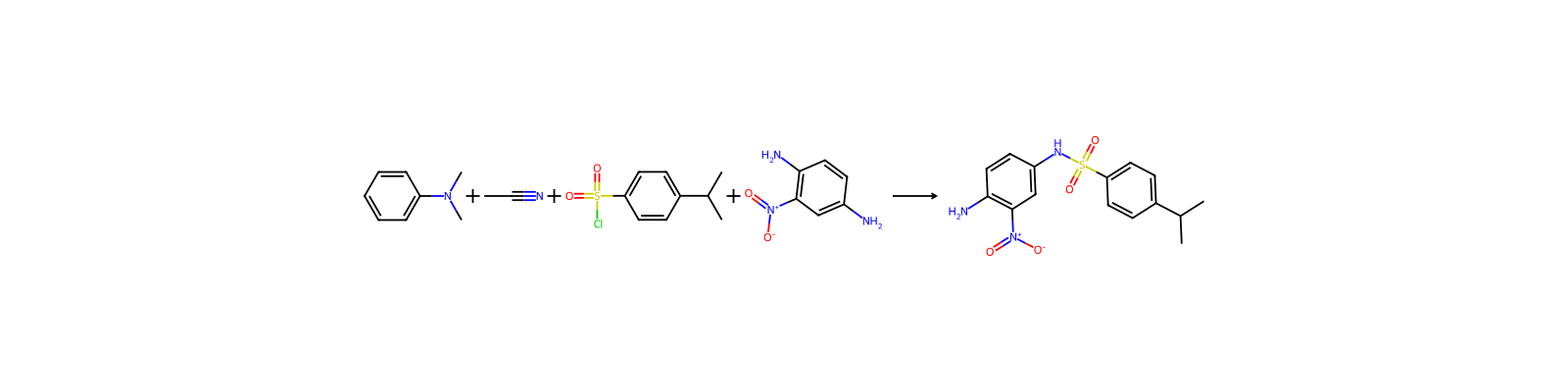
HRID 92524 の反応式
HRID 92524反応物としてTraining data from https://doi.org/10.1039/C8SC04228D (2/10)
HRID 115065 の反応式
HRID 115065反応物としてTraining data from https://doi.org/10.1039/C8SC04228D (2/10)
HRID 162742 の反応式
HRID 162742反応物としてTraining data from https://doi.org/10.1039/C8SC04228D (9/10)
HRID 183361 の反応式
HRID 183361反応物としてTraining data from https://doi.org/10.1039/C8SC04228D (6/10)
HRID 184708 の反応式
HRID 184708反応物としてTraining data from https://doi.org/10.1039/C8SC04228D (6/10)
HRID 306274 の反応式
HRID 306274反応物としてTraining data from https://doi.org/10.1039/C8SC04228D (8/10)
HRID 412699 の反応式
HRID 412699反応物としてuspto-grants-2003_05
HRID 450723 の反応式
HRID 450723反応物としてuspto-grants-2013_07
1 / 4 ページ

化合物ノート

読み込み中…

このページの内容基本情報概要名称と識別子物性安全と法規制化学と産業関連反応化合物ノート
その他の操作
ノートを作成反応を作成見積依頼を出す

物理化学的性質

融点
135 · 135-138 °C (lit.)
沸点
276.04 °C · 276.04°C (rough estimate)
比重(密度)
1.3682 · 1.3682 (rough estimate)
屈折率
1.65 · 1.6500 (estimate)
貯蔵温度
Keep in dark place,Inert atmosphere,Room temperature
溶解性
0.2 g/リットル · 0.2g/リットル
外見
粉
酸解離定数(Pka)
4.36 · 4.36±0.10(Predicted)
色
ブラウンからブラック
PH
7 · 7 (H2O)(aqueous suspension)
水溶解度
0.1 g/100 · <0.1 g/100 mL で 22 ºC
BRN
2210195 · 2210195
Henry's Law Constant
1.7 · 1.7×105 mol/(m3Pa) at 25℃, HSDB (2015)
安定性
安定。強力な酸化剤とは相容れない。
化粧品成分の機能
ヘアカラーリング
InChI
1S/C6H7N3O2/c7-4-1-2-5(8)6(3-4)9(10)11/h1-3H,7-8H2
InChIKey
HVHNMNGARPCGGD-UHFFFAOYSA-N
SMILES
Nc1ccc(N)c(c1)[N+]([O-])=O
LogP
0.53 · 0.53
CAS データベース
5307 · 5307-14-2(CAS DataBase Reference)
NISTの化学物質情報
1 · 1,4-Benzenediamine, 2-nitro-(5307-14-2)
EPAの化学物質情報
2 · 2-Nitro-p-phenylenediamine (5307-14-2)

化学的性質

化学的特性Dark red crystal Powder

Special Reports · 2 件

2-Nitro-p-phenylenediamine. a component of both semipermanent and permanent hair dye formulations, was selected for bioassay by the National Cancer Institute because of the increased incidence of bladder cancer among dye manufacturing industry workers. Aromatic amines are one of several classes of organic chemicals thought to contribute to the increased cancer risk in this industry. The widespread exposure to 2-nitro-p-phenylenediamine among the general population, and the possibility of an increased cancer risk among hairdressers were additional factors in the selection of this compound for testing. A bioassay for the possible carcinogenicity of 2-nitro-p-phenylenediamine was conducted using Fischer 344 rats and B6C3F1 mice. ... Under the conditions of this bioassay, dietary administration of 2-nitro-p-phenylenediamine was carcinogenic to female B6C3F1 mice, causing an increased incidence of hepatocellular neoplasms, primarily hepatocellular adenomas. There was no convincing evidence for the carcinogenicity of the compound in Fischer 344 rats or in male B6C3F1 mice.[DHEW/NCI; Bioassay of 2-Nitro-p-phenylenediamine for Possible Carcinogenicity (1979) Technical Rpt Series No. 169 DHEW Pub No. (NIH) 79-1725]

A safety assessment of 2-nitro-p-phenylenediamine and 4-nitro-o-phenylenediamine was published in 1985 with the conclusion "for those persons not sensitized, the Expert Panel Concludes that 2-nitro-p-phenylenediamine and 4-nitro-o-phenylenediamine are safe as hair dye ingredients at the current concentration of use" ... Studies available since that safety assessment was completed, along with updated information regarding uses and use concentrations, were considered by the CIR Expert Panel. The Panel determined to not reopen this safety assessment.[Cosmetic Ingredient Review; 2-Nitro-p-Phenylenediamine and 4-Nitro-o-Phenylenediamine. JACT 4(3): 161-202, 1985; Re-Review: International Journal of Toxicology. 25(S2), 2006]

TSCA Requirements · 1 件

Pursuant to section 8(d) of TSCA, EPA promulgated a model Health and Safety Data Reporting Rule. The section 8(d) model rule requires manufacturers, importers, and processors of listed chemical substances and mixtures to submit to EPA copies and lists of unpublished health and safety studies. 1,4-Benzenediamine, 2-nitro- is included on this list. Effective date 4/29/83; Sunset date 4/29/93.

Reactivity Profile2-NITRO-P-PHENYLENEDIAMINE is incompatible with strong oxidizing agents. (NTP, 1992)
Chemical DangersDecomposes on burning. This produces toxic fumes including nitrogen oxides. Reacts with strong oxidants.
Air and Water ReactionsThis chemical may be sensitive to prolonged exposure to light and air. Insoluble in water.

安全と保護具

Fire Fighting · 2 件

Fires involving this material can be controlled with a dry chemical, carbon dioxide or Halon extinguisher. A water spray may also be used. (NTP, 1992)

Use water spray, powder.

First Aid Measures · 4 件

Fresh air, rest.

Remove contaminated clothes. Rinse skin with plenty of water or shower.

First rinse with plenty of water for several minutes (remove contact lenses if easily possible), then refer for medical attention.

Rinse mouth.

First Aid · 1 件

EYES: First check the victim for contact lenses and remove if present. Flush victim's eyes with water or normal saline solution for 20 to 30 minutes while simultaneously calling a hospital or poison control center. Do not put any ointments, oils, or medication in the victim's eyes without specific instructions from a physician. IMMEDIATELY transport the victim after flushing eyes to a hospital even if no symptoms (such as redness or irritation) develop.

Safe StorageSeparated from strong oxidants.
Nonfire Spill Response · 1 件

SMALL SPILLS AND LEAKAGE: If a spill of this chemical occurs, FIRST REMOVE ALL SOURCES OF IGNITION, then you should dampen the solid spill material with acetone and transfer the dampened material to a suitable container. Use absorbent paper dampened with acetone to pick up any remaining material. Seal your contaminated clothing and the absorbent paper in a vapor-tight plastic bag for eventual disposal. Solvent wash all contaminated surfaces with acetone followed by washing with a soap and water solution. Do not reenter the contaminated area until the Safety Officer (or other responsible person) has verified that the area has been properly cleaned.

Disposal Methods · 1 件

SRP: The most favorable course of action is to use an alternative chemical product with less inherent propensity for occupational exposure or environmental contamination. Recycle any unused portion of the material for its approved use or return it to the manufacturer or supplier. Ultimate disposal of the chemical must consider: the material's impact on air quality; potential migration in soil or water; effects on animal, aquatic, and plant life; and conformance with environmental and public health regulations.

Spillage Disposal · 1 件

Personal protection: particulate filter respirator adapted to the airborne concentration of the substance. Sweep spilled substance into covered containers. If appropriate, moisten first to prevent dusting. Do NOT let this chemical enter the environment.

Isolation and EvacuationExcerpt from ERG Guide 153 [Substances - Toxic and/or Corrosive (Combustible)]:
Eye PreventionWear safety goggles.
Fire PreventionNO open flames.
Inhalation RiskNo indication can be given about the rate at which a harmful concentration of this substance in the air is reached on evaporation at 20 °C.
Skin PreventionProtective gloves. Protective clothing.

毒性情報

Environmental Fate · 3 件

TERRESTRIAL FATE: Based on a classification scheme(1), an estimated Koc value of 46(SRC), determined from a log Kow of 0.53(2) and a regression-derived equation(3), indicates that 2-nitro-p-phenylenediamine is expected to have very high mobility in soil(SRC). However, aromatic amines are expected to bind strongly to humus or organic matter in soils due to the high reactivity of the aromatic amino group(4), suggesting that mobility may be much lower in some soils(SRC). Volatilization of 2-nitro-p-phenylenediamine from moist soil surfaces is not expected to be an important fate process(SRC) given an estimated Henry's Law constant of 5.8X10⁻¹¹ atm-cu m/mole(SRC), using a fragment constant estimation method(5). 2-Nitro-p-phenylenediamine is not expected to volatilize from dry soil surfaces(SRC) based upon an estimated vapor pressure of 5.6X10⁻⁵ mm Hg(SRC), determined from a fragment constant method(6). Information is not available regarding the biodegradation potential of 2-nitro-p-phenylenediamine; however, 80% percent of p-phenylenediamine was removed over 120 hours based on chemical oxygen demand measurements and using an activated sludge inoculum(7).

AQUATIC FATE: Based on a classification scheme(1), an estimated Koc value of 46(SRC), determined from a log Kow of 0.53(2) and a regression-derived equation(3), indicates that 2-nitro-p-phenylenediamine is not expected to adsorb to suspended solids and sediment(SRC). 2-Nitro-p-phenylenediamine may bind strongly to organic matter as aromatic amines are highly reactive with an affinity for organic materials(4). Volatilization from water surfaces is not expected(3) based upon an estimated Henry's Law constant of 5.8X10⁻¹¹ atm-cu m/mole(SRC), developed using a fragment constant estimation method(5). According to a classification scheme(6), an estimated BCF of 3(SRC), from its log Kow(2) and a regression-derived equation(7), suggests the potential for bioconcentration in aquatic organisms is low(SRC). 2-Nitro-p-phenylenediamine absorbs at a wavelength of 441 nm(8) and therefore may be susceptible to direct photolysis by sunlight(SRC). Information is not available regarding the biodegradation potential of 2-nitro-p-phenylenediamine; however, 80% percent of p-phenylenediamine was removed over 120 hours based on chemical oxygen demand measurements and using an activated sludge inoculum(9).

ATMOSPHERIC FATE: According to a model of gas/particle partitioning of semivolatile organic compounds in the atmosphere(1), 2-nitro-p-phenylenediamine, which has an estimated vapor pressure of 5.6X10⁻⁵ mm Hg at 25 °C(SRC), determined from a fragment constant method(2), will exist in both the vapor and particulate phases in the ambient atmosphere. Vapor-phase 2-nitro-p-phenylenediamine is degraded in the atmosphere by reaction with photochemically-produced hydroxyl radicals(SRC); the half-life for this reaction in air is estimated to be 17 hours(SRC), calculated from its rate constant of 2.2X10⁻¹¹ cu cm/molecule-sec at 25 °C(SRC) that was derived using a structure estimation method(3). Particulate-phase 2-nitro-p-phenylenediamine may be removed from the air by wet or dry deposition(SRC). 2-Nitro-p-phenylenediamine absorbs at wavelengths of 441 nm(4) and therefore may be susceptible to direct photolysis by sunlight(SRC).

Adverse EffectsSkin Sensitizer - An agent that can induce an allergic reaction in the skin.
Exposure RoutesThe substance can be absorbed into the body through the skin.
Toxicity SummarySafe in the present practices of use and concentration. Ingredient, concentration, and use information are available in documents discoverable at https://cir-reports.cir-safety.org
Ongoing Test Status · 1 件

The following link will take the user to the National Toxicology Program (NTP) Test Agent Search Results page, which tabulates all of the "Standard Toxicology & Carcinogenesis Studies", "Developmental Studies", and "Genetic Toxicity Studies" performed with this chemical. Clicking on the "Testing Status" link will take the user to the status (i.e., in review, in progress, in preparation, on test, completed, etc.) and results of all the studies that the NTP has done on this chemical. [http://ntp-apps.niehs.nih.gov/ntp_tox/index.cfm?fuseaction=ntpsearch.searchresults&searchterm=5307-14-2]

ICSC Environmental DataThe substance is harmful to aquatic organisms.
Medical SurveillanceRoutine checking of lips, tongue and nail beds of exposed personnel for signs of cyanosis. /Protect/ from exposure those individuals with anemia, cardiovascular or pulmonary diseases.
Soil Adsorption/Mobility · 1 件

The Koc of 2-nitro-p-phenylenediamine is estimated as 46(SRC), using a log Kow of 0.53(1) and a regression-derived equation(2). According to a classification scheme(3), this estimated Koc value suggests that 2-nitro-p-phenylenediamine is expected to have very high mobility in soil. However, anilines (aromatic amines) are expected to bind strongly to humus or organic matter in soils due to the high reactivity of the aromatic amino group(4), suggesting that mobility may be much lower in some soils(SRC).

Natural Pollution Sources...is not known to occur as natural product.
Human Toxicity Excerpts · 5 件

/HUMAN EXPOSURE STUDIES/ Thirty-nine hairdressers were patch tested for 24 hours with 2-nitro-p-phenylenediamine (2NPPD). Thirty-two of the hairdressers had no history of allergic contact dermatitis from p-phenylenediamine, and none of these 32 had a positive reaction to 2NPPD. One of seven hairdressers who had experienced strongly positive reactions to p-phenylenediamine was positive for 2NPPD. The researchers suggested that this may have been a cross reaction.

/CASE REPORTS/ A case has been described in the literature in which a dental hygienist developed dermatitis on the skin of her left forearm where it came into frequent contact with the hair of patients. A patch test with p-phenylenediamine mix was negative at 48 and 96 hours, and, with 2% 2-nitro-p-phenylenediamine, was strongly positive at 48 hours.

/GENOTOXICITY/ At 50-100 ug/mL, 2-nitro-p-phenylenediamine induced chromosome & chromatid gaps & breaks in human peripheral blood lymphocytes.

/GENOTOXICITY/ 2-Nitro-p-phenylenediamie... was active in inducing unscheduled DNA synthesis in HELA human cervical cancer cells.

For more Human Toxicity Excerpts (Complete) data for 2-NITRO-P-PHENYLENEDIAMINE (6 total), please visit the HSDB record page.

Artificial Pollution Sources2-Nitro-p-phenylenediamine's production and subsequent use in the production of dyes for semi-permanant and permanant hair coloring and dyeing of fur(1) may result in its release to the environment through various waste streams(SRC).
Environmental Biodegradation · 1 件

AEROBIC: Information is not available regarding the biodegradation potential of 2-nitro-p-phenylenediamine; however, 80% percent of p-phenylenediamine was removed over 120 hours based on chemical oxygen demand measurements and using an activated sludge inoculum(1).

法規制情報

TSCA Requirements · 1 件

Pursuant to section 8(d) of TSCA, EPA promulgated a model Health and Safety Data Reporting Rule. The section 8(d) model rule requires manufacturers, importers, and processors of listed chemical substances and mixtures to submit to EPA copies and lists of unpublished health and safety studies. 1,4-Benzenediamine, 2-nitro- is included on this list. Effective date 4/29/83; Sunset date 4/29/93.

安全データ

wgk
2
tsca
TSCA listed
rtecs
ST3000000
ridadr
3143
hs_code
29215119
risk_code
43-68
化審法
(3)-402
消防法
危-5-II
hazard_code
Xi,Xn
safety_code
36/37-45
Hazard Classifications
Skin Sens. 1
ストレージクラス
11 - Combustible Solids
有毒物質データの
5307-14-2(Hazardous Substances Data)

/2-nitro-p-phenylenediamine/ (2NPPD) (14C) was administered intraperitoneally in a dose of 2.6 mg/kg to rats ... and excretion was monitored. Within 24 hours, almost 92 percent of the radioactivity was excreted; 37.4 percent was in the urine and 54.3 percent was in the feces. After 4 days, 96 percent of the radioactivity had been excreted. ...

... In vitro studies /were conducted/ to measure absorption and metabolism of 2-nitro-p-phenylenediamine (2NPPD) in human and fuzzy rat skin and rat jejunal tissue. ... In human skin, the percentages of total applied dose absorbed (receptor fluid + skin) over 24 hr were 9.2 +/- 5.7 (mean +/- SD) and 9.5 +/- 3.2 for ... ethanol and semipermanent /hair dye/ vehicles, respectively, with approximately 3% remaining in skin. In rat skin, the percentages of total applied dose absorbed over 24 hr were 9.3 +/- 1.2 (mean +/- SE), 6.9 +/- 1.2, and 4.2 +/- 0.1 for the ethanol, semipermanent, and permanent formulation vehicles, respectively, with approximately 3% remaining in skin. In rat intestinal tissue, the percentage of total applied dose absorbed over 24 hr was 10.9 +/- 1.2, with approximately 5% remaining in the tissue. ...

用途と製造

Uses · 5 件

CIR ingredient: 2-Nitro-p-Phenylenediamine

Used as a hair dye; [Kanerva, p. 1819]

Dressing Hair [Category: Other]

In dyeing furs brown and reddish brown

Dye intermediate in semi-permanent and permanent hair dye formulations.

Impurities · 2 件

AVAIL IN JAPAN WITH MIN PURITY OF 99% & CONTAINS NITROAMINOACETANILIDE ISOMERS AS IMPURITIES.

2-Nitro-p-phenylenediamine is available commercially in purities ranging from 95 to 100%, with 4-amino-3-nitroacetanilide as a possible impurity.

U.S. Imports · 2 件

(1976) 3.00X10+5 GRAMS (PRINCPL CUSTMS DISTS)

(1979) 4.53X10+5 GRAMS (PRINCPL CUSTMS DISTS)

U.S. ProductionProduction volumes for non-confidential chemicals reported under the Inventory Update Rule. [Table#4815]
Methods of Manufacturing · 1 件

FIRST PREPD BY HYDROLYSIS OF 1,4-DIAMINO-5-ACETYL-4-NITROBENZENE... A SIMILAR METHOD IS USED COMMERCIALLY IN JAPAN, WHERE 1,4-DIAMINO-2-NITROBENZENE IS PREPD BY ACETYLATING PARA-PHENYLENEDIAMINE...WITH ACETIC ANHYDRIDE FOLLOWED BY NITRATION & HYDROLYSIS.

Formulations/Preparations · 4 件

...AVAIL IN US AS COMMERCIAL GRADE WITH FOLLOWING TYPICAL SPECIFICATIONS: ASSAY, 97% MIN; MELTING RANGE, 135-138 °C; LOSS ON DRYING, 1.0% MAX; IRON CONTENT, 100 MG/KG MAX; RESIDUE ON IGNITION, 0.3%.

2-Nitro-p-phenylenediamine is available commercially in purities ranging from 95 to 100%, with 4-amino-3-nitroacetanilide as a possible impurity.

2-Nitro-p-phenylenediamine has the following specifications: ash, 0.1% (max); iron, 40 ppm (max); lead, 5 ppm (max); and arsenic, 2ppm(max).

IT HAS BEEN USED IN /HAIR DYES/ DARK-BROWN (@ LEVELS OF 0.1%), MEDIUM-BROWN (0.15%), MEDIUM-RED (2.5%) & ASH-BLOND (0.065%) DYE FORMULATIONS. IT CAN ALSO BE USED IN BLEACH-TONER FORMULATIONS FOR GOLDEN-BLOND (0.008%) & RED-BLOND (0.02%) SHADES.

Household ProductsInformation on 1 consumer products that contain 2-Nitro-p-phenylenediamine in the following categories is provided:
Use ClassificationCosmetics -> Hair dyeing
General Manufacturing Information1,4-Benzenediamine, 2-nitro-: ACTIVE
応用分野 · 4 件

用途有機合成原料。

説明o-Nitro-paraphenylenediamine (ONPD) is a hair dye and a sensitizer in hairdressers.

使用This compound is used in hair and fur dyes.

一般的な説明Almost black needles with dark-green luster or black powder.

上流・下流製品情報

下流製品

4-(4-Fluorobenzylamino)-1,2-phenylenediamine5-アミノ-1,3-ジメチル-1,3-ジヒドロ-2H-ベンズイミダゾール-2-オン
補足説明 · 2 件

定義本品は、次の化学式で表される芳香族アミン誘導体である。

定義ChEBI: A primary amino compound that is p-phenylenediamine in which one of the hydrogens attached to the benzene ring is replaced by a nitro group. It is a cosmetic hair dye intermediate that is used in permanent hair colouring products (diluted 1:1 ith an oxidising agent prior to application).