

基本情報
- 標準SMILES
C[C@H](Cn1cnc2c(N)ncnc21)OCP(=O)(O)O- InChIKey
SGOIRFVFHAKUTI-ZCFIWIBFSA-N- 分子式
- C9H14N5O4P
- 平均分子量
- 287.21 g/mol
- 単同位体質量
- 287.07834056
概要
Tenofovir (anhydrous) is a member of the class of phosphonic acids that is methylphosphonic acid in which one of the methyl hydrogens is replaced by a [(2R)-1-(6-amino-9H-purin-9-yl)propan-2-yl]oxy group. An inhibitor of HIV-1 reverse transcriptase, the bis(isopropyloxycarbonyloxymethyl) ester (disoproxil ester) prodrug is used as the fumaric acid salt in combination therapy for the treatment of HIV infection. It has a role as an antiviral drug, a drug metabolite and a HIV-1 reverse transcriptase inhibitor. It is a member of phosphonic acids and a nucleoside analogue. It is a conjugate acid of a tenofovir(1-).
名称と識別子
- 優先名称
- Tenofovir
- IUPAC
- [(2R)-1-(6-aminopurin-9-yl)propan-2-yl]oxymethylphosphonic acid
- 現地名
- テノホビル水和物
- 英語名
- Tenofovir
- 分子式
- C9H14N5O4P
- 分子量
- 287.21
名称と別名
Tenofovir147127-20-6(R)-9-(2-Phosphonomethoxypropyl)adenine(R)-PMPAtenofovir (anhydrous)Tenofovir anhydrousGS-1275anhydrous tenofovirtenofovir (anh.)GS-1278CHEBI:63625({[(2R)-1-(6-amino-9H-purin-9-yl)propan-2-yl]oxy}methyl)phosphonic acid
名称をさらに表示
テノホビル水和物(R)-[[2-(6-アミノ-9H-プリン-9-イル)-1-メチルエトキシ]メチル]ホスホン酸水和物テノホビルテノフォビル({[(2R)-1-(6-アミノ-9H-プリン-9-イル)プロパン-2-イル]オキシ}メチル)ホスホン酸テノゼット[[(R)-2-(6-アミノ-9H-プリン-9-イル)-1-メチルエトキシ]メチル]ホスホン酸9-[(R)-2-(ホスホノメトキシ)プロピル]-9H-プリン-6-アミン[[(1R)-1-メチル-2-(6-アミノ-9H-プリン-9-イル)エトキシ]メチル]ホスホン酸[(R)-1-メチル-2-(6-アミノ-9H-プリン-9-イル)エトキシ]メチルホスホン酸テネホビル[[[(R)-1-(6-アミノ-9H-プリン-9-イル)プロパン-2-イル]オキシ]メチル]ホスホン酸(R)-9-(2-PHOSPHONYLMETHOXYPROPYL)-ADENINEVireadApropovir9-PmpaGS 1275Tenofovienofovir
W4HFE001U5[(2R)-1-(6-aminopurin-9-yl)propan-2-yl]oxymethylphosphonic acid(R)-9-(Phosphonomethoxypropyl)adenine(R)-9-(2-Phosphonylmethoxypropyl)adeninePMP-ADTXSID9040132(((1R)-2-(6-Amino-9H-purin-9-yl)-1-methylethoxy)methyl)phosphonic acidPhosphonic acid, (((1R)-2-(6-amino-9H-purin-9-yl)-1-methylethoxy)methyl)-
データベース識別子
- CAS
147127-20-6- PubChem CID
- 464205
- DTXSID
DTXSID9040132- ChEMBL
CHEMBL3989702、CHEMBL483- ChEBI
CHEBI:63625- UNII
- W4HFE001U5
- EC Number
- 604-571-2
- Nikkaji
- J540.142I
物性
構造計算による物性
- XLogP
- -1.6
- 極性表面積
- 136 Ų
- 水素結合供与体数
- 3
- 水素結合受容体数
- 8
- 回転可能結合数
- 5
- 重原子数
- 19
- 形式電荷
- 0
- 複雑度
- 354
実験および物理化学的性質
Drugs
Pharmaceuticals -> Listed in ZINC15
Pharmaceuticals -> Metabolite of Tenofovir alafenamide, 'Tenofovir disoproxil
LogP-1.6
Solubility1.87e+00 g/L
Human DrugsFDA approved drugs -> Active ingredient
Melting Point276 - 280 °C
Physical DescriptionSolid
Dissociation Constants3.8 and 6.7
物理化学的性質
- 融点
- 276 · 276-280°C
- 比旋光度
- 21 ° · D +21° (c = 1 in 0.1M HCl)
- 沸点
- 616.1 · 616.1±65.0 °C(Predicted)
- 比重(密度)
- 1.79 · 1.79±0.1 g/cm3(Predicted)
- 貯蔵温度
- -20 °C · -20°C
- 溶解性
- 水性酸(控えめ)、DMSO(わずかに、加熱)、水(わずかに、加熱)
- 酸解離定数(Pka)
- 2.36 · 2.36±0.10(Predicted)
- 外見
- 粉
- 色
- 白からベージュ
- 水溶解度
- 13.4 mg/mL · 13.4mg/mL(25℃)
- Merck
- 14 · 14,9146
- InChI
- InChI=1S/C9H14N5O4P/c1-6(18-5-19(15,16)17)2-14-4-13-7-8(10)11-3-12-9(7)14/h3-4,6H,2,5H2,1H3,(H2,10,11,12)(H2,15,16,17)/t6-/m1/s1
- InChIKey
- SGOIRFVFHAKUTI-ZCFIWIBFSA-N
- SMILES
- P(CO[C@H](C)CN1C2C(N=C1)=C(N)N=CN=2)(=O)(O)O
- CAS データベース
- 147127 · 147127-20-6(CAS DataBase Reference)
化学的性質
化学的特性White Crystalline Solid
安全と法規制
GHS分類
GHS Classification
Danger
H318 (100%): Causes serious eye damage [Danger Serious eye damage/eye irritation]
P264+P265, P280, P305+P354+P338, and P317 (click each P-code to see the statement)
Aggregated GHS information provided per 2 reports by companies from 1 notifications to the ECHA C&L Inventory.
危険有害性情報
Regulatory InformationStatus: Active Update: 28-04-2021 https://echa.europa.eu/registration-dossier/-/registered-dossier/10529
Hazard Classes and CategoriesEye Dam. 1 (100%)
毒性情報
Hepatotoxicity
Like all nucleoside analogues used as therapy of hepatitis B, tenofovir can cause transient increases in serum aminotransferases during or after therapy. These abnormalities appear to be due to an exacerbation or flare of the underlying hepatitis B. Three types of flares due to nucleoside analogue therapy have been described: transient flares during initiation of therapy (treatment flares), flares occurring in association with development of antiviral resistance (breakthrough flares) and flares occurring in the few months after stopping therapy (withdrawal flares). Treatment flares generally arise during the first few months of starting therapy, are usually mild, asymptomatic and self-limited and do not require dose modification or interruption of therapy. Breakthrough flares generally follow the development of antiviral resistance and subsequent rise in HBV DNA levels during nucleoside analogue therapy. Breakthrough flares can be symptomatic and severe. Because tenofovir is associated with a very low rate of antiviral resistance (
Drug Induced Liver Injury
Benchmark Dataset for the Liver Toxicity Knowledge Base (LTKB)
tenofovir
Viread®
Antivirals
8
most-DILI-concern
安全データ
- wgk
- WGK 3
- rtecs
- SZ6563600
- hs_code
- 29339900
- ストレージクラス
- 11 - Combustible Solids
化学と産業
薬理情報
Protein BindingTenofovir is minimally bound to plasma proteins and only about 7.2% of the administered dose is found in the bound state.
Pharmacodynamics
Tenofovir has been shown to be highly effective in patients that have never had an antiretroviral therapy and it seemed to have lower toxicity than other antivirals such as [stavudine]. In phase 3 clinical trials, tenofovir presented a similar efficacy than [efavirenz] in treatment-naive HIV patients. In hepatitis B infected patients, after one year of tenofovir treatment, the viral DNA levels were undetectable.
Mechanism of Action
Once tenofovir is activated by a bi-phosphorylation it acts as an antiviral acyclic nucleoside phosphonate. It is a potent inhibitor of the viral reverse transcriptase with an inhibitory constant of approximately 0.022 micromolar. Once activated, tenofovir acts with different mechanisms including the inhibition of viral polymerase causing chain termination and the inhibition of viral synthesis. All these activities are attained by its competition with deoxyadenosine 5'-triphosphate in the generation of new viral DNA. Once tenofovir is incorporated in the chain, it induces a chain termination which in order inhibits viral replication. The safety of tenofovir relies on its low affinity towards the cellular DNA polymerase including the mitochondrial DNA polymerase gamma.
Biological Half-LifeThe reported half-life of tenofovir is of 32 hours.
Metabolism/MetabolitesTenofovir activation is performed by a bi-phosphorylation which in order forms the biologically active compound, tenofovir biphosphate. This metabolic activation has been shown to be performed in hepG2 cells and human hepatocytes.
FDA Pharmacological Classification
W4HFE001U5
TENOFOVIR ANHYDROUS
Established Pharmacologic Class [EPC] - Human Immunodeficiency Virus Nucleoside Analog Reverse Transcriptase Inhibitor
Established Pharmacologic Class [EPC] - Hepatitis B Virus Nucleoside Analog Reverse Transcriptase Inhibitor
Chemical Structure [CS] - Nucleosides
Mechanisms of Action [MoA] - Nucleoside Reverse Transcriptase Inhibitors
MeSH Pharmacological Classification
Agents used in the prophylaxis or therapy of VIRUS DISEASES. Some of the ways they may act include preventing viral replication by inhibiting viral DNA polymerase; binding to specific cell-surface receptors and inhibiting viral penetration or uncoating; inhibiting viral protein synthesis; or blocking late stages of virus assembly.
Inhibitors of reverse transcriptase (RNA-DIRECTED DNA POLYMERASE), an enzyme that synthesizes DNA on an RNA template.
Agents used to treat AIDS and/or stop the spread of the HIV infection. These do not include drugs used to treat symptoms or opportunistic infections associated with AIDS.
Absorption, Distribution and Excretion
Tenofovir as the active moiety presents a very low bioavailability when orally administered. Hence, the administration of this active agent is required to be under its two prodrug forms, [tenofovir disoproxil] and [tenofovir alafenamide]. This reduced absorption is suggested to be related to the presence of two negative charges among its structure. This negative charge limits its cellular penetration, and its passive diffusion across cellular membranes and intestinal mucosa hindering its availability for oral administration. Intravenous tenofovir has been shown to produce a maximum plasma concentration of 2500 ng/ml with an AUC of 4800 ng.h/ml.
Tenofovir is eliminated in the urine by tubular secretion and glomerular filtration. The elimination of this compound is driven by the activity of the human organic anion transporters 1 and 3 and its secretion is mainly ruled by the activity of the multidrug resistance-associated protein 4.
Accumulation of tenofovir in plasma is related to the presence of nephrotoxic effects. It is reported that tenofovir presents a volume of distribution of 0.813 L/kg.
The clearance of tenofovir is highly dependent on the patient renal stage and hence the clearance rate in patients with renal impairment is reported to be of 134 ml/min while in patients with normal function the clearance rate can be of 210 ml/min.
Cellular LocationsCytoplasm
Metabolite PathwaysTenofovir Action Pathway
応用分野
用途DNA ポリメラーゼによる基質 取り組みを競合的に阻害し、DNA 鎖の伸長停 止作用を示します。
用途テノホビル(Tenofovir、テノフォビルとも)は抗ウイルス薬の一つ。ジソプロキシルエステルまたはアラフェナミド(アラニンイソプロピルエステルとのアミド+フェノールとのエステル)のフマル酸塩として販売されている。 HIV感染症やB型肝炎の治療に用いられる。
説明Tenofovir is an analog of adenosine monophosphate that has antiviral activity. It is converted by cellular enzymes to tenofovir diphosphate, an obligate chain terminator that inhibits the activity of HIV reverse transcriptase and hepatitis B virus polymerase. Tenofovir diphosphate is a weak inhibitor of mammalian DNA polymerases α and β and mitochondrial DNA polymerase γ. For in vivo and cell culture use, tenofovir is supplied as a water soluble prodrug in the form of tenofovir disoproxil (fumarate) , which increases the intracellular diphosphorylated compound >1,000-fold above the level attained with unmodified tenofovir.
来歴Tenofovir was developed in the 1980s by Professor Antonín Holý and his team at the Institute of Organic Chemistry and Biochemistry (IOCB Prague) of the Czech Academy of Sciences. Their research focused on the design and synthesis of nucleotide analogs, aiming to develop novel compounds with antiviral activity. As an acyclic nucleotide phosphate analog, tenofovir exhibited broad-spectrum antiviral potential in vitro, but its low oral bioavailability limited its initial development. To overcome this bottleneck, collaboration with Gilead Sciences was crucial, ultimately leading to the successful development of tenofovir disoproxil fumarate (TDF) through a prodrug synthesis strategy. This prodrug was first approved by the FDA in 2001 for the treatment of HIV-1 infection, marking a significant breakthrough in its clinical application. Subsequent research further solidified its position in the treatment of chronic hepatitis B and facilitated the market launch of tenofovir alafenamide (TAF), a prodrug with superior renal and bone safety characteristics.
使用Tenofovir is a drug used for the treatment of chronic heptatitis B as well as prevention and treatment of HIV/AIDS. It is a kind of nucleotide analog, acting as the reverse-transcriptase inhibitor (NtRTI). It inhibits the activity of HIV reverse transcriptase through competing with the natural substrate deoxyadenosine 5’-triphosphate, causing the termination of DNA chain.
上流・下流製品情報
上流原料
下流製品
サプライヤー50 社
国药集团化学试剂有限公司86-21-63210123 · [email protected]
北京华美互利生物化工010-56205725 · [email protected]
梯希爱(上海)化成工业发展有限公司021-67121386 · [email protected]
衢州润东化工有限公司0570-8789886 18892685668 · [email protected]
上海阿拉丁生化科技股份有限公司400-6206333 13167063860 · [email protected]
广州隽沐生物科技股份有限公司020-36607679; 13502246435 · [email protected]
T&W GROUP021-61551611 13296011611 · [email protected]
河北立业化学制品有限公司0310-6697998 13930001710 · [email protected]
上海同昌生物医药科技有限公司+86-21-33282107
中山奕安泰医药科技有限公司760-85282375 15900088539 · [email protected]
LGM Pharma1-(800)-881-8210 · [email protected]
武汉易泰科技有限公司上海分公司18930552037 · [email protected]
宁波亿诺化学品有限公司86-574-27787657 · [email protected]
上海德默医药科技有限公司400-021-7337 2355568890 · [email protected]
安耐吉化学&3A(安徽泽升科技股份有限公司)400-0056266 · [email protected]
成都傲飞生物化学品有限责任公司+86-028-60911900 13540204019 · [email protected]
安庆奇创药业有限公司18061456370
广州市亿邦医药科技有限公司+86 (20) 28996708,29078958,28139708,29076128,28133708,28139728,28139738,28133718,021-31663278,021-31663578,021-60538387
上海瀚鸿科技股份有限公司021-54306202 13764082696 · [email protected]
上海柯维化学技术有限公司021-64609169 18901607656 · [email protected]
China Kouting Group Limited+86 (21) 5811-6473 5811-6475 · [email protected]
上海景颜化工科技有限公司13817811078 · [email protected]
嘉兴市艾森化工有限公司0573-85285100 18627885956 · [email protected]
上海泰坦科技股份有限公司400-6009262 15618770481 · [email protected]
上海诺太医药科技有限公司021-50189163 · [email protected]
MedChemexpress LLC021-58955995 · [email protected]
沧州维智达美制药有限公司13426038769 · [email protected]
上海攀鸿化工科技有限公司021-56491756 13512199871 · [email protected]
武汉丰泰威远科技有限公司027-87465837 19945049750 · [email protected]
孝感深远化工有限公司15527621225; 15527621225 · [email protected]
云南西力生物技术股份有限公司0871-65217109 · [email protected]
山东西亚化学有限公司13355009207 13355009207 · [email protected]
四川库利南科技有限公司400-1166-196 18981987031 · [email protected]
天津希恩思生化科技有限公司400 638 7771 · [email protected]
河南多贝化工有限公司0370-2785118 17550508557 · [email protected]
上海源叶生物科技有限公司13636370518 · [email protected]
山东铭枫医药科技有限公司053155551677 15315114555 · [email protected]
艾科试剂4008-755-333 18080918076 · [email protected]
深圳菲斯生物科技有限公司0755-83725681-603
AdooQ BioScience, LLC+1 (866) 930-6790 · [email protected]
Wuhan NCE Biomedical Co.,Ltd.4000-027-021 |24 +86-13986109188 | +86-15623472865 | +81-08033611988
TOKYO CHEMICAL INDUSTRY CO., LTD.03-36680489 · [email protected]
深圳振强药物研发有限公司0755-66853366 13670046396 · [email protected]
深圳康特腾科技有限公司86-0755-86635001 · [email protected]
越林试剂021-62960152 · [email protected]
上海睿升化工科技有限公司+86-021-50935922
广州爱纯医药科技有限公司020-39119399 18927568969 · [email protected]
南京生利德生物科技有限公司025-57798810 18652991625 · [email protected]
山东博洛达生物科技有限公司0531-68659041 · [email protected]
无锡中坤生化科技有限公司+86 0510-85629785
補足説明
定義ChEBI: A member of the class of phosphonic acids that is methylphosphonic acid in which one of the methyl hydrogens is replaced by a [(2R)-1-(6-amino-9H-purin-9-yl)propan-2-yl]oxy group. An inhibitor of HIV-1 reverse transcriptase, the bis(isopropyloxycarbonyloxy ethyl) ester (disoproxil ester) prodrug is used as the fumaric acid salt in combination therapy for the treatment of HIV infection.
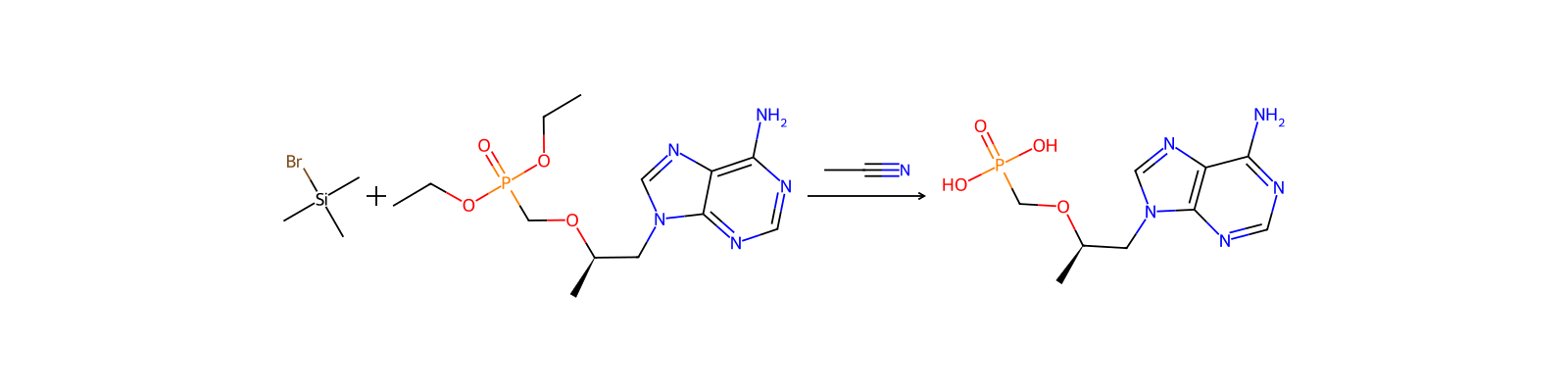
関連反応
8 件




関連ノート
読み込み中…