
HRID 319328反応物として
Phorate
データを補完しています。しばらくしてからページを更新すると最新の内容を表示できます
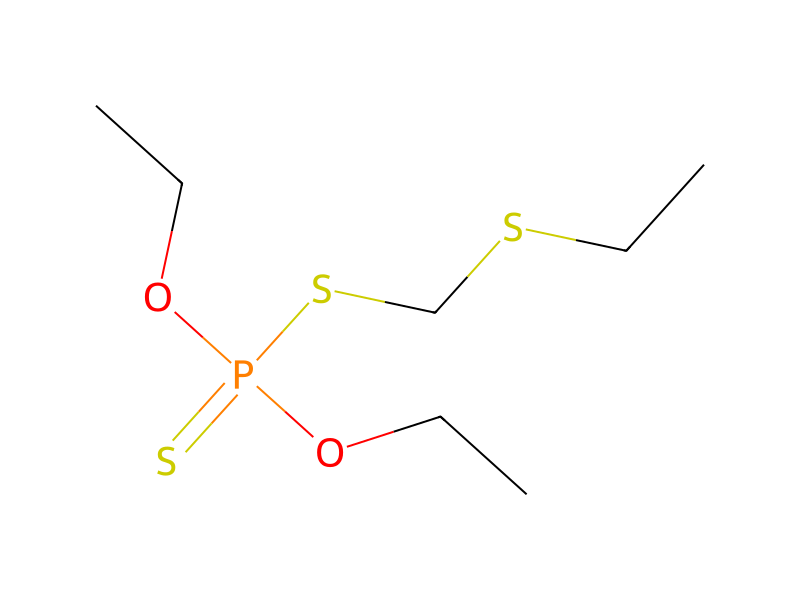
298-02-2CCOP(=S)(OCC)SCSCCBULVZWIRKLYCBC-UHFFFAOYSA-NPhorate is a clear liquid with an objectionable odor. Used as an insecticide and acaricide; it is applied to plants and soil. (EPA, 1998)
Pesticides
Insecticides
Active substance -> EU Pesticides database: Not approved
Pesticides -> Organophosphate Insecticides
Pesticide (Phorate) -> USDA PDB
Pesticide
log Kow = 3.56
3.9
3.24
1.156 at 77 °F (EPA, 1998) - Denser than water; will sink
1.156 @ 25 °C/4 °C
Density 1.167 g/cu cm @ 25 °C /Technical/
Relative density (water = 1): 1.2
1.16 at 77 °F
1.16 @25 °C
0.005 % (NIOSH, 2024)
Soluble in most organic solvents such as acetone.
Miscible with xylene, carbon tetrachloride, dioxane, methyl cellosolve, dibutyl phthalate, vegetable oils
In water, 50 mg/l @ 25 °C
Solubility in water: none
0.005%
安全情報は参考情報です。供給元の安全データシート(SDS)、適用法令、専門家による評価に代わるものではありません。
Danger
H300: Fatal if swallowed [Danger Acute toxicity, oral]
P262, P264, P270, P273, P280, P301+P316, P302+P352, P316, P321, P330, P361+P364, P391, P405, and P501 (click each P-code to see the statement)
Danger
H300+H310+H330 (67.2%): Fatal if swallowed, in contact with skin or if inhaled [Danger Acute toxicity, oral; acute toxicity, dermal; acute toxicity, inhalation]
P260, P262, P264, P270, P271, P273, P280, P284, P301+P316, P302+P352, P304+P340, P316, P320, P321, P330, P361+P364, P391, P403+P233, P405, and P501 (click each P-code to see the statement)
Hazard Traits - Developmental Toxicity; Environmental tox; Neurotoxicity
Regulation (EC) No 1107/2009 (amended)
Phorate is listed in the dataset of EPA Human Health Benchmarks for Pesticides under the Safe Drinking Water Act (40 eCFR 141)
2002/2076
The New Jersey Worker and Community Right to Know Act requires public and private employers to provide information about hazardous substances at their workplaces. (N.J.S.A. 34:5A-1 et. seq.)
Shock can shatter containers, releasing the contents. When heated to decomposition, toxic fumes of sulfur oxides, phosphorus oxides, and nitrogen oxides are emitted. Hydrolyzed in water and alkalies. (EPA, 1998)
Combustible.
This material is one of the more toxic organophosphorus insecticides. It is a cholinesterase inhibitor that acts on the nervous system, and produces toxicity similar to Parathion. The probable oral lethal dose for humans is less than 5 mg/kg, i.e. a taste (less than 7 drops) for a 70 kg (150 lb.) person. (EPA, 1998)
The main feature of the toxic mechanism of organophosphorus pesticides is inhibition of the esterase enzyme activity, in particular of cholinesterase, which plays an important physiological part. Organophosphorus pesticides can also indirectly interact with the biochemical receptors of acetylcholine. /Organophosphorus pesticides/
Organophosphates poison insects and mammals primarily by phosphorylation of the acetylcholinesterase enzyme at nerve endings. ... At sufficient dosage, loss of enzyme function allows accumulation of acetylcholine (the impulse- transmitter substance) at cholinergic neuroeffector junctions (muscarinic effects, and at skeletal myoneural junctions and in autonomic ganglia (nicotinic effects). Organophosphates also impair nerve impulse transmission in the brain ... . /Organophosphate pesticides/
Thimet (32)P in oil was administered orally to male albino rats. ...Hydrolysis products appearing in urine of rats within 2 days were found to consist of o,o-diethyl phosphoric acid (17%); o,o-diethyl phosphorothioic acid (80%); and o,o-diethyl phosphorodithioic acid (3%). Using rat liver preparation, phosphorodithioate sulfoxides and sulfones and phosphorothiolate sulfoxides and sulfones were formed ...<1% of radioactive metabolites appeared as hydrolysis products or unextractable residue from proteins... . After thimet was applied to plants ...four non-hydrolyzed metabolites were identified as phosphorodithioate sulfoxide and sulfone, phoratoxon, phosphorothiolate sulfoxide and sulfone. o,o-Diethyl phosphorothioic and o,o-diethyl phosphoric acid were also found.
The compound is metabolized by plants to very potent anticholinesterase agents, of which both the sulfoxide and the sulfone of both phorate and its oxygen analog have been identified. The anticholinesterase activity of the compounds expressed as pI 50 values are as follows: phorate, 3.17; P-sulfoxide, 3.35; phorate-sulfone, 5.00; oxygen analog (PO) 5.87; PO-sulfoxide, 6.76; PO-sulfone, 7.02. Because of this oxidation by plants and in spite of some inevitable loss of total residue, residues on plants to which phorate had been applied increase in anticholinesterase activity for several days and only then gradually lose activity. Although phorate metabolites could be detected in foliage of 7.4 week old cotton plants grown from treated seed, no metabolites (<0.03 ppm) could be found in the seeds gathered when the plants were 16 weeks old.
298-02-2DTXSID4032459CHEMBL510014CHEBI:38764320 °F (NIOSH, 2024)
160 °C (Open cup)
160 °C o.c.
320 °F (open cup)
(oc) 320 °F
257 to 261 °F at 2 mmHg (EPA, 1998)
75-78 °C @ 0.1 mm Hg; 118-120 °C @ 0.8 mm Hg; 125-127 °C @ 2.0 mm Hg
257-261 °F
290 °C @760 [mm Hg]
-45 °F (EPA, 1998)
<-15 °C
-42.9 °C
-45 °F
-42.9 °C
-45 °F
0.00084 mmHg at 68 °F (EPA, 1998)
0.0008 [mmHg]
85 mPa (6.38X10⁻⁴ mm Hg) @ 25 °C
Vapor pressure, Pa at 20 °C: 0.1
0.00084 mmHg at 68 °F
0.00084 [mm Hg] @25 °C
化学的特性Phorate is a clear mobile liquid with a skunk-like odor
Classified as highly toxic with an LD50 of 1.1 to 3.7 mg/kg in rats, phorate may be used only by certified applicators. [EXTOXNET] The average of two baseline respective cholinesterase activity determinations three days apart, with no exposures to enzyme inhibiting pesticides for at least 30 days, is recommended for each worker prior to exposure to cholinesterase inhibitors because of large inter-individual differences in published baseline values. To be established at least once a year. Removal from workplace exposures is recommended until the cholinesterase activity returns to within 20% of baseline. [TLVs and BEIs]
USEPA; Chemical Profile: Phorate (1985)
Matsumura F, Madhukar BV; Pharmacol Ther 9 (1): 27-49 (1980). Epidemiology information from exposure to insecticides, including phorate is provided.
USEPA/Office of Pesticide Programs; Interim Reregistration Eligibility Decision (IRED) for Phorate. EPA issues an IRED for a pesticide that is undergoing reregistration, requires a reregistration eligibility decision, and also needs a cumulative assessment under FQPA. The IRED, issued after EPA completes the individual pesticide\'s aggregate risk assessment, may include taking risk reduction measures -- for example, reducing risks to workers or eliminating uses that the registrant no longer wishes to maintain -- to gain the benefits of these changes before the final RED can be issued following the Agency\'s consideration of cumulative risks.[Available from, as of July 24, 2003: http://www.epa.gov/pesticides/reregistration/status.htm]
P094; As stipulated in 40 CFR 261.33, when phorate, as a commercial chemical product or manufacturing chemical intermediate or an off-specification commercial chemical product or a manufacturing chemical intermediate, becomes a waste, it must be managed according to federal and/or state hazardous waste regulations. Also defined as a hazardous waste is any container or inner liner used to hold this waste or any residue, contaminated soil, water, or other debris resulting from the cleanup of a spill, into water or on dry land, of this waste. Generators of small quantities of this waste may qualify for partial exclusion from hazardous waste regulations (40 CFR 261.5(e)).
(Non-Specific -- Organophosphorous Pesticide) Wear positive pressure self-contained breathing apparatus. Move container from fire area if you can do it without risk. Fight fire from maximum distance. Dike fire control water for later disposal; do not scatter the material.
Use water spray, foam, powder, carbon dioxide.
Fresh air, rest. Refer for medical attention.
Remove contaminated clothes. Rinse and then wash skin with water and soap. Refer for medical attention .
First rinse with plenty of water for several minutes (remove contact lenses if easily possible), then refer for medical attention.
Rinse mouth. Give one or two glasses of water to drink. Refer for medical attention .
Note: Phorate is a cholinesterase inhibitor.
(General first aid procedures)
Biological Exposure Indices (BEI) [ACGIH] - Acetylcholinesterase activity in red blood cells = 70% of individual's baseline; Butylcholinesterase activity in serum or plasma = 60% of individual's baseline; Sample at end of shift; [TLVs and BEIs]
If material on fire or involved in fire: Do not extinguish fire unless flow can be stopped. Use water in flooding quantities as fog. Solid streams of water may be ineffective. Cool all affected containers with flooding quantities of water. Apply water from as far a distance as possible. Use "alcohol" foam, dry chemical or carbon dioxide. /Organophosphorus pesticides, liquid, flammable, toxic; Organophosphorus pesticides, liquid, toxic/
If material on fire or involved in fire: Use water in flooding quantities as fog. Extinguish fire using agent suitable for type of surrounding fire. (Material itself does not burn or burns with difficulty.) /Organophosphorus pesticides, solid, toxic/
Provision to contain effluent from fire extinguishing. Separated from food and feedstuffs. Keep in a well-ventilated room.
Keep out of reach of domestic animals. Not for use or storage in or around home.
Environmental considerations: Air spill: Apply water spray or mist to knock down vapors. /Organophosphorus pesticides, liquid, flammable, toxic; Organophosphorus pesticides, liquid, toxic; Organophosphorus pesticides, solid, toxic/
Environmental considerations: Water spill: Use natural barriers or oil spill control booms to limit spill travel. Remove trapped material with suction hoses. /Organophosphorus pesticides, liquid, flammable, toxic; Organophosphorus pesticides, liquid, toxic; Organophosphorus pesticides, solid, toxic/
Environmental considerations: Land spill: Dig a pit, pond, lagoon, holding area to contain liquid or solid material. /SRP: If time permits, pits, ponds, lagoons, soak holes, or holding areas should be sealed with an impermeable flexible membrane liner./ Dike surface flow using soil, sand bags, foamed polyurethane, or foamed concrete. Absorb bulk liquid with fly ash, cement powder, or commercial sorbents. /Organophosphorus pesticides, liquid, flammable, toxic; Organophosphorus pesticides, liquid, toxic; Organophosphorus pesticides, solid, toxic/
Collect leaking and spilled liquid in sealable containers as far as possible. Absorb remaining liquid in sand or inert absorbent and remove to safe place. Do NOT let this chemical enter the environment. Gas-tight chemical protection suit including self-contained breathing apparatus.
SRP: The most favorable course of action is to use an alternative chemical product with less inherent propensity for occupational exposure or environmental contamination. Recycle any unused portion of the material for its approved use or return it to the manufacturer or supplier. Ultimate disposal of the chemical must consider: the material's impact on air quality; potential migration in soil or water; effects on animal, aquatic, and plant life; and conformance with environmental and public health regulations.
Generators of waste (equal to or greater than 100 kg/mo) containing this contaminant, EPA hazardous waste number P094, must conform with USEPA regulations in storage, transportation, treatment and disposal of waste.
Potential candidate for liquid injection incineration with a temperature range of 650-1600 °C and residence time of 0.1 to 2 seconds. Also, a candidate for rotary kiln incineration with a temperature range of 820 to 1600 °C with regidence times for liquids and gases: seconds; solids: hours. Also, a candidate for fluidized bed incineration with a temperature range of 450 to 980 °C with residence times for liquids and gases: seconds; solids: longer.
Mix phorate with excess calcium oxide or sodium hydroxide and sand or other adsorbent... . Sodium hydroxide (or sodium carbonate) can also be added to the mixture to help speed the reactions when calcium oxide is used as the main alkali. The amount of calcium oxide or sodium hydroxide to use depends on the amount of pesticide to be disposed of and, to some extent, the concentration of active ingredient in the pesticide and the actual chemical nature of the active ingredient. ...For safety, a preliminary test should be made in which a very small amount of the pesticide and akali are mixed and observed briefly to make sure it does not react too vigorously. Sizable quantities of pesticides can be disposed of in several smaller batches, rather than all at once, for added safety. Recommendable methods: Incineration and hydrolysis. Peer-review: For large amt: Incineration in a unit with effluent gas scrubbing is recommendable. (Peer-review conclusions of an IRPTC expert consultation (May 1985))
Hydrolysis: Alkaline hydrolysis leads to complete degradation. Alkaline salts of O,S-diethylphosphorodithioate, formaldehyde, and ethyl mercaptan are non-toxic. Acid hydrolysis leads to complete degradation. Essentially the same products as alkaline hydrolysis.
Personal protection: gas-tight chemical protection suit including self-contained breathing apparatus. Do NOT let this chemical enter the environment. Collect leaking and spilled liquid in sealable containers as far as possible. Absorb remaining liquid in sand or inert absorbent. Then store and dispose of according to local regulations.
Do not handle broken packages without protective equipment. Wash away any material which may have contacted the body with copious amounts of water, or soap and water. /Organophosphorus pesticide, liquid, not otherwise specified, (compounds and preparations, agricultural insecticides, not elsewhere classified, liquid)/
If material is not on fire and not involved in a fire: Keep sparks, flames, and other sources of ignition away. Keep material out of water sources and sewers. Build dikes to contain flow as necessary. Attempt to stop leak if without hazard. Use water spray to knock-down vapros. /Organophosphorus pesticide, liquid, not otherwise specified, (compounds and preparations, agricultural insecticides, not elsewhere classified, liquid)/
The protective clothing should be kept in separate places where it cannot be contaminated with toxic chemicals. It should be forbidden to keep this clothing in living quarters. Protective clothing must be washed at least once a week and each time it is contaminated with pesticides. Before washing the clothing should be soaked for several hours in a calcium carbonate solution. /Pesticides/
Smoking, eating, and drinking before washing should be absolutely prohibited when any pesticide ... is being handled or used. /Pesticides/
For more Preventive Measures (Complete) data for PHORATE (13 total), please visit the HSDB record page.
If the compound has been ingested, rapid gastric lavage should be performed using 5% sodium bicarbonate. For skin contact, the skin should be washed with soap and water. If the compound has entered the eyes, they should be washed with large quantities of isotonic saline or water. In serious cases, atropine and/or pralidoxime should be administered. Anti-cholinergic drugs work to counteract the effects of excess acetylcholine and reactivate AChE. Atropine can be used as an antidote in conjunction with pralidoxime or other pyridinium oximes (such as trimedoxime or obidoxime), though the use of '-oximes' has been found to be of no benefit, or possibly harmful, in at least two meta-analyses. Atropine is a muscarinic antagonist, and thus blocks the action of acetylcholine peripherally.
Acute exposure to cholinesterase inhibitors can cause a cholinergic crisis characterized by severe nausea/vomiting, salivation, sweating, bradycardia, hypotension, collapse, and convulsions. Increasing muscle weakness is a possibility and may result in death if respiratory muscles are involved. Accumulation of ACh at motor nerves causes overstimulation of nicotinic expression at the neuromuscular junction. When this occurs symptoms such as muscle weakness, fatigue, muscle cramps, fasciculation, and paralysis can be seen. When there is an accumulation of ACh at autonomic ganglia this causes overstimulation of nicotinic expression in the sympathetic system. Symptoms associated with this are hypertension, and hypoglycemia. Overstimulation of nicotinic acetylcholine receptors in the central nervous system, due to accumulation of ACh, results in anxiety, headache, convulsions, ataxia, depression of respiration and circulation, tremor, general weakness, and potentially coma. When there is expression of muscarinic overstimulation due to excess acetylcholine at muscarinic acetylcholine receptors symptoms of visual disturbances, tightness in chest, wheezing due to bronchoconstriction, increased bronchial secretions, increased salivation, lacrimation, sweating, peristalsis, and urination can occur. Certain reproductive effects in fertility, growth, and development for males and females have been linked specifically to organophosphate pesticide exposure. Most of the research on reproductive effects has been conducted on farmers working with pesticides and insecticdes in rural areas. In females menstrual cycle disturbances, longer pregnancies, spontaneous abortions, stillbirths, and some developmental effects in offspring have been linked to organophosphate pesticide exposure. Prenatal exposure has been linked to impaired fetal growth and development. Neurotoxic effects have also been linked to poisoning with OP pesticides causing four neurotoxic effects in humans: cholinergic syndrome, intermediate syndrome, organophosphate-induced delayed polyneuropathy (OPIDP), and chronic organophosphate-induced neuropsychiatric disorder (COPIND). These syndromes result after acute and chronic exposure to OP pesticides.
LD50 ANAS PLATYRHNCHOS (MALLARD) FEMALE ORAL 0.616 MG/KG (95% CONFIDENCE LIMIT 0.367-1.03 MG/KG), 3-4 MO OLD
LD50 PHASTANUS COLCHICUS (PHEASANT) ORAL 7.12 MG/KG (95% CONFIDENCE LIMIT 4.94-10.3 MG/KG), 3-4 MO OLD
LD50 ALECTORIS CHUKAR (CHUKAR) ORAL 12.8 MG/KG (95% CONFIDENCE LIMIT 3.20-51.2 MG/KG), 3 MO OLD
LD50 RANA CATESBEIANA (BULLFROG) ORAL 85.2 MG/KG (95% CONFIDENCE LIMIT 59.3-122 MG/KG)
For more Ecotoxicity Values (Complete) data for PHORATE (22 total), please visit the HSDB record page.
TERRESTRIAL FATE: Based on a classification scheme(1), Koc values ranging from 543 to 3,200(2-4) indicate that phorate is expected to have low to slight mobility in soil(SRC). Volatilization of phorate from moist soil surfaces is expected(SRC) given a Henry's Law constant of 4.37X10⁻⁶ atm-cu m/mole(SRC), derived from its vapor pressure, 0.000638 mm Hg(3) and water solubility, 50 mg/l(3). However, adsorption to soil is expected to attenuate volatilization(SRC). Phorate is not expected to volatilize from dry soil surfaces(SRC), based upon its vapor pressure(3). The rate of photolysis for phorate in soil was reported as 0.3758 per day at 25 °C(5), which corresponds to a half-life of 1.8 days(SRC). Biodegradation studies suggest phorate will biodegrade in soils with half-lives ranging from 5 to 68 days(6,7).
AQUATIC FATE: Based on a classification scheme(1), Koc values ranging from 543 to 3,200(2-4) indicate that phorate is expected to adsorb to suspended solids and sediment(SRC). Volatilization from water surfaces is expected(5) based upon a Henry's Law constant of 4.37X10⁻⁶ atm-cu m/mole(SRC), derived from its vapor pressure, 0.000638 mm Hg(3) and water solubility, 50 mg/l(3). Using this Henry's Law constant and an estimation method(5), volatilization half-lives for a model river and model lake are 14 and 105 days, respectively(SRC). However, volatilization from water surfaces is expected to be attenuated by adsorption to suspended solids and sediment in the water column(SRC). The estimated volatilization half-life from a model pond is 810 days if adsorption is considered(6). According to a classification scheme(7), a BCF of 90(8), suggests the potential for bioconcentration in aquatic organisms is moderate(SRC). Half-lives for the hydrolysis of phorate at pH 5.7, 8.5, 9.4, and 10.25 were 52, 61, 62, and 33 days, respectively, producing diethyl disulfide, hydrogen sulfide, and formaldehyde uner alkaline conditions(9). No significant catalytic effect was observed in the presences of several metal oxides(9). Aqueous solutions of phorate are degraded by light with a half-life of 1.1 days(3). Half-lives of 1.2 days and 1.1 days were determined for phorate in active sediment and water, respectively(9). In shake flasks tests, phorate showed more degradation in the presence of non-sterile estuarine sediment, half-life of about 1 day, than in the presence of sterile sediment, half-life of about 1.5 days(10). The half-lives of phorate in shake flasks containing a non-sterile sediment-water slurry were less than 1 day(10). The half-lives (days) of phorate in water of the Limon River, Venezula that had been filtered through cellulose acetate with 0.45 um porosity were 12.63 (dark) and 11.87 (sunlight); half-lives (days) in non-filtered water exposed to sunlight were 12.46 (open) and 11.46 (closed)(11).
ATMOSPHERIC FATE: According to a model of gas/particle partitioning of semivolatile organic compounds in the atmosphere(1), phorate, which has a vapor pressure of 0.000638 mm Hg at 25 °C(2), is expected to exist solely as a vapor in the ambient atmosphere. Vapor-phase phorate is degraded in the atmosphere by reaction with photochemically-produced hydroxyl radicals(SRC); the half-life for this reaction in air is estimated to be 1.5 hours(SRC), calculated from its rate constant of 2.5X10⁻¹⁰ cu cm/molecule-sec at 25 °C(SRC), that was derived using a structure estimation method(3). Laboratory experiments indicated rapid gas-phase photolysis of phorate under midsummer sunlight conditions with observed half-lives <30 minutes(4).
The FDA detected phorate residues in raw agricultural commodities between 1978-1982, 1983-1986, in 1992 and 1994(1-4). Phorate was detected in domestic fresh potatoes (0.05 ppm) in Canada during April 1989-December 1991(5) and in imported fresh broccoli (0.10-0.50 ppm) in Canada during January 1992-March 1994(6). Phorate was qualitatively detected in Mexican rice and tomatoes(7). Phorate was not found in various fruits, vegetables, and milk analyzed for pesticide residues by the New York State Department of Agriculture and Markets(8). Phorate was not found in foods studied in the Danish National Pesticide Monitoring Program 1995-1996(9).
The substance can be absorbed into the body by inhalation, through the skin, through the eyes and by ingestion.
inhalation, skin absorption, ingestion, skin and/or eye contact
Oral (L1186) ; inhalation (L1186) ; dermal. (L1186)
Phorate is a cholinesterase or acetylcholinesterase (AChE) inhibitor. A cholinesterase inhibitor (or 'anticholinesterase') suppresses the action of acetylcholinesterase. Because of its essential function, chemicals that interfere with the action of acetylcholinesterase are potent neurotoxins, causing excessive salivation and eye-watering in low doses, followed by muscle spasms and ultimately death. Nerve gases and many substances used in insecticides have been shown to act by binding a serine in the active site of acetylcholine esterase, inhibiting the enzyme completely. Acetylcholine esterase breaks down the neurotransmitter acetylcholine, which is released at nerve and muscle junctions, in order to allow the muscle or organ to relax. The result of acetylcholine esterase inhibition is that acetylcholine builds up and continues to act so that any nerve impulses are continually transmitted and muscle contractions do not stop. Among the most common acetylcholinesterase inhibitors are phosphorus-based compounds, which are designed to bind to the active site of the enzyme. The structural requirements are a phosphorus atom bearing two lipophilic groups, a leaving group (such as a halide or thiocyanate), and a terminal oxygen.
According to the US Food and Drug Administration Total Diet Study to determine dietary intakes of selected pesticides, industrial chemicals and elements the mean daily intakes of phorate, phorate sulfone, and phorate sulfoxide were all 0.0001 ug/kg body weight or less for all groups studied(1).
P094; As stipulated in 40 CFR 261.33, when phorate, as a commercial chemical product or manufacturing chemical intermediate or an off-specification commercial chemical product or a manufacturing chemical intermediate, becomes a waste, it must be managed according to federal and/or state hazardous waste regulations. Also defined as a hazardous waste is any container or inner liner used to hold this waste or any residue, contaminated soil, water, or other debris resulting from the cleanup of a spill, into water or on dry land, of this waste. Generators of small quantities of this waste may qualify for partial exclusion from hazardous waste regulations (40 CFR 261.5(e)).
Classified for restricted use and limited to use by or under the direct supervision of a certified applicator. Formulation: Liquid formulations 65% and greater; Use Pattern. All uses; Classification: Restricted; Criteria Influencing Restriction: Acute dermal toxicity. Residue effects on avian species (applies to foliar applications only). Residue effects on mammalian species (applies to foliar applications only).
As the federal pesticide law FIFRA directs, EPA is conducting a comprehensive review of older pesticides to consider their health and environmental effects and make decisions about their future use. Under this pesticide reregistration program, EPA examines health and safety data for pesticide active ingredients initially registered before November 1, 1984, and determines whether they are eligible for reregistration. In addition, all pesticides must meet the new safety standard of the Food Quality Protection Act of 1996. Phorate is found on List A, which contains most food use pesticides and consists of the 194 chemical cases (or 350 individual active ingredients) for which EPA issued registration standards prior to FIFRA, as amended in 1988. Case No: 0103; Pesticide type: Insecticide; Registration Standard Date: 08/01/84; Case Status: OPP is reviewing data from the pesticide's producers regarding its human health and/or environmental effects, or OPP is determining the pesticide's eligibility for reregistration and developing the Reregistration Eligibility Decision (RED) document.; Active ingredient (AI): Phorate; Data Call-in (DCI) Date(s): 10/14/92, 10/13/95; AI Status: The producers of the pesticide have made commitments to conduct the studies and pay the fees required for reregistration, and are meeting those commitments in a timely manner.
Tolerances are established for combined residues of the insecticide phorate (O,O-diethyl S((ethylthio)methyl)phosphorodithioate) and its cholinesterase-inhibiting metabolites in or on raw agricultural commodities as follows: bean; beet, sugar, roots; beet, sugar, tops; coffee bean; corn, forage; corn, grain; corn, sweet, kernel plus cob with husks removed; cottonseed; hop; peanut; potato; sorghum, fodder; sorghum, grain; soybean; sugarcane; wheat, grain; wheat, green fodder; and wheat, straw.
EPA has completed its review of public comments on the revised risk assessments and is issuing its risk management decisions for phorate. The decisions outlined in this document do not include the final tolerance reassessment decision for phorate; however, some tolerance actions will be undertaken prior to completion of the final tolerance reassessment. EPA has proposed to revoke tolerances in or on meat, milk, poultry and eggs for residues of phorate because the Agency has determined that there are no reasonable expectations of finite residues and the tolerances are not necessary. Some tolerance reassessment actions such as revocations on alfalfa and barley have already been finalized while other tolerance reassessment decisions for this chemical will be issued once the cumulative assessment for all of the organophosphates is complete. The Agency may need to pursue further risk management measures for phorate once the cumulative assessment is finalized.
Persons in charge of vessels or facilities are required to notify the National Response Center (NRC) immediately, when there is a release of this designated hazardous substance, in an amount equal to or greater than its reportable quantity of 10 lb or 4.54 kg. The toll free number of the NRC is (800) 424-8802; In the Washington D.C. metropolitan area (202) 426-2675. The rule for determining when notification is required is stated in 40 CFR 302.4 (section IV. D.3.b).
Releases of CERCLA hazardous substances are subject to the release reporting requirement of CERCLA section 103, codified at 40 CFR part 302, in addition to the requirements of 40 CFR part 355. phorate is an extremely hazardous substance (EHS) subject to reporting requirements when stored in amounts in excess of its threshold planning quantity (TPQ) of 10 lbs.
(FL) FLORIDA 1.4 ug/l
(ME) MAINE 3.5 ug/l
Rats and cows not only form the same metabolites as plants but, in addition cleave the P-S bond to form O,O-diethylphosphorothiolic and later O,O-diethyl-phosphoric acid, which are excreted in the urine.
The relative contributions of the cytochrome p450 dependent monooxygenase system and the flavin containing monooxygenase in the microsomal oxidation of phorate, O,O-diethyl S-((ethylthio)methyl)phosphorodithioate, were investigated in mice following treatment with phenobarbital, piperonyl butoxide, acetone, or hydrocortisone. Piperonyl butoxide treatment produced a distinct biphasic effect (initial inhibition and subsequent induction) on several hepatic enzyme activities, including phorate sulfoxidation. The relative contribution by the cytochrome p450 dependent monooxygenase system to phorate sulfoxidation decreased from 76% in control to 58% at 2 hr after treatment and increased to 89% at 12 hr. Hydrocortisone treatment caused an increase in flavin containing monooxygenase activity in liver microsomes, but not in lung microsomes. Administration of acetone caused an increase in benzphetamine N-demethylation and p-nitrophenol hydroxylation in the liver, but no change in phorate sulfoxidase activity was observed, nor was the relative contributions due to the cytochrome p450 dependent monooxygenase system and flavin containing monooxygenase altered. Treatment with phenobarbital produced a large increase in both benzephetamine N-demethylase and phorate sulfoxidase activity in liver microsomes, with the percentage of phorate sulfoxidase activity due to the cytochrome p450 dependent monooxygenase system being increased from 76% in the control livers to 85% in the treated livers.
Metabolites of phorate were quantified in daily urine specimens obtained from employees of a pesticide formulating plant. The predominant alkyl phosphates found in urine were diethyl phosphate, diethyl phosphorothiolate, and diethyl thiophosphate.
Phorate has known human metabolites that include Phorate sulfoxide.
Drugs that inhibit cholinesterases. The neurotransmitter ACETYLCHOLINE is rapidly hydrolyzed, and thereby inactivated, by cholinesterases. When cholinesterases are inhibited, the action of endogenously released acetylcholine at cholinergic synapses is potentiated. Cholinesterase inhibitors are widely used clinically for their potentiation of cholinergic inputs to the gastrointestinal tract and urinary bladder, the eye, and skeletal muscles; they are also used for their effects on the heart and the central nervous system.
Pesticides designed to control insects that are harmful to man. The insects may be directly harmful, as those acting as disease vectors, or indirectly harmful, as destroyers of crops, food products, or textile fabrics.
(32)P-labeled thimet was orally admin to lactating Holstein cow. Only hydrolysis products present in urine. ...Highest total tissue residues appeared in liver, kidney, lung, alimentary canal, and glandular tissues. Fat samples ...very low in thimet metabolites.
It is absorbed by all routes, oral, respiratory, and dermal.
About 77% of an oral dose was excreted in the urine of rats within 24 hr, and 12% was excreted in the feces. Rats given oral phorate at 2 mg/kg or 6 daily doses at 1 mg/kg/day eliminated up to 35% of the dose in urine and up to 6% in feces in 6 days. Rats treated at the rate of 1 mg/kg/day for 6 days excreted only 12% in the urine and 6% in the feces within 7 days.
A cow that received a dosage of 3.04 mg/kg excreted 59% in the urine within 72 hr and only 0.8% in the feces. In both /cows and rats/ most of the radioactivity remaining in the body when the animals were killed was bound to the tissues, especially liver and kidney, in an unidentified form (perhaps diethyl phosphorylated protein) that could not be extracted with either chloroform or acetones.
Binding seems to be to proteins, principally, and the turnover appears to be related to the half-life of these proteins. There are limited data showing that incorporation of residues into DNA occurs only in trace amounts and not by direct alkylation, such as might be believed to be associated with genetic damage. /Organophosphorus Pesticides/
Used to kill insects in pine forests, ornamentals, root crops, and field crops (corn, cotton and coffee); [EXTOXNET]
Farming (Pesticides) [Category: Industry]
For phorate (USEPA/OPP Pesticide Code: 057201) ACTIVE products with label matches. /SRP: Registered for use in the U.S. but approved pesticide uses may change periodically and so federal, state and local authorities must be consulted for currently approved uses./
Application sites: Non-domestic terrestrial and aquatic food/feed crops, and greenhouse commercial nursery stock (both outdoor and greenhouse).
... /PHORATE IS/ USED TO PROTECT PRIMARILY BRASSICAS, COFFEE, COTTON, FIELD AND ROOT CROPS, FROM SUCKING & BITING INSECTS, MITES & CERTAIN NEMATODES. ALSO USED IN MAIZE AND SUGAR BEET AGAINST SOIL-DWELLING PESTS.
/Insecticide/ in beetroot, ... fodder beet, carrots, field beans, broad beans, celery, ... potatoes, tomatoes, hops, ... sunflowers, ... lucerne, ... rice, groundnuts, and some ornamentals.
64% FOR CORN; 13% FOR FIELD CROPS; 13% FOR GRAINS; 10% FOR OTHER CROPS (1971)
Applied to barley, 4.4%; corn, 8.9%; cotton, 47.6%; sorghum, 3%; sugarbeets, 13.1%; wheat, 22.7%; remainder is used on alfalfa, beans, ornamentals, structures (1984) /California use/
IN 1971, 4.2 MILLION POUNDS OF PHORATE ... USED IN UNITED STATES ... REPRESENTED2% OF TOTAL INSECTICIDE USED THAT YEAR. USE ... GROWING STEADILY, WITH INDICATIONS ... /OF/ FURTHER INCR ... .
(1974) 3.50X10+9 GRAMS (CONSUMPTION)
(1984) 5.90X10+8 g /California use/
THIMET LD-87- EC CONTAINING 8.7 LB/US GAL; THIMET LC-8- EC CONTAINING 8 LB/US GAL; THIMET 600- EC CONTAINING 6 LB/US GAL; THIMET 44-D- CARBON POWDER CONTAINING 44% PHORATE; THIMET 44-D2- CARBON POWDER CONTAINING 44% PHORATE & 2% METHYL CELLULOSE; GRANULAR- 2 1/2, 5, 10, 15% AI.
Technical phorate ... >90% pure ...
Thimet 15-G Soil Systemic Insecticide; 15% phorate, 85% inert ingredients (largely clay carrier)
Agrimet and Geomet /formulations produced by American Cyanamid Co/
For more Formulations/Preparations (Complete) data for PHORATE (17 total), please visit the HSDB record page.
The WHO Recommended Classification of Pesticides by Hazard identifies Phorate (technical grade) as Class IA: extremely hazardous; Main Use: insecticide.
... WORKED INTO SOIL AROUND VARIETY OF ORNAMENTALS--EG, ROSE APHIDS, VARIOUS LEAF MINERS, BORERS, ETC; CONTROLLED FOR EXTENDED PERIODS FOLLOWING SINGLE SOIL APPLICATION.
TOLERANCE TO ORGANOPHOSPHORUS CMPD ... PHORATE ... INCR IN /SOIL-INHABITING/ DIABROTICA VIRGIFERA BY 60% IN PERIOD FROM 1963 TO 1967 ... .
Application rates (lb active ingredient): Ornamentals: 8-20 lb/acre (10% granular product); agricultural food/feed crops: 1-3 lb/acre (10-20% granular product), except sugarcane, which is 4 lb/acre, and potato, which is 3.6 lb/acre. the emulsifiable concentrates are applied at 1 lb/acre (6 lb/gal emulsifiable concentrate) for bermuda grass, and at 2-2.18 lb/150 lb seed (8-8.7 lb/gal emulsifiable concentrate for treatment of cottonseed.
For more General Manufacturing Information (Complete) data for PHORATE (6 total), please visit the HSDB record page.
用途農薬(殺虫剤)
説明Phorate is a colorless oil. The water solubility is 50 mg/L (25 C). It is miscible with common organic solvents. Log Kow = 3.92. Phorate is relatively unstable to hydrolysis in aqueous media; DT50 values at pH 7 and 9 are 3.2 and 3.9 d, respectively. Phorate is effective against sucking plant pests as a systemic insecticide-acaricide and also has good contact and vapor actions. It is usually formulated as granules. The acute oral LD50 for rats is 1.6–3.7 mg/kg. Inhalation LC50 (1 h) for rats is 0.06–0.011 mg/L air. ADI is 0.5 μg/kg b.w.
使用Phorate is a non-biocumulative organophosphate used as an insecticide and acaricide. Phorate is an inhibitor of acetylcholinesterase and pseudocholinesterase.
一般的な説明Clear liquid with an objectionable odor. Used as an insecticide and acaricide; Phorate is applied to plants and soil.