
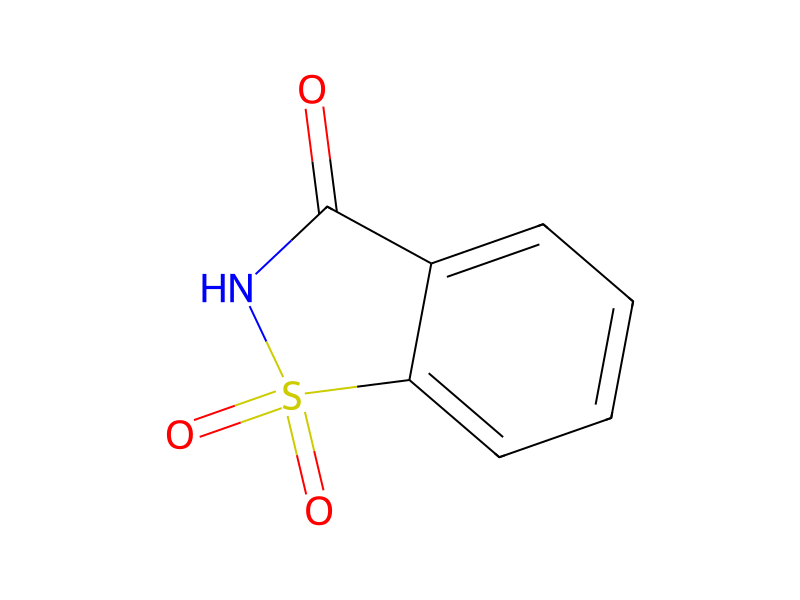
基本情報
- 標準SMILES
O=C1NS(=O)(=O)c2ccccc21- InChIKey
CVHZOJJKTDOEJC-UHFFFAOYSA-N- 分子式
- C7H5NO3S
- 平均分子量
- 183.19 g/mol
- 単同位体質量
- 182.99901402
概要
Saccharin (manufacturing) appears as white crystals. Odorless or faintly aromatic odor. Sweet taste. (NTP, 1992)
名称と識別子
- 優先名称
- Saccharin
- IUPAC
- 1,1-dioxo-1,2-benzothiazol-3-one
- 現地名
- o-スルホベンズイミド
- 英語名
- Saccharin
- 分子式
- C7H5NO3S
- 分子量
- 183.18
名称と別名
saccharin81-07-2o-Benzoic sulfimideo-SulfobenzimideSaccharineSaccharimideBenzosulfimideGarantoseo-BenzosulfimideBenzoic sulfimideBenzosulphimideSaccharinol
名称をさらに表示
o-スルホベンズイミド2,3-ジヒドロ-1,2-ベンゾイソチアゾール-3-オン1,1-ジオキシド2,3-ジヒドロ-1,2-ベンゾイソチアゾール-3-オン-1,1-ジオキシドo-スルホベンゾイミドサッカリンo-安息香酸スルフィミドサキシン3-オキソ-2,3-ジヒドロ-1,2-ベンゾイソチアゾール1,1-ジオキシドサッカリノースヘルメセタスサッカリノール2,3-ジヒドロ-3-オキソ-1,2-ベンゾイソチアゾール1,1-ジオキシドグルシドサイコースベンゾスルホイミド1,2-ベンゾイソチアゾール-3(2H)-オン1,1-ジオキシドガラントースサッカリン不溶性サッカリン (JP17)o-ベンゾイックスルフィミドBenzo[d]isothiazol-3(2H)-one 1,1-dioxideINSOLUBLE SACCHARINSacharinSacarina
SaccharinoseSaccharin insolubleBenzosulfinideHermesetasSaccharolGlucidGlusideSaccharin acid
データベース識別子
- CAS
81-07-2- PubChem CID
- 5143
- DTXSID
DTXSID5021251- ChEMBL
CHEMBL310671- ChEBI
CHEBI:32111- UNII
- FST467XS7D
- EC Number
- 201-321-0
- Nikkaji
- J747.663I
物性
構造計算による物性
- XLogP
- 0.9
- 極性表面積
- 71.6 Ų
- 水素結合供与体数
- 1
- 水素結合受容体数
- 3
- 回転可能結合数
- 0
- 重原子数
- 12
- 形式電荷
- 0
- 複雑度
- 303
実験および物理化学的性質
Chemical ClassesOther Uses -> Food Additives
Drugs
Pharmaceuticals -> Listed in ZINC15
Pharmaceuticals -> Used in Switzerland
CosmeticsMasking; Oral care
pHpH of 0.35% aqueous solution: 2.0
SpringerMaterials PropertiesCrystal structure
FragrancesFragrance Ingredient (Saccharin) -> IFRA transparency List
PesticidesEnvironmental transformation -> Pesticide transformation products (metabolite, successor)
LogP
log Kow = 0.91
0.91
OdorODORLESS OR HAS FAINT AROMATIC ODOR.
Taste
In dilute aqueous solution it is 500 times as sweet as sugar; sweet taste detectable in 1:100,000 dilution.
Bitter, metallic aftertaste
Food Additives
NON-NUTRITIVE SWEETENER -> FDA Substance added to food
Food
Density
0.828 (NTP, 1992) - Less dense than water; will float
0.828 g/cu cm at 25 °C
物理化学的性質
- 融点
- 226 · 226-229 °C (lit.)
- 沸点
- subl
- 比重(密度)
- 0.828 · 0.828
- 蒸気圧
- 0 Pa · 0Pa at 25℃
- 屈折率
- 1.55 · 1.5500 (estimate)
- 貯蔵温度
- 30 °C · Store below +30°C.
- 溶解性
- 12 mL · アセトン: 12mL(lit.)に可溶1g
- 外見
- 結晶または結晶性粉末
- 酸解離定数(Pka)
- 11.68 · 11.68(at 18℃)
- 色
- 白い
- 臭い (Odor)
- 無臭
- 水溶解度
- 3.3 g/L · 3.3g/L(20℃)
- Merck
- 14 · 14,8311
- BRN
- 6888 · 6888
- Henry's Law Constant
- 8.2 · 8.2×103 mol/(m3Pa) at 25℃, HSDB (2015)
- 安定性
- 安定。強力な酸化剤とは相容れない。
- 化粧品成分の機能
- 香料口腔ケア
- InChI
- 1S/C7H5NO3S/c9-7-5-3-1-2-4-6(5)12(10,11)8-7/h1-4H,(H,8,9)
- InChIKey
- CVHZOJJKTDOEJC-UHFFFAOYSA-N
- SMILES
- O=C1NS(=O)(=O)c2ccccc12
- LogP
- -0.024 at · -0.024 at 25℃
- CAS データベース
- 81 · 81-07-2(CAS DataBase Reference)
- NISTの化学物質情報
- Saccharin(81-07-2)
- EPAの化学物質情報
- Saccharin (81-07-2)
化学的性質
化学的特性Saccharin is a crystalline solid with a sweet taste (500 times sweeter than sugar).
安全と法規制
GHS分類
GHS Classification
This chemical does not meet GHS hazard criteria for 97% (549 of 566) of all reports.
Not Classified
Aggregated GHS information provided per 566 reports by companies from 6 notifications to the ECHA C&L Inventory.
危険有害性情報
Regulatory Information
Chemical: 1,2-Benzisothiazol-3(2H)-one, 1,1-dioxide
Commission Regulation No 844/2012
1,2-Benzisothiazol-3(2H)-one, 1,1-dioxide is listed on the EPA's Chemical Data Reporting (CDR) system. Manufacturers and importers of 1,2-Benzisothiazol-3(2H)-one, 1,1-dioxide are required to report information about their production and use of this chemical to the EPA under the Toxic Substances Control Act (TSCA). (40 eCFR Part 711)
Status: Active Update: 12-12-2018 https://echa.europa.eu/registration-dossier/-/registered-dossier/11056
Saccharin: Does not have an individual approval but may be used under an appropriate group standard
The New Jersey Worker and Community Right to Know Act requires public and private employers to provide information about hazardous substances at their workplaces. (N.J.S.A. 34:5A-1 et. seq.)
Other Safety InformationEvaluation - Chemicals that are unlikely to require further regulation to manage risks to environment
Fire HazardsFlash point data for this chemical are not available; however, it is probably combustible. (NTP, 1992)
Health HazardsSYMPTOMS: Symptoms of exposure to this compound include anorexia, nausea, vomiting, diarrhea and gastric hyperacidity. Other symptoms include coughing, chest pain and irritation of the eyes, nose and throat.
Hazards SummaryMay cause irritation; [Sigma-Aldrich MSDS]
FDA Requirements
The food additives saccharin, ammonium saccharin, calcium saccharin, and sodium saccharin may be safely used as sweetening agents in food in accordance with the following conditions /in part 180, section 37/, if the substitution for nutritive sweeteners is for a valid special dietary purpose and is in accord with current special dietary food regulations and policies or if the use or intended use is for an authorized technological purpose other than calorie reduction.
Drug products containing certain active ingredients offered over-the-counter (OTC) for certain uses. A number of active ingredients have been present in OTC drug products for various uses, as described below. However, based on evidence currently available, there are inadequate data to establish general recognition of the safety and effectiveness of these ingredients for the specified uses: Saccharin is included in weight control drugs.
Reactive GroupAmides and Imides
Special Reports
Toxicity of Food Additives (Excluding Antioxidants), January 1978-July 1989. Govt Reports Announcements & Index (GRA&I) Issue 6 (1990). This bibliography contains citations concerning the toxicity of food additives, incl saccharin, and their effects on the liver, kidneys, bladder, and other organs.
Arnold DL, Boyes BG; The Toxicological Effects Of Saccharin in Short-Term Genotoxicity Assays. Mutat Res 221 (2): 69-132 (1989).
National Toxicology Program. Eleventh Report on Carcinogens (2005). The Report on Carcinogens is an informational scientific and public health document that identifies and discusses substances (including agents, mixtures, or exposure circumstances) that may pose a carcinogenic hazard to human health. Saccharin (81-07-2) is delisted as reasonably anticipated to be a human carcinogen.[Available from, as of July 31, 2009: http://ntp.niehs.nih.gov/ntp/roc/eleventh/profiles/append/appb.pdf]
TSCA Requirements
Section 8(a) of TSCA requires manufacturers of this chemical substance to report preliminary assessment information concerned with production, exposure, and use to EPA as cited in the preamble in 51 FR 41329. Effective date 9/29/2006; Reporting date: 11/28/2006.
Pursuant to section 8(d) of TSCA, EPA promulgated a model Health and Safety Data Reporting Rule. The section 8(d) model rule requires manufacturers, importers, and processors of listed chemical substances and mixtures to submit to EPA copies and lists of unpublished health and safety studies. 1,2-Benzisothiazol-3(2H)-one, 1,1-dioxide is included on this list. Effective date: 9/29/2006; Sunset date: 11/28/2006.
Reactivity Profile
An amide. Acid to litmus. pH of 0.35% aqueous solution: 2.0. Organic amides/imides react with azo and diazo compounds to generate toxic gases. Flammable gases are formed by the reaction of organic amides/imides with strong reducing agents. Amides are very weak bases (weaker than water). Imides are less basic yet and in fact react with strong bases to form salts. That is, they can react as acids. Mixing amides with dehydrating agents such as P2O5 or SOCl2 generates the corresponding nitrile. The combustion of these compounds generates mixed oxides of nitrogen (NOx).
Air and Water ReactionsSlightly soluble in water.
Hazard Classes and CategoriesNot Classified
安全と保護具
Fire FightingFires involving this material can be controlled with a dry chemical, carbon dioxide or Halon extinguisher. (NTP, 1992)
First Aid
EYES: First check the victim for contact lenses and remove if present. Flush victim's eyes with water or normal saline solution for 20 to 30 minutes while simultaneously calling a hospital or poison control center. Do not put any ointments, oils, or medication in the victim's eyes without specific instructions from a physician. IMMEDIATELY transport the victim after flushing eyes to a hospital even if no symptoms (such as redness or irritation) develop.
Nonfire Spill Response
SMALL SPILLS AND LEAKAGE: If you spill this chemical, you should dampen the solid spill material with water, then transfer the dampened material to a suitable container. Use absorbent paper dampened with water to pick up any remaining material. Seal your contaminated clothing and the absorbent paper in a vapor-tight plastic bag for eventual disposal. Wash all contaminated surfaces with a soap and water solution. Do not reenter the contaminated area until the Safety Officer (or other responsible person) has verified that the area has been properly cleaned.
Disposal Methods
SRP: The most favorable course of action is to use an alternative chemical product with less inherent propensity for occupational harm/injury/toxicity or environmental contamination. Recycle any unused portion of the material for its approved use or return it to the manufacturer or supplier. Ultimate disposal of the chemical must consider: the material's impact on air quality; potential migration in soil or water; effects on animal and plant life; and conformance with environmental and public health regulations.
Generators of waste (equal to or greater than 100 kg/mo) containing this contaminant, EPA hazardous waste number U202, must conform with USEPA regulations in storage, transportation, treatment and disposal of waste.
A potential candidate for rotary kiln incineration at a temperature range of 820 to 1,600 °C and residence times of seconds for liquids and gases, and hours for solids. A potential candidate for fluidized bed incineration at a temperature range of 450 to 980 °C and residence times of seconds for liquids and gases, and longer for solids.
Preventive Measures
SRP: In bulk storage or manufacturing situations where combustible dusts can collect in sufficient concentrations to give rise to an explosion/deflagration, reasonable precautions shall be taken to reduce or eliminate the hazard. Efforts shall be made to control or eliminate the five elements necessary to initiate a dust explosion. These include combustible dust (fuel), ignition source (heat), oxygen in air (oxidizer), and dispersion of dust particles in sufficient quantity and concentration as well as confinement of the dust cloud. General guidance in these efforts can be found in OSHA's "Combustible Dust in Industry; Preventing and Mitigating the Effects of Fire and Explosions", which list measures to control dusts, eliminate ignition sources, and limit the effects of explosions.
Personal Protective Equipment (PPE)
RECOMMENDED RESPIRATOR: Where the neat test chemical is weighed and diluted, wear a NIOSH-approved half face respirator equipped with a combination filter cartridge, i.e. organic vapor/acid gas/HEPA (specific for organic vapors, HCl, acid gas, SO2 and a high efficiency particulate filter). (NTP, 1992)
Other Standards Regulations and Guidelines
In 1977, the FDA proposed a ban on saccharin because of the discovery of bladder tumors in some male rats fed with high doses of saccharin. Because no other nonnutritive sweetener was available at that time, the proposed ban faced strong opposition. Legislation to stay the ban has been passed in the U.S. Congress periodically. In December, 1991, the FDA withdrew its proposed ban. All saccharin-containing packaged products were required to carry a warning label indicating that saccharin has been determined to cause cancer in laboratory animals. In 2001, the warning label requirement was lifted by the Congress. In 2003, saccharin was delisted from California Proposition 65 (the so-called carcinogen list).
毒性情報
Interactions
IT IS NOW WELL ESTABLISHED THAT THE INTERACTION OF MULTIPLE ENVIRONMENTAL FACTORS MAY INCR THE INCIDENCE OF SOME HUMAN CANCERS MORE THAN EXPOSURE TO A SINGLE CARCINOGEN. WITH AN IN VIVO EXPERIMENTAL RAT MODEL, SYNERGISTIC EFFECT IN BLADDER CARCINOGENESIS BETWEEN A SUBCARCINOGENIC DOSE OF THE STRONG BLADDER CARCINOGEN, N-METHYL-N-NITROSOUREA & SACCHARIN WAS DEMONSTRATED.
Since both sodium L-ascorbate and sodium saccharin promote two-stage bladder carcinogenesis in rats, synergism of the two chemicals was investigated with special reference to the role of urinary pH and sodium+ concentration. Male F344 rats were given 0.05% N-butyl-N-(4-hydroxybutyl)nitrosamine in the drinking water for 4 wk and then treated with basal diet containing 5% sodium saccharin, 5% sodium L-ascorbate, 5% sodium saccharin plus 5% sodium L-ascorbate, 5% L-ascorbic acid, 5% sodium saccharin plus 5% L-ascorbic acid, or no added chemical for 32 wk. Treatment with sodium saccharin or sodium L-ascorbate alone significantly increased the induction of neoplastic and preneoplastic lesions of the bladder. Sodium saccharin plus sodium L-ascorbate also induced these bladder lesions significantly when compared with the controls, and the number of lesions was greater than the sum of the lesions in the group treated with sodium saccharin alone or sodium L-ascorbate alone. In contrast, the induction of carcinomas and papillomas in rats treated with sodium saccharin plus sodium L-ascorbate produced an elevation of urinary pH and sodium+ concentrations, although the increases were not different from those in rats fed sodium saccharin or sodium L-ascorbate alone. Sodium saccharin plus L-ascorbic acid, however, did not cause elevation of urinary pH, although it increased urinary sodium+ concentration. Thus, the bladder carcinogenesis promotion by sodium saccharin was synergized by sodium L-ascorbate and inhibited by L-ascorbic acid. This modulation was associated with changes of urinary pH and Na+ concentration. /Sodium saccharin/
CHRONIC RAT FEEDING STUDIES WERE CONDUCTED ON A 10:1 CYCLAMATE/SACCHARIN MIXT. THE TEST MIXT WAS FED AT DIETARY LEVELS DESIGNED TO FURNISH 500, 1120, & 2500 MG/KG TO GROUPS OF 35 MALE & 45 FEMALE RATS. THE ONLY POS FINDING WHICH PROVED TO HAVE CRUCIAL SIGNIFICANCE WAS THE OCCURRENCE OF PAPILLARY CARCINOMAS IN THE BLADDERS OF 12 OF THE 70 RATS FED THE MAX DIETARY LEVEL OF THE MIXT (EQUIV TO ABOUT 2500 MG/KG) FOR PERIODS RANGING FROM 78 TO 105 WK.
N-METHYL-N-NITROSOUREA WAS USED AS INITIATING CARCINOGEN AND GREATLY INCR YIELD OF BLADDER CANCERS IN SACCHARIN TREATED RATS. SACCHARIN IS A WEAK INITIATOR BUT A POWERFUL PROMOTER OF CARCINOGENESIS IN THE RAT BLADDER.
For more Interactions (Complete) data for SACCHARIN (15 total), please visit the HSDB record page.
Ecotoxicity Values
LC50; Species: Pimephales promelas (fathead minnow, 30 day old); Concentration: 18.3 g/L for 96 hr (confidence limit 16.4 - 20.4 g/L). Dilution factor: 0%, 20%, 40%, 60%, 80% and 100% of the stock solution. Behavioral observations were not recorded. Increased alkalinity values were due to a reaction between the titrant and toxicant. /Saccharin, sodium salt hydrate/
Environmental Fate
TERRESTRIAL FATE: Based on a classification scheme(1), an estimated Koc value of 23(SRC), determined from a log Kow of 0.91(2) and a regression-derived equation(3), indicates that saccharin is expected to have very mobility in soil(SRC). Volatilization of saccharin from moist soil surfaces is not expected to be an important fate process(SRC) given an estimated Henry's Law constant of 1.2X10⁻⁹ atm-cu m/mole(SRC), using a fragment constant estimation method(4). The pKa of saccharin is 1.31(5), indicating that this compound will partially exist in the anion form in the environment and anions generally do not adsorb more strongly to soils containing organic carbon and clay than their neutral counterparts(6). Saccharin is not expected to volatilize from dry soil surfaces(SRC) based upon an estimated vapor pressure of 1.0X10⁻⁷ mm Hg at 25 °C(SRC), determined from a fragment constant method(7). Incubation experiments with activated sludge resulted in a first order half-life of 90 minutes with 78% removal efficiency after 3 hours(8) suggesting that biodegradation may be an important environmental fate process in soil(SRC).
AQUATIC FATE: Based on a classification scheme(1), an estimated Koc value of 23(SRC), determined from a log Kow of 0.91(2) and a regression-derived equation(3), indicates that saccharin is not expected to adsorb to suspended solids and sediment(SRC). Volatilization from water surfaces is not expected(4) based upon an estimated Henry's Law constant of 1.2X10⁻⁹ atm-cu m/mole(SRC), developed using a fragment constant estimation method(5). According to a classification scheme(6), an estimated BCF of three(SRC), from its log Kow(2) and a regression-derived equation(2), suggests the potential for bioconcentration in aquatic organisms is low(SRC).Incubation experiments with activated sludge resulted in a first order half-life of 90 minutes with 78% removal efficiency after 3 hours(7) suggesting that biodegradation may be an important environmental fate process in water(SRC).
ATMOSPHERIC FATE: According to a model of gas/particle partitioning of semivolatile organic compounds in the atmosphere(1), saccharin, which has an estimated vapor pressure of 1.0X10⁻⁷ mm Hg at 25 °C(SRC), determined from a fragment constant method(2), will exist in both the vapor and particulate phases in the ambient atmosphere. Vapor-phase saccharin is degraded in the atmosphere by reaction with photochemically-produced hydroxyl radicals(SRC); the half-life for this reaction in air is estimated to be 22 hours(SRC), calculated from its rate constant of 5.9X10⁻¹² cu cm/molecule-sec at 25 °C(SRC) that was derived using a structure estimation method(3). Particulate-phase saccharin may be removed from the air by wet or dry deposition(SRC). Saccharin contains chromophores that absorb at wavelengths >290 nm(4), and therefore may be susceptible to direct photolysis by sunlight(SRC).
Average Daily IntakeThe average daily intake of saccharin through food for the Finnish population was estimated to be 15 mg, based on a survey of the population of Finland(1).
Effluent ConcentrationsSaccharin concentrations in untreated and treated wastewater from the Canton of Zurich, Switzerland, collected in 2008(1). [Table#1945]
Soil Adsorption/Mobility
The Koc of saccharin is estimated as 20(SRC), using a log Kow of 0.91(1) and a regression-derived equation(2). According to a classification scheme(3), this estimated Koc value suggests that saccharin is expected to have very high mobility in soil. The pKa of saccharin is 1.31(4), indicating that this compound will partially exist in the anion form in the environment and anions generally do not adsorb more strongly to soils containing organic carbon and clay than their neutral counterparts(5).
Natural Pollution SourcesSaccharin, sodium and calcium saccharin and o-toluenesulphonamide do not occur as natural products.
Human Toxicity Excerpts
/HUMAN EXPOSURE STUDIES/ Randomised, double-blind, placebo-controlled N-of-1 trial with a cross-over design /was conducted in order/ to determine whether there was a connection between the complaint of restless legs and the ingestion of artificial sweeteners in a patient with these symptoms after drinking certain 'light' beverages. During a period of 48 days, the patient took 4 capsules per day containing either 150 mg of cyclamate, 22.5 mg of saccharine, both sweeteners, or placebo on two successive days. Between each of these 2-day periods there was a 2-day rest period during which no capsules were taken. The hospital pharmacist had prepared the capsules and determined the sequence of the 2-day periods on a random basis. The patient did not know which capsules he was taking. Every day on arising, starting 3 weeks before the trial period, the patient noted the intensity and duration of the symptoms in the late evening and previous night. For this notation he used an 11-point scale, from 0 (= no restless legs) to 10 (= almost total inability to sleep because of restless legs). A score of 1-3 corresponded to mild symptoms that had no effect on the patient's sleep; at a score of 4-6 his sleep was disturbed and at a score of 7-10 the patient hardly slept at all. The patient had symptoms more often while using saccharine or the combination of saccharine and cyclamate than when taking the placebo (4 and 4 versus 2 of the 6 nights); moreover, the average score was then statistically significantly higher (5.2 and 5.8 versus 3.3). There was a connection between the patient's complaints of restless legs and the use of saccharine, but not the use of cyclamate.
/CASE REPORTS/ Idiosyncratic effects of saccharin on the liver were reported in a 70-year-old woman. Increased activities of alanine aminotransferase, aspartate aminotransferase, gamma-glutamyl transferase and alkaline phosphatase were found after oral administration of three pharmaceutical drugs of which saccharin was the only common constituent. The drugs were lorazepam, dihydroergocristine and chlordemethyldiazepam. Exposure to saccharin alone reproduced the effects.
/CASE REPORTS/ ...reported 5 patients in whom oral administration of 0.1 g saccharin caused pruritis and edematous papules on the trunk and limbs.
/EPIDEMIOLOGY STUDIES/ A SURVEY OF BLADDER CANCER PATIENTS & CONTROLS WITHOUT BLADDER CANCER SHOWED THAT IN GENERAL BLADDER CANCER RISK WAS NOT INCREASED BY NONNUTRITIVE SWEETENER SACCHARIN & CYCLAMATE USE. ADJUSTING FOR SMOKING HABITS, OCCUPATION, AGE, RACE, SEX, DIABETES MELLITUS, ETC DID NOT LEAD TO SIGNIFICANT CORRELATIONS BETWEEN THE SWEETENER USE & BLADDER CANCER.
For more Human Toxicity Excerpts (Complete) data for SACCHARIN (11 total), please visit the HSDB record page.
Artificial Pollution SourcesSaccharin's production and use as an artificial, non-nutritive sweetener, pharmaceutic aid (flavor), and in formulations for electroplating-bath brighteners(1) may result in its release to the environment through various waste streams(SRC).
Environmental Biodegradation
AEROBIC: The importance of biodegradation of saccharin in soil and water is unknown, but amides are usually susceptible to microbial metabolism(1). Saccharin was eliminated in wastewater treatment plants with activated sludge processes sampled in Zurich Switzerland; a mean removal efficiency of 90% was observed. Incubation experiments with activated sludge resulted in a first order half-life of 90 minutes with 78% removal efficiency after 3 hours. No loss was observed using sterile controls(2).
Carcinogen Classification
Saccharin and its salts
Group 3: Not classifiable as to its carcinogenicity to humans
Volume Sup 7: Overall Evaluations of Carcinogenicity: An Updating of IARC Monographs Volumes 1 to 42, 1987; 440 pages; ISBN 92-832-1411-0 (out of print)
1999
1998
NB Overall evaluation downgraded to Group 3 with supporting evidence from other relevant data
Environmental Bioconcentration
An estimated BCF of three was calculated in fish for saccharin(SRC), using a log Kow of 0.91(1) and a regression-derived equation(2). According to a classification scheme(3), this BCF suggests the potential for bioconcentration in aquatic organisms is low(SRC). Bioconcentration of the substance was tested as a breakdown product of 3-(allyloxy)-1,1-dioxo-1lambda(6),2-benzothiazole; results indicated low bioconcentration potential(4).
法規制情報
FDA Requirements
The food additives saccharin, ammonium saccharin, calcium saccharin, and sodium saccharin may be safely used as sweetening agents in food in accordance with the following conditions /in part 180, section 37/, if the substitution for nutritive sweeteners is for a valid special dietary purpose and is in accord with current special dietary food regulations and policies or if the use or intended use is for an authorized technological purpose other than calorie reduction.
Drug products containing certain active ingredients offered over-the-counter (OTC) for certain uses. A number of active ingredients have been present in OTC drug products for various uses, as described below. However, based on evidence currently available, there are inadequate data to establish general recognition of the safety and effectiveness of these ingredients for the specified uses: Saccharin is included in weight control drugs.
TSCA Requirements
Section 8(a) of TSCA requires manufacturers of this chemical substance to report preliminary assessment information concerned with production, exposure, and use to EPA as cited in the preamble in 51 FR 41329. Effective date 9/29/2006; Reporting date: 11/28/2006.
Pursuant to section 8(d) of TSCA, EPA promulgated a model Health and Safety Data Reporting Rule. The section 8(d) model rule requires manufacturers, importers, and processors of listed chemical substances and mixtures to submit to EPA copies and lists of unpublished health and safety studies. 1,2-Benzisothiazol-3(2H)-one, 1,1-dioxide is included on this list. Effective date: 9/29/2006; Sunset date: 11/28/2006.
安全データ
- wgk
- 2
- tsca
- TSCA listed
- rtecs
- DE4200000
- ridadr
- UN 3077 9/PG 3
- 毒性
- LD50 oral in mouse: 17gm/kg
- hs_code
- 29251100
- risk_code
- 40-62-63-68
- 化審法
- (5)-198
- safety_code
- 24/25
- hazard_class
- IRRITANT
- ストレージクラス
- 11 - Combustible Solids
- 有毒物質データの
- 81-07-2(Hazardous Substances Data)
化学と産業
薬理情報
Mechanism of Action
...it has been shown that the activation of particular T2R bitter taste receptors is partially involved with the bitter aftertaste sensation of saccharin and acesulfame-K. ... /This study/ addressed the question of whether /they/ could stimulate transient receptor potential vanilloid-1 (TRPV1) receptors, as these receptors are activated by a large range of structurally different chemicals. Moreover, TRPV1 receptors and/or their variants are found in taste receptor cells and in nerve terminals throughout the oral cavity. Hence, TRPV1 activation could be involved in the ... aftertaste or even contribute to the poorly understood metallic taste sensation. Using Ca(2+) imaging on TRPV1 receptors heterologously expressed in the human embryonic kidney (HEK) 293 cells and on dissociated primary sensory neurons,... /it was found/ that in both systems, .../sweeteners/ activate TRPV1 receptors, and, moreover, they sensitize these channels to acid and heat. ... /it was/also found that TRPV1 receptors were activated by CuSO(4), ZnSO(4), and FeSO(4), three salts known to produce a metallic taste sensation. In summary, .../the/ results identify a novel group of compounds that activate TRPV1 and, consequently, provide a molecular mechanism that may account for off tastes of sweeteners and metallic tasting salts.
Biological Half-Life
In three adult men given an intravenous bolus of 10 mg/kg bw sodium saccharin, the plasma concentration-time curve fitted a two-compartment open model with a terminal half-life of 70 min. /Sodium saccharin/
Six women with an average oral daily intake of 100-300 mg saccharin (form not specified) had maximum plasma concentrations after 0.5-1 hr and an elimination half-life of 7.5 hr.
Metabolism/Metabolites
... 3-(14)C-SACCHARIN WAS EXCRETED UNCHANGED, MAINLY IN THE URINE (85-92% IN 24 HR) BY ADULT HUMAN SUBJECTS, BOTH BEFORE & AFTER TAKING 1 G OF SACCHARIN DAILY FOR 21 DAYS; NO METABOLITE OF SACCHARIN WAS FOUND. THESE RESULTS WERE AMPLY CONFIRMED IN ANIMAL EXPERIMENTS, IN WHICH ORALLY ADMIN (14)C-SACCHARIN WAS EXCRETED ENTIRELY UNCHANGED BY RATS ON A NORMAL DIET & BY RATS ON A DIET CONTAINING 1% & 5% OF SACCHARIN FOR UP TO 12 MO. 80-90% OF THE DOSE WAS EXCRETED IN THE URINE, 10-20% IN THE FECES; NO (14)CO2 WAS FOUND IN THE EXHALED AIR, & NO (14)CO3(2-) OR 2-SULFAMOYLBENZOIC ACID IN THE URINE.
YIELDS IN MONKEYS SULFAMOYLBENZOIC ACID & O-SULFOBENZOIC ACID. /FROM TABLE/
EXPOSURE OF MALE CHARLES RIVER CDI RATS TO 5% SACCHARIN DIET IN UTERO & THROUGHOUT WEANING, DID NOT INDUCE DETECTABLE METABOLISM. NO METABOLITES WERE DETECTED IN URINE OF NORMAL RATS GIVEN TRACER DOSE. PRETREATMENT WITH 3-METHYLCHOLANTHRENE DID NOT INDUCE SACCHARIN METABOLISM.
One female and two male volunteers excreted 85-92% of a dose of 1g (3-14)C- saccharin unchanged in the urine within 24 hr, before or after taking 1 g saccharin daily for 21 days; no metabolites were found.
Within 48 h, 92% of a dose of 500 mg [14C]saccharin taken by six male volunteers was excreted in the urine and 5.8% in the faeces. Analysis of urine and feces by highperformance liquid chromatography and thin-layer chromatography revealed only unmetabolized saccharin.
MeSH Pharmacological ClassificationSubstances that sweeten food, beverages, medications, etc., such as sugar, saccharine or other low-calorie synthetic products. (From Random House Unabridged Dictionary, 2d ed)
Absorption, Distribution and Excretion
TRANSPLACENTAL TRANSFER OF ... (14)C-SACCHARIN ADMIN BY IV INFUSION TO RHESUS MONKEYS IN LATE PREGNANCY, WAS RAPID, BUT SLIGHT. (14)C WAS CLEARED MORE SLOWLY FROM FETAL THAN FROM MATERNAL BLOOD, & WAS DISTRIBUTED IN ALL FETAL TISSUES EXAMINED ... WAS ONLY BIOTRANSFORMED TO LIMITED EXTENT & WAS RAPIDLY EXCRETED ... .
Three groups of five men were given sodium saccharin in single oral doses of 50, 150 or 333 mg/60 kg bw. Peak plasma concentrations occurred between 30 and 60 min after dosing, and 60 and 76% was excreted unchanged in urine at 6 and 24 h, respectively. /Sodium saccharin/
IN 3 VOLUNTEERS, 85-92% OF DOSES OF 1 G 3(14)C-SACCHARIN ADMIN ORALLY FOR 21 DAYS WAS EXCRETED UNCHANGED IN THE URINE WITHIN 24 HR; NO METABOLITES WERE FOUND. WITHIN 48 HR, 92.3% OF A DOSE OF 500 MG (14)C-SACCHARIN WAS EXCRETED IN THE URINE & 5.8% IN THE FECES.
After administration of 1-g doses of soluble (sodium) saccharin [form not specified] to three men, saccharin was excreted in the urine quantitatively unchanged by two of the subjects within 48 hr. In a subsequent experiment involving six subjects, none excreted the dose quantitatively within 72 hr, but no metabolism of saccharin was detected. /Sodium saccharin/
For more Absorption, Distribution and Excretion (Complete) data for SACCHARIN (13 total), please visit the HSDB record page.
Cellular LocationsCytoplasm
用途と製造
Uses
Used as a non-nutritive sweetener, pharmaceutic aid (flavor), and in electroplating-bath brighteners; [Merck Index] Used as a cattle feed additive and in tobacco processing; [HSDB] Permitted for use as an inert ingredient in non-food pesticide products; [EPA]
Electroplating [Category: Plate]
Non-nutritive sweetener; pharmaceutic aid (flavor). In formulations for electroplating-bath brighteners
A sweetening agent in Aromatic Cascara Sagrada Fluid extract and highly alcoholic preparations. ... It is used as a sweetening agent in vehicles, canned foods, and beverages and in diets for diabetics to replace sucrose.
Add sweetness with or without the extra calories ... /in/ beverages, baked goods, confections, table-top sugar, substitutes, many processed foods
NON-CALORIC SYNTHETIC SWEETENER IN TABLETS, LIQ PRODUCTS, SOFT DRINKS, DIETETIC FOODS, MISC PHARMACEUTICALS, CHEWING GUM, TOOTH PASTE, SMOKELESS TOBACCO PRODUCTS; ELECTROPLATING BATH ADDITIVE; CATTLE FEED ADDITIVE; ANTISEPTIC (FORMER USE); PRESERVATIVE TO RETARD FERMENTATION OF FOOD (FORMER USE).
Impurities
o- & p-Toluenesulfonamide; 1,2-benzisothiazol-1,1-dioxide; 1,2-benzisothiazoline-1,1-dioxide; 3-aminobenzisothazol-1,1-dioxide; 5- & 6-chlorosaccharin; ammonium saccharin; methyl saccharin; diphenyl sulfone; ditolylsulphone isomers; o- & p-sulfamoylbenzoic acid; o-chlorobenzoic acid; o-sulfobenzoic acid (& ammonium salt); n-tetracosane; bis(4-carboxyphenyl)sulfone; toluene-2,4-disulfonamide; saccharin-o-toluenesulfonamide; saccharin-6-sulfonamide; N-methyl-o-toluene-sulfonamide; methyl-o-chlorobenzoate; 4,4'-dibenzoylsulfone; 2- or 3-carboxy thiaxanthone-5-dioxide; o-sulfobenzamide; methyl-o-sulfamoylbenzoate; methyl-N-methylsulfamoylbenzoate; saccharin-o-toluenesulfoxylimide; & other /Reported impurities in saccharin & sodium saccharin/
U.S. Imports
(1977) 1.35X10+9 G
(1982) 1.34X10+9 G
(1985) 8.07X10+8 g.
U.S. Production
2023: 2,740,100 lb
(1977) AT LEAST 2.18X10+9 G (EST-INCL SALT)
(1985) Not reported
1,2-Benzisothiazol-3(2H)-one, 1,1-dioxide is listed as a High Production Volume (HPV) chemical (65FR81686). Chemicals listed as HPV were produced in or imported into the U.S. in >1 million pounds in 1990 and/or 1994. The HPV list is based on the 1990 Inventory Update Rule. (IUR) (40 CFR part 710 subpart B; 51FR21438).
Production volumes for non-confidential chemicals reported under the Inventory Update Rule. [Table#1947]
For more U.S. Production (Complete) data for SACCHARIN (6 total), please visit the HSDB record page.
Consumption Patterns
Global consumption (1000 tons): 37
The USA consumption pattern for saccharin (all forms) in 1976 has been estimated as follows: 77% in food uses: 45% in soft drinks, 18% in 'tabletop' sweetener, and 14% in other foods such as fruits, premixes, juices, sweets, chewing gum and jellies; and 23% in nonfood items: 10% in cosmetics such as toothpaste, mouthwash and lipstick, 7% in pharmaceuticals such as coatings on pills, 2% in smokeless tobacco products such as chewing tobacco and snuff, 2% in electroplating, 1% in cattle feed and 1% in miscellaneous uses. /Saccharin (all forms)/
Consumer UsesNot Known or Reasonably Ascertainable
Methods of Manufacturing
In most countries, commercial saccharin is produced by the Remsen-Fahlberg process ... Toluene is used as the starting material and reacted with chlorosulfonic acid to a mixture of isomeric toluene sulfochlorides. In the presence of ammonia, 2-toluene sulfochloride forms 2-toluene sulfonic acid amide which is oxidized under appropriate conditions to saccharin. Potential oxidizing agents are potassium permanganate or chromic acid.
In the United States, the Maumee process is used. This starts from either anthranilic acid or its methyl ester, which can be obtained from phthalic acid anhydride. With sodium nitrite, anthranilic acid forms a diazonium compound, which is reacted with sulfur dioxide or sulfites, and chlorinated to 2-chlorosulfonylbenzoic acid methyl ester. In the presence of ammonia, this ester yields the respective amide, from which, after de-esterification, saccharin is obtained. Reaction with sodium hydroxide or calcium hydroxide forms the respective saccharin salts.
Saccharin is dissolved in an equimolar quantity of aqueous sodium hydroxide, and the solution is concentrated to crystallization. /Saccharin sodium/
Saccharin is reacted with a semimolar quantity of calcium hydroxide in aqueous medium, and the resulting solution is concentrated to crystallization. /Saccharin calcium/
A mixture of toluenesulfonic acids is converted into the sodium salt then distilled with phosphorus trichloride and chlorine to obtain the o-toluene sulfonyl chloride which, by means of ammonia, is converted into o-toluenesulfamide. This is oxidized with permanganate, treated with acid, and saccharin crystallized out.
Formulations/Preparations
Grades: Commercial; CP /Chemically pure: A grade designation signifying a minimum of impurities, but not 100% pure/; USP /United States Pharmacopeia/; FCC /Food Chemicals Codex/.
Sodium saccharin FCC (Food Chemicals Codex) is available in the USA in four grades: spray-dried, containing 3.0% moisture; powder, containing 5.0-5.8% moisture; pelletized, containing 10.5-11.5% moisture; and granular, containing 14.0-15.0% moisture. Each of these grades meets or exceeds the following Food Chemicals Codex specifications: 98-101% active ingredient on an anhydrous basis, 3-15% water, 100 mg/kg toluenesulphonamides, 30 mg/kg selenium, 10 mg/kg heavy metals (as lead) and 3 mg/kg arsenic. /Sodium saccharin/
Trade Names: Assugrin vollsuss (also contains sodium cyclamate); Garantose; Glucid; Gluside; Hermesetas; Kandiset; Natreen (also contains sodium cyclamate); Sacarina; 550 Saccharin; Saccharina; Saccharinol; Saccharinose; Saccharol; Saxin; Sucre Edulcor; Sucrette; Sykose; Zaharina.
Available in the USA as saccharin insoluble powder FCC (Food Chemicals Codex): 98-101% active ingredient on an anhydrous basis, a maximum of 100 mg/kg toluenesulphonamides, 30 mg/kg selenium, 10 mg/kg heavy metals (as lead) & 3 mg/kg arsenic ... Available in the USA as a USP grade containing 98-101% active ingredient on an anhydrous basis.
Household ProductsInformation on 2 consumer products that contain Saccharin in the following categories is provided:
Use Classification
Fragrance Ingredients
Food Additives -> SWEETENER -> JECFA Functional Classes
Environmental transformation -> Pesticide transformation products (metabolite, successor)
Cosmetics -> Masking; Oral care
General Manufacturing Information
1,2-Benzisothiazol-3(2H)-one, 1,1-dioxide: ACTIVE
In 1977, the FDA proposed a ban on saccharin because of the discovery of bladder tumors in some male rats fed with high doses of saccharin. Because no other nonnutritive sweetener was available at that time, the proposed ban faced strong opposition. Legislation to stay the ban has been passed in the U.S. Congress periodically. In December, 1991, the FDA withdrew its proposed ban. All saccharin-containing packaged products were required to carry a warning label indicating that saccharin has been determined to cause cancer in laboratory animals. In 2001, the warning label requirement was lifted by the Congress. In 2003, saccharin was delisted from California Proposition 65 (the so-called carcinogen list).
Industrial grade sodium saccharin is reportedly used as a brightener in nickel-plating baths, as an antistatic agent in plastics and textiles, as a polymer modifier and accelerator in photosensitive dispersions, and as a light fastness aid in nylon dyes. /Sodium saccharin/
Compared with dilute sucrose solutions, the sweetness intensity of saccharin is about 550, whereas the values for its salts are about 450. At medium or elevated use levels, saccharin sweetness is accompanied by a metallic or bitter aftertaste. Several masking agents for this side-taste have been suggested, and sweetener blends, especially a blend of 1 part sodium saccharin to 9 - 10 parts sodium cyclamate, are often used.
応用分野
解説サッカリン,1,2-benzisothiazol-3(2H)-one.C7H5NO3S(183.19).人工甘味料の一つ.o-トルエンスルホンアミドを酸化し,還元すると得られる.白色の結晶.融点226~230 ℃.d1940.828.エタノールなどに可溶,水に難溶であるが,N-ナトリウム塩は水溶性である.水溶液はショ糖の約500倍の甘さがある.糖尿病患者や肥満者用のノンカロリー甘味料として広く利用されている.
用途生理作用研究、有機合成原料。
使用It is a non-nutritive sweetener; pharmaceutic aid (flavor). Saccharin was formerly listed as reasonably anticipated to be a human carcinogen; delisted because the cancer data are not sufficient to meet the current criteria for this listing.
一般的な説明White crystals. Odorless or faintly aromatic odor. Sweet taste.
使用用途サッカリンの主な用途は甘味料です。ショ糖の甘味度を1とした場合、サッカリンの甘味度は200-700であり、一万倍の水溶液でも甘味があるとされています。サッカリン自体は水溶性が低いためチューインガムなどの限られた食品にのみ使われており、一般的には水溶性のナトリウム塩であるサッカリンナトリウムがいろいろな加工食品に用いられています。 サッカリンナトリウムは、歯磨き粉やガム、漬物、菓子など、糖分による腐敗防止の必要性がある医薬品、食品にも使用されています。また、分解されてもブドウ糖が含まれていないために体内で吸収されにくく、ショ糖などの糖類よりも摂取エネルギーが小さい物質です。 糖尿病患者など甘味が制限される食事などに砂糖の代替として使用されたり、ダイエット用食品、飲料に使用されたりしています。
調製方法
製造方法Saccharin is synthesized using two methods: the Remsen-Fahlberg process and the Maumee or Sherwin-Williams method. The Remsen-Fahlberg synthesis of saccharin starts by reacting toluene with chlorosulfonic acid to give ortho and para forms of toluene-sulfonic acid (Figure 78.1). The acid can be converted to sulfonyl chlorides by treating with phosphorus pentachloride. The ortho form, o-toluene-sulfonyl chloride, is treated with ammonia to give o-toluene-sulfonamide, which is then oxidized with potassium permanganate to produce o-sulfamido-benzoic acid. On heating, the latter yields saccharin. Another synthesis was developed at Maumee Chemical Company in Toledo, Ohio, and it came to be known as the Maumee process. This process starts with phthalic anhydride, which is converted into anthranilic acid. Anthranilic acid is then reacted with nitrous acid, sulfur dioxide, chlorine, and ammonia to give saccharin. The Maumee process was further refi ned by the Sherwin-Williams Company and is therefore now referred to as the Sherwin-Williams process.
Saccharin is prepared from toluene by a series of reactions known as the Remsen–Fahlberg method. Toluene is first reacted with chlorosulfonic acid to form o-toluenesulfonyl chloride, which is reacted with ammonia to form the sulfonamide. The methyl group is then oxidized with dichromate, yielding o-sulfamoylbenzoic acid, which forms the cyclic imide saccharin when heated. An alternative method involves a refined version of the Maumee process. Methyl anthranilate is initially diazotized to form 2- carbomethoxybenzenediazonium chloride; sulfonation followed by oxidation then yields 2-carbomethoxybenzenesulfonyl chloride. Amidation of this material, followed by acidification, forms insoluble acid saccharin.
純化方法Purify saccharin by recrystallisation from Me2CO [solubility 7.14% at 0o, 14.4% at 50o], or aqueous isoPrOH to give a fluorescent solution. It sublimes in vacuo. It is an artificial sweetner and is 500 times sweeter than sucrose. [DeGarmo et al. J Am Pharm Assoc (Sci Ed) 41 17 1952, Beilstein 27 H 168, 870, 27 I 266, 27 II 214, 27 III/IV 2649.]
上流・下流製品情報
上流原料
下流製品
サプライヤー50 社
国药集团化学试剂有限公司86-21-63210123 · [email protected]
北京华美互利生物化工010-56205725 · [email protected]
梯希爱(上海)化成工业发展有限公司021-67121386 · [email protected]
衢州润东化工有限公司0570-8789886 18892685668 · [email protected]
上海阿拉丁生化科技股份有限公司400-6206333 13167063860 · [email protected]
T&W GROUP021-61551611 13296011611 · [email protected]
爱斯特(成都)生物制药股份有限公司+86-28-85122536 85324413 · [email protected]
Baoji Guokang Healthchem co.,ltd+8615604608665 15604608665 · [email protected]
上海迈瑞尔生化科技有限公司4006356688 18621169109 · [email protected]
武汉易泰科技有限公司上海分公司18930552037 · [email protected]
大连美仑生物技术有限公司0411-62910999 13889544652 · [email protected]
阿法埃莎(中国)化学有限公司400-6106006 · [email protected]
安耐吉化学&3A(安徽泽升科技股份有限公司)400-0056266 · [email protected]
北京绿百草科技发展有限公司010-61136123 · [email protected]
上海瀚鸿科技股份有限公司021-54306202 13764082696 · [email protected]
天津万象恒远科技有限公司15722085254 · [email protected]
Zhejiang J&C Biological Technology Co.,Limited+1-2135480471 · [email protected]
山东西亚化学有限公司13355009207 13355009207 · [email protected]
玛雅试剂+86 (573) 82222445 (0)18006601000 452520369 · [email protected]
四川库利南科技有限公司400-1166-196 18981987031 · [email protected]
天津希恩思生化科技有限公司400 638 7771 · [email protected]
斯百全化学(上海)有限公司021-021-021-67601398-809-809-809 15221380277 · [email protected]
上海源叶生物科技有限公司13636370518 · [email protected]
艾科试剂4008-755-333 18080918076 · [email protected]
上海思域化工科技有限公司86-21-34053660 · [email protected]
赛默飞世尔科技(中国)有限公司800-810-5118 · [email protected]
北京伊诺凯科技有限公司400-810-7969 010-59572699 · [email protected]
南京诺利斯医药科技有限公司13901585132 · [email protected]
TCI AMERICA800-4238616 · [email protected]
TOKYO CHEMICAL INDUSTRY CO., LTD.03-36680489 · [email protected]
TCI Europe320-37350700 · [email protected]
上海贤鼎生物科技有限公司4009209199 · [email protected]
深圳振强药物研发有限公司0755-66853366 13670046396 · [email protected]
上海将来实业股份有限公司021-61552785 · [email protected]
HBCChem, Inc.+1-510-219-6317 · [email protected]
成都零六生物科技有限公司400-1166-196 13458535857 · [email protected]
上海麦克林生化科技股份有限公司15221275939 15221275939 · [email protected]
杭州杰恒化工有限公司0571-87396432 · [email protected]
上海永叶生物科技有限公司86-021-61559134 15921386130 · [email protected]
上海孚一生物科技有限公司+86 (21) 61124340
成都润泽本土化工有限公司13096311329 028-88469284 616445927 · [email protected]
凯试(上海)科技有限公司021-50135380 · [email protected]
湖北巨胜科技有限公司027-59599241 18871490274 · [email protected]
池州凯隆进出口贸易有限公司[email protected]
Sigma-Aldrich西格玛奥德里奇(上海)贸易有限公司021-61415566 800-8193336 · [email protected]
天津阿尔塔科技有限公司022-6537-8550 15522853686 · [email protected]
TargetMol中国(陶术生物)021-021-33632979 15002134094 · [email protected]
上海昕凯医药科技有限公司21-619849051-1 18521059765 · [email protected]
上海陶术生物科技股份有限公司+1-781-999-5354; +1-00000000000 · [email protected]
厦门志信化学有限公司+86-5922680277 +86-13806087780 · [email protected]
補足説明
定義本品は、トルエンスルホンアミドの無水物であり、次の化学式で表される。
定義saccharin: A white crystalline solid,C7H5NO3S, m.p. 224°C. It is madefrom a compound of toluene, derivedfrom petroleum or coal tar. It is awell-known artificial sweetener,being some 500 times as sweet assugar (sucrose), and is usually marketedas its sodium salt. Because ofan association with cancer in laboratoryanimals, its use is restricted insome countries.
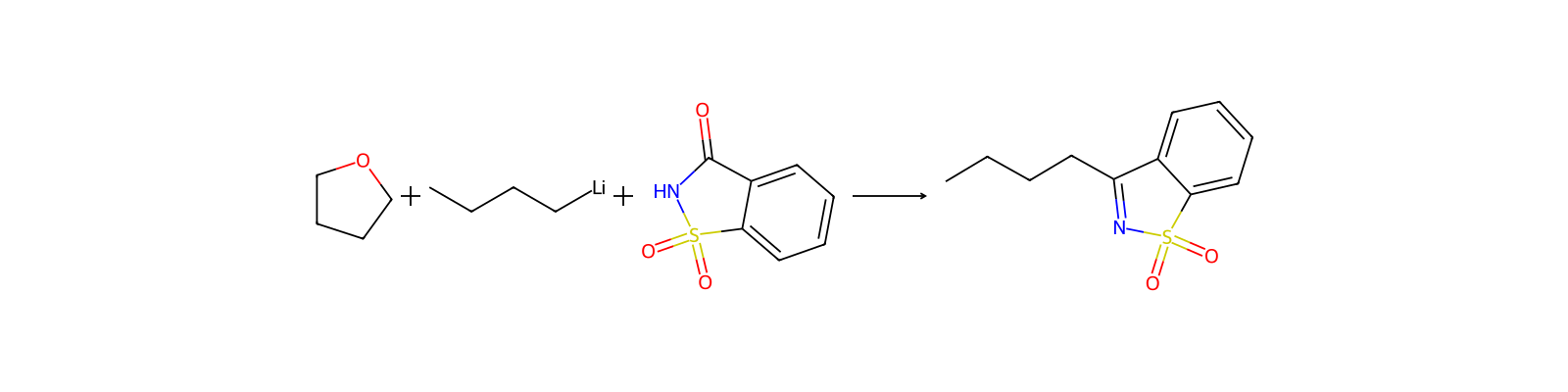
関連反応
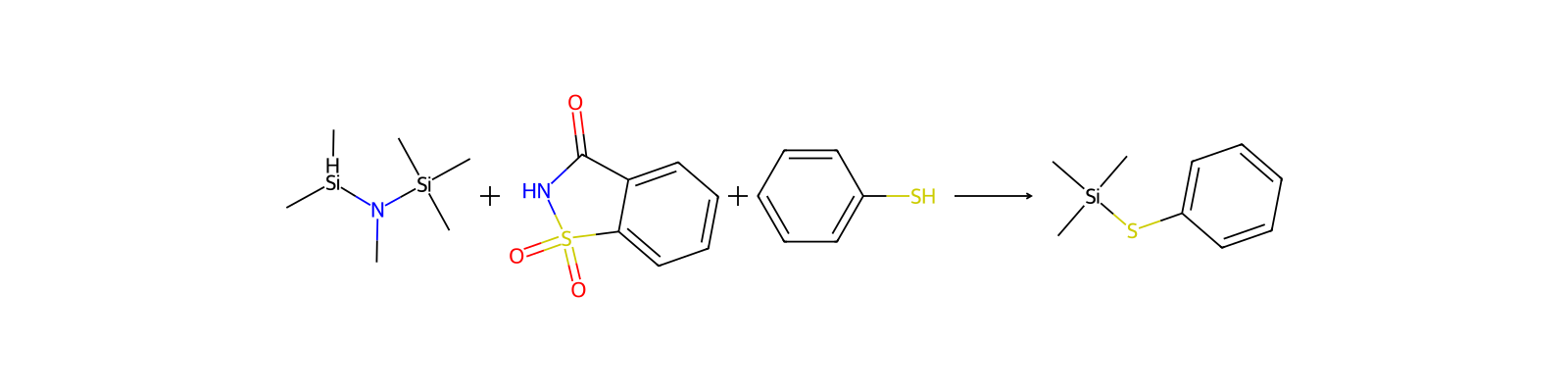
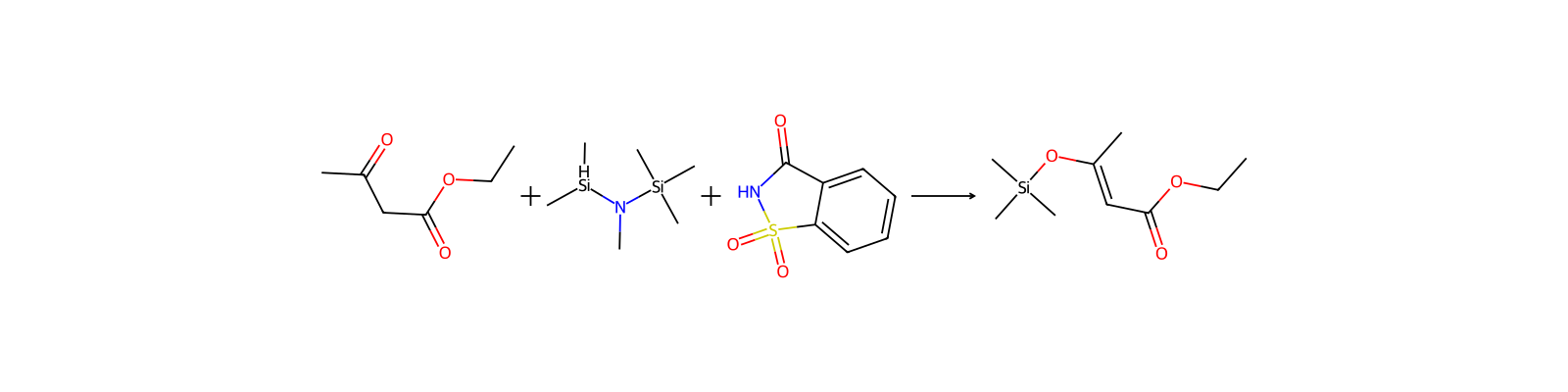
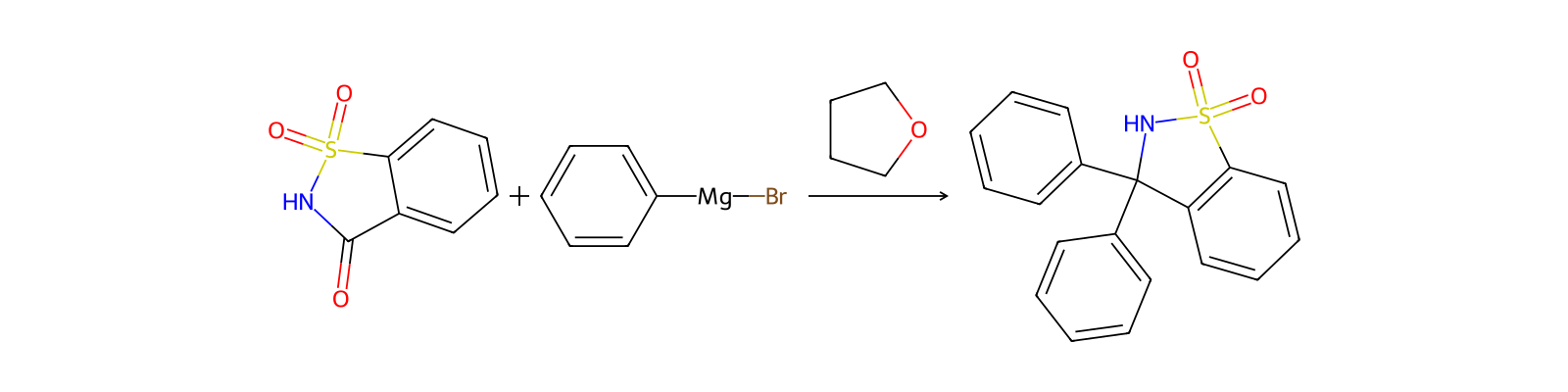
164 件



関連ノート
読み込み中…