炭酸水素ナトリウム
炭酸水素ナトリウム [一般有機合成用] · メイロン · 重そう · 重炭酸ナトリウム · 重炭酸ソ-ダ · 重曹 · 二炭酸ナトリウム · 炭酸水素Na
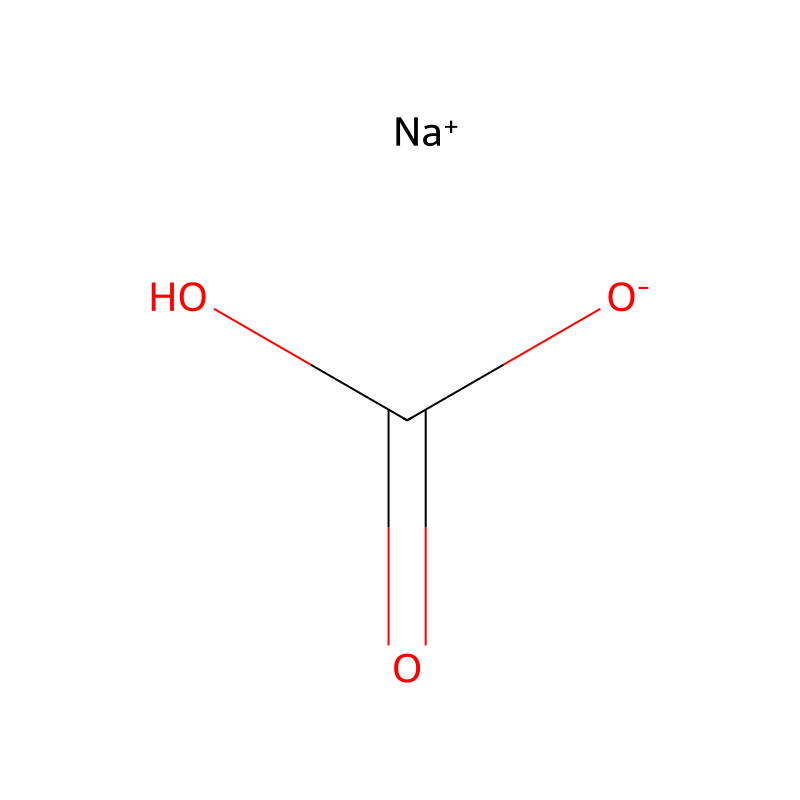
識別子と物理属性
| CAS No. | 144-55-8 |
|---|---|
| 分子式 | CHNaO3 |
| 平均分子量 | 84.007 g/mol |
| 単同位体質量 | 83.98233817 g/mol |
| SMILES | O=C([O-])O.[Na+] |
| InChIKey | UIIMBOGNXHQVGW-UHFFFAOYSA-M |
| PubChem CID | 516892 |
| ChEMBL | CHEMBL1353 |
| ChEBI | CHEBI:32139 |
| EC No. | 205-633-8 |
| DTXSID | DTXSID9021269 |
| 現地名 | 炭酸水素ナトリウム |
化学・物理的性質
| 極性表面積 | 60.4 |
|---|---|
| 水素結合供与体数 | 1 |
| 水素結合受容体数 | 3 |
| 回転可能結合数 | 0 |
| 重原子数 | 5 |
| 形式電荷 | 0 |
| 複雑度 | 33 |
| pH | Between 8,0 and 8,6 (1 % solution)Freshly prepared 0.1 molar solution at 25 °C: 8.38.27(1 mM solution)8.22(10 mM solution)8.02(100 mM solution) |
| 臭い | Odorless無臭 |
| 味 | Cooling, slightly alkaline tasteSaline and slightly alkaline taste |
| 密度 | 2.159 (NTP, 1992) - Denser than waterwill sink2.20 g/cu cm2.1 g/cm³2.2 @25 °C2.16 g/mL at 25 °C (lit.) |
| Color/Form | White, monoclinic prismsWhite crystalline powder or granulesWhite powder or crystalline lumps |
| 溶解度 | 1 in 10 % at 77 °F (NTP, 1992)100000Soluble in water. Insoluble in ethanolIn water, 10.3 g/100 g water at 25 °CSoluble in 10 parts water at 25 °C12 parts water at about 18 °CSolubility in water = 6.4, 7.6, 8.7, 10.0, 11.3, 12.7, 14.2, 16.5, and 19.1 g/100g solution at 0, 10, 20, 30, 40, 50, 60, 80, and 100 °C, respectivelySolubility in water = 6.9, 8.2, 9.6, 11.1, 12.7, 14.5, 16.5, 19.7, and 23.6 g/100g H2O at 0, 10, 20, 30, 40, 50, 60, 80, and 100 °C, respectively. Solubility is lower in the presence of sodium carbonateH2O: 1M at20℃、透明、無色9g/100mL(20℃) |
| Decomposition | Hazardous decomposition products formed under fire conditions: Carbon oxides, sodium oxides.When heated to decomposition it emits acrid smoke, fumes, and carbon dioxide.Sodium bicarbonate starts decomposing when heated over 50 °C, releasing CO2, H2O and Na2CO3, with total decomposition at 270 °C. |
| 融点 | Decomposes at 228 °F (NTP, 1992)Decomposes around 50 °C228 °F (decomposes)Approximately 50 °C>300 °C(lit.) |
| 屈折率 | Refractive indices: 1.380, 1.500, 1.586 |
| Physical Description | Sodium bicarbonate appears as odorless white crystalline powder or lumps. Slightly alkaline (bitter) taste. pH (of freshly prepared 0.1 molar aqueous solution): 8.3 at 77 °F. pH (of saturated solution): 8-9. Non-toxic.Other SolidDry PowderCBILarge CrystalsLiquidColourless or white crystalline masses or crystalline powderOdorless, white crystals[CAMEO]FINE WHITE CRYSTALLINE POWDER. |
| Stability/Shelf Life | Stable under recommended storage conditions.Stable in dry air, but slowly decomposes in moist air |
| Dissociation Constants | 6.3 |
| 沸点 | 851°C |
| 貯蔵条件 | 2-8°C |
| 外観・状態 | ソリューション (7.5%) |
| 色 | 白い |
| 比重 | 2.159 |
| pKa(酸解離定数) | (1) 6.37, (2) 10.25 (carbonic (at 25℃) |
| 比熱容量 | Cp(crystal): 1.03 J/(g·K), at 25℃ |
| Merck | 14,8583 |
| BRN | 4153970 |
| BCS Class | 1 |
| 安定性 | 安定。 |
| 化粧品成分の機能 | デオドラントバッファリング研磨剤口腔ケア肌を保護する |
| InChI | 1S/CH2O3.Na/c2-1(3)4/h(H2,2,3,4)/q+1/p-1 |
| InChIKey | UIIMBOGNXHQVGW-UHFFFAOYSA-M |
| SMILES | [Na+].OC([O-])=O |
| LogP(分配係数) | -4.010 (est) |
| CAS データベース | 144-55-8(CAS DataBase Reference) |
| EPAの化学物質情報 | Sodium bicarbonate (144-55-8) |
化学的特性
Sodium bicarbonate, NaHC03, also known as sodium acid carbonate and baking soda, is a white water-soluble crystalline solid.It has an alkaline taste, loses carbon dioxide at 270°C (518 °F).and is used in food preparation. Sodium bicarbonate also finds use as a medicine,a butter preservative, in ceramics,and to prevent timber mold.
安全性と法規制
| GHS 分類 | This chemical does not meet GHS hazard criteria for 99.4% (6796 of 6838) of all reports.Not ClassifiedReported as not meeting GHS hazard criteria by 6796 of 6838 companies (only 0.6% companies provided GHS information). For more detailed information, please visit ECHA C&L website.Aggregated GHS information provided per 6838 reports by companies from 9 notifications to the ECHA C&L Inventory.Reported as not meeting GHS hazard criteria per 6796 of 6838 reports by companies.There are 5 notifications provided by 42 of 6838 reports by companies with hazard statement code(s).Information may vary between notifications depending on impurities, additives, and other factors. The percentage value in parenthesis indicates the notified classification ratio from companies that provide hazard codes. Only hazard codes with percentage values above 10% are shown. For more detailed information, please visit ECHA C&L website. |
|---|---|
| 規制情報 | Chemical: Carbonic acid, monosodium saltRegulation (EC) No 1107/2009 (amended)Carbonic acid sodium salt (1:1) is listed on the EPA's Chemical Data Reporting (CDR) system. Manufacturers and importers of Carbonic acid sodium salt (1:1) are required to report information about their production and use of this chemical to the EPA under the Toxic Substances Control Act (TSCA). (40 eCFR Part 711)2007/442, 2007/442, Reg. (EU) 2015/2069, Reg. (EU) 2015/2069, Reg. (EU) No 540/2011, Reg. (EU) No 540/2011Reg. (EU) 2020/1263Status: Active Update: 09-03-2023 https://echa.europa.eu/registration-dossier/-/registered-dossier/16157 |
| その他の安全情報 | IMAP assessments - Carbonic acid, monosodium salt: Environment tier I assessmentIMAP assessments - Carbonic acid, monosodium salt: Human health tier I assessment |
| 火災危険 | Literature sources indicate that this chemical is noncombustible. (NTP, 1992)Not combustible. |
| 火災の可能性 | Not combustible. |
| 健康有害性 | SYMPTOMS: Symptoms of exposure to this compound include irritation of the skin, eyes, nose and throat, coughing, chest discomfort and gastrointestinal disturbance. It may cause distention or rupture of the stomach, systemic alkalosis, edema and expansion of extracellular fluid volume. Severe alkalosis may be characterized by hyperirritability and tetany. It can cause cerebral edema leading to death. It may also cause renal injury. |
用途
解説
NaHCO3(84.01).炭酸水素ナトリウムは,重曹,酸性炭酸ナトリウム,重炭酸ナトリウムともいう.炭酸ナトリウムの飽和水溶液に二酸化炭素を通じると得られる.白色の単斜晶系結晶.密度2.159 g cm-3.水100 g に対する溶解度は6.9 g(0 ℃),16.4 g(60 ℃).エタノールに難溶.熱すれば二酸化炭素と水を放って分解し,270 ℃ 以上では炭酸ナトリウム無水物となる(二酸化炭素の実験室的製法,および純炭酸ナトリウムの製法).水溶液は加水分解して微アルカリ性を示し,水溶液を65 ℃ 以上に熱すると炭酸ナトリウムになる.ナトリウム塩の製造,二酸化炭素の発生,消火器,ベーキングパウダー,炭酸飲料水の製造,洗濯用粉せっけん,バターの防腐剤,木材の防かび剤,医薬品,分析試薬などに用いられる.ほかにセスキ炭酸ナトリウムともよばれるNaCO3・NaHCO3・2H2Oもある.これは天然ソーダである.白色の単斜晶系結晶で,炭酸ナトリウムよりアルカリ性が弱く,羊毛,毛織物の洗濯に用いられる.森北出版「化学辞典(第2版)
用途
清涼飲料水原料、ふくらし粉。
用途
医薬品原料、ふくらし粉
用途
入浴剤?医薬?食品添加物?飼料配合原料、土壌安定剤?セメント添加物、医薬、消火剤、粉末石けん原料、食品添加物(ふくらし粉、清涼飲料)、農薬(殺菌剤)
用途
胃酸を中和し、酸性度を低下 させます。
用途
胃酸を中和し、酸性度を低下 させます。
説明
Sodium bicarbonate, which is the compound commonly called baking soda, exists as a white, odorless, crystalline solid. It occurs naturally as the mineral nahcolite, which derives its name from its chemical formula by replacing the “3” in NaHCO3 with the ending “lite.” The world’s main source of nahcolite is the Piceance Creek Basin in western Colorado, which is part of the larger Green River formation. Sodium bicarbonate is extracted using solution mining by pumping hot water through injection wells to dissolve the nahcolite from the Eocene beds where it occurs 1,500 to 2,000 feet below the surface. The dissolved sodium bicarbonate is pumped to the surface where it is treated to recover NaHCO3 from solution. Sodium bicarbonate can also be produced from the trona deposits, which is a source of sodium carbonates (see Sodium Carbonate).
使用
sodium bicarbonate (baking soda) is an inorganic salt used as a buffering agent and a pH adjuster, it also serves as a neutralizer. It is used in skin-smoothing powders.
一般的な説明
Odorless white crystalline powder or lumps. Slightly alkaline (bitter) taste. pH (of freshly prepared 0.1 molar aqueous solution): 8.3 at 77°F. pH (of saturated solution): 8-9. Non-toxic.
製法・合成法
調製方法
Sodium bicarbonate is manufactured either by passing carbon dioxide into a cold saturated solution of sodium carbonate, or by the ammonia–soda (Solvay) process, in which first ammonia and then carbon dioxide is passed into a sodium chloride solution to precipitate sodium bicarbonate while the more soluble ammonium chloride remains in solution.
合成方法
水酸化ナトリウムあるいは炭酸ナトリウム水溶液に二酸化炭素を吹き込み,炭酸水素ナトリウム結晶を析出させる
純化方法
Crystallise it from hot water (6mL/g). The solid should not be heated above 40o due to the formation of carbonate.