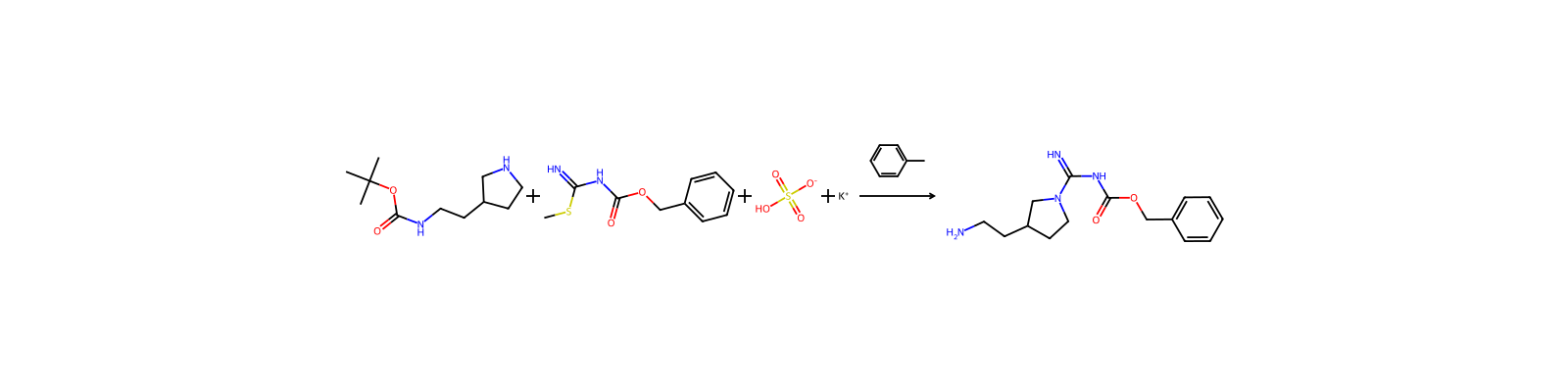

基本情報
- CAS
7646-93-7- 標準SMILES
O=S(=O)([O-])O.[K+]- InChIKey
CHKVPAROMQMJNQ-UHFFFAOYSA-M- 分子式
- HKO4S
- 平均分子量
- 136.17 g/mol
- 単同位体質量
- 135.92326117
名称と識別子
- 優先名称
- Potassium bisulfate
- IUPAC
- potassium hydrogen sulfate
- 現地名
- 硫酸水素カリウム
- 英語名
- Potassium bisulfate
- 分子式
- HKO4S
- 分子量
- 136.16884
名称と別名
Potassium bisulfatePotassium hydrogen sulfate7646-93-7Sal enixumSulfuric acid, monopotassium saltCaswell No. 682CMonopotassium hydrogen sulfatePotassium hydrosulfate (KHSO4)Potassium hydrogen sulfate, solidEINECS 231-594-1UN2509EPA Pesticide Chemical Code 005605
名称をさらに表示
硫酸水素カリウム重硫酸カリウム硫酸水素カリウム(酸性硫酸カリウム)重硫酸カリウム PURISS. P.A.,≥99%重硫酸カリウム PURUM P.A.,≥98.0% (T)重硫酸カリウム REAGENT GRADE硫酸水素カリウム, 97%KHSO4POTASSIUM BISULPHATEPOTASSIUM HYDROGEN SULPHATEKaliumhydrogensulfatPOTASSIUM HYDROGEN SULPHATE puresalenixumPotassium bisuLmonopotassiumsulfate
NSC 409996UNII-1J1K03241FAI3-044591J1K03241FINS NO.515(II)DTXSID8047715POTASSIUM BISULFATE [MI]INS-515(II)
データベース識別子
- CAS
7646-93-7- PubChem CID
- 516920
- DTXSID
DTXSID8047715- UNII
- 1J1K03241F
- EC Number
- 231-594-1
- Nikkaji
- J43.947I
物性
構造計算による物性
- 極性表面積
- 85.8 Ų
- 水素結合供与体数
- 1
- 水素結合受容体数
- 4
- 回転可能結合数
- 0
- 重原子数
- 6
- 形式電荷
- 0
- 複雑度
- 93
実験および物理化学的性質
Density
2.2 g/cm³
2.24 @25 °C
Solubility
Freely soluble in water, insoluble in ethanol
Solubility in water, g/100ml: 49 (very good)
Decomposition195-214 °C
Physical Description
Potassium hydrogen sulfate is a colorless crystalline solid with a sulfur odor. It may cause illness from ingestion. If heated to high temperatures it may emit toxic fumes. It is used to make fertilizers and wine.
Large Crystals; Other Solid; Dry Powder; Large Crystals
White deliquescent crystals, pieces or granules
White deliquescent solid; [Merck Index] Colorless to white hygroscopic solid; [ICSC]
COLOURLESS-TO-WHITE HYGROSCOPIC CRYSTALS OR CRYSTALLINE POWDER.
物理化学的性質
- 融点
- 214 °C · 214 °C(lit.)
- 沸点
- 93 · decomposes [STR93]
- 比重(密度)
- 2.32 g/mL · 2.32 g/mL at 25 °C(lit.)
- 貯蔵温度
- 5 °C · Store at +5°C to +30°C.
- 溶解性
- 2 O: · H2O: 1M at20℃、透明、無色
- 外見
- 個体
- 色
- 白い
- 比重
- 2.322 · 2.322
- PH
- 1 · 1 (50g/l, H2O, 20℃)
- 水溶解度
- 溶ける
- Merck
- 14 · 14,7613
- 安定性
- 安定。湿気に敏感。
- InChI
- 1S/K.H2O4S/c;1-5(2,3)4/h;(H2,1,2,3,4)/q+1;/p-1
- InChIKey
- CHKVPAROMQMJNQ-UHFFFAOYSA-M
- SMILES
- [K+].OS([O-])(=O)=O
- CAS データベース
- 7646 · 7646-93-7(CAS DataBase Reference)
- EPAの化学物質情報
- Potassium bisulfate (7646-93-7)
化学的性質
化学的特性Potassium bisulfate, also known as potassium hydrogen sulfate and potassium acid sulfate, KHS04 is water soluble, white deliquescent crystals,which melt at 214°C. Potassium bisulfate dissolved in water undergoes ionization to form K+, H+, SO42-. It is used in wine making, fertilizer manufacture, and as a flux and food preservative.
安全と法規制
GHS分類
GHS Classification
Danger
H314: Causes severe skin burns and eye damage [Danger Skin corrosion/irritation];H335: May cause respiratory irritation [Warning Specific target organ toxicity, single exposure; Respiratory tract irritation]
P260, P261, P264, P271, P280, P301+P330+P331, P302+P361+P354, P304+P340, P305+P354+P338, P316, P319, P321, P363, P403+P233, P405, and P501 (click each P-code to see the statement)
Danger
危険有害性情報
Regulatory Information
Chemical: Sulfuric acid, monopotassium salt
Regulation (EC) No 1333/2008 (amended)
Sulfuric acid, potassium salt (1:1) is listed on the EPA's Chemical Data Reporting (CDR) system. Manufacturers and importers of Sulfuric acid, potassium salt (1:1) are required to report information about their production and use of this chemical to the EPA under the Toxic Substances Control Act (TSCA). (40 eCFR Part 711)
Status: Active Update: 12-02-2023 https://echa.europa.eu/registration-dossier/-/registered-dossier/23635;Status: Active Update: 07-12-2022 https://echa.europa.eu/registration-dossier/-/registered-dossier/22889
Potassium hydrogen sulphate: Does not have an individual approval but may be used under an appropriate group standard
The New Jersey Worker and Community Right to Know Act requires public and private employers to provide information about hazardous substances at their workplaces. (N.J.S.A. 34:5A-1 et. seq.)
DOT LabelCorrosive
Fire Hazards
Excerpt from ERG Guide 154 [Substances - Toxic and/or Corrosive (Non-Combustible)]:;Non-combustible, substance itself does not burn but may decompose upon heating to produce corrosive and/or toxic fumes. Some are oxidizers and may ignite combustibles (wood, paper, oil, clothing, etc.). Corrosives in contact with metals may evolve flammable hydrogen gas. Containers may explode when heated. For electric vehicles or equipment, ERG Guide 147 (lithium ion or sodium ion batteries) or ERG Guide 138 (sodium batteries) should also be consulted. (ERG, 2024)
· Non-combustible, substance itself does not burn but may decompose upon heating to produce corrosive and/or toxic fumes.;· Some are oxidizers and may ignite combustibles (wood, paper, oil, clothing, etc.).;· Corrosives in contact with metals may evolve flammable hydrogen gas.;· Containers may explode when heated.;· For electric vehicles or equipment, GUIDE 147 (lithium ion or sodium ion batteries) or GUIDE 138 (sodium batteries) should also be consulted.
Not combustible. Gives off irritating or toxic fumes (or gases) in a fire.
Health Hazards
Excerpt from ERG Guide 154 [Substances - Toxic and/or Corrosive (Non-Combustible)]:;TOXIC and/or CORROSIVE; inhalation, ingestion or skin contact with material may cause severe injury or death. Contact with molten substance may cause severe burns to skin and eyes. Avoid any skin contact. Fire may produce irritating, corrosive and/or toxic gases. Runoff from fire control or dilution water may be corrosive and/or toxic and cause environmental contamination. (ERG, 2024)
· TOXIC and/or CORROSIVE; inhalation, ingestion or skin contact with material may cause severe injury or death.;· Contact with molten substance may cause severe burns to skin and eyes.;· Avoid any skin contact.;· Fire may produce irritating, corrosive and/or toxic gases.;· Runoff from fire control or dilution water may be corrosive and/or toxic and cause environmental contamination.
Hazards SummaryReacts with water; A corrosive substance that can cause injury to the skin, eyes, and respiratory tract; [ICSC] Causes burns; May cause respiratory irritation; [Aldrich MSDS]
DOT ID and Guide2509 154
Reactive GroupSalts, Acidic
EC ClassificationSymbol: C; R: 34-37; S: (1/2)-26-36/37/39-45
UN ClassificationUN Hazard Class: 8; UN Pack Group: II
Reactivity Profile
Acidic salts, such as POTASSIUM HYDROGEN SULFATE, are generally soluble in water. The resulting solutions contain moderate concentrations of hydrogen ions and have pH's of less than 7.0. They react as acids to neutralize bases. These neutralizations generate heat, but less or far less than is generated by neutralization of inorganic acids, inorganic oxoacids, and carboxylic acid. They usually do not react as either oxidizing agents or reducing agents but such behavior is not impossible. Many of these compounds catalyze organic reactions.
Chemical DangersDecomposes on heating. This produces toxic fumes. Reacts with alcohols and water. The solution in water is a medium strong acid. Attacks many metals. This produces flammable/explosive gas (hydrogen - see ICSC 0001).
Packaging and LabellingUnbreakable packaging. Put breakable packaging into closed unbreakable container.
安全と保護具
Fire Fighting
Excerpt from ERG Guide 154 [Substances - Toxic and/or Corrosive (Non-Combustible)]:;SMALL FIRE: Dry chemical, CO2 or water spray.;LARGE FIRE: Dry chemical, CO2, alcohol-resistant foam or water spray. If it can be done safely, move undamaged containers away from the area around the fire. Dike runoff from fire control for later disposal.;FIRE INVOLVING TANKS, RAIL TANK CARS OR HIGHWAY TANKS: Fight fire from maximum distance or use unmanned master stream devices or monitor nozzles. Do not get water inside containers. Cool containers with flooding quantities of water until well after fire is out. Withdraw immediately in case of rising sound from venting safety devices or discoloration of tank. ALWAYS stay away from tanks in direct contact with flames. (ERG, 2024)
In case of fire in the surroundings, use appropriate extinguishing media.
First Aid Measures
Fresh air, rest. Seek medical attention if you feel unwell.
First rinse with plenty of water for at least 15 minutes, then remove contaminated clothes and rinse again. Refer for medical attention if skin irritation occurs.
First rinse with plenty of water for several minutes (remove contact lenses if easily possible), then refer for medical attention.
Do NOT induce vomiting. Refer immediately for medical attention.
Accidental Release Measures
· CALL 911. Then call emergency response telephone number on shipping paper. If shipping paper not available or no answer, refer to appropriate telephone number listed on the inside back cover.;· Keep unauthorized personnel away.;· Stay upwind, uphill and/or upstream.;· Ventilate closed spaces before entering, but only if properly trained and equipped.
· ELIMINATE all ignition sources (no smoking, flares, sparks or flames) from immediate area.;· Do not touch damaged containers or spilled material unless wearing appropriate protective clothing.;· Stop leak if you can do it without risk.;· Prevent entry into waterways, sewers, basements or confined areas.;· Absorb or cover with dry earth, sand or other non-combustible material and transfer to containers.;· DO NOT GET WATER INSIDE CONTAINERS.
First Aid
Excerpt from ERG Guide 154 [Substances - Toxic and/or Corrosive (Non-Combustible)]:;Refer to the "General First Aid" section. Specific First Aid: For corrosives, in case of contact, immediately flush skin or eyes with running water for at least 30 minutes. Additional flushing may be required. (ERG, 2024)
General First Aid:;· Call 911 or emergency medical service.;· Ensure that medical personnel are aware of the material(s) involved, take precautions to protect themselves and avoid contamination.;· Move victim to fresh air if it can be done safely.;· Administer oxygen if breathing is difficult.;· If victim is not breathing:;-- DO NOT perform mouth-to-mouth resuscitation; the victim may have ingested or inhaled the substance.;-- If equipped and pulse detected, wash face and mouth, then give artificial respiration using a proper respiratory medical device (bag-valve mask, pocket mask equipped with a one-way valve or other device).;-- If no pulse detected or no respiratory medical device available, provide continuous compressions. Conduct a pulse check every two minutes or monitor for any signs of spontaneous respirations.;· Remove and isolate contaminated clothing and shoes.;· For minor skin contact, avoid spreading material on unaffected skin.;· In case of contact with substance, remove immediately by flushing skin or eyes with running water for at least 20 minutes.;· For severe burns, immediate medical attention is required.;· Effects of exposure (inhalation, ingestion, or skin contact) to substance may be delayed.;· Keep victim calm and warm.;· Keep victim under observation.;· For further assistance, contact your local Poison Control Center.;· Note: Basic Life Support (BLS) and Advanced Life Support (ALS) should be done by trained professionals.;Specific First Aid:;· For corrosives, in case of contact, immediately flush skin or eyes with running water for at least 30 minutes. Additional flushing may be required.
Safe StorageDry. Separated from strong bases, alcohols, metals and food and feedstuffs.
Exposure Control and Personal Protection
· Wear positive pressure self-contained breathing apparatus (SCBA).;· Wear chemical protective clothing that is specifically recommended by the manufacturer when there is NO RISK OF FIRE.;· Structural firefighters' protective clothing provides thermal protection but only limited chemical protection.
Nonfire Spill Response
Excerpt from ERG Guide 154 [Substances - Toxic and/or Corrosive (Non-Combustible)]:;ELIMINATE all ignition sources (no smoking, flares, sparks or flames) from immediate area. Do not touch damaged containers or spilled material unless wearing appropriate protective clothing. Stop leak if you can do it without risk. Prevent entry into waterways, sewers, basements or confined areas. Absorb or cover with dry earth, sand or other non-combustible material and transfer to containers. DO NOT GET WATER INSIDE CONTAINERS. (ERG, 2024)
Spillage DisposalPersonal protection: chemical protection suit and particulate filter respirator adapted to the airborne concentration of the substance. Sweep spilled substance into covered containers. If appropriate, moisten first to prevent dusting.
Isolation and Evacuation
Excerpt from ERG Guide 154 [Substances - Toxic and/or Corrosive (Non-Combustible)]:;IMMEDIATE PRECAUTIONARY MEASURE: Isolate spill or leak area in all directions for at least 50 meters (150 feet) for liquids and at least 25 meters (75 feet) for solids.;SPILL: Increase the immediate precautionary measure distance, in the downwind direction, as necessary.;FIRE: If tank, rail tank car or highway tank is involved in a fire, ISOLATE for 800 meters (1/2 mile) in all directions; also, consider initial evacuation for 800 meters (1/2 mile) in all directions. (ERG, 2024)
Immediate precautionary measure;· Isolate spill or leak area in all directions for at least 50 meters (150 feet) for liquids and at least 25 meters (75 feet) for solids.;Spill;· For highlighted materials: see Table 1 - Initial Isolation and Protective Action Distances.;· For non-highlighted materials: increase the immediate precautionary measure distance, in the downwind direction, as necessary.;Fire;· If tank, rail tank car or highway tank is involved in a fire, ISOLATE for 800 meters (1/2 mile) in all directions; also, consider initial evacuation for 800 meters (1/2 mile) in all directions.
Eye PreventionWear face shield or eye protection in combination with breathing protection.
Inhalation RiskA harmful concentration of airborne particles can be reached quickly when dispersed, especially if powdered.
Skin PreventionProtective gloves. Protective clothing.
毒性情報
Adverse EffectsDermatotoxin - Skin burns.
Exposure RoutesThe substance can be absorbed into the body by inhalation of dust and by ingestion.
Signs and Symptoms
Cough. Sore throat.
Redness. Pain. Skin burns.
Redness. Pain. Severe deep burns.
Sore throat. Abdominal pain. Burning sensation. Shock or collapse.
法規制情報
Regulatory Information
Chemical: Sulfuric acid, monopotassium salt
Regulation (EC) No 1333/2008 (amended)
Sulfuric acid, potassium salt (1:1) is listed on the EPA's Chemical Data Reporting (CDR) system. Manufacturers and importers of Sulfuric acid, potassium salt (1:1) are required to report information about their production and use of this chemical to the EPA under the Toxic Substances Control Act (TSCA). (40 eCFR Part 711)
Status: Active Update: 12-02-2023 https://echa.europa.eu/registration-dossier/-/registered-dossier/23635;Status: Active Update: 07-12-2022 https://echa.europa.eu/registration-dossier/-/registered-dossier/22889
Potassium hydrogen sulphate: Does not have an individual approval but may be used under an appropriate group standard
The New Jersey Worker and Community Right to Know Act requires public and private employers to provide information about hazardous substances at their workplaces. (N.J.S.A. 34:5A-1 et. seq.)
安全データ
- F
- 3
- wgk
- 1
- tsca
- TSCA listed
- rtecs
- TS7200000
- ridadr
- UN 2509
- 毒性
- LD50 orally in Rabbit: 2340 mg/kg
- hs_code
- 2833 29 80
- risk_code
- 34-37
- hazard_code
- C
- safety_code
- 26-36/37/39-45
- hazard_class
- 8
- packing_group
- II
- Hazard Classifications
- Eye Dam. 1Skin Corr. 1BSTOT SE 3
- ストレージクラス
- 8B - Non-combustible corrosive hazardous materials
化学と産業
用途と製造
UsesUsed as a flux (ores and siliceous compounds) and cathartic; [Merck Index] Used to make fertilizers and wine; [CAMEO]
U.S. Production2023: 250,000 - <400,000 lb;2022: 550,000 - <700,000 lb;2021: 1,000,000 - <2,500,000 lb;2020: 4,000,000 - <5,500,000 lb
Consumer UsesSoil amendments (fertilizers)
Industry UsesSoil amendments (fertilizers)
Household ProductsInformation on 3 consumer products that contain Potassium hydrogensulphate in the following categories is provided:;• Commercial / Institutional;• Landscaping/Yard
Use ClassificationFood additives
General Manufacturing Information
Agriculture, Forestry, Fishing and Hunting
Sulfuric acid, potassium salt (1:1): ACTIVE
応用分野
解説硫酸水素カリウム,無水物は無色の結晶.密度2.35 g cm-3.融点214 ℃.水に易溶で,水溶液は酸性を呈する.水溶液からは水和物が得られる.エタノール中では分解する.森北出版「化学辞典(第2版)
用途鉱石やシリカ化合物の分析用試薬
一般的な説明Potassium hydrogen sulfate is a colorless crystalline solid with a sulfur odor. It may cause illness from ingestion. If heated to high temperatures it may emit toxic fumes. It is used as flux in analysis of ores and siliceous Compounds.
使用用途硫酸水素カリウムの主な使用用途として、鉱物や難溶性塩の分析用融剤、白金器具の洗浄が挙げられます。これらの用途は、本物質を含む硫酸水素塩が難溶性塩と溶融すると可溶性硫酸塩を生じる性質を利用したものです。この現象あるいは分析手法を、硫酸水素塩融解といいます。 また、硫酸水素カリウムは、ワイン製造用の酒石酸カリウムを調製するためにも使用されます。そのほか、強力な酸化剤であるの調製に使用されたり、肥料や食品保存剤にも有用です。
調製方法
製造方法Potassium bisulfate is typically made by heating potassium sulfate (K2SO4) with sulfuric acid. The acid provides the hydrogen needed to convert the salt (K2SO4) to the corresponding acid salt (KHSO4).
純化方法Crystallise it from H2O (1mL/g) between 100o and 0o. It is also formed when a warm solution of K2SO4 in conc H2SO4 is cooled down.
上流・下流製品情報
上流原料
下流製品
サプライヤー100 社
国药集团化学试剂有限公司86-21-63210123 · [email protected]
北京华美互利生物化工010-56205725 · [email protected]
阿诺西(上海)生物技术有限公司400-1107768 15058188853 · [email protected]
上海阿拉丁生化科技股份有限公司400-6206333 13167063860 · [email protected]
湖北成丰化工有限公司13125175253 · [email protected]
廊坊乾耀科技有限公司0316-2617888 17301291189 · [email protected]
杭州品高化工有限公司0571-87658025 · [email protected]
武汉楚江浩宇化工科技发展有限公司027-85881289; 15871235046 · [email protected]
河北创海生物科技有限公司+86-86-13131129325 · [email protected]
Hebei Yanxi Chemical Co., Ltd.+86-17531190177 · [email protected]
武汉绿景丰华生物科技有限公司19972070065 · [email protected]
山东信恒化工有限公司15269160602 15269160602
上海迈瑞尔生化科技有限公司4006356688 18621169109 · [email protected]
江苏普乐司生物科技有限公司0513-66017706 18551496367 · [email protected]
武汉市聚舜化工有限公司027-02783261126 18971318572 · [email protected]
阿法埃莎(中国)化学有限公司400-6106006 · [email protected]
安耐吉化学&3A(安徽泽升科技股份有限公司)400-0056266 · [email protected]
上海泰坦科技股份有限公司400-6009262 15618770481 · [email protected]
武汉市皇臻生物化工有限公司13795480948 · [email protected]
山东信恒化工有限公司152-15269160605-0605 15269160605 · [email protected]
天津金汇太亚化学试剂有限公司022-59582624 18622766592 · [email protected]
山东西亚化学有限公司13355009207 13355009207 · [email protected]
天津希恩思生化科技有限公司400 638 7771 · [email protected]
Xiamen AmoyChem Co., Ltd+86-86-5926051114 · [email protected]
南京化学试剂股份有限公司025-58369808 17895012682 · [email protected]
斯百全化学(上海)有限公司021-021-021-67601398-809-809-809 15221380277 · [email protected]
艾科试剂4008-755-333 18080918076 · [email protected]
赛默飞世尔科技(中国)有限公司800-810-5118 · [email protected]
北京伊诺凯科技有限公司400-810-7969 010-59572699 · [email protected]
上海乐晨国际贸易有限公司021-67256163 · [email protected]
北京环宇世纪化学科技有限公司hysj_bj.com
成都零六生物科技有限公司400-1166-196 13458535857 · [email protected]
天津普西唐生物医药科技有限公司010-60605840 · [email protected]
上海麦克林生化科技股份有限公司15221275939 15221275939 · [email protected]
杭州杰恒化工有限公司0571-87396432 · [email protected]
康迪斯化工(湖北)有限公司13125172151 · [email protected]
上海嵩爰化工科技有限公司010-1234567 18521000990 · [email protected]
上海兴鲁化工科技有限公司02120970332 · [email protected]
成都润泽本土化工有限公司13096311329 028-88469284 616445927 · [email protected]
Sigma-Aldrich西格玛奥德里奇(上海)贸易有限公司021-61415566 800-8193336 · [email protected]
九鼎化学(上海)科技有限公司4009209199 · [email protected]
广东翁江化学试剂有限公司0751-2815987 13927875076 · [email protected]
厦门志信化学有限公司+86-5922680277 +86-13806087780 · [email protected]
荆州市尹杰化工有限公司18008658728 · [email protected]
上海玻尔化学试剂有限公司19102157732 · [email protected]
sgtlifesciences pvt ltd+91-8790379245 · [email protected]
廊坊乾耀科技有限公司0316-2132008 19932680339 · [email protected]
陕西缔都医药化工有限公司029-029-81120477 17792793610 · [email protected]
启源(广东)医药化工有限公司18026564465 · [email protected]
上海岚克医药科技发展有限公司0086-21-58956006
関連反応
1,094 件


化合物ノート
読み込み中…