
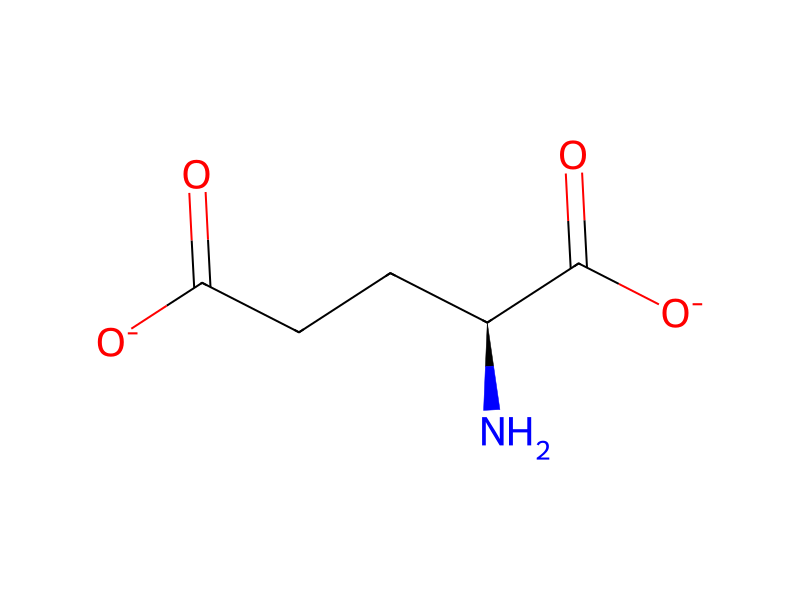
基本情報
- CAS
138-18-1- 標準SMILES
N[C@@H](CCC(=O)[O-])C(=O)[O-]- InChIKey
WHUUTDBJXJRKMK-VKHMYHEASA-L- 分子式
- C5H7NO4-2
- 平均分子量
- 145.11 g/mol
- 単同位体質量
- 145.03860486
概要
L-glutamate(2-) is an L-alpha-amino acid anion that is the dianion obtained by the deprotonation of the both the carboxy groups of L-glutamic acid. It is a glutamate(2-) and a L-alpha-amino acid anion. It is a conjugate base of a L-glutamate(1-). It is an enantiomer of a D-glutamate(2-).
名称と識別子
- 優先名称
- L-glutamate(2-)
- IUPAC
- (2S)-2-aminopentanedioate
名称と別名
L-glutamate(2-)(2S)-2-aminopentanedioateCHEBI:29988RefChem:1088172glutamate(S)-2-Aminopentanedioic acid dianion138-18-1L-glutamic acid dianionL-Glutamic acid (2-)WHUUTDBJXJRKMK-VKHMYHEASA-LDTXSID201315375Q27110357
データベース識別子
- CAS
138-18-1- PubChem CID
- 5460544
- DTXSID
DTXSID201315375- ChEBI
CHEBI:29988- Nikkaji
- J2.338.013G
物性
構造計算による物性
- XLogP
- -2.4
- 極性表面積
- 106 Ų
- 水素結合供与体数
- 1
- 水素結合受容体数
- 5
- 回転可能結合数
- 2
- 重原子数
- 10
- 形式電荷
- -2
- 複雑度
- 134
安全と法規制
毒性情報
Exposure RoutesAbsorbed from the lumen of the small intestine into the enterocytes.Absorption is efficient and occurs by an active transport mechanism.
Toxicity Summary
Glutamate activates both ionotropic and metabotropic glutamate receptors. The ionotropic ones being non-NMDA (AMPA and kainate) and NMDA receptors. Free glutamic acid cannot cross the blood-brain barrier in appreciable quantities; instead it is converted into L-glutamine, which the brain uses for fuel and protein synthesis. It is conjectured that glutamate is involved in cognitive functions like learning and memory in the brain, though excessive amounts may cause neuronal damage associated in diseases like amyotrophic lateral sclerosis, lathyrism, and Alzheimer's disease. Also, the drug phencyclidine (more commonly known as PCP) antagonizes glutamate at the NMDA receptor, causing behavior reminiscent of schizophrenia. Glutamate in action is extremely difficult to study due to its transient nature.
Carcinogen ClassificationNo indication of carcinogenicity to humans (not listed by IARC).
化学と産業
薬理情報
Metabolism/MetabolitesHepatic
用途と製造
UsesConsidered to be nature's "Brain food" by improving mental capacities; helps speed the healing of ulcers; gives a "lift" from fatigue; helps control alcoholism, schizophrenia and the craving for sugar.
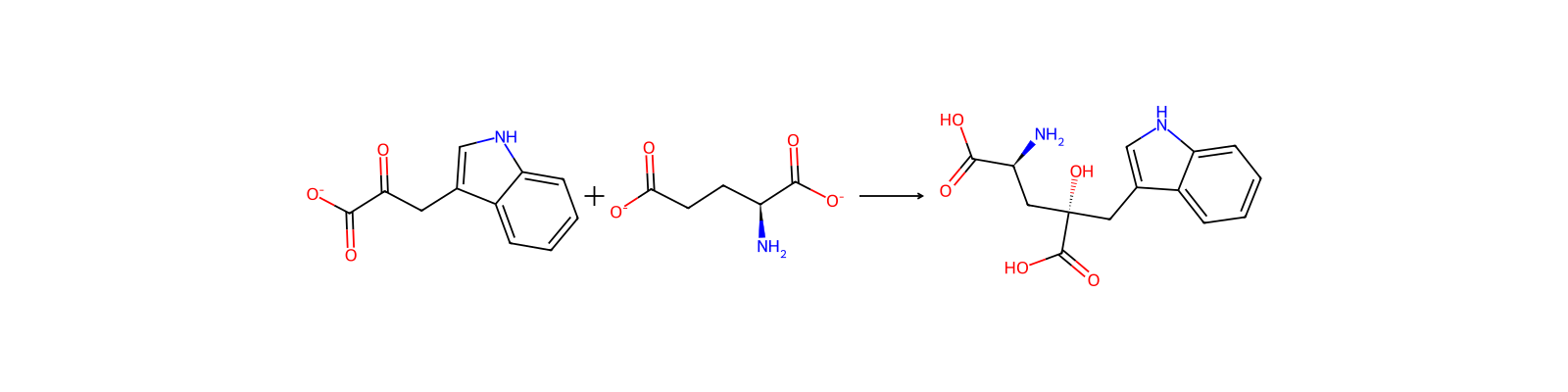
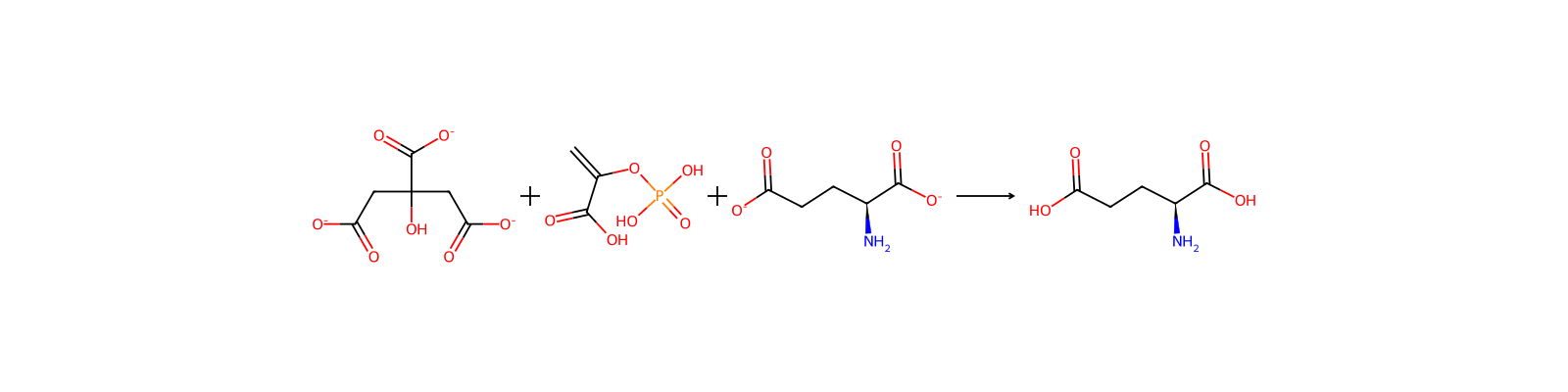
関連反応
52 件





化合物ノート
読み込み中…