

基本情報
- 標準SMILES
CCOC(=O)[C@H](CCc1ccccc1)N[C@@H](C)C(=O)N1[C@H](C(=O)O)C[C@H]2CCCC[C@@H]21- InChIKey
VXFJYXUZANRPDJ-WTNASJBWSA-N- 分子式
- C24H34N2O5
- 平均分子量
- 430.5 g/mol
- 単同位体質量
- 430.24677219
概要
Trandolapril is a heterobicylic compound that is (2S,3aR,7aS)-1-[(2S)-2-aminopropanoyl]octahydro-1H-indole-2-carboxylic acid in which the hydrogen of the amino group is substituted by a (2R)-1-ethoxy-1-oxo-4-phenylbutan-2-yl group. It is a angiotensin-converting enzyme inhibitor and a prodrug used for the treatment of hypertension. It has a role as an EC 3.4.15.1 (peptidyl-dipeptidase A) inhibitor, an antihypertensive agent and a prodrug. It is a tertiary carboxamide, an ethyl ester, an organic heterobicyclic compound, a dicarboxylic acid monoester, a dipeptide and a secondary amino compound. It is functionally related to a trandolaprilat.
名称と識別子
- 優先名称
- Trandolapril
- IUPAC
- (2S,3aR,7aS)-1-[(2S)-2-[[(2S)-1-ethoxy-1-oxo-4-phenylbutan-2-yl]amino]propanoyl]-2,3,3a,4,5,6,7,7a-octahydroindole-2-carboxylic acid
名称と別名
trandolapril87679-37-6MavikGoptenOdrikTrandolaprilumUdrikRU 44570Trandolaprilum [Latin]RU-44570DTXSID20236921T0N3G9CRC
名称をさらに表示
Trandolapril TabletsTrandolaprilum (Latin)RU44570(2S,3aR,7aS)-1-[(2S)-2-[[(2S)-1-ethoxy-1-oxo-4-phenylbutan-2-yl]amino]propanoyl]-2,3,3a,4,5,6,7,7a-octahydroindole-2-carboxylic acidNSC-758939CHEBI:9649DTXCID003692(2S,3aR,7aS)-1-((S)-N-((S)-1-Carboxy-3-phenylpropyl)alanyl)hexahydro-2-indolinecarboxylic acid, 1-ethyl ester
データベース識別子
- CAS
87679-37-6- PubChem CID
- 5484727
- DTXSID
DTXSID2023692- ChEMBL
CHEMBL1519- ChEBI
CHEBI:9649- UNII
- 1T0N3G9CRC
- EC Number
- 618-046-0
- Nikkaji
- J33.158I
物性
構造計算による物性
- XLogP
- 2
- 極性表面積
- 95.9 Ų
- 水素結合供与体数
- 2
- 水素結合受容体数
- 6
- 回転可能結合数
- 10
- 重原子数
- 31
- 形式電荷
- 0
- 複雑度
- 633
実験および物理化学的性質
Drugs
Pharmaceuticals -> Listed in ZINC15
Pharmaceuticals -> Antihypertensives
LogP3.5
Color/FormColorless, crystalline solid
Solubility
Soluble in chloroform, dichloromethane, methanol
2.07e-02 g/L
Human Drugs
Breast Feeding; Lactation; Milk, Human; Antihypertensive Agents; Angiotensin-Converting Enzyme Inhibitors; ACE Inhibitors
FDA approved drugs -> Active ingredient
FDA approved drugs -> Active ingredient
Melting Point
119-123 °C
125 °C
119 - 123 °C
Physical DescriptionSolid
Stability/Shelf LifeStable under recommended storage conditions.
Dissociation ConstantspKa values of trandolapril[Table#8435]
Collision Cross Section203.5 Ų [M+H]+ [CCS Type: TW; Method: Major Mix IMS/Tof Calibration Kit (Waters)]
安全と法規制
GHS分類
GHS Classification
Warning
H361 (94.1%): Suspected of damaging fertility or the unborn child [Warning Reproductive toxicity]
P203, P260, P280, P318, P319, P405, and P501 (click each P-code to see the statement)
Aggregated GHS information provided per 51 reports by companies from 5 notifications to the ECHA C&L Inventory. Each notification may be associated with multiple companies.
Danger
H360: May damage fertility or the unborn child [Danger Reproductive toxicity]
危険有害性情報
FDA Requirements
The Approved Drug Products with Therapeutic Equivalence Evaluations identifies currently marketed prescription drug products, including trandolapril, approved on the basis of safety and effectiveness by FDA under sections 505 of the Federal Food, Drug, and Cosmetic Act.
Hazard Classes and CategoriesRepr. 2 (94.1%)
Hazardous Reactivities and IncompatibilitiesIncompatible materials: Strong oxidizing agents.
安全と保護具
Fire Fighting Procedures
Suitable extinguishing media: Use water spray, alcohol-resistant foam, dry chemical or carbon dioxide.
Advice for firefighters: Wear self contained breathing apparatus for fire fighting if necessary.
Storage Conditions
Store at 20 deg - 25 °C (68 deg - 77 °F)
Keep container tightly closed in a dry and well-ventilated place. Keep in a dry place.
Cleanup Methods
ACCIDENTAL RELEASE MEASURES: Personal precautions, protective equipment and emergency procedures: Use personal protective equipment. Avoid dust formation. Avoid breathing vapors, mist or gas. Ensure adequate ventilation. Evacuate personnel to safe areas. Avoid breathing dust. Environmental precautions: Prevent further leakage or spillage if safe to do so. Do not let product enter drains. Methods and materials for containment and cleaning up: Pick up and arrange disposal without creating dust. Sweep up and shovel. Keep in suitable, closed containers for disposal.
Disposal Methods
SRP: Expired or waste pharmaceuticals shall carefully take into consideration applicable DEA, EPA, and FDA regulations. It is not appropriate to dispose by flushing the pharmaceutical down the toilet or discarding to trash. If possible return the pharmaceutical to the manufacturer for proper disposal being careful to properly label and securely package the material. Alternatively, the waste pharmaceutical shall be labeled, securely packaged and transported by a state licensed medical waste contractor to dispose by burial in a licensed hazardous or toxic waste landfill or incinerator.
Product: Offer surplus and non-recyclable solutions to a licensed disposal company. Contact a licensed professional waste disposal service to dispose of this material; Contaminated packaging: Dispose of as unused product.
Preventive Measures
ACCIDENTAL RELEASE MEASURES: Personal precautions, protective equipment and emergency procedures: Use personal protective equipment. Avoid dust formation. Avoid breathing vapors, mist or gas. Ensure adequate ventilation. Evacuate personnel to safe areas. Avoid breathing dust. Environmental precautions: Prevent further leakage or spillage if safe to do so. Do not let product enter drains.
SRP: Local exhaust ventilation should be applied wherever there is an incidence of point source emissions or dispersion of regulated contaminants in the work area. Ventilation control of the contaminant as close to its point of generation is both the most economical and safest method to minimize personnel exposure to airborne contaminants. Ensure that the local ventilation moves the contaminant away from the worker.
Precautions for safe handling: Avoid formation of dust and aerosols. Further processing of solid materials may result in the formation of combustible dusts. The potential for combustible dust formation should be taken into consideration before additional processing occurs. Provide appropriate exhaust ventilation at places where dust is formed.
Appropriate engineering controls: Handle in accordance with good industrial hygiene and safety practice. Wash hands before breaks and at the end of workday.
Gloves must be inspected prior to use. Use proper glove removal technique (without touching glove's outer surface) to avoid skin contact with this product. Dispose of contaminated gloves after use in accordance with applicable laws and good laboratory practices. Wash and dry hands.
Personal Protective Equipment (PPE)
Eye/face protection: Use equipment for eye protection tested and approved under appropriate government standards such as NIOSH (US) or EN 166(EU).
Skin protection: Handle with gloves.
Body Protection: Impervious clothing. The type of protective equipment must be selected according to the concentration and amount of the dangerous substance at the specific workplace.
Respiratory protection: Where risk assessment shows air-purifying respirators are appropriate use a full-face particle respirator type N100 (US) or type P3 (EN 143) respirator cartridges as a backup to engineering controls. If the respirator is the sole means of protection, use a full-face supplied air respirator. Use respirators and components tested and approved under appropriate government standards such as NIOSH (US) or CEN (EU).
毒性情報
Interactions
The hypotensive effect of certain inhalation anesthetics may be enhanced by angiotensin-converting enzyme (ACE) inhibitors including trandolapril.
Patients taking concomitant mammalian target of rapamycin (mTOR)inhibitor (e.g., temsirolimus, sirolimus, everolimus) therapy may be at increased risk for angioedema.
Nitritoid reactions (symptoms include facial flushing, nausea, vomiting and hypotension) have been reported rarely in patients on therapy with injectable gold (sodium aurothiomalate) and concomitant angiotensin-converting enzyme (ACE) inhibitor therapy including trandolapril.
In patients who are elderly, volume-depleted (including those on diuretic therapy), or with compromised renal function, co- administration of non-steroidal anti-inflammatory drugs (NSAIDs), including selective cyclooxygenase-2 (COX-2) inhibitors, with angiotensin-converting enzyme (ACE) inhibitors, including trandolapril, may result in deterioration of renal function, including possible acute renal failure. These effects are usually reversible. Monitor renal function periodically in patients receiving trandolapril and NSAID therapy. The antihypertensive effect of ACE inhibitors, including trandolapril may be attenuated by NSAIDs.
For more Interactions (Complete) data for Trandolapril (9 total), please visit the HSDB record page.
HepatotoxicityTrandolapril, like other ACE inhibitors, has been associated with a low rate of serum aminotransferase elevations (
Toxicity Summary
IDENTIFICATION AND USE: Trandolapril is a colorless, crystalline solid. Trandolapril tablets are indicated for the treatment of hypertension. HUMAN STUDIES: In humans, the most likely clinical manifestation would be symptoms attributable to severe hypotension. Symptoms expected with angiotensin-converting enzyme (ACE) inhibitors are hypotension, hyperkalemia, and renal failure. Rare angiotensin-converting enzyme (ACE) inhibitor-associated clinical syndrome manifested initially by cholestatic jaundice may occur; this may progress to fulminant hepatic necrosis and is potentially fatal. Patients receiving an ACE inhibitor, including trandolapril, who develop jaundice or marked elevations in hepatic enzymes should discontinue the drug and receive appropriate monitoring. Use of drugs that act on the renin-angiotensin system during the second and third trimesters of pregnancy reduces fetal renal function and increases fetal and neonatal morbidity and death. Resulting oligohydramnios can be associated with fetal lung hypoplasia and skeletal deformations. Potential neonatal adverse effects include skull hypoplasia, anuria, hypotension, renal failure, and death. ANIMAL STUDIES: In dogs, an oral dose of 1000 mg/kg did not cause mortality and abnormal clinical signs were not observed. In rats, an oral dose of 5000 mg/kg caused low mortality (1 male out of 5; 0 females). A perinatal and postnatal study was performed in female Sprague-Dawley rats treated orally with trandolapril at dosage levels of 3, 30 and 300 mg/kg/day from day 17 of pregnancy to postpartum day 21. Incidence of dilatation of renal pelvis with higher value in kidney weight was increased in offspring in the 30 and 300 mg/kg dosage groups, and water consumption at the same dosage groups was higher than that of the control group. Body weight gain in offspring was depressed in each treated group and viability of offspring from postpartum day 0 to day 4 was slightly decreased in the 30 and 300 mg/kg dosage groups comparing with that of the control group. No adverse effects were observed on the other postnatal development of the offspring, such as differentiation, sexual maturation, reflex, motor activity, emotionality, learning ability and reproductive performance. No adverse effects were detected in the second generation offspring.
Ongoing Test Status
EPA has released the Interactive Chemical Safety for Sustainability (iCSS) Dashboard. The iCSS Dashboard provides an interactive tool to explore rapid, automated (or in vitro high-throughput) chemical screening data generated by the Toxicity Forecaster (ToxCast) project and the federal Toxicity Testing in the 21st century (Tox21) collaboration. /The title compound was tested by ToxCast and/or Tox21 assays/[USEPA; ICSS Dashboard Application; Available from, as of November 16, 2017: http://actor.epa.gov/dashboard/]
Human Toxicity Excerpts
/HUMAN EXPOSURE STUDIES/ Trandolapril is deesterified to the diacid metabolite, trandolaprilat, which is approximately eight times more active as an inhibitor of angiotensin-converting enzyme (ACE) activity. ACE is a peptidyl dipeptidase that catalyzes the conversion of angiotensin I to the vasoconstrictor, angiotensin II. Angiotensin II is a potent peripheral vasoconstrictor that also stimulates secretion of aldosterone by the adrenal cortex and provides negative feedback for renin secretion. The effect of trandolapril in hypertension appears to result primarily from the inhibition of circulating and tissue ACE activity thereby reducing angiotensin II formation, decreasing vasoconstriction, decreasing aldosterone secretion, and increasing plasma renin. Decreased aldosterone secretion leads to diuresis, natriuresis, and a small increase of serum potassium. In controlled clinical trials, treatment with trandolapril alone resulted in mean increases in potassium of 0.1 mEq/L. ACE is identical to kininase II, an enzyme that degrades bradykinin, a potent peptide vasodilator; whether increased levels of bradykinin play a role in the therapeutic effect of trandolapril remains to be elucidated. While the principal mechanism of antihypertensive effect is thought to be through the renin-angiotensin-aldosterone system, trandolapril exerts antihypertensive actions even in patients with low-renin hypertension.
/SIGNS AND SYMPTOMS/ Angioedema of the face, extremities, lips, tongue, glottis, and larynx has been reported in patients treated with angiotensin-converting enzyme (ACE) inhibitors including trandolapril. Symptoms suggestive of angioedema or facial edema occurred in 0.13% of trandolapril-treated patients. Two of the four cases were life-threatening and resolved without treatment or with medication (corticosteroids). Angioedema associated with laryngeal edema can be fatal. If laryngeal stridor or angioedema of the face, tongue or glottis occurs, treatment with trandolapril should be discontinued immediately, the patient treated in accordance with accepted medical care and carefully observed until the swelling disappears. In instances where swelling is confined to the face and lips, the condition generally resolves without treatment; antihistamines may be useful in relieving symptoms.
/SIGNS AND SYMPTOMS/ Rare angiotensin-converting enzyme (ACE) inhibitor-associated clinical syndrome manifested initially by cholestatic jaundice may occur; may progress to fulminant hepatic necrosis and is potentially fatal. Patients receiving an ACE inhibitor, including trandolapril, who develop jaundice or marked elevations in hepatic enzymes should discontinue the drug and receive appropriate monitoring.
/SIGNS AND SYMPTOMS/ In humans, the most likely clinical manifestation would be symptoms attributable to severe hypotension. Symptoms also expected with angiotensin-converting enzyme (ACE) inhibitors are hypotension, hyperkalemia, and renal failure. /Angiotensin-converting enzyme (ACE) inhibitors/
/PREGNANCY AND HUMAN REPRODUCTION/ Use of drugs that act on the renin-angiotensin system during the second and third trimesters of pregnancy reduces fetal renal function and increases fetal and neonatal morbidity and death. Resulting oligohydramnios can be associated with fetal lung hypoplasia and skeletal deformations. Potential neonatal adverse effects include skull hypoplasia, anuria, hypotension, renal failure, and death. When pregnancy is detected, discontinue trandolapril as soon as possible. These adverse outcomes are usually associated with use of these drugs in the second and third trimester of pregnancy. Most epidemiologic studies examining fetal abnormalities after exposure to antihypertensive use in the first trimester have not distinguished drugs affecting the renin-angiotensin system from other antihypertensive agents. Appropriate management of maternal hypertension during pregnancy is important to optimize outcomes for both mother and fetus.
Artificial Pollution SourcesTrandolapril's production and administration as a antihypertensive(1) may result in its release to the environment through various waste streams(SRC).
Drug Induced Liver Injury
Drug Induced Liver Injury Rank (DILIrank 2.0)
Trandolapril
vLess-DILI-concern
4
Adverse reactions
DOI:10.1016/j.drudis.2016.02.015
Non-Human Toxicity Excerpts
/LABORATORY ANIMALS: Acute Exposure/ In dogs, an oral dose of 1000 mg/kg did not cause mortality and abnormal clinical signs were not observed.
/LABORATORY ANIMALS: Acute Exposure/ In rats, an oral dose of 5000 mg/kg caused low mortality (1 male out of 5; 0 females).
/LABORATORY ANIMALS: Subchronic or Prechronic Exposure/ Trandolapril (RU44570) was orally administered to dogs at a daily dose of 2.5, 25 or 250 mg/kg for 13 weeks. After the administration period, 25 and 250 mg/kg groups were observed for recovery for 4 weeks. The results obtained are as follows: 1. One male in the 250 mg/kg group showed decrease of food consumption and body weight, stomatitis, hematemesis, decumbence, hypothermia, and finally loss of reactivity to stimuli. This animal was killed because of these severe changes on the 39th day of administration. Among the surviving animals, a temporary loss of body weight was observed in a few animals of the 25 and 250 mg/kg groups, and a decreased food consumption was sporadically seen in a few animals of the 250 mg/kg group during the administration period. No abnormal changes were found in the clinical observation and water intake in the surviving animals. 2. The changes attributable to the pharmacological effect of RU44570 were a decreased activity of the angiotensin-converting enzyme, increases in plasma renin activity and urine volume, and decreases in specific gravity and concentrations of Na, K and Cl in the urine of every administration group. A decrease in blood pressure and an increase in the PAS and Bowie positive granules in the juxtaglomerular cells were also found in the 25 and 250 mg/kg groups. In addition, thickening of the afferent arteriolar wall of the glomeruli, a basophilic change of the renal tubular epithelial cells, and localized atrophy and hypertrophy of the renal tubules were observed in the 25 and 250 mg/kg groups, and increases in BUN, ALP and creatinine, and a slight dilation of the renal tubules were seen in the 250 mg/kg group. These observations indicated that RU44570 affected renal structure at a dose of 25 mg/kg or more renal function at a dose of 250 mg/kg. The animal killed in a moribund state showed nephrosis which consisted mainly of a moderate dilation of the renal tubules and vacuolation of the renal tubular epithelial cells, stomatitis, severe hemorrhage and necrosis with neutrophil infiltration in the fundus of the glandular stomach, atrophy of the hemopoietic system, and ectopic calcification in the heart, kidneys, stomach, trachea and alveolar wall. Changes in the kidneys similar to those observed in other animals were also detected. These changes suggested that this animal lapsed into a moribund state due to renal dysfunction and the resultant uremia.
/LABORATORY ANIMALS: Subchronic or Prechronic Exposure/ The angiotensin I-converting enzyme (CE) inhibitors, trandolapril (RU 44570) and enalapril were administered for 2 weeks to SHR at doses (3 and 10 mg/kg/day, p.o., respectively) that produced important and comparable inhibitions of plasma (84 and 88%), aorta (97 and 88%), and atrium (89 and 82%) CE activities. At these doses, the inhibitory effects of trandolapril and enalapril were nonetheless different on CE in heart ventricle (58 and 72%) and kidney (45 and 85%). In addition, although both drugs reduced blood pressure (BP) and heart hypertrophy, trandolapril was more potent despite a lower dose-ratio. All these parameters were reexamined 1, 3, and 8 days after drug withdrawal: BP returned to control levels within 3 days in enalapril-treated rats, whereas it remained low for at least 8 days in trandolapril-treated animals. The reduction of heart hypertrophy owing to trandolapril was still present 8 days after drug discontinuation. On cessation of treatment, plasma CE increased above controls, ventricle CE returned to control levels within 3 days, whereas atrial and aortic CE activities remained inhibited for 8 days in the enalapril group. In contrast, in trandolapril-treated rats, CE activities in serum and tissues were still inhibited after 8 days. These results demonstrate that at the doses used trandolapril is more potent and longer acting than enalapril.
For more Non-Human Toxicity Excerpts (Complete) data for Trandolapril (8 total), please visit the HSDB record page.
Populations at Special Risk
Neutropenia/agranulocytosis, particularly in patients with renal impairment (especially those with concomitant collagen vascular disease [e.g., systemic lupus erythematosus, scleroderma]), reported with captopril. Data insufficient to rule out similar incidence of agranulocytosis with trandolapril in patients without prior reactions with other angiotensin-converting enzyme (ACE) inhibitors. Monitoring of leukocytes in patients with collagen vascular disease, especially if renal impairment exists, should be considered.
Trandolapril tablets are contraindicated in patients who are hypersensitive to this product, in patients with hereditary/idiopathic angioedema and in patients with a history of angioedema related to previous treatment with an angiotensin-converting enzyme (ACE) inhibitor.
Antidote and Emergency Treatment
/SRP:/ Immediate first aid: Ensure that adequate decontamination has been carried out. If patient is not breathing, start artificial respiration, preferably with a demand valve resuscitator, bag-valve-mask device, or pocket mask, as trained. Perform CPR if necessary. Immediately flush contaminated eyes with gently flowing water. Do not induce vomiting. If vomiting occurs, lean patient forward or place on the left side (head-down position, if possible) to maintain an open airway and prevent aspiration. Keep patient quiet and maintain normal body temperature. Obtain medical attention. /Poisons A and B/
/SRP:/ Basic treatment: Establish a patent airway (oropharyngeal or nasopharyngeal airway, if needed). Suction if necessary. Watch for signs of respiratory insufficiency and assist ventilations if needed. Administer oxygen by nonrebreather mask at 10 to 15 L/min. Monitor for pulmonary edema and treat if necessary ... . Monitor for shock and treat if necessary ... . Anticipate seizures and treat if necessary ... . For eye contamination, flush eyes immediately with water. Irrigate each eye continuously with 0.9% saline (NS) during transport ... . Do not use emetics. For ingestion, rinse mouth and administer 5 mL/kg up to 200 mL of water for dilution if the patient can swallow, has a strong gag reflex, and does not drool ... . Cover skin burns with dry sterile dressings after decontamination ... . /Poisons A and B/
/SRP:/ Advanced treatment: Consider orotracheal or nasotracheal intubation for airway control in the patient who is unconscious, has severe pulmonary edema, or is in severe respiratory distress. Positive-pressure ventilation techniques with a bag valve mask device may be beneficial. Consider drug therapy for pulmonary edema ... . Consider administering a beta agonist such as albuterol for severe bronchospasm ... . Monitor cardiac rhythm and treat arrhythmias as necessary ... . Start IV administration of D5W TKO /SRP: "To keep open", minimal flow rate/. Use 0.9% saline (NS) or lactated Ringer's (LR) if signs of hypovolemia are present. For hypotension with signs of hypovolemia, administer fluid cautiously. Watch for signs of fluid overload ... . Treat seizures with diazepam or lorazepam ... . Use proparacaine hydrochloride to assist eye irrigation ... . /Poisons A and B/
Treatment and supportive measures: Monitor blood pressure and heart rate for 6 hours after ingestion. If symptomatic or significant hypotension develops, observe for at least 24 hours. 1. If hypotension occurs, treat it with supine positioning and IV fluids. Vasopressors are rarely necessary. 2. Treat angioedema with usual measures (eg, diphenhydramine, corticosteroids) and discontinue the ACE inhibitors. Switching to an AR blocker may not be appropriate as angioedema has also been reported with these agents. 3. Treat hyperkalemia if it occurs. /Angiotensin blockers and ACE inhibitors/
For more Antidote and Emergency Treatment (Complete) data for Trandolapril (7 total), please visit the HSDB record page.
Effects During Pregnancy and Lactation◉ Summary of Use during Lactation
Non-Human Toxicity Values
LD50 Mouse (male) oral 4875 mg/kg
LD50 Mouse (female) oral 3990 mg/kg
法規制情報
FDA Requirements
The Approved Drug Products with Therapeutic Equivalence Evaluations identifies currently marketed prescription drug products, including trandolapril, approved on the basis of safety and effectiveness by FDA under sections 505 of the Federal Food, Drug, and Cosmetic Act.
化学と産業
薬理情報
ATC Code
C - Cardiovascular system
QC - Cardiovascular system
Protein BindingSerum protein binding of trandolapril is ~ 80% (independent of concentration and not saturable) while that of trandolaprilat is 65 to 94% (concentration-dependent and saturable).
Pharmacodynamics
Trandolapril is the ethyl ester prodrug of a nonsulfhydryl ACE inhibitor, trandolaprilat. Trandolapril is deesterified in the liver to the diacid metabolite, trandolaprilat, which is approximately eight times more active as an inhibitor of ACE than its parent compound. ACE is a peptidyl dipeptidase that is part of the RAAS. The RAAS is a homeostatic mechanism for regulating hemodynamics, water and electrolyte balance. During sympathetic stimulation or when renal blood pressure or blood flow is reduced, renin is released from the granular cells of the juxtaglomerular apparatus in the kidneys. In the blood stream, renin cleaves circulating angiotensinogen to ATI, which is subsequently cleaved to ATII by ACE. ATII increases blood pressure via a number of mechanisms. First, it stimulates the secretion of aldosterone from the adrenal cortex. Aldosterone travels to the distal convoluted tubule (DCT) and collecting tubule of nephrons where it increases sodium and water reabsorption by increasing the number of sodium channels and sodium-potassium ATPases on cell membranes. Second, ATII stimulates the secretion of vasopressin (also known as antidiuretic hormone or ADH) from the posterior pituitary gland. ADH stimulates further water reabsorption from the kidneys via insertion of aquaporin-2 channels on the apical surface of cells of the DCT and collecting tubules. Third, ATII increases blood pressure through direct arterial vasoconstriction. Stimulation of the Type 1 ATII receptor on vascular smooth muscle cells leads to a cascade of events resulting in myocyte contraction and vasoconstriction. In addition to these major effects, ATII induces the thirst response via stimulation of hypothalamic neurons. ACE inhibitors inhibit the rapid conversion of ATI to ATII and antagonize RAAS-induced increases in blood pressure. ACE (also known as kininase II) is also involved in the enzymatic deactivation of bradykinin, a vasodilator. Inhibiting the deactivation of bradykinin increases bradykinin levels and may further sustain the effects of trandolaprilat by causing increased vasodilation and decreased blood pressure. The blood pressure lowering effect of trandolaprilat is due to a decrease in peripheral vascular resistance, which is not accompanied by significant changes in urinary excretion of chloride or potassium or water or sodium retention.
Mechanism of Action
There are two isoforms of ACE: the somatic isoform, which exists as a glycoprotein comprised of a single polypeptide chain of 1277; and the testicular isoform, which has a lower molecular mass and is thought to play a role in sperm maturation and binding of sperm to the oviduct epithelium. Somatic ACE has two functionally active domains, N and C, which arise from tandem gene duplication. Although the two domains have high sequence similarity, they play distinct physiological roles. The C-domain is predominantly involved in blood pressure regulation while the N-domain plays a role in hematopoietic stem cell differentiation and proliferation. ACE inhibitors bind to and inhibit the activity of both domains, but have much greater affinity for and inhibitory activity against the C-domain. Trandolaprilat, the active metabolite of trandolapril, competes with ATI for binding to ACE and inhibits and enzymatic proteolysis of ATI to ATII. Decreasing ATII levels in the body decreases blood pressure by inhibiting the pressor effects of ATII as described in the Pharmacology section above. Trandolaprilat also causes an increase in plasma renin activity likely due to a loss of feedback inhibition mediated by ATII on the release of renin and/or stimulation of reflex mechanisms via baroreceptors.
Biological Half-Life
The elimination half lives of trandolapril and trandolaprilat are about 6 and 10 hours, respectively, but, similar to all ACE inhibitors, trandolaprilat also has a prolonged terminal elimination phase that involves a small fraction of administered drug. This likely represents drug binding to plasma and tissue ACE. The effective half life of elimination for trandolaprilat is 16-24 hours.
At steady state, the effective half-life of trandolaprilat is 22.5 hours. /Trandolaprilat/
Metabolism/Metabolites
Cleavage of the ester group of trandolapril, primarily in the liver, is responsible for conversion to trandolaprilat, the active metabolite. Seven other metabolites, including diketopiperazine and glucuronide conjugated derivatives of trandolapril and trandolaprilat, have been identified.
Trandolapril is a prodrug and has little pharmacologic activity until hydrolyzed in the liver to trandolaprilat.
Trandolapril's angiotensin-converting enzyme (ACE)-inhibiting activity is primarily due to its diacid metabolite, trandolaprilat. Cleavage of the ester group of trandolapril, primarily in the liver, is responsible for conversion.
After oral administration of trandolapril, about 33% of parent drug and metabolites are recovered in urine, mostly as trandolaprilat, with about 66% in feces. ... In addition to trandolaprilat, at least 7 other metabolites have been found, principally glucuronides or deesterification products.
FDA Pharmacological Classification
1T0N3G9CRC
TRANDOLAPRIL
Established Pharmacologic Class [EPC] - Angiotensin Converting Enzyme Inhibitor
Mechanisms of Action [MoA] - Angiotensin-converting Enzyme Inhibitors
Trandolapril is an Angiotensin Converting Enzyme Inhibitor. The mechanism of action of trandolapril is as an Angiotensin-converting Enzyme Inhibitor.
TRANDOLAPRIL
MeSH Pharmacological Classification
A class of drugs whose main indications are the treatment of hypertension and heart failure. They exert their hemodynamic effect mainly by inhibiting the renin-angiotensin system. They also modulate sympathetic nervous system activity and increase prostaglandin synthesis. They cause mainly vasodilation and mild natriuresis without affecting heart rate and contractility.
Drugs used in the treatment of acute or chronic vascular HYPERTENSION regardless of pharmacological mechanism. Among the antihypertensive agents are DIURETICS; (especially DIURETICS, THIAZIDE); ADRENERGIC BETA-ANTAGONISTS; ADRENERGIC ALPHA-ANTAGONISTS; ANGIOTENSIN-CONVERTING ENZYME INHIBITORS; CALCIUM CHANNEL BLOCKERS; GANGLIONIC BLOCKERS; and VASODILATOR AGENTS.
Absorption, Distribution and Excretion
~ 40-60% absorbed; extensive first pass metabolism results in a low bioavailability of 4-14%
After oral administration of trandolapril, about 33% of parent drug and metabolites are recovered in urine, mostly as trandolaprilat, with about 66% in feces.
18 L
52 L/h [After approximately 2 mg IV doses]
/MILK/ Trandolapril and its metabolites are distributed into milk in rats.
After oral administration of trandolapril, about 33% of parent drug and metabolites are recovered in urine, mostly as trandolaprilat, with about 66% in feces. The extent of the absorbed dose which is biliary excreted has not been determined. Plasma concentrations (Cmax and AUC of trandolapril and Cmax of trandolaprilat) are dose proportional over the 1-4 mg range, but the AUC of trandolaprilat is somewhat less than dose proportional. In addition to trandolaprilat, at least 7 other metabolites have been found, principally glucuronides or deesterification products.
Cellular LocationsExtracellular
Metabolite PathwaysTrandolapril Action Pathway
用途と製造
Uses
MEDICATION (VET)
MEDICATION
Use (kg; approx.) in Germany (2009): >10
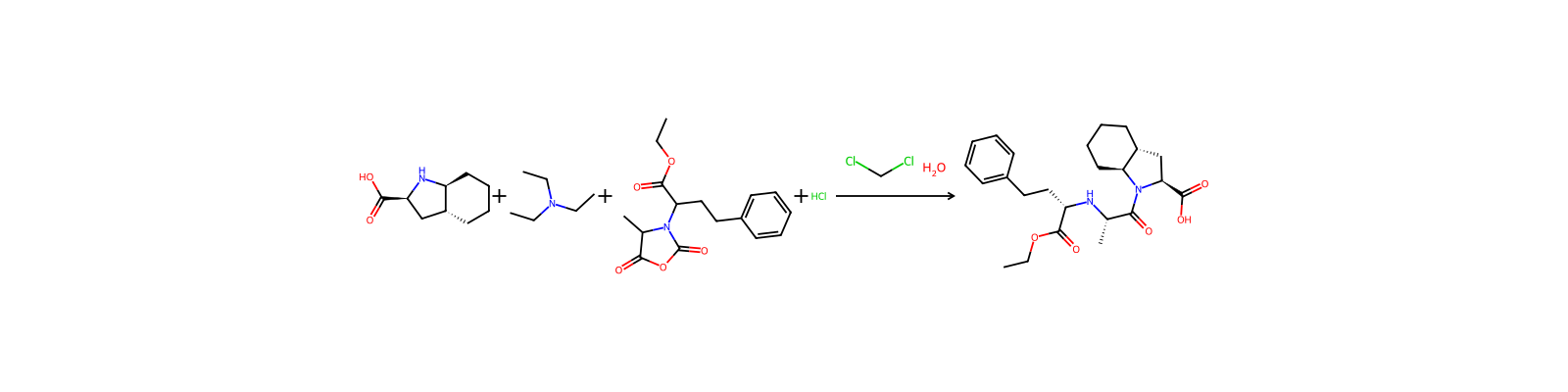
Methods of ManufacturingPreparation: H. Urback et al., European Patent Office patent 84164; eidem, United States of America patent 4933361 (1983, 1990 both to Hoechst).
Formulations/Preparations
Table: Trandolapril Preparations [Table#8436]
Table: Trandolapril and Verapamil Hydrochloride Preparations [Table#8437]
関連反応
7 件





関連ノート
読み込み中…