
(7R)-7-[[[(2-アミノ-4-チアゾリル)(メトキシイミノ)メチル]カルボニル]アミノ]-3-[(アセチルオキシ)メチル]セファム-3-エン-4-カルボン酸
Cefotaxime

基本情報
- CAS
60846-21-1- 標準SMILES
CO/N=C(\C(=O)N[C@@H]1C(=O)N2C(C(=O)O)=C(COC(C)=O)CS[C@H]12)c1csc(N)n1- InChIKey
GPRBEKHLDVQUJE-QSWIMTSFSA-N- 分子式
- C16H17N5O7S2
- 平均分子量
- 455.5 g/mol
- 単同位体質量
- 455.05694025
概要
Cefotaxime is a cephalosporin compound having acetoxymethyl and [2-(2-amino-1,3-thiazol-4-yl)-2-(methoxyimino)acetyl]amino side groups. It has a role as an antibacterial drug and a drug allergen. It is a cephalosporin, an oxime O-ether and a member of 1,3-thiazoles. It is a conjugate acid of a cefotaxime(1-).
名称と識別子
- 優先名称
- Cefotaxime
- IUPAC
- (6R,7R)-3-(acetyloxymethyl)-7-[[(2Z)-2-(2-amino-1,3-thiazol-4-yl)-2-methoxyiminoacetyl]amino]-8-oxo-5-thia-1-azabicyclo[4.2.0]oct-2-ene-2-carboxylic acid
- 現地名
- (7R)-7-[[[(2-アミノ-4-チアゾリル)(メトキシイミノ)メチル]カルボニル]アミノ]-3-[(アセチルオキシ)メチル]セファム-3-エン-4-カルボン酸
- 英語名
- (6R,7R)-3-(Acetoxymethyl)-8-oxo-7-[(2-amino-4-thiazolyl)(methoxyimino)acetylamino]-5-thia-1-azabicyclo[4.2.0]octa-2-ene-2-carboxylic acid
- 分子式
- C16H17N5O7S2
- 分子量
- 455.47
名称と別名
cefotaxime63527-52-6CephotaximeCefotaximaCefotaximumCefotaxim HikmaCephotaximKlaforanPrimafenCHEBI:204928N2GI8B1GK7(6R,7R)-3-(acetyloxymethyl)-7-[[(2Z)-2-(2-amino-1,3-thiazol-4-yl)-2-methoxyiminoacetyl]amino]-8-oxo-5-thia-1-azabicyclo[4.2.0]oct-2-ene-2-carboxylic acid
名称をさらに表示
(6R,7R)-3-(アセトキシメチル)-8-オキソ-7-[(2-アミノ-4-チアゾリル)(メトキシイミノ)アセチルアミノ]-5-チア-1-アザビシクロ[4.2.0]オクタ-2-エン-2-カルボン酸3-(アセトキシメチル)-7β-[(2-アミノ-4-チアゾリル)(メトキシイミノ)アセチルアミノ]セファム-3-エン-4-カルボン酸(6R,7R)-3-アセチルオキシメチル-7β-[(2-アミノ-4-チアゾリル)(メトキシイミノ)アセチルアミノ]セファム-3-エン-4-カルボン酸(7R)-7-[[[(2-アミノ-4-チアゾリル)(メトキシイミノ)メチル]カルボニル]アミノ]-3-[(アセチルオキシ)メチル]セファム-3-エン-4-カルボン酸(6R,7R)-3-[(アセチルオキシ)メチル]-7-[2-(2-アミノ-1,3-チアゾール-4-イル)-2-(メトキシイミノ)アセトアミド]-8-オキソ-5-チア-1-アザビシクロ[4.2.0]オクタ-2-エン-2-カルボン酸3-(Acetoxymethyl)-7β-[(2-amino-4-thiazolyl)(methoxyimino)acetylamino]cepham-3-ene-4-carboxylic acid
物性
構造計算による物性
- XLogP
- -1.4
- 極性表面積
- 227 Ų
- 水素結合供与体数
- 3
- 水素結合受容体数
- 12
- 回転可能結合数
- 8
- 重原子数
- 30
- 形式電荷
- 0
- 複雑度
- 833
実験および物理化学的性質
Drugs
Pharmaceuticals -> Listed in ZINC15
Pharmaceuticals -> Antibiotics
Pharmaceuticals -> Antibiotics
LogP
-0.5
-0.13
Solubility
Soluble
1.46e-01 g/L
Human Drugs
Breast Feeding; Lactation; Milk, Human; Anti-Infective Agents; Antibacterial Agents; Cephalosporins
Medicines for bacterial central nervous system infections
Physical DescriptionSolid
物理化学的性質
- 比重(密度)
- 1.802 · 1.802±0.14 g/cm3(Temp: 25 °C; Press: 760 Torr)(predicted)
- 酸解離定数(Pka)
- 2.66 · 2.660±0.50(predicted)
安全と法規制
安全情報は参考情報です。供給元の安全データシート(SDS)、適用法令、専門家による評価に代わるものではありません。
GHS分類
GHS Classification
Danger
H315 (58.8%): Causes skin irritation [Warning Skin corrosion/irritation]
P233, P260, P261, P264, P264+P265, P271, P272, P280, P284, P302+P352, P304+P340, P305+P351+P338, P319, P321, P332+P317, P333+P317, P337+P317, P342+P316, P362+P364, P403, P403+P233, P405, and P501 (click each P-code to see the statement)
Aggregated GHS information provided per 17 reports by companies from 4 notifications to the ECHA C&L Inventory. Each notification may be associated with multiple companies.
危険有害性情報
Regulatory InformationREACH registered substance: Cefotaxime (EC: 264-299-1)
Hazard Classes and CategoriesSkin Irrit. 2 (58.8%)
毒性情報
Adverse Effects* Local reaction: pain, swelling
Toxicity Summary
Cefotaxime is metabolized by the liver and excreted through the kidneys, and dysfunctions may result in decreased drug clearance leading to increased plasma concentrations. About 50 to 60% of the agent is excreted unchanged, and 15 to 20% is excreted as a desacetyl metabolite desacetylcefotaxime. Toxicity may result in convulsions, dyspnea, hypothermia, cyanosis, reversible encephalopathy, and death. Mortality has occurred with dosages of 6000 mg/kg/day. Treatment for cefotaxime toxicity requires supportive management.
Drug Induced Liver Injury
Drug-Induced Liver Injury Severity and Toxicity (DILIst)
cefotaxime
DILI Positive
Intravenous
DOI:10.1016/j.drudis.2019.09.022
化学と産業
薬理情報
ATC Code
J - Antiinfectives for systemic use
QJ - Antiinfectives for systemic use
J01DD01
Pharmacodynamics
Cefotaxime is a third generation intravenous cephalosporin antibiotic. It has broad spectrum activity against Gram positive and Gram negative bacteria. It does not have activity against <i>Pseudomonas aeruginosa</i>. Cefotaxime works by inhibiting bacterial cell wall biosynthesis. A positive feature of cefotaxime is that it display a resistance to penicillinases and is useful to treat infections that are resistant to penicillin derivatives.
Mechanism of Action
The bactericidal activity of cefotaxime results from the inhibition of cell wall synthesis via affinity for penicillin-binding proteins (PBPs). Cefotaxime shows high affinity for penicillin-binding proteins in the cell wall including PBP Ib and PBP III.
Biological Half-LifeApproximately 1 hour.
Metabolism/Metabolites
Approximately 20-36% of an intravenously administered dose of 14C-cefotaxime is excreted by the kidney as unchanged cefotaxime and 15-25% as the desacetyl derivative, the major metabolite. The desacetyl metabolite has been shown to contribute to the bactericidal activity. Two other urinary metabolites (M2 and M3) account for about 20-25%. They lack bactericidal activity.
FDA Pharmacological Classification
N2GI8B1GK7
CEFOTAXIME
Established Pharmacologic Class [EPC] - Cephalosporin Antibacterial
Chemical Structure [CS] - Cephalosporins
Cefotaxime is a Cephalosporin Antibacterial.
CEFOTAXIME
MeSH Pharmacological ClassificationSubstances that inhibit the growth or reproduction of BACTERIA.
Absorption, Distribution and Excretion
関連反応
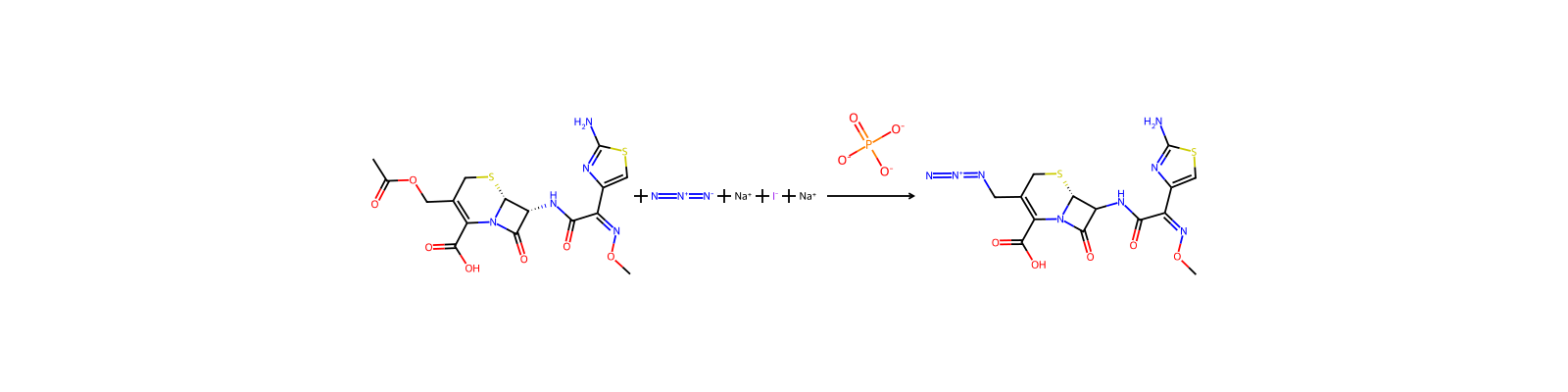
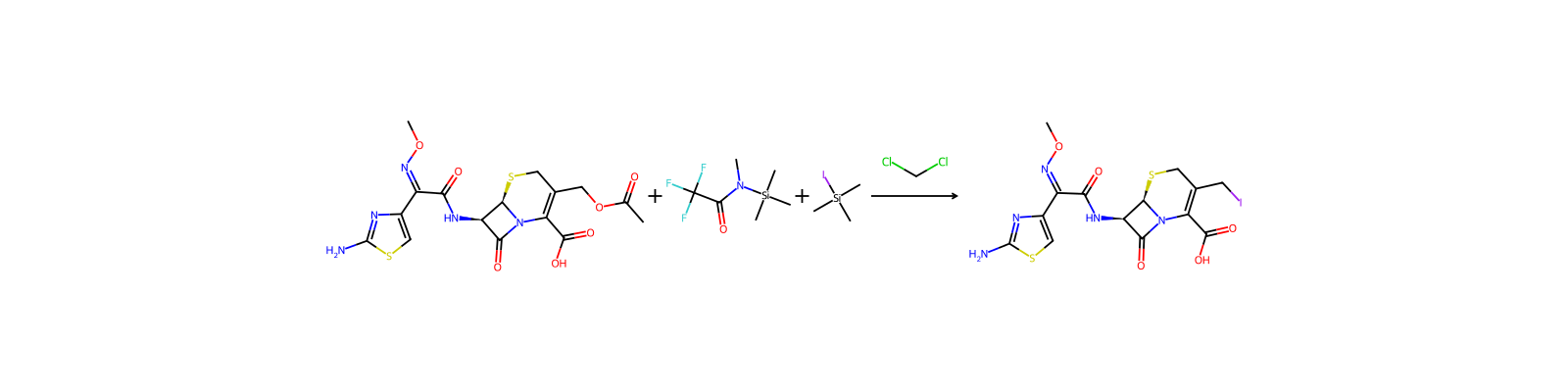
19 件




化合物ノート
読み込み中…