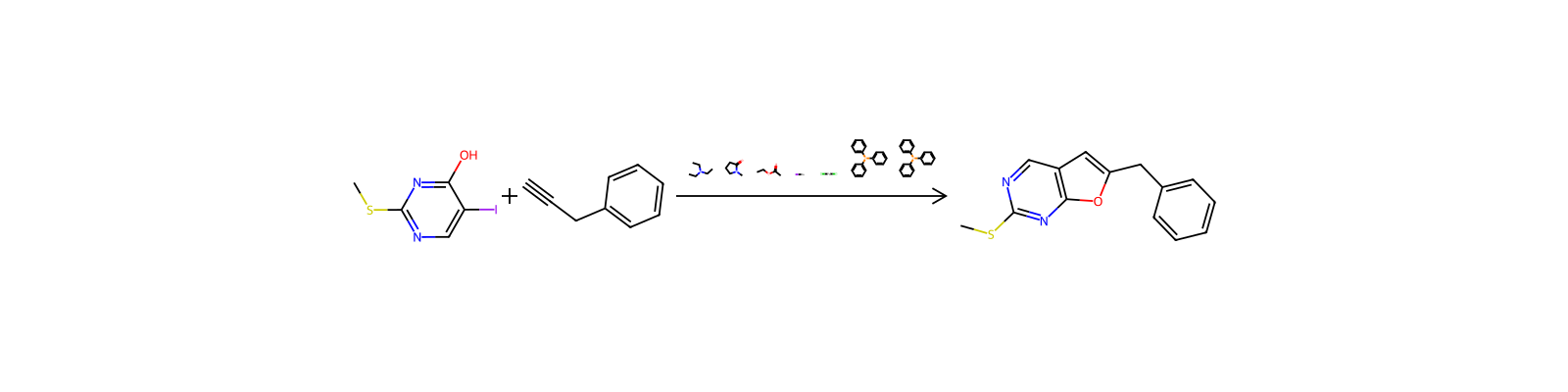
HRID 9764反応物として
Benzylacetylene

10147-11-2C#CCc1ccccc1NGKSKVYWPINGLI-UHFFFAOYSA-N10147-11-2DTXSID00143941Clear colorless to yellow liquid
安全情報は参考情報です。供給元の安全データシート(SDS)、適用法令、専門家による評価に代わるものではありません。
Warning
H226 (91.3%): Flammable liquid and vapor [Warning Flammable liquids]
P210, P233, P240, P241, P242, P243, P261, P264, P264+P265, P271, P280, P302+P352, P303+P361+P353, P304+P340, P305+P351+P338, P319, P321, P332+P317, P337+P317, P362+P364, P370+P378, P403+P233, P403+P235, P405, and P501 (click each P-code to see the statement)
Aggregated GHS information provided per 46 reports by companies from 6 notifications to the ECHA C&L Inventory. Each notification may be associated with multiple companies.
使用3-Phenyl-1-propyne is used as a starting material in the synthesis of 4-phenyl-2-butyn-1-ol. It is also used in the preparation of beta-hydroxytriazoles and indoles.
一般的な説明3-Phenyl-1-propyne is a 3-aryl-1-propyne. The electronic transition of the resonance-stabilized 1-phenylpropargyl radical, produced in a jet-cooled discharge of 3-phenyl-1-propyne, has been studied by laser-induced fluorescence excitation and dispersed single vibronic level fluorescence (SVLF) spectroscopy. The microwave rotational spectrum of 3-phenyl-1-propyne (propargyl benzene) has been studied and its stable conformation is reported to have coplanar carbon atoms. Reaction of N-methyl-N-phenylhydrazine or N-phenylhydrazine with 3-phenyl-1-propyne is reported to yield indoles. 3-Phenyl-1-propyne is reported to react with styrene oxide and sodium azide, to afford β-hydroxytriazoles.


