ホームMCPワークベンチSkills
ホームワークベンチ通知マイページ
llms.txt · MCPガイドプライバシーポリシー · 利用規約 · サポートv1.8.0
  1. ホーム
  2. /化合物

ベンジルトリメチルアンモニウムクロリド

Benzyltrimethylammonium chloride

HCID 5963
ノートを作成反応を作成見積依頼を出す
印刷プレビュー
基本情報概要名称と識別子物性安全と法規制化学と産業関連反応化合物ノート
部分構造検索類似構造を探す

基本情報

CAS
56-93-9
標準SMILES
C[N+](C)(C)Cc1ccccc1.[Cl-]
InChIKey
KXHPPCXNWTUNSB-UHFFFAOYSA-M
分子式
C10H16N.Cl
平均分子量
185.69 g/mol
単同位体質量
185.09712719

概要

Benzyltrimethylammonium chloride appears as light yellow liquid with a mild almond odor. May float or sink in water. (USCG, 1999)

名称と識別子

優先名称
Benzyltrimethylammonium chloride
IUPAC
benzyl(trimethyl)azanium chloride
現地名
ベンジルトリメチルアンモニウムクロリド
英語名
Benzyltrimethylammonium chloride
分子式
C10H16ClN
分子量
185.69

名称と別名

Benzyltrimethylammonium chloride56-93-9TmbacBenzenemethanaminium, N,N,N-trimethyl-, chlorideTRIMETHYLBENZYLAMMONIUM CHLORIDEBenzyl trimethylammonium chlorideAmmonium, benzyltrimethyl-, chlorideDTXSID8024600VNK45Y7BA1Hipochem migrator jN,N,N-Trimethylbenzenemethanaminium chlorideVARIQUAT B 200
名称をさらに表示
ベンジルトリメチルアンモニウムクロリドトリメチルベンジルアミニウム·クロリドベンジルトリメチルアミニウム·クロリドN,N,N-トリメチルベンゼンメタンアミニウム·クロリドベンジルトリメチルアンモニウム·クロリドベンジル(トリメチル)アンモニウム=クロリドN,N-ジメチル-N-ベンジルメタンアミニウム·クロリド塩化ベンジルトリメチルアンモニウムN,N,N-トリメチルベンジルアミニウム·クロリドベンジルトリメチルアンモニウムクロライド塩化ベンジルトリメチルアンモンモニウム塩化物塩化ベンジルトリメチルアンモニウム,50%溶液ベンジルトリメチルアンモニウム=クロリドトリメチルベンジルアンモニウム=クロリド塩化トリメチルベンジルアンモニウムトリメチルベンジルアンモニウムクロリドベンジルトリメチルアンモニウムクロリド 溶液(2R)-2α-フェニル-2,3-ジヒドロ-1,3a-ジアザ-8-チアシクロペンタ[a]インデン(2R)-2-フェニル-2,3-ジヒドロイミダゾ[2,1-b]ベンゾチアゾール(4R)-4-フェニル-7-チア-2,5-ジアザトリシクロ[6.4.0.02,6]ドデカ-1(12),5,8,10-テトラエンBTMBTMACBENZYL TRIMETHYL AMMONIUM CHLORIDE (BTMAC60) SURFACTANTN1,1,1,BZCl4-OH-Sudan I

データベース識別子

CAS
56-93-9
PubChem CID
5963
DTXSID
DTXSID8024600
ChEMBL
CHEMBL1372143
UNII
VNK45Y7BA1
EC Number
200-300-3

物性

構造計算による物性

極性表面積
0 Ų
水素結合供与体数
0
水素結合受容体数
1
回転可能結合数
2
重原子数
12
形式電荷
0
複雑度
107

実験および物理化学的性質

Chemical ClassesNitrogen Compounds -> Quaternary Amines
LogPlog Kow = -2.17
OdorMild almond odor
Density · 3 件

1.07 at 68 °F (USCG, 1999) - Denser than water; will sink

1.07 @ 20 °C/20 °C

Properties of 60% soln; wt/gal /bulk density/: 8.90 lb; FP: less than -50 °C

Color/Form · 3 件

CRYSTALLIZED FROM ACETONE

Colorless crystals

Light yellow, liquid (@ 15 °C and 1 atm)

Solubility · 4 件

greater than or equal to 100 mg/mL at 65.3 °F (NTP, 1992)

VERY SOL IN WATER, SOL IN HOT ACETONE

Readily sol in ethanol, butanol, and water; slightly sol in butyl phthalate and tributyl phosphate

>27.9 [ug/mL] (The mean of the results at pH 7.4)

Boiling Point · 2 件

greater than 275 °F at 760 mmHg (decomposes) (NTP, 1992)

>135 °C (Some decomp)

DecompositionWhen heated to decomposition it emits very toxic fumes of /hydrogen chloride and nitrogen oxides/.
Melting Point · 2 件

469 °F (NTP, 1992)

243 °C

安全と法規制

安全情報は参考情報です。供給元の安全データシート(SDS)、適用法令、専門家による評価に代わるものではありません。

GHS分類

GHS Classification · 6 件

This chemical does not meet GHS hazard criteria for 1.5% (5 of 339) of reports.

Danger

H301+H311 (36.3%): Toxic if swallowed or in contact with skin [Danger Acute toxicity, oral; acute toxicity, dermal]

P203, P261, P262, P264, P264+P265, P270, P271, P273, P280, P301+P316, P302+P352, P304+P340, P305+P351+P338, P316, P317, P318, P321, P330, P332+P317, P337+P317, P361+P364, P362+P364, P405, and P501 (click each P-code to see the statement)

Aggregated GHS information provided per 339 reports by companies from 16 notifications to the ECHA C&L Inventory. Each notification may be associated with multiple companies.

Danger

危険有害性情報

Regulatory Information · 4 件

Chemical: Benzenemethanaminium, N,N,N-trimethyl-, chloride (1:1)

Benzenemethanaminium, N,N,N-trimethyl-, chloride (1:1) is listed on the EPA's Chemical Data Reporting (CDR) system. Manufacturers and importers of Benzenemethanaminium, N,N,N-trimethyl-, chloride (1:1) are required to report information about their production and use of this chemical to the EPA under the Toxic Substances Control Act (TSCA). (40 eCFR Part 711)

Status: Active Update: 08-06-2016 https://echa.europa.eu/registration-dossier/-/registered-dossier/13489

Benzyltrimethylammonium chloride: Does not have an individual approval but may be used under an appropriate group standard

Fire HazardsSpecial Hazards of Combustion Products: Toxic oxides of nitrogen and hydrochloric acid fumes may form in fire. (USCG, 1999)
Health HazardsIngestion causes gastrointestinal disturbances. Contact with liquid irritates eyes and may irritate skin. (USCG, 1999)
Hazards SummaryA skin and eye irritant; [HSDB] Harmful if swallowed; A skin, eye, and respiratory tract irritant; [MSDSonline]
Reactive Group

化学と産業

薬理情報

Mechanism of Action · 3 件

IT DECR THE RESTING MEMBRANE POTENTIALS & BLOCKED ACTION POTENTIAL OF BOTH INNERVATED & DENERVATED MUSCLES. BTM MAY HAVE DUAL MECHANISM OF ACTION, A DEPOLARIZING TYPE & A BLOCKING ACTION WHICH IS DOSE DEPENDENT.

ACETYLCHOLINE-LIKE AGONIST ACTIVITY ON CAT SUPERIOR CERVICAL GANGLION IN VIVO & FROG RECTUS ABDOMINIS IN VITRO WAS STUDIED. BENZYLTRIMETHYLAMMONIUM WAS MORE ACTIVE THAN ACETYLCHOLINE AS GANGLION STIMULANT.

IT WAS TESTED FOR MUSCARINIC ACTIVITY RELATIVE TO ACETYLCHOLINE DURING NONDEPOLARIZING BLOCKAGE DUE TO NICOTINE 1.2 MG/MIN IV & WAS FOUND TO BE MORE ACTIVE THAN ACETYLCHOLINE. IT IS CAPABLE OF STIMULATING BOTH NICOTINIC & MUSCARINIC RECEPTORS.

MeSH Pharmacological Classification · 2 件

Substances that prevent infectious agents or organisms from spreading or kill infectious agents in order to prevent the spread of infection.

Agents that modify interfacial tension of water; usually substances that have one lipophilic and one hydrophilic group in the molecule; includes soaps, detergents, emulsifiers, dispersing and wetting agents, and several groups of antiseptics.

用途と製造

Uses · 5 件

Used as a solvent for cellulose; a gelling inhibitor in polyester resins; an intermediate; a dye assistant; a phase-transfer catalyst; [HSDB] Used as a catalyst along with other quaternary ammonium salts; [Ullmann]

Plastic Composites Manufacturing [Category: Industry]

Solvent for cellulose; gelling inhibitor in polyester resins; intermediate

DYE ASSISTANT, EG, FOR ACRYLICS.

Phase-transfer catalyst

U.S. Production · 4 件

2023: 2,451,010 lb

(1977) 4.65X10+8 GRAMS (SALES)

(1979) 4.34X10+8 GRAMS

(1988) 3,985,000 lb

Industry UsesSurface modifier
Methods of Manufacturing · 2 件

関連反応

210 件
反応記録を作成
HRID 6453 の反応式
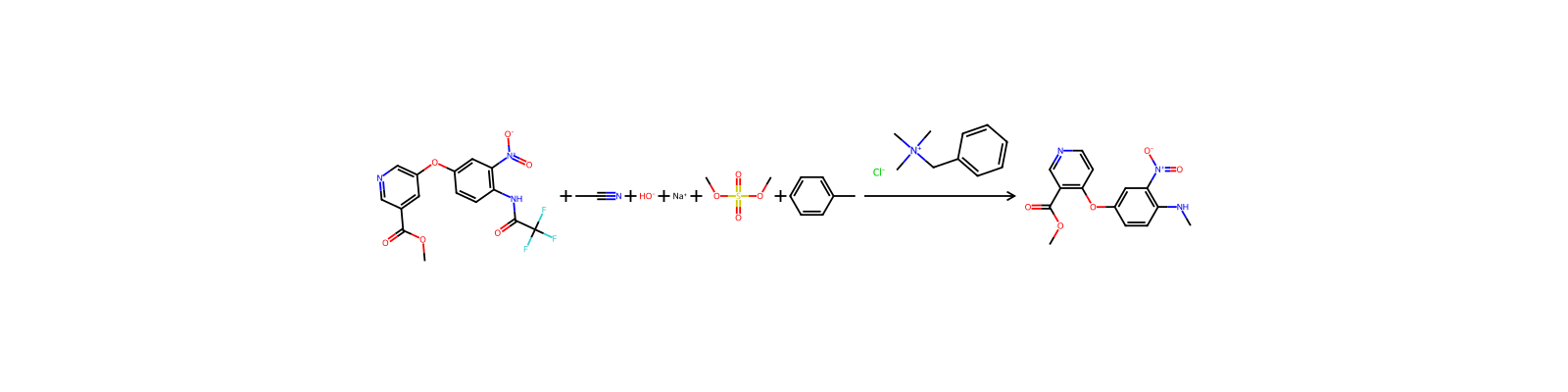
HRID 6453触媒としてuspto-grants-1993_09
HRID 8477 の反応式
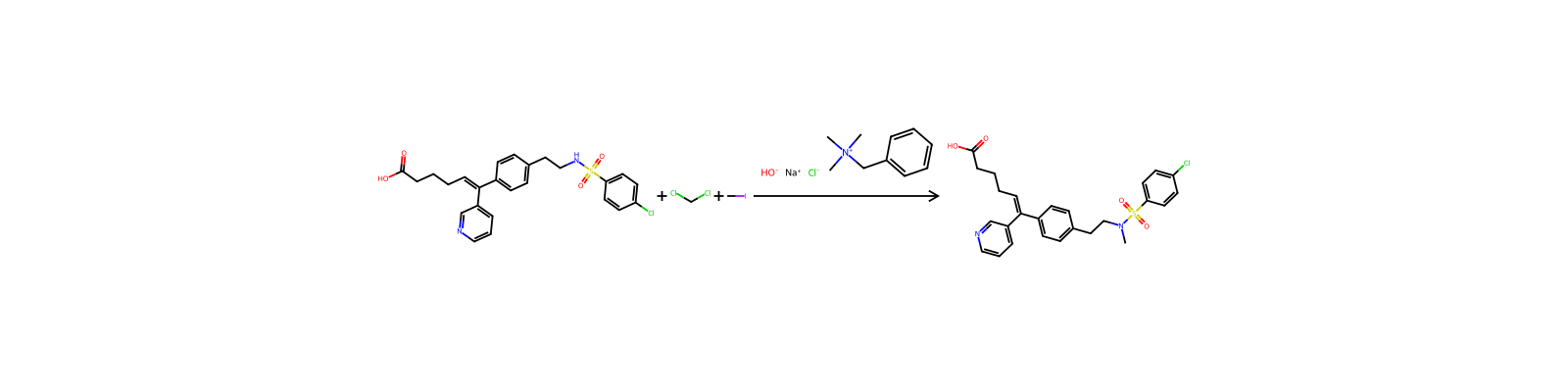
HRID 8477触媒としてuspto-grants-2006_08
HRID 8478 の反応式
HRID 8478触媒としてuspto-grants-2006_08
HRID 13484 の反応式
HRID 13484触媒としてuspto-grants-2010_06
HRID 13503 の反応式
HRID 13503触媒としてuspto-grants-2010_06
HRID 22129 の反応式
HRID 22129触媒としてuspto-grants-1995_06
HRID 34887 の反応式
HRID 34887触媒としてuspto-grants-1988_08
HRID 36876 の反応式
HRID 36876触媒としてuspto-grants-1995_05
1 / 27 ページ

化合物ノート

読み込み中…

このページの内容基本情報概要名称と識別子物性安全と法規制化学と産業関連反応化合物ノート
その他の操作
ノートを作成反応を作成見積依頼を出す
(+)-Benzotetramisole
BTMAC 100DTXCID604600Benzenemethanaminium, N,N,N-trimethyl-, chloride (1:1)RefChem:566996200-300-3N,N,N-Trimethyl-1-phenylmethanaminium chloridebenzyl(trimethyl)azanium;chlorideBenzyltrimethyl ammonium chloride
Vapor Pressure0.00000022 [mmHg]
Food Contact SubstancesFCS -> FDA Inventory of Food Contact Substances Listed in 21 CFR
Physical Description · 3 件

Benzyltrimethylammonium chloride appears as light yellow liquid with a mild almond odor. May float or sink in water. (USCG, 1999)

Liquid

Colorless solid; [HSDB] Light yellow liquid; [CAMEO] Off-white to yellow powder, soluble in water; [MSDSonline]

物理化学的性質

融点
239 °C · 239 °C (dec.) (lit.)
沸点
305.52 °C · 305.52°C (rough estimate)
比重(密度)
1.08 g/mL · 1.08 g/mL at 25 °C
蒸気圧
0.0001 hPa · <0.0001 hPa (20 °C)
屈折率
20 · n20/D 1.479
闪点
50 ° · <50° (for 61%sol), d: 1.07 at 20°/20° (61% sol)
貯蔵温度
30 °C · Store below +30°C.
溶解性
800 g/リットル · 800g/リットル
外見
結晶性粉末またはチャンク
色
ホワイトからアイボリー
臭い (Odor)
ほのかなアーモンドのような香り
PH
6 · 6-8 (100g/l, H2O, 20℃)
水溶解度
800 g/L · 800g/L
BRN
3917255 · 3917255
Henry's Law Constant
2.9 · 2.9×108 mol/(m3Pa) at 25℃, HSDB (2015)
安定性
安定。吸湿性。強力な酸化剤とは相容れない。
InChI
1S/C10H16N.ClH/c1-11(2,3)9-10-7-5-4-6-8-10;/h4-8H,9H2,1-3H3;1H/q+1;/p-1
InChIKey
KXHPPCXNWTUNSB-UHFFFAOYSA-M
SMILES
[Cl-].C[N+](C)(C)Cc1ccccc1
CAS データベース
56 · 56-93-9(CAS DataBase Reference)
EPAの化学物質情報
Benzyltrimethylammonium chloride (56-93-9)

化学的性質

化学的特性white to light yellow crystal powde

Non-Redox-Active Inorganic Compounds
Reactivity ProfileBENZYLTRIMETHYLAMMONIUM CHLORIDE can react with oxidizing materials (NTP, 1992). Toxic oxides of nitrogen and hydrochloric acid fumes may form in fire (USCG, 1999).
Air and Water ReactionsWater soluble.
Toxic Combustion ProductsPoisonous gases may be produced in fire.
Hazard Classes and Categories · 3 件

Acute Tox. 3 (90.9%)

Acute toxicity (Oral) - Category 3

Acute toxicity (Oral) - Category 3

Skin, Eye, and Respiratory IrritationsLiquid irritating to skin and eyes.

安全と保護具

Fire FightingFire Extinguishing Agents Not to Be Used: Water may be ineffective on fire. (USCG, 1999)
First Aid · 1 件

EYES: First check the victim for contact lenses and remove if present. Flush victim's eyes with water or normal saline solution for 20 to 30 minutes while simultaneously calling a hospital or poison control center. Do not put any ointments, oils, or medication in the victim's eyes without specific instructions from a physician. IMMEDIATELY transport the victim after flushing eyes to a hospital even if no symptoms (such as redness or irritation) develop.

Fire Fighting ProceduresWear goggles and self-contained breathing apparatus. Extinguish with dry chemical, foam or carbon dioxide. Water may be ineffective on fire.
Nonfire Spill Response · 1 件

SMALL SPILLS AND LEAKAGE: If you spill this chemical, you should dampen the solid spill material with water, then transfer the dampened material to a suitable container. Use absorbent paper dampened with water to pick up any remaining material. Seal your contaminated clothing and the absorbent paper in a vapor-tight plastic bag for eventual disposal. Wash all contaminated surfaces with a strong soap and water solution. Do not reenter the contaminated area until the Safety Officer (or other responsible person) has verified that the area has been properly cleaned.

Disposal Methods · 1 件

SRP: At the time of review, criteria for land treatment or burial (sanitary landfill) disposal practices are subject to significant revision. Prior to implementing land disposal of waste residue (including waste sludge), consult with environmental regulatory agencies for guidance on acceptable disposal practices.

Preventive Measures · 1 件

SRP: The scientific literature for the use of contact lenses in industry is conflicting. The benefit or detrimental effects of wearing contact lenses depend not only upon the substance, but also on factors including the form of the substance, characteristics and duration of the exposure, the uses of other eye protection equipment, and the hygiene of the lenses. However, there may be individual substances whose irritating or corrosive properties are such that the wearing of contact lenses would be harmful to the eye. In those specific cases, contact lenses should not be worn. In any event, the usual eye protection equipment should be worn even when contact lenses are in place.

Personal Protective Equipment (PPE)Goggles and rubber gloves (USCG, 1999)

毒性情報

Environmental Fate · 3 件

TERRESTRIAL FATE: Based on a classification scheme(1), an estimated Koc value of 900(SRC), determined from a log Kow of -2.17(2) and a regression-derived equation(3), indicates that trimethylbenzylammonium chloride is expected to have low mobility in soil(SRC). Volatilization of trimethylbenzylammonium chloride from moist soil surfaces is not expected to be an important fate process(SRC) given an estimated Henry's Law constant of 3.4X10⁻¹⁴ atm-cu m/mole(SRC), using a fragment constant estimation method(4). Trimethylbenzylammonium chloride is not expected to volatilize from dry soil surfaces(SRC) based upon an estimated vapor pressure of 2.2X10⁻⁷ mm Hg(SRC), determined from a fragment constant method(5). Studies on the influence of chemical structure on quaternary ammonium compound (QACs) biodegradability suggest that alkyltrimethylammonium QACs will be most rapidly degraded followed by alkyldimethylbenzylammonium and alkylpyridinium QACs, although at high concentrations it may be toxic to the microbial population(6).

AQUATIC FATE: Based on a classification scheme(1), an estimated Koc value of 900(SRC), determined from a log Kow of -2.17(2) and a regression-derived equation(3), indicates that trimethylbenzylammonium chloride is expected to adsorb to suspended solids and sediment in water(SRC). By analogy to other alkyldimethylbenzyl quaternary ammonium compounds, trimethylbenzylammonium chloride is expected to strongly adsorb to sediment and suspended organic matter(8). Volatilization from water surfaces is not expected(3) based upon an estimated Henry's Law constant of 3.4X10⁻¹⁴ atm-cu m/mole(SRC), developed using a fragment constant estimation method(4). Trimethylbenzylammonium chloride will not volatilize from water to the atmosphere(9,SRC) because it completely dissociates. According to a classification scheme(5), a BCF of <0.2(7), and a regression-derived equation(6), suggests the potential for bioconcentration in aquatic organisms is low. If released to water, trimethylbenzylammonium chloride will completely dissociate(SRC) since it is an ionic compound. By analogy to other alkyldimethylbenzyl quaternary ammonium compounds, trimethylbenzylammonium chloride may biodegrade in aquatic systems at low concentrations(8).

ATMOSPHERIC FATE: According to a model of gas/particle partitioning of semivolatile organic compounds in the atmosphere(1), trimethylbenzylammonium chloride, which has an estimated vapor pressure of 2.2X10⁻⁷ mm Hg at 25 °C(SRC), using a fragment onstant estimation method(2), will exist in both the vapor and particulate phases in the ambient atmosphere. Vapor-phase trimethylbenzylammonium chloride is degraded in the atmosphere by reaction with photochemically-produced hydroxyl radicals(SRC); the half-life for this reaction in air is estimated to be 1 day(SRC), calculated from its rate constant of 1.7X10⁻¹³ cu cm/molecule-sec at 25 °C(3) determined using a structure estimation method(3). Particulate-phase trimethylbenzylammonium chloride may be removed from the air by wet and dry deposition(SRC).

Ongoing Test Status · 1 件

The following link will take the user to the National Toxicology Program (NTP) Test Agent Search Results page, which tabulates all of the "Standard Toxicology & Carcinogenesis Studies", "Developmental Studies", and "Genetic Toxicity Studies" performed with this chemical. Clicking on the "Testing Status" link will take the user to the status (i.e., in review, in progress, in preparation, on test, completed, etc.) and results of all the studies that the NTP has done on this chemical. [http://ntp-apps.niehs.nih.gov/ntp_tox/index.cfm?fuseaction=ntpsearch.searchresults&searchterm=56-93-9]

Soil Adsorption/Mobility · 1 件

The Koc of trimethylbenzylammonium chloride is estimated as 900(SRC), using a log Kow of -2.17(1) and a regression-derived equation(2). According to a classification scheme(3), this estimated Koc value suggests that trimethylbenzylammonium chloride is expected to have low mobility in soil. Quaternary ammonium compounds (QACs) are strongly adsorbed by a wide variety of materials, and alkyldimethylbenzylammonium QACs are known to adsorb strongly to sewage sludge(4).

Human Toxicity ExcerptsLiquid irritating to skin and eyes.
Artificial Pollution Sources · 1 件

Trimethylbenzylammonium chloride's production and use as a solvent for cellulose, a gelling inhibitor in polyester resins and as an intermediate(1) and as a phase-transfer catalyst(2) may result in its release to the environment through various waste streams(SRC).

Environmental Biodegradation · 1 件

At an initial concentration of 100 mg/L, trimethylbenzylammonium chloride did not biodegrade when incubated with activated sludge for ten days(1), although at high concentrations it may be toxic to the microbial population(2). Studies on the influence of chemical structure on quaternary ammonium compound (QACs) biodegradability suggest that alkyltrimethylammonium QACs will be most rapidly degraded followed by alkyldimethylbenzylammonium and alkylpyridinium QACs; few, if any, of the QACs should be regarded as persistent(2). The acclimation of the microbial community may profoundly influence the biodegradability of alkyldimethylbenzylammonium QACs(2).

Environmental BioconcentrationA BCF of <0.2 was measured for trimethylbenzylammonium(1). According to a classification scheme(2), this BCF suggests the potential for bioconcentration in aquatic organisms is low.
Volatilization from Water/Soil · 1 件

The Henry's Law constant for trimethylbenzylammonium chloride is estimated as 3.4X10⁻¹⁴ atm-cu m/mole(SRC) using a fragment constant estimation method(1). This Henry's Law constant indicates that trimethylbenzylammonium chloride is expected to be essentially nonvolatile from water surfaces(2). Trimethylbenzylammonium chloride's Henry's Law constant(1) indicates that volatilization from moist soil surfaces will not occur(SRC). Trimethylbenzylammonium chloride is not expected to volatilize from dry soil surfaces(SRC) based upon an estimated vapor pressure of 2.2X10⁻⁷ mm Hg(SRC), determined from a fragment constant method(3).

Non-Human Toxicity Excerpts · 3 件

EFFECTS OF BENZYLTRIMETHYLAMMONIUM CHLORIDE ON BLOOD PRESSURE IN DOGS WAS STUDIED. IT WAS A MUSCARINIC VASODEPRESSOR.

IT WAS APPROX 1/4 TO 1/2 AS ACTIVE AS ACETYLCHOLINE CHLORIDE AS DEPRESSOR AGENT IN DOG & APPROX 4-15 TIMES AS ACTIVE IN ABILITY TO INDUCE SALIVA FORMATION. HIGHER DOSES DEMONSTRATED ANTICHOLINERGIC ACTIVITY & INHIBITION MAY BE NONCOMPETITIVE TYPE.

BENZYLTRIMETHYLAMMONIUM BROMIDE BLOCKED RESPONSES TO ACTYLCHOLINE, NICOTINE & POTASSIUM CHLORIDE IN FROG RECTUS ABDOMINIS PREPN. IT CAUSED INHIBITION OF RABBIT SCIATIC NERVE GASTROCNEMIUS MUSCLE PREPN.

Environmental Abiotic Degradation · 1 件

The rate constant for the vapor-phase reaction of trimethylbenzylammonium chloride with photochemically-produced hydroxyl radicals has been estimated as 1.7X10⁻¹³ cu cm/molecule-sec at 25 °C(SRC) using a structure estimation method(1). This corresponds to an atmospheric half-life of about 1 day at an atmospheric concentration of 5X10+5 hydroxyl radicals per cu cm(1).

Probable Routes of Human Exposure · 1 件

NIOSH (NOES Survey 1981-1983) has statistically estimated that 3,635 workers (2,606 of these are female) are potentially exposed to trimethylbenzylammonium chloride in the US(1). Occupational exposure to trimethylbenzylammonium chloride may occur through dermal contact with this compound at workplaces where trimethylbenzylammonium chloride is produced or used(SRC).

Environmental Fate/Exposure Summary · 1 件

Trimethylbenzylammonium chloride's production and use as a solvent for cellulose, a gelling inhibitor in polyester resins and as an intermediate and as a phase-transfer catalyst may result in its release to the environment through various waste streams. If released to air, an estimated vapor pressure of 2.2X10⁻⁷ mm Hg at 25 °C indicates trimethylbenzylammonium chloride will exist in both the vapor and particulate phases in the ambient atmosphere. Vapor-phase trimethylbenzylammonium chloride will be degraded in the atmosphere by reaction with photochemically-produced hydroxyl radicals; the half-life for this reaction in air is estimated to be 1 day. Particulate-phase trimethylbenzylammonium chloride will be removed from the atmosphere by wet and dry deposition. If released to soil, trimethylbenzylammonium chloride is expected to have low mobility based upon an estimated Koc of 900. By analogy to other alkyldimethylbenzyl quaternary ammonium compounds, trimethylbenzylammonium chloride is expected to strongly adsorb to sediment and suspended organic matter. Volatilization from moist soil surfaces is not expected to be an important fate process based upon an estimated Henry's Law constant of 3.4X10⁻¹⁴ atm-cu m/mole. If released into water, trimethylbenzylammonium chloride is expected to adsorb to suspended solids and sediment in water based upon the estimated Koc. Volatilization from water surfaces is not expected to be an important fate process based upon this compound's estimated Henry's Law constant. Studies on the influence of chemical structure on quaternary ammonium compound (QACs) biodegradability suggest that alkyltrimethylammonium QACs will be most rapidly degraded followed by alkyldimethylbenzylammonium and alkylpyridinium QACs, although at high concentrations it may be toxic to the microbial population. A BCF of <0.2 suggests bioconcentration in aquatic organisms is low. Occupational exposure to trimethylbenzylammonium chloride may occur through inhalation and dermal contact with this compound at workplaces where trimethylbenzylammonium chloride is produced or used. (SRC)

安全データ

F
3
wgk
3
tsca
TSCA listed
rtecs
BO8400000
ridadr
UN 2811 6.1/PG 3
毒性
LD50 orally in Rabbit: 500 mg/kg
hs_code
29239000
risk_code
22-36/38-36
化審法
(3)-2694
安衛法
変異原性物質
hazard_code
Xn
safety_code
26-37/39
hazard_class
6.1
packing_group
III
Hazard Classifications
Acute Tox. 3 DermalAcute Tox. 3 OralAcute Tox. 4 InhalationAquatic Chronic 3Muta. 2
ストレージクラス
6.1D - Non-combustible acute toxic Cat.3toxic hazardous materials or hazardous materials causing chronic effects
有毒物質データの
56-93-9(Hazardous Substances Data)

REACTION OF TRIMETHYLAMINE AND BENZYL CHLORIDE

Trimethylamine + benzyl chloride (quaternisation)

Formulations/Preparations · 2 件

Grades: 60-62% aq soln.

Grades: 50-60% solution in water

General Manufacturing Information · 2 件

All Other Chemical Product and Preparation Manufacturing

Benzenemethanaminium, N,N,N-trimethyl-, chloride (1:1): ACTIVE

応用分野 · 3 件

用途有機合成反応触媒、四級アンモニウム陽イオン活性剤

使用Benzyltrimethylammonium chloride are Ccommercially important catalyst. Used in antistatic agent, detergent Sanitisers, softner for textiles and paper products, phase transfer catalyst.

一般的な説明Light yellow liquid with a mild almond odor. May float or sink in water.

調製方法 · 1 件

純化方法A 60% aqueous solution of the salt is evaporated to dryness under a vacuum on a steam bath, and then left in a vacuum desiccator containing a suitable drying agent. The solid residue is dissolved in a small volume of boiling absolute EtOH and precipitated by adding an equal volume of diethyl ether with cooling. After washing, the precipitate is dried under a vacuum [Karusch J Am Chem Soc 73 1246 1951]. [Beilstein 12 IV 2162.]

上流・下流製品情報

上流原料

塩化ベンジルトリメチルアミン水溶液 3 0 %

下流製品

ポリ(ビスフェノールAカルボナート)(3R)-(+)-1-(tert-ブトキシカルボニル)-3-アミノピロリジン8,18-ジクロロ-5,15-ジエチル-5,15-ジヒドロジインドロ[3,2-b:3',2'-m]トリフェノジオキサジン4-(ジフルオロメトキシ)-3-メトキシベンズアルデヒド2-クロロ-3-ニトロ-5-(トリフルオロメチル)ピリジン