
アリルパラジウム(II)クロリド (ダイマー)
Palladium, di-mu-chlorobis(eta3-2-propenyl)di-

基本情報
- CAS
12012-95-2- 標準SMILES
C=C[CH2-].C=C[CH2-].[Cl][Pd+].[Cl][Pd+]- InChIKey
PENAXHPKEVTBLF-UHFFFAOYSA-L- 分子式
- C6H10Cl2Pd2
- 平均分子量
- 365.9 g/mol
概要
Allyl palladium(II) chloride dimer is a organopalladium compound. It is an important catalyst used in organic synthesis. Palladium is a chemical element with the chemical symbol Pd and an atomic number of 46. It is found as a free metal alloyed with gold and other platinum group metals and in the rare minerals cooperite and polarite. (L794, A27)
名称と識別子
- 優先名称
- Palladium, di-mu-chlorobis(eta3-2-propenyl)di-
- IUPAC
- bis(chloropalladium(1+));bis(prop-1-ene)
- 現地名
- アリルパラジウム(II)クロリド (ダイマー)
- 英語名
- Allylpalladium(II) Chloride Dimer
- 分子式
- C6H10Cl2Pd2
- 分子量
- 365.89
名称と別名
Palladium, di-mu-chlorobis(eta3-2-propenyl)di-RefChem:858349Palladium, di-.mu.-chlorobis(.eta.3-2-propenyl)di-Palladium, di-mu-chlorobis(eta3-2-propenyl)di-(9CI)Allyl palladium (II) chloride dimer12012-95-2Allylpalladium chloride dimerAllylpalladium(II) chloride dimerallylpalladium(II) chloridePalladium allyl chloride dimer[Pd(allyl)Cl]2Bis(allyl(mu-chloro)palladium)
名称をさらに表示
アリルパラジウム(II)クロリド (ダイマー)塩化アリルパラジウム(II)二量体 塩化物ジ-μ-クロロビス[(η-アリル)パラジウム(II)]ビス(Η3‐アリル)ジ(Μ‐クロロ)ジパラジウム(II)塩化アリルパラジウム,ダイマージ-Μ-クロロビス[(Η-アリル)パラジウム(Ⅱ)]ジ-Μ-クロロビス[(Η-アリル)パラジウム(Ⅱ)] 【ジョンソン・マッセイ社製造】アリルパラジウム(II)クロリド ダイマー塩化アリルパラジウム二量体CHEMDOSE™タブレット塩化アリルパラジウム, 二量体, min. 98%塩化アリルパラジウム(II)二量体ジ-μ-クロリド-ビス[(η3-プロペニド)パラジウム(II)]ジアリルパラジウムジクロリド[PdCl(C3H5)]2[PdCl(allyl)]2allylpaladiumAllylpalladium chlorideDi-μ-chlorobis(η3-2-propenyl)dipalladium
物性
構造計算による物性
- 極性表面積
- 0 Ų
- 水素結合供与体数
- 0
- 水素結合受容体数
- 2
- 回転可能結合数
- 0
- 重原子数
- 10
- 形式電荷
- 0
- 複雑度
- 14.4
物理化学的性質
- 融点
- 120 °C · 120°C (dec.)
- 貯蔵温度
- 2 · 2-8°C
- 外見
- 結晶または結晶性粉末
- 色
- 黄色から緑黄色
- 水溶解度
- 分解する
- BRN
- 4124623 · 4124623
- InChI
- InChI=1S/2C3H2.2ClH.2Pd/c2*1-3-2;;;;/h2*1-2H;2*1H;;/q2*-1;;;2*+2/p-2
- InChIKey
- GSVMTGORPBRYQY-UHFFFAOYSA-L
- SMILES
- [Pd+2]123(C=C1[CH-]2)[Cl-][Pd+2]12(C=C1[CH-]2)[Cl-]3
- NISTの化学物質情報
- [Pd(Cl)(C3H5)]2(12012-95-2)
化学的性質
化学的特性Allylpalladium(II) chloride dimer is a yellow powder with the formula [(η3-C3H5)PdCl]2. This compound is an important catalyst used in organic synthesis. It is one of the most widely used transition metal allyl complexes.
安全と法規制
安全情報は参考情報です。供給元の安全データシート(SDS)、適用法令、専門家による評価に代わるものではありません。
GHS分類
GHS Classification
Danger
H228 (21.2%): Flammable solid [Danger Flammable solids]
P210, P240, P241, P261, P264, P264+P265, P270, P271, P273, P280, P301+P317, P302+P352, P304+P340, P305+P351+P338, P305+P354+P338, P317, P319, P321, P330, P332+P317, P337+P317, P362+P364, P370+P378, P391, P403+P233, P405, and P501 (click each P-code to see the statement)
Aggregated GHS information provided per 104 reports by companies from 12 notifications to the ECHA C&L Inventory. Each notification may be associated with multiple companies.
危険有害性情報
Regulatory Information
Chemical: Palladium, di-.mu.-chlorobis(.eta.3-2-propenyl)di-
Allyl palladium (II) chloride dimer: Does not have an individual approval but may be used under an appropriate group standard
Other Safety InformationIMAP assessments - Palladium, di-.mu.-chlorobis(.eta.3-2-propenyl)di-: Environment tier I assessment
Hazard Classes and CategoriesFlam. Sol. 1 (21.2%)
毒性情報
Health EffectsContact with palladium may cause palladium sensitivity and allergy. Animal studies have shown that palladium may damage the liver and kidney. (L798)
Exposure RoutesOral (A21) ; inhalation (A21) ; dermal (A21)
Toxicity Summary
Due to their ability to form strong complexes with both inorganic and organic ligands, palladium ions can disturb cellular equilibria, replace other essential ions, and interact with functional groups of macromolecules, such as proteins or DNA. Palladium complexes binding to DNA and RNA leads to strand breakage. Palladium ions are able to inhibit most major cellular functions, including DNA and RNA synthesis. Palladium compounds have been shown to bind to and inhibit various enzymes, including creatine kinase and prolyl hydroxylase. (L798)
化学と産業
薬理情報
Metabolism/Metabolites
Palladium may be absorbed through oral, dermal, and inhalation exposure. Once in the body it distributes to the kidney, liver, spleen, lymph nodes, adrenal gland, lung and bone. Palladium's ability to form complexes allows it the bind to amino acids, proteins, DNA, and other macromolecules. Palladium and its metabolites are excreted in the urine and faeces. (A21)
用途と製造
UsesAllylpalladium(II) chloride dimer is an important catalyst used in organic synthesis. (A27)
応用分野
用途有機合成用触媒。
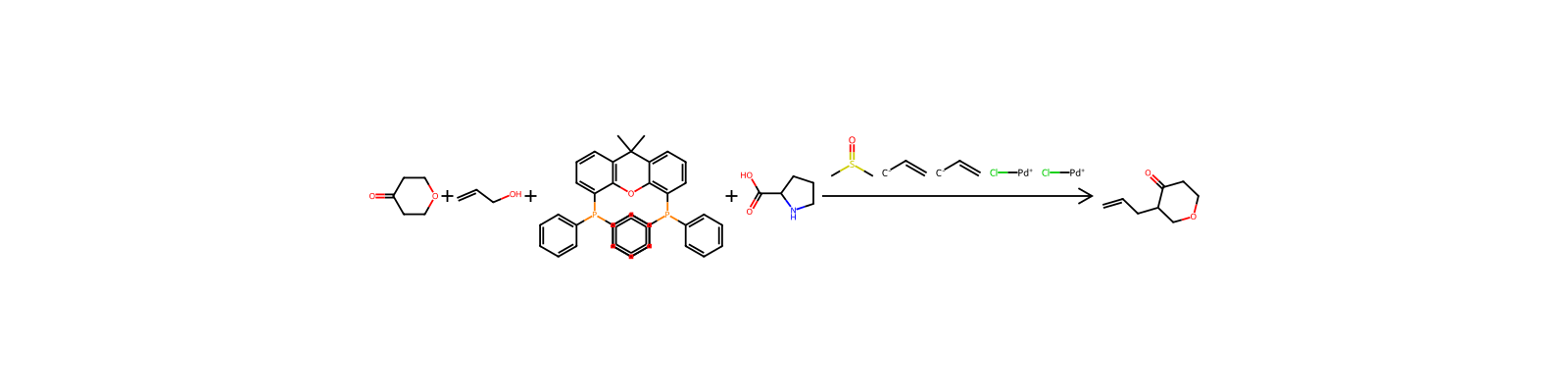
使用Allylpalladium(II) chloride dimer is used as an important catalyst in Heck reaction. It reacts with cyclopentadienyl anion to give cyclopentadienyl allyl palladium. It acts as a precatalyst for asymmetric and cross-coupling catalysis. Further, it is used in the preparation of 1,4-diallyl-1,2-dihydroisoquinolines. It is also employed as a catalyst for greener Buchwald-Hartwig coupling reaction and involved in the synthesis of cationic palladium catalysts. In addition, it takes part in preparation of -heterocyclic carbene-palladium-eta3-allyl chloride complex, which is an efficient catalyst for the Suzuki-Miyaura cross-coupling reactions in synthetic chemistry.
一般的な説明Allylpalladium(II) chloride dimer is employed as catalyst in Heck reaction. It also participates as catalyst in the tandem nucleophilic allylation-alkoxyallylation reaction of the alkynylaldehydes with allyl chloride and allyltributylstannane.
調製方法
純化方法It crystallises from benzene and is soluble in MeOH, Et2O and CHCl3. [Hüttel et al. Chem Ber 94 766 1961, Dent et al. J Chem Soc 1585 1964, Armstrong J Org Chem 31 618 1966.]
関連反応
2,033 件




化合物ノート
読み込み中…