

基本情報
- CAS
1609-86-5- 標準SMILES
CC(C)(C)N=C=O- InChIKey
MGOLNIXAPIAKFM-UHFFFAOYSA-N- 分子式
- C5H9NO
- 平均分子量
- 99.13 g/mol
- 単同位体質量
- 99.06841391
概要
Tert-butyl isocyanate appears as a clear colorless liquid with a pungent odor. Very toxic by ingestion, may also be toxic by skin absorption and inhalation. Vapors heavier than air. Less dense than water and insoluble in water. Vapors heavier than air. Produces toxic oxides of nitrogen during combustion.
名称と識別子
- 優先名称
- tert-Butyl isocyanate
- IUPAC
- 2-isocyanato-2-methylpropane
- 現地名
- イソシアン酸 t-ブチル
- 英語名
- tert-Butylisocyanate
- 分子式
- C5H9NO
- 分子量
- 99.13
名称と別名
TERT-BUTYL ISOCYANATE1609-86-52-Isocyanato-2-methylpropanePropane, 2-isocyanato-2-methyl-t-butylisocyanate1,1-Dimethylethyl isocyanateIsocyanic acid, tert-butyl ester2RHQ1BS36DDTXSID6061818RefChem:894669DTXCID3035181216-544-9
名称をさらに表示
イソシアン酸 t-ブチルtert-ブチルイソシアナートイソシアン酸tert-ブチル1,1-ジメチルエチルイソシアナートtert-ブチルイソシアナトイソシアン酸t-ブチルTERT-ブチルイソシアネートイソシアン酸 tert-ブチル2-イソシアナト-2-メチルプロパンTERT-BUTYL ISOCYANATE, STAB.t-C4H9NCOTertbuty IsocyanateTert-Butyl Isocyanatleft-Butyl isocyanate
tert-butylisocyanateT-BUTYL ISOCYANATE2-isocyanato-2-methyl-propaneIsocyanic Acid tert-Butyl EsterMFCD00002035Butyl isocyanate, Tert-UNII-2RHQ1BS36DCCRIS 3590
データベース識別子
- CAS
1609-86-5- PubChem CID
- 62412
- DTXSID
DTXSID6061818- UNII
- 2RHQ1BS36D
- EC Number
- 216-544-9
- Nikkaji
- J68.769C
物性
構造計算による物性
- XLogP
- 2
- 極性表面積
- 29.4 Ų
- 水素結合供与体数
- 0
- 水素結合受容体数
- 2
- 回転可能結合数
- 1
- 重原子数
- 7
- 形式電荷
- 0
- 複雑度
- 95.1
実験および物理化学的性質
Chemical Classes
Toxic Gases & Vapors -> Monoisocyanates
Flammable agents - 3rd degree
SpringerMaterials Properties15N nuclear magnetic resonance spectrum
Density0.8670 @ 7°C
Physical Description
Tert-butyl isocyanate appears as a clear colorless liquid with a pungent odor. Very toxic by ingestion, may also be toxic by skin absorption and inhalation. Vapors heavier than air. Less dense than water and insoluble in water. Vapors heavier than air. Produces toxic oxides of nitrogen during combustion.
Colorless liquid with a pungent odor; [CAMEO]
物理化学的性質
- 融点
- 85.5 °C · 85.5°C
- 沸点
- 85 · 85-86 °C(lit.)
- 比重(密度)
- 0.868 g/mL · 0.868 g/mL at 25 °C(lit.)
- 蒸気圧
- 79 hPa · 79hPa at 20℃
- 屈折率
- 20 · n20/D 1.386(lit.)
- 闪点
- 24 °F · 24 °F
- 貯蔵温度
- 2 · 2-8°C
- 溶解性
- クロロホルム(可溶)、DMSO(微量)
- 外見
- 液体
- 色
- 無色透明
- 水溶解度
- 1000 g/L · 1000g/L at 25℃
- BRN
- 969479 · 969479
- 安定性
- 吸湿性、湿気に敏感
- LogP
- 0.4 · 0.4
- CAS データベース
- 1609 · 1609-86-5(CAS DataBase Reference)
- NISTの化学物質情報
- 2 · Propane, 2-isocyanato-2-methyl-(1609-86-5)
- EPAの化学物質情報
- tert-Butyl isocyanate (1609-86-5)
化学的性質
化学的特性Clear colorless liquid
安全と法規制
GHS分類
GHS Classification
Danger
H225 (98.5%): Highly Flammable liquid and vapor [Danger Flammable liquids]
P210, P233, P240, P241, P242, P243, P260, P261, P264, P264+P265, P270, P271, P272, P273, P280, P284, P301+P316, P301+P317, P301+P330+P331, P302+P352, P302+P361+P354, P303+P361+P353, P304+P340, P305+P354+P338, P316, P317, P319, P320, P321, P330, P333+P317, P342+P316, P362+P364, P363, P370+P378, P403, P403+P233, P403+P235, P405, and P501 (click each P-code to see the statement)
Aggregated GHS information provided per 194 reports by companies from 12 notifications to the ECHA C&L Inventory. Each notification may be associated with multiple companies.
危険有害性情報
Hazards IdentificationToxic/poison by inhalation (TIH/PIH)
Regulatory Information
Status: Active Update: 03-12-2015 https://echa.europa.eu/registration-dossier/-/registered-dossier/12810
The New Jersey Worker and Community Right to Know Act requires public and private employers to provide information about hazardous substances at their workplaces. (N.J.S.A. 34:5A-1 et. seq.)
DOT LabelPoison Inhalation Hazard Flammable Liquid
Fire Hazards
Excerpt from ERG Guide 155 [Substances - Toxic and/or Corrosive (Flammable / Water-Sensitive)]:
· HIGHLY FLAMMABLE: Will be easily ignited by heat, sparks or flames.
Health Hazards
Excerpt from ERG Guide 155 [Substances - Toxic and/or Corrosive (Flammable / Water-Sensitive)]:
· TOXIC and/or CORROSIVE; inhalation, ingestion or contact (skin, eyes) with vapors, dusts or substance may cause severe injury, burns or death.
Hazards SummaryHighly flammable and water-reactive; Skin contact may cause burns and inhalation severe injury and death; Corrosive and flammable gases may be released; Vapors are heavier than air; Combustion produces oxides of nitrogen; [CAMEO]
DOT ID and Guide2484 155
Reactive GroupIsocyanates and Isothiocyanates
Reactivity AlertsHighly Flammable
Reactivity Profile
TERT-BUTYL ISOCYANATE can react exothermically with amines, aldehydes, alcohols, alkali metals, ketones, mercaptans, strong oxidizing agents, hydrides, phenols, and peroxides. May undergo polymerization with acids and bases. May react with water to form tert-butylamine and carbon dioxide. Base-catalysed reactions of isocyanates with alcohols should be carried out in inert solvents. Such reactions in the absence of solvents often occur with explosive violence [Wischmeyer 1969].
DOT Hazard Classification
tert-Butyl isocyanate
UN2484
Div 6.1 Poisonous materials (49 eCFR § 173.132)
Div 6.1 Poisonous materials (49 eCFR § 173.132)
PG I: the degree of danger presented by the material is great
Air and Water ReactionsHighly flammable. May react with water to produce a toxic vapor. Very slowly decomposed by water.
安全と保護具
Fire FightingExcerpt from ERG Guide 155 [Substances - Toxic and/or Corrosive (Flammable / Water-Sensitive)]:
Accidental Release Measures
· CALL 911. Then call emergency response telephone number on shipping paper. If shipping paper not available or no answer, refer to appropriate telephone number listed on the inside back cover.
· ELIMINATE all ignition sources (no smoking, flares, sparks or flames) from immediate area.
First Aid
Excerpt from ERG Guide 155 [Substances - Toxic and/or Corrosive (Flammable / Water-Sensitive)]:
General First Aid:
Exposure Control and Personal Protection
· Wear positive pressure self-contained breathing apparatus (SCBA).
TIH (Toxic Inhalation Hazard) - Term used to describe gases and volatile liquids that are toxic when inhaled. Some are TIH materials themselves, e.g., chlorine, and some release TIH gases when spilled in water, e.g., chlorosilanes. [ERG 2016].
Nonfire Spill ResponseExcerpt from ERG Guide 155 [Substances - Toxic and/or Corrosive (Flammable / Water-Sensitive)]:
Isolation and Evacuation
Excerpt from ERG Guide 155 [Substances - Toxic and/or Corrosive (Flammable / Water-Sensitive)]:
Immediate precautionary measure
Small spill:
Small spill:
Protective Action Criteria (PAC)
1.1 [mg/m3]
12 [mg/m3]
70 [mg/m3]
Personal Protective Equipment (PPE)Excerpt from ERG Guide 155 [Substances - Toxic and/or Corrosive (Flammable / Water-Sensitive)]:
Emergency Response Planning Guidelines· Note: Most foams will react with the material and release corrosive/toxic gases.
Acute Exposure Guideline Levels (AEGLs)The compound is currently at the Holding Status AEGLs which have been reviewed by the NAC/AEGL Committee and are on hold due to insufficient data to develop AEGL values.
AEGLs NotesAEGLs Status: Holding
毒性情報
Adverse EffectsDermatotoxin - Skin burns.
安全データ
- F
- 10-21
- wgk
- 3
- tsca
- TSCA listed
- ridadr
- UN 2484
- hs_code
- 29291090
- risk_code
- 11-14-22-26-34-37-42-36/37/38-23/24/25-10
- 化審法
- (2)-1690
- 消防法
- 危-4-1-II
- hazard_code
- F,T+,T
- safety_code
- 16-26-36/37/39-45-43-30-7/9
- hazard_class
- 6.1
- packing_group
- I
化学と産業
用途と製造
General Manufacturing InformationPropane, 2-isocyanato-2-methyl-: ACTIVE
応用分野
一般的な説明A clear colorless liquid with a pungent odor. Flash point 68°F. Very toxic by ingestion, may also be toxic by skin absorption and inhalation. Vapors heavier than air. Less dense than water and insoluble in water. Vapors heavier than air. Produces toxic oxides of nitrogen during combustion.
調製方法
純化方法It is LACHRYMATORY and TOXIC, and should have IR with 2251 (CN) cm-1 and no OH bands. The NMR should have one band at 1.37 ppm from TMS. Purify it by fractional distillation under reduced pressure. [Greene & Bergmark J Org Chem 36 3056 1971, Curtius J Prakt Chem 125 152 1930, Beilstein 4 IV 669.]
上流・下流製品情報
上流原料
下流製品
サプライヤー100 社
国药集团化学试剂有限公司86-21-63210123 · [email protected]
梯希爱(上海)化成工业发展有限公司021-67121386 · [email protected]
阿诺西(上海)生物技术有限公司400-1107768 15058188853 · [email protected]
上海阿拉丁生化科技股份有限公司400-6206333 13167063860 · [email protected]
武汉欣扬瑞和化学科技有限公司153-07155313 15307155313 · [email protected]
河北创海生物科技有限公司+86-86-13131129325 · [email protected]
武汉问津化学科技有限公司13517196568 · [email protected]
T&W GROUP021-61551611 13296011611 · [email protected]
杭州布朗生物医药科技有限公司15967138206
Dayang Chem (Hangzhou) Co.,Ltd.+86-0571-88938639 17705817739 · [email protected]
科瑞迪化学400-821-5857 021-64326257 · [email protected]
Syntechem Co.,Ltd[email protected]
上海晶抗生物工程有限公司021-54721350 13524668266 · [email protected]
武汉市聚舜化工有限公司027-02783261126 18971318572 · [email protected]
阿法埃莎(中国)化学有限公司400-6106006 · [email protected]
安耐吉化学&3A(安徽泽升科技股份有限公司)400-0056266 · [email protected]
上海瀚鸿科技股份有限公司021-54306202 13764082696 · [email protected]
上海忆嵘生物科技有限公司18049974220 · [email protected]
山东西亚化学有限公司13355009207 13355009207 · [email protected]
玛雅试剂+86 (573) 82222445 (0)18006601000 452520369 · [email protected]
Xiamen AmoyChem Co., Ltd+86-86-5926051114 · [email protected]
艾科试剂4008-755-333 18080918076 · [email protected]
上海思域化工科技有限公司86-21-34053660 · [email protected]
赛默飞世尔科技(中国)有限公司800-810-5118 · [email protected]
TOKYO CHEMICAL INDUSTRY CO., LTD.03-36680489 · [email protected]
上海贤鼎生物科技有限公司4009209199 · [email protected]
武汉卡诺斯科技有限公司153-37111468 15337111468 · [email protected]
越林试剂021-62960152 · [email protected]
无锡中坤生化科技有限公司+86 0510-85629785
上海将来实业股份有限公司021-61552785 · [email protected]
HBCChem, Inc.+1-510-219-6317 · [email protected]
成都零六生物科技有限公司400-1166-196 13458535857 · [email protected]
雷丁试剂0510-85629785 18013409632 · [email protected]
上海鑫圭生物科技有限公司15121041756 · [email protected]
上海麦克林生化科技股份有限公司15221275939 15221275939 · [email protected]
杭州杰恒化工有限公司0571-87396432 · [email protected]
康迪斯化工(湖北)有限公司13125172151 · [email protected]
上海纳谦化学科技有限公司13598610367 13598610367 · [email protected]
陕西缔都医药化工有限公司029-81024372 17792795018 · [email protected]
池州凯隆进出口贸易有限公司[email protected]
康迪斯化工(湖北)有限公司13343438265 · [email protected]
郑州科豫隆化工产品有限公司17319789407 17319789407 · [email protected]
厦门志信化学有限公司+86-5922680277 +86-13806087780 · [email protected]
武汉欣扬瑞和化学科技有限公司13720181483 13720181483 · [email protected]
荆州市尹杰化工有限公司18008658728 · [email protected]
武汉裕清嘉衡药业有限公司027-83850122 13343472658 · [email protected]
北京汇康博源医药科技有限公司010-68862197 15810698817 · [email protected]
南京艾比克斯生化科技有限公司025-87193546 18652950785 · [email protected]
上海思言生物科技有限公司021-50908862,442785678,326799392 18721037013 · [email protected]
南京熙朗化工产品有限公司18936048580 · [email protected]
関連反応
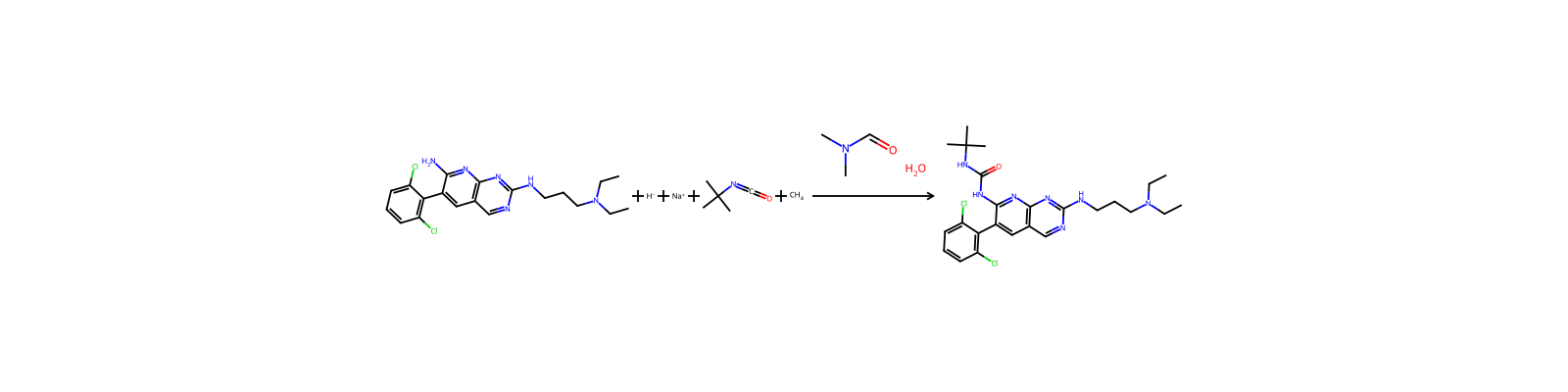
423 件



化合物ノート
読み込み中…