
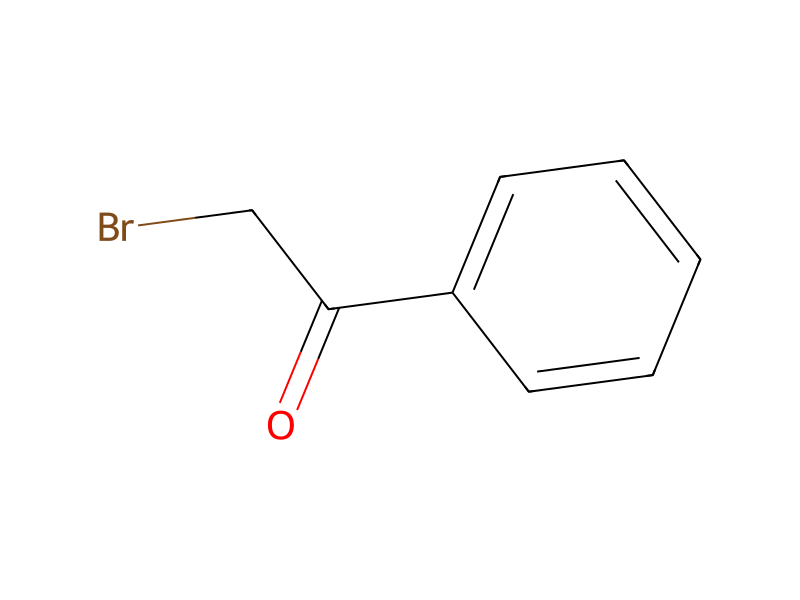
基本情報
- 標準SMILES
O=C(CBr)c1ccccc1- InChIKey
LIGACIXOYTUXAW-UHFFFAOYSA-N- 分子式
- C8H7BrO
- 平均分子量
- 199.04 g/mol
- 単同位体質量
- 197.96802694
概要
Phenacyl bromide appears as a crystalline solid or a liquid with a sharp odor. Toxic by inhalation, ingestion and skin absorption. A severe eye irritant (a lachrymator). Used to make other chemicals.
名称と識別子
- 優先名称
- Phenacyl bromide
- IUPAC
- 2-bromo-1-phenylethanone
- 現地名
- フェナシルブロミド
- 英語名
- 2-Bromoacetophenone
- 分子式
- C8H7BrO
- 分子量
- 199.04
名称と別名
2-BromoacetophenonePhenacyl bromide70-11-12-Bromo-1-phenylethanoneBromoacetophenone2-Bromo-1-Phenylethan-1-OneBromomethyl phenyl ketoneEthanone, 2-bromo-1-phenyl-omega-BromoacetophenoneALPHA-BROMOACETOPHENONEAcetophenone, 2-bromo-Stauffer 4644
名称をさらに表示
フェナシルブロミド臭化フェナシルブロモアセチルベンゼンα-ブロモアセトフェノン1-フェニル-2-ブロモエタン-1-オン(ブロモアセチル)ベンゼン2-ブロモアセトフェノンフェニルカルボニルメチルブロミドω-ブロモアセトフェノンフェニル(ブロモメチル)ケトン2-ブロモ-1-フェニルエタノン1-(ブロモアセチル)ベンゼン1-フェニル-2-ブロモエタノン2-プロモアセトンフェノンフェナシル ブロミドΑ‐ブロモアセトフェノンα-BromoacetophenoneA-BROMOACETOPHENONE1-Phenyl-2-broMoethanone2-Bromoacetophenone ,99%NSC 9807AKOS BBS-00004003Bromoacetylbenzene-Bromoacetophenone
phenacylbromideBenzoylmethyl bromideomega-BromacetophenoneDTXSID2049426UN2645STAUFFER-4644phenyl bromomethyl ketoneNSC-9807
データベース識別子
- CAS
70-11-1- PubChem CID
- 6259
- DTXSID
DTXSID2049426- ChEMBL
CHEMBL102953- ChEBI
CHEBI:51846- UNII
- 754Y0U325I
- EC Number
- 200-724-9
- Nikkaji
- J4.874G
物性
構造計算による物性
- XLogP
- 2.5
- 極性表面積
- 17.1 Ų
- 水素結合供与体数
- 0
- 水素結合受容体数
- 1
- 回転可能結合数
- 2
- 重原子数
- 10
- 形式電荷
- 0
- 複雑度
- 116
実験および物理化学的性質
Chemical ClassesOther Classes -> Aromatic Ketones, Halogenated
SpringerMaterials PropertiesChemical shift
LogP2.19
Vapor Pressure0.01 [mmHg]
Physical Description
Phenacyl bromide appears as a crystalline solid or a liquid with a sharp odor. Toxic by inhalation, ingestion and skin absorption. A severe eye irritant (a lachrymator). Used to make other chemicals.
Solid; [Merck Index] Beige crystalline solid; [Aldrich MSDS]
物理化学的性質
- 融点
- 48 · 48-51 °C (lit.)
- 沸点
- 135 °C/18 · 135 °C/18 mmHg (lit.)
- 比重(密度)
- 1.476 · 1.476
- 屈折率
- 1.57 · 1.5700 (estimate)
- 闪点
- 230 °F · >230 °F
- 貯蔵温度
- 2 · 2-8°C
- 溶解性
- クロロホルム(微量)、DMSO(微量)、メタノール(微量)
- 外見
- 結晶または粉末
- 色
- 白から濃い緑褐色
- 水溶解度
- 実質的に不溶
- Merck
- 14 · 14,1402
- BRN
- 606474 · 606474
- 安定性
- 安定。強塩基、強酸化剤とは相容れない。可燃性。
- InChI
- 1S/C8H7BrO/c9-6-8(10)7-4-2-1-3-5-7/h1-5H,6H2
- InChIKey
- LIGACIXOYTUXAW-UHFFFAOYSA-N
- SMILES
- BrCC(=O)c1ccccc1
- CAS データベース
- 70 · 70-11-1(CAS DataBase Reference)
- NISTの化学物質情報
- 2 · Ethanone, 2-bromo-1-phenyl-(70-11-1)
- EPAの化学物質情報
- 2 · Ethanone, 2-bromo-1-phenyl- (70-11-1)
化学的性質
化学的特性Off white-grey green crystaline powder
安全と法規制
GHS分類
GHS Classification
Danger
H301 (20.6%): Toxic if swallowed [Danger Acute toxicity, oral]
P260, P261, P262, P264, P264+P265, P270, P271, P280, P284, P301+P316, P301+P330+P331, P302+P352, P302+P361+P354, P304+P340, P305+P351+P338, P305+P354+P338, P316, P319, P320, P321, P330, P332+P317, P337+P317, P361+P364, P362+P364, P363, P403+P233, P405, and P501 (click each P-code to see the statement)
Aggregated GHS information provided per 63 reports by companies from 8 notifications to the ECHA C&L Inventory. Each notification may be associated with multiple companies.
危険有害性情報
Regulatory Information
Chemical: Ethanone, 2-bromo-1-phenyl-
2-Bromoacetophenone: Does not have an individual approval but may be used under an appropriate group standard
DOT LabelPoison
Fire Hazards
Excerpt from ERG Guide 153 [Substances - Toxic and/or Corrosive (Combustible)]:
· Combustible material: may burn but does not ignite readily.
Health Hazards
Excerpt from ERG Guide 153 [Substances - Toxic and/or Corrosive (Combustible)]:
· TOXIC and/or CORROSIVE; inhalation, ingestion or skin contact with material may cause severe injury or death.
Hazards Summary
A lachrymator; A severe skin, eye, and mucous membrane irritant; [Merck Index] Slowly reacts with moisture producing hydrogen bromide; A lachrymator; Toxic by ingestion, inhalation, and skin absorption; [CAMEO] Causes burns and lachrymation; Inhalation may cause corrosive injuries to upper respiratory tract and lungs; [Aldrich MSDS] See alpha-Chloroacetophenone.
DOT ID and Guide2645 153
Reactive GroupHalogenated Organic Compounds
Reactivity ProfilePHENACYL BROMIDE reacts slowly with metals causing mild corrosion.
DOT Hazard Classification
Phenacyl bromide
UN2645
Div 6.1 Poisonous materials (49 eCFR § 173.132)
PG II: the degree of danger presented by the material is medium
Air and Water ReactionsReacts slowly with moisture in air to form hydrogen bromide.
Hazard Classes and CategoriesAcute Tox. 3 (20.6%)
安全と保護具
Fire FightingExcerpt from ERG Guide 153 [Substances - Toxic and/or Corrosive (Combustible)]:
Accidental Release Measures
· CALL 911. Then call emergency response telephone number on shipping paper. If shipping paper not available or no answer, refer to appropriate telephone number listed on the inside back cover.
· ELIMINATE all ignition sources (no smoking, flares, sparks or flames) from immediate area.
First Aid
Excerpt from ERG Guide 153 [Substances - Toxic and/or Corrosive (Combustible)]:
General First Aid:
Exposure Control and Personal Protection· Wear positive pressure self-contained breathing apparatus (SCBA).
Nonfire Spill ResponseExcerpt from ERG Guide 153 [Substances - Toxic and/or Corrosive (Combustible)]:
Isolation and Evacuation
Excerpt from ERG Guide 153 [Substances - Toxic and/or Corrosive (Combustible)]:
Immediate precautionary measure
Personal Protective Equipment (PPE)Excerpt from ERG Guide 153 [Substances - Toxic and/or Corrosive (Combustible)]:
Emergency Response Planning GuidelinesSmall Fire
毒性情報
Treatment
EYES: irrigate opened eyes for several minutes under running water. INGESTION: do not induce vomiting. Rinse mouth with water (never give anything by mouth to an unconscious person). Seek immediate medical advice. SKIN: should be treated immediately by rinsing the affected parts in cold running water for at least 15 minutes, followed by thorough washing with soap and water. If necessary, the person should shower and change contaminated clothing and shoes, and then must seek medical attention. INHALATION: supply fresh air. If required provide artificial respiration.
Health EffectsA strong lachrymator. Inhalation, ingestion or skin contact with material may cause severe injury or death. Potentially hepatotoxic. It is not carcinogenic or mutagenic.
Adverse EffectsDermatotoxin - Skin burns.
Exposure RoutesOral (L626) ; inhalation (L626) ; dermal (L626)
Toxicity Summary
Organobromide compounds such as phenacyl bromide are strong alkylating agents. Consequently they can readily modify free thiols (cysteines) and methionine residues of the surfaces of proteins leading to the disruption of enzyme, transporter or membrane functions. One of the most probable protein targets is the TRPA1 ion channel that is expressed in sensory nerves (trigeminal nerve) of the eyes, nose, mouth and lungs. Human liver aldehyde dehydrogenase isozymes E1 and E2 are both completely and irreversibly inactivated by phenacyl bromide. This kind targeted modification may lead to liver toxicity.
Signs and Symptoms
Phenacyl bromide is a strong lachrymator. Eye exposure produces irritation, characterized by a burning sensation, redness, tearing, inflammation, and possible corneal injury. Causes skin irritation and possible burns. May cause gastrointestinal irritation with nausea, vomiting and diarrhea. Causes respiratory tract irritation.
Carcinogen ClassificationNo indication of carcinogenicity (not listed by IARC). (L135)
安全データ
- F
- 8-19
- wgk
- 3
- tsca
- TSCA listed
- ridadr
- UN 2645
- hs_code
- 29143990
- risk_code
- 34-20/21/22
- 化審法
- (3)-2931
- hazard_code
- C
- hazard_note
- Corrosive
- safety_code
- 26-36/37/39-45
- hazard_class
- 6.1
- packing_group
- II
- Hazard Classifications
- Skin Corr. 1B
- ストレージクラス
- 6.1A - Combustible acute toxic Cat. 1 and 2very toxic hazardous materials
化学と産業
薬理情報
Metabolism/Metabolites
Bromine is mainly absorbed via inhalation, but may also enter the body through dermal contact. Bromine salts can be ingested. Due to its reactivity, bromine quickly forms bromide and may be deposited in the tissues, displacing other halogens. (L626)
用途と製造
Uses
Used to make other chemicals; [CAMEO]
Phenacyl bromide is an industrial and laboratory chemical.
General Manufacturing InformationEthanone, 2-bromo-1-phenyl-: ACTIVE
応用分野
用途有機合成原料。
使用2-Bromoacetophenone is a brominated acteophenone derivative. 2-Bromoacetophenone has been shown to completely and irreversibly inactivate human liver aldehyde dehydrogenase (EC 1.2.1.3) isoenzymes E1 and E2. 2-Bromoacetophenone and its derivatives display some inhibitory activity on neutral protein tyrosine.inhibitors
一般的な説明A crystalline solid or a liquid with a sharp odor. Toxic by inhalation, ingestion and skin absorption. A severe eye irritant (a lachrymator). Used to make other chemicals.
調製方法
純化方法Crystallise the bromide from EtOH, MeOH or pet ether (b 80-100o). [Tanner J Org Chem 52 2142 1987, Beilstein 7 IV 649.]
上流・下流製品情報
上流原料
下流製品
サプライヤー50 社
国药集团化学试剂有限公司86-21-63210123 · [email protected]
梯希爱(上海)化成工业发展有限公司021-67121386 · [email protected]
衢州润东化工有限公司0570-8789886 18892685668 · [email protected]
上海阿拉丁生化科技股份有限公司400-6206333 13167063860 · [email protected]
河北创海生物科技有限公司+86-86-13131129325 · [email protected]
爱斯特(成都)生物制药股份有限公司+86-28-85122536 85324413 · [email protected]
山东前元高分子材料有限公司18678041314 18765609661 · [email protected]
Hebei Yanxi Chemical Co., Ltd.+86-17531190177 · [email protected]
科瑞迪化学400-821-5857 021-64326257 · [email protected]
上海迈瑞尔生化科技有限公司4006356688 18621169109 · [email protected]
宇瑞(上海)化学有限公司02150456736 18602143071 · [email protected]
阿法埃莎(中国)化学有限公司400-6106006 · [email protected]
安耐吉化学&3A(安徽泽升科技股份有限公司)400-0056266 · [email protected]
上海瀚鸿科技股份有限公司021-54306202 13764082696 · [email protected]
上海景颜化工科技有限公司13817811078 · [email protected]
嘉兴市艾森化工有限公司0573-85285100 18627885956 · [email protected]
Pure Chemistry Scientific Inc.001-857-928-2050 or 1-888-588-9418 · [email protected]
上海隆盛化工有限公司58099637 13585536065 · [email protected]
玛雅试剂+86 (573) 82222445 (0)18006601000 452520369 · [email protected]
四川库利南科技有限公司400-1166-196 18981987031 · [email protected]
天津希恩思生化科技有限公司400 638 7771 · [email protected]
南京维奥化工有限公司Please Send Email 18652950785 · [email protected]
上海思域化工科技有限公司86-21-34053660 · [email protected]
赛默飞世尔科技(中国)有限公司800-810-5118 · [email protected]
北京伊诺凯科技有限公司400-810-7969 010-59572699 · [email protected]
南京诺利斯医药科技有限公司13901585132 · [email protected]
TCI AMERICA800-4238616 · [email protected]
TOKYO CHEMICAL INDUSTRY CO., LTD.03-36680489 · [email protected]
TCI Europe320-37350700 · [email protected]
深圳康特腾科技有限公司86-0755-86635001 · [email protected]
越林试剂021-62960152 · [email protected]
上海湄水化工科技有限公司021-60549325 18616193163
HBCChem, Inc.+1-510-219-6317 · [email protected]
日照力德士化工有限公司010-51268198 · [email protected]
美岚实业(上海)有限公司021-58958189 · [email protected]
上海石洋化工有限公司021-56795766 · [email protected]
上海爱蝶实业有限公司021-58957966 18930537195 · [email protected]
成都零六生物科技有限公司400-1166-196 13458535857 · [email protected]
广拓化学(上海)有限公司021-60899189-8001 18918189673 · [email protected]
雷丁试剂0510-85629785 18013409632 · [email protected]
上海麦克林生化科技股份有限公司15221275939 15221275939 · [email protected]
杭州杰恒化工有限公司0571-87396432 · [email protected]
上海寰川实业有限公司021-61478794 · [email protected]
上海嵩爰化工科技有限公司010-1234567 18521000990 · [email protected]
上海有朋化工有限公司021-69005955 13701776567 · [email protected]
上海凯赛化工有限公司021-33516722 13701817765 · [email protected]
上海彤源化工有限公司021-021-69182866 13701855675 · [email protected]
凯试(上海)科技有限公司021-50135380 · [email protected]
上海蓝润化学有限公司021-69515658 ; 69515628 13701998368 · [email protected]
上海容立化学科技有限公司021-69992220 13701886816 · [email protected]
補足説明
定義ChEBI: An alpha-bromoketone that is acetophenone substituted by a bromo group at position 2.
関連反応
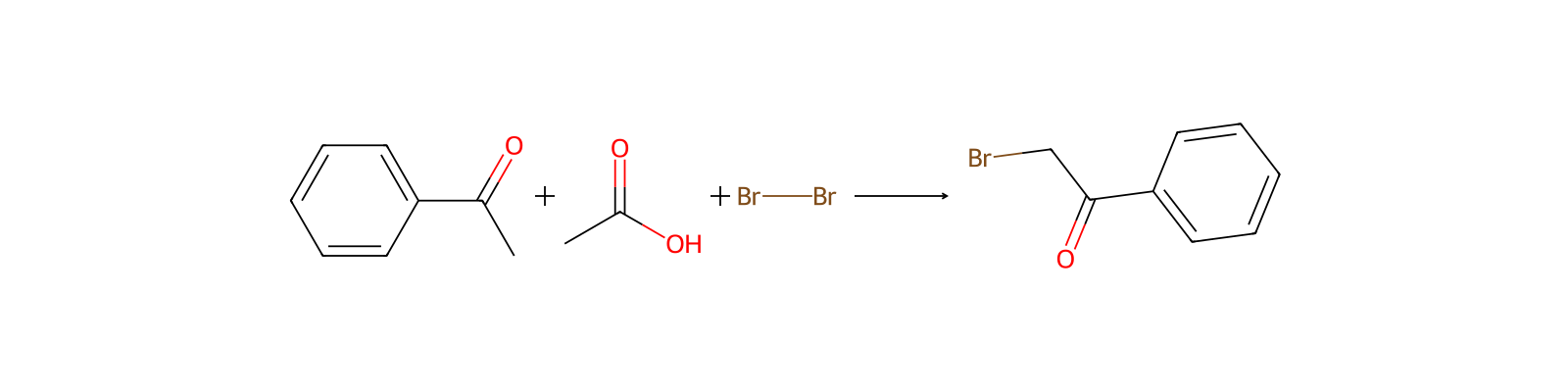
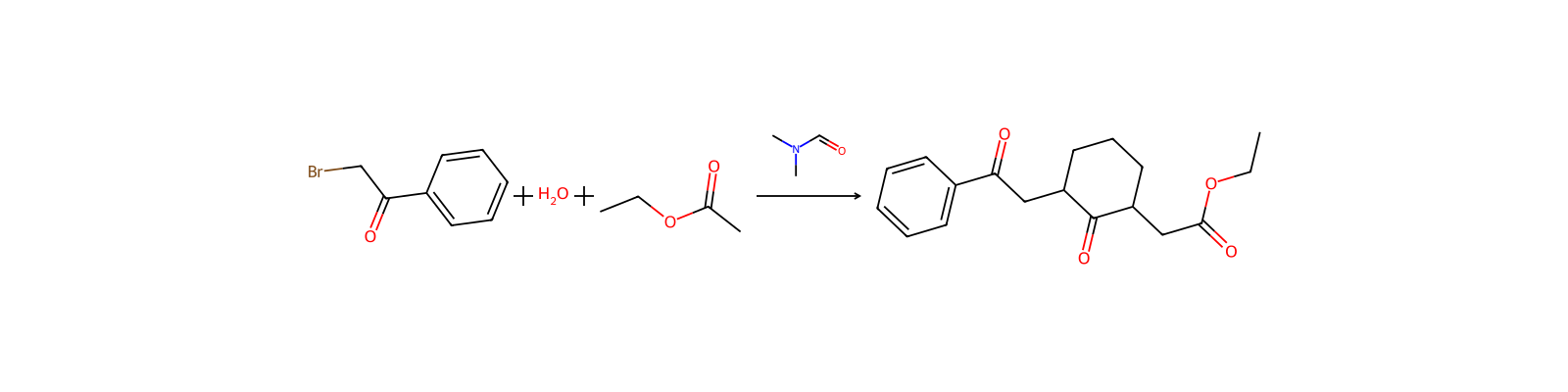
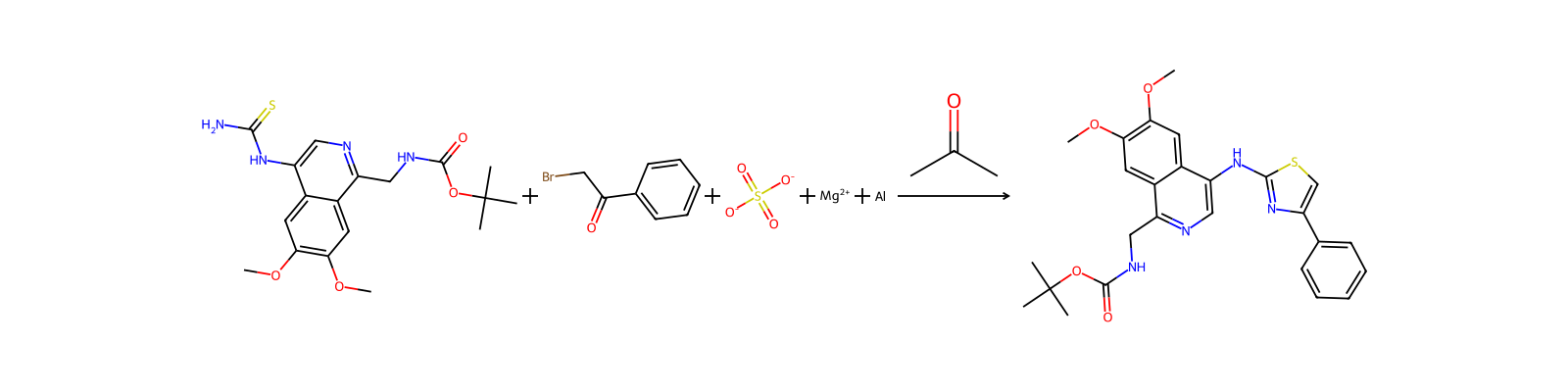
1,060 件




関連ノート
読み込み中…