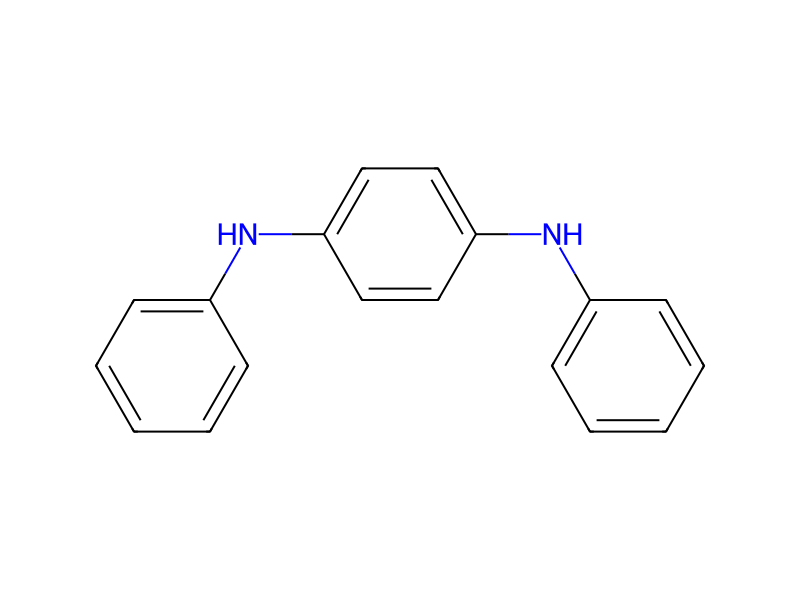
N,N'-Diphenyl-P-Phenylenediamine
74-31-7c1ccc(Nc2ccc(Nc3ccccc3)cc2)cc1UTGQNNCQYDRXCH-UHFFFAOYSA-NN,n'-diphenyl-p-phenylenediamine appears as gray or dark gray powder or flakes. (NTP, 1992)
74-31-7DTXSID9020538CHEMBL1333512CHEBI:348601.21 (NTP, 1992) - Denser than water; will sink
1.20
Relative density (water = 1): 1.2
Colorless leaflets from alcohol; commercial grades are greenish-brown
Gray powder
White solid
less than 1 mg/mL at 68 °F (NTP, 1992)
Sol in monochlorobenzene, benzene, DMF, ether, chloroform, acetone, ethyl acetate, isopropyl acetate, glacial acetic acid. Slightly sol in alcohol. Almost insol in petr ether, water.
Solubility in water: none
400 °F (NTP, 1992)
232 °C c.c.
428 to 437 °F at 0.5 mmHg (NTP, 1992)
220-225 °C @ 0.5 mm Hg
安全情報は参考情報です。供給元の安全データシート(SDS)、適用法令、専門家による評価に代わるものではありません。
Warning
H317: May cause an allergic skin reaction [Warning Sensitization, Skin]
P261, P272, P273, P280, P302+P352, P321, P333+P317, P362+P364, and P501 (click each P-code to see the statement)
Warning
H317 (100%): May cause an allergic skin reaction [Warning Sensitization, Skin]
P203, P261, P272, P273, P280, P302+P352, P318, P321, P333+P317, P362+P364, P391, P405, and P501 (click each P-code to see the statement)
Chemical: 1,4-Benzenediamine, N,N'-diphenyl-
1,4-Benzenediamine, N1,N4-diphenyl- is listed on the EPA's Chemical Data Reporting (CDR) system. Manufacturers and importers of 1,4-Benzenediamine, N1,N4-diphenyl- are required to report information about their production and use of this chemical to the EPA under the Toxic Substances Control Act (TSCA). (40 eCFR Part 711)
Status: Active Update: 26-05-2018 https://echa.europa.eu/registration-dossier/-/registered-dossier/22932
1,4-Benzenediamine, N,N'-diphenyl-: Does not have an individual approval but may be used under an appropriate group standard
This chemical is combustible. This chemical may form explosive dust-air mixtures. (NTP, 1992)
Combustible. Gives off irritating or toxic fumes (or gases) in a fire. Finely dispersed particles form explosive mixtures in air.
COMBUSTIBLE.
SLIGHT, WHEN EXPOSED TO HEAT OR FLAME.
DD517SCM92
N,N'-DIPHENYL-1,4-PHENYLENEDIAMINE
Established Pharmacologic Class [EPC] - Standardized Chemical Allergen
Physiologic Effects [PE] - Increased Histamine Release
Physiologic Effects [PE] - Cell-mediated Immunity
Chemical Structure [CS] - Allergens
Used as antioxidant (rubber, polyethylene, feedstuffs, petroleum, vegetable oils, animal fats, and oils), polymerization inhibitor, copper degradation inhibitor, and as an intermediate (dyes, drugs, plastics, and detergents); [HSDB]
Petroleum Production and Refining [Category: Industry]
ANTIOXIDANT FOR RUBBER, POLYETHYLENE, FEEDSTUFFS, PETROLEUM, VEGETABLE OILS, ANIMAL FATS & OILS; POLYMERIZATION INHIBITOR
Polymerization inhibitor, antioxidant for rubber, petr oils, feedstuffs.
THERAP CAT (VET): Antioxidant for feedstuffs
Flex-resistant antioxidant in rubbers; stabilizer; polymerization inhibitor; retards copper degradation; intermediate for dyes, drugs, plastics and detergents.
2023: <75,000 lb
(1972) 8.13X10+8 GRAMS
(1975) 4.85X10+8 GRAMS
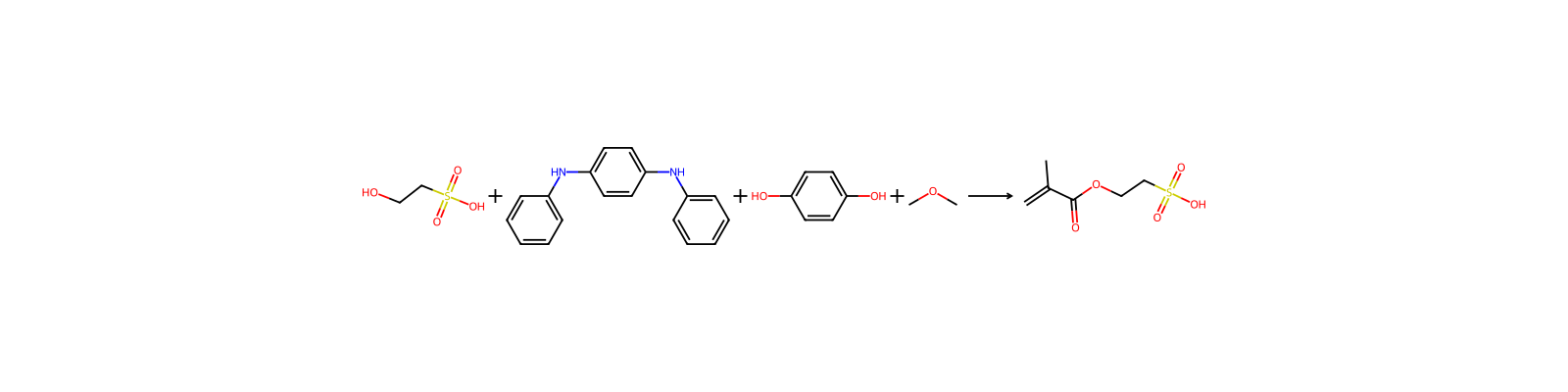
Prepd by condensing hydroquinone or p-aminophenol with aniline: Calm, Ber 16, 2805 (1883); Clemens, Magoffin, US patent 2,503,712 (1950 to Kodak). Purification: Pecherer, US patent 2,833,824 (1958 to Hoffmann-La Roche).
読み込み中…
293 to 306 °F (NTP, 1992)
150-151 °C
Specific gravity: 1.28; melting point: 145-152 °C
150-151 °C
9 (NTP, 1992) - Heavier than air; will sink (Relative to Air)
9.0 (Air= 1)
Relative vapor density (air = 1): 9.0
化学的特性grey powder
May cause skin sensitization; [ICSC] Danger of skin sensitization; [MAK] Food concentrations as low as 0.005% increase frequency of stillbirths in pregnant rats; Emergency treatment: Paraphenylenediamine; In sensitized individuals, paraphenylenediamine may cause allergic contact dermatitis following application as a hair dye and asthma following inhalation; Following ingestion, can cause angioneurotic edema, methemoglobinemia, acute tubular necrosis, and hepatotoxicity; An adult died after ingestion of 3 grams of p-phenylenediamine; Another adult who ingested 1800 mg developed angioneurotic edema and acute renal failure; [HSDB] May cause skin sensitization; [eChemPortal: ESIS] A mild eye irritant; Causes changes in liver weight, renal tubules, and clotting factors in repeated feeding studies of rats; [RTECS] See p-Phenylenediamine.
N,N'-DIPHENYL-P-PHENYLENEDIAMINE may react with oxidizing materials (NTP, 1992). Neutralizes acids in exothermic reactions to form salts plus water. May be incompatible with isocyanates, halogenated organics, peroxides, phenols (acidic), epoxides, anhydrides, and acid halides. Flammable gaseous hydrogen may be generated in combination with strong reducing agents, such as hydrides.
Fires involving this material can be controlled with a dry chemical, carbon dioxide or Halon extinguisher. A water spray may also be used. (NTP, 1992)
Use water spray, powder, foam, carbon dioxide.
Fresh air, rest.
Wear protective gloves when administering first aid. Remove contaminated clothes. Rinse and then wash skin with water and soap.
Rinse with plenty of water (remove contact lenses if easily possible).
Rinse mouth.
EYES: First check the victim for contact lenses and remove if present. Flush victim's eyes with water or normal saline solution for 20 to 30 minutes while simultaneously calling a hospital or poison control center. Do not put any ointments, oils, or medication in the victim's eyes without specific instructions from a physician. IMMEDIATELY transport the victim after flushing eyes to a hospital even if no symptoms (such as redness or irritation) develop.
...MATERIALS WHICH ARE TOXIC AS STORED OR WHICH CAN DECOMP INTO TOXIC COMPONENTS DUE TO CONTACT WITH HEAT, MOISTURE, ACID, OR ACID FUMES, SHOULD BE STORED IN COOL, WELL-VENTILATED PLACE, OUT OF DIRECT RAYS OF SUN, AWAY FROM AREAS OF HIGH FIRE HAZARD & SHOULD BE PERIODICALLY INSPECTED & MONITORED.
SMALL SPILLS AND LEAKAGE: If a spill of this chemical occurs, FIRST REMOVE ALL SOURCES OF IGNITION, then you should dampen the solid spill material with acetone and transfer the dampened material to a suitable container. Use absorbent paper dampened with acetone to pick up any remaining material. Seal your contaminated clothing and the absorbent paper in a vapor-tight plastic bag for eventual disposal. Solvent wash all contaminated surfaces with acetone followed by washing with a soap and water solution. Do not reenter the contaminated area until the Safety Officer (or other responsible person) has verified that the area has been properly cleaned.
SRP: At the time of review, criteria for land treatment or burial (sanitary landfill) disposal practices are subject to significant revision. Prior to implementing land disposal of waste residue (including waste sludge), consult with environmental regulatory agencies for guidance on acceptable disposal practices.
Personal protection: particulate filter respirator adapted to the airborne concentration of the substance. Sweep spilled substance into covered containers. If appropriate, moisten first to prevent dusting. Carefully collect remainder. Then store and dispose of according to local regulations.
TERRESTRIAL FATE: Based on a classification scheme(1), an estimated Koc value of 1.3X10+5(SRC), determined from a structure estimation method(2), indicates that N,N'-diphenyl-p-phenylenediamine is expected to be immobile in soil(SRC). Volatilization of N,N'-diphenyl-p-phenylenediamine from moist soil surfaces is not expected to be an important fate process(SRC) given an estimated Henry's Law constant of 2.1X10⁻¹⁰ atm-cu m/mole(3), using a fragment constant estimation method(3). N,N'-Diphenyl-p-phenylenediamine is not expected to volatilize from dry soil surfaces(SRC) based upon a vapor pressure of 6.35X10⁻⁹ mm Hg(4).
AQUATIC FATE: Based on a classification scheme(1), an estimated Koc value of 1.3X10+5(SRC), determined from an estimation method(2), indicates that N,N'-diphenyl-p-phenylenediamine is expected to adsorb to suspended solids and sediment(SRC). Volatilization from water surfaces is not expected(3) based upon an estimated Henry's Law constant of 2.1X10⁻¹⁰ atm-cu m/mole(4), developed using a fragment constant estimation method(4). According to a classification scheme(5), an estimated BCF of 260(SRC), from an estimated log Kow of 4.0(6) and a regression-derived equation(7), suggests the potential for bioconcentration in aquatic organisms is moderate. BCFs for N,N'-diphenyl-p-phenylenediamine were determined to be greater than 100(8,9). N,N'-Diphenyl-p-phenylenediamine was determined to be non-biodegradable using the Japanese MITI test(9), attaining 0.2% of its theoretical BOD in 2 weeks(9).
ATMOSPHERIC FATE: According to a model of gas/particle partitioning of semivolatile organic compounds in the atmosphere(1), N,N'-diphenyl-p-phenylenediamine, which has a vapor pressure of 6.35X10⁻⁹ mm Hg at 25 °C(2) is expected to exist solely in the particulate phase in the ambient atmosphere. Particulate-phase N,N'-diphenyl-p-phenylenediamine may be removed from the air by wet and dry deposition. N,N'-Diphenyl-p-phenylenediamine absorbs light in the environmental UV spectrum, and has the potential for direct photolysis(3).
Using a structure estimation method based on molecular connectivity indices(1), the Koc for N,N'-diphenyl-p-phenylenediamine can be estimated to be 1.3X10+5(SRC). According to a classification scheme(2), this estimated Koc value suggests that N,N'-diphenyl-p-phenylenediamine is expected to be immobile in soil(SRC).
An estimated BCF of 260 was calculated for N,N'-diphenyl-p-phenylenediamine(SRC), using an estimated log Kow of 4.0(1) and a regression-derived equation(2). The BCF for N,N'-diphenyl-p-phenylenediamine was determined to be greater than 100(4). The bioconcentration of N,N'-diphenyl-p-phenylenediamine in the lipids of fish (8 week exposure period) were between 264-1418 and 495-2146 for test concentrations of 0.1 mg/l and 0.01 mg/l, respectively(5). According to a classification scheme(3), BCF values of 500 to 2000 are low and from 50 to 150 are high.
The Henry's Law constant for N,N'-diphenyl-p-phenylenediamine is estimated as 2.1X10⁻¹⁰ atm-cu m/mole(SRC) using a fragment constant estimation method(1). This Henry's Law constant indicates that N,N'-diphenyl-p-phenylenediamine is expected to be essentially nonvolatile from water surfaces(2). N,N'-Diphenyl-p-phenylenediamine is not expected to volatilize from dry soil surfaces(SRC) based upon a vapor pressure of 6.35X10⁻⁹ mm Hg(3).
... from hydroquinone and aniline, acid cat.
Purity: 9.2% (min)
Flexamine G /is/ trademark for mixt of N,N'-diphenyl-para-phenylenediamine and complex diarylamine-ketone reaction product. Uses: antioxidant used in tires, camelback, wire insulation, neoprene belting and soles. /Flexamine G/
Plastics Material and Resin Manufacturing
1,4-Benzenediamine, N1,N4-diphenyl-: ACTIVE
...ITS DISTRIBUTION WAS...STOPPED IN 1956 BY US FDA.
IN ORDER TO PREVENT OXIDATION OF VITAMIN E & TO STABILIZE VITAMIN A & CAROTENE IN MIXED ANIMAL FEEDS IT.../BECAME/ COMMERCIAL PRACTICE TO ADD ANTIOXIDANTS. PROBABLY MOST WIDELY USED COMPD WAS DPPD...WHICH WAS USUALLY ADDED TO POULTRY FEEDS IN CONCN OF 0.025%.
用途重合阻害剤。抗酸化ゴム、ペトル油、飼料。
説明N,N'-Diphenyl-4-phenylenediamine (DPPD) is a rubber accelerant, formerly contained in the "black rubber mix". The most frequent occupational categories are in metal industry, homemakers, health services and laboratories, and building industries.
使用Polymerization inhibitor. Antioxidant for rubber, petroleum oils, feedstuffs.
一般的な説明Gray or dark gray powder or flakes.
純化方法Crystallise the diamine from EtOH, chlorobenzene/pet ether or *benzene. It has also been crystallised from aniline, then extracted three times with absolute EtOH. [Beilstein 13 H 80.]
定義ChEBI: An N-substituted diamine that is 1,4-phenylenediamine in which one hydrogen from each amino group is replaced by a phenyl group.