ホームMCPワークベンチSkills
ホームワークベンチ通知マイページ
llms.txt · MCPガイドプライバシーポリシー · 利用規約 · サポートv1.8.0
  1. ホーム
  2. /化合物

テルル

Tellurium

HCID 6327182
ノートを作成反応を作成見積依頼を出す
印刷プレビュー

データを補完しています。しばらくしてからページを更新すると最新の内容を表示できます
基本情報概要名称と識別子物性安全と法規制化学と産業関連反応化合物ノート
部分構造検索類似構造を探す

基本情報

CAS
13494-80-9
標準SMILES
[Te]
InChIKey
PORWMNRCUJJQNO-UHFFFAOYSA-N
分子式
Te
平均分子量
127.6 g/mol
単同位体質量
129.9062244

概要

Grayish-white, lustrous, brittle, crystalline solid; dark-gray to brown, amorphous powder with metallic characteristics. Used as a coloring agent in chinaware, porcelains, enamels, glass; producing black finish on silverware; semiconductor devices and research; manufacturing special alloys of marked electrical resistance. Improves mechanical properties of lead; powerful carbide stabilizer in cast iron, tellurium vapor in "daylight" lamps, vulcanization of rubber. Blasting caps. Semiconductor research. (EPA, 1998)

名称と識別子

優先名称
Tellurium
IUPAC
tellurium
現地名
テルル
英語名
Tellurium
分子式
Te
分子量
127.6

名称と別名

TELLURIUM13494-80-9Tellurium elementTellurium, metallicTelloyTellurTellurium, elementalAurum paradoxumMetallum problematumTENCI-C60117NQA0O090ZJ
名称をさらに表示
テルル金属テルルテルル,粉末テルル,塊状テルル,粒状テルル及びその化合物(水素化テルルを除く)テルル(粉末)テルル.粉末テルル.粒状テルル、粒状、99.9%テルル broken ingot (99.999%)テルル broken ingot (99.9999%)テルル powder (99.8%)テルル powder (99.9%)テルル powder, -30 mesh, 99.99% (metals basis)テルル powder (99.999%)テルル broken ingot (99.99+%)TELLERIUMurium LTelluniumTellurStckeelluriumatom
DTXSID9032119TELLURIUM METALLICUMCHEBI:30452RefChem:389303DTXCID7012119236-813-4Tellurium AtomTellurium powder

データベース識別子

CAS
13494-80-9、7783-09-7
PubChem CID
6327182
DTXSID
DTXSID9032119
ChEBI
CHEBI:30452
UNII
7F4735942K、NQA0O090ZJ
EC Number
236-813-4
Nikkaji
J95.176E、J95.290G

物性

構造計算による物性補完中

極性表面積
0 Ų
水素結合供与体数
0
水素結合受容体数
0
回転可能結合数
0
重原子数
1
形式電荷
0
複雑度
0

実験および物理化学的性質

Chemical Classes · 2 件

Metals -> Metalloid Compounds (Tellurium)

Flammable agents - 3rd degree

SpringerMaterials Propertiesphonon wavenumber
OdorOdorless.
Density · 6 件

6.24 (EPA, 1998) - Denser than water; will sink

6.11-6.27

6.0-6.25 g/cm³

6.24

6.232 @25 °C

6.24

Viscosity1.8-1.95 cP
Color/Form · 2 件

Grayish-white, lustrous, brittle, crystalline solid, hexagonal, rhombohedral structure

Dark-gray to brown, amorphous powder with metal characteristics

Solubility · 5 件

Insoluble (NIOSH, 2024)

Insol in benzene, carbon disulfide

INSOL IN HOT & COLD WATER, HYDROCHLORIC ACID; SOL IN NITRIC ACID, AQ REGIA, POTASSIUM CYANIDE, POTASSIUM HYDROXIDE, SULFURIC ACID

Solubility in water: none

Insoluble

Boiling Point · 6 件

1814 °F amorphous powder; 2534 °F crystalline solid (EPA, 1998)

989.9 °C

989.8 °C

1814 °F

988 °C @760 [mm Hg]

1814 °F

安全と法規制

安全情報は参考情報です。供給元の安全データシート(SDS)、適用法令、専門家による評価に代わるものではありません。

GHS分類

GHS Classification · 6 件

Danger

H360Df: May damage the unborn child; Suspected of damaging fertility [Danger Reproductive toxicity]

P203, P260, P263, P264, P270, P280, P318, P405, and P501 (click each P-code to see the statement)

This chemical does not meet GHS hazard criteria for 0.8% (4 of 527) of reports.

Danger

H301 (18.6%): Toxic if swallowed [Danger Acute toxicity, oral]

危険有害性情報

Regulatory Information · 6 件

Chemical: Tellurium

Hazard Traits - Reproductive Toxicity

Tellurium is listed on the EPA's Chemical Data Reporting (CDR) system. Manufacturers and importers of Tellurium are required to report information about their production and use of this chemical to the EPA under the Toxic Substances Control Act (TSCA). (40 eCFR Part 711)

Status: Active Update: 16-11-2022 https://echa.europa.eu/registration-dossier/-/registered-dossier/14525

Tellurium: Does not have an individual approval but may be used under an appropriate group standard

The New Jersey Worker and Community Right to Know Act requires public and private employers to provide information about hazardous substances at their workplaces. (N.J.S.A. 34:5A-1 et. seq.)

DOT LabelPoison
Fire Hazards · 3 件

A finely divided suspension of elemental tellurium in air will explode. Burning tellurium produces toxic tellurium oxide gas. Avoid solid sodium, halogens, interhalogens, metals, hexalithium disilicide. Reacts with nitric acid; reacts with concentrated sulfuric acid forming a red solution. Dissolves in potassium hydroxide in the presence of air with formation of deep red solution; combines with halogens. Avoid antimony and chlorine trifluoride; chlorine trifluoride reacts vigorously with tellurium producing flame. Fluorine and tellurium react with incandescence. Lithium silicide attacks tellurium with incandescence. Reaction with zinc is accompanied by incandescence (same potential with cadmium, only hazard is less). A vigorous reaction results when liquid tellurium is poured over solid sodium. (EPA, 1998)

化学と産業

薬理情報

BionecessityThere is no evidence that tellurium is essential either for man or animals. /Tellurium/
Mechanism of Action · 2 件

The efficacy of garlic as a lipid-lowering agent is being increasingly recognized, but the biochemical mechanisms underlying this action are currently unknown. It is proposed that organic tellurium compounds, which are found in high concentration in fresh garlic buds, may contribute to this action by inhibiting squalene epoxidase, the penultimate enzyme in the synthetic pathway of cholesterol. Weanling rats fed a diet rich in tellurium develop a demyelinating polyneuropathy due to inhibition of this enzyme in peripheral nerves. Chronic exposure to small amounts of tellurium found in garlic might reduce endogenous cholesterol production through inhibition of hepatic squalene epoxidase and so reduce cholesterol levels. Tellurium may also contribute to the characteristic odor of garlic since the most obvious clinical sign of tellurium poisoning is a garlic-like odor.

Inclusion of 1.1% tellurium in the diet of developing rats causes a highly synchronous primary demyelination of peripheral nerves, which is followed closely by a period of rapid remyelination. The demyelination is related to the inhibition of squalene epoxidase activity, which results in a block in cholesterol synthesis and accumulation of squalene. We now report that the demyelination resulting from this limiting of the supply of an intrinsic component of myelin (cholesterol) leads to repression of the expression of mRNA for myelin-specific proteins. Tellurium exposure resulted in an increase in total RNA (largely rRNA) in sciatic nerve, which could not be accounted for by cellular proliferation; these increased levels of rRNA may be a reactive response of Schwann cells to toxic insult and may relate to the higher levels of protein synthesis required during remyelination. In contrast, steady-state levels of mRNA, determined by Northern blot analysis, for P0 and myelin basic protein were markedly decreased (levels after 5 days of tellurium exposure were only 10-15% of control levels as a fraction of total RNA and 25-35% of control levels when the increased levels of total RNA were taken into account). Message levels increased during the subsequent period of remyelination and reached near-normal levels 30 days after beginning tellurium exposure. Although message levels for the myelin-associated glycoprotein showed a similar temporal pattern, levels did not decrease as greatly and subsequently increased sooner than did levels for P0 and myelin basic protein. The coordinate alterations in message levels for myelin proteins indicate that Schwann cells can down-regulate and then up-regulate the synthesis of myelin in response to alterations in the supply of membrane components.

関連反応

12 件
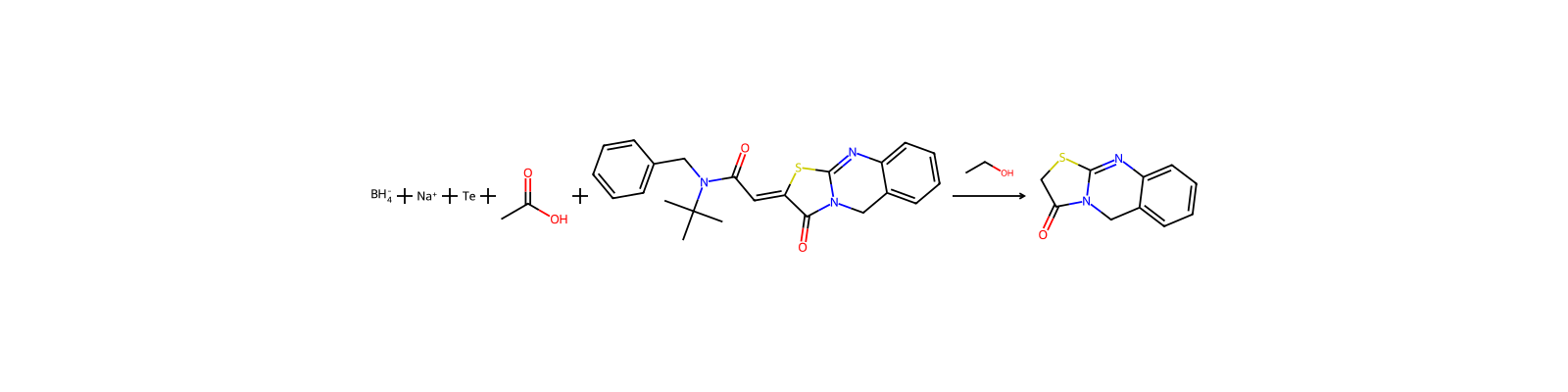
反応記録を作成
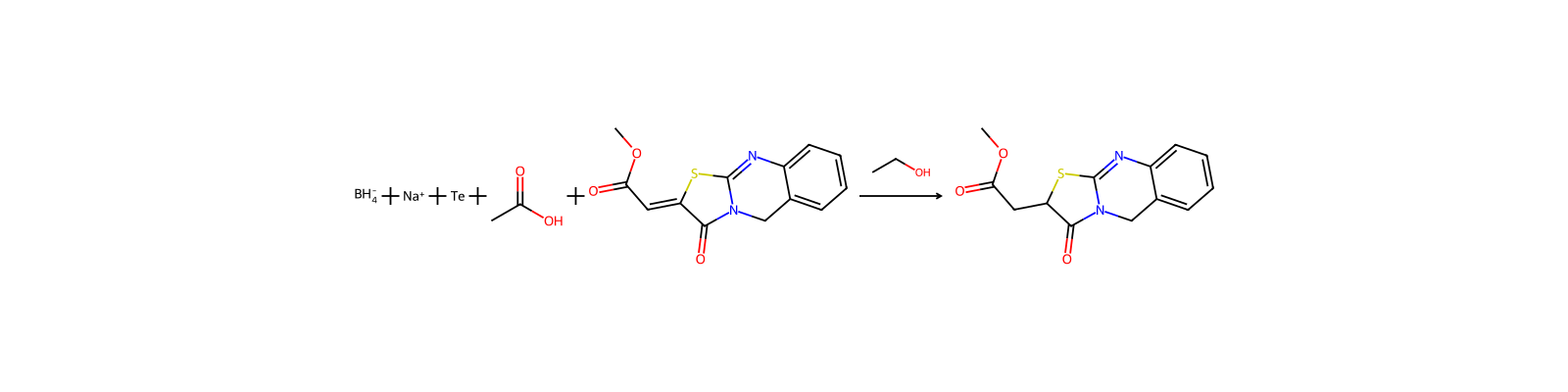
HRID 1044 の反応式
HRID 1044反応物としてuspto-grants-1998_03
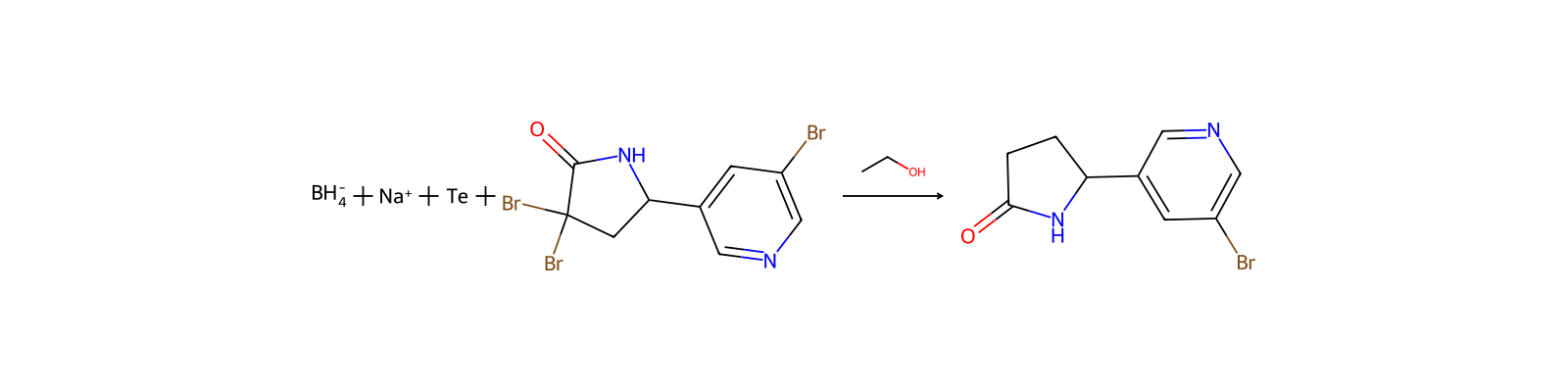
HRID 280372 の反応式
HRID 280372反応物としてuspto-grants-1986_05
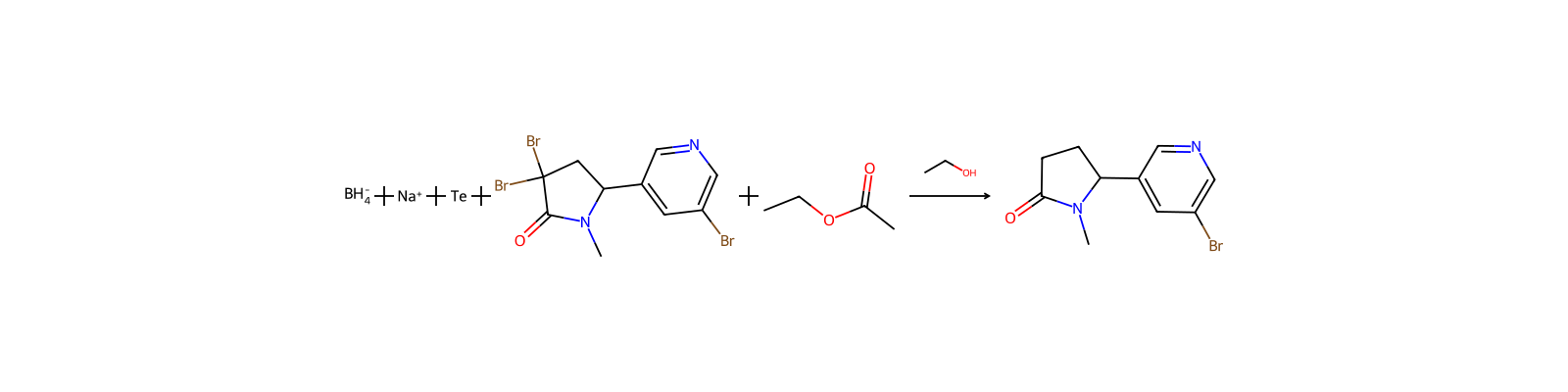
HRID 280376 の反応式
HRID 280376反応物としてuspto-grants-1986_05
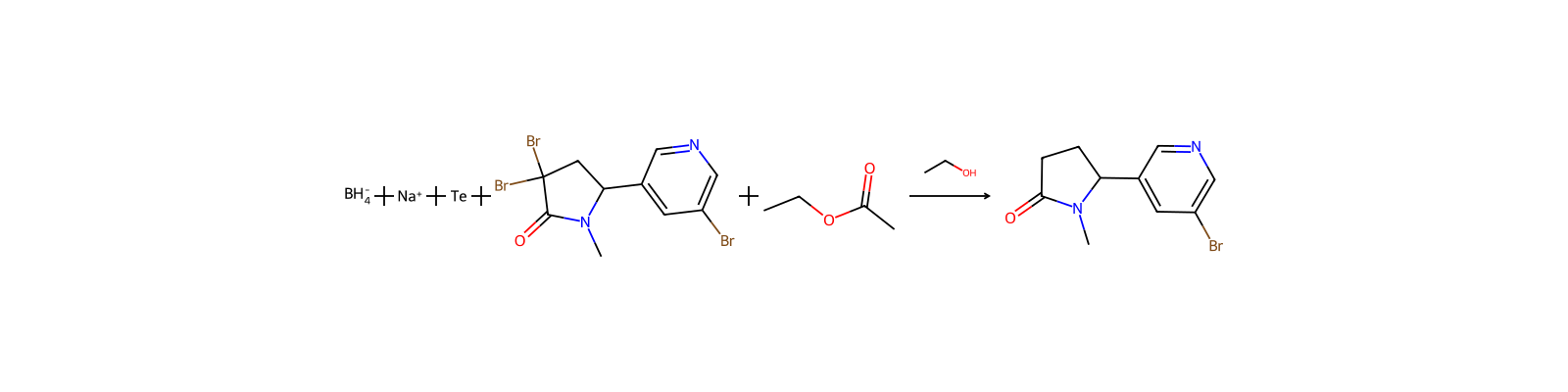
HRID 355343 の反応式
HRID 355343反応物としてuspto-grants-1998_11
HRID 712700 の反応式
HRID 712700反応物としてuspto-grants-2015_11
HRID 724907 の反応式
HRID 724907反応物としてuspto-grants-1998_01
HRID 1214071 の反応式
HRID 1214071反応物としてTraining data from https://doi.org/10.1039/C8SC04228D (5/10)
HRID 1489407 の反応式
HRID 1489407反応物としてuspto-grants-1997_10
1 / 2 ページ

化合物ノート

読み込み中…

このページの内容基本情報概要名称と識別子物性安全と法規制化学と産業関連反応化合物ノート
その他の操作
ノートを作成反応を作成見積依頼を出す
DecompositionWhen heated to decomposition it emits toxic fumes of /tellurium/.
Melting Point · 6 件

842 °F (EPA, 1998)

449.8 °C

449.5 °C

842 °F

449.51 °C

842 °F

Vapor Pressure · 5 件

1 mmHg at 968 °F (EPA, 1998)

Vapor pressure between 511 and 835 °C is given by equation logP(kPa)= 6.7249-(5960.2/K)

0 mmHg (approx)

0.75 [mm Hg] @502 °C

0 mmHg (approx)

Refractive IndexINDEX OF REFRACTION: 1.0025; SADTLER REFERENCE NUMBER: 5272 (IR, PRISM)

物理化学的性質

融点
450 °C · 450 °C (lit.)
沸点
990 °C · 990 °C (lit.)
比重(密度)
6.24 g/mL · 6.24 g/mL at 25 °C (lit.)
蒸気圧
0 Pa · 0Pa at 25℃
貯蔵温度
Sealed in dry,Room Temperature
溶解性
2 O, · insoluble in H2O, benzene, CS2
外見
shot
色
シルバーホワイト
比重
6.24 · 6.24
PH
0.5 · 0.5 (20°C in H2O)
Flame Color
Pale green
水溶解度
2 O、ベンゼン、CS2 · 不溶性H2O、ベンゼン、CS2 [MER06]
比熱容量
0.2 J/ · Cp(crystal): 0.2 J/(g·K); Cp(gas): 0.16 J/(g·K), at 25℃
Merck
13 · 13,9201
InChI
1S/Te
InChIKey
VTLHPSMQDDEFRU-UHFFFAOYSA-N
SMILES
[Te]
Hardness, Brinell
25 · 25
Modulus of Elasticity
40 GPa · 40.0 GPa
Poissons Ratio
0.33 · 0.33
Shear Modulus
15.16 GPa · 15.16 GPa
CAS データベース
13494 · 13494-80-9(CAS DataBase Reference)
EPAの化学物質情報
Tellurium (13494-80-9)
化学的性質 · 1 件

化学的特性Tellurium is a grayish or silvery white, lustrous, crystalline, semimetallic element. It may exist in a hexagonal crystalline form or an amorphous powder.Soluble in sulfuric acid, nitric acid, potassium hydroxide, and potassium cyanide solutions; insoluble in water. Imparts garlic-like odor to breath, can be depilatory. It is a ptype semiconductor and its conductivity is sensitive to light exposure. It is found in sulfide ores and is produced as a by-product of copper or bismuth refining.

Excerpt from ERG Guide 151 [Substances - Toxic (Non-Combustible)]:

Combustible. Finely dispersed particles form explosive mixtures in air.

Fire Potential · 2 件

FIRE HAZARD: MODERATE, IN FORM OF DUST WHEN EXPOSED TO HEAT OR FLAME OR BY CHEM REACTION WITH OXIDIZING AGENTS.

ELEMENTAL TELLURIUM WILL BURN SLOWLY IN AIR.

Health Hazards · 2 件

Causes central nervous system depression. Moderate skin and eye irritant. Tellurium is capable of doing harm within the body by replacing the essential element sulfur. (EPA, 1998)

Excerpt from ERG Guide 151 [Substances - Toxic (Non-Combustible)]:

Hazards Summary · 1 件

The TLV excludes the compound hydrogen telluride (H2Te). Garlic odor of the breath, urine, and sweat are signs of tellurium absorption. Foundry workers exposed to 0.01-0.1 mg/m3 with a peak of 0.74 mg/m3 complained of metallic taste, somnolence, and garlic odor. Signs of tellurium poisoning in experimental animals include pneumonitis, hemolytic anemia, hematuria, paralysis, convulsions, and coma. In 2 cases of human poisoning after instillation of 2 grams of sodium tellurite by ureteral catheter, the patients suffered cyanosis, stupor, and signs of liver injury and died 6 hours after the accident. There have not been any reports of serious occupational illnesses or deaths. [ACGIH] Causes damage to the nervous system, liver, kidneys, and heart in animal experiments; [Nordberg, p. 1217] In high-dose animal studies, tellurium produces birth defects (hydrocephalus). [Frazier] Tellurium is a hepatotoxic agent. [Zimmerman, p. 4] Tellurium is a skin and respiratory tract irritant. It can have effects on the CNS and liver. [ICSC] See Tellurium hexafluoride.

Reactive Group · 2 件

Metals, Less Reactive

Metals, Less Reactive

Reactivity AlertsPyrophoric
OSHA StandardsPermissible Exposure Limit: Table Z-1 8-hr Time Weighted Avg: 0.1 mg/cu m. /Tellurium and compounds, as Te/
Reactivity Profile · 2 件

TELLURIUM is attacked by chlorine fluoride with incandescence. When tellurium and potassium are warmed in an atmosphere of hydrogen, combination occurs with incandescence [Mellor 11:40. 1946-47]. Burning tellurium produces toxic tellurium oxide gas. Avoid solid sodium, halogens, interhalogens, metals, hexalithium disilicide. Reacts with nitric acid; reacts with concentrated sulfuric acid forming a red solution. Dissolves in potassium hydroxide in the presence of air with formation of deep red solution; combines with halogens. Avoid antimony and chlorine trifluoride; chlorine trifluoride reacts vigorously with tellurium producing flame. Fluorine and tellurium react with incandescence. Lithium silicide attacks tellurium with incandescence. Reaction with zinc is accompanied by incandescence (same potential with cadmium, only hazard is less). A vigorous reaction results when liquid tellurium is poured over solid sodium [EPA, 1998].

Mixtures of tellurium tetrabromide or tellurium tetrachloride with ammonia produces tellurium nitride complexes that are explosive upon heating. Tellurium trioxide is a powerful oxidant, which reacts violently when heated with a variety of metallic and non metallic materials. Noncombustible, substance itself does not burn but may decompose upon heating to produce corrosive and/or toxic fumes.

Chemical Dangers · 1 件

Upon heating, toxic fumes are formed. Decomposes on heating. This produces toxic fumes. Reacts vigorously with halogens and interhalogens. This generates fire hazard. Reacts with zinc with incandescence. Lithium silicide attacks tellurium with incandescence.

Flammable LimitsCombustible Solid

安全と保護具

Fire Fighting · 3 件

Straight water streams will scatter molten tellurium oxide. Wear goggles, rubber gloves, and proper respirator with filter.

Excerpt from ERG Guide 151 [Substances - Toxic (Non-Combustible)]:

Use foam, carbon dioxide, dry powder.

First Aid Measures · 4 件

Fresh air, rest. Artificial respiration may be needed. Refer for medical attention.

Remove contaminated clothes. Rinse and then wash skin with water and soap.

First rinse with plenty of water for several minutes (remove contact lenses if easily possible), then refer for medical attention.

Rinse mouth. Induce vomiting (ONLY IN CONSCIOUS PERSONS!). Refer for medical attention .

First Aid · 3 件

Signs and Symptoms of Acute Tellurium Exposure: Signs and symptoms of acute exposure to tellurium may include drowsiness, malaise, lassitude, weakness, and dizziness. Gastrointestinal symptoms may include nausea, vomiting, anorexia, and constipation. A metallic taste, garlicky breath, and profuse sweating may be noted. Kidney damage, liver injury, and pulmonary effects may also occur. Dermal exposure may result in dermatitis (red, inflamed skin).

Excerpt from ERG Guide 151 [Substances - Toxic (Non-Combustible)]:

(General first aid procedures)

Safe StorageSeparated from halogens and interhalogens.
Cleanup Methods · 1 件

1. VENTILATE AREA OF SPILL OR LEAK. 2. COLLECT SPILLED MATERIAL IN THE MOST CONVENIENT & SAFE MANNER & DEPOSIT IN SEALED CONTAINERS FOR RECLAMATION OR FOR DISPOSAL IN A SECURED SANITARY LANDFILL. LIQUIDS CONTAINING TELLURIUM & CMPD SHOULD BE ABSORBED IN VERMICULITE, DRY SAND, EARTH, OR A SIMILAR MATERIAL.

Nonfire Spill Response · 2 件

Caution : When heated to decomposition, toxic fumes of tellurium oxide will be emitted. Avoid sources of extreme heat.

Excerpt from ERG Guide 151 [Substances - Toxic (Non-Combustible)]:

Spillage Disposal · 1 件

Personal protection: particulate filter respirator adapted to the airborne concentration of the substance. Sweep spilled substance into covered sealable containers. Carefully collect remainder. Then store and dispose of according to local regulations.

Preventive Measures · 2 件

SRP: The scientific literature for the use of contact lenses in industry is conflicting. The benefit or detrimental effects of wearing contact lenses depend not only upon the substance, but also on factors including the form of the substance, characteristics and duration of the exposure, the uses of other eye protection equipment, and the hygiene of the lenses. However, there may be individual substances whose irritating or corrosive properties are such that the wearing of contact lenses would be harmful to the eye. In those specific cases, contact lenses should not be worn. In any event, the usual eye protection equipment should be worn even when contact lenses are in place.

SRP: Contaminated protective clothing should be segregated in such a manner so that there is no direct personal contact by personnel who handle, dispose, or clean the clothing. Quality assurance to ascertain the completeness of the cleaning procedures should be implemented before the decontaminated protective clothing is returned for reuse by the workers. Contaminated clothing should not be taken home at end of shift, but should remain at employee's place of work for cleaning.

Isolation and EvacuationExcerpt from ERG Guide 151 [Substances - Toxic (Non-Combustible)]:
Eye PreventionWear safety goggles or eye protection in combination with breathing protection if powder.
Fire PreventionNO open flames. Closed system, dust explosion-proof electrical equipment and lighting. Prevent deposition of dust.
Inhalation RiskEvaporation at 20 °C is negligible; a harmful concentration of airborne particles can, however, be reached quickly when dispersed.

毒性情報

Interactions · 1 件

Selenium is known to form complexes with heavy metals in the blood and thus increase the retention time of the metals in several organs, especially in the reticulo-endothelial system. Selenium may similarly cause retention of mercury in the lung after metallic mercury (Hg0) inhalation. This study, comparing the effects of tellurium with those of selenium (both in group '6b' of the periodical system), showed that Te(IV) was as effective as Se(IV) and Se(VI) (all given in a dose of 10 mumol/kg body wt.) in retaining inhaled 203Hg0 (1.5 mumol/kg body wt.) in the lung (presumably 203Hg2+ after oxidation). Te(VI) had to be given in a dose of 100 mumol/kg body wt to produce the same effect. As in the lung, also in other organs tellurium caused a dose-dependent increase in mercury retention. At a dose level of 10 mumol Te(IV) per kg body wt. the mercury retention ratios (treated/control) were 140 for the lung and 8.6 for the whole body. The corresponding figures for Te(VI) (10, 30 and 100 mumol/kg body wt.) were 10, 73 and 120 and 3.7, 3.9 and 4.3, respectively. Retention of i.v. injected 203HgCl2 was increased by pre-administration of tellurium, again in a dose-dependent manner and Te(IV) being 3-10 times more effective than Te(VI). The kidney and the spleen were the dominant organs, as is the case after Se pretreatment. Anions of other elements, arsenite, arsenate, chromate, molybdate and wolframate (30 mumol/kg body wt.), did not affect the retention of 203Hg in lung or any other organ, or in the whole body after inhalation of 203Hg0. It is suggested that Te(IV) may easily be reduced to Te2- (in analogy with selenium) which may complex with Hg2+. The liability for Te(VI) to be reduced to Te2- appears to be approx. 10 times lower.

Target OrgansSkin, central nervous system, blood
Adverse EffectsNeurotoxin - Other CNS neurotoxin
Exposure Routes · 2 件

The substance can be absorbed into the body by inhalation of its aerosol.

inhalation, ingestion, skin and/or eye contact

Signs and Symptoms · 4 件

Drowsiness. Metallic taste. Headache. Garlic odour. Nausea.

Redness. Pain.

Abdominal pain. Constipation. Vomiting. Further see Inhalation.

Garlic breath, sweating; dry mouth, metallic taste; drowsiness; anorexia, nausea, no sweating; dermatitis; In Animals: central nervous system, red blood cell changes

Medical SurveillanceIf the avg urinary tellurium concn for a whole shift of workers exceeds 0.05 mg/l, the working conditions for the shift should be investigated.
Human Toxicity Excerpts · 5 件

... EXPOSURE TO TELLURIUM FUME OCCURRED ... POURING ... TELLURIUM-COPPER ALLOY ... ONLY ... SYMPTOM ... GARLIC ODOR. TELLURIUM WAS PRESENT IN URINE IN AMT FROM 0.008 TO 0.106 MG/L. SKIN LESIONS ... DRY, SCALY ITCHING PATCHES & LOSS OF SWEAT FUNCTION ... .

Tellurium is one of the rarest elements on earth. Intoxications are rare & almost exclusively occupationally exposed workers are affected. Only a few cases of non- occupational poisoning have been reported so far. Severe poisoning results in respiratory depression & circulatory collapse. After occupational exposure main symptoms & signs include loss of appetite, dryness of the mouth, suppression of sweating, a metallic taste in the mouth, & most notable, a sharp garlic odor of the breath, sweat & urine.

THE GARLIC ODOR OF SWEAT WAS A GOOD INDICATOR OF THE ABSORPTION OF TELLURIUM.

Exposure of iron foundry workers to concns of 0.01 & 0.1 mg Te/cu m for 22 months produced mild GI distress, the characteristic garlic odor, dryness of the mouth, metallic taste, & somnolence.

For more Human Toxicity Excerpts (Complete) data for TELLURIUM, ELEMENTAL (7 total), please visit the HSDB record page.

Non-Human Toxicity Excerpts · 5 件

... IN CATS, CHRONIC POISONING ... INDUCED BY INJECTION OF OILY SUSPENSION OF METALLIC TELLURIUM SC OR IM, & ... FOUND AFTER 3 MO TO CAUSE DEGENERATIVE CHANGES IN GANGLION CELLS OF RETINA & IN BRAIN ... RETINAL GANGLION CELLS ... DEVELOPED HONEYCOMBED VACUOLAR DEGENERATION ... .

... POISONING OF MONKEYS ... PRODUCED ENCEPHALOPATHY & CHANGES IN RETINAL GANGLION CELLS, OPTIC NERVES, OPTIC TRACTS, & IN LATERAL GENICULATE BODIES. NO DESCRIPTION ... PUBLISHED ON EFFECTS ON VISION OR ON RELATED CLINICAL OBSERVATIONS.

BRAINS OF RATS TREATED ORALLY WITH 0.2 G TELLURIUM DAY FOR 2-6 MO SHOWED INCR IN LIPOFUSCIN PIGMENTS IN NEURONAL PARENCHYMA.

RATS FED 0.2 G/DAY TELLURIUM SHOWED BLACK BRAIN CAUSED BY DARK TELLURIUM PARTICLES LOCALIZED IN LIPOFUSCIN GRANULES IN NEURON CYTOPLASM THROUGHOUT BRAIN, PROBABLY DUE TO EFFECTS OF TELLURIUM ON BRAIN MITOCHONDRIA.

For more Non-Human Toxicity Excerpts (Complete) data for TELLURIUM, ELEMENTAL (35 total), please visit the HSDB record page.

Antidote and Emergency Treatment · 5 件

Basic treatment: Establish a patent airway. Suction if necessary. Watch for signs of respiratory insufficiency and assist ventilations if needed. Administer oxygen by nonrebreather mask at 10 to 15 L/min. Monitor for pulmonary edema and treat if necessary ... . Monitor for shock and treat if necessary ... . Anticipate seizures and treat if necessary ... . For eye contamination, flush eyes immediately with water. Irrigate each eye continuously with normal saline during transport ... . Do not use emetics. For ingestion, rinse mouth and administer 5 ml/kg up to 200 ml of water for dilution if the patient can swallow, has a strong gag reflex, and does not drool ... . Cover skin burns with dry sterile dressings after decontamination ... . /Poison A and B/

Advanced treatment: Consider orotracheal or nasotracheal intubation for airway control in the patient who is unconscious, has severe pulmonary edema, or is in respiratory arrest. Positive pressure ventilation techniques with a bag valve mask device may be beneficial. Monitor cardiac rhythm and treat arrhythmias as necessary ... . Start an IV with D5W /SRP: "To keep open", minimal flow rate/. Use lactated Ringer's if signs of hypovolemia are present. Watch for signs of fluid overload. Consider drug therapy for pulmonary edema ... . For hypotension with signs of hypovolemia, administer fluid cautiously. Watch for signs of fluid overload ... . Treat seizures with diazepam (Valium) ... . Use proparacaine hydrochloride to assist eye irrigation ... . /Poison A and B/

... BAL VALUELESS IN THERAPY OF EXPOSURE TO TELLURIUM ... IT ENHANCES ITS TOXICITY, POSSIBLY BY FORMATION OF DIMERCAPROL-TELLURIUM COMPLEX.

THERE IS PRESENTLY NO ANTIDOTE FOR TELLURIUM POISONING.

For more Antidote and Emergency Treatment (Complete) data for TELLURIUM, ELEMENTAL (6 total), please visit the HSDB record page.

Toxicity DataLC50 (rat) > 2,420 mg/m3/4h
Non-Human Toxicity Values · 3 件

LD50 Rat oral 83 mg/kg

LD50 Rabbit oral 67 mg/kg

LD50 Guinea pig oral 45 mg/kg

安全データ

OEB
D
OEL
TWA: 0.1 mg/m3 [*Note: The REL also applies to other tellurium compounds (as Te) except Tellurium hexafluoride and Bismuth telluride.]
wgk
3
IDLA
25 mg Te/m3
tsca
TSCA listed
rtecs
WY2625000
ridadr
UN 3288 6.1/PG 3
毒性
A member element of group IVa in the Periodic Table with both metallic and non-metallic properties. Tellurium compounds of biological interest include the elemental form, as well as compounds with valences of 12 (telluride), 14 (tellurite), and 16 (tellurate). Commercial applications of tellurium include its use as a coloring agent and as an alloy with other metals. Industrial hazards generally involve the volatile forms including tellurium dioxide and hydrogen telluride rather than the less toxic elemental form. Exposure to potassium tellurite may also occur; this compound is known to cause hemolysis of erythrocytes, probably via its reduction product, telluride. Other non-nervous system effects of exposure to tellurium compounds include weight loss, blue/ black discoloration of skin, and a characteristic garlic breath odor. Animal models have clearly implicated tellurium in induction of specific neuropathological findings. These include its action as a teratogen in the induction of communicating hydrocephalus (treated rats give rise to affected offspring), lipofuscinosis, and peripheral neuropathy.
hs_code
28045000
risk_code
25
安衛法
57-2
hazard_code
T
safety_code
45-28A
hazard_class
8
packing_group
III
環境リスク評価
テルル(13494-80-9)
Hazard Classifications
Acute Tox. 4 InhalationAquatic Chronic 4Lact.Repr. 1BSkin Sens. 1B
ストレージクラス
6.1D - Non-combustible acute toxic Cat.3toxic hazardous materials or hazardous materials causing chronic effects
有毒物質データの
13494-80-9(Hazardous Substances Data)
危険度評価(NFPA 704基準/消防庁データ)
人的[青]=3
毒性と防護 · 1 件

毒性テルル単体やテルル化合物には、毒性があります。テルルは化合物を作って環境中に露出し、体内にも入りやすいです。体内でテルルは代謝され、生じたジメチルテルリド (英: dimethyltelluride) はニンニクに似た悪臭を持っています。 テルル化合物によって、鉱山労働者などに症状が多く報告されています。その場合には、暴露から遠ざけると改善可能です。具体的には、食欲不振、口渇、頭痛、悪心、傾眠、発汗停止、呼吸困難などの症状が報告されています。それ以外にも、体に青黒い斑点が現れ、発疹を生じるほか、口に金属味を感じます。

Biological Half-Life · 2 件

Rats in blood: 9 days; Rats in kidneys: 23 days; In bone: 600 days; [Nordberg, p. 815]

... THE WHOLE BODY RETENTION MODEL FOR MAN ASSUMES BIOLOGICAL HALF-TIME OF ABOUT 3 WK.

Metabolism/MetabolitesA very small amt of tellurium is exhaled (about 0.1%) presumably as dimethyltelluride ... in animals and man after exposure to elemental tellurium and tellurium(IV) cmpd. /Elemental tellurium & tellurium(IV) compounds/
Absorption, Distribution and Excretion · 5 件

In the nervous system, tellurium accumulates in the gray matter, not the white matter, when injected intracerebrally. The metal is found in phagocytic & ependymal cells & in lysosomes as fine needles.

Elemental tellurium is poorly absorbed. ... Soluble tellurium can be absorbed through the skin, although ingestion or inhalation of fumes presents the greatest industrial hazard. A metallic taste in the mouth may result from excessive absorption. The characteristic sign of absorption is the garlic-like odor ... in the breath & sweat.

Urinary, fecal, & biliary excretion also occur. Urinary excretion is probably more important than respiratory excretion in eliminating absorbed tellurium.

EXCRETION BY BREATH ... IS NOT ... IMPORTANT CHANNEL. ... EXCRETION IN SALIVA ... SUGGESTED ... AS EXPLANATION OF METALLIC TASTE IN MOUTH ... .

For more Absorption, Distribution and Excretion (Complete) data for TELLURIUM, ELEMENTAL (9 total), please visit the HSDB record page.

用途と製造

Uses · 6 件

Used in semiconductor devices, storage batteries, tellurium vapor lamps, alloys (lead, copper, tin, steel, and iron), blasting caps, isotopes for medical imaging; Also used as a pigment in enamels and glass, to produce a black finish on silverware, and to vulcanize rubber; [HSDB] Bismuth telluride is used in thermoelectric devices. Organic tellurium compounds are used in bactericides, pharmaceuticals, photographic development, etching solutions, and water treatment chemicals. Tellurium is present in garlic, milk, nuts, and fish. In the body, tellurium is converted to dimethyl telluride, which gives a garlic odor to the breath and sweat. [Rom, p. 1094]

Steel Producing [Category: Industry]

Coloring agent in chinaware, porcelains, enamels, glass; producing black finish on silverware

Semiconductor devices and research; mfr special alloys of marked electrical resistance

Improve the crop strength of tin and the mechanical properties of lead.

As a catalyst

Impurities · 2 件

Commercial grade: copper, 0.01 wt%; lead, 0.003 wt%; selenium, 0.01 wt%; silica, 0.04 wt%; iron, 0.01 wt%

High purity grade: other impurities, 10 ppm.

U.S. Production · 2 件

2023: 250,000 - <550,000 lb

(1975) 150-200 tons (approx)

Consumption Patterns · 1 件

The largest use for tellurium was as an additive to free- machining steel, about one-half of the market. Chemicals and catalyst usage made up about 25% of the market. Additives to nonferrous alloys accounted for slightly more than 10% of total use, and photoreceptor and thermoelectric applications accounted for slightly less than 10%. Other uses were about 5%.

Consumer UsesSemiconductor and photovoltaic agent
Industry UsesSemiconductor and photovoltaic agent
Methods of Manufacturing · 4 件

Most commercial tellurium is recovered from electrolytic copper refinery slimes. The tellurium content of the slimes can range from trace up to 10%. Typically, the removal of copper in slimes is accomplished by the autoclaving of slimes at elevated temperatures with sulfuric acid and oxygen. Using temperatures of 120 °C and oxygen pressures of 345 kPa (50 psig) allows almost complete copper extraction and tellurium extractions ranging from 50-80%. Tellurium is recovered from solution by cementation with copper at elevated (>90 °C) temperature. Copper telluride is leached with caustic soda and air to produce a sodium tellurite solution. This solution with excess free caustic soda is then electrolyzed in a cell using stainless steel anodes to produce tellurium metal.

To produce commercial (99.5%) tellurium metal, tellurium dioxide is dissolved in hydrochloric acid. The tellurium solution is saturated with sulfur dioxide gas to yield commercial tellurium powder, which is washed, dried, and melted.

TELLURIUM ... EXTRACTED CHIEFLY FROM RESIDUES OF BISMUTH ORES ... DISSOLVED IN HYDROGEN CHLORIDE, TELLURIUM PRECIPITATES BY ADDING SODIUM SULFITE ... PURIFIED BY BOILING WITH SODIUM SULFIDE, POWDERED SULFUR & SODIUM SULFITE.

Reduction of telluric oxide with sulfur dioxide; by dissolving the oxide in a caustic soda solution and plating out the metal.

Formulations/Preparations · 3 件

Powder, sticks, slabs, and tablets, 99.5% pure, crystals up to 99.999% pure.

Commercial grade: 99.7 wt% tellurium; High purity grade: 99.999 wt% tellurium

Commercial grade: Tablets, slabs, sticks, powder; high purity: cast cakes, chunks

General Manufacturing Information · 4 件

Electrical Equipment, Appliance, and Component Manufacturing

Tellurium: ACTIVE

DISCOVERED BY VON REICHENSTEIN IN 1782; NAMED BY KLAPROTH IN 1798.

A tellurium containing catalyst from an industrial plant caused a serious odor problem during biological treatment of wastewater from about 35 plants producing organic and inorganic chemicals in the Netherlands. Odor problems, not noticeable during the first years of wastewater plant operation, developed on the skin of the operators and at a distance of 0.5 to 1 km from the plant. It was determined that the odor producing organic tellurium compound was produced under anoxic conditions in the denitrification step. Faint odor was detected with addition of as little as 0.01 mg/l of tellurium tetrachloride. This odor was apparent earlier under anoxic conditions than under aerobic conditions. Strong odor was produced under anoxic conditions after 20 hr at concentrations of 0.02, 0.05, and 0.10 mg/l. Under aerobic conditions the higher concentrations produced faint odor except for one trial. To avoid odor problems a process was developed to reduce the tellurium content of the wastewater to 5 to 10% of the usual values before leaving the plant of origin.

応用分野 · 6 件

解説Te.原子番号52の元素.電子配置[Kr]4d105s25p4の周期表16族非金属元素.原子量127.60(3).質量数105~132の同位体が知られているが,120,122~126,128(31.74(8)%),130(34.08(62)%)の8種が安定で,それ以外は放射性同位体である.1782年オTe.原子番号52の元素.電子配置[Kr]4d105s25p4の周期表16族非金属元素.原子量127.60(3).質量数105~132の同位体が知られているが,120,122~126,128(31.74(8)%),130(34.08(62)%)の8種が安定で,それ以外は放射性同位体である.地殻中の存在度0.01 ppm(深度20マイルまでの平均元素存在度).カルコゲン中で存在量は最少で,硫化物中にテルル化物などとして存在する.銅,鉛などの電解精錬の副産物として得られる.六方晶系に属する銀白色のもろい半金属.融点449.5 ℃,沸点990 ℃.密度6.24 g cm-3(20 ℃).酸化数-2,4,6.第一イオン化エネルギー9.009 eV.亜テルル酸(テルル(Ⅳ)酸H2TeO3)を二酸化硫黄で還元すると灰色の無定形テルルが得られる.水とは反応しないが,空気中で徐々に酸化され,熱すると青い炎をあげてTeO2になる.

説明Tellurium is one of the rarest elements on earth similar to selenium, and was discovered in Transylvania in 1782 by Franz-Joseph Muller von Reichenstein. The name derived from the Latin word for earth. Tellurium is occasionally found naturally, more often as telluride of gold, calaverite.

天然物の起源Tellurium is the 71st most abundant element on Earth. It makes up a small portion ofigneous rocks and is sometimes found as a free element, but is more often recovered fromseveral ores. Its major ores are sylvanite (AgAuTe4), also known as graphic tellurium, calaverite,sylvanite, and krennerite, all with the same general formula (AuTe2). Other minor ores arenagyagite, black tellurium, hessite, altaite, and coloradoite. In addition, it is recovered fromgold telluride (AuTe2). Significant quantities are also recovered from the anode “slime” of theelectrolytic refining process of copper production.

使用Tellurium is a common constituent of ores that contain silver, gold, lead, antimony, and bismuth, and it is often present in small amounts in coal. Tellurium is widely used in metallurgy because it improves the properties of copper, tin, lead-based alloys, steel, and cast iron. It is used in rubber manufacturing to increase heat resistance and to retard the aging of rubber hoses and cable coatings. Small amounts are used in the electronics industry for lasers and photoreceptors. Tellurium is not an essential micronutrient; therefore, it is not found in nutritional supplements. As coloring agent in chinaware, porcelains, enamels, glass; reagent in producing black finish on silverware; in manufacture of special alloys of marked electrical resistance; in semiconductor research.

一般的な説明Grayish-white, lustrous, brittle, crystalline solid; dark-gray to brown, amorphous powder with metallic characteristics. Used as a coloring agent in chinaware, porcelains, enamels, glass; producing black finish on silverware; semiconductor devices and research; manufacturing special alloys of marked electrical resistance. Improves mechanical properties of lead; powerful carbide stabilizer in cast iron, Tellurium vapor in "daylight" lamps, vulcanization of rubber. Blasting caps. Semiconductor research.

使用用途金属テルルは、加工性や耐硫酸性の向上のために、耐酸性合金や鋼の合金添加剤に用いられます。テルル化合物は、特殊な着色剤 (や陶磁器の着色) 、酸化剤、熱電素子に使用可能です。 特に、電子冷凍装置の熱電対として多く使用されます。また、乾式コピー用感光ドラムに高純度の金属間化合物 (Se-Te) が使用されており、回収・再使用率も高いです。 さらに、金属テルルを鉄鋼に0.01~1.0%添加すると、快削性、強靭性、耐蝕性が改善されます。そのため、 (切削性に優れた鋼) は、自動車部品や精密機械部品などに使用されています。

調製方法 · 2 件

Elemental tellurium (Te) has some metallic properties, although it is classed as a nonmetal or metalloid. The name is derived from the Latin word for earth, tellus. Tellurium is occasionally found naturally, more often as telluride of gold, calaverite. The elemental form has a bright luster, is brittle, readily powders, and burns slowly in air. Tellurium exists in two allotropic forms, in the form of powder and hexagonal crystalline (isomorphous) with gray selenium. The concentration in the earth’s crust is about 0.002 ppm. It is recovered from anode muds during the refining of blister copper. It is also found in various sulfide ores along with selenium and is produced as a by-product of metal refineries. The United States, Canada, Peru, and Japan are the largest producers. Tellurium’s industrial applications include its use as a metallurgical additive to improve the characteristics of alloys of copper, steel, lead, and bronze. Increased ductility results from its use in steel and copper alloys. Addition of tellurium to cast iron is used for chill control, and it is a basic part of blasting caps. It is used in some chemical processes as a catalyst for synthetic fiber production, and as a vulcanizing agent and accelerator in the processing of rubber.

純化方法Purify it by zone refining and repeated sublimation to an impurity of less than 1 part in 108 (except for surface contamination by TeO2). [Machol & Westrum J Am Chem Soc 80 2950 1958.] Tellurium is volatile at 500o/0.2mm. It has also been purified by electrode deposition [Mathers & Turner Trans Amer Electrochem Soc 54 293 1928].

上流・下流製品情報

上流原料

セレンTellurium dioxideTellurous acid硫化ナトリウム-スルフォバイオティクス-ソジウムテトラスルフィド塩酸ヒドロキシルアミン水和物硫酸水素水素

下流製品

塩化亜鉛塩化アリル
補足説明 · 1 件

定義tellurium: Symbol Te. A silvery metalloidelement belonging to group16 (formerly VIB) of the periodictable; a.n. 52; r.a.m. 127.60; r.d. 6.24(crystalline); m.p. 449.5°C; b.p.989.8°C. It occurs mainly as telluridesin ores of gold, silver, copper,and nickel and it is obtained as a byproductin copper refining. There areeight natural isotopes and nine radioactiveisotopes. The element is usedin semiconductors and smallamounts are added to certain steels.Tellurium is also added in smallquantities to lead. Its chemistry issimilar to that of sulphur. It was discoveredby Franz Müller (1740–1825)in 1782.