
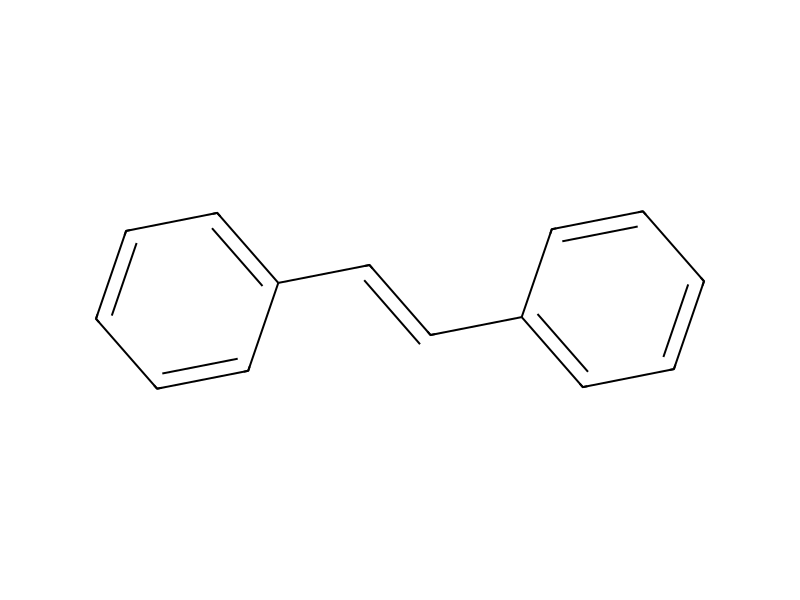
基本情報
- 標準SMILES
C(=C\c1ccccc1)/c1ccccc1- InChIKey
PJANXHGTPQOBST-VAWYXSNFSA-N- 分子式
- C14H12
- 平均分子量
- 180.24 g/mol
- 単同位体質量
- 180.09390038
概要
Trans-stilbene appears as off-white crystals. Melting point of 122-124 °C. Shows blue fluorescence. (NTP, 1992)
名称と識別子
- 優先名称
- trans-Stilbene
- IUPAC
- (E)-stilbene
- 現地名
- trans-スチルベン
- 英語名
- trans-Stilbene
- 分子式
- C14H12
- 分子量
- 180.25
名称と別名
trans-Stilbene103-30-0(E)-Stilbene(E)-1,2-DiphenyletheneTRANS-1,2-DIPHENYLETHYLENE(E)-1,2-DiphenylethyleneToluylenetrans-Diphenylethenetrans-1,2-DiphenyletheneBenzene, 1,1'-(1E)-1,2-ethenediylbis-trans-alpha,beta-DiphenylethyleneDTXSID4026050
名称をさらに表示
trans-スチルベン(E)-1,2-ジフェニルエテンtrans-ジフェニルエチレン[(E)-エテン-1,2-ジイル]ビスベンゼン(E)-エテン-1,2-ジイルビスベンゼンtrans-ジフェニルスチルベン1,1'-[(E)-1,2-エテンジイル]ビスベンゼン(E)-スチルベン(αE)-スチルベン(E)-スチルベン,trans-1,2-ジフェニルエチレンTRANS‐スチルベンスチルベン, TRANS-1,2-Diphenylethene1,2-DIPHENYLETHYLENEbenerans-stilbeneBibenzylidenecp46940BIBENZAL
Benzene, 1,1'-(1,2-ethenediyl)bis-, (E)-3FA7NW80A0NSC-2069STILBENE, TRANS-1,1'-(E)-ethene-1,2-diyldibenzene[(E)-2-Phenylethenyl]benzeneCHEBI:36007((E)-2-phenylethenyl)benzene
データベース識別子
- CAS
103-30-0、588-59-0- PubChem CID
- 638088
- DTXSID
DTXSID4026050- ChEMBL
CHEMBL113028- ChEBI
CHEBI:26775- UNII
- 3FA7NW80A0
- EC Number
- 203-098-5
- Nikkaji
- J1.639J、J46.982C
物性
構造計算による物性
- XLogP
- 4.8
- 極性表面積
- 0 Ų
- 水素結合供与体数
- 0
- 水素結合受容体数
- 0
- 回転可能結合数
- 2
- 重原子数
- 14
- 形式電荷
- 0
- 複雑度
- 148
実験および物理化学的性質
Chemical ClassesOther Classes -> Aromatic Hydrocarbons
SpringerMaterials Properties13C nuclear magnetic resonance spectrum
LogPlog Kow = 4.81
Density
0.9707 at 68 °F (NTP, 1992) - Less dense than water; will float
0.9707
Color/Form
Crystals from 95% ethanol
Colorless or slightly yellow crystals
Solubility
Insoluble (NTP, 1992)
Freely sol in benzene, ether; practically insol in water; sol in 90 parts cold alc, 13 parts boiling alc
2.90X10⁻¹ mg/l in water at 25 °C
Boiling Point
583 to 585 °F at 760 mmHg (NTP, 1992)
306-307 °C @ 760 mm Hg
DecompositionWhen heated to decomposition it emits acrid smoke and irritating vapors.
Melting Point
255 to 257 °F (NTP, 1992)
124 °C
Vapor Pressure
0.000881 [mmHg]
8.81X10⁻⁴ mm Hg @ 25 °C
Refractive IndexIndex of refraction: 1.6264 @ 17 °C
Heat of CombustionNet heat of combustion of liquid = 17176 Btu/lb at 77 °F
物理化学的性質
- 融点
- 123 · 123-125 °C(lit.)
- 沸点
- 305 · 305-307 °C744 mm Hg(lit.)
- 比重(密度)
- 0.97 g/mL · 0.97 g/mL at 25 °C(lit.)
- 屈折率
- 1.623 · 1.6230
- 闪点
- 305 · 305-307°C
- 貯蔵温度
- 30 °C · Store below +30°C.
- 溶解性
- 0.00029 g/l · 0.00029g/l
- 外見
- 結晶または結晶性粉末
- 色
- 白~ややベージュ
- 比重
- 0.97 · 0.97
- 水溶解度
- ベンゼン、エーテルに可溶。水に不溶。
- Merck
- 14 · 14,8817
- BRN
- 1616740 · 1616740
- Henry's Law Constant
- 1.4 · 1.4×10-2 mol/(m3Pa) at 25℃, Duchowicz et al. (2020)
- 安定性
- Light Sensitive
- InChI
- 1S/C14H12/c1-3-7-13(8-4-1)11-12-14-9-5-2-6-10-14/h1-12H/b12-11+
- InChIKey
- PJANXHGTPQOBST-VAWYXSNFSA-N
- SMILES
- c1ccc(cc1)\C=C\c2ccccc2
- LogP
- 4.81 · 4.810
- CAS データベース
- 103 · 103-30-0(CAS DataBase Reference)
- EPAの化学物質情報
- trans-Stilbene (103-30-0)
化学的性質
化学的特性off-white crystalline powder
安全と法規制
GHS分類
GHS Classification
This chemical does not meet GHS hazard criteria for 4% (2 of 50) of reports.
Warning
H302 (94%): Harmful if swallowed [Warning Acute toxicity, oral]
P264, P264+P265, P270, P273, P280, P301+P317, P305+P351+P338, P330, P337+P317, P391, and P501 (click each P-code to see the statement)
Aggregated GHS information provided per 50 reports by companies from 6 notifications to the ECHA C&L Inventory. Each notification may be associated with multiple companies.
危険有害性情報
Regulatory Information
Chemical: Benzene, 1,1'-(1,2-ethenediyl)bis-, (E)-
Benzene, 1,1'-(1E)-1,2-ethenediylbis-: Does not have an individual approval but may be used under an appropriate group standard
DOT LabelClass 9
Fire HazardsFlash point data for this chemical are not available, however it is probably combustible. (NTP, 1992)
Health HazardsExcerpt from ERG Guide 171 [Substances (Low to Moderate Hazard)]:
Hazards SummaryToxic effects in animal studies include inflammation, scarring, or necrosis of the bladder; [RTECS] May cause irritation; [MSDSonline] See cis-1,2-Diphenylethylene.
Reactive GroupHydrocarbons, Aliphatic Unsaturated
Reactivity ProfileTRANS-STILBENE may react vigorously with strong oxidizing agents. May react exothermically with reducing agents to release gaseous hydrogen.
Air and Water ReactionsSensitive to air and light. Insoluble in water.
Hazard Classes and CategoriesAcute Tox. 4 (94%)
Critical Temperature and PressureCritical temperature = 982.13 °F; critical pressure = 397.40 psia
安全と保護具
Fire FightingFires involving this compound can be controlled using a dry chemical, carbon dioxide or Halon extinguisher. (NTP, 1992)
First Aid
EYES: First check the victim for contact lenses and remove if present. Flush victim's eyes with water or normal saline solution for 20 to 30 minutes while simultaneously calling a hospital or poison control center. Do not put any ointments, oils, or medication in the victim's eyes without specific instructions from a physician. IMMEDIATELY transport the victim after flushing eyes to a hospital even if no symptoms (such as redness or irritation) develop.
Nonfire Spill Response
SMALL SPILLS AND LEAKAGE: If you spill this chemical, FIRST REMOVE ALL SOURCES OF IGNITION, then dampen the solid spill material with toluene, then transfer the dampened material to a suitable container. Use absorbent paper dampened with toluene to pick up any remaining material. Your contaminated clothing and absorbent paper should be sealed in a vapor-tight plastic bag for eventual disposal. Solvent-wash all contaminated surfaces with toluene followed by washing with a soap and water solution. Do not reenter the contaminated area until the Safety Officer (or other responsible person) has verified that the area has been properly cleaned.
Disposal Methods
SRP: At the time of review, criteria for land treatment or burial (sanitary landfill) disposal practices are subject to significant revision. Prior to implementing land disposal of waste residue (including waste sludge), consult with environmental regulatory agencies for guidance on acceptable disposal practices.
Isolation and EvacuationExcerpt from ERG Guide 171 [Substances (Low to Moderate Hazard)]:
Personal Protective Equipment (PPE)
RECOMMENDED RESPIRATOR: Where the neat test chemical is weighed and diluted, wear a NIOSH-approved half face respirator equipped with an organic vapor/acid gas cartridge (specific for organic vapors, HCl, acid gas and SO2) with a dust/mist filter. (NTP, 1992)
毒性情報
Environmental Fate
TERRESTRIAL FATE: Based on a classification scheme(1), an estimated Koc value of 9,850(SRC), determined from a measured log Kow of 4.81(2) and a regression-derived equation(3), indicates that trans-1,2-diphenylethylene is expected to be immobile in soil(SRC). Volatilization of trans-1,2-diphenylethylene from moist soil surfaces is expected given an estimated Henry's Law constant of 7.2X10⁻⁴ atm-cu m/mole(SRC), determined from a water solubility of 0.29 mg/l(4) and a vapor pressure of 8.8X10⁻⁴ at 25 °C(5), however, adsorption to soil may attenuate this process(SRC). trans-1,2-Diphenylethylene is not expected to volatilize from dry soil surfaces(SRC) based upon its vapor pressure(5).
AQUATIC FATE: Based on a classification scheme(1), an estimated Koc value of 9,850(SRC), determined from a measured log Kow of 4.81(2) and a regression-derived equation(3), indicates that trans-1,2-diphenylethylene is expected to adsorb to suspended solids and sediment(SRC). trans-1,2-Diphenylethylene is expected to volatilize from water surfaces(3) based on an estimated Henry's Law constant of 7.2X10⁻⁴ atm-cu m/mole(SRC), determined from a water solubility of 0.29 mg/l(4) and a vapor pressure of 8.8X10⁻⁴ at 25 °C(5). Using this Henry's Law constant and an estimation method(3), volatilization half-lives for a model river and model lake are 2 and 140 hours, respectively(SRC). However, volatilization from water surfaces is expected to be attenuated by adsorption to suspended solids and sediment. The estimated volatilation half-life from a model pond is 90 days if adsorption is considered(6). According to a classification scheme(7), an estimated BCF of 1,000(SRC), from its log Kow(2) and a regression-derived equation(8), suggests the potential for bioconcentration in aquatic organisms is very high(SRC).
ATMOSPHERIC FATE: According to a model of gas/particle partitioning of semivolatile organic compounds in the atmosphere(1), trans-1,2-diphenylethylene, which has a vapor pressure of 8.81X10⁻⁴ mm Hg at 25 °C(2), is expected to exist solely as a vapor in the ambient atmosphere. Vapor-phase trans-1,2-diphenylethylene is degraded in the atmosphere by reaction with photochemically-produced hydroxyl radicals and ozone molecules(SRC). The half-life for the reaction in air with hydroxyl radicals is estimated to be 6 hours(SRC), calculated from its rate constant of 6.8X10⁻¹¹ cu cm/molecule-sec at 25 °C(SRC) determined using a structure estimation method(3). The half-life for the reaction in air with ozone is estimated to be 1 hour(SRC), calculated from its rate constant of 2.5X10⁻¹⁶ cu cm/molecule-sec(SRC), estimated with a structure estimation method(3).
Soil Adsorption/Mobility
The Koc of trans-1,2-diphenylethylene is estimated as 9,850(SRC), using a log Kow of 4.81(1) and a regression-derived equation(2). According to a classification scheme(3), this estimated Koc value suggests that trans-1,2-diphenylethylene is expected to be immobile in soil.
Artificial Pollution Sourcestrans-1,2-Diphenylethylene's production and use in the manufacture of dyes and optical bleaches, and as phosphors and scintillators(1) may result in its release to the environment through various waste streams(SRC).
Environmental Bioconcentration
An estimated BCF of 1,000 was calculated for trans-1,2-diphenylethylene(SRC), using a log Kow of 4.81(1) and a regression-derived equation(2). According to a classification scheme(3), this BCF suggests the potential for bioconcentration in aquatic organisms is very high(SRC).
Volatilization from Water/Soil
The Henry's Law constant for trans-1,2-diphenylethylene is estimated as 7.2X10⁻⁴ atm-cu m/mole(SRC) based upon its vapor pressure, 8.81X10⁻⁴ mm Hg(1), and water solubility, 0.29 mg/l(2). This Henry's Law constant indicates that trans-1,2-diphenylethylene is expected to volatilize from water surfaces(3). Based on this Henry's Law constant, the volatilization half-life from a model river (1 m deep, flowing 1 m/sec, wind velocity of 3 m/sec)(3) is estimated as 2 hours(SRC). The volatilization half-life from a model lake (1 m deep, flowing 0.05 m/sec, wind velocity of 0.5 m/sec)(3) is estimated as 140 hours(SRC). However, volatilization from water surfaces is expected to be attenuated by adsorption to suspended solids and sediment in the water column. The estimated volatilization half-life from a model pond is 90 days if adsorption is considered(4). trans-1,2-Diphenylethylene's estimated Henry's Law constant(1,2) indicates that volatilization from moist soil surfaces may occur(SRC), however, adsorption to soil may attenuate this process(SRC). trans-1,2-Diphenylethylene is not expected to volatilize from dry soil surfaces(SRC) based upon its vapor pressure(1).
Non-Human Toxicity Excerpts
trans-Stilbene oxide (TSO, 2 mmol/kg ip.) induced ornithine decarboxylase (ODC) and S-adenosylmethionine decarboxylase (SAMDC) to 60-fold and 5-fold of the controls, respectively, in the liver of rats. Parallel to ODC induction, there was a marked increase in putrescine content to 50-fold of the control levels. cis-Stilbene oxide (CSO), a stereoisomer of TSO, also produced the induction of ODC and SAMDC and the increase in putrescine content. There was no difference in the ability to induce ODC and SAMDC between TSO and CSO with respect to the extents of induction and the time needed to reach maximal levels. trans-Stilbene (TS), a mother compound of TSO, did not show such an effect on ODC, while cis-stilbene (CS) induced both ODC and SAMDC. Treatment with glutathione inhibited TSO- and CSO-mediated induction of ODC and SAMDC. These findings add new information concerning the abilities of TSO, CSO and CS on hepatic polyamine metabolism.
Environmental Abiotic Degradation
The rate constant for the vapor-phase reaction of trans-1,2-diphenylethylene with photochemically-produced hydroxyl radicals has been estimated as 6.8X10⁻¹¹ cu cm/molecule-sec at 25 °C(SRC) using a structure estimation method(1). This corresponds to an atmospheric half-life of about 6 hours at an atmospheric concentration of 5X10+5 hydroxyl radicals per cu cm(1). The rate constant for the vapor-phase reaction of trans-1,2-diphenylethylene with ozone molecules has been estimated as 2.5X10⁻¹⁶ cu cm/molecule-sec at 25 °C(SRC) using a structure estimation method(1). This corresponds to an atmospheric half-life of 1 hour at an atmospheric concentration of 7X10+11 ozone molecules per cu cm(1). trans-1,2-Diphenylethylene was converted to trans-1,2-diphenylethylene oxide (ratio of conversion was 44%) after 1 hour of irradiation with a xenon lamp (operating through a Pyrex filter) in the presence of nitrogen dioxide in air(2). trans-1,2-Diphenylethylene is not expected to undergo hydrolysis(SRC) due to the lack of functional groups to hydrolyze(3).
Probable Routes of Human Exposure
Occupational exposure to trans-1,2-diphenylethylene may occur through inhalation of dust particles and dermal contact with this compound at workplaces where it is produced or used. Limited monitoring data indicate that non-occupational exposure can occur from the ingestion of contaminated drinking water. (SRC)
Environmental Water Concentrations
DRINKING WATER: Trans-1,2-diphenylethylene was detected in drinking water samples from Ottawa in January and February, 1978(1). Trans-1,2-diphenylethylene was quantitatively detected in drinking water in Poplarville, Mississippi in March 1989; Philadelphia, PA in February 1976; and in Ottumwa, Iowa in September 1976(2).
Environmental Fate/Exposure Summary
trans-1,2-Diphenylethylene's production and use in the manufacture of dyes and optical bleaches, and as phosphors and scintillators may result in its release to the environment. If released to air, a vapor pressure of 8.81X10⁻⁴ mm Hg at 25 °C indicates trans-1,2-diphenylethylene will exist solely as a vapor in the ambient atmosphere. Vapor-phase trans-1,2-diphenylethylene will be degraded in the atmosphere by reaction with photochemically-produced hydroxyl radicals and ozone molecules. The half-life for the reaction in air with hydroxyl radicals is estimated to be 6 hours. The half-life for the reaction in air with ozone is estimated to be 1 hour. If released to soil, trans-1,2-diphenylethylene is expected to have no mobility based upon an estimated Koc of 9,850. Volatilization from moist soil surfaces may be an important fate process based upon an estimated Henry's Law constant of 7.2X10⁻⁴ atm-cu m/mole; however, adsorption to soil may attenuate this process. trans-1,2-Diphenylethylene is not expected to volatilize from dry soil surfaces based upon its vapor pressure. If released into water, trans-1,2-diphenylethylene is expected to adsorb to suspended solids and sediment based upon its estimated Koc. Volatilization from water surfaces may be an important fate process based upon this compound's estimated Henry's Law constant. Estimated volatilization half-lives for a model river and model lake are 2 and 140 hours, respectively. However, volatilization from water surfaces is expected to be attenuated by adsorption to suspended solids and sediment. The estimated volatilation half-life from a model pond is 90 days if adsorption is considered. An estimated BCF of 1,000 suggests the potential for bioconcentration in aquatic organisms is very high. Occupational exposure to trans-1,2-diphenylethylene may occur through inhalation of dust particles and dermal contact with this compound at workplaces where it is produced or used. Limited monitoring data indicate that non-occupational exposure can occur from the ingestion of contaminated drinking water. (SRC)
Non-Human Toxicity Values
LD50 Mouse oral 920 mg/kg
LD50 Mouse ip 6050 mg/kg
安全データ
- wgk
- 2
- tsca
- TSCA listed
- rtecs
- WJ4926500
- ridadr
- UN3077
- hs_code
- 29029090
- risk_code
- 22-36-51/53
- hazard_code
- Xn,N
- safety_code
- 26-36/37-61
- hazard_class
- 9
- packing_group
- III
- Hazard Classifications
- Acute Tox. 4 OralAquatic Chronic 2Eye Irrit. 2
- ストレージクラス
- 11 - Combustible Solids
- 有毒物質データの
- 103-30-0(Hazardous Substances Data)
化学と産業
薬理情報
Metabolism/Metabolites
TRANS-STILBENE GIVES 4-HYDROXY-TRANS-STILBENE IN RABBIT & GUINEA PIG. /FROM TABLE/
STUDY OF RING-HYDROXYLATED METABOLITES OF TRANS-STILBENE /SHOWS/...URINE CONTAINS RANGE OF POLYHYDROXYLATED BIBENZYL DERIVATIVES. ...EVIDENCE /SUGGESTS/ THAT BIBENZYL COMPD ARE FORMED BY MICROFLORAL REDUCTION OF STILBENES.
IN GUINEA PIGS & RABBITS, /TRANS-STILBENE/ BIOTRANSFORMATION INTO 4-HYDROXY-, 4,4'-DIHYDROXY-, 3-HYDROXY-4-METHOXY-, & 3-METHOXY-4-HYDROXYSTILBENES OCCURS... HOWEVER, IN MOUSE ONLY LIMITED CONVERSION TO 4,4'-DIHYDROXY- TAKES PLACE.
SCHEME FOR OXIDATIVE CLEAVAGE OF ETHYLENIC LINKAGE OF STILBENE IS PRESENTED.
For more Metabolism/Metabolites (Complete) data for TRANS-1,2-DIPHENYLETHYLENE (6 total), please visit the HSDB record page.
用途と製造
Uses
Used to make dyes and optical bleaches; as phosphors and scintillators (crystal forms); [HSDB]
Mfr of dyes and optical bleaches; crystals are used as phosphors and scintillators
U.S. Imports(1979) 9.9X10+4 G (PRINCPL CUSTMS DISTS-TRANS)
U.S. Production
(1977) NOT PRODUCED COMMERCIALLY IN US
(1979) NOT PRODUCED COMMERCIALLY IN US
Methods of Manufacturing
Trans-form prepd by Clemmensen redn of benzoin: Shriner, Berger, Org Syn Coll Vol III, 786 (1955); cis-form by copper-chromite decarboxylation of alpha-phenylcinnamic acid: Buckles, Wheeler, Org Synth Coll Vol IV, 857 (1963).
Synthesis of cis- and trans-forms by Wittig reaction and decarboxylation of phenylcinnamic acids: Wheeler, Batlle de Pabon, J Org Chem 30, 1473 (1965).
By passing toluene over hot lead oxide. Method of purification: crystallization; zone melting used for very pure crystals.
Formulations/PreparationsGrades: technical; pure.
General Manufacturing InformationBenzene, 1,1'-(1E)-1,2-ethenediylbis-: ACTIVE
応用分野
用途有機合成原料。
用途スチルベンは分子全体に共役系が広がっているので、スチルベン、あるいは、その誘導体は、色素や蛍光増白剤の原料や、シンチレーターの燐光体、色素レーザーの利得媒質として用いられる。 スチルベンの誘導体として、強力なエストロゲン作用を持つために、かつて流産の阻止などに用いられたものの、発がん性が認められて使用が中止された合成品のジエチルスチルベストロールがある。
使用trans-Stilbene is used in the manufacturing of dye lasers, optical brighteners, non-steroidal synthetic estrogens such as diethylstilbestrol, fosfestrol and dienestrol. It is used as a phosphor and a scintillator. It is also involved in transition metal catalyzed asymmetric epoxidation and dihydroxylation. Further, it is used as raw material in organic synthesis.
一般的な説明Off-white crystals. Melting point of 122-124°C. Shows blue fluorescence.
調製方法
純化方法Purify it by vacuum distillation. (The final product contains about 1% of the cis isomer.) Crystallise it from EtOH. It has also been purified by zone melting. The styphnate (see next entry) has m 142o. [Lewis et al. J Am Chem Soc 107 203 1985, Bollucci et al. J Am Chem Soc 109 515 1987, Saltiel J Phys Chem 91 2755 1987, Beilstein 5 IV 2156.]
上流・下流製品情報
上流原料
下流製品
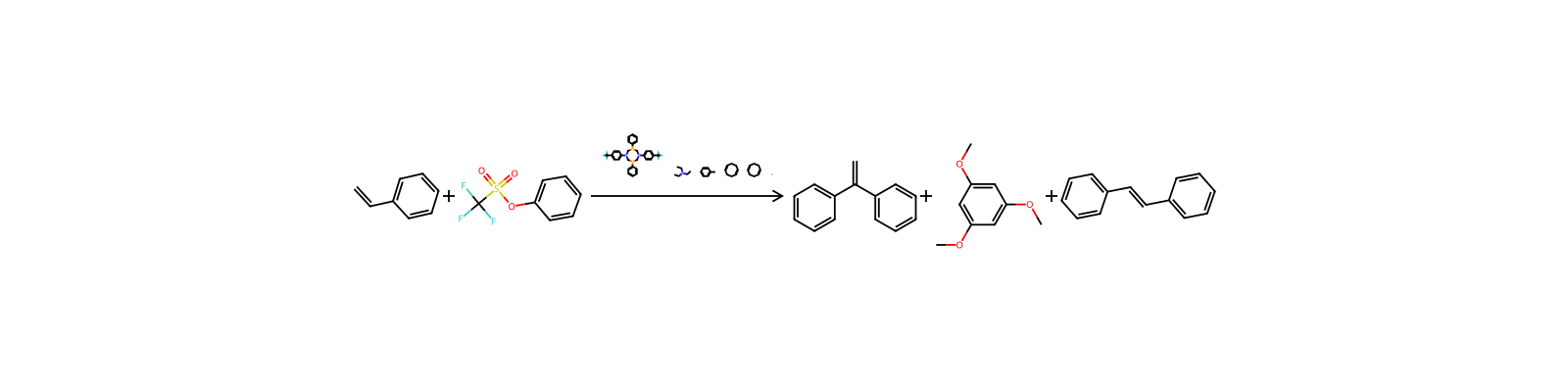
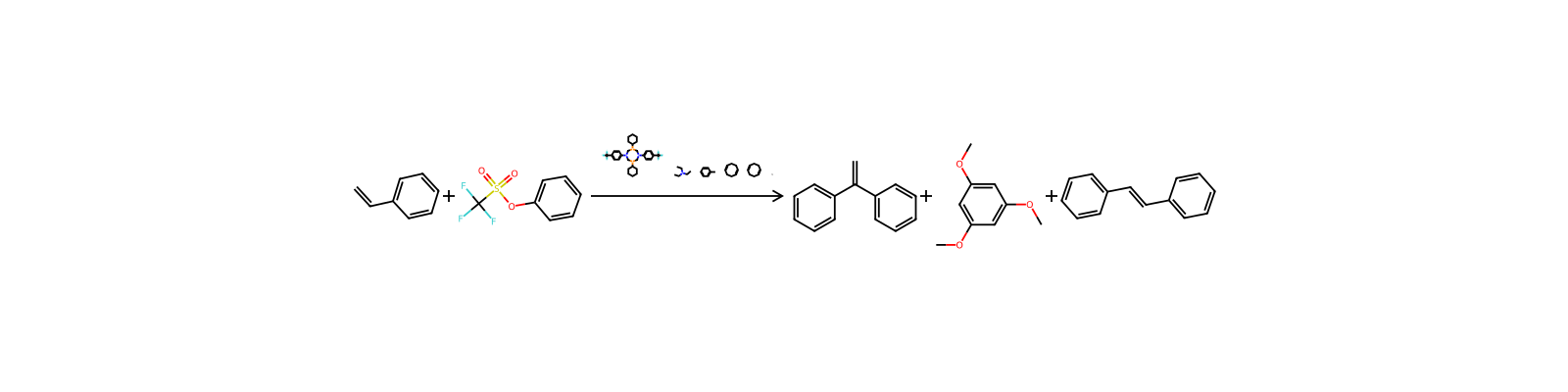
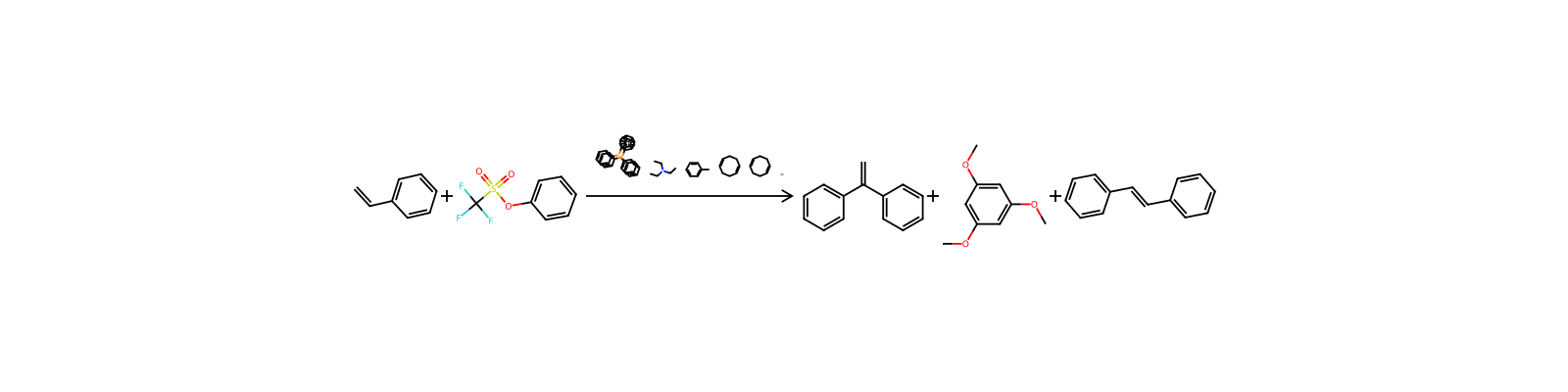
関連反応
148 件




関連ノート
読み込み中…