ホームMCPワークベンチSkills
ホームワークベンチ通知マイページ
llms.txt · MCPガイドプライバシーポリシー · 利用規約 · サポートv1.8.3
  1. ホーム
  2. /化合物

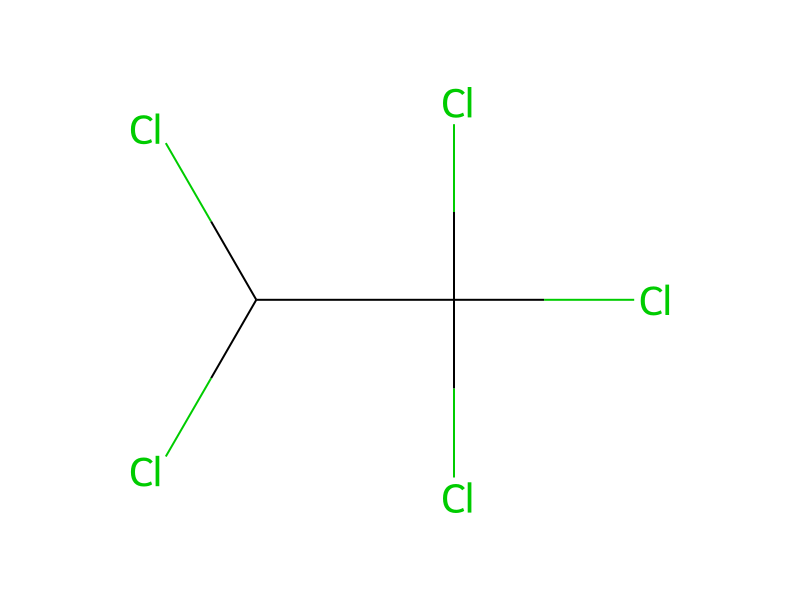
ペンタクロロエタン

Pentachloroethane

HCID 6419
反応を作成
印刷

データを補完しています。しばらくしてからページを更新すると最新の内容を表示できます
基本情報概要名称と識別子物性安全と法規制化学と産業関連反応化合物ノート
部分構造検索類似構造を探す

基本情報

CAS
76-01-7
標準SMILES
ClC(Cl)C(Cl)(Cl)Cl
InChIKey
BNIXVQGCZULYKV-UHFFFAOYSA-N
分子式
C2HCl5
平均分子量
202.3 g/mol
単同位体質量
199.85208843

概要

Pentachloroethane appears as a colorless liquid with a chloroform-like odor. Insoluble in water and denser than water. Toxic by inhalation and ingestion. May irritate skin and eyes. Used as a solvent.

名称と識別子

優先名称
Pentachloroethane
IUPAC
1,1,1,2,2-pentachloroethane
現地名
ペンタクロロエタン
英語名
Pentachloroethane
分子式
C2HCl5
分子量
202.29

名称と別名

PENTACHLOROETHANE76-01-71,1,1,2,2-PentachloroethanePentalinEthane pentachlorideEthane, pentachloro-PentacloroetanoPentachloraethanPentachlorethanePentachloorethaanRCRA waste number U184DTXSID7021104
名称をさらに表示
ペンタクロロエタンペンタクロロエタン(五塩化エタン)ペンタクロロエタン STANDARDペンタクロロエタン Standard, 5.0 mg/mL in MeOHペンタクロロエタン, 100 µg/mL in MeOHペンタクロロエタン, 2.0 mg/mL in MeOH2,2-ジクロロ-1,1,1-トリクロロエタン1,1,1,2,2-ペンタクロロエタン1,1,2,2,2-ペンタクロロエタン1,1-ジクロロ-2,2,2-トリクロロエタンペンタリンCHCl2CCl3R-120freon120PentalinePentaclorethanePentachlorethan
NCI-C53894QOJ9TH7LDLEPA Pesticide Chemical Code 5983001,1,1,2,2-Pentachloro-ethaneDTXCID901104CHEBI:76287RefChem:171307200-925-1

データベース識別子

CAS
76-01-7
PubChem CID
6419
DTXSID
DTXSID7021104
ChEMBL
CHEMBL350040
ChEBI
CHEBI:76287
UNII
QOJ9TH7LDL
EC Number
200-925-1
Nikkaji
J1.471K

物性

構造計算による物性補完中

XLogP
3.2
極性表面積
0 Ų
水素結合供与体数
0
水素結合受容体数
0
回転可能結合数
0
重原子数
7
形式電荷
0
複雑度
51.6

実験および物理化学的性質

SolventsSolvents -> Chlorinated Aliphatics
SpringerMaterials PropertiesAcentric factor
LogP · 3 件

log Kow = 3.22

3.67

3.22

Odor · 2 件

Chloroform-like

Camphor-like

Density · 5 件

1.6728 at 77 °F (USCG, 1999) - Denser than water; will sink

1.6796 at 20 °C/4 °C

Relative density (water = 1): 1.68

1.6796 @ 20°C

1.68

Viscosity2.49X10-3 Pa-sec at 20 °C
Color/FormCOLORLESS LIQUID
Solubility · 6 件

less than 0.1 mg/mL at 70 °F (NTP, 1992)

Wt per gallon at 20 °C = 14.00 lb; latent heat of vaporization at bp = 43.6 cal/g = 78.4 Btu/lb; acidity as HCl = 0.001% by wt, max; coefficient of cubical expansion Av/deg C, liquid = 0.0009097; solubility of water in solvent at 20 °C = 0.24 g water/100 g

Miscible with ethanol, ether

Miscible in most common organic solvents

In water, 4.90X10+2 mg/L at 25 °C

Solubility in water: very poor

安全と法規制

安全情報は参考情報です。供給元の安全データシート(SDS)、適用法令、専門家による評価に代わるものではありません。

GHS分類

GHS Classification · 6 件

Danger

H351: Suspected of causing cancer [Warning Carcinogenicity]

P203, P260, P264, P270, P273, P280, P318, P319, P391, P405, and P501 (click each P-code to see the statement)

Danger

H302 (56.5%): Harmful if swallowed [Warning Acute toxicity, oral]

P203, P260, P264, P270, P273, P280, P301+P317, P318, P319, P330, P391, P405, and P501 (click each P-code to see the statement)

危険有害性情報

Regulatory Information · 5 件

Chemical: Ethane, pentachloro-

Ethane, 1,1,1,2,2-pentachloro- is listed on the EPA's Chemical Data Reporting (CDR) system. Manufacturers and importers of Ethane, 1,1,1,2,2-pentachloro- are required to report information about their production and use of this chemical to the EPA under the Toxic Substances Control Act (TSCA). (40 eCFR Part 711)

S - indicates a substance that is identified in a final Significant New Use Rule.

Restricted substance: Pentachloroethane

The New Jersey Worker and Community Right to Know Act requires public and private employers to provide information about hazardous substances at their workplaces. (N.J.S.A. 34:5A-1 et. seq.)

Other Safety InformationIMAP assessments - Ethane, pentachloro-: Human health tier II assessment
DOT LabelPoison
Fire Hazards · 3 件

Special Hazards of Combustion Products: Contain irritating and toxic chloride vapors.

· Non-combustible, substance itself does not burn but may decompose upon heating to produce corrosive and/or toxic fumes.

Not combustible. Gives off irritating or toxic fumes (or gases) in a fire.

Fire PotentialMODERATE, WHEN EXPOSED TO HEAT OR FLAME.

化学と産業

薬理情報

Metabolism/Metabolites · 5 件

MOST OF ITS METABOLITES ARE GENERATED BY NON-REDUCTIVE DEHALOGENATIONS ... HOWEVER THE METABOLITE TRICHLOROETHYLENE IS EXPLAINED IN TERMS OF A REDUCTIVE DECHLORINATION WITHIN THE PATHWAY.

UNDER ANAEROBIC CONDITIONS, POLYHALOGENATED ALKANES STIMULATED REDUCED NICOTINAMIDE ADENINE DINUCLEOTIDE OXIDN BY RAT LIVER MICROSOMAL FRACTIONS, & PARTICIPATION OF CYTOCHROME P450 WAS SHOWN BY INDUCERS & INHIBITORS OF MONOOXYGENASE SYSTEM. PENTACHLOROETHANE WAS METABOLIZED TO TRICHLOROETHENE & TETRACHLOROETHANE.

PENTACHLOROETHANE WAS INJECTED SC INTO MICE AND ITS EXCRETION WAS FOLLOWED FOR 3 DAYS. THE METABOLIZED PART WAS EXCRETED AS 2,2,2-TRICHLOROETHANOL AND TRICHLOROACETIC ACID IN THE URINE. THE EXPIRED AIR CONTAINED TRICHLOROETHYLENE AND TETRACHLOROETHYLENE, INDICATING BOTH DECHLORINATION AND DEHYDROCHLORINATION OF PENTACHLOROETHANE.

In the presence of oxygen, NADPH and rat liver microsomes, 1.7% dechlorination of pentachloroethane was observed. In contrast, in the absence of oxygen, pentachloroethane was metabolized by NADPH-fortified hepatic microsomal fractions to trichloroethylene (96%) and 1,1,2,2-tetrachloroethane (4%). The in-vitro reductive dechlorination of pentachloroethane was catalysed by a purified (rabbit liver) reconstituted cytochrome p450 system.

For more Metabolism/Metabolites (Complete) data for PENTACHLOROETHANE (7 total), please visit the HSDB record page.

Absorption, Distribution and Excretion · 1 件

Mice were injected with (14)C-pentachloroethane subcutaneously at doses of 1.1-1.8 g/kg and the excretion over a 3 d period was determined. About 1/3 of the dose (12-51%) was expired unchanged; 16-32% was excreted as 2,2,2-trichloroethanol, and 9-18% as trichloroacetic acid in the urine. The expired air also contained trichloroethylene (3-9% of the dose), indicating both dechlorination and dehydrochlorination.

用途と製造

Uses · 6 件

Used as a metal degreaser, dry cleaning agent, fumigant, timber drying agent, to separate impurities from coal, and as a solvent for chemicals, rubbers, resins, and gums; [HSDB] Used as a chemical intermediate and in soil sterilization; [NTP]

関連反応

0 件
反応記録を作成
関連する反応はまだありません

化合物ノート

このページの内容基本情報概要名称と識別子物性安全と法規制化学と産業関連反応化合物ノート
CorrosivityDry pentachloroethane does not corrode iron; if it is stored over longer periods of time, however, the addition of amine stabilizers is recommended.
Boiling Point · 5 件

324 °F at 760 mmHg (NTP, 1992)

162.0 °C

162 °C

162 °C @760 [mm Hg]

322 °F

Decomposition · 2 件

When heated to decomposition it emits highly toxic fumes of /hydrogen chloride/.

Decomposition of pentachlorethane with aluminum chloride will produce chloroform.

Melting Point · 5 件

-20 °F (NTP, 1992)

-28.78 °C

-29 °C

-28.78 °C

-20 °F

物理化学的性質

融点
-29 · -29--22°C
沸点
161 · 161-162 °C(lit.)
比重(密度)
1.68 g/mL · 1.68 g/mL at 25 °C(lit.)
蒸気圧
4.5 at · 4.5 at 25 °C (Mackay and Shiu, 1981)
屈折率
20 · n20/D 1.502(lit.)
闪点
162 °C · 162°C
貯蔵温度
2 · 2-8°C
溶解性
アルコールおよびエーテルと混合可能 (Windholz et al., 1983)
外見
液体
色
無色
臭い (Odor)
クロロホルム様の臭い
水溶解度
水に不溶。
比熱容量
0.86 J/ · Cp(liquid): 0.86 J/(g·K), at 25℃
Merck
14 · 14,7108
BRN
1736845 · 1736845
Henry's Law Constant
2.11 at · 2.11 at 30 °C (headspace-GC, Sanz et al., 1997)
Dielectric constant
3.7 · 3.7(16℃)
安定性
安定。不燃性。強力な酸化剤とは相容れない。アルカリ性物質や金属と激しく反応することがあります。
InChI
1S/C2HCl5/c3-1(4)2(5,6)7/h1H
InChIKey
BNIXVQGCZULYKV-UHFFFAOYSA-N
SMILES
ClC(Cl)C(Cl)(Cl)Cl
CAS データベース
76 · 76-01-7(CAS DataBase Reference)
EPAの化学物質情報
Pentachloroethane (76-01-7)
化学的性質 · 1 件

化学的特性colourless liquid with a camphor-like smell.Pentachloroethane is incompatible and very reactive in contact with sodium potassium (alloy + bromoform), alkalis, metals, and water. On hydrolysis, pentachloroethane produces dichloroacetic acid and the reaction with alkalis and metals produces chloroacetylenes, which becomes spontaneously explosive. Pentachloroethane is a colourless stable liquid with a camphor-like smell and non-flammable. Pentachloroethane is incompatible with strong oxidising agents and reacts violently with alkalis or metals.

Health Hazards · 2 件

Irritation of skin, lungs, eyes, and mucous membrane; depression of central nervous system; and toxicity similar to tetrachloroethanes. (USCG, 1999)

· Highly toxic, may be fatal if inhaled, ingested or absorbed through skin.

Hazards Summary · 1 件

A central nervous system depressant in acute animal studies; [HSDB] An eye and respiratory tract irritant; May cause CNS depression; Chronic exposure may cause impaired nervous system function; [ICSC] Overexposure may cause liver and kidney injury; [NTP] May cause irritation; Prolonged or repeated inhalation exposure may cause organ injury; [Alfa Aesar MSDS]

DOT ID and Guide · 2 件

1669 151

1669 151

Reactive GroupHalogenated Organic Compounds
EC ClassificationSymbol: T, N; R: 40-48/23-51/53; S: (1/2)-23-36/37-45-61
UN ClassificationUN Hazard Class: 6.1; UN Pack Group: II
Special Reports · 2 件

USEPA; Ambient Water Quality Criteria Doc: Chlorinated Ethanes (1980) EPA 440/5-80-0269

DHHS/NTP; Toxicology & Carcinogenesis Studies of Pentachloroethane in F344/N Rats and B6C3F1 Mice (Gavage Study) Technical Report Series No. 232 (1983) NIH Publication No. 83-1788

安全と保護具

Fire Fighting · 2 件

Excerpt from ERG Guide 151 [Substances - Toxic (Non-Combustible)]:

In case of fire in the surroundings, use appropriate extinguishing media. In case of fire: keep drums, etc., cool by spraying with water.

First Aid Measures · 4 件

Fresh air, rest. Refer for medical attention.

Remove contaminated clothes. Rinse skin with plenty of water or shower. Refer for medical attention .

First rinse with plenty of water for several minutes (remove contact lenses if easily possible), then refer for medical attention.

Rinse mouth. Do NOT induce vomiting. Refer for medical attention .

Accidental Release Measures · 2 件

· CALL 911. Then call emergency response telephone number on shipping paper. If shipping paper not available or no answer, refer to appropriate telephone number listed on the inside back cover.

· Do not touch damaged containers or spilled material unless wearing appropriate protective clothing.

First Aid · 3 件

EYES: First check the victim for contact lenses and remove if present. Flush victim's eyes with water or normal saline solution for 20 to 30 minutes while simultaneously calling a hospital or poison control center. Do not put any ointments, oils, or medication in the victim's eyes without specific instructions from a physician. IMMEDIATELY transport the victim after flushing eyes to a hospital even if no symptoms (such as redness or irritation) develop.

General First Aid:

(General first aid procedures)

Safe StorageSeparated from food and feedstuffs, strong bases and powdered metals. Well closed. Keep in a well-ventilated room.
Firefighting Hazards · 2 件

The vapor is heavier than air.

Vapors are heavier than air and will collect in low areas. Vapors may travel long distances to ignition sources and flashback. Storage containers and parts of containers may rocket great distances, in many directions.

Exposure Control and Personal Protection · 2 件

· Wear positive pressure self-contained breathing apparatus (SCBA).

5.0 [ppm]

Fire Fighting Procedures · 2 件

To fight fire use water, carbon dioxide, dry chemical.

If material on fire or involved in fire: Do not extinguish fire unless flow can be stopped. Extinguish fire using agent suitable for type of surrounding fire (Material itself does not burn or burns with difficulty.). Use water in flooding quantities as fog. Cool all affected containers with flooding quantities of water. Apply water from as far a distance as possible. Use foam, dry chemical, or carbon dioxide. Keep run-off water out of sewers and water sources.

Storage Conditions · 3 件

Separated from food and feedstuffs, strong bases and powdered metals. Well closed. Keep in a well-ventilated room.

...Store in a refrigerator away from alkalis, reactive metals, water. Where possible, automatically pump liquid from drums or other storage containers to process containers. Sources of ignition such as smoking and open flames are prohibited where this chemical is handled, used, or stored. Metal containers involving the transfer of 5 gallons or more of this chemical should be grounded and bonded. Drums must be equipped with self-closing valves, pressure vacuum bungs, and flame arresters. Use only non-sparking tools and equipment, especially when openning and closing containers of this chemical.

Before being stored or transported over longer periods of time, chlorinated ethanes ... should be carefully analyzed for water, free acid, and stabilizers because decomposition may lead to excessive corrosion. ... Chlorinated ethanes should not be brought into contact with tanks, containers, valves, etc made of aluminum. /Chloroethanes/

Cleanup Methods · 5 件

Absorb the spills with paper towels or the like materials. Place in a hood to evaporate. Dispose by burning the towel.

Environmental considerations: Land spill: Dig a pit, pond, lagoon, holding area to contain liquid or solid material. Dike surface flow using soil, sand bags, foamed polyurethane, or foamed concrete. Absorb bulk liquid with fly ash, cement powder, or commercial sorbents /SRP: If time permits, pits, ponds, lagoons, soak holes, or holding areas should be sealed with an impermeable flexible membrane liner./

Environmental considerations: Water spill: Use natural barriers or oil spill control booms to limit spill travel. Remove trapped material with suction hoses.

Environmental considerations: Air spill: Apply water spray or mist to knock down vapors.

Evacuate and restrict persons not wearing protective equipment from area of spill or leak until clean-up is complete. Remove all ignition sources. Collect powdered material in the most convenient and safe manner and deposit in sealed containers. Ventilate area after clean-up is complete. It may be necessary to contain and dispose of this chemical as a hazardous waste.

Nonfire Spill ResponseExcerpt from ERG Guide 151 [Substances - Toxic (Non-Combustible)]:
Disposal Methods · 3 件

[40 CFR 240-280, 300-306, 702-799 (7/1/2006)] Generators of waste (equal to or greater than 100 kg/mo) containing this contaminant, EPA hazardous waste number U184, must conform with USEPA regulations in storage, transportation, treatment and disposal of waste.

A potential candidate for liquid injection incineration at a temperature range of 650 to 1,600 °C and a residence time of 0.1 to 2 seconds. A potential candidate for rotary kiln incineration at a temperature range of 820 to 1,600 °C and residence times of seconds for liquids and gases, and hours for solids. A potential candidate for fluidized bed incineration at a temperature range of 450 to 980 °C and residence times of seconds for liquids and gases, and longer for solids.

Incineration after mixing with another combustible fuel. Care must be exercised to assure complete combustion to prevent the formation of phosgene. An acid scrubber is necessary to remove the halo acids produced. Recommendable method: Incineration.

毒性情報

Target OrgansEyes, skin, respiratory system, central nervous system, liver, kidneys
Ecotoxicity Values · 5 件

LC50 Mysidopris bahia (Mysid shrimp) 5,060 ug/L/96 hr in an unmeasured, static bioassay.

LC50 Mysidopsis bahia (mysid shrimp) 390 ug/L/96 hr in a measured, flow-through bioassay.

LC50; Species: Cyprinodon variegatus (Sheepshead minnow, juvenile, age 14-28 days post hatch, standard length 8-15 mm); Conditions: saltwater, static, 25-31 °C, salinity 10-31 ppt; Concentration: 120 ppm for 24 hr (110-130 ppm) />80% purity/

LC50; Species: Cyprinodon variegatus (Sheepshead minnow, juvenile, age 14-28 days post hatch, standard length 8-15 mm); Conditions: saltwater, static, 25-31 °C, salinity 10-31 ppt; Concentration: 120 ppm for 48 hr (110-150 ppm) />80% purity/

For more Ecotoxicity Values (Complete) data for PENTACHLOROETHANE (25 total), please visit the HSDB record page.

Environmental Fate · 3 件

TERRESTRIAL FATE: Based on a classification scheme(1), an estimated Koc value of 1340(SRC), determined from a log Kow of 3.22(2) and a regression-derived equation(3), indicates that pentachloroethane is expected to have low mobility in soil(SRC). Volatilization of pentachloroethane from moist soil surfaces is expected to be an important fate process(SRC) given an estimated Henry's Law constant of 1.9X10⁻³ atm-cu m/mole(SRC), derived from its vapor pressure of 3.50 mm Hg(4) and water solubility of 4.90X10+2 mg/L(5). Pentachloroethane may volatilize from dry soil surfaces(SRC) based upon its vapor pressure(4). Similar degradation rates (90-100% loss in 30 days) were obtained during sterile and non-sterile anoxic biodegradation tests; therefore, the degradation of pentachloroethane in soil is expected to be dominated by abiotic processes(6,7).

AQUATIC FATE: Based on a classification scheme(1), an estimated Koc value of 1340(SRC), determined from a log Kow of 3.22(2) and a regression-derived equation(3), indicates that pentachloroethane is expected to adsorb to suspended solids and sediment(SRC). Volatilization from water surfaces is expected(3) based upon an estimated Henry's Law constant of 1.9X10⁻³ atm-cu m/mole(SRC), derived from its vapor pressure, 3.50 mm Hg(4), and water solubility, 4.90 mg/L(5). Using this Henry's Law constant and an estimation method(3), volatilization half-lives for a model river and model lake are 5 hours and 6 days, respectively(SRC). According to a classification scheme(6), a measured BCF of 67(7), suggests the potential for bioconcentration in aquatic organisms is moderate(SRC). Similar results were observed in sterile and non-sterile degradation tests; therefore, the degradation of pentachloroethane in water is expected to be dominated by abiotic processes(8,9). The hydroloysis half-life of pentachloroethane was calculated to be 3.7 days at 25 °C and pH 7(10).

ATMOSPHERIC FATE: According to a model of gas/particle partitioning of semivolatile organic compounds in the atmosphere(1), pentachloroethane, which has a vapor pressure of 3.50 mm Hg at 25 °C(2), is expected to exist solely as a vapor in the ambient atmosphere. Vapor-phase pentachloroethane is degraded in the atmosphere by reaction with photochemically-produced hydroxyl radicals(SRC); the half-life for this reaction in air is estimated to be 69 days(SRC), calculated from its rate constant of 2.33X10⁻¹³ cu cm/molecule-sec at 25 °C(3). Pentachloroethane does not contain chromophores that absorb at wavelengths >290 nm(4) and therefore is not expected to be susceptible to direct photolysis by sunlight(SRC).

Adverse EffectsNeurotoxin - Acute solvent syndrome
Exposure Routes · 2 件

The substance can be absorbed into the body by inhalation and by ingestion.

inhalation, ingestion, skin and/or eye contact

Signs and Symptoms · 5 件

Confusion. Cough. Dizziness. Headache. Nausea. Sore throat. Vomiting.

Dry skin.

Redness. Pain.

Abdominal pain. Diarrhoea. Further see Inhalation.

In Animals: irritation eyes, skin; lassitude (weakness, exhaustion), restlessness, irreg respiration, muscle incoordination; liver, kidney, lung changes

Ongoing Test Status · 1 件

The following link will take the user to the National Toxicology Program (NTP) Test Agent Search Results page, which tabulates all of the "Standard Toxicology & Carcinogenesis Studies", "Developmental Studies", and "Genetic Toxicity Studies" performed with this chemical. Clicking on the "Testing Status" link will take the user to the status (i.e., in review, in progress, in preparation, on test, completed, etc.) and results of all the studies that the NTP has done on this chemical. [http://ntp-apps.niehs.nih.gov/ntp_tox/index.cfm?fuseaction=ntpsearch.searchresults&searchterm=76-01-7]

Effluent Concentrations · 1 件

Pentachloroethane was identified in the spent chlorination liquor from the bleaching of sulphite pulp at a concentration corresponding to 0.1 g/ton pulp process(1). During August 1972, pentachloroethane was detected in chlorinated effluent from a sewage treatment plant(2). Pentachloroethane has been detected in fly ash resulting from waste incineration (concentration unspecified)(3).

ICSC Environmental DataThe substance is toxic to aquatic organisms.
Soil Adsorption/Mobility · 1 件

The Koc of pentachloroethane is estimated as 1340(SRC), using a log Kow of 3.22(1) and a regression-derived equation(2). According to a classification scheme(3), this estimated Koc value suggests that pentachloroethane is expected to have low mobility in soil.

Atmospheric Concentrations · 4 件

URBAN/SUBURBAN: During 1976-1977 pentachloroethane was detected in 0 out of 74 air samples collected in urban/suburban areas(1).

INDOOR: During a nationwide survey of indoor air concentrations conducted in Canada during 1991, the mean concentration of pentachloroethane detected in the air of 185 Canadian homes sampled during the winter was 0.03 ug/cu m(1). Pentachloroethane was not detected in air samples collected from homes sampled in the spring (178 homes), summer (197 homes), or fall (194 homes)(1).

RURAL/REMOTE: Monitoring data obtained from samples collected in the Atlantic Ocean between 1982 and 1985 indicate that the average baseline level of pentachloroethane in the Northern hemisphere was 0.1 part per trillion/volume. In tradewind systems and in the Southern hemisphere the baseline level was below the detection limit (0.02 to 0.04 part per trillion/volume)(1). During 1976-1977 pentachloroethane was detected in 0 out of 2 air samples collected in rural/remote areas(2). During Feb 1977 trace levels of pentachloroethane were found in the ambient air of Iberville Parish, LA(3).

SOURCE DOMINATED: During 1976-1977 pentachloroethane was detected in 2 out of 54 air samples in source dominated areas(1). During Feb 1977, a pentachloroethane concentration of 3,984 ng/cu m was detected in ambient air collected from Dow Chemical Property in Freeport, TX(2).

Human Toxicity Excerpts · 2 件

/SIGNS AND SYMPTOMS/ Symptomatology: 1. Prompt nausea, vomiting and abdominal pain. ... After ingestion, hematemesis, and diarrhea. 2. Headaches, dizziness, confusion, drowsiness, & occasionally, convulsions. 3. Visual disturbances. ... 4. ... Coma and death from resp arrest or circulatory collapse. 5. Occasionally sudden death due to ventricular fibrillation. ... 8. Oliguria, albuminuria, anuria, gradual wt gain, edema. 9. Anorexia, jaundice, & rt upper quadrant pain due to an enlarged and tender liver. /Carbon tetrachloride/

/OTHER TOXICITY INFORMATION/ /Produces/ more potent central nervous effects than chloroform or even tetrachloroethane.

法規制情報

RCRA Requirements · 1 件

U184; As stipulated in 40 CFR 261.33, when pentachloroethane, as a commercial chemical product or manufacturing chemical intermediate or an off-specification commercial chemical product or a manufacturing chemical intermediate, becomes a waste, it must be managed according to Federal and/or State hazardous waste regulations. Also defined as a hazardous waste is any residue, contaminated soil, water, or other debris resulting from the cleanup of a spill, into water or on dry land, of this waste. Generators of small quantities of this waste may qualify for partial exclusion from hazardous waste regulations (40 CFR 261.5).

TSCA Requirements · 1 件

All persons who manufacture (including import or manufacture as a byproduct) or process or intend to manufacture or process one or more of the substances in paragraph c of this section, other than as an impurity, after July 29, 1988, to the end of the reimbursement period shall submit letters of intent to conduct testing, submit study plans, conduct tests, and submit data, or submit exemption applications for those substances they manufacture or process, or intend to manufacture or process, as specified in this section, subpart A of this part, and parts 790 and 792 of this chapter for single-phase rulemaking. Pentachloroethane is included on this list. Required testing: hydrolysis.

CERCLA Reportable Quantities · 1 件

Persons in charge of vessels or facilities are required to notify the National Response Center (NRC) immediately, when there is a release of this designated hazardous substance, in an amount equal to or greater than its reportable quantity of 10 lb or 4.54 kg. The toll free number of the NRC is (800) 424-8802. The rule for determining when notification is required is stated in 40 CFR 302.4 (section IV. D.3.b).

Clean Water Act RequirementsToxic pollutant designated pursuant to section 307(a)(1) of the Federal Water Pollution Control Act and is subject to effluent limitations. /Chlorinated ethanes/

安全データ

wgk
2
tsca
TSCA listed
rtecs
KI6300000
ridadr
UN 1669
毒性
MLD (mg/kg) in dogs: 1750 orally; 100 i.v.; in rabbits: 700 s.c. (Barsoum, Saad)
risk_code
40-48/23-51/53-48/20-39/23/24/25-36/38-23/24/25-11
化審法
一般化学物質
hazard_code
T,N
safety_code
23-36/37-45-61-26
hazard_class
6.1
packing_group
II
Hazard Classifications
Acute Tox. 4 OralAquatic Chronic 2Carc. 2STOT RE 1
ストレージクラス
6.1A - Combustible acute toxic Cat. 1 and 2very toxic hazardous materials
有毒物質データの
76-01-7(Hazardous Substances Data)

Metal Degreasing [Category: Clean]

Solvent for oil & grease in metal cleaning; separation of coal from impurities.

Also used for separation of coal from impurities by density difference.

Pentachloroethane is used as a solvent for cellulose acetate, certain cellulose ethers, resins and gums. Pentachloroethane is also used as a drying agent for timber /immersed in it/ at temperatures greater than 100 °C.

... Uses for pentachloroethane as a solvent (cellulose derivatives, rubbers, and resins) are insignificant.

U.S. Production · 3 件

2023: 2,500,000 - <4,000,000 lb

(1977) 0.45-2.27X10+10 g /TSCA Inventory (1980) based on 1977 production/

Production volumes for non-confidential chemicals reported under the Inventory Update Rule. [Table#3794]

Industry UsesIntermediate
Methods of Manufacturing · 5 件

Pentachloroethane can be made by chlorinating 1,1,2,2-tetrachloroethane under ultraviolet light, or trichloroethylene at 70 °C in the presence of ferric chloride, sulfur, or ultraviolet light. Oxychlorination of ethylene gives pentachloroethane as well as lower chlorinated hydrocarbons. Chlorination of trichloroethylene can also give pentachloroethane in good yield.

By chlorination of trichloroethylene, obtained by a two-step process involving chlorination of acetylene to obtain tetrachloroethane, and removal of hydrogen chloride by action of alkali.

Since tetrachloroethylene is more economically produced by the chlorinolysis process, industrial production of pentachloroethane has become unimportant and is presently no longer used. If required, the synthesis can be performed by two routes: 1) chlorination of trichloroethylene ... and 2) ethylene-induced chlorination of 1,2-dichloroethane.

By oxychlorination of ethylene, 1,2-dichloroethane,or other chlorinated C2 hydrocarbons, pentachloroethane is also produced.

The main industrial source ... is the photochemical production of 1,1,1-trichloroethane and the liquid-phase chlorination process for 1,1,2-trichloroethane production. Pentachloroethane formed in these processes is frequently not isolated but fed together with the tetrachloroethanes to the chlorinolysis process.

General Manufacturing Information · 3 件

All Other Basic Organic Chemical Manufacturing

Ethane, 1,1,1,2,2-pentachloro-: ACTIVE

Formation during combustion or incineration of polyvinyl chloride (PVC) waste products is a potential source of pentachloroethane release to the environment.

応用分野 · 2 件

使用Pentachloroethane has been used as a solvent and chemical intermediate but has had little commercial utilization. Pentachloroethane is used as a solvent for oil and grease in metal cleaning; in the separation of cola from impurities by density difference; as a chemical intermediate in the manufacture of tetrachloroethylene and dichloroacetic acid; as a solvent for cellulose acetate, certain cellulose ethers, resins, and gums; as a drying agent for timber by immersion at temperatures greater than 100C; in dry cleaning and soil sterilizing.

一般的な説明A colorless liquid with a chloroform-like odor. Insoluble in water and denser than water. Toxic by inhalation and ingestion. May irritate skin and eyes. Used as a solvent.

調製方法 · 1 件

純化方法Usual impurities include trichloroethylene. It partially decomposes if it is distilled at atmospheric pressure. Drying it with CaO, KOH or sodium is unsatisfactory because of the elimination of the elements of HCl. It can be purified by steam distillation, or by washing with conc H2SO4, water, and then aqueous K2CO3, drying with solid K2CO3 or CaSO4, and fractionally distilling under reduced pressure. [Beilstein 2 IV 147.]

上流・下流製品情報

上流原料

トリクロロエチレン1,1,2,2-テトラクロロエタン

下流製品

ヘキサクロロエタントリクロロエチレンテトラクロロエチレンジクロロアセチル クロリド1,1,1,2-テトラクロロエタン (1mg/mlメタノール溶液) [水質分析用]1,1,2-トリクロロエタン