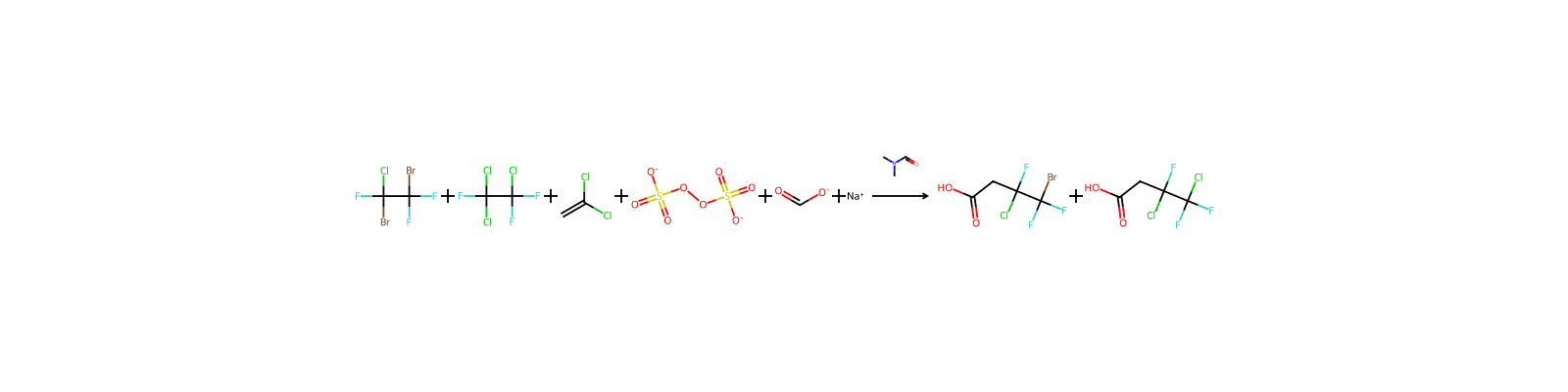

基本情報
- 標準SMILES
FC(F)(Cl)C(F)(Cl)Cl- InChIKey
AJDIZQLSFPQPEY-UHFFFAOYSA-N- 分子式
- C2Cl3F3
- 平均分子量
- 187.37 g/mol
- 単同位体質量
- 185.901768
名称と識別子
- 優先名称
- Cfc 113
- IUPAC
- 1,1,2-trichloro-1,2,2-trifluoroethane
- 現地名
- 1,1,2-トリフルオロトリクロロエタン
- 英語名
- 1,1,2-Trichlorotrifluoroethane
- 分子式
- C2Cl3F3
- 分子量
- 187.38
名称と別名
1,1,2-Trichlorotrifluoroethane76-13-11,1,2-Trichloro-1,2,2-trifluoroethaneFluorocarbon 113Arcton 63Genesolv DArklone PFreon TFCFC-113Refrigerant 113Asahifron 113Genetron 113
名称をさらに表示
1,1,2-トリフルオロ-1,2,2-トリクロロエタンイスセオン113フレオン113TR-T1,1,2-トリクロロ-1,2,2-トリフルオロエタンフロン-113フロン113アルクロンPアサヒフロン113フリゲン113TR1,1,2-トリフルオロトリクロロエタンアルクトン631,2,2-トリクロロ-1,1,2-トリフルオロエタンフリゲン113TR-Nフレオン113ゲネトロン113フレオンTFレドン113フロンソルブ113ホラン113レフリゲラント113FREONR113f113FREON 113FC-113TrifluorotrichloroethaneArklone
Khladon 113Forane 113Frigen 113Frigen 113AFrigen 113TRIsceon 113Halocarbon 113Daiflon S 3
データベース識別子
- CAS
76-13-1- PubChem CID
- 6428
- DTXSID
DTXSID6021377- ChEMBL
CHEMBL478511- ChEBI
CHEBI:193131- UNII
- 0739N04X3A
- EC Number
- 200-936-1
- Nikkaji
- J1.947J
物性
構造計算による物性
- XLogP
- 3.2
- 極性表面積
- 0 Ų
- 水素結合供与体数
- 0
- 水素結合受容体数
- 3
- 回転可能結合数
- 1
- 重原子数
- 8
- 形式電荷
- 0
- 複雑度
- 90
実験および物理化学的性質
LogP
log Kow = 3.16
3.30
Odor
Nearly odorless
Odor like carbon tetrachloride at high concentrations
Faint solvent odor
Density
1.5635 at 77 °F (USCG, 1999) - Denser than water; will sink
1.5635 g/cu cm at 25 °C
Relative density (water = 1): 1.56
1.56
(77 °F): 1.56
Viscosity0.497 mPa.s at 48.9 °C (liquid); 0.0108 mPa.s at 49 °C (gas)
Color/Form
Liquid
Colorless gas
Volatile liquid
Colorless to water-white liquid ... [Note: A gas above 118 degrees F]
Clear, dense, colorless liquid
Solubility
Insoluble (NTP, 1992)
In water, 170 mg/L at 25 °C
Soluble in ethanol; miscible with ethyl ether and benzene
Solubility in water, g/100ml at 20 °C: 0.02
(77 °F): 0.02%
Corrosivity... 1,1,2-Trichloro-1,2,2-trifluoroethane will attack some forms of plastics, rubber, and coatings.
Boiling Point
117.9 °F at 760 mmHg (NTP, 1992)
47.7 °C
48 °C
118 °F
118 °F
Decomposition
Decomposes on contact with hot surfaces or flames. This produces toxic and corrosive gases of hydrogen chloride, phosgene, hydrogen fluoride and carbonyl fluoride. Reacts violently with powdered metals. This generates fire and explosion hazard. Attacks magnesium and its alloys.
Under certain conditions, /chlorofluorocarbon/ vapors may decompose on contact with flames or hot surfaces, creating the potential hazard of inhalation of toxic decomposition products. /Chlorofluorocarbon/
The appearance of toxic decomposition products serves as warning of the occurrence of thermal decompositon and detection of a sharp acrid odor warns of the presence of these products. /Fluorocarbons/
Melting Point
-33.5 °F (NTP, 1992)
-36.22 °C
-36 °C
-33.5 °F
-31 °F
Vapor Density
6.5 (Air = 1)
Relative vapor density (air = 1): 6.5
Odor Threshold
Odor Threshold Low: 45.0 [ppm];Odor Threshold High: 70.0 [ppm];Odor thresholds (detection at 45 ppm and recognition at 70 ppm) from CHEMINFO
Odor detection in air: 4.5x10+1 ppm; odor recognition in air: 6.8x10+1 ppm /Purities not specified/
Low: 342 mg/cu m; High: 1026 mg/cu m /From table/
物理化学的性質
- 融点
- 35 °C · −35 °C(lit.)
- 沸点
- 47 · 47-48 °C(lit.)
- 比重(密度)
- 1.57 g/mL · 1.57 g/mL at 25 °C(lit.)
- 蒸気密度
- 6.5 · 6.5 (vs air)
- 蒸気圧
- 5.5 psi · 5.5 psi ( 20 °C)
- 屈折率
- 20 · n20/D 1.358(lit.)
- 闪点
- 195 °C · 195°C
- 貯蔵温度
- 2 · 2-8°C
- 溶解性
- 0.17 g/リットル · 0.17g/リットル
- 外見
- 無色のガス;揮発性の液体。
- 色
- clear colorless
- 由来生物
- human
- 水溶解度
- 0.02 g/100 · 0.02 g/100 mL。微溶性
- 比熱容量
- 0.91 J/ · Cp(liquid): 0.91 J/(g·K), at 25℃
- BRN
- 1740335 · 1740335
- Henry's Law Constant
- 0.154 · 0.154, 0.215, 0.245, 0.319, and 0.321 at 10, 15, 20, 25, and 30 °C, respectively (EPICS, Ashworth et al., 1988)
- Dielectric constant
- 2.6 · 2.6(21℃)
- 安定性
- 安定。不燃性。アルカリ金属、反応性金属、マグネシウム、亜鉛、アルミニウムとは混和しません。
- InChI
- 1S/C2Cl3F3/c3-1(4,6)2(5,7)8
- InChIKey
- AJDIZQLSFPQPEY-UHFFFAOYSA-N
- LogP
- 3.16 · 3.160
- CAS データベース
- 76 · 76-13-1(CAS DataBase Reference)
- NISTの化学物質情報
- 1 · Ethane, 1,1,2-trichloro-1,2,2-trifluoro-(76-13-1)
- EPAの化学物質情報
- -113 · CFC-113 (76-13-1)
化学的性質
化学的特性colourless liquid or gas
安全と法規制
GHS分類
GHS Classification
This chemical does not meet GHS hazard criteria for 2.4% (5 of 206) of reports.
Warning
H319 (70.4%): Causes serious eye irritation [Warning Serious eye damage/eye irritation];H411 (93.2%): Toxic to aquatic life with long lasting effects [Hazardous to the aquatic environment, long-term hazard];H420 (32%): Harms public health and the environment by destroying ozone in the upper atmosphere [Warning Hazardous to the ozone layer]
P264+P265, P273, P280, P305+P351+P338, P337+P317, P391, P501, and P502 (click each P-code to see the statement)
Aggregated GHS information provided per 206 reports by companies from 9 notifications to the ECHA C&L Inventory. Each notification may be associated with multiple companies.;Reported as not meeting GHS hazard criteria per 5 of 206 reports by companies.;There are 8 notifications provided by 201 of 206 reports by companies with hazard statement code(s).;Information may vary between notifications depending on impurities, additives, and other factors. The percentage value in parenthesis indicates the notified classification ratio from companies that provide hazard codes. Only hazard codes with percentage values above 10% are shown. For more detailed information, please visit ECHA C&L website.
危険有害性情報
Regulatory Information
Chemical: Ethane, 1,1,2-trichloro-1,2,2-trifluoro-
Hazard Traits - Hepatotoxicity and Digestive System Toxicity;Authoritative List - CA MCLs; CWA 303(d);Report - if used as a fragrance or flavor ingredient
Ethane, 1,1,2-trichloro-1,2,2-trifluoro- is listed on the EPA's Chemical Data Reporting (CDR) system. Manufacturers and importers of Ethane, 1,1,2-trichloro-1,2,2-trifluoro- are required to report information about their production and use of this chemical to the EPA under the Toxic Substances Control Act (TSCA). (40 eCFR Part 711)
1,1,2-Trichlorotrifluoroethane: Does not have an individual approval but may be used under an appropriate group standard
DOT LabelClass 9
Fire Hazards
Special Hazards of Combustion Products: Toxic gases including hydrogen chloride, hydrogen fluoride, and very small amounts of phosgene, fluorine and chlorine are produced.;Behavior in Fire: While no flash point is reported, the material may burn if ignited by a high intensity heat source. (USCG, 1999)
Combustible under specific conditions. Gives off irritating or toxic fumes (or gases) in a fire.
Fire Potential
Not combustible.
Combustible when exposed to heat or flame.
Health HazardsInhalation causes irritation of the nose, throat, and lungs. High concentrations may cause death by respiratory failure or asphyxiation. May produce superficial skin burns or defatting type dermatitis and may irritate the eyes. (USCG, 1999)
Hazards Summary
A weak narcotic and strong cardiac sensitizer compared to other CFCs; In animal experiments, CNS depression occurs with exposures above 12,000 ppm; Mild liver changes are noted at concentrations somewhat below this; [ACGIH] Inhalation of high concentrations can cause CNS depression and cardiac arrhythmias; In confined space spill, may displace air and act as simple asphyxiant; An eye irritant; [ICSC]
FDA Requirements
The Food and Drug Administration (FDA), after consultation with the Environmental Protection Agency (EPA), is amending FDA's regulation on the use of ozone-depleting substances (ODSs) in selfpressurized containers to remove the essential-use designations for flunisolide, triamcinolone, metaproterenol, pirbuterol, albuterol and ipratropium in combination, cromolyn, and nedocromil used in oral pressurized metered-dose inhalers (MDIs). The Clean Air Act requires FDA, in consultation with the EPA, to determine whether an FDA-regulated product that releases an ODS is an essential use of the ODS. FDA has concluded that there are no substantial technical barriers to formulating flunisolide, triamcinolone, metaproterenol, pirbuterol, albuterol and ipratropium in combination, cromolyn, and nedocromil as products that do not release ODSs, and therefore they will no longer be essential uses of ODSs as of the effective dates of this rule. MDIs for these active moieties containing an ODS may not be marketed after the relevant effective date. DATES: Removal of Part 2.125(e)(2)(iii) and 2.125(e)(4)(vii) is effective June 14, 2010. Removal of Part 2.125(e)(1)(v) and 2.125(e)(4)(iv) is effective December 31, 2010. Removal of Part 2.125(e)(1)(iii) is effective June 30, 2011. Removal of 2.125(e)(2)(iv) and Part 2.125(e)(4)(viii) is effective December 31, 2013. /Ozone-Depleting Substances/
Use of ozone-depleting substances in foods, drugs, devices, or cosmetics. (a) As used in this section, ozone-depleting substance (ODS) means any class I substance as defined in 40 CFR part 82, appendix A to subpart A, or class II substance as defined in 40 CFR part 82, appendix B to subpart A. (b) Except as provided in paragraph (c) of this section, any food, drug, device, or cosmetic that is, consists in part of, or is contained in an aerosol product or other pressurized dispenser that releases an ODS is not an essential use of the ODS under the Clean Air Act. (c) A food, drug, device, or cosmetic that is, consists in part of, or is contained in an aerosol product or other pressurized dispenser that releases an ODS is an essential use of the ODS under the Clean Air Act if paragraph (e) of this section specifies the use of that product as essential. For drugs, including biologics and animal drugs, and for devices, an investigational application or an approved marketing application must be in effect, as applicable. ... (e) The use of ODSs in the following products is essential: ... (2) Metered-dose short-acting adrenergic bronchodilator human drugs for oral inhalation. Oral pressurized metered-dose inhalers containing the following active moieties: ... (iv) Pirbuterol. ... (4) Other essential uses. (iii) Anesthetic drugs for topical use on accessible mucous membranes of humans where a cannula is used for application. ... (vi) Metered-dose atropine sulfate aerosol human drugs administered by oral inhalation. ... (viii) Metered-dose ipratropium bromide and albuterol sulfate, in combination, administered by oral inhalation for human use. (ix) Sterile aerosol talc administered intrapleurally by thoracoscopy for human use. /Ozone-Depleting Substances/
A mixture of 99 percent chlorofluorocarbon 113 (1,1,2-trichloro-1,2,2-trifluoroethane) (CAS Reg. No. 76-13-1, also known as fluorocarbon 113, CFC 113 and FC 113) and 1 percent perfluorohexane (CAS Reg. No. 355-42-0) may be safely used in accordance with the following prescribed conditions: (a) The additive chlorofluorocarbon 113 has a purity of not less than 99.99 percent. (b) The additive mixture is intended for use to quickly cool or crust-freeze chickens sealed in intact bags composed of substances regulated in parts 174, 175, 177, 178, and section 179.45 of this chapter and conforming to any limitations or specifications in such regulations.
Reactive GroupFluorinated Organic Compounds
Special Reports
USEPA; Health Assessment Document: 1,1,2-Trichloro-1,2,2-trifluoroethane (1983) EPA-600/58-5-82-002F
Zakhari S, Aviado DM; Cardiovascular Toxicology of Aerosol Propellants, Refrigerants and Related Solvents; Target Organ Toxicology Series: Cardiovascular Toxicology, XII+ 388 pages; Raven Press: New York, NY 281-326 (1982). Review of the toxicology of aerosol propellants, refrigerants and related solvents on the cardiovascular system of humans.
Barlow SM, Sullivan FM; Fluorocarbons; Reproductive Hazards of Industrial Chemicals pp.326-33 (1982.).
Production and Consumption of Ozone Depleting Substances under the Montreal Protocol 1986 - 2004[UNEP; Ozone Secretariat UNEP November 2005, Available from, as of march 11, 2013: http://ozone.unep.org/Publications/Production_and_consumption2005.pdf]
For more Special Reports (Complete) data for 1,1,2-TRICHLORO-1,2,2-TRIFLUOROETHANE (8 total), please visit the HSDB record page.
RCRA Requirements
F002; When 1,1,2-trichloro-1,2,2-trifluoroethane is a spent halogenated solvent, it is classified as a hazardous waste from a nonspecific source (F002), as stated in 40 CFR 261.31, and must be managed according to state and/or federal hazardous waste regulations.
TSCA Requirements
Pursuant to section 8(d) of TSCA, EPA promulgated a model Health and Safety Data Reporting Rule. The section 8(d) model rule requires manufacturers, importers, and processors of listed chemical substances and mixtures to submit to EPA copies and lists of unpublished health and safety studies. 1,1,2-Trichloro-1,2,2-trifluoroethane is included on this list. Effective date: 4/13/89; Sunset date: 12/19/95.
OSHA StandardsPermissible Exposure Limit: Table Z-1 8-hr Time Weighted Avg: 1000 ppm (7600 mg/cu m).
安全と保護具
Fire Fighting
Fire Extinguishing Agents: Extinguish fires with material appropriate to the surrounding materials. (USCG, 1999)
In case of fire in the surroundings, use appropriate extinguishing media. In case of fire: keep drums, etc., cool by spraying with water.
First Aid Measures
Fresh air, rest. Artificial respiration may be needed. Refer for medical attention.
Remove contaminated clothes. Rinse skin with plenty of water or shower. Refer for medical attention .
First rinse with plenty of water for several minutes (remove contact lenses if easily possible), then refer for medical attention.
Rinse mouth. Refer for medical attention .
First Aid
EYES: First check the victim for contact lenses and remove if present. Flush victim's eyes with water or normal saline solution for 20 to 30 minutes while simultaneously calling a hospital or poison control center. Do not put any ointments, oils, or medication in the victim's eyes without specific instructions from a physician. IMMEDIATELY transport the victim after flushing eyes to a hospital even if no symptoms (such as redness or irritation) develop.;SKIN: IMMEDIATELY flood affected skin with water while removing and isolating all contaminated clothing. Gently wash all affected skin areas thoroughly with soap and water. If symptoms such as redness or irritation develop, IMMEDIATELY call a physician and be prepared to transport the victim to a hospital for treatment.;INHALATION: IMMEDIATELY leave the contaminated area; take deep breaths of fresh air. If symptoms (such as wheezing, coughing, shortness of breath, or burning in the mouth, throat, or chest) develop, call a physician and be prepared to transport the victim to a hospital. Provide proper respiratory protection to rescuers entering an unknown atmosphere. Whenever possible, Self-Contained Breathing Apparatus (SCBA) should be used; if not available, use a level of protection greater than or equal to that advised under Protective Clothing.;INGESTION: DO NOT INDUCE VOMITING. Volatile chemicals have a high risk of being aspirated into the victim's lungs during vomiting which increases the medical problems. If the victim is conscious and not convulsing, give 1 or 2 glasses of water to dilute the chemical and IMMEDIATELY call a hospital or poison control center. IMMEDIATELY transport the victim to a hospital. If the victim is convulsing or unconscious, do not give anything by mouth, ensure that the victim's airway is open and lay the victim on his/her side with the head lower than the body. DO NOT INDUCE VOMITING. IMMEDIATELY transport the victim to a hospital. (NTP, 1992)
(General first aid procedures);Eye: Irrigate immediately - If this chemical contacts the eyes, immediately wash (irrigate) the eyes with large amounts of water, occasionally lifting the lower and upper lids. Get medical attention immediately.;Skin: Soap wash promptly - If this chemical contacts the skin, promptly wash the contaminated skin with soap and water. If this chemical penetrates the clothing, promptly remove the clothing and wash the skin with soap and water. Get medical attention promptly.;Breathing: Respiratory support;Swallow: Medical attention immediately - If this chemical has been swallowed, get medical attention immediately.
Safe StorageSeparated from metals and alloys. See Chemical Dangers. Cool. Ventilation along the floor.
Exposure Control and Personal Protection500.0 [ppm]
Fire Fighting Procedures
Firefighters should wear self-contained, NIOSH-approved breathing apparatus for protection against suffocation and possible toxic decomposition products. Proper eye and skin protection should be provided. Use water spray to keep fire-exposed containers cool and to knock down vapors which may result from product decomposition.
In case of fire in the surroundings, use appropriate extinguishing media.
In case of fire: keep drums, etc., cool by spraying with water.
/During fire fighting wear/ self-contained breathing apparatus with full facepiece operated in pressure-demand or other positive pressure mode.
Storage Conditions
Keep container closed when not in use. DO NOT store in open, unlabeled or mislabeled containers. Store in a cool, well- ventilated area of low fire risk. Protect container and its fittings from physical damage. Storage in subsurface locations should be avoided. Close valve tightly after use and when empty. If container temperature exceeds boiling point, cool the container before opening.
Separated from metals and alloys. ... Cool. Ventilation along the floor.
Cleanup Methods
Always wear recommended personal protective equipment. Immediately evacuate the area and provide maximum ventilation. Try to eliminate all ignition sources. Unprotected personnel should move upwind from spill. Only personnel equipped with proper respiratory and eye/skin protection should be permitted in the area. Dike area to contain the spill. Take precautions as necessary to prevent contamination of ground and surface waters. For large spills, pump material into appropriate containers. For small spills, recover or absorb spilled material using an absorbent designed for chemical spills such as Hazsorb pillows. Place used absorbents into closed DOT approved containers for disposal. After all visible traces have been removed, thoroughly wet vacuum the area. DO NOT flush into sewer. If the area of the spill is porous, removal of contaminated earth/surface may be required.
If ... spilled or leaked, the following steps should be taken: 1. Ventilate area of spill or leak. 2. Collect for reclamation or absorb in vermiculite, dry sand, earth, or similar material.
Personal protection: self-contained breathing apparatus. Do not let this chemical enter the environment. Collect leaking and spilled liquid in sealable containers as far as possible. Absorb remaining liquid in sand or inert absorbent. Then store and dispose of according to local regulations.
Nonfire Spill Response
SMALL SPILLS AND LEAKAGE: If you spill this chemical, use absorbent paper to pick up all liquid spill material. Your contaminated clothing and absorbent paper should be sealed in a vapor-tight plastic bag for eventual disposal. Solvent wash all contaminated surfaces with alcohol followed by washing with a strong soap and water solution. Do not reenter the contaminated area until the Safety Officer (or other responsible person) has verified that the area has been properly cleaned.;STORAGE PRECAUTIONS: You should store this chemical under freezer conditions, and keep it away from all oxidizing materials. (NTP, 1992)
Disposal Methods
Generators of waste (equal to or greater than 100 kg/mo) containing this contaminant, EPA hazardous waste number F002, must conform with USEPA regulations in storage, transportation, treatment and disposal of waste.
A potential candidate for liquid injection incineration at a temperature range of 650 to 1,600 °C and a residence time of 0.1 to 2 seconds. A potential candidate for rotary kiln incineration at a temperature range of 820 to 1,600 °C and residence times of seconds for liquids and gases, and hours for solids. A potential candidate for fluidized bed incineration at a temperature range of 450 to 980 °C and residence times of seconds for liquids and gases, and longer for solids.
Incineration, preferably after mixing with ... combustible fuel. Care must be exercised to assure complete combustion to prevent the formation of phosgene. An acid scrubber is necessary to remove the halo acids produced.
SRP: Wastewater from contaminant suppression, cleaning of protective clothing/equipment, or contaminated sites should be contained and evaluated for subject chemical or decomposition product concentrations. Concentrations shall be lower than applicable environmental discharge or disposal criteria. Alternatively, pretreatment and/or discharge to a permitted wastewater treatment facility is acceptable only after review by the governing authority and assurance that "pass through" violations will not occur. Due consideration shall be given to remediation worker exposure (inhalation, dermal and ingestion) as well as fate during treatment, transfer and disposal. If it is not practicable to manage the chemical in this fashion, it must be evaluated in accordance with EPA 40 CFR Part 261, specifically Subpart B, in order to determine the appropriate local, state and federal requirements for disposal.
Spillage Disposal
Personal protection: self-contained breathing apparatus. Do NOT let this chemical enter the environment. Collect leaking and spilled liquid in sealable containers as far as possible. Absorb remaining liquid in sand or inert absorbent. Then store and dispose of according to local regulations.
Preventive Measures
Skin that becomes contaminated with liquid 1,1,2-trichloro-1,2,2-trifluoroethane should be immediately washed or showered with soap or mild detergent and water.
Sufficient exhaust & general ventilation should be provided to keep vapor concn below recommended levels. /Fluorocarbons/
Many of the fluorocarbons are good solvents of skin oil, so protective ointment should be used. /Fluorocarbons/
Work clothing that becomes wet or significantly contaminated should be removed and replaced.
For more Preventive Measures (Complete) data for 1,1,2-TRICHLORO-1,2,2-TRIFLUOROETHANE (15 total), please visit the HSDB record page.
毒性情報
Interactions
The interaction of Freon 113 and hypoxia on the heart conduction system was investigated by using the isolated perfused hearts from Wistar rats. The mean preexposure heart rate was 214.8 beats per minute and the mean preexposure atrioventricular conduction time (PQ interval was 42.9 milliseconds. Freon 113 alone elicited significant change to control levels in heart rate which was enhanced by the coadministration of hypoxia. An enhanced delayed PQ interval was noted following coadministration of Freon 113 and hypoxia, although significant PQ interval changes were noted with Freon 113 alone or with hypoxia alone. In the coadministration group, a 2:1 atrioventricular block was elicited in two of four hearts. It was suggested that in occupational deaths among Freon 113 workers, there may be complex interactions between hypoxia, enhanced cardiac sensitivity to circulating epinephrine, and direct alterations of cardiac muscle cell membrane potentials which result in arrhythmias following Freon 113 exposures.
In studies of cardiac sensitization with conscious dogs exposed at 5000 ppm for 5 minutes in conjuction with intravenous epinephrine, 10 of 29 showed serious arrhythmia...If exposures were increased to 0.5 to 6 hours at 2000 to 2500 ppm and accompanied by intravenous epinephrine, arrhythmia occasionally occurred; however, 1000 ppm failed to elicit arrhythmia, even after four successive 6-hour exposures. Endogenous epinephrine produced by fright was insufficient to cause arrythmia at 12,000 ppm. At concentrations > 25,000 ppm, tachycardia, hypotension, or myocardial depression developed in dogs, monkeys, or rats exposed under anesthesia or various experimental conditions.
Target Organs
Nervous
Skin, heart, central nervous system, cardiovascular system
Environmental Fate
TERRESTRIAL FATE: Based on a classification scheme(1), an estimated Koc value of 552(SRC), determined from a log Kow of 3.16(2) and a regression-derived equation(3), indicates that 1,1,2-trichloro-1,2,2-trifluoroethane is expected to have low mobility in soil(SRC). Volatilization of 1,1,2-trichloro-1,2,2-trifluoroethane from moist soil surfaces is expected to be an important fate process(SRC) given a estimated Henry's Law constant of 5.26X10⁻¹ atm-cu m/mole(SRC), derived from its vapor pressure, 363 mm Hg(4), and water solubility, 170 mg/L(5). 1,1,2-Trichloro-1,2,2-trifluoroethane is expected to volatilize from dry soil surfaces(SRC) based upon its vapor pressure. Utilizing the Japanese MITI test, 0-5% of the Theoretical BOD was reached in 4 weeks(6) indicating that biodegradation is not an important environmental fate process in soil(SRC). 1,1,2-Trichloro-1,2,2-trifluoroethane was degraded under anaerobic landfill conditions using an anoxic landfill leachate microcosm(7), suggesting this compound may biodegrade in soils under anaerobic conditions(SRC).
AQUATIC FATE: Based on a classification scheme(1), an estimated Koc value of 552(SRC), determined from a log Kow of 3.16(2) and a regression-derived equation(3), indicates that 1,1,2-trichloro-1,2,2-trifluoroethane is expected to adsorb to suspended solids and sediment(SRC). Volatilization from water surfaces is expected(4) based upon an estimated Henry's Law constant of 5.26X10⁻¹ atm-cu m/mole(SRC) derived from its vapor pressure, 363 mm Hg(5), and water solubility, 170 mg/L(6). Using this Henry's Law constant and an estimation method(4), volatilization half-lives for a model river and model lake are 1 hour and 5 days, respectively(SRC). According to a classification scheme(7), BCF's of 11-68(8) suggest that bioconcentration in aquatic organisms is low to moderate(SRC). Utilizing the Japanese MITI test, 0-5% of the Theoretical BOD was reached in 4 weeks(8) indicating that biodegradation is not an important environmental fate process in water(SRC).
ATMOSPHERIC FATE: According to a model of gas/particle partitioning of semivolatile organic compounds in the atmosphere(1), 1,1,2-trichloro-1,2,2-trifluoroethane, which has a vapor pressure of 363 mm Hg at 25 °C(2), is expected to exist solely as a vapor. 1,1,2-Trichloro-1,2,2-trifluoroethane is extremely stable in the troposphere, being essentially inert to reaction with photochemically generated radicals and ozone molecules in the troposphere(3). As a result of its long half-life, a substantial fraction of 1,1,2-trichloro-1,2,2-trdifluoroethane will slowly diffuse to the stratosphere. Once in the upper stratosphere, it is dissociated through photolysis, reaction with hydroxyl radical and excited atomic oxygen resulting in the release of chlorine. These chlorine atoms then become part of a catalytic process that contributes to the destruction of the ozone layer(4).
Adverse EffectsNeurotoxin - Acute solvent syndrome;ACGIH Carcinogen - Not Classifiable.
Exposure Routes
The substance can be absorbed into the body by inhalation and by ingestion.
inhalation, ingestion, skin and/or eye contact
Average Daily IntakeThe average daily intake of 1,1,2-trichloro-1,2,2-trifluoroethane in air, (assume 13-31 parts/trillion(1,2)) is 2.0-4.8 ug/day(SRC).
Signs and Symptoms
Irregular heartbeat. Confusion. Drowsiness. Unconsciousness.
Redness.
Redness. Pain.
irritation skin, throat, drowsiness, dermatitis; central nervous system depression; In Animals: cardiac arrhythmias, narcosis
Effluent Concentrations
The annual emissions of 1,1,2-trichloro-1,2,2-trifluoroethane were estimated at 100 million kg/yr, increasing exponentially at 5% per year from 1981 through 1988(1). The total evaporative losses (in percentages) of 1,1,2-trichloro-1,2,2-trifluoroethane from cleaning and electronic maintenance operations at the Newark AFB, Ohio, was from spraying/flushing booths at 71%, ultrasonic cleaners at 21%, degreasers at 4.3%, and brushing/wiping and miscellaneous at a 1.7(2). 1,1,2-Trichloro-1,2,2-trifluoroethane concentrations in samples from six municipal solid waste landfills in Hamburg, Germany ranged from not detected to 0.01 mg/kg(3). The range in landfill gas from seven U.K. municipal waste disposal sites was <0.5 to 74 mg/cu m(4).
ICSC Environmental DataThe substance is toxic to aquatic organisms. Avoid release to the environment because of its impact on the ozone layer.
EPA IRIS Information
1,1,2-Trichloro-1,2,2-trifluoroethane (CFC-113)
Nervous
3 x 10 ^1 mg/kg-day
Medical Surveillance
Employees should be screened for history of certain medical conditions (listed below) which might place the employee at increased risk from ... exposure. ... 1,1,2-Trichloro-1,2,2-trifluoroethane is a defatting agent and can cause dermatitis on prolonged exposure. Persons with existing skin disorders may be more susceptible to the effects of this agent. ... In persons with impaired cardiovascular function, especially those with a history of cardiac arrhythmias, the breathing of 1,1,2-trichloro-1,2,2-trifluoroethane might cause exacerbation of symptoms due to its sensitizing properties. ... Any employee developing the above-listed conditions should be referred for further medical examination.
Soil Adsorption/Mobility
The Koc of 1,1,2-trichloro-1,2,2-trifluoroethane is estimated as 552(SRC), using a log Kow of 3.16(1) and a regression-derived equation(2). According to a classification scheme(3), this estimated Koc value suggests that 1,1,2-trichloro-1,2,2-trifluoroethane is expected to have low mobility in soil.
法規制情報
Regulatory Information
Chemical: Ethane, 1,1,2-trichloro-1,2,2-trifluoro-
Hazard Traits - Hepatotoxicity and Digestive System Toxicity;Authoritative List - CA MCLs; CWA 303(d);Report - if used as a fragrance or flavor ingredient
Ethane, 1,1,2-trichloro-1,2,2-trifluoro- is listed on the EPA's Chemical Data Reporting (CDR) system. Manufacturers and importers of Ethane, 1,1,2-trichloro-1,2,2-trifluoro- are required to report information about their production and use of this chemical to the EPA under the Toxic Substances Control Act (TSCA). (40 eCFR Part 711)
1,1,2-Trichlorotrifluoroethane: Does not have an individual approval but may be used under an appropriate group standard
FDA Requirements
The Food and Drug Administration (FDA), after consultation with the Environmental Protection Agency (EPA), is amending FDA's regulation on the use of ozone-depleting substances (ODSs) in selfpressurized containers to remove the essential-use designations for flunisolide, triamcinolone, metaproterenol, pirbuterol, albuterol and ipratropium in combination, cromolyn, and nedocromil used in oral pressurized metered-dose inhalers (MDIs). The Clean Air Act requires FDA, in consultation with the EPA, to determine whether an FDA-regulated product that releases an ODS is an essential use of the ODS. FDA has concluded that there are no substantial technical barriers to formulating flunisolide, triamcinolone, metaproterenol, pirbuterol, albuterol and ipratropium in combination, cromolyn, and nedocromil as products that do not release ODSs, and therefore they will no longer be essential uses of ODSs as of the effective dates of this rule. MDIs for these active moieties containing an ODS may not be marketed after the relevant effective date. DATES: Removal of Part 2.125(e)(2)(iii) and 2.125(e)(4)(vii) is effective June 14, 2010. Removal of Part 2.125(e)(1)(v) and 2.125(e)(4)(iv) is effective December 31, 2010. Removal of Part 2.125(e)(1)(iii) is effective June 30, 2011. Removal of 2.125(e)(2)(iv) and Part 2.125(e)(4)(viii) is effective December 31, 2013. /Ozone-Depleting Substances/
Use of ozone-depleting substances in foods, drugs, devices, or cosmetics. (a) As used in this section, ozone-depleting substance (ODS) means any class I substance as defined in 40 CFR part 82, appendix A to subpart A, or class II substance as defined in 40 CFR part 82, appendix B to subpart A. (b) Except as provided in paragraph (c) of this section, any food, drug, device, or cosmetic that is, consists in part of, or is contained in an aerosol product or other pressurized dispenser that releases an ODS is not an essential use of the ODS under the Clean Air Act. (c) A food, drug, device, or cosmetic that is, consists in part of, or is contained in an aerosol product or other pressurized dispenser that releases an ODS is an essential use of the ODS under the Clean Air Act if paragraph (e) of this section specifies the use of that product as essential. For drugs, including biologics and animal drugs, and for devices, an investigational application or an approved marketing application must be in effect, as applicable. ... (e) The use of ODSs in the following products is essential: ... (2) Metered-dose short-acting adrenergic bronchodilator human drugs for oral inhalation. Oral pressurized metered-dose inhalers containing the following active moieties: ... (iv) Pirbuterol. ... (4) Other essential uses. (iii) Anesthetic drugs for topical use on accessible mucous membranes of humans where a cannula is used for application. ... (vi) Metered-dose atropine sulfate aerosol human drugs administered by oral inhalation. ... (viii) Metered-dose ipratropium bromide and albuterol sulfate, in combination, administered by oral inhalation for human use. (ix) Sterile aerosol talc administered intrapleurally by thoracoscopy for human use. /Ozone-Depleting Substances/
A mixture of 99 percent chlorofluorocarbon 113 (1,1,2-trichloro-1,2,2-trifluoroethane) (CAS Reg. No. 76-13-1, also known as fluorocarbon 113, CFC 113 and FC 113) and 1 percent perfluorohexane (CAS Reg. No. 355-42-0) may be safely used in accordance with the following prescribed conditions: (a) The additive chlorofluorocarbon 113 has a purity of not less than 99.99 percent. (b) The additive mixture is intended for use to quickly cool or crust-freeze chickens sealed in intact bags composed of substances regulated in parts 174, 175, 177, 178, and section 179.45 of this chapter and conforming to any limitations or specifications in such regulations.
RCRA Requirements
F002; When 1,1,2-trichloro-1,2,2-trifluoroethane is a spent halogenated solvent, it is classified as a hazardous waste from a nonspecific source (F002), as stated in 40 CFR 261.31, and must be managed according to state and/or federal hazardous waste regulations.
TSCA Requirements
Pursuant to section 8(d) of TSCA, EPA promulgated a model Health and Safety Data Reporting Rule. The section 8(d) model rule requires manufacturers, importers, and processors of listed chemical substances and mixtures to submit to EPA copies and lists of unpublished health and safety studies. 1,1,2-Trichloro-1,2,2-trifluoroethane is included on this list. Effective date: 4/13/89; Sunset date: 12/19/95.
Atmospheric Standards
This action promulgates standards of performance for equipment leaks of Volatile Organic Compounds (VOC) in the Synthetic Organic Chemical Manufacturing Industry (SOCMI). The intended effect of these standards is to require all newly constructed, modified, and reconstructed SOCMI process units to use the best demonstrated system of continuous emission reduction for equipment leaks of VOC, considering costs, non air quality health and environmental impact and energy requirements. 1,1,2-Trichloro-1,2,2,-trifluoroethane is produced, as an intermediate or a final product, by process units covered under this subpart.
CERCLA Reportable Quantities
Persons in charge of vessels or facilities are required to notify the National Response Center (NRC) immediately, when there is a release of this designated hazardous substance, in an amount equal to or greater than its reportable quantity of 5000 lb or 2270 kg. The toll free number of the NRC is (800) 424-8802. The rule for determining when notification is required is stated in 40 CFR 302.4 (section IV. D.3.b).
State Drinking Water Standards(CA) CALIFORNIA 1200 ug/l
State Drinking Water Guidelines
(FL) FLORIDA 500,000 ug/l
(MA) MASSACHUSETTS 210000 ug/l
(MN) MINNESOTA 200000 ug/l
安全データ
- OEB
- A
- OEL
- TWA: 1000 ppm (7600 mg/m3), STEL: 1250 ppm (9500 mg/m3)
- wgk
- 2
- IDLA
- 2,000 ppm
- tsca
- TSCA listed
- rtecs
- KJ4000000
- ridadr
- UN 3082 9/PG 3
- 毒性
- Acute oral LD50 for rats 43 mg/kg (quoted, RTECS, 1985).
- PRTR法
- 第1種指定化学物質
- risk_code
- 52/53-59-39/23/24/25-23/24/25-51/53-11
- 化審法
- 一般化学物質
- hazard_code
- N,Xi,T,F
- hazard_note
- Irritant
- safety_code
- 59-61-45-36/37-16
- 自然発火温度
- 1256 °F
- 環境リスク評価
- 1,1,2-トリクロロ-1,2,2-トリフルオロエタン(76-13-1)
- Hazard Classifications
- Aquatic Chronic 2Eye Irrit. 2Ozone 1
- ストレージクラス
- 10 - Combustible liquids
- 有毒物質データの
- 76-13-1(Hazardous Substances Data)
化学と産業
薬理情報
Biological Half-Life
Breath-holding trials of inspired CFC-113 found that total excretion in expired air after 1 hr was 63% of the inhaled compound, a value corresponding to an elimination half-time of 17 min.
In a study with exposure levels of 260-1000 ppm for 4 hr, /investigators/ demonstrated that the elimination of CFC-113 from humans is a three compartment model with average half-lives of elimination of 0.22, 2.3, and 29 hr.
Metabolism/Metabolites
The compound binds to rat cytochrome P-450 and the binding can be increased by phenobarbital induction; however, concurrent treatment with piperonyl butoxide failed to influence CFC-113 toxicity due principally to the extremely limited biotransformation of this compound in vivo.
The ratio of retained CFC to that found in expired air suggests that some metabolism does occur. The rate is, however, so low that it could not be concluded with certainty that CFC-113 is metabolized by man.
Absorption, Distribution and Excretion
Arterial and venous concn of 3 C2 fluorocarbons were obtained in unanesthetized beagle dogs during and after 10 min of exposures. Blood concn increased rapidly during the 1st 5 min of exposure and more slowly or not at all thereafter. At termination of exposure, fluorocarbon blood concn decreased rapidly at 1st, followed by a more prolonged decline. An arterial-venous difference, observed during and after exposure, suggested a tissue uptake of fluorocarbon. Although a wide range of inspired concn 0.5% fluorocarbon 113, 2.5% fluorocarbon 114, and 15.0% fluorocarbon 115, is needed to produce cardiac sensitization, arterial or venous fluorocarbon concn associated with these sensitizing levels differ only slightly among the cmpds tested: 12.5, 13.8, and 5.8 ug/mL arterial and 4.9, 7.2 and 3.9 ug/mL venous respectively. Sensitizing blood levels from 25-35 ug/mL arterial and from 18-23 ug/mL venous were reported for C1 fluorocarbons 11 and 12.
Human exposure to CFC 113 is predominantly by inhalation and most of it is rapidly cleared from the body by exhalation.
Animal exposure studies indicate that CFC 113 partitions preferentially into lipid-rich tissues and is poorly metabolized. Loss of CFC 113 from all tissues is rapid during post-exposure periods with virtually 100% clearance within 24 hr after cessation of acute exposure.
Human & animal studies indicate rapid excretion of inhaled FC-114. In a study with radiolabeled FC-114, 30 min retention of the dose inhaled in a single breath was 12% versus 23%, 10%, & 20% for comparable doses of FC-11, FC-12, and FC-113, respectively.
For more Absorption, Distribution and Excretion (Complete) data for 1,1,2-TRICHLORO-1,2,2-TRIFLUOROETHANE (12 total), please visit the HSDB record page.
用途と製造
Uses
CFC-113 has been used as s solvent (degreasing and dry cleaning), refrigerant, heat transfer liquid, and chemical intermediate; [ACGIH]
See CHLOROFLUOROCARBONS
Metal Degreasing [Category: Clean];Dry Cleaning [Category: Clean]
Chemical intermediate
Electronics, metal, precision, dry cleaning agent /Former in USA/
Clean /semiconductor/ wafers; remove grease from printed circuit boards; in defluxing operations to remove solder flux after components are attached /to printed circuit boards/ /Former in USA/
Impurities
Maximum limits of impurities: Residue after evaporation: 0.0005%; Water (by Karl Fischer titrn): 0.05%. /'Photrex' reagent/
Chlorofluoroalkanes (and also the alternative HCFCs and HFCs) produced on an industrial scale are subject to stringent standards. Impurities must not exceed the following limits (vol %): acids, 0; moisture, <0.001; higher-boiling fractions, <0.05; and other gases, 2. /Chlorofluoroalkanes/
U.S. Production
2023: 75,000,000 - <150,000,000 lb;2022: 75,000,000 - <150,000,000 lb;2021: 75,000,000 - <150,000,000 lb;2020: 75,000,000 - <150,000,000 lb
(1974) 2.9X10+10 GRAMS
(1975) GREATER THAN 4.54X10+5 GRAMS
>35 million lbs annual capacity
Ethane, 1,1,2-trichloro-1,2,2-trifluoro- is listed as a High Production Volume (HPV) chemical (65FR81686). Chemicals listed as HPV were produced in or imported into the U.S. in >1 million pounds in 1990 and/or 1994. The HPV list is based on the 1990 Inventory Update Rule. (IUR) (40 CFR part 710 subpart B; 51FR21438).
For more U.S. Production (Complete) data for 1,1,2-TRICHLORO-1,2,2-TRIFLUOROETHANE (6 total), please visit the HSDB record page.
Consumption Patterns
Most CFC 113 ... is used as a solvent /although/ it also has refrigerant applications (1984).
Refrigerants, 39%; foam blowing agents, 17%; solvents, 14%; fluoropolymers, 14%; sterilant gas, 2%; aerosol propellants, 2%; food freezant, 1%; other, 8%; exports, 3% (1985) /Fluorocarbons/
Approximately 160-170 million lb/yr ... is consumed in the United States, particularly by the electronics industry.
Industry UsesRefrigerants;Intermediate;Monomers
Methods of Manufacturing
Reaction of perchloroethylene with a mixture of hydrogen fluoride and chlorine in the presence of a zirconium fluoride catalyst
From perchloroethylene and hafnium.
... Catalytic fluorination of perhalo-olefins or alkanes with hydrogen fluoride.
... By electrolysis of bromotrichloroethylene, lithium fluoride, and calcium fluoride in liquid hydrogen fluoride.
The most important commercial method for manufacturing CFCs and HCFCs is the successive replacement of chlorine by fluorine using hydrogen fluoride. The traditional, liquid-phase process uses antimony pentafluoride or a mixture of antimony trifluoride and chlorine as catalysts. Continuous vapor-phase processes that employ gaseous hydrogen fluoride in the presence of heterogenous chromium, iron, or fluorinated alumina catalysts also are widely used. Carbon tetrachloride, chloroform, and hexachloroethane (or tetrachloroethylene plus chlorine) are commonly used starting materials for one- and two-carbon chlorofluorocarbons. The extent of chlorine exchange can be controlled by varying the hydrogen fluoride concentration, the contact time, or the reaction temperature. /CFCs and HCFCs/
Formulations/PreparationsGrades: technical; spectrophotometric
Use Classification
Food Additives -> EXTRACTION_SOLVENT -> JECFA Functional Classes
Food Additives -> EXTRACTION_SOLVENT -> JECFA Functional Classes
General Manufacturing Information
Plastics Material and Resin Manufacturing;Industrial Gas Manufacturing;All Other Basic Inorganic Chemical Manufacturing
Ethane, 1,1,2-trichloro-1,2,2-trifluoro-: ACTIVE
SRP: The EPA has organized groups of chemicals into two classes according to their ozone-depletion potential. Class I controlled substances are those with an ozone-depletion potential of 0.2 or higher. Class II controlled substances are those with an ozone-potential of less than 0.2. Class II controlled substances are all hydrochlorofluorocarbons (HCFCs).
In the United States, "Class I" substances were subject to the first round of phaseout targets. Class I substances have an ozone depletion potential (ODP) of 0.2 or higher, and include halons, chlorofluorocarbons (CFCs), methyl chloroform, carbon tetrachloride, and methyl bromide. Section 604 of the Clean Air Act sets the phaseout targets for Class I substances. The ban on production and import of halons took effect on January 1, 1994. The ban on production and import of other Class I ODS /ozone-depleting substance/ - excluding methyl bromide - took effect on January 1, 1996.
The numbers in the "ODP1" column are from the Montreal Protocol. Some numbers have been updated as per amendments to the protocol. The "ODP2" column numbers are from the stratospheric ozone protection regulations at 40 CFR Part 82, as required by Title VI of the Clean Air Act amendments. These numbers include the amendments of July 18, 2003 (68 FR 42892). Data in the "ODP3" column come from WMO's /World Meteorological Organization/ Scientific Assessment of Ozone Depletion: 2006. ODP values listed are semi-empirical and can be found in Table 8-1 of the document. All GWP values represent global warming potential over a 100-year time horizon. The numbers in the "GWP1" column are from Table 1-6 of The Scientific Assessment of Ozone Depletion, 2002, a report of the World Meteorological Association's Global Ozone Research and Monitoring Project. The GWPs in the "GWP1" column that were not provided Table 1-6 of the 2002 report have not been updated since 1998 and are from The Scientific Assessment of Ozone Depletion, 1998. "GWP2" column numbers are from the Intergovernmental Panel on Climate Change Third Assessment Report: Climate Change 2001, and "GWP3" column numbers are from 40 CFR Part 82, stratospheric ozone protection regulations required by Title VI of the Clean Air Act amendments. The data in the "GWP4" column come from the IPCC Special Report on Safeguarding the Ozone Layer and the Global Climate System: Issues related to Hydrofluorocarbons and Perfluorocarbons ("SROC"). The values listed are for direct radiative forcing and can be found in Table 2.7 in the document. The numbers in the "GWP5" column come from the WMO's Scientific Assessment of Ozone Depletion: 2006. The values listed are for direct radiative forcing and can be found in Table 8-2 of the document.;Table: Class I Ozone-depleting Substances [Table#468]
... /The use of chlorofluorocarbons for aerosol sprays/ was prohibited in 1979 except for a few specialized items, because of their depleting effect on stratospheric ozone. /Chlorofluorocarbons/
応用分野
解説メタン,エタンなど低級炭化水素の水素原子を,フッ素を主体とするハロゲン原子で置換した化合物の化学工業製品としての慣用名.最初,米国のdu Pont社で商品化され,Freonの名でよばれたが,同じ製品をわが国ではフロンという.多くの種類があって,フロンlmnのような番号で表示される.ここで,lは炭素原子数から1を引いた数,mは水素原子数に1を足した数,nはフッ素原子数,残りは塩素原子数を表す.たとえば,フロン113はC2H0F3Cl3である.用途として冷媒,エーロゾル噴霧剤,半導体製造プロセス(エッチング)用などがある.分解しにくいため成層圏にまで拡散し,成層圏のオゾン層を破壊する可能性が指摘されている.オゾン層の破壊は皮膚がんの増大や気候の変動をもたらす危険性がある.
使用Dry-cleaning solvent, fire extinguishers, to make chlorotrifluoroethylene, blowing agent, polymer intermediate, solvent drying, drying electronic parts and precision equipment.
一般的な説明Colorless liquid with a sweet, ether-like odor. Sinks in water.
調製方法
純化方法Wash it with water, then with weak alkali. Dry it with CaCl2 or H2SO4 and distil it. [Locke et al. J Am Chem Soc 56 1726 1934, Beilstein 1 III 157, 1 IV 142.]
上流・下流製品情報
上流原料
下流製品
関連反応
65 件




関連ノート
読み込み中…