
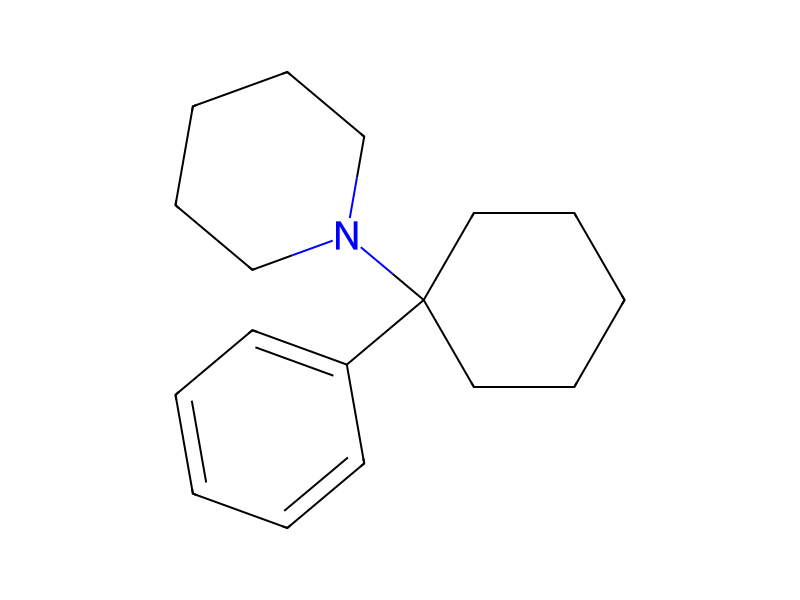
基本情報
- 標準SMILES
c1ccc(C2(N3CCCCC3)CCCCC2)cc1- InChIKey
JTJMJGYZQZDUJJ-UHFFFAOYSA-N- 分子式
- C17H25N
- 平均分子量
- 243.4 g/mol
- 単同位体質量
- 243.1986998
概要
Phencyclidine is a member of the class of piperidines that is piperidine in which the nitrogen is substituted with a 1-phenylcyclohexyl group. Formerly used as an anaesthetic agent, it exhibits both hallucinogenic and neurotoxic effects. It has a role as a psychotropic drug, an anaesthetic, a neurotoxin and a NMDA receptor antagonist. It is a member of benzenes and a member of piperidines. It derives from a hydride of a piperidine.
名称と識別子
- 優先名称
- Phencyclidine
- IUPAC
- 1-(1-phenylcyclohexyl)piperidine
- 現地名
- 1-(ピペリジン-1-イル)-1-(フェニル)シクロヘキサン
- 英語名
- PHENCYCLIDINE
- 分子式
- C17H25N
- 分子量
- 243.39
名称と別名
PHENCYCLIDINE1-(1-Phenylcyclohexyl)piperidineAngel dustFenciclidina77-10-1Piperidine, 1-(1-phenylcyclohexyl)-PhencyclidinumPhencyclineCl-395PhenylcyclidineJ1DOI7UV76J4.441E
名称をさらに表示
フェンシクリジンエンゼルダストPCP【麻酔薬】フェンシクリン1-(1-フェニルシクロヘキシル)ピペリジン1-フェニル-1-ピペリジノシクロヘキサンフェンサイクリジン1-(ピペリジン-1-イル)-1-(フェニル)シクロヘキサンPCPC07575HUMPCPPhencylidinePhencyclidine (pcp)Pcp (phencyclidine)prolylcarboxypeptidasePhencyclidine solutionPentachlorophenol in methanol
CHEBI:8058CL 395GP 121DTXSID6023446Dust, AngelRefChem:6117DTXCID703446CL395
データベース識別子
- CAS
77-10-1- PubChem CID
- 6468
- DTXSID
DTXSID6023446- ChEMBL
CHEMBL275528- ChEBI
CHEBI:8058- UNII
- J1DOI7UV76
- EC Number
- 621-588-0
- Nikkaji
- J4.441E
物性
構造計算による物性
- XLogP
- 3.6
- 極性表面積
- 3.2 Ų
- 水素結合供与体数
- 0
- 水素結合受容体数
- 1
- 回転可能結合数
- 2
- 重原子数
- 18
- 形式電荷
- 0
- 複雑度
- 242
実験および物理化学的性質
Drugs
DEA NFLIS-Drug Category -> Depressants and Tranquilizers
DEA Schedule II Controlled Substance -> Depressants
Pharmaceuticals -> Synthetic Cannabinoids or Psychoactive Compounds
Pharmaceuticals -> Listed in ZINC15
LogP
log Kow = 4.69 (ion-corrected average)
5.74
OdorOily, slightly ammoniac
Color/Form
White, crystalline powder
On the street may contain a number of contaminants causing the color to range from tan to brown with a consistency ranging from powder to a gummy mass
Colorless crystals
White crystalline powder
SolubilitySoluble in ethanol
Human Drugs
Breast Feeding; Lactation; Milk, Human; Excitatory Amino Acid Antagonists; Hallucinogens; Street Drugs
Pharmaceuticals
Boiling PointBP: 136 °C at 1.0 mm Hg
DecompositionWhen heated to decomposition it emits toxic fumes of /nitrogen oxides/.
Melting Point46.5 °C
Stability/Shelf LifeStable under recommended storage conditions. /Phencyclidine hydrochloride/
Dissociation Constants
8.29
pKa = 8.29
Other Experimental Properties
Phencyclidine belongs to a unique family of chemicals called cyclohexylamines.
Crystals, mp 243-244 °C /Phencyclidine hydrochloride/
The majority of illicitly synthesized compounds are nitrogen-substituted. Small chain alkyl groups (eg, ethyl, propyl) have been the most common substitution ... /PCP analogs/
Crystals, mp 214-218 °C /Phencyclidine hydrobromide/
物理化学的性質
- 融点
- 46.5 ℃ · 46.5℃
- 沸点
- 1 · bp1.0 135-137°
- 比重(密度)
- 0.9762 · 0.9762 (rough estimate)
- 屈折率
- 1.5 · 1.5000 (estimate)
- 闪点
- 11 °C · 11 °C
- 貯蔵温度
- 20 °C · −20°C
- 外見
- liquid
- 酸解離定数(Pka)
- 8.5 · pKa 8.5 (Uncertain)
- 色
- 無色の結晶
- 由来生物
- human
- Henry's Law Constant
- 1.8 · 1.8×100 mol/(m3Pa) at 25℃, HSDB (2015)
- 主な用途
- 法医学と毒物学
- InChI
- 1S/C17H25N/c1-4-10-16(11-5-1)17(12-6-2-7-13-17)18-14-8-3-9-15-18/h1,4-5,10-11H,2-3,6-9,12-15H2
- InChIKey
- JTJMJGYZQZDUJJ-UHFFFAOYSA-N
- SMILES
- N3(CCCCC3)C2(CCCCC2)c1ccccc1
- EPAの化学物質情報
- 1 · Piperidine, 1-(1-phenylcyclohexyl)- (77-10-1)
安全と法規制
GHS分類
GHS Classification
Danger
H301 (100%): Toxic if swallowed [Danger Acute toxicity, oral]
P261, P262, P264, P270, P271, P280, P301+P316, P302+P352, P304+P340, P316, P321, P330, P361+P364, P403+P233, P405, and P501 (click each P-code to see the statement)
Aggregated GHS information provided per 39 reports by companies from 2 notifications to the ECHA C&L Inventory. Each notification may be associated with multiple companies.
Danger
H301: Toxic if swallowed [Danger Acute toxicity, oral]
危険有害性情報
Regulatory Information
DEA schedule II controlled substance
Piperidine, 1-(1-phenylcyclohexyl)-: Does not have an individual approval but may be used under an appropriate group standard
FDA Requirements
Schedule II shall consist of the drugs and other substances, by whatever official name, common or usual name, chemical name, or brand name designated, listed in this section. Each drug or substance has been assigned the DEA Controlled Substances Code Number set forth opposite it. ... Unless specifically excepted or unless listed in another schedule, any material, compound, mixture, or preparation which contains any quantity of the following substances having a depressant effect on the central nervous system, including its salts, isomers, and salts of isomers whenever the existence of such salts, isomers, and salts of isomers is possible within the specific chemical designation. Phencyclidine (DEA Code Number: 7471) is included on this list.
Schedule I shall consist of the drugs and other substances, by whatever official name, common or usual name, chemical name, or brand name designated, listed in this section. Each drug or substance has been assigned the DEA Controlled Substances Code Number set forth opposite it. ... Unless specifically excepted or unless listed in another schedule, any material, compound, mixture, or preparation, which contains any quantity of the following hallucinogenic substances, or which contains any of its salts, isomers, and salts of isomers whenever the existence of such salts, isomers, and salts of isomers is possible within the specific chemical designation (for purposes of this paragraph only, the term "isomer" includes the optical, position and geometric isomers). Ethylamine analog of phencyclidine (DEA Code Number: 7455) is included on this list. /Ethylamine analog of phencyclidine/
Schedule I shall consist of the drugs and other substances, by whatever official name, common or usual name, chemical name, or brand name designated, listed in this section. Each drug or substance has been assigned the DEA Controlled Substances Code Number set forth opposite it. ... Unless specifically excepted or unless listed in another schedule, any material, compound, mixture, or preparation, which contains any quantity of the following hallucinogenic substances, or which contains any of its salts, isomers, and salts of isomers whenever the existence of such salts, isomers, and salts of isomers is possible within the specific chemical designation (for purposes of this paragraph only, the term "isomer" includes the optical, position and geometric isomers). Pyrrolidine analog of phencyclidine (DEA Code Number: 7458) is included on this list. /Pyrrolidine analog of phencyclidine/
Schedule I shall consist of the drugs and other substances, by whatever official name, common or usual name, chemical name, or brand name designated, listed in this section. Each drug or substance has been assigned the DEA Controlled Substances Code Number set forth opposite it. ... Unless specifically excepted or unless listed in another schedule, any material, compound, mixture, or preparation, which contains any quantity of the following hallucinogenic substances, or which contains any of its salts, isomers, and salts of isomers whenever the existence of such salts, isomers, and salts of isomers is possible within the specific chemical designation (for purposes of this paragraph only, the term "isomer" includes the optical, position and geometric isomers). Thiophene analog of phencyclidine (DEA Code Number: 7470) is included on this list. /Thiophene analog of phencyclidine/
Special Reports
PCP is predominantly abused by young adults and high school students. In 2010, there was an estimated 53,542 emergency department visits associated with PCP use, according to Drug Abuse Warning Network (New DAWN ED). This is a significant increase from an estimated 37,266 PCP-associated visits in 2008. The American Association of Poison Control Centers (AAPCC) National Poison Data System reports 747 PCP exposure case mentions and 350 single exposures in 2010. According to the 2011 National Survey on Drug Use and Health (NSDUH), 6.1 million (2.4%) individuals in the U.S., aged 12 and older, reported using PCP in their lifetime. The Monitoring the Future (MTF) survey indicates that PCP use among 12th graders in the past year increased from 1.0% in 2010 to 1.3% in 2011 and then decreased to 0.9% in 2012.[US DEA; Drugs and Chemicals of Concern. Phencyclidine. Washington, DC: US Dept Just., Drug Enforc Admin, Off Diversion Control. Available from, as of Sept 14, 2017: https://www.deadiversion.usdoj.gov/index.html]
Toxic Combustion ProductsSpecial hazards arising from the substance or mixture: Carbon oxides, nitrogen oxides (NOx), hydrogen chloride gas. /Phencyclidine hydrochloride/
Hazard Classes and CategoriesAcute Tox. 3 (100%)
Hazardous Reactivities and IncompatibilitiesIncompatible materials: Strong oxidizing agents. /Phencyclidine hydrochloride/
安全と保護具
Fire Fighting Procedures
Suitable extinguishing media: Use water spray, alcohol-resistant foam, dry chemical or carbon dioxide. /Phencyclidine hydrochloride/
Advice for firefighters: Wear self contained breathing apparatus for fire fighting if necessary. /Phencyclidine hydrochloride/
Storage ConditionsKeep container tightly closed in a dry and well-ventilated place. /Phencyclidine hydrochloride/
Cleanup Methods
ACCIDENTAL RELEASE MEASURES: Personal precautions, protective equipment and emergency procedures: Wear respiratory protection. Avoid dust formation. Avoid breathing vapors, mist or gas. Ensure adequate ventilation. Evacuate personnel to safe areas. Avoid breathing dust. Environmental precautions: Prevent further leakage or spillage if safe to do so. Do not let product enter drains. Methods and materials for containment and cleaning up: Pick up and arrange disposal without creating dust. Sweep up and shovel. Keep in suitable, closed containers for disposal. /Phencyclidine hydrochloride/
Disposal Methods
SRP: Expired or waste pharmaceuticals shall carefully take into consideration applicable DEA, EPA, and FDA regulations. It is not appropriate to dispose by flushing the pharmaceutical down the toilet or discarding to trash. If possible return the pharmaceutical to the manufacturer for proper disposal being careful to properly label and securely package the material. Alternatively, the waste pharmaceutical shall be labeled, securely packaged and transported by a state licensed medical waste contractor to dispose by burial in a licensed hazardous or toxic waste landfill or incinerator.
Product: Offer surplus and non-recyclable solutions to a licensed disposal company. Contact a licensed professional waste disposal service to dispose of this material. Dissolve or mix the material with a combustible solvent and burn in a chemical incinerator equipped with an afterburner and scrubber; Contaminated packaging: Dispose of as unused product. /Phencyclidine hydrochloride/
Preventive Measures
ACCIDENTAL RELEASE MEASURES: Personal precautions, protective equipment and emergency procedures: Wear respiratory protection. Avoid dust formation. Avoid breathing vapors, mist or gas. Ensure adequate ventilation. Evacuate personnel to safe areas. Avoid breathing dust. Environmental precautions: Prevent further leakage or spillage if safe to do so. Do not let product enter drains. /Phencyclidine hydrochloride/
Precautions for safe handling: Avoid contact with skin and eyes. Avoid formation of dust and aerosols. Provide appropriate exhaust ventilation at places where dust is formed. Normal measures for preventive fire protection. /Phencyclidine hydrochloride/
Appropriate engineering controls: Avoid contact with skin, eyes and clothing. Wash hands before breaks and immediately after handling the product. /Phencyclidine hydrochloride/
Gloves must be inspected prior to use. Use proper glove removal technique (without touching glove's outer surface) to avoid skin contact with this product. Dispose of contaminated gloves after use in accordance with applicable laws and good laboratory practices. Wash and dry hands. /Phencyclidine hydrochloride/
SRP: Local exhaust ventilation should be applied wherever there is an incidence of point source emissions or dispersion of regulated contaminants in the work area. Ventilation control of the contaminant as close to its point of generation is both the most economical and safest method to minimize personnel exposure to airborne contaminants. Ensure that the local ventilation moves the contaminant away from the worker.
Personal Protective Equipment (PPE)
Eye/face protection: Face shield and safety glasses. Use equipment for eye protection tested and approved under appropriate government standards such as NIOSH (US) or EN 166(EU). /Phencyclidine hydrochloride/
Skin protection: Handle with gloves. /Phencyclidine hydrochloride/
Body Protection: Complete suit protecting against chemicals. The type of protective equipment must be selected according to the concentration and amount of the dangerous substance at the specific workplace. /Phencyclidine hydrochloride/
Respiratory protection: Where risk assessment shows air-purifying respirators are appropriate use a full-face particle respirator type N99 (US) or type P2 (EN 143) respirator cartridges as a backup to engineering controls. If the respirator is the sole means of protection, use a full-face supplied air respirator. Use respirators and components tested and approved under appropriate government standards such as NIOSH (US) or CEN (EU). /Phencyclidine hydrochloride/
Acute Exposure Guideline Levels (AEGLs)The compound is currently at the Holding Status AEGLs which have been reviewed by the NAC/AEGL Committee and are on hold due to insufficient data to develop AEGL values.
AEGLs NotesAEGLs Status: Holding
毒性情報
Body Burden
Phencyclidine was detected in 12% of cord blood samples /of chronic phencyclidine users/ in a large urban teaching hospital, with levels ranging from 0.1 to 5.8 ng/mL.
Phencyclidine is concentrated in milk and remains detectable for weeks after heavy use.
Toxic phencyclidine blood concentration: 0.7-24 ug/dL /From table/
Interactions
Nicotine is a widely-abused drug, yet its primary reinforcing effect does not seem potent as other stimulants such as cocaine. Recent research on the contributing factors toward chronic use of nicotine-containing products has implicated the role of reinforcement-enhancing effects of nicotine. The present study investigates whether phencyclidine (PCP) may also possess a reinforcement-enhancement effect and how this may interact with the reinforcement-enhancement effect of nicotine. PCP was tested for two reasons: (1) it produces discrepant results on overall reward, similar to that seen with nicotine and (2) it may elucidate how other compounds may interact with the reinforcement-enhancement of nicotine. Adult male Sprague-Dawley rats were trained to lever press for brief visual stimulus presentations under fixed-ratio (FR) schedules of reinforcement and then were tested with nicotine (0.2 or 0.4 mg/kg) and/or PCP (2.0 mg/kg) over six increasing FR values. A selective increase in active lever-pressing for the visual stimulus with drug treatment was considered evidence of a reinforcement-enhancement effect. PCP and nicotine separately increased active lever pressing for a visual stimulus in a dose-dependent manner and across the different FR schedules. The addition of PCP to nicotine did not increase lever-pressing for the visual stimulus, possibly due to a ceiling effect. The effect of PCP may be driven largely by its locomotor stimulant effects, whereas the effect of nicotine was independent of locomotor stimulation. This dissociation emphasizes that distinct pharmacological properties contribute to the reinforcement-enhancement effects of substances.
The aim of the study was to determine the effects of early postnatal PCP treatment on the sensitivity of pubertal and adult rats to lindane proepileptogenic effects. Rat pups were treated with NaCl (0.9%) or PCP (10 mg/kg) at postnatal days 2, 6, 9 and 12. One control (NaCl-35) and one experimental (PCP-35) group have received lindane (4 mg/kg) at postnatal day 35, while others received lindane at postnatal day 65 (NaCl-65 and PCP-65). One week prior to lindane treatment three gold-plated EEG electrodes were implanted. Pubertal rats had significantly shorter latency time. After lindane, a prompt increase in power spectral density seen in PCP-treated groups vs. control was evident earlier in PCP-65 rats. The theta waves were significantly increased in PCP-35 and alpha rhythm in PCP-65 rats, when compared with corresponding controls. Postnatal PCP treatment increases the synchronization of brain electrical activity, thus contributing to the increased susceptibility to lindane.
... The combined effects of chronic phencyclidine (PCP) and delta-9-tetrahydrocannabinol on spermatogenesis in mice were examined. Mice were treated with delta-9-tetrahydrocannabinol (50 mg/kg, po) and PCP (15 mg/kg, ip) alone or in combination for 16 days and with PCP alone for 35 days. delta-9-Tetrahydrocannabinol had a significant effect on spermatogenesis and decreased the number of all germinal cells except spermatids after 35 days of treatment. Combination of delta-9-tetrahydrocannabinol and PCP treatment caused a significant decrease in resting and pachytene spermatocytes. Similarly, combination of these two drugs caused a significant increase in cauda epididymal abnormal sperms. These results suggest that delta-9-tetrahydrocannabinol and PCP may cause greater disruption in spermatogenesis when they are abused together.
Three non-competitive antagonists (MK-801, TCP, PCP) and one competitive antagonist (CPP) of N-methyl-D-aspartate (NMDA) receptors, were compared for their ability to antagonize neurotoxic actions of NMDA injected into the brains of 7-day-old rats. Unilateral intracerebral injection of NMDA (25 nmol/0.5 microliters) into the corpus striatum of pups consistently produced severe confluent neuronal necrosis in the striatum extending into the dorsal hippocampus and overlying neocortex. The distribution of damage corresponded to the topography of NMDA type glutamate receptors in the vulnerable regions. With this lesion in developing brain, the weight of the injected hemisphere 5 days later can be used as a quantitative measure of brain injury. Intraperitoneal administration of MK-801 (0.02-42.0 umol/kg), TCP (3.5-54.0 umol/kg), PCP (1.0-41.0 umol/kg), and CPP (1.0-60.0 umol/kg) 15 min after NMDA injection had prominent dose-dependent neuroprotective effects. MK-801 was 14 times more potent than other compounds tested and the 50% protective dose (PD50, that dose which reduced damage by 50% relative to untreated NMDA-injected controls) was 0.63 umol/kg. Corresponding values for CPP, PCP, and TCP were 8.84, 10.85, and 24.05 umol/kg respectively. The lowest dose of MK-801 that provided significant protection was 0.2 umol/kg (0.04 mg/kg, 37.9 + or - 4.6% protection). Four umol/kg (0.8 mg/kg) of MK-801 completely protected against NMDA-mediated damage. The study provides the first direct in vivo comparison of the neuroprotective abilities of these compounds. Systemic administrations of MK-801, TCP, PCP, and CPP all limit NMDA-induced neuronal injury in this model. The susceptibility of the immature brain to the neurotoxicity of NMDA provides a sensitive, reproducible, and quantitative in vivo system for comparing the effectiveness of drugs with protective actions against excitotoxic neuronal injury.
For more Interactions (Complete) data for Phencyclidine (7 total), please visit the HSDB record page.
Hepatotoxicity
Phencyclidine is no longer used medically and its production is outlawed. Nevertheless, phencyclidine remains an agent of abuse, used for its hallucinogenic effects. At low doses, phencyclidine appears to have little effect on the liver. However, high doses of phencyclidine have been associated with malignant hyperthermia which can trigger acute hepatitis necrosis and liver failure. Patients generally present with seizures and coma followed by severe hyperthermia, rhabdomyolysis and renal failure. The liver injury arises 1 to 2 days after the overdose with marked, rapid elevations in serum ALT, AST and LDH, with minimal increases in alkaline phosphatase and delayed rises in bilirubin (Case 1). Coma arises early along with prolongation of the prothrombin time, hyperammonemia and metabolic acidosis. The abnormalities resolve almost as rapidly as they develop and with suitable life support, survival is not uncommon (Case 1). The clinical syndrome is that of acute hepatic necrosis and resembles the acute liver injury that occurs with heat shock, severe hypoxia and hepatic ischemia. Liver biopsy shows severe centrilobular necrosis with mild inflammation.
Environmental Fate
TERRESTRIAL FATE: Based on a classification scheme(1), an estimated Koc value of 1300(SRC), determined from a log Kow of 4.69(2) and a regression-derived equation(3), indicates that phencyclidine is expected to have low mobility in soil(SRC). The pKa of phencyclidine is 8.29(2), indicating that this compound will exist almost entirely in cation form in the environment and cations generally adsorb more strongly to soils containing organic carbon and clay than their neutral counterparts(4). Volatilization from moist soil surfaces is not expected to be an important fate process because this substance exists as a cation and cations do not volatilize(SRC). Phencyclidine is not expected to volatilize from dry soil surfaces(SRC) based upon an estimated vapor pressure of 1.9X10⁻⁴ mm Hg at 25 °C(SRC), determined from a fragment constant method(3). Biodegradation data in soil were not available(SRC, 2017).
AQUATIC FATE: Based on a classification scheme(1), an estimated Koc value of 1300(SRC), determined from a log Kow of 4.69(2) and a regression-derived equation(3), indicates that phencyclidine is expected to adsorb to suspended solids and sediment(SRC). A pKa of 8.29(2) indicates phencyclidine will exist almost entirely in the cation form at pH values of 5 to 9 and, therefore, volatilization from water surfaces is not expected to be an important fate process(SRC). According to a classification scheme(4), an estimated BCF of 580(SRC), from its log Kow(2) and a regression-derived equation(3), suggests the potential for bioconcentration in aquatic organisms is high(SRC). Biodegradation data in water were not available(SRC, 2017).
ATMOSPHERIC FATE: According to a model of gas/particle partitioning of semivolatile organic compounds in the atmosphere(1), phencyclidine, which has an estimated vapor pressure of 1.9X10⁻⁴ mm Hg at 25 °C(SRC), determined from a fragment constant method(2), is expected to exist solely as a vapor in the ambient atmosphere. Vapor-phase phencyclidine is degraded in the atmosphere by reaction with photochemically-produced hydroxyl radicals(SRC); the half-life for this reaction in air is estimated to be 3.7 hours(SRC), calculated from its rate constant of 1.0X10⁻¹⁰ cu cm/molecule-sec at 25 °C(SRC) that was derived using a structure estimation method(3). Phencyclidine contains chromophores that absorb light at wavelengths up to 269 nm(4) and, therefore, is not expected to be susceptible to direct photolysis by sunlight since sunlight consists of wavelengths above 290 nm(SRC).
Milk ConcentrationsPhencyclidine is concentrated in milk and remains detectable for weeks after heavy use. Breast feeding should be avoided after phencyclidine use, but a sufficient duration of abstinence is undefined.
Toxicity Summary
IDENTIFICATION AND USE: Phencyclidine (PCP) is a white, crystalline powder. It is a Schedule II Controlled Substance. PCP was formerly used as a preinduction anesthetic and as an animal tranquilizer. It has no current medical indications, although it is still used illegally as a hallucinogen. HUMAN STUDIES: PCP causes distortion of perception and produces a feeling of detachment of dissociation from the user's surroundings and self. It is not a classic hallucinogen but better described as a dissociative agent or anesthetic. The hallmark of PCP toxicity is the recurring delusion of superhuman strength and invulnerability resulting from both its anesthetic and dissociative properties. There are case reports of patients presenting with trauma either from jumping from high altitudes, fighting large crowds or the police, or self-mutilation. Children have become intoxicated by ingesting the butts of used PCP-impregnated cigarettes or from passive inhalation of sidestream smoke. Children aged 5 years and younger often present with lethargy, severe depression of consciousness, ataxia, nystagmus, and staring episodes. Presenting signs may also include apnea, seizures, opisthotonos, and choreoathetosis. Miosis may be present. In children, unexplained stupor or coma, seizures, ataxia, nystagmus, strange behavior, staring spells, or unusual posturing can indicate possible PCP intoxication. Patients may present with various combinations of CNS stimulation and depression, cholinergic and anticholinergic effects, and adrenergic effects. The most common physical findings are nystagmus (horizontal, vertical, or rotatory) and hypertension. Respiratory depression and aspiration may also occur. Some patients display evidence of nystagmus, ataxia, loss of muscle coordination, and vital sign abnormalities without obvious signs of behavioral toxicity. Irritability, hypertonicity, poor feeding, and abnormal neurobehavior have been reported in newborns of phencyclidine abusing mothers. ANIMAL STUDIES: Subchronic PCP treatment induces schizophrenic-like behavior in rodents, including cognitive deficits and increased locomotor sensitivity towards acute administration of PCP. Perinatal PCP administration in rat blocks the N-methyl D-aspartate receptor and causes symptoms reminiscent of schizophrenia in human. Animals exposed to PCP during the neonatal period have fewer GABAergic interneurons in the corticolimbic area, including the hippocampus, and exhibit abnormal behaviors after attaining maturation. In developmental studies 25 to 30 mg/kg of PCP was injected into rats on gestational days 6 through 15 and produced skeletal dysplasias and cleft palates in the offspring. Growth retardation and delay in reflexes was found in the offspring of mice exposed to 5 to 20 mg/kg of PCP.
Effluent ConcentrationsPhencyclidine was not detected in waste-water samples collected in October and November 2011 from three major WWTPs in UK serving populations in excess of 100,000 (specific locations not reported)(1).
Soil Adsorption/Mobility
The Koc of phencyclidine is estimated as 1300(SRC), using a log Kow of 4.69(1) and a regression-derived equation(2). According to a classification scheme(3), this estimated Koc value suggests that phencyclidine is expected to have low mobility in soil. The pKa of phencyclidine is 8.29, indicating that this compound will exist almost entirely in cation form in the environment and cations generally adsorb more strongly to soils containing organic carbon and clay than their neutral counterparts(4).
Human Toxicity Excerpts
/HUMAN EXPOSURE STUDIES/ After swallowing a 7.5 mg tablet, /normal volunteers were given a/ battery of /seven/ tests /that were/ repeated every 15 minutes for 2 hr. Phencyclidine produced a general impairment in sensory function as evidenced by the elevated thresholds on all seven tests. Two-point discrimination, aesthesiometry, and perimetry thresholds showed the greatest increase, while taste was the least affected. In addition, the PCP-induced sensory disturbances always occurred before any verbal reports of subjective changes in feelings or mood.
/SIGNS AND SYMPTOMS/ Nervous system effects include seizures, stupor, coma, cerebral ischemia, subarachnoid hemorrhage, amaurosis fugax, and muscle rigidity. The muscle rigidity, along with agitation, can result in acute rhabdomyolysis and myoglobin-induced renal failure. Myoclonic, choreoathetoid, and dystonic movements, including opisthotonus and torticollis, may be seen.
/SIGNS AND SYMPTOMS/ PCP causes distortion of perception and produces a feeling of detachment of dissociation from the user's surroundings and self. It is not a classic hallucinogen but better described as a dissociative agent or anesthetic. The most common physical findings are nystagmus and hypertension.
/SIGNS AND SYMPTOMS/ Most deaths in PCP-intoxicated patients occur because of its behavioral toxicity. The bizarre and violent behavior induced by PCP, along with analgesic effects and lack of muscular coordination, may cause drowning or significant trauma. Nontraumatic causes of death include cardiopulmonary arrest after status epilepticus, primary respiratory arrest, and intracranial hemorrhage.
For more Human Toxicity Excerpts (Complete) data for Phencyclidine (25 total), please visit the HSDB record page.
Artificial Pollution SourcesPhencyclidine's production and illicit use as a hallucinogen(1,2) may result in its release to the environment through various waste streams(SRC). This substance is no longer produced or used for medical purposes in the US(1).
Environmental Bioconcentration
An estimated BCF of 580 was calculated in fish for phencyclidine(SRC), using a log Kow of 4.69(1) and a regression-derived equation(2). According to a classification scheme(3), this BCF suggests the potential for bioconcentration in aquatic organisms is high(SRC).
Volatilization from Water/Soil
A pKa of 8.29(1) indicates phencyclidine will exist almost entirely in the cation form at pH values of 5 to 9 and, therefore, volatilization from water surfaces is not expected to be an important fate process(SRC). Phencyclidine is not expected to volatilize from dry soil surfaces(SRC) based upon an estimated vapor pressure of 1.9X10⁻⁴ mm Hg(SRC), determined from a fragment constant method(2).
法規制情報
FDA Requirements
Schedule II shall consist of the drugs and other substances, by whatever official name, common or usual name, chemical name, or brand name designated, listed in this section. Each drug or substance has been assigned the DEA Controlled Substances Code Number set forth opposite it. ... Unless specifically excepted or unless listed in another schedule, any material, compound, mixture, or preparation which contains any quantity of the following substances having a depressant effect on the central nervous system, including its salts, isomers, and salts of isomers whenever the existence of such salts, isomers, and salts of isomers is possible within the specific chemical designation. Phencyclidine (DEA Code Number: 7471) is included on this list.
Schedule I shall consist of the drugs and other substances, by whatever official name, common or usual name, chemical name, or brand name designated, listed in this section. Each drug or substance has been assigned the DEA Controlled Substances Code Number set forth opposite it. ... Unless specifically excepted or unless listed in another schedule, any material, compound, mixture, or preparation, which contains any quantity of the following hallucinogenic substances, or which contains any of its salts, isomers, and salts of isomers whenever the existence of such salts, isomers, and salts of isomers is possible within the specific chemical designation (for purposes of this paragraph only, the term "isomer" includes the optical, position and geometric isomers). Ethylamine analog of phencyclidine (DEA Code Number: 7455) is included on this list. /Ethylamine analog of phencyclidine/
Schedule I shall consist of the drugs and other substances, by whatever official name, common or usual name, chemical name, or brand name designated, listed in this section. Each drug or substance has been assigned the DEA Controlled Substances Code Number set forth opposite it. ... Unless specifically excepted or unless listed in another schedule, any material, compound, mixture, or preparation, which contains any quantity of the following hallucinogenic substances, or which contains any of its salts, isomers, and salts of isomers whenever the existence of such salts, isomers, and salts of isomers is possible within the specific chemical designation (for purposes of this paragraph only, the term "isomer" includes the optical, position and geometric isomers). Pyrrolidine analog of phencyclidine (DEA Code Number: 7458) is included on this list. /Pyrrolidine analog of phencyclidine/
Schedule I shall consist of the drugs and other substances, by whatever official name, common or usual name, chemical name, or brand name designated, listed in this section. Each drug or substance has been assigned the DEA Controlled Substances Code Number set forth opposite it. ... Unless specifically excepted or unless listed in another schedule, any material, compound, mixture, or preparation, which contains any quantity of the following hallucinogenic substances, or which contains any of its salts, isomers, and salts of isomers whenever the existence of such salts, isomers, and salts of isomers is possible within the specific chemical designation (for purposes of this paragraph only, the term "isomer" includes the optical, position and geometric isomers). Thiophene analog of phencyclidine (DEA Code Number: 7470) is included on this list. /Thiophene analog of phencyclidine/
安全データ
- wgk
- 1
- ridadr
- 2811
- 毒性
- LD50 oral in mouse: 75mg/kg
- risk_code
- 23/24/25-39/23/24/25-11-61
- hazard_code
- F,T
- safety_code
- 36/37-45-16-53
- hazard_class
- 6.1(a)
- packing_group
- I
- Hazard Classifications
- Acute Tox. 3 DermalAcute Tox. 3 InhalationAcute Tox. 3 OralFlam. Liq. 2STOT SE 1
- ストレージクラス
- 3 - Flammable liquids
- 有毒物質データの
- 77-10-1(Hazardous Substances Data)
化学と産業
薬理情報
PharmacodynamicsPhencyclidine works primarily as an NMDA receptor antagonist, which blocks the activity of the NMDA Receptor.
Mechanism of Action
The N-methyl-D-Aspartate (NMDA) receptor, a type of ionotropic receptor, is found on the dendrites of neurons and receives signals in the form of neurotransmitters. It is a major excitatory receptor in the brain. Normal physiological function requires that the activated receptor fluxes positive ions through the channel part of the receptor. PCP enters the ion channel from the outside of the neuron and binds, reversibly, to a site in the channel pore, blocking the flux of positive ions into the cell. PCP therefore inhibits depolarization of neurons and interferes with cognitive and other functions of the nervous system.
Noncompetitive N-methyl-d-aspartate (NMDA) receptor antagonists evoke a behavioral and neurobiological syndrome in experimental animals. We previously reported that phencyclidine (PCP), an NMDA receptor antagonist, increased locomotor activity in wildtype (WT) mice but not GluN2D subunit knockout mice. Thus, the aim of the present study was to determine whether the GluN2D subunit is involved in PCP-induced motor impairment. PCP or UBP141 (a GluN2D antagonist) induced potent motor impairment in WT mice but not GluN2D KO mice. By contrast, CIQ, a GluN2C/2D potentiator, induced severe motor impairment in GluN2D KO mice but not WT mice, suggesting that the GluN2D subunit plays an essential role in the effects of PCP and UBP141, and an appropriate balance between GluN2C and GluN2D subunits might be needed for appropriate motor performance. The level of the GluN2D subunit in the mature mouse brain is very low and restricted. GluN2D subunits exist in brainstem structures, the globus pallidus, thalamus, and subthalamic nucleus. We found that the expression of the c-fos gene increased the most among PCP-dependent differentially expressed genes between WT and GluN2D KO mice, and the number of Fos-positive cells increased after PCP administration in the basal ganglia motor circuit in WT mice but not GluN2D KO mice. These results suggest that the GluN2D subunit within the motor circuitry is a key subunit for PCP-induced motor impairment, which requires an intricate balance between GluN2C- and GluN2D-mediated excitatory outputs.
Prepulse inhibition (PPI) is an example of sensorimotor gating and deficits in PPI have been demonstrated in schizophrenia patients. Phencyclidine (PCP) suppression of PPI in animals has been studied to elucidate the pathological elements of schizophrenia. However, the molecular mechanisms underlying PCP treatment or PPI in the brain are still poorly understood. In this study, quantitative phosphoproteomic analysis was performed on the prefrontal cortex from rats that were subjected to PPI after being systemically injected with PCP or saline. PCP downregulated phosphorylation events were significantly enriched in proteins associated with long-term potentiation (LTP). Importantly, this data set identifies functionally novel phosphorylation sites on known LTP-associated signaling molecules. In addition, mutagenesis of a significantly altered phosphorylation site on xCT (SLC7A11), the light chain of system xc-, the cystine/glutamate antiporter, suggests that PCP also regulates the activity of this protein. Finally, new insights were also derived on PPI signaling independent of PCP treatment. This is the first quantitative phosphorylation proteomic analysis providing new molecular insights into sensorimotor gating.
Phencyclidine (PCP), a noncompetitive N-methyl-D-aspartate receptor antagonist, induces psychotomimetic effects in humans and animals. Administration of PCP to rodents is used as a preclinical model for schizophrenia; however, the molecular mechanisms underlying the symptoms remain largely unknown. Acute PCP treatment rapidly induces behavioral and cognitive deficits; therefore, post-translational regulation of protein activity is expected to play a role at early time points. We performed mass-spectrometry-driven quantitative analysis of rat frontal cortex 15, 30, or 240 min after the administration of PCP (10 mg/kg). We identified and quantified 23,548 peptides, including 4749 phosphopeptides, corresponding to 2604 proteins. A total of 352 proteins exhibited altered phosphorylation levels, indicating that protein phosphorylation is involved in the acute response to PCP. Computational assessment of the regulated proteins biological function revealed that PCP perturbs key processes in the frontal cortex including calcium homeostasis, organization of cytoskeleton, endo/exocytosis, and energy metabolism. This study on acute PCP treatment provides the largest proteomics and phosphoproteomics data sets to date of a preclinical model of schizophrenia. Our findings contribute to the understanding of alterations in glutamatergic neurotransmission in schizophrenia and provide a foundation for discovery of novel targets for pharmacological intervention.
Phencyclidine (PCP) is a psychotomimetic drug that induces schizophrenia-like symptoms in healthy individuals and exacerbates pre-existing symptoms in patients with schizophrenia. PCP also induces behavioral and cognitive abnormalities in non-human animals, and PCP-treated animals are considered a reliable pharmacological model of schizophrenia. However, the exact neural mechanisms by which PCP modulates behavior are not known. During the last decade several studies have indicated that disturbed activity of the prefrontal cortex (PFC) may be closely related to PCP-induced psychosis. Systemic administration of PCP produces long-lasting activation of medial PFC (mPFC) neurons in rats, almost in parallel with augmentation of locomotor activity and behavioral stereotypies. Later studies have showed that such PCP-induced behavioral abnormalities are ameliorated by prior administration of drugs that normalize or inhibit excess excitability of PFC neurons. Similar activation of mPFC neurons is not induced by systemic injection of a typical psychostimulant such as methamphetamine, even though behavioral hyperactivity is induced to almost the same level. This suggests that the neural circuits mediating PCP-induced psychosis are different to those mediating methamphetamine-induced psychosis. Locally applied PCP does not induce excitation of mPFC neurons, indicating that PCP-induced tonic excitation of mPFC neurons is mediated by inputs from regions outside the mPFC. This hypothesis is strongly supported by experimental results showing that local perfusion of PCP in the ventral hippocampus, which has dense fiber projections to the mPFC, induces tonic activation of mPFC neurons with accompanying augmentation of behavioral abnormalities. In this review we summarize current knowledge on the neural mechanisms underlying PCP-induced psychosis and highlight a possible involvement of the PFC and the hippocampus in PCP-induced psychosis.
For more Mechanism of Action (Complete) data for Phencyclidine (11 total), please visit the HSDB record page.
Biological Half-Life
PCP elimination from plasma is consistent with first-order kinetics with a half life of 7 to 26 hours.
The terminal phase serum half-life of PCP is 21 to 24 hours.
/PCP/ has an apparent terminal half life of 21 + or - 3 hours under both control and overdose settings.
Harmonic mean elimination half-lives of 14 hr (iv administration), 24 hr (oral administration), and 17 hr (administration via smoking) have been reported ...
Metabolism/Metabolites
PCP is metabolized mainly in the liver. Oxidative hydroxylation to the inactive monohydroxypiperidine is followed by glucuronidation to a more water-soluble, conjugated derivative that is then excreted in the urine as the major form of metabolism. Significant first-pass liver metabolism also occurs when the drug is ingested orally, as opposed to being smoked or injected. Approximately 10% of drug is excreted unchanged un the urine.
Abuse Liability: A bioassay procedure ... demonstrated that eight structurally related analogs of PCP were self administered by the dog. The thienyl-substituted analog was the most potent, followed by PCP, N-substituted alkyl analogs, monohydroxylated metabolites, and ketamine.
Phencyclidine has known human metabolites that include PCHP and c-PPC/t-PPC.
MeSH Pharmacological Classification
Compounds or agents that combine with an enzyme in such a manner as to prevent the normal substrate-enzyme combination and the catalytic reaction.
Drugs capable of inducing illusions, hallucinations, delusions, paranoid ideations, and other alterations of mood and thinking. Despite the name, the feature that distinguishes these agents from other classes of drugs is their capacity to induce states of altered perception, thought, and feeling that are not experienced otherwise.
Drugs that bind to but do not activate excitatory amino acid receptors, thereby blocking the actions of agonists.
Absorption, Distribution and Excretion
/Monkeys/ maintained a state of continuous intoxication which was sustained when the dose /of PCP/ was increased to 0.5 mg/kg. Substitution of saline after 58 days of exposure resulted in the appearance of numerous abstinence signs and symptoms including increased vocalizations, bruxism, oculomotor hyperactivity, diarrhea, refusal of preferred food, piloerection, and tremors. Less common signs included ear and facial twitches, priapism, abdominal contractions, emesis, and convulsions. The time course of withdrawal was characterized by an initial recovery from the PCP-induced intoxication at about 4 hr after saline substitution. Onset of hyper-responsive behaviors became evident at 8-12 hr, with the maximum number of symptoms occurring 12-15 hr post-substitution. The syndrome dissipated over 24 hr, however, and all withdrawal signs were immediately reversed by PCP (0.25 g/kg, iv). This study also showed that PCP blood levels were in the 105-280 mg/mL range during self administration, and declined to 0-12 mg/mL with saline substitution.
/MILK/ Excreted in milk. /From table/
/Phencyclidine/ is rapidly absorbed from the respiratory and the gastrointestinal tracts; as such, it is typically self-administered by oral ingestion, nasal insufflation, smoking, or IV and subcutaneous injection.
Urine pH is an important determinant of renal elimination of PCP. In acidic urine, PCP becomes ionized and then cannot be reabsorbed. Acidification of the urine increased renal clearance of PCP from 1.98 + or- 0.48 L/hr to 2.4 + or - 0.78 L/hr. Additional studies have found a much higher renal clearance (8.04 + or- 1.56 L/hr) if the urine pH was decreased to less than 5.0. Although this may account for a 23% increase in the renal clearance, it only represents a 1.2% increase of the total clearance.
For more Absorption, Distribution and Excretion (Complete) data for Phencyclidine (8 total), please visit the HSDB record page.
用途と製造
Uses
Phencyclidine (DEA Code Number: 7471) is a Schedule II controlled substance.
Schedule II Controlled Substance: (A) The drug or other substance has a high potential for abuse; (B) The drug or other substance has a currently accepted medical use in treatment in the United States or a currently accepted medical use with severe restrictions; and (C) Abuse of the drug or other substances may lead to severe psychological or physical dependence.
Ethylamine analog of phencyclidine (DEA Code Number: 7455), pyrrolidine analog of phencyclidine (DEA Code Number: 7471)and the thiophene analog of phencyclidine (DEA Code Number: 7470) are Schedule 1 controlled substances. /Ethylamine analog of phencyclidine, pyrrolidine analog of phencyclidine, thiophene analog of phencyclidine/
Schedule I Controlled Substance: (A) The drug or other substance has a high potential for abuse; (B) The drug or other substance has no currently accepted medical use in treatment in the United States; and (C) There is a lack of accepted safety for use of the drug or other substance under medical supervision.
For more Uses (Complete) data for Phencyclidine (7 total), please visit the HSDB record page.
Impurities
Ether, cyclohexanol, isopropyl alcohol, ammonium chloride or hydroxide, and phenyllithium or phenylmagnesium halide may appear in the final product of phencyclidine synthesis ... 1-Piperidinocyclohexanecarbonitrile /PCC/ is a synthetic intermediate that has contaminated some batches of phencyclidine.
The purity of phencyclidine sold as "angel dust" is high (80%-100%) compared with the surreptitious presence of phencyclidine (range, 10% to 30%).
Methods of ManufacturingPreparation: United Kingdom patent 836083 and Godefroi et al., United States of America patent 3097136 (1960, 1963 to Parke, Davis).
Formulations/Preparations
Sernyl, Sernylan /Phencyclidine hydrochloride/
Street names include Angel Dust, Hog, Ozone, Rocket Fuel, Shermans, Wack, Crystal and Embalming Fluid, Tic Tac, Zoom, Boat, Supergrass, PCP.
Street names for PCP combined with marijuana include Killer Joints, Super Grass, Fry, Lovelies, Wets, and Waters.
PCP is available in powder, crystal, tablet, capsule, and liquid forms. It is most commonly sold in powder and liquid forms.
For more Formulations/Preparations (Complete) data for Phencyclidine (7 total), please visit the HSDB record page.
Use ClassificationPharmaceuticals
General Manufacturing Information
PCP was developed in the 1950s to be used as an intravenous anesthetic in the United States, but its use was discontinued due to the high incidence of patients experiencing postoperative delirium with hallucinations. PCP is no longer produced or used for medical purposes in the United States.
On January 25, 1978, PCP was transferred from Schedule III to Schedule II under the Controlled Substances Act.
PCP was originally marketed in the late 1950s by Parke Davis Pharmaceutical Company as a sedative and surgical anesthetic. Under the trade name Sernyl, PCP was touted as an anesthetic agent free of objectionable cardiorespiratory depression. However, after surgery many patients developed extreme agitation and dysphoric effects, and the drug was subsequently removed from the market. In 1967, PCP returned as Sernylan and was marketed as a veterinary tranquilizer, prompting the street names with allusions to animals.
Vet: The veterinary anesthetic, Sernylan ... was voluntarily withdrawn from the market /about 1978/. /Phencyclidine hydrochloride/
応用分野
使用Anesthetic.
一般的な説明Phencyclidine was introduced as a dissociative anestheticfor animals. Its close structural relative ketamine is still soused and may be used in humans. In humans,PCP produces a sense of intoxication, hallucinogenic experiencesnot unlike those produced by the anticholinergic hallucinogens,and often, amnesia.The drug affects many systems, including those of NE,DA, and 5-HT. It has been proposed that PCP (and certainother psychotomimetics) produces a unique pattern of activationof ventral tegumental area dopaminergic neurons.Itblocks glutaminergic N-methyl-D-aspartate receptors.Thisaction is the basis for many of its CNS effects. PCP itself appearsto be the active agent. The psychotic state produced bythis drug is also cited as a better model than amphetaminepsychosis for the psychotic state of schizophrenia.
補足説明
定義ChEBI: A member of the class of piperidines that is piperidine in which the nitrogen is substituted with a 1-phenylcyclohexyl group. Formerly used as an anaesthetic agent, it exhibits both hallucinogenic and neurotoxic effects.
関連反応
6 件


関連ノート
読み込み中…