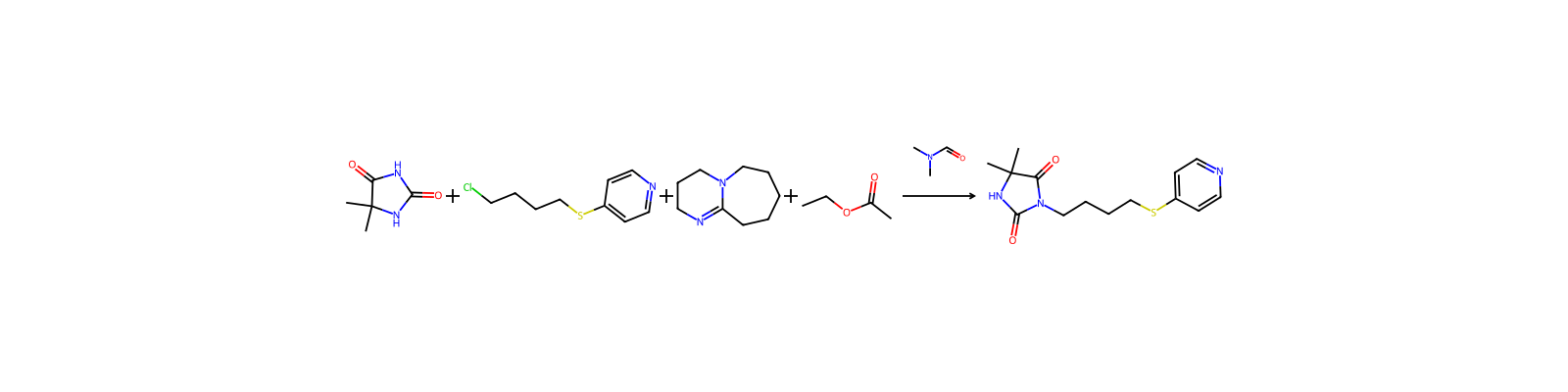

基本情報
- 標準SMILES
CC1(C)NC(=O)NC1=O- InChIKey
YIROYDNZEPTFOL-UHFFFAOYSA-N- 分子式
- C5H8N2O2
- 平均分子量
- 128.13 g/mol
- 単同位体質量
- 128.0585775
概要
5,5-Dimethylhydantoin is an imidazolidine-2,4-dione.
名称と識別子
- 優先名称
- Dimethylhydantoin
- IUPAC
- 5,5-dimethylimidazolidine-2,4-dione
- 現地名
- 5,5-ジメチルヒダントイン
- 英語名
- 5,5-Dimethylhydantoin
- 分子式
- C5H8N2O2
- 分子量
- 128.13
名称と別名
5,5-DIMETHYLHYDANTOIN77-71-4Dimethylhydantoin2,4-Imidazolidinedione, 5,5-dimethyl-Dantoin DMH5,5-Dimethyl-2,4-imidazolidinedioneDantoin 7365,5-Dimethyl hydantoinHydantoin, 5,5-dimethyl-DTXSID502175434032MQ9RONSC-8652
名称をさらに表示
5,5-ジメチルヒダントイン5,5-ジメチル-1H-イミダゾール-2,4(3H,5H)-ジオン2,4-ジオキソ-5,5-ジメチルイミダゾリジン5,5-ジメチルイミダゾリジン-2,4-ジオン5,5-ジメチル-イミダゾリジン-2,4-ジオン5,5-ジメチル-2,4-イミダゾリジンジオンアセトニル尿素5,5‐ジメチルヒダントインDMHT10dantoindmhADPRC1dmh[qr]nsc8652
DTXCID601754RefChem:527790201-051-35,5-dimethylimidazolidine-2,4-dioneDM HydantoinMFCD00005266NSC 8652EINECS 201-051-3
データベース識別子
- CAS
77-71-4- PubChem CID
- 6491
- DTXSID
DTXSID5021754- ChEMBL
CHEMBL3181806- ChEBI
CHEBI:183672- UNII
- 34032MQ9RO
- EC Number
- 201-051-3
- Nikkaji
- J25.257C
物性
構造計算による物性
- XLogP
- -0.3
- 極性表面積
- 58.2 Ų
- 水素結合供与体数
- 2
- 水素結合受容体数
- 2
- 回転可能結合数
- 0
- 重原子数
- 9
- 形式電荷
- 0
- 複雑度
- 174
実験および物理化学的性質
Chemical ClassesNitrogen Compounds -> Other Nitrogen Compounds
Cosmetics
Cosmetic ingredients (DM Hydantoin) -> CIR (Cosmetic Ingredient Review)
Hair conditioning; Viscosity controlling
LogPlog Kow = -0.48
Color/Form
White, crystalline solid
Prisms from dilute alcohol
SolubilityVery soluble in ethanol, ether, acetone, benzene, chloroform; soluble in DMSO
Boiling PointSublimes
Melting Point178 °C
Vapor Pressure0.0000028 [mmHg]
Food Contact Substances
FCS -> FDA Cumulative Estimated Daily Intake (CEDI)
FCS -> FDA Inventory of Effective Food Contact Substance (FCS) Notifications
FCS -> FDA Inventory of Effective Food Contact Substance (FCS) Notifications
FCS -> FDA Inventory of Effective Food Contact Substance (FCS) Notifications
Physical Description
Large Crystals; Liquid
White solid; [Hawley] White odorless crystalline powder; [Alfa Aesar MSDS]
Dissociation ConstantspKa = 9.19
物理化学的性質
- 融点
- 174 · 174-177 °C (lit.)
- 沸点
- 237.54 °C · 237.54°C (rough estimate)
- 比重(密度)
- 1.2864 · 1.2864 (rough estimate)
- 屈折率
- 1.473 · 1.4730 (estimate)
- 闪点
- 193 °C · 193°C
- 貯蔵温度
- Sealed in dry,Room Temperature
- 溶解性
- 2 O: · H2O: 0.1 g/mL ホット、クリア
- 酸解離定数(Pka)
- 8.1 · pKa 8.1 (Uncertain)
- 外見
- 結晶性粉末または結晶
- 色
- ホワイトからオフホワイト
- 水溶解度
- 溶ける
- BRN
- 2827 · 2827
- Henry's Law Constant
- 3.5 · 3.5×103 mol/(m3Pa) at 25℃, HSDB (2015)
- 化粧品成分の機能
- ヘアコンディショニング粘度制御
- InChI
- 1S/C5H8N2O2/c1-5(2)3(8)6-4(9)7-5/h1-2H3,(H2,6,7,8,9)
- InChIKey
- YIROYDNZEPTFOL-UHFFFAOYSA-N
- SMILES
- CC1(C)NC(=O)NC1=O
- LogP
- -0.48 · -0.480
- CAS データベース
- 77 · 77-71-4(CAS DataBase Reference)
- NISTの化学物質情報
- 2 · 2,4-Imidazolidinedione, 5,5-dimethyl-(77-71-4)
- EPAの化学物質情報
- 5 · 5,5-Dimethylhydantoin (77-71-4)
化学的性質
化学的特性white to off-white crystals or crystalline powder
安全と法規制
GHS分類
GHS Classification
This chemical does not meet GHS hazard criteria for 91% (252 of 277) of all reports.
Not Classified
Aggregated GHS information provided per 277 reports by companies from 4 notifications to the ECHA C&L Inventory.
危険有害性情報
Regulatory Information
Chemical: 2,4-Imidazolidinedione, 5,5-dimethyl-
2,4-Imidazolidinedione, 5,5-dimethyl- is listed on the EPA's Chemical Data Reporting (CDR) system. Manufacturers and importers of 2,4-Imidazolidinedione, 5,5-dimethyl- are required to report information about their production and use of this chemical to the EPA under the Toxic Substances Control Act (TSCA). (40 eCFR Part 711)
Status: Active Update: 08-08-2022 https://echa.europa.eu/registration-dossier/-/registered-dossier/13155
5,5-Dimethylhydantoin: Does not have an individual approval but may be used as a component in a product covered by a group standard. It is not approved for use as a chemical in its own right.
Other Safety InformationEvaluation - Chemicals that are unlikely to require further regulation to manage risks to environment
Hazards Summary
No compound related effects observed in 13-week dermal study of rats; Increased adrenal weight (with corresponding adrenal cortical hypertrophy) was observed in a one year feeding study of dogs, but no other significant adverse effects observed in long term studies of mice, rats, or dogs; No evidence of developmental toxicity; Two generation gavage study of rats produced decreased pup weights in both generations and decreased mean live litter sizes in the second generation; No evidence of mutagenicity; [HSDB] Decreased testicular and epididymides weights (without corresponding histopathology) observed in 4-week oral (capsule) study of dogs at highest tested dose (2,000 mg/kg/day); 90-day gavage studies of rats produced histopathological changes to kidneys (renal pelvic urolithiasis and chronic interstitial nephritis) and increased kidney weights in mid and high dose animals (5,000 and 10,000 mg/kg/day); No significant adverse effects observed in several other animal studies including a 90-day gavage study of rats (doses up to 2,000 mg/kg/day), 13-week dermal study of rats, 24-month feeding study of rats (doses up to 1,000 mg/kg/day), and 1-year feeding (capsules) study of dogs (up to 1,000 mg/kg/day); No evidence of carcinogenicity in rats or mice; No evidence of mutagenicity; No evidence of adverse effects on reproduction or reproductive tissue in two generational feeding study of rats (doses up to 20,000 ppm); Limited evidence or teratogenicity; [EPA HPVIS] May cause irritation; [Alfa Aesar MSDS] See DMDM hydantoin.
Hazard Classes and CategoriesNot Classified
安全と保護具
Disposal Methods
SRP: The most favorable course of action is to use an alternative chemical product with less inherent propensity for occupational exposure or environmental contamination. Recycle any unused portion of the material for its approved use or return it to the manufacturer or supplier. Ultimate disposal of the chemical must consider: the material's impact on air quality; potential migration in soil or water; effects on animal, aquatic, and plant life; and conformance with environmental and public health regulations.
毒性情報
Interactions
A case of allergic contact dermititis secondary to photographic print coating liquid is described ... . Patch test reactions to the mixture were positive, but negative to the individual components which included dimethylhydantoin formaldehyde resin, the logical allergen. ... In this patient, the combination of components was necessary to yield a sensitivity reaction. ... Dermatitis secondary to this product has not been previously reported.
Ecotoxicity Values
LC50 Saltwater mysid (Mysidopsis bahia) 921.7 mg/L/96 (nominal concentration); static, saltwater.
LC50 Grass shrimp (Palaemonetes pugio) 1300 mg/L/96 hr (nominal concentration); static, saltwater.
LC50 American oyster (Crassostrea virginica) 13300 mg/L/96 hr (nominal concentration); static, saltwater.
LC50 Water flea (Daphnia magna) 6200 mg/L/48 hr (nominal concentration); static, freshwater.
For more Ecotoxicity Values (Complete) data for 5,5-DIMETHYLHYDANTOIN (12 total), please visit the HSDB record page.
Environmental Fate
TERRESTRIAL FATE: Based on a classification scheme(1), an estimated Koc value of 13(SRC), determined from a log Kow of -0.48(2) and a regression-derived equation(3), indicates that 5,5-dimethylhydantoin is expected to have very high mobility in soil(SRC). Volatilization of 5,5-dimethylhydantoin from moist soil surfaces is not expected to be an important fate process(SRC) given an estimated Henry's Law constant of 2.8X10⁻⁹ atm-cu m/mole(SRC), using a fragment constant estimation method(4). 5,5-Dimethylhydantoin is not expected to volatilize from dry soil surfaces(SRC) based upon an estimated vapor pressure of 2.8X10⁻⁶ mm Hg(SRC), determined from a fragment constant method(5). Biodegradation half-lives range from 194 days using static tests and sewage inoculum to 5 days using a SCAS test and activated sludge(6); these diverse test conditions and results indicate that biodegradation may be a slow environmental fate process in soil(SRC).
AQUATIC FATE: Based on a classification scheme(1), an estimated Koc value of 13(SRC), determined from a log Kow of -0.48(2) and a regression-derived equation(3), indicates that 5,5-dimethylhydantoin is not expected to adsorb to suspended solids and sediment(SRC). Volatilization from water surfaces is not expected(3) based upon an estimated Henry's Law constant of 2.8X10⁻⁹ atm-cu m/mole(SRC), developed using a fragment constant estimation method(4). According to a classification scheme(5), an estimated BCF of 3(SRC), from its log Kow(2) and a regression-derived equation(6), suggests the potential for bioconcentration in aquatic organisms is low(SRC). Biodegradation half-lives range from 194 days using static tests and sewage inoculum to 5 days using a SCAS test and activated sludge(7); these diverse test conditions and results indicate that biodegradation may be a slow environmental fate process in water(SRC).
ATMOSPHERIC FATE: According to a model of gas/particle partitioning of semivolatile organic compounds in the atmosphere(1), 5,5-dimethylhydantoin, which has an estimated vapor pressure of 2.8X10⁻⁶ mm Hg at 25 °C(SRC), determined from a fragment constant method(2), will exist in both the vapor and particulate phases in the ambient atmosphere. Vapor-phase 5,5-dimethylhydantoin is degraded in the atmosphere by reaction with photochemically-produced hydroxyl radicals(SRC); the half-life for this reaction in air is estimated to be 5 days(SRC), calculated from its rate constant of 3.1X10⁻¹² cu cm/molecule-sec at 25 °C(SRC) that was derived using a structure estimation method(3). Particulate-phase 5,5-dimethylhydantoin may be removed from the air by wet or dry deposition(SRC). 5,5-Dimethylhydantoin does not absorb light at wavelengths >290 nm(4) and therefore is not expected to be susceptible to direct photolysis by sunlight(SRC).
Ecotoxicity Excerpts
/AQUATIC SPECIES/ In a chronic Flow through test of Pimephales promelas (fathead minnow) with nominal concentrations (ppm): 0, 7.5, 15, 30, 60 and 120 ppm and measured concentrations (ppm): 0, 6.8, 14, 29, 55 and 116 ppm. There were no treatment-related effects upon mean hatching success or on the survival of fathead minnow larvae during the 28-day post hatch exposure period at any concentration of 5,5-dimethylhydantoin (DMH) tested. Based upon the hatching success and survival data, the NOEC was 116 ppm and the LOEC was >116 ppm. The mean length of the fish in the 0, 6.8, 14, 29, 55 and 116 ppm groups at study termination were 18.3, 17.8, 18.7, 17.8, 17.6 and 17.9 cm, respectively. The mean wet weight of the fish in the 0, 6.8, 14, 29, 55 and 116 ppm groups at study termination were 66.5, 67.8, 72.4, 65.2, 62.0 and 65.5 mg, respectively, and the mean dry weight of the fish in the 0, 6.8, 14, 29, 55 and 116 ppm groups at study termination were 14.1, 14.2, 14.2, 12.5, 11.4 and 11.8 mg, respectively. There were no statistically significant differences in the mean total length or mean wet weight of fish exposed to any concentration of DMH. However, fish dry weights were significantly decreased in the 29, 55 and 116 ppm treatment groups when compared to the control group. This reduction appeared to be treatment related. Conclusions: Based on measurements of length, wet weight and dry weight of fathead minnows, the NOEC and LOEC of DMH were 14 and 29 ppm, respectively.
/AQUATIC SPECIES/ In a 21-day study of Daphnia magna using fresh water in a flow-through system, at nominal concentrations (ppm): 0, 15.6, 25.9, 43.2, 72.0 and 120 ppm and measured concentrations (ppm): 0, 15.7, 25.3, 42.2, 70.9 and 116 ppm, Mortality of the daphnids in the control group was 9% (2 of 22). Mortality of the daphnids in the 15.7, 25.3, 42.2 and 70.9 ppm groups ranged from 5 to 14% (1 to 3 of 22) and was considered similar to that of the control group. Mortality of the daphnids in the 116 ppm group was 55% (12 of 22) and was statistically different from the control group. Based on survival and clinical observations data, the NOEC for DMH was 70.9 ppm and the LOEC for DMH was 116 ppm. Mean neonatal production in the 0, 15.7, 25.3, 42.2, 70.9 and 116 ppm groups was 69, 104, 80, 85, 94 and 58 neonates per daphnid, respectively. Although the number of neonates per daphnid in the 116 ppm group was lower than any other treated group, it was not statistically different from the control group and therefore was not considered to be treatment-related. When compared to the control group, there were no significant decreases in the length or dry weight of daphnids at any of the concentrations of DMH tested. Conclusions: Based on neonate production and measurements of length and dry weight the NOEC for DMH was 116 ppm and the LOEC for DMH was >116 ppm.
Effluent Concentrations
5,5-Dimethylhydantoin was detected at a concentration of 456 mg/L in wastewater from a coal gasification plant in North Dakota, processing Indian Head lignite(1). Levels in four samples of coal-gasification condensate waters at this plant were 660, 150, 230, and 40 mg/L collected in June 1998, June 1981, September 1981, and April 1982, respectively, and immediately acidified to pH 2(2). The concentrations in samples where the pH was not adjusted and were allowed to stand for 30 days actually increased to 1,720, 300, 400, and 165 mg/L, respectively(2).
Soil Adsorption/Mobility
The Koc of 5,5-dimethylhydantoin is estimated as 13(SRC), using a log Kow of -0.48(1) and a regression-derived equation(2). According to a classification scheme(3), this estimated Koc value suggests that 5,5-dimethylhydantoin is expected to have very high mobility in soil.
Human Toxicity Excerpts/SIGNS AND SYMPTOMS/ Central nervous system depressant
Artificial Pollution Sources
5,5-Dimethylhydantoin's production and use as a chemical intermediate(1) may result in its release to the environment through various waste streams(SRC). Its use as an inert ingredient in some pesticide formulations(2) will result in its direct release to the environment(SRC).
Environmental Biodegradation
AEROBIC: 5,5-Dimethylhydantoin, present at 25 ppm 14-C, was 94% degraded in 19 days using an activated sludge inoculum acclimated for 14 days, incubated in fermenters, corresponding to a half-life of 5 days(1). The compound was 100% degraded when added to a 24-hr SCAS system acclimated for 16 days, in accordance with OECD test method 302A; from test day 18 through test day 42, the average daily removal was noted at >95%, corresponding to a half-life of 6 days(1). However, the compound was not readily biodegraded when subjected to a standard DOC test (TSCA guideline 40CFR796.3240) using a sewage inoculum and test compound concentration of 20 mg C/L; percent degradation was 7.3, 4.5, 10.1, and 9.5 on day 7, 14, 21, 27,and 28, respectively, corresponding to a half-life of 194 days(1).
Environmental Bioconcentration
An estimated BCF of 3 was calculated in fish for 5,5-dimethylhydantoin(SRC), using a log Kow of -0.48(1) and a regression-derived equation(2). According to a classification scheme(3), this BCF suggests the potential for bioconcentration in aquatic organisms is low(SRC).
Volatilization from Water/Soil
The Henry's Law constant for 5,5-dimethylhydantoin is estimated as 2.8X10⁻⁹ atm-cu m/mole(SRC) using a fragment constant estimation method(1). This Henry's Law constant indicates that 5,5-dimethylhydantoin is expected to be essentially nonvolatile from water surfaces(2). 5,5-Dimethylhydantoin is not expected to volatilize from dry soil surfaces(SRC) based upon an estimated vapor pressure of 2.8X10⁻⁶ mm Hg(SRC), determined from a fragment constant method(3).
Non-Human Toxicity Excerpts
/LABORATORY ANIMALS: Acute Exposure/ Ten young adult rats (five males and five females) were administered /5,5-dimethylhydantoin, purity not stated/ via gavage at a dose level of 5,000 mg/kg. Males and females weighed 151 to 159 g and 131 to 146 g, respectively, and were fasted for approximately 16 hours prior to dosing. Rats were observed for signs of toxicity and mortality at frequent intervals during the day of dosing, and twice daily thereafter for a total of 14 days. Body weights were taken on days 0, 7 and 14. At the end of the 14-day observation period, surviving rats were sacrificed and gross necropsies were performed. No signs of toxicity were observed in any of the males throughout the study. On the day of dosing, two females were observed to be slightly to moderately lethargic and slight lacrimation was noted, which subsided by day 1. The females were observed to be normal throughout the remainder of the study. The acute oral LD50 was determined to be greater than 5,000 mg/kg.
/LABORATORY ANIMALS: Acute Exposure/ Eight albino rabbits (four males and four females) were administered /5,5-dimethylhydantoin, purity not stated/ dermally at a dose level of 3000 mg/kg. Rabbits were 10 to 13 weeks old and weighed 2.75 to 3.35 kg. Twenty-four hours prior to the application of the test substance the hair was clipped from the back and flanks of each rabbit. The exposure sites of two rabbits (one male and one female) were lightly abraded. The exposure area was occluded. The rabbits were exposed to the test substance for 24 hours. All rabbits were observed for systemic toxicity and skin irritation for 14 days following the 24-hour exposure period. Body weights were recorded for each rabbit before dosing and at 7 and 14 days post dose. At the end of the 14-day observation period, all rabbits were killed and gross necropsies were performed. Slight erythema was noted in one female rabbit for the first two days following the exposure period. No other irritation was noted throughout the study. During the first two or three days of the observation period, most of the rabbits exhibited a creamy nasal discharge, these signs reappeared intermittently throughout the remainder of the observation period. Watery eye discharge was noted daily in one female rabbit. A gross necropsy revealed no significant gross pathological findings in any of the rabbits. The acute dermal LD50 was determined to be greater than 3000 mg/kg.
/LABORATORY ANIMALS: Subchronic or Prechronic Exposure/ Groups of mice (five males and five females) were administered /5,5-dimethylhydantoin, purity not stated/ in the diet at concentrations of 1000, 5000, 10000 and 50000 ppm for a period of four weeks. A concurrent control group was administered the basal diet alone. Mice were approximately 43 days old at study initiation. All mice were observed twice daily for mortality and signs of overt toxicity. Detailed physical examinations, individual body weights and food consumption were recorded weekly. The following clinical pathology parameters were evaluated for all mice after 28 consecutive days of test substance administration: hematology (including differential white blood cell count, platelet estimate, red blood cell morphology, white cell estimate and hemoglobin estimate) and serum chemistry (including urea nitrogen, creatinine, total bilirubin, aspartate aminotransferase, alanine aminotransferase and serum alkaline phosphatase). Clinical necropsy examinations were performed at the scheduled sacrifice and the following organs were weighed: brain, kidneys, liver, ovaries and testes. A microscopic examination was conducted on the following tissues from mice in the control and 50,000 ppm groups: adrenals, bone with marrow, brain, duodenum, gallbladder, heart, kidneys, liver, lungs, ovaries with oviducts, peripheral sciatic nerve, pituitary, spinal cord, spleen, stomach, testes with epididymides, thyroid and all gross lesions. Evaluation of tissues for the 1000, 5000 and 10,000 ppm groups was limited to kidneys and liver. All animals survived to the scheduled sacrifice. No compound related effect was apparent at any dose level on survival, clinical observations, body weight data, food consumption, hematology parameters, macroscopic or microscopic necropsy findings, or organ weight data. In the serum chemistry parameters, mean serum alkaline phosphatase was statistically significantly increased in the 50,000 ppm group females. However, based on the apparent wide range of biological variability in serum alkaline phosphatase values exhibited in the control group, and the limited sample size in this study, this increase may not be toxicologically meaningful. Systemic toxicity was not apparent at any dose level. The only potential effect ... was increased serum alkaline phosphatase in the female mice at 50,000 ppm.
/LABORATORY ANIMALS: Subchronic or Prechronic Exposure/ Groups of /COBS CD/ rats (20 males and 20 females) were administered ... /5,5-dimethylhydantoin, purity 99%,/ via oral gavage at concentrations of 250, 500, 1000 and 2000 mg/kg/day for a period of at least 90 days. A concurrent vehicle control group, also composed of 20 male and 20 female rats, received 1.0% aqueous methylcellulose on a comparable regimen at 20 mL/kg/day. The animals were observed twice daily for signs of overt toxicity. No deaths occurred during the study period. The incidence and duration of hair loss on the forepaws and forelegs was increased in the 2000 mg/kg/day group males and slightly increased in the 500 and 1000 mg/kg/day group males. Hair loss in females from all treated groups was comparable to that observed in females from the control group. No treatment-related effects in body weights, food consumption, clinical laboratory parameters, ophthalmoscopic, macroscopic or microscopic examinations, or organ weights were apparent in any treated groups. The differences noted in this study were considered to occur spontaneously in rats of this strain and age and could not be attributed to treatment with the test substance. NOEL = 2000 mg/kg/day
For more Non-Human Toxicity Excerpts (Complete) data for 5,5-DIMETHYLHYDANTOIN (36 total), please visit the HSDB record page.
安全データ
- wgk
- 2
- tsca
- TSCA listed
- rtecs
- MU0977000
- 毒性
- LD50 oral in rabbit: 12660mg/kg
- hs_code
- 29332100
- risk_code
- 36/37/38
- 化審法
- (5)-441
- hazard_code
- Xi
- safety_code
- 22-24/25-36/37-26
- ストレージクラス
- 11 - Combustible Solids
- 有毒物質データの
- 77-71-4(Hazardous Substances Data)
化学と産業
薬理情報
Metabolism/Metabolites
CD Rats, /male and female,/ were administered single oral doses of dimethylhydantoin-14C (DMH-14C) at either 100 (high dose) or 20 mg/kg (low dose). ... The parent DMH-14C was the only major radioactive component found in urine by thin layer chromatographic analysis. One minor metabolite was detected, which amounted to 2.5% of the urinary 14C. ...
Absorption, Distribution and Excretion
CD Rats, /male and female,/ were administered single oral doses of dimethylhydantoin-14C (DMH-14C) at either 100 (high dose) or 20 mg/kg (low dose). The disposition of the 14C was followed for a seven-day period. ... Urine and feces were collected and measured for the amount of 14C at the following periods: 0 - 8 hours, 8 - 16 hours, 15 - 24 hours, 24 - 32 hours, 32 - 48 hours, then 24 hour collections on Study Days 2 through 5. All animals were killed on Study Day 6. The following tissues were removed and immediately frozen: heart, liver, kidneys, spleen, abdominal fat, right leg muscle, leg bone, gonads and brain tissue. These tissues were measured for amount of 14C. The interior of the cage was washed with methanol and 14C was measured in the wash liquid. ... The average recovery of 14C from the rats was 95%. The compound was absorbed rapidly and was eliminated primarily in the urine with only minor metabolic conversion. ... The average amount eliminated in the urine was 91% of the dose. The elimination also was rapid, as 88% was eliminated in the first 24 hours after dosing. ... In the case of rats receiving the high dose, low levels of 14C were detected in kidney and bone tissues; however all measurements were not significant. ...
用途と製造
Uses
CIR ingredient: DM Hydantoin
Used as an inert ingredient in pesticides and in the synthesis of water-soluble polymers; [HSDB]
Farming (Pesticides) [Category: Industry]
Synthesis, preparation of water-soluble polymers
Inert ingredient in pesticides, List 3
U.S. Production
2023: 1,000,000 - <8,500,000 lb
Production volumes for non-confidential chemicals reported under the Inventory Update Rule. [Table#5274]
This chemical is listed as a High Production Volume (HPV) (65FR81686). Chemicals listed as HPV were produced in or imported into the U.S. in >1 million pounds in 1990 and/or 1994. The HPV list is based on the 1990 Inventory Update Rule. (IUR) (40 CFR part 710 subpart B; 51FR21438).
Consumer UsesIon exchange agent
Industry UsesIon exchange agent
Methods of ManufacturingFrom acetone, urea, and ammonium carbonate; from acetone, potassium cyanate and hydrocyanic acid
Formulations/PreparationsReagent grade: 97%
Household ProductsInformation on 6 consumer products that contain 5,5-Dimethyl-2,4-imidazolidinedione in the following categories is provided:
Use ClassificationCosmetics -> Hair conditioning; Viscosity controlling
General Manufacturing Information
Pesticide, Fertilizer, and Other Agricultural Chemical Manufacturing
2,4-Imidazolidinedione, 5,5-dimethyl-: ACTIVE
...derivatives have been patented as color photographic couplers ... /Some/ 5,5-disubstituted hydantoins ... are used in medicine /5,5-Domethylhydantoins/
Several hydantoin derivatives are found in various consumer items; hair sprays, cosmetics, acne medications, and photographic film. Several amino acids are produced commercially from hydantoins. /Hydantoins/
Hydantoin epoxy-resins are used in ... industry when weather resistance, high temperature resistance, good color, or high filler loading is required. /Hydantoins/
応用分野
使用5,5-Dimethylhydantoin is part of a group of hydantoin compounds that are being evaluated for their anticonvulsant and central nervous system antitumour properties.
調製方法
純化方法Crystallise the hydantoin from EtOH and sublime it in vacuo. [Beilstein 24 III/IV 1097.]
上流・下流製品情報
上流原料
下流製品
サプライヤー50 社
国药集团化学试剂有限公司86-21-63210123 · [email protected]
北京华美互利生物化工010-56205725 · [email protected]
梯希爱(上海)化成工业发展有限公司021-67121386 · [email protected]
上海阿拉丁生化科技股份有限公司400-6206333 13167063860 · [email protected]
山东泰诚生物科技有限公司18769832557 18769832557 · [email protected]
T&W GROUP021-61551611 13296011611 · [email protected]
北京安司莫森技术有限公司010-82954736 13391601435 · [email protected]
科瑞迪化学400-821-5857 021-64326257 · [email protected]
Syntechem Co.,Ltd[email protected]
北京华威锐科化工有限公司0757-86329057 18934348241 · [email protected]
阿法埃莎(中国)化学有限公司400-6106006 · [email protected]
安耐吉化学&3A(安徽泽升科技股份有限公司)400-0056266 · [email protected]
上海瀚鸿科技股份有限公司021-54306202 13764082696 · [email protected]
合肥天健化工有限公司551-65418679 15856988503;15837135945 · [email protected]
孝感深远化工有限公司15527621225; 15527621225 · [email protected]
Beckmann-Kenko GmbH+49 4241 9308 88 · [email protected]
玛雅试剂+86 (573) 82222445 (0)18006601000 452520369 · [email protected]
四川库利南科技有限公司400-1166-196 18981987031 · [email protected]
上海耐士化工科技有限公司400-188-0725 +86 21 34310725 13611771617
天津希恩思生化科技有限公司400 638 7771 · [email protected]
湖南汇百侍生物科技有限公司0731-85526065 13308475853 · [email protected]
Connect Chemicals GmbH+49 2102 2077 19 · [email protected]
北京泰亚杰科技有限公司021-33690831-8001 13552411790;18616022633 · [email protected]
上海思域化工科技有限公司86-21-34053660 · [email protected]
赛默飞世尔科技(中国)有限公司800-810-5118 · [email protected]
北京伊诺凯科技有限公司400-810-7969 010-59572699 · [email protected]
江苏艾康生物医药研发有限公司025-66113011 13913916777 · [email protected]
TCI AMERICA800-4238616 · [email protected]
TOKYO CHEMICAL INDUSTRY CO., LTD.03-36680489 · [email protected]
TCI Europe320-37350700 · [email protected]
上海贤鼎生物科技有限公司4009209199 · [email protected]
深圳振强药物研发有限公司0755-66853366 13670046396 · [email protected]
无锡中坤生化科技有限公司+86 0510-85629785
日照力德士化工有限公司010-51268198 · [email protected]
郑州鸿晟医药科技有限公司0371-0371-13526885213 15637198702 · [email protected]
美岚实业(上海)有限公司021-58958189 · [email protected]
上海石洋化工有限公司021-56795766 · [email protected]
上海爱蝶实业有限公司021-58957966 18930537195 · [email protected]
成都零六生物科技有限公司400-1166-196 13458535857 · [email protected]
广拓化学(上海)有限公司021-60899189-8001 18918189673 · [email protected]
雷丁试剂0510-85629785 18013409632 · [email protected]
上海麦克林生化科技股份有限公司15221275939 15221275939 · [email protected]
杭州杰恒化工有限公司0571-87396432 · [email protected]
上海永叶生物科技有限公司86-021-61559134 15921386130 · [email protected]
上海有朋化工有限公司021-69005955 13701776567 · [email protected]
北京海力扬化学科技有限公司13718199399 · [email protected]
北京欣赛维化学科技有限公司010-56218822 13717722232 · [email protected]
四川海诺威科技有限公司13708085536 13708085536 · [email protected]
上海凯赛化工有限公司021-33516722 13701817765 · [email protected]
上海彤源化工有限公司021-021-69182866 13701855675 · [email protected]
関連反応
90 件


関連ノート
読み込み中…