
基本情報
- 標準SMILES
CCCCCCCCCCC(=O)O[C@H]1CC[C@H]2[C@@H]3CCC4=CC(=O)CC[C@]4(C)[C@H]3CC[C@]12C- InChIKey
UDSFVOAUHKGBEK-CNQKSJKFSA-N- 分子式
- C30H48O3
- 平均分子量
- 456.7 g/mol
- 単同位体質量
- 456.3603454
概要
Testosterone undecanoate is a steroid ester.
名称と識別子
- 優先名称
- Testosterone, undecanoate
- IUPAC
- [(8R,9S,10R,13S,14S,17S)-10,13-dimethyl-3-oxo-1,2,6,7,8,9,11,12,14,15,16,17-dodecahydrocyclopenta[a]phenanthren-17-yl] undecanoate
- 現地名
- テストステロンウンデカノアート
- 英語名
- Testosterone undecanoate
- 分子式
- C30H48O3
- 分子量
- 456.71
名称と別名
Testosterone undecanoate5949-44-0PantestoneRestandolAveedOrg 538JatenzoTlandoTestosterone UndeconateTestosterone, undecanoate (ester)KYZATREXTestosterone, undecanoate
名称をさらに表示
テストステロンウンデカノアートテストステロン17-ウンデカノアート17β-[(1-オキソウンデシル)オキシ]アンドロスタ-4-エン-3-オン3-オキソアンドロスタ-4-エン-17β-オールウンデカノアートウンデカン酸3-オキソアンドロスタ-4-エン-17β-イル17β-(ウンデカノイルオキシ)アンドロスタ-4-エン-3-オンウンデカン酸テストステロン(1S,3aS,3bR,9aR,9bS,11aS)-9a,11a-ジメチル-7-オキソ-1H,2H,3H,3aH,3bH,4H,5H,7H,8H,9H,9aH,9bH,10H,11H,11aH-シクロペンタ[a]フェナントレン-1-イル ウンデカノアートUndecanoateandriolTestosterone 17-undecanoateTesto UTest unTest UndeTest undecaBoldenoneUndecanoateTestosterone Undecan
H16A5VCT9CORG-538TSX-011MK-3033UndecatrexRestandol testocapRefChem:56109Testosterone 17Beta-Undecylate
データベース識別子
- CAS
5949-44-0- PubChem CID
- 65157
- DTXSID
DTXSID90863661- ChEMBL
CHEMBL2107067- ChEBI
CHEBI:135741- UNII
- H16A5VCT9C
- EC Number
- 227-712-6
- Nikkaji
- J61.334G
物性
構造計算による物性
- XLogP
- 8.5
- 極性表面積
- 43.4 Ų
- 水素結合供与体数
- 0
- 水素結合受容体数
- 3
- 回転可能結合数
- 11
- 重原子数
- 33
- 形式電荷
- 0
- 複雑度
- 739
実験および物理化学的性質
DrugsPharmaceuticals -> Listed in ZINC15
Solubility<1 mg/mL
Human Drugs
FDA approved drugs -> Active ingredient
FDA approved drugs -> Active ingredient
Endocrine DisruptorsPotential endocrine disrupting compound
物理化学的性質
- 融点
- 59 · 59-61°C
- 沸点
- 550.7 · 550.7±50.0 °C(Predicted)
- 比重(密度)
- 1.03 · 1.03±0.1 g/cm3(Predicted)
- 貯蔵温度
- -20 °C · Controlled Substance, -20°C Freezer
- 溶解性
- 10 mg/mL · DMSO : 10 mg/mL (21.90 mM; Need ultrasonic and warming)
- 外見
- Solid
- 色
- White to Off-White
- InChIKey
- UDSFVOAUHKGBEK-JCROKFDDNA-N
- SMILES
- C[C@]12CCC(=O)C=C1CC[C@@]1([H])[C@]3([H])CC[C@H](OC(=O)CCCCCCCCCC)[C@@]3(C)CC[C@]21[H] |&1:1,10,12,16,30,34,r|
- CAS データベース
- 5949 · 5949-44-0(CAS DataBase Reference)
化学的性質
化学的特性White Solid
安全と法規制
GHS分類
GHS Classification
Danger
H302 (93.3%): Harmful if swallowed [Warning Acute toxicity, oral]
P203, P260, P261, P263, P264, P270, P271, P280, P301+P317, P302+P352, P304+P340, P317, P318, P321, P330, P362+P364, P405, and P501 (click each P-code to see the statement)
Aggregated GHS information provided per 45 reports by companies from 5 notifications to the ECHA C&L Inventory. Each notification may be associated with multiple companies.
危険有害性情報
Hazard Classes and CategoriesAcute Tox. 4 (93.3%)
安全データ
- wgk
- WGK 3
- Hazard Classifications
- Acute Tox. 4 OralAquatic Acute 1Carc. 2Repr. 1B
- ストレージクラス
- 6.1C - Combustible acute toxic Cat.3toxic compounds or compounds which causing chronic effects
化学と産業
薬理情報
Protein BindingAbout 40% of circulating testosterone is bound to sex hormone-binding globulin (SHBG) and about 2% of the drug remains unbound to plasma proteins. The rest is loosely bound to albumin and other plasma proteins.
Pharmacodynamics
Once in circulation, testosterone undecanoate is cleaved to release testosterone, which mediates a range of biological actions. Testosterone is an endogenous male hormone that plays a key role in male sexual differentiation: it is involved in the regulation of hematopoiesis, body composition, and bone metabolism. As a hormone replacement therapy, testosterone undecanoate is an exogenous source of testosterone in males with hypogonadism. Testosterone therapy aims to improve symptoms and signs of testosterone deficiency including decreased libido, erectile dysfunction, and loss of muscle and bone mass. Testosterone has a controlled substance in the US due to the abuse potential by athletes and bodybuilders. The use of testosterone at higher doses than recommended can lead to withdrawal symptoms lasting for weeks or months. Withdrawal symptoms include depressed mood, major depression, fatigue, craving, restlessness, irritability, anorexia, insomnia, decreased libido, and hypogonadotropic hypogonadism. Testosterone can cause hirsutism, virilization, deepening of the voice, clitoral enlargement, breast atrophy, male-pattern baldness, and menstrual irregularities when administered to women. The use in adolescents can lead to the premature closure of bony epiphyses with termination of growth and precocious puberty.
Mechanism of Action
Testosterone is a critical male sex hormone that is responsible for the normal growth and development of the male sex organs and the maintenance of secondary sex characteristics, such as the growth and maturation of male sex organs, the development of male hair distribution, vocal cord thickening, and alterations in body musculature and fat distribution. Male hypogonadism, resulting from insufficient testosterone secretion, has two main etiologies: primary hypogonadism is caused by defects in the gonads, whereas secondary hypogonadism is the failure of the hypothalamus (or pituitary) to produce sufficient gonadotropins (FSH and LH). In the circulation, testosterone undecanoate is cleaved by endogenous non-specific esterases to release testosterone, the active component of the compound. The undecanoate side chain is pharmacologically inactive. Testosterone can be further converted by 5α reductase to its more biologically active form, dihydrotestosterone (DHT). The actions of testosterone and DHT are mediated via androgen receptor, which is widely expressed in many tissues, including the bone, muscle, prostate, and adipose tissue. Testosterone binds to androgen receptors with high affinity and regulates target gene transcription involved in the normal growth and development of the male sex organs and the maintenance of secondary sex characteristics. Testosterone can cause improved sexual function, increased lean body mass, bone density, erythropoiesis, prostate size, and changes in lipid profiles.
Biological Half-Life
The elimination half-life of testosterone undecanoate is approximately two hours. Once testosterone is formed from testosterone undecanoate, the half life of testosterone can vary and the reported values in the literature remain inconsistent, ranging from 10 to to 100 minutes. Testosterone undecanoate in castor oil for intramuscular injection had a half life of 33.9 days, allowing it to maintain serum levels in the normal range for over 6 weeks.
Metabolism/Metabolites
Testosterone undecanoate can be reduced to dihydrotestosterone undecanoate via 5α-reductase. In the circulation, the ester bond linking testosterone to the undecanoic acid is cleaved by endogenous non-specific esterases. Like all fatty acids, the undecanoic side chain undergoes β-oxidation to form acetyl coenzyme A (CoA) and, finally, propionyl CoA. Testosterone is metabolized to various 17-keto steroids through two different pathways to form major active metabolites, estradiol and dihydrotestosterone (DHT).
FDA Pharmacological Classification
TESTOSTERONE UNDECANOATE
Androstanes [CS]; Androgen [EPC]; Androgen Receptor Agonists [MoA]
MeSH Pharmacological Classification
Compounds that interact with ANDROGEN RECEPTORS in target tissues to bring about the effects similar to those of TESTOSTERONE. Depending on the target tissues, androgenic effects can be on SEX DIFFERENTIATION; male reproductive organs, SPERMATOGENESIS; secondary male SEX CHARACTERISTICS; LIBIDO; development of muscle mass, strength, and power.
Absorption, Distribution and Excretion
Testosterone undecanoate is a lipophilic molecule that is absorbed into the intestinal lymphatic system after oral administration. It is then released into the general blood circulation by the thoracic duct, thereby bypassing the portal circulation and first-pass metabolism in the liver, unlike endogenous testosterone. Following oral administration of 237 mg twice per day in males with hypogonadism, the mean (SD) Cmax was 1008 (581) ng/dL. Tmax is about five hours following oral administration. Decreased testosterone exposure was observed when administered without food. Following intramuscular administration of 750 mg testosterone undecanoate, serum testosterone concentrations reached a maximum after a median of seven days (range of four to 42 days), which then slowly declined. The mean (SD) Cmax was about 90.9 (68.8) ng/dL on the fourth day following injection of testosterone undecanoate. Steady-state serum testosterone concentration was achieved with the third injection at 14 weeks. At 42 days following the injection, testosterone undecanoate was nearly undetectable.
About 90% of a testosterone dose given intramuscularly is excreted in the urine as glucuronic and sulfuric acid-conjugates of testosterone or as metabolites. About 6% of a dose is excreted in the feces, mostly in the unconjugated form. Inactivation of testosterone occurs primarily in the liver.
There is no information available.
While there is limited information available, an earlier study reports a metabolic clearance rate of 24.5 mL/min/kg for testosterone following oral administration of 25 mg testosterone and 40 mg testosterone undecanoate in women.
応用分野
説明Testosterone undecanoate, sold under the brand names Andriol and Aveed among others, is an androgen and anabolic steroid (AAS) medication that is used mainly in the treatment of low testosterone levels in men. which includes hormone therapy for transgender men. It is taken by mouth or given by injection into muscle.Testosterone Undecanoate is the undecanoate ester form of the androgen testosterone, with gonadotropin-secretory inhibiting and hormone replacement activity. As testosterone inhibits the secretion of gonadotropins from the pituitary gland, administration of testosterone decreases the secretion of luteinizing hormone (LH). By inhibiting LH secretion, the growth of Leydig cells, which are normally stimulated by LH to produce testosterone, may be suppressed. In addition, this agent promotes the maintenance of male sex characteristics and can be used for testosterone replacement in hypogonadal males.
使用Testosterone undecanoate is the ester prodrug of testosterone and has a midchain fatty acid at the 17Beta position. It is available as an intramuscular injection and as an oral capsule, and is indicated for treatment of testosterone deficiency. It should be noted that testosterone undecanoate is only indicated for treatment of hypogonadal conditions with structural or genetic etiologies and should not be used to manage "age-related hypogonadism".
上流・下流製品情報
上流原料
サプライヤー50 社
Shanghai Biolang Biotechnology Co., Ltd.+86-15970428662 +86-13397199602 · [email protected]
艾吉析科技(上海)有限公司17717235263 · [email protected]
广州佳途科技股份有限公司81960175 18933936954 · [email protected]
湖北金梭生物科技有限公司00123456789 · [email protected]
INTATRADE GmbH+49 3493/605464 · [email protected]
湖北海克斯生化有限公司17362916295; 17362916295 · [email protected]
Hebei shuoxi biotechnology co. LTD+8613081092107
江苏艾康生物医药研发有限公司025-025-66113011 15955137747 · [email protected]
Hebei Henghe Import and Export Trading Co. LTD+8618032935937 18032916000 · [email protected]
上海赛可锐生物科技有限公司021-58000709 13120558703 · [email protected]
浙江仙琚制药股份有限公司[email protected]
武汉绿景丰华生物科技有限公司19972070065 · [email protected]
上海钰源生物化学有限公司021-13814116 13814116708 · [email protected]
陕西林奈生物化工有限公司15327269642 · [email protected]
Syntechem Co.,Ltd[email protected]
杭州甾特生化科技有限公司18858184290
上海德默医药科技有限公司400-021-7337 2355568890 · [email protected]
欧利希(湖北)医药科技有限公司17316404525 17316404525 · [email protected]
Cangzhou Wanyou New Material Technology Co.,Ltd18631714998 · [email protected]
Pure Chemistry Scientific Inc.001-857-928-2050 or 1-888-588-9418 · [email protected]
Zhejiang J&C Biological Technology Co.,Limited+1-2135480471 · [email protected]
上海瀚香生物科技有限公司177-54423994 17754423994 · [email protected]
湖北恩星生物科技有限公司16621771607 · [email protected]
廊坊市泽康医药科技有限公司0316-2883536 19333636468 · [email protected]
河北茹麒科技有限公司176-03256889 17603256889 · [email protected]
贵州迪大科技有限责任公司0851-8475-2296 18096062265 · [email protected]
云南西力生物技术股份有限公司0871-65217109 · [email protected]
邯郸市泽池贸易有限公司19293117057 · [email protected]
武汉盈邦医药有限公司+86-13296627870; +86-13971566811 · [email protected]
天津希恩思生化科技有限公司400 638 7771 · [email protected]
Hebei Qige Biological Technology Co. Ltd+86 +8618733132031
Wuhan Demeikai Biotechnology Co., Ltd+8618942921723 · [email protected]
西安超邦生物科技有限公司13324615505 · [email protected]
广州普罗艾森生物医药有限公司19098059326 · [email protected]
上海诺宝化工有限公司+86(0)21 60484900
Hubei Datong Bio-Chemical Technology Co.,Ltd027-87666700 · [email protected]
Clearsynth Labs Limited+91-22-26355700 · [email protected]
南京生利德生物科技有限公司025-57798810 18652991625 · [email protected]
湖北鑫源顺医药化工有限公司13971561712, 13995564702, 027-50664929 · [email protected]
北京汤普森生物科技有限公司+86-13439059536 +86-15201677815 · [email protected]
常州冠鼎生物科技有限公司—
雷丁试剂0510-85629785 18013409632 · [email protected]
湖南华腾制药有限公司400-8592883 · [email protected]
天津普西唐生物医药科技有限公司010-60605840 · [email protected]
上海寰川实业有限公司021-61478794 · [email protected]
Taizhou Xinen Biotechnology Co., Ltd.+8615068633455 · [email protected]
武汉贝乐叶生物医药科技有限公司18086118078 · [email protected]
深圳振强药物研发有限公司+86-0755-66853366 +86-13670046396 · [email protected]
珠海安哲生物科技有限公司13169972583 · [email protected]
Wuhan Biocar Bio-Pharm Co., Ltd.86 15387057351 · [email protected]
補足説明
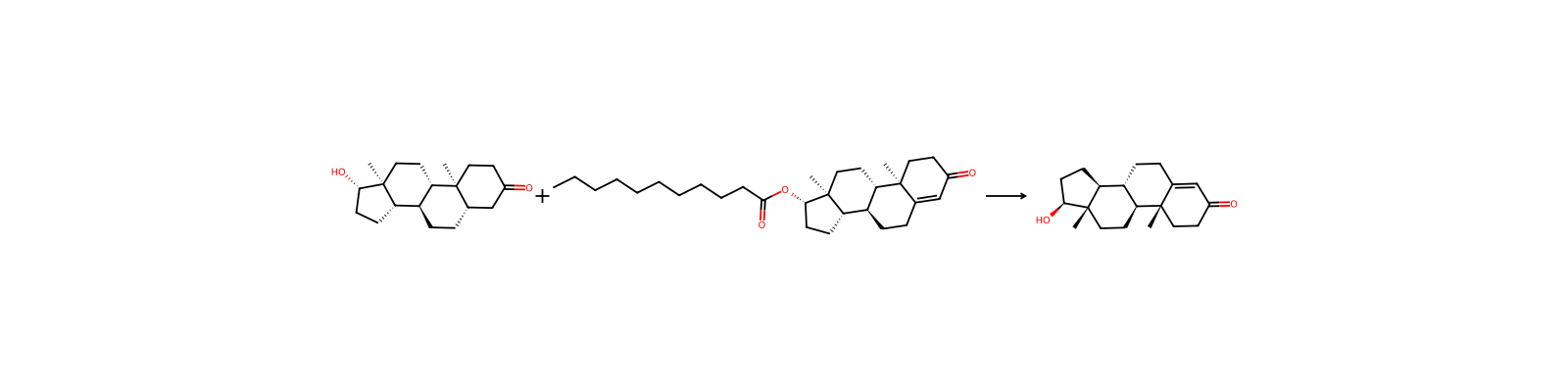
定義ChEBI: Testosterone undecanoate is a steroid ester. It is a metabolite of Testosterone. It is a promising androgen for male hormonal contraception.
関連反応
2 件

関連ノート
読み込み中…