

基本情報
- 標準SMILES
CCO[Si](OCC)(OCC)OCC- InChIKey
BOTDANWDWHJENH-UHFFFAOYSA-N- 分子式
- C8H20O4Si
- 平均分子量
- 208.33 g/mol
- 単同位体質量
- 208.11308565
概要
Ethyl silicate appears as a clear colorless liquid with a faint odor. Flash point 125 °F. Less dense than water. Vapors are heavier than air.
名称と識別子
- 優先名称
- Tetraethoxysilane
- IUPAC
- tetraethyl silicate
- 現地名
- オルトけい酸テトラエチル
- 英語名
- Ethyl silicate
- 分子式
- C8H20O4Si
- 分子量
- 208.33
名称と別名
Tetraethyl orthosilicateTetraethoxysilaneTetraethyl silicate78-10-4TEOSETHYL SILICATEDynasil ASilicon ethoxideSilicon tetraethoxideSilikan LEthyl orthosilicateTetraethoxysilicon
名称をさらに表示
オルトけい酸テトラエチルけい酸エチルシリカンLジナシルAシュタインフェスティガーOHテトラエトキシシランテトラエチルオルトシリカートけい酸テトラエチルテトラエチルオルトシランテトラエドキシシランオルトけい酸テトラエチル,3Nけい酸エチル,3Nけい酸テトラエチル,3Nテトラエトキシシラン,3Nエチルシリケートテトラエトキシシラン, 98%テトラエトキシシラン, 99+%テトラエチルオルトシリケートETHYL SILICATE 40TETRAETHOXYSILANE-28Tetraethoxysilane (TEOS)
Etylu krzemianTetraethylsilikatSilane, tetraethoxy-TetraethylorthosilicateSilicic acid, tetraethyl esterSilicate d'ethyleSilicate tetraethyliqueES 28 (ester)
データベース識別子
- CAS
78-10-4- PubChem CID
- 6517
- DTXSID
DTXSID6026450- ChEMBL
CHEMBL3187981- UNII
- 42064KRE49
- EC Number
- 201-083-8
- Nikkaji
- J5.506I
物性
構造計算による物性
- 極性表面積
- 36.9 Ų
- 水素結合供与体数
- 0
- 水素結合受容体数
- 4
- 回転可能結合数
- 8
- 重原子数
- 13
- 形式電荷
- 0
- 複雑度
- 91.2
実験および物理化学的性質
Chemical Classes
Metals -> Metalloid Compounds (Silicon)
Flammable agents - 3rd degree
SpringerMaterials PropertiesBoiling point
Odor
SHARP, ESTER-LIKE ODOR
Faint odor
Sharp alcohol-like odor
Density
0.933 at 68 °F (USCG, 1999) - Less dense than water; will float
0.933 at 20 °C
Bulk density: 7.8 lbs/gal at 20 °C
Relative density (water = 1): 0.93
0.93
0.9320 @ 20°C
Viscosity0.6 cP at 25 °C
Color/Form
Colorless liquid
Water-white
Solubility
Reacts with water (NIOSH, 2024)
Soluble in ether
Slightly soluble in benzene
Miscible with alcohol
Decomposes in water
Solubility in water: slowly hydrolyzes
Flash Point
99 °F (USCG, 1999)
99 °F
125 °F (52 °C) (Open cup)
99 °F (Closed cup)
37 °CC, closed-cup
37 °C c.c.
Boiling Point
336 °F at 760 mmHg (USCG, 1999)
168.8 °C
168 °C
336 °F
168.8 °C @760 [mm Hg]
336 °F
DecompositionWhen heated to decomposition it emits acrid smoke and fumes.
Melting Point
-121.9 °F (USCG, 1999)
-82.5 °C
-77 °C
-117 °F
-82.5 °C
-117 °F
Vapor Density
7.22 (Air = 1)
Relative vapor density (air = 1): 7.22
物理化学的性質
- 融点
- -77 °C · -77 °C
- 沸点
- 168 °C · 168 °C(lit.)
- 比重(密度)
- 0.933 g/mL · 0.933 g/mL at 20 °C(lit.)
- 蒸気密度
- 7.2 · 7.2 (vs air)
- 蒸気圧
- 1 mm · <1 mm Hg ( 20 °C)
- 屈折率
- 20 · n20/D 1.382(lit.)
- 闪点
- 116 °F · 116 °F
- 貯蔵温度
- 30 °C · Store below +30°C.
- 溶解性
- 2 · エタノール、2-プロパノールに可溶。
- 外見
- 液体
- 比重
- 0.934 · 0.934
- 色
- 無色
- PH
- 7 · 7 (20°C)
- 爆発限界(explosive limit)
- 1.3 · 1.3-23%(V)
- 水溶解度
- 加水分解
- 凝固点
- -77 ℃ · -77℃
- 比熱容量
- 1.75 J/ · Cp(liquid): 1.75 J/(g·K), at 25℃
- Merck
- 14 · 14,3851
- BRN
- 1422225 · 1422225
- Henry's Law Constant
- 4.9 · 4.9×10-1 mol/(m3Pa) at 25℃, HSDB (2015)
- Dielectric constant
- 4.1 · 4.1(20℃)
- 安定性
- 安定。可燃性。強力な酸化剤、水、アルカリ、鉱酸とは相容れない。
- InChI
- 1S/C8H20O4Si/c1-5-9-13(10-6-2,11-7-3)12-8-4/h5-8H2,1-4H3
- InChIKey
- BOTDANWDWHJENH-UHFFFAOYSA-N
- SMILES
- CCO[Si](OCC)(OCC)OCC
- CAS データベース
- 78 · 78-10-4(CAS DataBase Reference)
- NISTの化学物質情報
- Silicic acid (H4sio4), tetraethyl ester(78-10-4)
- EPAの化学物質情報
- Tetraethyl silicate (78-10-4)
化学的性質
化学的特性Ethyl silicate is a flammable, colourless liquid with a mild, sweet, alcohol-like odour. Exposure to ethyl silicate can occur through inhalation, ingestion, and eye or skin contact. It is practically insoluble in water, soluble in alcohol, and slightly soluble in benzene.
安全と法規制
GHS分類
GHS Classification
Warning
H226: Flammable liquid and vapor [Warning Flammable liquids]
P210, P233, P240, P241, P242, P243, P261, P264+P265, P271, P280, P303+P361+P353, P304+P340, P305+P351+P338, P317, P319, P337+P317, P370+P378, P403+P233, P403+P235, P405, and P501 (click each P-code to see the statement)
This chemical does not meet GHS hazard criteria for < 0.1% (1 of 1197) of reports.
Warning
H226 (> 99.9%): Flammable liquid and vapor [Warning Flammable liquids]
危険有害性情報
Regulatory Information
Chemical: Silicic acid (H4SiO4), tetraethyl ester
Regulation (EC) No 1935/2004 (amended)
Silicic acid (H4SiO4), tetraethyl ester is listed on the EPA's Chemical Data Reporting (CDR) system. Manufacturers and importers of Silicic acid (H4SiO4), tetraethyl ester are required to report information about their production and use of this chemical to the EPA under the Toxic Substances Control Act (TSCA). (40 eCFR Part 711)
Status: Active Update: 15-05-2023 https://echa.europa.eu/registration-dossier/-/registered-dossier/14920
Silicic acid, tetraethyl ester: HSNO Approval: HSR001223 Approved with controls
The New Jersey Worker and Community Right to Know Act requires public and private employers to provide information about hazardous substances at their workplaces. (N.J.S.A. 34:5A-1 et. seq.)
DOT LabelFlammable Liquid
Fire Hazards
Excerpt from ERG Guide 129 [Flammable Liquids (Water-Miscible / Noxious)]:
· HIGHLY FLAMMABLE: Will be easily ignited by heat, sparks or flames.
· HIGHLY FLAMMABLE: Will be easily ignited by heat, sparks or flames.
Flammable. Above 37 °C explosive vapour/air mixtures may be formed.
Fire PotentialFlammable liquid when exposed to heat or flame; can react vigorously with oxidizing materials.
Health Hazards
Inhalation of vapor causes eye and nose irritation, unsteadiness, tremors, salivation, respiratory difficulty, and unconsciousness. Contact with liquid irritates eyes and may cause dryness, cracking, and inflammation of skin. Ingestion may produce nausea, vomiting, and cramps. (USCG, 1999)
· May cause toxic effects if inhaled or absorbed through skin.
· May cause toxic effects if inhaled or absorbed through skin.
Hazards Summary
Rats that survived concentrations of 400 ppm for 7 hours/day for 30 days show liver, kidney, and lung damage. [ACGIH] Causes eye irritation at 250 ppm and tearing at 1,200 ppm; [CSH, p. 402] A skin and respiratory tract irritant; Liquid defats the skin and vapor may depress consciousness; [ICSC] In high-dose animal experiments, it acts as a general anesthetic; [ChemIDplus] See Methyl silicate.
DOT ID and Guide
1292 129
1292 129
1292 129
Reactive GroupSiloxanes
EC ClassificationSymbol: Xn; R: 10-20-36/37; S: (2)
UN ClassificationUN Hazard Class: 3; UN Pack Group: III
TSCA Requirements
Section 8(a) of TSCA requires manufacturers of this chemical substance to report preliminary assessment information concerned with production, exposure, and use to EPA as cited in the preamble in 51 FR 41329. Effective date 8/23/00; Reporting date: 10/23/00.
Reactivity AlertsHighly Flammable
安全と保護具
Fire Fighting
Excerpt from ERG Guide 129 [Flammable Liquids (Water-Miscible / Noxious)]:
Use water spray, foam, alcohol-resistant foam. In case of fire: keep drums, etc., cool by spraying with water.
First Aid Measures
Fresh air, rest.
Remove contaminated clothes. Rinse skin with plenty of water or shower.
First rinse with plenty of water for several minutes (remove contact lenses if easily possible), then refer for medical attention.
Rinse mouth.
Accidental Release Measures
· CALL 911. Then call emergency response telephone number on shipping paper. If shipping paper not available or no answer, refer to appropriate telephone number listed on the inside back cover.
· ELIMINATE all ignition sources (no smoking, flares, sparks or flames) from immediate area.
· CALL 911. Then call emergency response telephone number on shipping paper. If shipping paper not available or no answer, refer to appropriate telephone number listed on the inside back cover.
· ELIMINATE all ignition sources (no smoking, flares, sparks or flames) from immediate area.
First Aid
Excerpt from NIOSH Pocket Guide for Ethyl silicate:
General First Aid:
General First Aid:
(General first aid procedures)
Safe StorageFireproof. Separated from acids and oxidants. Cool. Dry. Keep in a well-ventilated room.
Exposure Control and Personal Protection
· Wear positive pressure self-contained breathing apparatus (SCBA).
· Wear positive pressure self-contained breathing apparatus (SCBA).
10.0 [ppm]
Fire Fighting Procedures
Water, foam, dry chemical, carbon dioxide
This chemical is a flammable liquid. Poisonous gases including carbon monoxide and silicon oxide are produced in fire. Use dry chemical, carbon dioxide, or foam extinguishers. Vapors are heavier than air and will collect in low areas. Vapors may travel long distances to ignition sources and flashback. Vapors in confined areas may explode when exposed to fire. Containers may explode in fire. Storage containers and parts of containers may rocket great distances, in many directions. If material or contaminated runoff enters waterways, notify downstream users of potentially contaminated waters. Notify local health and fire officials and pollution control agencies. From a secure, explosion-proof location, use water spray to cool exposed containers. If cooling streams are ineffective (venting sound increases in volume and pitch, tank discolors or shows any signs of deforming), withdraw immediately to a secure position ...
Storage Conditions
Ethyl silicate must be stored to avoid contact with strong oxidizers (such as chlorine, bromine, and fluorine) since violent reactions occur. Before entering confined space where this chemical may be present, check to make sure that an explosive concentration does not exist. Store in tightly closed containers in a cool, well-ventilated area away from water. Sources of ignition, such as smoking and open flames, are prohibited where ethyl silicate is handled, used, or stored. Metal containers involving the transfer of five gallons or more of ethyl silicate should be grounded and bonded. Drums must be equipped with self-closing valves, pressure vacuum bungs, and flame arresters. Use only non-sparking tools and equipment, especially when opening and closing containers of ethyl silicate.
Cleanup Methods
SRP: Wastewater from contaminant suppression, cleaning of protective clothing/equipment, or contaminated sites should be contained and evaluated for subject chemical or decomposition product concentrations. Concentrations shall be lower than applicable environmental discharge or disposal criteria. Alternatively, pretreatment and/or discharge to a permitted wastewater treatment facility is acceptable only after review by the governing authority and assurance that "pass through" violations will not occur. Due consideration shall be given to remediation worker exposure (inhalation, dermal and ingestion) as well as fate during treatment, transfer and disposal. If it is not practicable to manage the chemical in this fashion, it must be evaluated in accordance with EPA 40 CFR Part 261, specifically Subpart B, in order to determine the appropriate local, state and federal requirements for disposal.
Remove all ignition sources. Ventilate area of spill or leak. For small quantities, absorb on paper towels. Evaporate in safe place (such as a fume hood). Allow sufficient time for evaporating vapors to completely clear hood ductwork. Burn paper in suitable location away from combustible materials ... Ethyl silicate should not be allowed to enter a confined space, such as a sewer, because of the possibility of an explosion. Sewers designed to preclude formation of explosive concn of ethyl silicate vapors are permitted.
Collect leaking liquid in sealable containers. Absorb remaining liquid in sand or inert absorbent and remove to safe place. Note: Reacts with water to form an adhesive mass.
Nonfire Spill ResponseExcerpt from ERG Guide 129 [Flammable Liquids (Water-Miscible / Noxious)]:
Disposal Methods
SRP: The most favorable course of action is to use an alternative chemical product with less inherent propensity for occupational harm/injury/toxicity or environmental contamination. Recycle any unused portion of the material for its approved use or return it to the manufacturer or supplier. Ultimate disposal of the chemical must consider: the material's impact on air quality; potential migration in soil or water; effects on animal and plant life; and conformance with environmental and public health regulations.
Incineration in admixture with a more flammable solvent. /SRP: Process eqipped with afterburner and effluent gas scrubber./
Spillage Disposal
Personal protection: complete protective clothing including self-contained breathing apparatus. Ventilation. Remove all ignition sources. Collect leaking and spilled liquid in sealable containers as far as possible. Absorb remaining liquid in sand or inert absorbent. Then store and dispose of according to local regulations. Note: Reacts with water to form an adhesive mass.
毒性情報
Interactions
Three experiments were conducted to determine the effects of excess dietary calcium carbonate, phosphorus and urine acidifying and alkalizing salts on silica urolith formation in a model using rats fed dextrose-based diets containing 2% tetraethylorthosilicate (TES). Diets containing 2% TES lowered wt gains to 91-95% of gains made by rats fed non-TES diets. Urine silica concn of rats fed TES were generally in the range of 50-60 mg/dL. In expt 1, rats fed TES with no additional dietary calcium carbonate had a silica urolith incidence of 35%. With additions of 1 and 2% calcium carbonate to the basal-TES diet, respective urolith incidences were 45 and 60% (r = 0.99, P < 0.02). In expt 2, monobasic sodium phosphate (MP) providing 0.2% additional phosphorus resulted in a mean urine pH of 6.42 and no uroliths. Dibasic sodium phosphate (DP) without and with 0.5% sodium bicarbonate (SB) resulted in respective urine pH values of 6.78 and 7.14 and urolith incidences of 15 and 20% (MP less than DP and DP + SB, P < 0.05). However, the uroliths were small averaging less than 1 mg. In expt 3, substitution of autoclaved egg albumin for casein, the protein source in expt 1 and 2, resulted in urine pH of 7.45 and a silica urolith incidence of 46%. An equal-molar mixture of MP and DP providing an added 0.2% phosphorus resulted in a urine pH of 7.07 and reduced the urolith incidence to 4%, and 0.75% of dietary ammonium chloride either with or without the added 0.2% phosphorus gave urine acidification and complete protection from uroliths ...
Rats fed a dextrose-casein type of diet adequate for normal growth and containing 2% of tetraethylorthosilicate were used to study the effect of sodium chloride and sodium sulfate drinking waters & dietary additions of chloride, sulfate & phosphate on formation of silica urinary calculi. 50% of rats fed the basal-tetraethylorthosilicate diet (2%) developed silica urinary calculi. Addition of 0.2 eq/kg diet of chloride, sulfate or phosphate as sodium salts (phosphate was an equal molar mixture of mono- and dibasic sodium phosphates) resulted in a reduction in silica urinary calculi (P <0.05) by dietary chloride (15% incidence) and phosphate (5% incidence) but not by sulfate (35% incidence).
Target OrgansEyes, respiratory system, liver, kidneys, blood, skin
Environmental Fate
TERRESTRIAL FATE: Based on a classification scheme(1), an estimated Koc value of 1(SRC), determined from a structure estimation method(2), indicates that tetraethyl silicate is expected have very high mobility in soil(SRC). Volatilization of tetraethyl silicate from moist soil surfaces may be an important fate process(SRC) given an estimated Henry's Law constant of 2.0X10⁻⁵ atm-cu m/mole(SRC), using a fragment constant estimation method(3). Tetraethyl silicate is expected to volatilize from dry soil surfaces(SRC) based upon a vapor pressure of 1.88 mm Hg at 25 °C(4). Biodegradation data were not available(SRC, 2009). Without special precautions, tetraethoxysilane hydrolyzes to a gel in about 10 days(5).
AQUATIC FATE: Based on a classification scheme(1), an estimated Koc value of 1(SRC), determined from a structure estimation method(2), indicates that tetraethyl silicate is not expected to adsorb to suspended solids and sediment(SRC). Volatilization from water surfaces may occur(3) based upon an estimated Henry's Law constant of 2.0X10⁻⁵ atm-cu m/mole(SRC), developed using a fragment constant estimation method(4). Using this Henry's Law constant and an estimation method(3), volatilization half-lives for a model river and model lake are 2.9 and 25 days, respectively(SRC). According to a classification scheme(5), an estimated BCF of 3(SRC), from an estimated log Kow of 0.04(6) and a regression-derived equation(7), suggests the potential for bioconcentration in aquatic organisms is low(SRC). Biodegradation data were not available(SRC, 2009). Without special precautions, tetraethoxysilane hydrolyzes to a gel in about 10 days(8).
ATMOSPHERIC FATE: According to a model of gas/particle partitioning of semivolatile organic compounds in the atmosphere(1), tetraethyl silicate, which has a vapor pressure of 1.88 mm Hg at 25 °C(2), is expected to exist solely as a vapor in the ambient atmosphere. Vapor-phase tetraethyl silicate is degraded in the atmosphere by reaction with photochemically-produced hydroxyl radicals(SRC); the half-life for this reaction in air is estimated to be 16 hours(SRC), calculated from its rate constant of 2.5X10⁻¹¹ cu cm/molecule-sec at 25 °C(SRC) that was derived using a structure estimation method(3). Tetraethyl silicate does not contain chromophores that absorb at wavelengths >290 nm(4) and therefore is not expected to be susceptible to direct photolysis by sunlight(SRC).
Adverse EffectsNeurotoxin - Other CNS neurotoxin
Exposure Routes
The substance can be absorbed into the body by inhalation of its vapour and by ingestion.
inhalation, ingestion, skin and/or eye contact
Signs and Symptoms
Cough. Dizziness. Headache. Sore throat.
Dry skin. Redness.
Redness. Pain.
Confusion. Vomiting. Further see Inhalation.
irritation eyes, nose; In Animals: lacrimation (discharge of tears); dyspnea (breathing difficulty), pulmonary edema; tremor, narcosis; liver, kidney damage; anemia
Medical Surveillance
The following medical procedures should be made available to each employee who is exposed to ethyl silicate at potentially hazardous levels: Employees should be screened for history of certain medical conditions which might place the employees at increased risk from ethyl silicate exposure. /These are/ chronic respiratory disease ... liver disease ... kidney disease ... blood disease ... skin disease. ... Any employee developing the above-listed conditions should be referred for further medical examination.
Soil Adsorption/Mobility
Using a structure estimation method based on molecular connectivity indices(1), the Koc of tetraethyl silicate can be estimated to be 1(SRC). According to a classification scheme(2), this estimated Koc value suggests that tetraethyl silicate is expected to have very high mobility in soil.
Human Toxicity Excerpts
/HUMAN EXPOSURE STUDIES/ ... Human experiments found: 3000 ppm is extremely irritating to the eyes and nose; 1200 ppm stings eyes and nose and produces tears; 700 ppm mildly stings eyes and nose; 250 ppm makes the eyes and nose tingle slightly; 85 ppm can be detected only by odor. It appeared that 700 ppm would be intolerable to human beings for more than half an hour.
/SIGNS AND SYMPTOMS/ Skin or eye contact can cause severe irritation or burns. The vapor can irritate the nose, eyes, throat, and bronchial tubes, causing cough and difficulty breathing. Higher exposures can cause pulmonary edema, a medical emergency that can be delayed for several hours. This can cause death. Repeated skin contact can cause dryness and cracking.
/SIGNS AND SYMPTOMS/ Orally, the ethyl silicate is moderately toxic, but may be /CNS depressant/ in high concentrations.
/SIGNS AND SYMPTOMS/ Potential symptoms of overexposure are irritation of eyes and nose.
For more Human Toxicity Excerpts (Complete) data for Ethyl silicate (6 total), please visit the HSDB record page.
Artificial Pollution SourcesTetraethyl silicate's production and use as a chemical sol-gel(1,2), and in casting(3) and glass frosting(1) processes may result in its release to the environment through various waste streams(SRC).
Environmental Bioconcentration
An estimated BCF of 3 was calculated for ethyl silicate(SRC), using an estimated log Kow of 0.04(1) and a regression-derived equation(2). According to a classification scheme(3), this BCF suggests the potential for bioconcentration in aquatic organisms is low(SRC).
Volatilization from Water/Soil
The Henry's Law constant for tetraethyl silicate is estimated as 2.0X10⁻⁵ atm-cu m/mole(SRC) using a fragment constant estimation method(1). This Henry's Law constant indicates that tetraethyl silicate may volatilize from water surfaces(2). Based on this Henry's Law constant, the volatilization half-life from a model river (1 m deep, flowing 1 m/sec, wind velocity of 3 m/sec)(2) is estimated as 2.9 days(SRC). The volatilization half-life from a model lake (1 m deep, flowing 0.05 m/sec, wind velocity of 0.5 m/sec)(2) is estimated as 25 days(SRC). Henry's Law constant of tetraethyl silicate indicates that volatilization from moist soil surfaces may occur(SRC). Tetraethyl silicate may volatilize from dry soil surfaces(SRC) based upon a vapor pressure of 1.88 mm Hg(3).
法規制情報
TSCA Requirements
Section 8(a) of TSCA requires manufacturers of this chemical substance to report preliminary assessment information concerned with production, exposure, and use to EPA as cited in the preamble in 51 FR 41329. Effective date 8/23/00; Reporting date: 10/23/00.
安全データ
- OEB
- A
- OEL
- TWA: 10 ppm (85 mg/m3)
- wgk
- 1
- IDLA
- 700 ppm
- tsca
- TSCA listed
- rtecs
- VV9450000
- ridadr
- UN 1292
- 毒性
- LD50 orally in Rabbit: 6270 mg/kg LD50 dermal Rabbit 5860 mg/kg
- hs_code
- 2920 90 70
- risk_code
- 10-20-36/37-36/37/38
- 化審法
- (2)-2048
- 安衛法
- 57,57-2
- 消防法
- 危-4-2-III
- hazard_code
- Xn
- safety_code
- 16-36/37/39-26-24/25
- hazard_class
- 3
- packing_group
- III
- 自然発火温度
- 230 °C
- Hazard Classifications
- Acute Tox. 4 InhalationEye Irrit. 2Flam. Liq. 3STOT SE 3
- ストレージクラス
- 3 - Flammable liquids
- 有毒物質データの
- 78-10-4(Hazardous Substances Data)
毒性と防護
毒性急性毒性(経口) ラット LD50値 6270mg/kg急性毒性(経皮) ウサギ LD50値 6300μL/kg(換算値5859mg/kg)
化学と産業
薬理情報
Metabolism/Metabolites... Readily undergoes hydrolysis, with formation of ethyl alcohol and hydroxy esters, progressing until the end products are silicic acid or hydrated silicic acid.
Absorption, Distribution and Excretion
Acute stomach, kidney, and bladder toxicity was evaluated in F344 rats after gastric gavage of tetraethylorthosilicate at daily doses of 0, 0.111, 0.223, and 0.333 g. Five rats of each sex at each dose were sacrificed after 1, 2, and 4 days. In tetraethylorthosilicate treated groups, silicate accumulated in the stomach glands and the muscle layer of the forestomach and glandular stomach.
用途と製造
Uses
Used in mortar and surface coatings to improve resistance to weather and chemical corrosion; [ACGIH] Used in the semiconductor/electronics industry; [CSH, p. 402] Used in castings for alloys with high melting points, copper alloys, and dental prosthetic devices; Also used as a source of silicon dioxide by vapor deposition and to produce refractory bricks and heat-resistant paints; [HSDB]
Semiconductor Manufacturing [Category: Industry]
Tetraethyl silicate is used as a preservative for stone, brick, concrete, and plaster. It is used in water, weather- and acid-proofing processes, heat- and chemical-resistant paints, and protective coatings.
In weatherproofing and for hardening stone, arresting decay and disintegration; in mfr of weatherproof and acid-proof mortars and cements; in the "lost wax" process for casting of high-melting alloys.[The Merck Index, Fourteenth Edition (2006)
Weatherproof and acid-proof mortar and cements, refractory bricks, other molded objects, heat-resistant paints, chemical-resistant paints, protective coatings for industrial buildings and castings, lacquers, bonding agent intermediate.
Used in ceramic processing
U.S. Production
2023: 10,000,000 - <50,000,000 lb
Silicic acid (H4SiO4), tetraethyl ester is listed as a High Production Volume (HPV) chemical (65FR81686). Chemicals listed as HPV were produced in or imported into the U.S. in >1 million pounds in 1990 and/or 1994. The HPV list is based on the 1990 Inventory Update Rule. (IUR) (40 CFR part 710 subpart B; 51FR21438).
Production volumes for non-confidential chemicals reported under the Inventory Update Rule. [Table#1532]
Production volume for non-confidential chemicals reported under the 2006 Inventory Update Rule. Chemical: Silicic acid (H4SiO4), tetraethyl ester. Aggreated National Production Volume: 500,000 to < 1 million lbs.
Consumer UsesSemiconductor and photovoltaic agent
Industry UsesInsulators
Methods of ManufacturingPreparation from absolute alcohol and silicon tetrachloride
Formulations/Preparations
/Ethyl silicate/... is marketed in 2 grades, a 29% and 40% silicon dioxide, and in a "condensed" form consisting of 85% ethyl silicate and 15% polyethoxysiloxanes.
Extrema - 99.9999% grade /available/
Pure ethyl silicate >98%. A partially hydrolyzed or polymeric version with a substantial portion having an average of 4-5 silicon atoms and 40 wt% silicon dioxide content is called ethyl silicate 40.
Dynasil A
General Manufacturing Information
Adhesive Manufacturing
Silicic acid (H4SiO4), tetraethyl ester: ACTIVE
応用分野
用途耐候性及び耐酸性モルタルとセメント、耐火ブロック、耐熱性ペイント、耐薬品性ペイント、中間体、精密鋳造用、塗料用バインダー、サンドモールドバインダー、セラミックス原料。シリカやゾルゲルガラスの原料、球状シリカ原料
用途帯電防止剤、ガラス原料
使用Tetraethyl Orthosilicate is used in the preparation of antidreflective coatings on silicate glass via silicon dioxide. Crosslinking reagent.
一般的な説明A clear colorless liquid with a faint odor. Flash point 125°F. Less dense than water. Vapors are heavier than air.
調製方法
Prepared from absolute alcohol and silicon tetrachloride.
純化方法Fractionate it through an 80cm Podbielniak type column (p 11) with a heated jacket and partial take-off head. It is slowly decomposed by H2O-and is soluble in EtOH. It is flammable-it irritates the eyes and mucous membranes. [Sumrell & Ham J Am Chem Soc 78 5573 1956, Bradley et al. J Chem Soc 5020 1952, Beilstein 1 IV 1360.]
上流・下流製品情報
上流原料
下流製品
サプライヤー50 社
国药集团化学试剂有限公司86-21-63210123 · [email protected]
梯希爱(上海)化成工业发展有限公司021-67121386 · [email protected]
衢州润东化工有限公司0570-8789886 18892685668 · [email protected]
上海阿拉丁生化科技股份有限公司400-6206333 13167063860 · [email protected]
河北创海生物科技有限公司+86-86-13131129325 · [email protected]
南京兰亚化工贸易有限公司+86-25-8331-5620 · [email protected]
Hebei Yanxi Chemical Co., Ltd.+86-17531190177 · [email protected]
Syntechem Co.,Ltd[email protected]
上海迈瑞尔生化科技有限公司4006356688 18621169109 · [email protected]
阿法埃莎(中国)化学有限公司400-6106006 · [email protected]
安耐吉化学&3A(安徽泽升科技股份有限公司)400-0056266 · [email protected]
上海瀚鸿科技股份有限公司021-54306202 13764082696 · [email protected]
山东洛克化工有限公司17653113209 13065062079 · [email protected]
上海景颜化工科技有限公司13817811078 · [email protected]
池州捷峰生物科技有限公司0566-8928158 · [email protected]
上海泰坦科技股份有限公司400-6009262 15618770481 · [email protected]
山东万达有机硅新材料有限公司021-54177116
合肥天健化工有限公司551-65418679 15856988503;15837135945 · [email protected]
上海比阳实业有限公司+86-15021878111 · [email protected]
沈阳依莱普克斯化工有限公司024-31124838 15840046119
杭州东帆化学有限公司86-0571-85151182
山东西亚化学有限公司13355009207 13355009207 · [email protected]
玛雅试剂+86 (573) 82222445 (0)18006601000 452520369 · [email protected]
四川库利南科技有限公司400-1166-196 18981987031 · [email protected]
天津希恩思生化科技有限公司400 638 7771 · [email protected]
斯百全化学(上海)有限公司021-021-021-67601398-809-809-809 15221380277 · [email protected]
艾科试剂4008-755-333 18080918076 · [email protected]
上海思域化工科技有限公司86-21-34053660 · [email protected]
赛默飞世尔科技(中国)有限公司800-810-5118 · [email protected]
北京伊诺凯科技有限公司400-810-7969 010-59572699 · [email protected]
安必亚特种有机硅南通有限公司18151323200 · [email protected]
TOKYO CHEMICAL INDUSTRY CO., LTD.03-36680489 · [email protected]
南京腾川科技有限公司18014470519; 18014470519
上海卓锐化工有限公司021-69180038
山东艾特化工有限公司18615658326 18615658326 · [email protected]
北京环宇世纪化学科技有限公司hysj_bj.com
HBCChem, Inc.+1-510-219-6317 · [email protected]
日照力德士化工有限公司010-51268198 · [email protected]
上海探圭新材料科技有限公司18516111942 · [email protected]
上海石洋化工有限公司021-56795766 · [email protected]
上海爱蝶实业有限公司021-58957966 18930537195 · [email protected]
成都零六生物科技有限公司400-1166-196 13458535857 · [email protected]
张家港新亚化工有限公司0512-58980899, 58228762 · [email protected]
上海麦克林生化科技股份有限公司15221275939 15221275939 · [email protected]
杭州杰恒化工有限公司0571-87396432 · [email protected]
上海有朋化工有限公司021-69005955 13701776567 · [email protected]
上海凯赛化工有限公司021-33516722 13701817765 · [email protected]
上海彤源化工有限公司021-021-69182866 13701855675 · [email protected]
上海兴鲁化工科技有限公司02120970332 · [email protected]
凯试(上海)科技有限公司021-50135380 · [email protected]
関連反応
164 件


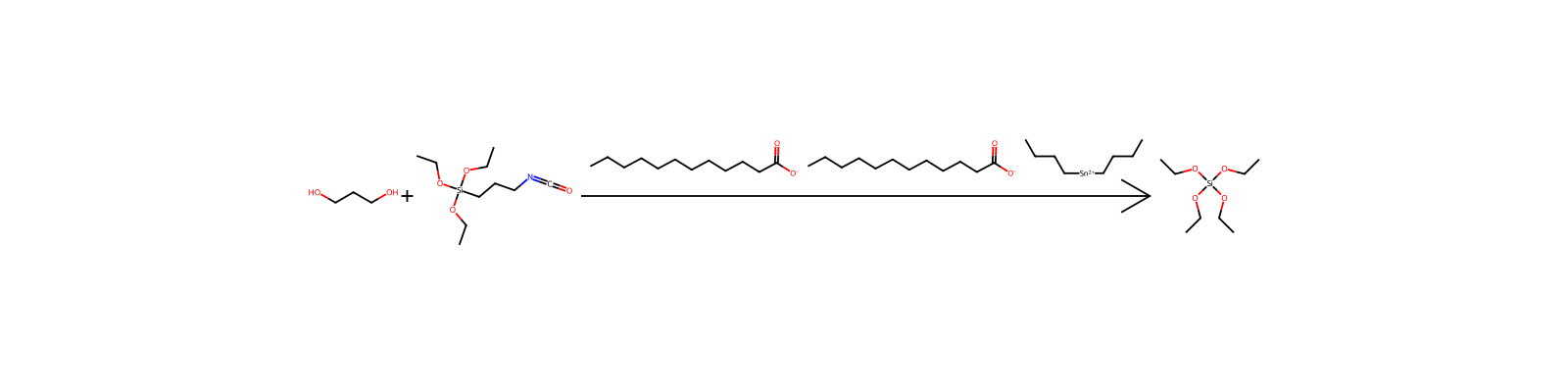


関連ノート
読み込み中…