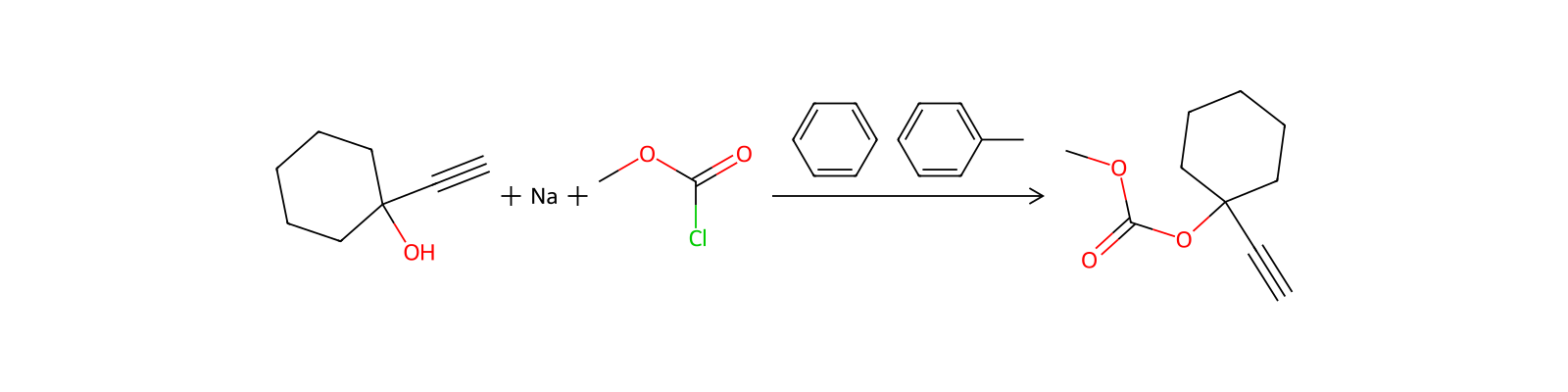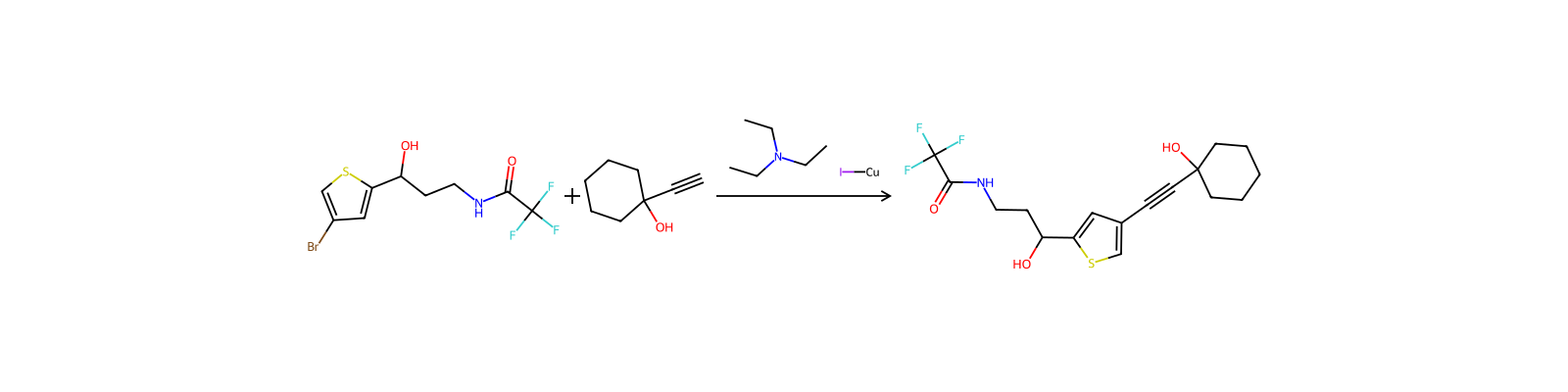
HRID 63305反応物として
1-Ethynylcyclohexanol
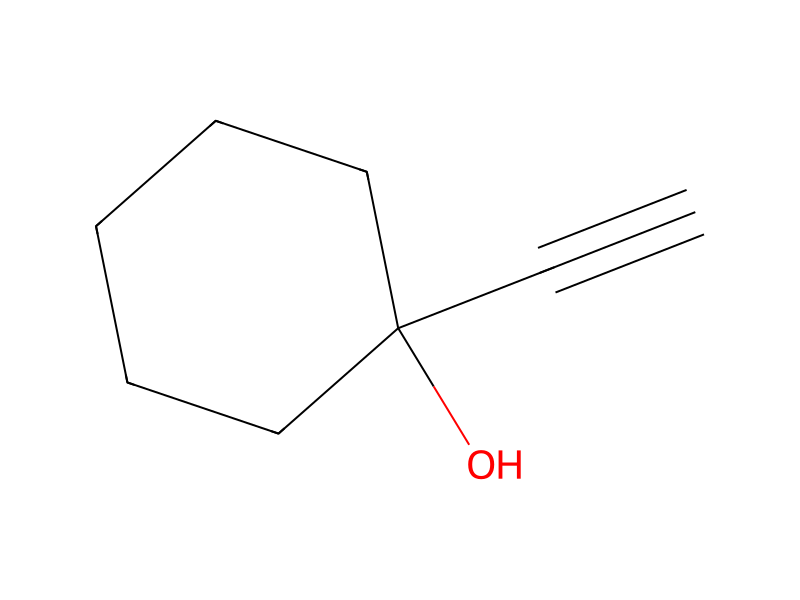
28652-54-2C#CC1(O)CCCCC1QYLFHLNFIHBCPR-UHFFFAOYSA-NSee also: Cyclohexanol, ethynyl- (annotation moved to).
28652-54-2、78-27-3DTXSID0021757CHEMBL394631FCS -> FDA Cumulative Estimated Daily Intake (CEDI)
FCS -> FDA Inventory of Food Contact Substances Listed in 21 CFR
FCS -> FDA Inventory of Effective Food Contact Substance (FCS) Notifications
FCS -> FDA Inventory of Effective Food Contact Substance (FCS) Notifications
Other Solid
White crystalline solid with a slight odor; mp = 30-33 deg C; [Alfa Aesar MSDS]
化学的特性Colorless liquid
安全情報は参考情報です。供給元の安全データシート(SDS)、適用法令、専門家による評価に代わるものではありません。
Danger
H302 (99.6%): Harmful if swallowed [Warning Acute toxicity, oral]
P262, P264, P264+P265, P270, P280, P301+P317, P302+P352, P305+P351+P338, P316, P321, P330, P332+P317, P337+P317, P361+P364, P362+P364, P405, and P501 (click each P-code to see the statement)
Aggregated GHS information provided per 268 reports by companies from 8 notifications to the ECHA C&L Inventory. Each notification may be associated with multiple companies.
Chemical: Cyclohexanol, 1-ethynyl-
Cyclohexanol, 1-ethynyl- is listed on the EPA's Chemical Data Reporting (CDR) system. Manufacturers and importers of Cyclohexanol, 1-ethynyl- are required to report information about their production and use of this chemical to the EPA under the Toxic Substances Control Act (TSCA). (40 eCFR Part 711)
REACH registered substance: 1-ethynylcyclohexanol (EC: 201-100-9)
1-ethynylcyclohexanol: Does not have an individual approval but may be used as a component in a product covered by a group standard. It is not approved for use as a chemical in its own right.
All Other Basic Organic Chemical Manufacturing
Cyclohexanol, 1-ethynyl-: ACTIVE
使用1-Ethynyl-1-cyclohexanol (ECHO) can undergo acetylation in the presence of a catalytic amount of ruthenium chloride at room temperature. It can be used to synthesize novel organotellurium(IV) compounds with potent inhibitory activity towards Cathepsin B. The polymerization of ECHO by transition metal catalysts leads to the formation of poly(ECHO). It can also react with transition metal hydride complexes to form vinyl derivatives by inserting into the M-H bonds.