
2-クロロアセトアミド
Chloroacetamide
データを補完しています。しばらくしてからページを更新すると最新の内容を表示できます

基本情報
- CAS
79-07-2- 標準SMILES
NC(=O)CCl- InChIKey
VXIVSQZSERGHQP-UHFFFAOYSA-N- 分子式
- C2H4ClNO
- 平均分子量
- 93.51 g/mol
- 単同位体質量
- 92.99814143
概要
2-chloroacetamide is a monocarboxylic acid amide that is acetamide substituted by a chloro group at position 2. It has a role as an antimicrobial cosmetic preservative, a fungicide, a herbicide and an antimicrobial agent. It is a primary carboxamide, a monocarboxylic acid amide, an organochlorine compound and a N-acylammonia.
名称と識別子
- 優先名称
- Chloroacetamide
- IUPAC
- 2-chloroacetamide
- 現地名
- 2-クロロアセトアミド
- 英語名
- Chloroacetamide
- 分子式
- C2H4ClNO
- 分子量
- 93.51
名称と別名
2-ChloroacetamideChloroacetamide79-07-2Acetamide, 2-chloro-CHLORACETAMIDEMicrocide2-ChloroethanamideMergal AFChloracetamidalpha-Chloroacetamide2-ChloracetamideUSAF DO-29
名称をさらに表示
2-クロロアセトアミドミクロシドクロルアセトアミドクロロアセトアミドメルガールAFモノクロル酢酸アミド2-クロロアセトアミド [生化学用]2‐クロロアセトアミドΑ-クロロアセトアミド(2-)2-クロロアセトアミド, 98+%クロロアセトアミド, 100 µg/mL in MeOHKM 1010/2/79NSC 8408mergalafNSC 54286
DTXSID9041570NSC-542862R97846T1LDTXCID7021570RefChem:125357201-174-22-Chloro-acetamide.alpha.-Chloroacetamide
データベース識別子
- CAS
79-07-2- PubChem CID
- 6580
- DTXSID
DTXSID9041570- ChEMBL
CHEMBL346368- ChEBI
CHEBI:234507- UNII
- 2R97846T1L
- EC Number
- 201-174-2
- Nikkaji
- J1.491E
物性
構造計算による物性補完中
- XLogP
- -0.5
- 極性表面積
- 43.1 Ų
- 水素結合供与体数
- 1
- 水素結合受容体数
- 1
- 回転可能結合数
- 1
- 重原子数
- 5
- 形式電荷
- 0
- 複雑度
- 44.9
実験および物理化学的性質
Chemical ClassesOther Uses -> Biocides/Disinfectants
Cosmetics
Cosmetic ingredients (Chloroacetamide) -> CIR (Cosmetic Ingredient Review)
Preservative
SpringerMaterials PropertiesMoessbauer quadrupole effect
LogP
log Kow = -0.53
-0.53
-0.53
OdorCharacteristic odor
DensityRelative density of the vapour/air-mixture at 20 °C (air = 1): 1.00
Color/Form
Crystals from water
Colorless to pale yellow crystals
Solubility
In water, 90,000 mg/L at 25 °C
Solubility in water: 98 g/mL at 20 °C
Soluble in alcohol; insoluble in ether
Solubility in water, g/100ml at 20 °C: 98
CorrosivityStrong irritant to skin and tissue
Flash Point
170 °C
170 °C
Boiling PointApproximately 225 °C (decomposes)
Decomposition
Decomposes on heating. This produces toxic fumes including nitrogen oxides and chlorine.
When heated to decomposition it emits very toxic fumes of /hydrogen chloride and nitrogen oxides/.
225 °C
物理化学的性質
- 融点
- 116 · 116-118 °C(lit.)
- 沸点
- 224.5 °C · 224.5 °C
- 比重(密度)
- 0.84 · 0.84
- 蒸気圧
- 0.05 mm · 0.05 mm Hg ( 20 °C)
- 屈折率
- 1.448 · 1.4480 (estimate)
- 闪点
- 170 °C · 170 °C
- 貯蔵温度
- 30 °C · Store below +30°C.
- 溶解性
- 1 g/10mL · メタノール:可溶1g/10mL
- 酸解離定数(Pka)
- 14.69 · 14.69±0.40(Predicted)
- 外見
- 結晶性粉末
- 色
- 白い
- PH
- 3.8 · 3.8-4.1 (40g/l, H2O, 20℃)
- 水溶解度
- 水に溶けます(90g/L)。
- Merck
- 14 · 14,2110
- BRN
- 878191 · 878191
- Henry's Law Constant
- 2.5 · 2.5×103 mol/(m3Pa) at 25℃, HSDB (2015)
- 化粧品成分の機能
- 防腐剤
- InChI
- 1S/C2H4ClNO/c3-1-2(4)5/h1H2,(H2,4,5)
- InChIKey
- VXIVSQZSERGHQP-UHFFFAOYSA-N
- SMILES
- NC(=O)CCl
- LogP
- -0.53 · -0.530
- CAS データベース
- 79 · 79-07-2(CAS DataBase Reference)
- NISTの化学物質情報
- 2 · Acetamide, 2-chloro-(79-07-2)
- EPAの化学物質情報
- 2 · Acetamide, 2-chloro- (79-07-2)
化学的性質
化学的特性white crystalline powder
安全と法規制
安全情報は参考情報です。供給元の安全データシート(SDS)、適用法令、専門家による評価に代わるものではありません。
GHS分類
GHS Classification
Danger
H301: Toxic if swallowed [Danger Acute toxicity, oral]
P203, P261, P264, P270, P272, P280, P301+P316, P302+P352, P318, P321, P330, P333+P317, P362+P364, P405, and P501 (click each P-code to see the statement)
Danger
H301 (92.5%): Toxic if swallowed [Danger Acute toxicity, oral]
P203, P261, P264, P264+P265, P270, P272, P280, P301+P316, P302+P352, P305+P351+P338, P318, P321, P330, P333+P317, P337+P317, P362+P364, P405, and P501 (click each P-code to see the statement)
危険有害性情報
Regulatory Information
Chemical: Acetamide, 2-chloro-
Status: Active Update: 15-05-2018 https://echa.europa.eu/registration-dossier/-/registered-dossier/11045
2-Chloroacetamide: Does not have an individual approval but may be used under an appropriate group standard
Other Safety InformationIMAP assessments - Acetamide, 2-chloro-: Human health tier II assessment
Fire HazardsNot combustible. Gives off irritating or toxic fumes (or gases) in a fire.
Fire PotentialNot combustible.
Hazards Summary
Allergic contact dermatitis reported in hairdressers and shoemakers; [Kanerva, 1769] A skin and eye irritant; May cause skin sensitization; Animal tests show that this substance possibly causes toxicity to human reproduction or development. [ICSC] Danger of skin sensitization; [MAK]
FDA RequirementsChloracetamide is an indirect food additive for use only as a component of adhesives.
EC ClassificationSymbol: T; R: 25-43-62; S: (1/2)-22-36/37-45
UN ClassificationUN Hazard Class: 6.1; UN Pack Group: III
Chemical DangersDecomposes on heating. This produces toxic fumes including nitrogen oxides and chlorine. Reacts with strong oxidants, strong reducing agents, strong acids and strong bases.
Packaging and LabellingDo not transport with food and feedstuffs.
Toxic Combustion ProductsGives off irritating or toxic fumes (or gases) in a fire.
Hazard Classes and Categories
Acute Tox. 3 (92.5%)
Acute toxicity - category 3
Acute toxicity (Oral) - Category 3
Repr. 2
安全と保護具
Fire FightingIn case of fire in the surroundings, use appropriate extinguishing media.
First Aid Measures
Fresh air, rest.
Remove contaminated clothes. Rinse and then wash skin with water and soap.
Rinse with plenty of water for several minutes (remove contact lenses if easily possible).
Rinse mouth. Give a slurry of activated charcoal in water to drink. Refer for medical attention .
Safe StorageSeparated from strong oxidants, strong bases, strong acids and food and feedstuffs. Ventilation along the floor. Store in an area without drain or sewer access.
Fire Fighting ProceduresIn case of fire in the surroundings, use appropriate extinguishing media.
Storage ConditionsSeparated from strong oxidants, strong bases, strong acids and food and feedstuffs. Ventilation along the floor. Store in an area without drain or sewer access.
Cleanup Methods
Spillage Disposal. Personal protection: particulate filter respirator adapted to the airborne concentration of the substance. Do NOT let this chemical enter the environment. Sweep spilled substance into covered sealable containers. If appropriate, moisten first to prevent dusting. Carefully collect remainder. Then store and dispose of according to local regulations.
Disposal Methods
SRP: The most favorable course of action is to use an alternative chemical product with less inherent propensity for occupational exposure or environmental contamination. Recycle any unused portion of the material for its approved use or return it to the manufacturer or supplier. Ultimate disposal of the chemical must consider: the material's impact on air quality; potential migration in soil or water; effects on animal, aquatic, and plant life; and conformance with environmental and public health regulations.
Spillage Disposal
Personal protection: particulate filter respirator adapted to the airborne concentration of the substance. Do NOT let this chemical enter the environment. Sweep spilled substance into covered sealable containers. If appropriate, moisten first to prevent dusting. Carefully collect remainder. Then store and dispose of according to local regulations.
Preventive Measures
SRP: The scientific literature for the use of contact lenses in industry is conflicting. The benefit or detrimental effects of wearing contact lenses depend not only upon the substance, but also on factors including the form of the substance, characteristics and duration of the exposure, the uses of other eye protection equipment, and the hygiene of the lenses. However, there may be individual substances whose irritating or corrosive properties are such that the wearing of contact lenses would be harmful to the eye. In those specific cases, contact lenses should not be worn. In any event, the usual eye protection equipment should be worn even when contact lenses are in place.
SRP: Local exhaust ventilation should be applied wherever there is an incidence of point source emissions or dispersion of regulated contaminants in the work area. Ventilation control of the contaminant as close to its point of generation is both the most economical and safest method to minimize personnel exposure to airborne contaminants.
Do NOT take working clothes home.
Prevent dispersion of dust! Avoid all contact! Use local exhaust or breathing protection.
Do not eat, drink, or smoke during work. Wash hands before eating.
Eye PreventionWear safety spectacles, face shield or eye protection in combination with breathing protection if powder.
Inhalation RiskA harmful concentration of airborne particles can be reached quickly when dispersed, especially if powdered.
Skin PreventionProtective gloves. Protective clothing.
毒性情報
Ecotoxicity Values
EC50; Species: Eisenia andrei (Earthworm) adult; topical >25 mg/kg dry soil for 28 days; Effect: decreased growth
LC50; Species: Eisenia andrei (Earthworm) adult; topical 23.3 mg/kg dry soil for 28 days
EC50; Species: Eisenia andrei (Earthworm) adult; topical 18.5 mg/kg dry soil for 56 days; Effect: decreased progeny counts
LC50; Species: Eisenia fetida (Earthworm) topical using filter paper 2.7 ug/sq cm for 48 hr
LC50; Species: Eisenia fetida (Earthworm) topical 38.5 mg/kg artificial soil for 14 days
Environmental Fate
TERRESTRIAL FATE: Based on a classification scheme(1), an estimated Koc value of 4.2(SRC), determined from a log Kow of -0.53(2) and a regression-derived equation(3), indicates that chloroacetamide is expected to have very mobility in soil(SRC). Volatilization of chloroacetamide from moist soil surfaces is not expected to be an important fate process(SRC) given an estimated Henry's Law constant of 3.9X10⁻⁹ atm-cu m/mole(SRC), using a fragment constant estimation method(4). Chloroacetamide is not expected to volatilize from dry soil surfaces(SRC) based upon an estimated vapor pressure of 1.1X10⁻² mm Hg mm Hg at 25 deg (SRC), determined from a fragment constant method(2). Utilizing the Zahn-Wellens test, 90% biodegradation was reached in 6 days(5) indicating that biodegradation may be an important environmental fate process in soil(SRC).
AQUATIC FATE: Based on a classification scheme(1), an estimated Koc value of 4.2(SRC), determined from a log Kow of -0.53(2) and a regression-derived equation(3), indicates that chloroacetamide is not expected to adsorb to suspended solids and sediment(SRC). Volatilization from water surfaces is not expected(4) based upon an estimated Henry's Law constant of 3.9X10⁻⁹ atm-cu m/mole(SRC), developed using a fragment constant estimation method(5). According to a classification scheme(6), an estimated BCF of 3(SRC), from its log Kow(3) and a regression-derived equation(3), suggests the potential for bioconcentration in aquatic organisms is low(SRC). A hydrolysis half-life of 53 days at pH 8(7) suggests that hydrolysis may be an important environmental fate process for chloroacetamide in alkaline waters(SRC). Utilizing the Zahn-Wellens test, 90% biodegradation was reached in 6 days(8) indicating that biodegradation may be an important environmental fate process in water(SRC).
ATMOSPHERIC FATE: According to a model of gas/particle partitioning of semivolatile organic compounds in the atmosphere(1), chloroacetamide, which has an estimated vapor pressure of 1.1X10⁻² mm Hg at 25 °C(SRC), determined from a fragment constant method(2), is expected to exist solely as a vapor in the ambient atmosphere. Vapor-phase chloroacetamide is degraded in the atmosphere by reaction with photochemically-produced hydroxyl radicals(SRC); the half-life for this reaction in air is estimated to be 5 days(SRC), calculated from its rate constant of 2.3X10⁻¹² cu cm/molecule-sec at 25 °C(SRC) that was derived using a structure estimation method(3). Chloroacetamide does not contain chromophores that absorb at wavelengths >290 nm(4) and, therefore, is not expected to be susceptible to direct photolysis by sunlight(SRC).
Adverse Effects
Reproductive Toxin - A chemical that is toxic to the reproductive system, including defects in the progeny and injury to male or female reproductive function. Reproductive toxicity includes developmental effects. See Guidelines for Reproductive Toxicity Risk Assessment.
Exposure RoutesThe substance can be absorbed into the body in hazardous amounts by ingestion. The substance can be absorbed into the body through the skin.
Toxicity Summary
Based on the data included in this report and the reconfirmation that Chloroacetamide is a potential human sensitizer at use concentrations, the Expert Panel concludes that Chloroacetamide is unsafe for use as a cosmetic ingredient.
The ingredient is unsafe for use in cosmetics
Signs and Symptoms
Cough.
Redness. Pain.
Redness. Pain.
Sore throat.
ICSC Environmental DataThe substance is harmful to aquatic organisms.
Soil Adsorption/Mobility
The Koc of chloroacetamide is estimated as 4.2(SRC), using a log Kow of -0.53(1) and a regression-derived equation(2). According to a classification scheme(3), this estimated Koc value suggests that chloroacetamide is expected to have very high mobility in soil.
Human Toxicity Excerpts
/HUMAN EXPOSURE STUDIES/ Six subjects were used in a study of the effect of elicitation concentration in contact dermatitis testing. All of the subjects had positive reactions to a 1% solution of chloroacetamide in a Draize test conducted 6 months before the study reported here. Chloroacetamide at four concentrations in petrolatum (0.5, 0.1, 0.05, and 2%) was applied to the upper back of the subjects, and the reactions were scored. Four of the six subjects had positive reactions to the 2% concentration, and 1 subject had a positive reaction to the 0.5% concentration. None of the subjects had reactions to the 0.1 and 0.05% concentrations.
/HUMAN EXPOSURE STUDIES/ Chloroacetamide was patch tested on 465 dermatological patients ranging in age from 2 to 80 years, with an average age of 37 years. Chloroacetamide, 0.1% in petrolatum, was applied using the ICDRG procedure and scored at 24, 48, and 72 hr. Seven of the 465 subjects had a positive reaction to chloroacetamide. Of the 7 subjects who had positive reactions, 5 were younger women who had mainly facial lesions.
/HUMAN EXPOSURE STUDIES/ A mixture of 70% chloroacetamide and 30% sodium benzoate was tested for ocular irritation in humans. A 5% solution of this mixture was instilled without rinse into the human eye and caused slight discomfort, lacrimation, and blurred vision lasting 15 to 30 minutes.
/HUMAN EXPOSURE STUDIES/ From February 1989 to January 1990, the Swiss Contact Dermatitis Research Group conducted a 1-year study to examine the frequency of sensitization to a series of 13 common preservatives. A group of 2295 consecutive outpatients with suspected allergic contact dermatitis (age range 7-90 years, with a mean age of 42; 911 males, 1384 females) was tested. The %s of positive reactions to the preservatives studied are as follows, in descending order: formaldehyde 5.7%, benzalkonium chloride 5.5%, Kathon CG 5.5%, thimerosal 4.2%, chlorhexidine digluconate 2.0%, DMDM hydantoin 1.7%, paraben mix 1.7%, chloroacetamide 1.5%, Bronopol 1.2%, imidazolidinyl urea 1.0%, quaternium 15 1.0%, triclosan 0.8%, 2,4-dichlorobenzyl alcohol 0.4%. These relatively high values suggest a heavy exposure of the Swiss population to topical preservatives.
For more Human Toxicity Excerpts (Complete) data for CHLOROACETAMIDE (16 total), please visit the HSDB record page.
Artificial Pollution Sources
Chloroacetamide's production and use as a chemical intermediate for the production of herbicides and insecticides(1) may result in its release to the environment through various waste streams(SRC). The compound was formerly used as a preservative in various cosmetics(2).
Environmental BiodegradationAEROBIC: Chloroacetamide underwent greater than 90% biodegradation in 6 days using an activated sludge inoculum and the Zahn-Wellens test(1).
Environmental Bioconcentration
An estimated BCF of 3 was calculated in fish for chloroacetamide(SRC), using a log Kow of 0.53(1) and a regression-derived equation(2). According to a classification scheme(3), this BCF suggests the potential for bioconcentration in aquatic organisms is low(SRC).
法規制情報
FDA RequirementsChloracetamide is an indirect food additive for use only as a component of adhesives.
安全データ
- wgk
- 2
- tsca
- TSCA listed
- rtecs
- AB5075000
- ridadr
- UN 2811 6.1/PG 3
- 毒性
- LD50 orally in Rabbit: 138 mg/kg LD50 dermal Rat > 2000 mg/kg
- hs_code
- 29241900
- risk_code
- 25-43-62
- 化審法
- (2)-1148, (2)-2642
- hazard_code
- T
- safety_code
- 22-36/37-45
- hazard_class
- 6.1
- packing_group
- III
- Hazard Classifications
- Acute Tox. 3 OralRepr. 2Skin Sens. 1
- ストレージクラス
- 6.1C - Combustible acute toxic Cat.3toxic compounds or compounds which causing chronic effects
- 有毒物質データの
- 79-07-2(Hazardous Substances Data)
化学と産業
薬理情報
Absorption, Distribution and ExcretionThe substance can be absorbed into the body by inhalation of its aerosol, through the skin and by ingestion.
用途と製造
Uses
CIR ingredient: Chloroacetamide
Used as a preservative in paints, glues, metalworking fluids, and leather; [Kanerva, p. 1769]
Metal Machining [Category: Heat or Machine]
Intermediate
Chloroacetamide is a versatile intermediate. In addition, it has biocidal properties and, therefore, is used as an industrial preservative. Because of its good solubility in water, chloroacetamide is a particularly suitable biocide for protection of the aqueous phase, ... in water-containing paints, and as a wood preservative. Its insecticidal action on aphids and its use as a hardener for urea and melamine resins have also been described.
FORMER USE: Chloroacetamide is used as a preservative and antiseptic in cosmetics. Its function is to retard the deterioration of cosmetic products by slowing the growth of bacteria or fungi.
U.S. Production
(1986) 10 thousand-500 thousand pounds
(1990) 10 thousand-500 thousand pounds
(1998) 10 thousand-500 thousand pounds
Production volumes for non-confidential chemicals reported under the Inventory Update Rule.[Table#7102]
Methods of Manufacturing
Prepared from ethyl chloroacetate and ammonia; ... from chloroacetyl chloride and ammonium acetate ... .
... Obtained on an industrial scale by reaction of methylchloroacetate with ammonia at low temperature. Manufacture from chloroacetic acid and cyanamide at 150 to 200 °C also has been described.
Use ClassificationCosmetics -> Preservative
General Manufacturing InformationAcetamide, 2-chloro-: ACTIVE
応用分野
用途有機合成原料。
用途金属加工用切削油組成物、塗料、接着剤 (CONTACT DERMATITIS (FROSCH) (4TH, 2006))
説明Chloroacetamide is a preservative used in several applications such as in cutting metalwork fluids, in paints or in glues. It can induce contact dermatitis in hairdressers, or in shoemakers when used as a leather preservative.
使用2-Chloroacetamide is used as surface-active agent in home laundry, cleaning products & household formulated cleaners, other industrial uses, petroleum production, polymer processing.
調製方法
純化方法Recrystallise the amide from acetone and dry it under vacuum over P2O5. [Beilstein 2 IV 490.]
上流・下流製品情報
上流原料
下流製品
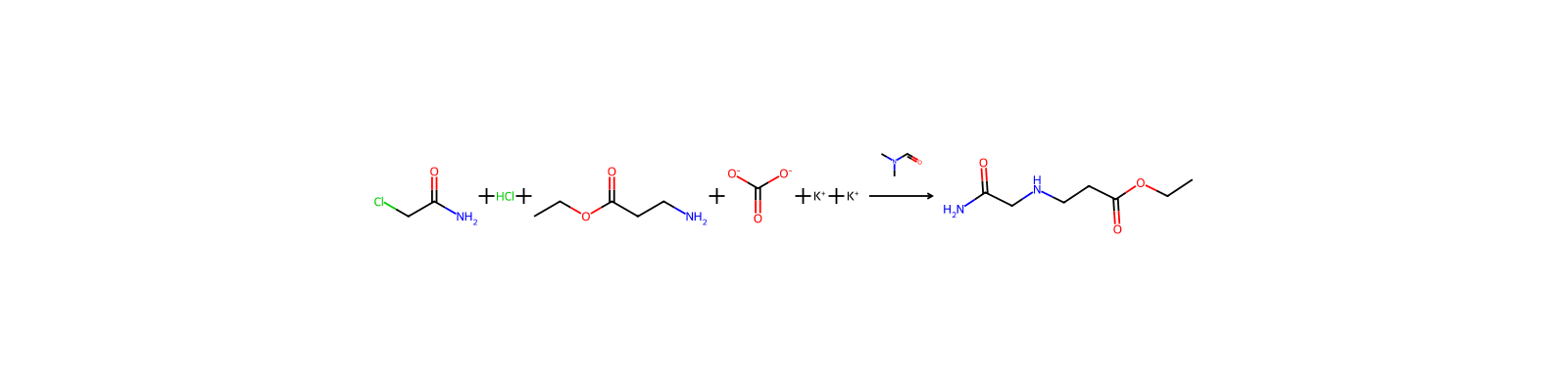
関連反応
260 件



化合物ノート
読み込み中…