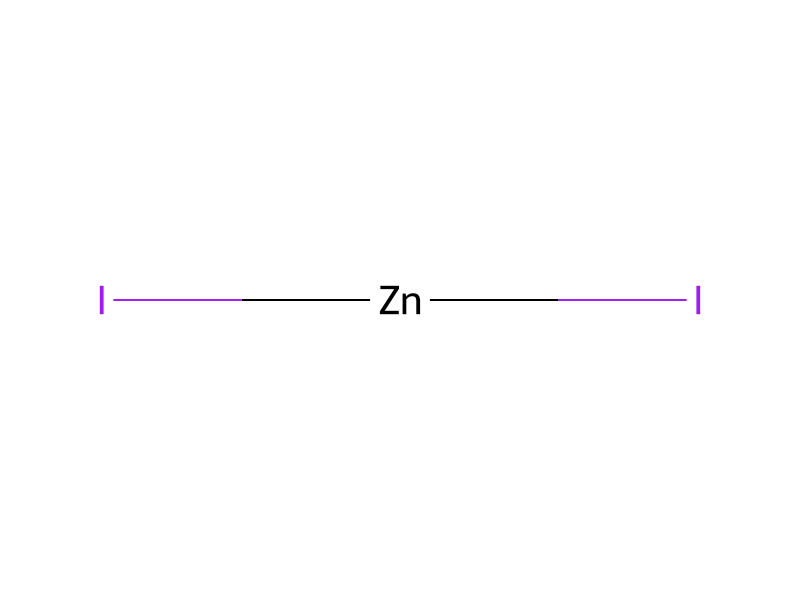
基本情報
- CAS
10139-47-6- 標準SMILES
[I][Zn][I]- InChIKey
UAYWVJHJZHQCIE-UHFFFAOYSA-L- 分子式
- I2Zn
- 平均分子量
- 319.2 g/mol
- 単同位体質量
- 317.7380882
概要
Zinc iodide is a iodide of zinc. It is used in x-rays and electron microscopy. Zinc is a metallic element with the atomic number 30. It is found in nature most often as the mineral sphalerite. Though excess zinc in harmful, in smaller amounts it is an essential element for life, as it is a cofactor for over 300 enzymes and is found in just as many transcription factors. (L48, L49, L69)
名称と識別子
- 優先名称
- Zinc iodide
- IUPAC
- diiodozinc
- 現地名
- ヨウ化亜鉛
- 英語名
- Zinc iodide
- 分子式
- I2Zn
- 分子量
- 319.2
名称と別名
名称をさらに表示
データベース識別子
- CAS
10139-47-6- PubChem CID
- 66278
- DTXSID
DTXSID5064968- EC Number
- 233-396-0
物性
構造計算による物性
- 極性表面積
- 0 Ų
- 水素結合供与体数
- 0
- 水素結合受容体数
- 0
- 回転可能結合数
- 0
- 重原子数
- 3
- 形式電荷
- 0
- 複雑度
- 2.8
実験および物理化学的性質
物理化学的性質
- 融点
- 445 °C · 445 °C (lit.)
- 沸点
- 624 °C · 624°C
- 比重(密度)
- 4.74 g/mL · 4.74 g/mL at 25 °C (lit.)
- 闪点
- 625 °C · 625°C
- 貯蔵温度
- 5 °C · Store at +5°C to +30°C.
- 溶解性
- 4500 g/リットル · 4500g/リットル
- 外見
- ビーズ
- 色
- 白色~淡黄色
- 比重
- 4.74 · 4.74
- PH
- 5.6 · 5.6 (50g/l, H2O, 20℃)
- 水溶解度
- 333 g/100mL · 333g/100mL
- Merck
- 14 · 14,10140
- InChI
- 1S/2HI.Zn/h2*1H;/q;;+2/p-2
- InChIKey
- UAYWVJHJZHQCIE-UHFFFAOYSA-L
- SMILES
- I[Zn]I
- CAS データベース
- 10139 · 10139-47-6(CAS DataBase Reference)
- NISTの化学物質情報
- Zinc diiodide(10139-47-6)
- EPAの化学物質情報
- Zinc iodide (ZnI2) (10139-47-6)
化学的性質
化学的特性亜鉛ヨウ化物は化学式でZnI2と表される無機化合物ですこの化合物は亜鉛とヨウ素のイオンが結合してできる塩であり透明から淡黄色の結晶または顆粒状の固体として存在します水に良く溶ける特性を持ちエタノールやアセトンにも可溶ですそのため様々な化学反応の媒介や触媒として利用されることがあります
化学的特性Zinc iodide is a Hygroscopic, white, crystalline powder with a sharp saline taste. It gradually turns brown in the air due to the release of iodine. Its melting point is 446°C, boiling point is about 624°C (decomposes), and relative density is 4.736 (25°C). It is easily soluble in water, ethanol, ether, ammonia water, sodium hydroxide, and ammonium carbonate solutions. Its aqueous solution is acidic to litmus, with a pH of about 5.
化学性质亜鉛ヨウ化物は主に二つの方法で製造されます一つ目は亜鉛金属とヨウ素を直接反応させる方法ですこの反応は発熱反応でありZnとI2からZnI2が生成されます二つ目は亜鉛塩例えば亜鉛硫酸塩とヨウ化カリウムKIを水溶液中で反応させる方法ですこの反応では沈殿が生じず反応後に溶液から亜鉛ヨウ化物を結晶化させて回収します
安全と法規制
GHS分類
GHS Classification
This chemical does not meet GHS hazard criteria for 1.7% (1 of 58) of reports.
Danger
H314 (93.1%): Causes severe skin burns and eye damage [Danger Skin corrosion/irritation]
P260, P264, P273, P280, P301+P330+P331, P302+P361+P354, P304+P340, P305+P354+P338, P316, P321, P363, P391, P405, and P501 (click each P-code to see the statement)
Aggregated GHS information provided per 58 reports by companies from 9 notifications to the ECHA C&L Inventory. Each notification may be associated with multiple companies.
危険有害性情報
Regulatory Information
Chemical: Zinc iodide (ZnI2)
Zinc iodide: Does not have an individual approval but may be used under an appropriate group standard
安全と保護具
毒性情報
Toxicity Summary
Anaemia results from the excessive absorption of zinc suppressing copper and iron absorption, most likely through competitive binding of intestinal mucosal cells. Unbalanced levels of copper and zinc binding to Cu,Zn-superoxide dismutase has been linked to amyotrophic lateral sclerosis (ALS). Stomach acid dissolves metallic zinc to give corrosive zinc chloride, which can cause damage to the stomach lining. Metal fume fever is thought to be an immune response to inhaled zinc. (L48, L49, A49)
Signs and Symptoms
Ingestion of large doses of zinc causes stomach cramps, nausea, and vomiting. Acute inhalation of large amounts of zinc causes metal fume fever, which is characterized by chills, fever, headache, weakness, dryness of the nose and throat, chest pain, and coughing. Dermal contact with zinc results in skin irritation. (L49)
安全データ
- F
- 3-8-23
- wgk
- 3
- tsca
- TSCA listed
- ridadr
- UN 3260 8/PG 3
- PRTR法
- 1-1
- hs_code
- 28276000
- risk_code
- 34
- 安衛法
- 57,57-2
- hazard_code
- C
- safety_code
- 26-36/37/39-45
- hazard_class
- 8
- packing_group
- II
- 毒劇物取締法
- III
- Hazard Classifications
- Aquatic Acute 1Aquatic Chronic 1Eye Irrit. 2Skin Irrit. 2STOT RE 2 Oral
- ストレージクラス
- 13 - Non Combustible Solids
化学と産業
薬理情報
Metabolism/Metabolites
Zinc can enter the body through the lungs, skin, and gastrointestinal tract. Intestinal absorption of zinc is controlled by zinc carrier protein CRIP. Zinc also binds to metallothioneins, which help prevent absorption of excess zinc. Zinc is widely distributed and found in all tissues and tissues fluids, concentrating in the liver, gastrointestinal tract, kidney, skin, lung, brain, heart, and pancreas. In the bloodstream zinc is found bound to carbonic anhydrase in erythrocytes, as well as bound to albumin, _2-macroglobulin, and amino acids in the the plasma. Albumin and amino acid bound zinc can diffuse across tissue membranes. Zinc is excreted in the urine and faeces. (L49)
用途と製造
Uses
Used as a topical antiseptic and astringent; [Merck Index] Used as an analytical reagent; [Hawley]
Using Disinfectants or Biocides [Category: Clean]
Zinc iodide is used in x-rays and electron microscopy. (L69)
応用分野
解説ヨウ化亜鉛,融点446 ℃(分解).沸点624 ℃.密度4.7 g cm-3.潮解性で,水,エタノール,エーテル,液体アンモニア,炭酸アンモニウム水溶液に易溶.ヨウ化亜鉛の水溶液にデンプンを加えたものはヨウ化亜鉛デンプン指示薬といい,亜硝酸,塩素などの酸化剤により青色を呈するので,これら酸化剤の検出試薬として用いられる.そのほか,歯科治療にも用いられる.森北出版「化学辞典(第2版)
用途高純度金属化合物。
用途有機合成 : 和光試薬時報Vol.62 No.1,p.25(1994)。
使用Zinc Iodide is used in the morphological study of dendritic cells in human cervix by zinc iodide osmium method. It is also used in conjunction with osmium tetroxide as a stain in electron microscopy.
使用用途ヨウ化亜鉛の主な使用用途は、放射線の遮蔽、ヨウ化亜鉛でんぷん指示薬の原料、シモンズ・スミス反応の試薬、歯科治療での殺菌剤、電子材料などです。 ヨウ化亜鉛でんぷん指示薬は、亜硝酸、などの酸化剤によって青色を呈色するため、これら酸化剤の検出試薬として用いられています。また、ヨウ化亜鉛を試薬として用いるシモンズ・スミス反応は、オレフィンをシクロプロパン化する反応であるため、シクロプロパン環を有する生理活性物質や医薬品などの合成に有用な反応を示します。
調製方法
製造方法Zinc iodide is prepared by the interaction of zinc sulfate solution and barium iodide solution, filtering out the barium sulfate precipitate and evaporating the filtrate to make it crystallize or by directly combining zinc and iodine.
純化方法Heat the iodide to 300o under vacuum (2 x 10⁻²mm) for 1hour, then sublime it. Its solubility in H2O is 0.3mL/g, and it is soluble in EtOH. Store it in the dark.
上流・下流製品情報
上流原料
サプライヤー100 社
関連反応
現在のフィルター条件では反応記録がありません。
化合物ノート
読み込み中…