N,N'-ジエチル-N,N'-ジフェニル尿素
Centralite
HCID 6828
データを補完しています。しばらくしてからページを更新すると最新の内容を表示できます
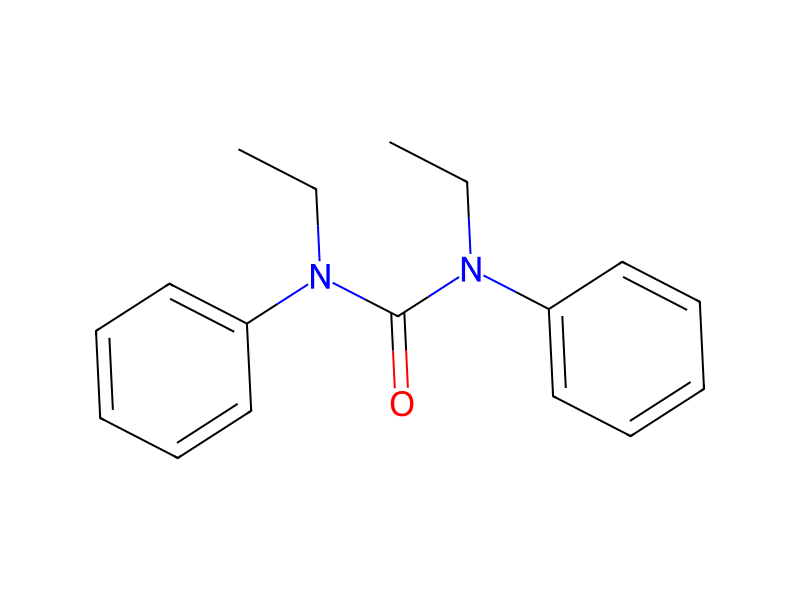
基本情報
- CAS
85-98-3- 標準SMILES
CCN(C(=O)N(CC)c1ccccc1)c1ccccc1- InChIKey
PZIMIYVOZBTARW-UHFFFAOYSA-N- 分子式
- C17H20N2O
- 平均分子量
- 268.35 g/mol
- 単同位体質量
- 268.15756327
概要
N,n'-diethylcarbanilide appears as white flakes or white crystalline solid. Peppery odor. (NTP, 1992)
名称と識別子
- 優先名称
- Centralite
- IUPAC
- 1,3-diethyl-1,3-diphenylurea
- 現地名
- N,N'-ジエチル-N,N'-ジフェニル尿素
- 英語名
- 1,3-Diethyl-1,3-diphenylurea
- 分子式
- C17H20N2O
- 分子量
- 268.35
名称と別名
1,3-Diethyl-1,3-diphenylurea85-98-3N,N'-DiethylcarbanilideCentraliteEthyl centraliteCentralite ICarbamiteN,N'-Diethyl-N,N'-diphenylureasym-DiethyldiphenylureaCentralite-1Bis(N-ethyl-N-phenyl)ureaUrea, N,N'-diethyl-N,N'-diphenyl-
名称をさらに表示
N,N'-ジエチル-N,N'-ジフェニル尿素N,N'-ジエチルカルバニリドセントラライトIs-ジエチルジフェニル尿素1,3-ジエチル-1,3-ジフェニル尿素カルバミトN,N'-ジフェニル-N,N'-ジエチル尿素ビス(NエチルNフェニル)ユリアエチルセントラライトN,N′-ジフェニル-N,N′-ジエチル尿素N,N′-ジエチルカルバニリドN,N′-ジエチル-N,N′-ジフェニル尿素CENTRALITusafek-1047CENTRALIT 1DIETHYLDIPHENYLUREA
Centralite 1USAF EK-1047Carbanilide, N,N'-diethyl-DTXSID80250404169Z9SDJGNSC-28779NSC-44038DTXCID705040
データベース識別子
- CAS
85-98-3- PubChem CID
- 6828
物性
構造計算による物性補完中
- XLogP
- 3.6
- 極性表面積
- 23.6 Ų
- 水素結合供与体数
- 0
- 水素結合受容体数
- 1
- 回転可能結合数
- 4
- 重原子数
- 20
- 形式電荷
- 0
- 複雑度
- 265
実験および物理化学的性質
SpringerMaterials PropertiesCrystal structure
Density1.12 at 68 °F (NTP, 1992) - Denser than water; will sink
Solubilityless than 1 mg/mL at 70.7 °F (NTP, 1992)
Flash Point302 °F (NTP, 1992)
Boiling Point617 to 626 °F at 760 mmHg (NTP, 1992)
Melting Point174 °F (NTP, 1992)
Vapor Density9.3 (NTP, 1992) - Heavier than air; will sink (Relative to Air)
Physical Description
N,n'-diethylcarbanilide appears as white flakes or white crystalline solid. Peppery odor. (NTP, 1992)
CBI
物理化学的性質
- 融点
- 73 · 73-75 °C(lit.)
- 沸点
- 411.52 °C · 411.52°C (rough estimate)
- 比重(密度)
安全と法規制
安全情報は参考情報です。供給元の安全データシート(SDS)、適用法令、専門家による評価に代わるものではありません。
GHS分類
GHS Classification
Warning
H302 (100%): Harmful if swallowed [Warning Acute toxicity, oral]
P264, P270, P273, P301+P317, P330, and P501 (click each P-code to see the statement)
Aggregated GHS information provided per 85 reports by companies from 3 notifications to the ECHA C&L Inventory. Each notification may be associated with multiple companies.
危険有害性情報
Regulatory Information
Chemical: Urea, N,N'-diethyl-N,N'-diphenyl-
Urea, N,N'-diethyl-N,N'-diphenyl- is listed on the EPA's Chemical Data Reporting (CDR) system. Manufacturers and importers of Urea, N,N'-diethyl-N,N'-diphenyl- are required to report information about their production and use of this chemical to the EPA under the Toxic Substances Control Act (TSCA). (40 eCFR Part 711)
REACH registered substance: 1,3-diethyldiphenylurea (EC: 201-645-2)
Urea, N,N'-diethyl-N,N'-diphenyl-: Does not have an individual approval but may be used as a component in a product covered by a group standard. It is not approved for use as a chemical in its own right.
Fire HazardsThis chemical is combustible. (NTP, 1992)
Health HazardsACUTE/CHRONIC HAZARDS: This compound may react violently when severely shocked or heated to extreme temperatures. (NTP, 1992)
Reactive GroupAmides and Imides
Reactivity AlertsExplosive
Reactivity Profile
N,N'-DIETHYLCARBANILIDE is an amide. Amides/imides react with azo and diazo compounds to generate toxic gases. Flammable gases are formed by the reaction of organic amides/imides with strong reducing agents. Amides are very weak bases (weaker than water). Imides are less basic yet and in fact react with strong bases to form salts. That is, they can react as acids. Mixing amides with dehydrating agents such as P2O5 or SOCl2 generates the corresponding nitrile. The combustion of these compounds generates mixed oxides of nitrogen (NOx). This compound is incompatible with acids and oxidizing agents. This chemical reacts violently when severely shocked or exposed to extreme temperatures. (NTP, 1992)
化学と産業
用途と製造
U.S. Production2023: 250,000 - <550,000 lb
Industry UsesOxidizing agent
General Manufacturing Information
All Other Chemical Product and Preparation Manufacturing
Urea, N,N'-diethyl-N,N'-diphenyl-: ACTIVE
応用分野
使用1,3-Diethyl-1,3-diphenylurea is a gunshot residue and a stabilizer for smokeless powder.
一般的な説明White flakes or white crystalline solid. Peppery odor.
関連反応
0 件
関連する反応はまだありません