
基本情報
- 標準SMILES
C=CC1=C(C(=O)O)N2C(=O)[C@@H](NC(=O)/C(=N\O)c3csc(N)n3)[C@H]2SC1- InChIKey
RTXOFQZKPXMALH-GHXIOONMSA-N- 分子式
- C14H13N5O5S2
- 平均分子量
- 395.4 g/mol
- 単同位体質量
- 395.03581052
概要
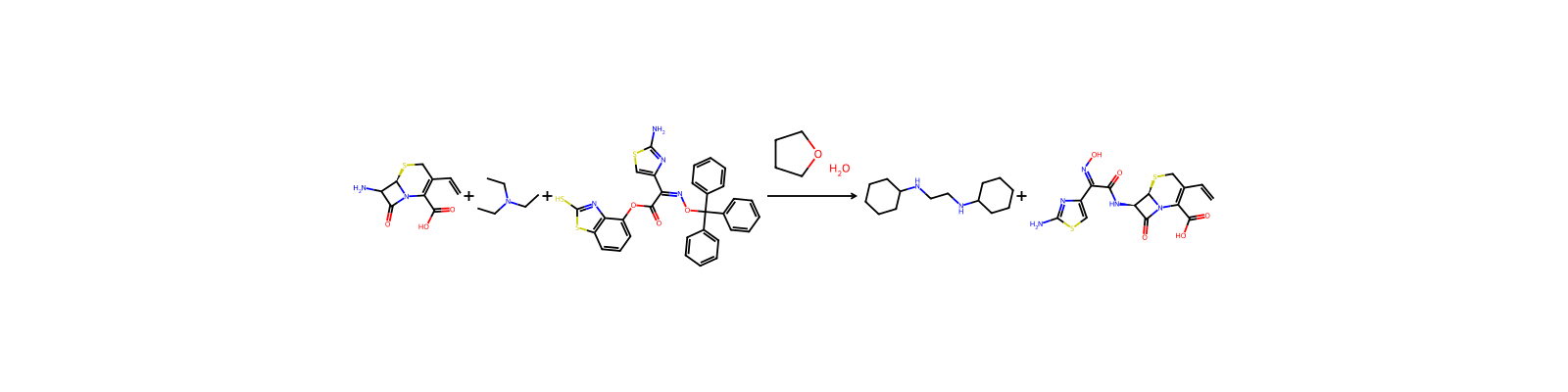
Cefdinir is a cephalosporin compound having 7beta-2-(2-amino-thiazol-4-yl)-2-[(Z)-hydroxyimino]-acetylamino- and 3-vinyl side groups. It has a role as an antibacterial drug. It is a cephalosporin and a ketoxime.
名称と識別子
- 優先名称
- Cefdinir
- IUPAC
- (6R,7R)-7-[[(2Z)-2-(2-amino-1,3-thiazol-4-yl)-2-hydroxyiminoacetyl]amino]-3-ethenyl-8-oxo-5-thia-1-azabicyclo[4.2.0]oct-2-ene-2-carboxylic acid
- 現地名
- セフジニル
- 英語名
- Cefdinir
- 分子式
- C14H13N5O5S2
- 分子量
- 395.41
名称と別名
cefdinir91832-40-5OmnicefCefzonCFDNCefdinirumFK 482FK-482CI-983Cefdinir anhydrousDTXSID8046084BMY-28488
名称をさらに表示
セフロジール(6R)-7α-[[(Z)-2-(2-アミノ-4-チアゾリル)-2-(ヒドロキシイミノ)アセチル]アミノ]-3-エテニル-8-オキソ-5-チア-1-アザビシクロ[4.2.0]オクタ-2-エン-2-カルボン酸セフゾン(6R,7R)-7α-[[(2-アミノ-4-チアゾリル)[(Z)-ヒドロキシイミノ]アセチル]アミノ]-3-エテニル-8-オキソ-5-チア-1-アザビシクロ[4.2.0]オクタ-2-エン-2-カルボン酸(6R,7R)-3-ビニル-7-[(2-アミノ-4-チアゾリル)[(Z)-ヒドロキシイミノ]アセチルアミノ]-8-オキソ-5-チア-1-アザビシクロ[4.2.0]オクタ-2-エン-2-カルボン酸セフジニル(6R,7R)-7-[(2-アミノ-4-チアゾリル)[(Z)-ヒドロキシイミノ]アセチルアミノ]-8-オキソ-3-ビニル-5-チア-1-アザビシクロ[4.2.0]オクタ-2-エン-2-カルボン酸[6R,7R,(-)]-7-[(2-アミノ-4-チアゾリル)[(Z)-ヒドロキシイミノ]アセチルアミノ]-8-オキソ-3-ビニル-5-チア-1-アザビシクロ[4.2.0]オクタ-2-エン-2-カルボン酸セフジニル (JP17)セフニール(6R,7R)-7-[(2Z)-2-(2-アミノ-1,3-チアゾール-4-イル)-2-(N-ヒドロキシイミノ)アセトアミド]-3-エテニル-8-オキソ-5-チア-1-アザビシクロ[4.2.0]オクタ-2-エン-2-カルボン酸シオジニルsyn-7-[2-(2-amino-4-thiazolyl)-2-hydroxyiminoacetamido]-3-vinyl-3-cephem-4-carboxylic acid7-[2-(2-AMINOTHIAZOL-4-YL)-2-HYDROXYIMINOACETYLAMINO]-8-OXO-3-VINYL-5-THIA-1-AZA-BICYCLO[4.2.0]OCT-2(6R,7R)-3-Vinyl-7-[(2-amino-4-thiazolyl)[(Z)-hydroxyimino]acetylamino]-8-oxo-5-thia-1-azabicyclo[4.2.0]octa-2-ene-2-carboxylic acid8-[2-(2-amino-1,3-thiazol-4-yl)-1-hydroxy-2-nitroso-ethenyl]amino-4-ethenyl-7-oxo-2-thia-6-azabicyclo[4.2.0]oct-4-ene-5-carboxylicacid(6R,7R)-7α-[[(2-Amino-4-thiazolyl)[(Z)-hydroxyimino]acetyl]amino]-3-ethenyl-8-oxo-5-thia-1-azabicyclo[4.2.0]oct-2-ene-2-carboxylic acid(6R,7R)-7-[[(2Z)-(2-Amino-4-thiazolyl)(hydroxyimino)acetyl]amino]-3-ethenyl-8-oxo--5-thia-1-azabicyclo[4.2.0]oct-2-ene-2-carboxylic Acid[6R-[6α,7β(Z)]]_7-[[(2-Amino-4-thiazolyl)(hydroxyimino)acetyl]amino]-3-ethenyl-8-oxo-5-thia-1-azabicyclo[4.2.0]oct-2-ene-2-carboxylic acid(6R,7R)-7-[[2-(2-amino-1,3-thiazol-4-yl)-2-hydroxyimino-acetyl]amino]-3-ethenyl-8-oxo-5-thia-1-azabicyclo[4.2.0]oct-2-ene-2-carboxylic acid
CI0FAO63WCPD-134393NSC-758926CHEBI:3485CI983FK482DTXCID20820060(6R,7R)-7-[(2Z)-2-(2-amino-1,3-thiazol-4-yl)-2-(N-hydroxyimino)acetamido]-3-ethenyl-8-oxo-5-thia-1-azabicyclo[4.2.0]oct-2-ene-2-carboxylic acid
データベース識別子
- CAS
91832-40-5- PubChem CID
- 6915944
- DTXSID
DTXSID8046084- ChEMBL
CHEMBL927- ChEBI
CHEBI:3485- UNII
- CI0FAO63WC
- EC Number
- 643-088-1
- Nikkaji
- J227.563E
物性
構造計算による物性
- XLogP
- 0
- 極性表面積
- 212 Ų
- 水素結合供与体数
- 4
- 水素結合受容体数
- 10
- 回転可能結合数
- 5
- 重原子数
- 26
- 形式電荷
- 0
- 複雑度
- 739
実験および物理化学的性質
Drugs
Pharmaceuticals -> Antibiotics
Pharmaceuticals -> Listed in ZINC15
LogP-0.2
Solubility8.78e-02 g/L
Human Drugs
Breast Feeding; Lactation; Anti-Infective Agents; Antibacterial Agents; Cephalosporins;
FDA approved drugs -> Active ingredient
FDA approved drugs -> Active ingredient
Melting Point>135
Physical DescriptionSolid
Dissociation Constants
3.35
9.7
物理化学的性質
- 融点
- 180 °C · >180°C dec.
- 比重(密度)
- 1.89 · 1.89±0.1 g/cm3(Predicted)
- 貯蔵温度
- 2 · Keep in dark place,Sealed in dry,2-8°C
- 溶解性
- 希塩酸: わずかに溶ける
- 酸解離定数(Pka)
- 9.7 · 9.70(at 25℃)
- 外見
- 個体
- 色
- 淡黄色~淡黄色
- 水溶解度
- 水に溶ける
- Merck
- 14 · 14,1920
- BCS Class
- 4 · 4
- 主な用途
- 医薬品
- InChIKey
- RTXOFQZKPXMALH-GHXIOONMSA-N
- SMILES
- N12[C@@]([H])([C@H](NC(/C(/C3=CSC(N)=N3)=N\O)=O)C1=O)SCC(C=C)=C2C(O)=O
- CAS データベース
- 91832 · 91832-40-5(CAS DataBase Reference)
化学的性質
化学的特性Pale Yellow Solid
安全と法規制
GHS分類
GHS Classification
Danger
H315 (20%): Causes skin irritation [Warning Skin corrosion/irritation]
P233, P260, P261, P264, P264+P265, P271, P272, P280, P284, P302+P352, P304+P340, P305+P351+P338, P319, P321, P332+P317, P333+P317, P337+P317, P342+P316, P362+P364, P403, P403+P233, P405, and P501 (click each P-code to see the statement)
Aggregated GHS information provided per 5 reports by companies from 3 notifications to the ECHA C&L Inventory. Each notification may be associated with multiple companies.
危険有害性情報
Hazard Classes and CategoriesSkin Irrit. 2 (20%)
毒性情報
Drug Induced Liver Injury
Drug Induced Liver Injury Rank (DILIrank 2.0)
Cefdinir
vLess-DILI-concern
7
Adverse reactions
DOI:10.1016/j.drudis.2016.02.015
Effects During Pregnancy and Lactation◉ Summary of Use during Lactation
安全データ
- wgk
- 3
- rtecs
- XI0367250
- 毒性
- LD50 orl-rat: >5600 mg/kg IYKEDH 23,93,1992
- hs_code
- 2941906000
- ストレージクラス
- 11 - Combustible Solids
化学と産業
薬理情報
ATC Code
J - Antiinfectives for systemic use
QJ - Antiinfectives for systemic use
Protein BindingThe plasma protein binding of cefdinir ranges from 60% to approximately 70%.
Pharmacodynamics
Cefdinir is a bactericidal agent that treats bacterial infections by interfering with cell wall synthesis. Cefdinir exerts broad-spectrum activity against a variety of gram-positive and gram-negative bacterial infections. It is effective against several beta-lactamase enzyme producing bacteria. As a result, many organisms that are resistant to other cephalosporins may be susceptible to cefdinir.
Mechanism of Action
Five-member thiazolidine rings that make up penicillins are replaced in cephalosporins by a six-member dihydrothiazine ring, conferring greater bactericidal activity. This 6-member ring enables cefdinir and other cephalosporins to resist inactivation by certain bacterial enzymes. With a mechanism similar to other beta-lactam antibiotics, the bactericidal activity of cefdinir is caused by the inhibition of cell wall synthesis via binding to penicillin-binding proteins (PBPs). Cefdinir, like other cephalosporins, penetrates the bacterial cell wall, combats inactivation by beta-lactamase enzymes, and inactivates penicillin-binding proteins. This interferes with the final step of transpeptidation in cell walls, eventually leading to cell lysis, which eventually leads to the death of bacteria that are susceptible to this drug. Cefdinir has shown affinity to penicillin protein binding proteins 2 and 3. It has also been shown to inhibit transpeptidase enzymes of various bacteria, which may play a role in its bactericidal action. One in vitro study suggests that cefdinir inhibits myeloperoxidase release extracellularly. The impact of this potential drug target in relation to its mechanism of action is unknown.
Biological Half-LifeThe average plasma elimination half-life is about 1.7 hours in adults. In children and healthy infants, plasma elimination half-life ranges from 1.2–1.5 hours.
Metabolism/MetabolitesThis drug is not significantly metabolized and its pharmacological actions are mainly attributed to the parent drug.
FDA Pharmacological Classification
CI0FAO63WC
CEFDINIR
Established Pharmacologic Class [EPC] - Cephalosporin Antibacterial
Chemical Structure [CS] - Cephalosporins
Cefdinir is a Cephalosporin Antibacterial.
CEFDINIR
MeSH Pharmacological Classification
Agents that are structurally similar to other CEPHALOSPORINS but have a broader spectrum of activity against bacteria than the first and second generation cephalosporins. These agents cover more resistant STREPTOCOCCUS, STAPHYLOCOCCUS, gram-positive anaerobes, and more resistant strains of HAEMOPHILUS, NEISSERIA, PROTEUS, ESCHERICHIA COLI, and KLEBSIELLA (HNPEK).
Absorption, Distribution and Excretion
Maximal plasma cefdinir concentration can be attained between 2-4 hours after an ingested dose. The bioavailability of cefdinir depends on the formulation used. The estimated bioavailability of cefdinir in the capsule form is approximately 16%-21%, depending on the dose. Absolute bioavailability after the administration of a suspension of cefdinir is 25%.. The Cmax of cefdinir is 1.60 μg/mL after a 300 mg dose with an AUC of 7.05. Cmax is 2.87 μg/mL after a 600 mg dose with an AUC of 11. A meal high in fat can reduce the absorption of cefdinir by up to 15%, however, this is not a cause for clinically significant changes, therefore cefdinir may be taken with or without food. When given with aluminum or magnesium-containing antacids or iron, cefdinir absorption may decrease. It is recommended to allow 2 hours between cefdinir administration and the administration of these agents.
This drug is mainly excreted by the kidneys. Dose adjustments may be required for patients with renal impairment or patients on dialysis. Approximately 18.4% of a 300 mg dose of cefdinir was found unchanged in the urine after a 300 mg dose was administered during a pharmacokinetic study of 21 individuals. A large proportion of the administered dose is excreted in the feces, although the majority is found in the urine.
The average volume of distribution of cefdinir in adults is about 0.35 L/kg and 0.67 L/kg in children. Another resource estimates the volume of distribution in adults at 1.56–2.09 L/kg. Cefdinir is found to be distributed in various tissues at clinically effective concentrations. It may be found in the epithelial lining fluid, bronchial mucosa, tonsils, sinuses, skin blister fluid, as well as the middle ear fluid. Third-generation cephalosporins such as cefdinir cross the blood-brain barrier and are found in high concentrations in the cerebrospinal fluid, unlike their first and second generation counterparts. The wide tissue distribution of cefdinir allows it to treat a variety of infections throughout the body.
The renal clearance in healthy adults in a pharmacokinetic study was 2.0 (± 1.0) mL/min/kg and the clearance in patients with renal failure was lower, decreasing in proportion to the degree of renal impairment. Dose adjustment is required in patients with renal impairment.
Cellular LocationsCytoplasm
用途と製造
UsesUse (kg) in USA (2002): 11300
応用分野
用途第 3 世代のセファロスポリン 系抗生物質です。ペニシリン結合タンパクに 結合し、細胞壁の合成阻害作用を示します。 抗菌スペクトルは広く、グラム陰性菌に対し、 強い抗菌力を示します。
説明Cefdinir is an orally active, beta-lactamase stable cephalosporin with a broad spectrum of activity. Compared to other oral cephalosporins, cefdinir is more potent against Gram-positive bacteria, especially Staphylococci. Its activity against Gram-negative bacteria such as E.coli,K. pneumoniae and P.mirabilis is similar to cefixime, but superior to cefaclor and cephalexin.
使用A Cephalosporin antibiotic structurally similar to Cefixime
上流・下流製品情報
上流原料
サプライヤー50 社
国药集团化学试剂有限公司86-21-63210123 · [email protected]
北京华美互利生物化工010-56205725 · [email protected]
梯希爱(上海)化成工业发展有限公司021-67121386 · [email protected]
上海阿拉丁生化科技股份有限公司400-6206333 13167063860 · [email protected]
河北展药生物科技有限公司15369953316 +8615369953316 · [email protected]
Baoji Guokang Healthchem co.,ltd+8615604608665 15604608665 · [email protected]
Hebei Henghe Import and Export Trading Co. LTD+8618032935937 18032916000 · [email protected]
Hebei Yanxi Chemical Co., Ltd.+86-17531190177 · [email protected]
LGM Pharma1-(800)-881-8210 · [email protected]
大连美仑生物技术有限公司0411-62910999 13889544652 · [email protected]
武汉凯威斯科技有限公司86-027-67849912 · [email protected]
上海柯维化学技术有限公司021-64609169 18901607656 · [email protected]
上海景颜化工科技有限公司13817811078 · [email protected]
Pure Chemistry Scientific Inc.001-857-928-2050 or 1-888-588-9418 · [email protected]
MedChemexpress LLC021-58955995 · [email protected]
Zhejiang J&C Biological Technology Co.,Limited+1-2135480471 · [email protected]
孝感深远化工有限公司15527621225; 15527621225 · [email protected]
湖南汇百侍生物科技有限公司0731-85526065 13308475853 · [email protected]
上海源叶生物科技有限公司13636370518 · [email protected]
深圳菲斯生物科技有限公司0755-83725681-603
上海思域化工科技有限公司86-21-34053660 · [email protected]
AdooQ BioScience, LLC+1 (866) 930-6790 · [email protected]
Wuhan NCE Biomedical Co.,Ltd.4000-027-021 |24 +86-13986109188 | +86-15623472865 | +81-08033611988
TCI AMERICA800-4238616 · [email protected]
TOKYO CHEMICAL INDUSTRY CO., LTD.03-36680489 · [email protected]
TCI Europe320-37350700 · [email protected]
深圳振强药物研发有限公司0755-66853366 13670046396 · [email protected]
广州爱纯医药科技有限公司020-39119399 18927568969 · [email protected]
南京生利德生物科技有限公司025-57798810 18652991625 · [email protected]
湖北威德利化学试剂有限公司186-02735115 18602735115 · [email protected]
Cato Research Chemicals Inc.020-81960175 · [email protected]
北京环宇世纪化学科技有限公司hysj_bj.com
上海将来实业股份有限公司021-61552785 · [email protected]
上海创赛科技有限公司400-6087598 15021221957 · [email protected]
潍坊鲁泽新材料有限公司0536-7971999 13583611556 · [email protected]
杭州杰恒化工有限公司0571-87396432 · [email protected]
南京百鑫德诺生物科技有限公司025-58849295 · [email protected]
广州市慈铭生物科技有限公司020-38082199,29065168,38082986,29878298,29866629,4000192398
上海孚一生物科技有限公司+86 (21) 61124340
凯试(上海)科技有限公司021-50135380 · [email protected]
湖北巨胜科技有限公司027-59599241 18871490274 · [email protected]
池州凯隆进出口贸易有限公司[email protected]
TargetMol中国(陶术生物)021-021-33632979 15002134094 · [email protected]
Hebei Runbin Biotechnology Co. LTD13180553332 · [email protected]
上海陶术生物科技股份有限公司+1-781-999-5354; +1-00000000000 · [email protected]
上海波以尔化工有限公司021-50182298 021-50180596 · [email protected]
BOC Sciences16314854226; +8616314854226 · [email protected]
西安天广源生物科技有限公司+86-029-86333380 +86-18829239519 · [email protected]
sgtlifesciences pvt ltd+91-8790379245 · [email protected]
湖北源梦生物科技有限公司027-68897569 18120462897 · [email protected]
補足説明
定義ChEBI: A cephalosporin compound having 7beta-2-(2-amino-thiazol-4-yl)-2-[(Z)-hydroxyimino]-acetylamino- and 3-vinyl side groups.
関連反応
6 件


関連ノート
読み込み中…