
ホームMCPワークベンチSkills
ホームワークベンチ通知マイページ
llms.txt · MCPガイドプライバシーポリシー · 利用規約 · サポートv1.8.1
  1. ホーム
  2. /化合物

2-メチルベンゼンスルホンアミド・4-メチルベンゼンスルホンアミド

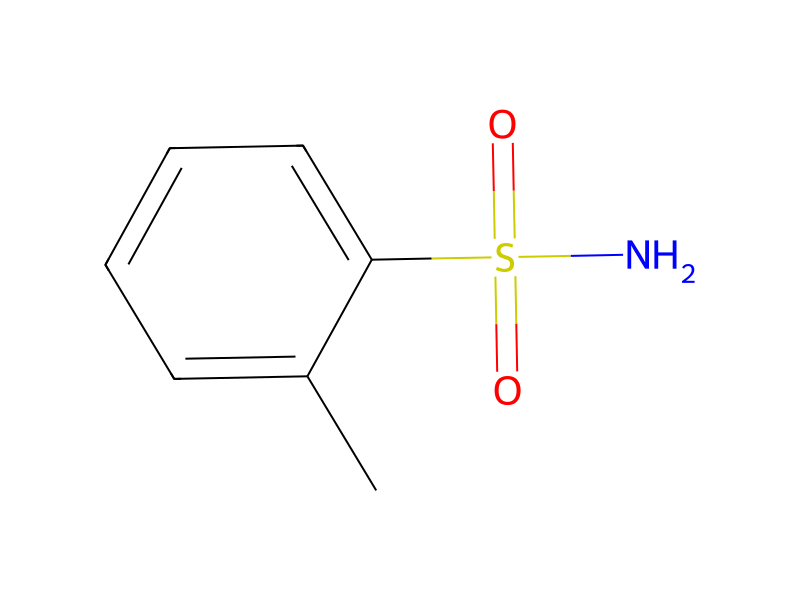
2-Methylbenzenesulfonamide

HCID 6924
反応を作成
印刷

データを補完しています。しばらくしてからページを更新すると最新の内容を表示できます
基本情報概要名称と識別子物性安全と法規制化学と産業関連反応化合物ノート
部分構造検索類似構造を探す

基本情報

CAS
1333-07-9
標準SMILES
Cc1ccccc1S(N)(=O)=O
InChIKey
YCMLQMDWSXFTIF-UHFFFAOYSA-N
分子式
C7H9NO2S
平均分子量
171.22 g/mol
単同位体質量
171.03539953

概要

saccharin impurity; starting material for preparation of saccharin; structure

名称と識別子

優先名称
2-Methylbenzenesulfonamide
IUPAC
2-methylbenzenesulfonamide
現地名
2-メチルベンゼンスルホンアミド・4-メチルベンゼンスルホンアミド
英語名
o-(or p)-toluenesulphonamide
分子式
C7H9NO2S
分子量
171.21686

名称と別名

O-TOLUENESULFONAMIDE88-19-72-Methylbenzenesulfonamide2-ToluenesulfonamideBenzenesulfonamide, 2-methyl-o-Methylbenzenesulfonamideortho-Toluenesulfonamide2-TolylsulfonamideOrtho-toluol-sulfonamidortho-ToluenesulphonamideDTXSID7021362R81Z6V889P
名称をさらに表示
2-メチルベンゼンスルホンアミド・4-メチルベンゼンスルホンアミドO/P-toluenesulfonateo-(or p)-toluenesulphonamideBenzenesulfonamide, 2(or 4)-methyl-o/p-Toluenesulfonamide@1000 μg/mL in Acetone
NSC-2185DTXCID301362o-toluolsulfonamideRefChem:910086201-808-82-methylbenzene-1-sulfonamideTOLUENESULFONAMIDEToluene-2-sulfonamide

データベース識別子

CAS
1333-07-9、8013-74-9、88-19-7
PubChem CID
6924
DTXSID
DTXSID7021362
ChEMBL
CHEMBL176892
UNII
R81Z6V889P
EC Number
201-808-8、232-394-7、903-036-3
Nikkaji
J3.544K

物性

構造計算による物性補完中

XLogP
0.8
極性表面積
68.5 Ų
水素結合供与体数
1
水素結合受容体数
3
回転可能結合数
1
重原子数
11
形式電荷
0
複雑度
217

実験および物理化学的性質

Chemical ClassesNitrogen Compounds -> Sulfonamides
SpringerMaterials PropertiesCrystal structure
LogP · 3 件

log Kow = 0.84

0.84

0.84

PlasticizersPlasticizer
Density1.46 g/cm³
Color/Form · 2 件

Octahedral crystals from alcohol; prisms from water

Colorless crystals

Solubility · 5 件

In water, 1.62X10+3 mg/L at 25 °C

Slightly soluble in water

Soluble in alcohol; slightly soluble in ether

Slightly soluble in ether, DMSO; soluble in ethanol

Solubility in water, g/100ml at 25 °C: 0.162

Boiling Point · 2 件

214 °C at 10 mm Hg

>270 °C

Melting Point · 2 件

156.3 °C

156 °C

Vapor Pressure · 2 件

安全と法規制

安全情報は参考情報です。供給元の安全データシート(SDS)、適用法令、専門家による評価に代わるものではありません。

GHS分類

GHS Classification · 6 件

This chemical does not meet GHS hazard criteria for 65.9% (112 of 170) of all reports.

Warning

H319 (28.2%): Causes serious eye irritation [Warning Serious eye damage/eye irritation]

P203, P264+P265, P280, P305+P351+P338, P318, P337+P317, P405, and P501 (click each P-code to see the statement)

Aggregated GHS information provided per 170 reports by companies from 9 notifications to the ECHA C&L Inventory. Each notification may be associated with multiple companies.

Not Classified

危険有害性情報

Regulatory Information · 5 件

Chemical: Benzenesulfonamide, 2-methyl-

Benzenesulfonamide, 2-methyl- is listed on the EPA's Chemical Data Reporting (CDR) system. Manufacturers and importers of Benzenesulfonamide, 2-methyl- are required to report information about their production and use of this chemical to the EPA under the Toxic Substances Control Act (TSCA). (40 eCFR Part 711)

Status: Active Update: 15-06-2018 https://echa.europa.eu/registration-dossier/-/registered-dossier/10712

Benzenesulfonamide, 2(or 4)-methyl-: Does not have an individual approval but may be used as a component in a product covered by a group standard. It is not approved for use as a chemical in its own right.

Toluene-2-sulfonamide: Does not have an individual approval but may be used as a component in a product covered by a group standard. It is not approved for use as a chemical in its own right.

Other Safety InformationEvaluation - Toluenesulfonamides
Fire HazardsCombustible. Gives off irritating or toxic fumes (or gases) in a fire.
Hazards Summary · 1 件

A mutagen, tumorigen, reproductive effector, and moderate eye irritant; [RTECS] Used therapeutically, sulfonamides can cause a range of hypersensitivity reactions including rashes and injury to the liver and kidneys; Methemoglobinemia has been reported after overdose; [HSDB] An eye irritant; [ICSC] An irritant; [MSDSonline] See p-Toluenesulfonamide and Toluenesulfonamide.

化学と産業

薬理情報

Metabolism/Metabolites · 4 件

...50% of administration ortho- and para-toluenesulfonamides excreted in urine had been metabolized to ortho- and para-sulfamoylbenzoic acids, respectively.

In female Wistar rats given single oral doses of 20, 125 or 200 mg/kg bw (14)C-orthotoluenesulfonamide, 79, 58 and 36% of the activity was recovered in 24 hr urine samples ... . The main metabolites in the urine were 2-sulfamoylbenzyl alcohol and its sulfate or glucuronic acid conjugates (80%), N-acetyltoluene-2-sulfonamide (6%), saccharin (3%) and 2-sulfamoylbenzoic acid (2%).

... After a single dose of 300 mg/kg bw of (35)S o-toluenesulfonamide to male Wistar rats ... . Approximately 50% of metabolites excreted in urine were o-sulfamoylbenzoic acid, while the compound excreted in feces was unchanged.

Low oral doses of 0.2-0.4 mg/kg bw (14)C-ortho-toluenesulfonamide were excreted more slowly in humans than in rats ... . The main urinary metabolites were 2-sulfamoylbenzoyl alcohol (unconjugated, 7%; conjugated with glucuronic acid, 11%; conjugated with sulfate, 20%), saccharin (35%) 2-sulfanoylbenzoic acid (4%) and N-acetyltoluene-2-sulfonamide (2%).

Absorption, Distribution and Excretion · 3 件

... After a single dose of 300 mg/kg bw of (35)S o-toluenesulfonamide to male Wistar rats, the radioactivity was recovered about 85% in urine and about 10% in feces mostly within 48 hr.

In female Wistar rats given single oral doses of 20, 125 or 200 mg/kg bw (14)C-orthotoluenesulfonamide, 79, 58 and 36% of the activity was recovered in 24 hr urine samples; elimination at 24-48 hr was 7, 14 and 33% of the dose, respectively. Within seven days, 4.5, 5.9 and 7% of the activity was recovered from the feces. ...

Low oral doses of 0.2-0.4 mg/kg bw (14)C-ortho-toluenesulfonamide were excreted more slowly in humans than in rats, an average of 56% of the activity being excreted in the urine within 24 hr and almost 90% within 48 hr. Less than 1% of the activity was found in feces.

用途と製造

Uses · 5 件

Used in mixtures with p-toluenesulfonamide as reactive plasticizer; Also used as a plasticizer for hot-melt adhesives and a chemical intermediate for fluorescent pigments and plasticizer resins; [HSDB] Used to make saccharin; [eChemPortal: SIDSUNEP] A contaminant of saccharin; [IARC]

関連反応

89 件

反応記録を作成
HRID 88723 の反応式
HRID 88723反応物としてTraining data from https://doi.org/10.1039/C8SC04228D (2/10)
HRID 92799 の反応式
HRID 92799反応物としてTraining data from https://doi.org/10.1039/C8SC04228D (2/10)
HRID 108449 の反応式
HRID 108449反応物としてTraining data from https://doi.org/10.1039/C8SC04228D (2/10)
HRID 115209 の反応式
HRID 115209反応物としてTraining data from https://doi.org/10.1039/C8SC04228D (2/10)
HRID 116686 の反応式
HRID 116686反応物としてTraining data from https://doi.org/10.1039/C8SC04228D (2/10)
HRID 118445 の反応式
HRID 118445反応物としてTraining data from https://doi.org/10.1039/C8SC04228D (2/10)
HRID 179353 の反応式
HRID 179353反応物としてTraining data from https://doi.org/10.1039/C8SC04228D (6/10)
HRID 232858 の反応式
HRID 232858反応物としてuspto-grants-1997_01
前へ1 / 12 ページ

化合物ノート

このページの内容基本情報概要名称と識別子物性安全と法規制化学と産業関連反応化合物ノート

0.00006 [mmHg]

Vapor pressure at 25 °C: negligible

Food Contact SubstancesFCS -> FDA Inventory of Food Contact Substances Listed in 21 CFR
Henry's Law ConstantHenry's Law constant = 4.7X10⁻⁷ atm-cu m/mole at 25 °C
FDA Requirementso- and p-Toluene sulfonamide is an indirect food additive for use as a component of adhesives. /o- and p-Toluene sulfonamide/
Chemical DangersDecomposes on burning. This produces toxic fumes including nitrogen oxides and sulfur oxides. Reacts with acids, bases and strong oxidants.
Toxic Combustion ProductsSpecial hazards arising from the substance or mixture: Carbon oxides, Nitrogen oxides (NOx), Sulfur oxides.
Hazard Classes and Categories · 3 件

Eye Irrit. 2 (28.2%)

Not Classified

Not Classified

Hazardous Reactivities and IncompatibilitiesIncompatible materials: Strong oxidizing agents, Strong bases.

安全と保護具

Fire FightingUse water spray, powder, foam, carbon dioxide.
First Aid Measures · 2 件

First rinse with plenty of water for several minutes (remove contact lenses if easily possible), then refer for medical attention.

Rinse mouth.

Safe StorageSeparated from strong oxidants, acids and bases.
Fire Fighting Procedures · 2 件

Suitable extinguishing media: Use water spray, alcohol-resistant foam, dry chemical or carbon dioxide.

Advice for firefighters: Wear self-contained breathing apparatus for firefighting if necessary.

Storage ConditionsKeep container tightly closed in a dry and well-ventilated place.
Cleanup Methods · 1 件

ACCIDENTAL RELEASE MEASURES: Personal precautions, protective equipment and emergency procedures: Use personal protective equipment. Avoid dust formation. Avoid breathing vapors, mist or gas. Ensure adequate ventilation. Evacuate personnel to safe areas. Avoid breathing dust. Environmental precautions: Prevent further leakage or spillage if safe to do so. Do not let product enter drains. Discharge into the environment must be avoided. Methods and materials for containment and cleaning up: Pick up and arrange disposal without creating dust. Sweep up and shovel. Keep in suitable, closed containers for disposal.

Disposal Methods · 2 件

SRP: Recycle any unused portion of the material for its approved use or return it to the manufacturer or supplier. Ultimate disposal of the chemical must consider: the material's impact on air quality; potential migration in air, soil or water; effects on animal, aquatic and plant life; and conformance with environmental and public health regulations. If it is possible or reasonable use an alternative chemical product with less inherent propensity for occupational harm/injury/toxicity or environmental contamination.

Product: Offer surplus and non-recyclable solutions to a licensed disposal company. Contact a licensed professional waste disposal service to dispose of this material; Contaminated packaging: Dispose of as unused product.

Spillage DisposalPersonal protection: particulate filter respirator adapted to the airborne concentration of the substance. Sweep spilled substance into covered containers. If appropriate, moisten first to prevent dusting.
Preventive Measures · 5 件

ACCIDENTAL RELEASE MEASURES: Personal precautions, protective equipment and emergency procedures: Use personal protective equipment. Avoid dust formation. Avoid breathing vapors, mist or gas. Ensure adequate ventilation. Evacuate personnel to safe areas. Avoid breathing dust. Environmental precautions: Prevent further leakage or spillage if safe to do so. Do not let product enter drains. Discharge into the environment must be avoided.

Precautions for safe handling: Avoid contact with skin and eyes. Avoid formation of dust and aerosols. Provide appropriate exhaust ventilation at places where dust is formed. Normal measures for preventive fire protection.

Appropriate engineering controls: Handle in accordance with good industrial hygiene and safety practice. Wash hands before breaks and at the end of workday.

Gloves must be inspected prior to use. Use proper glove removal technique (without touching glove's outer surface) to avoid skin contact with this product. Dispose of contaminated gloves after use in accordance with applicable laws and good laboratory practices. Wash and dry hands.

SRP: Local exhaust ventilation should be applied wherever there is an incidence of point source emissions or dispersion of regulated contaminants in the work area. Ventilation control of the contaminant as close to its point of generation is both the most economical and safest method to minimize personnel exposure to airborne contaminants. Ensure that the local ventilation moves the contaminant away from the worker.

Eye PreventionWear safety goggles.
Fire PreventionNO open flames.
Inhalation RiskA harmful concentration of airborne particles can be reached quickly when dispersed.

毒性情報

Interactions · 1 件

The importance of the contaminant ortho-toluene sulfonamide (OTS) in the promoting activity of commercial saccharin on rat bladder neoplasia was investigated. OTS, OTS-free and OTS-contaminated saccharin were administered in the drinking water or diet for 2 years to groups of rats pretreated with an intravesical instillation of N-methyl-N-nitrosourea (MNU); OTS alone and OTS-free saccharin were also given to groups of rats not pretreated with MNU. Administration of OTS was not associated with changes in urinary pH, crystalluria or calculus formation, had no effect on the histology of normal rat bladder, and did not increase the incidence of bladder hyperplasia or neoplasia elicited by pretreatment with MNU. No differences could be found between the effect of OTS-free or OTS-contaminated saccharin on bladders of rats pretreated with MNU. These results indicate that OTS contamination played no part in the reported promoting activity of saccharin on the rat bladder. Administration of saccharin did not increase urinary pH, crystalluria or calculus formation, and failed to promote bladder neoplasia after a carcinogenic dose of MNU, though the numbers of proliferative lesions in the bladder were increased.

Environmental Fate · 3 件

TERRESTRIAL FATE: Based on a classification scheme(1), an estimated Koc value of 36(SRC), determined from a log Kow of 0.84(2) and a regression-derived equation(3), indicates that o-toluenesulfonamide is expected to have very high mobility in soil(SRC). Volatilization of o-toluenesulfonamide from moist soil surfaces is not expected to be an important fate process(SRC) given an estimated Henry's Law constant of 4.7X10⁻⁷ atm-cu m/mole(SRC), using a fragment constant estimation method(3). o-Toluenesulfonamide is not expected to volatilize from dry soil surfaces(SRC) based upon an estimated vapor pressure of 6.0X10⁻⁵ mm Hg at 25 °C(SRC), determined from a fragment constant method(3). A 0% of theoretical BOD using activated sludge in the Japanese MITI test(4) suggests that biodegradation is not an important environmental fate process in soil(SRC).

AQUATIC FATE: Based on a classification scheme(1), an estimated Koc value of 36(SRC), determined from a log Kow of 0.84(2) and a regression-derived equation(3), indicates that o-toluenesulfonamide is not expected to adsorb to suspended solids and sediment(SRC). Volatilization from water surfaces is not expected(4) based upon an estimated Henry's Law constant of 4.7X10⁻⁷ atm-cu m/mole(SRC), developed using a fragment constant estimation method(3). According to a classification scheme(5), a BCF of range of 0.4-2.6(6), suggests bioconcentration in aquatic organisms is low(SRC). A 0% of theoretical BOD using activated sludge in the Japanese MITI test(6) suggests that biodegradation is not an important environmental fate process in water(SRC).

ATMOSPHERIC FATE: According to a model of gas/particle partitioning of semivolatile organic compounds in the atmosphere(1), o-toluenesulfonamide, which has an estimated vapor pressure of 6.0X10⁻⁵ mm Hg at 25 °C(SRC), determined from a fragment constant method(2), will exist in both the vapor and particulate phases in the ambient atmosphere. Vapor-phase o-toluenesulfonamide is degraded in the atmosphere by reaction with photochemically-produced hydroxyl radicals(SRC); the half-life for this reaction in air is estimated to be 13 days(SRC), calculated from its rate constant of 1.2X10⁻¹² cu cm/molecule-sec at 25 °C(SRC) that was derived using a structure estimation method(2). Particulate-phase o-toluenesulfonamide may be removed from the air by wet and dry deposition(SRC). o-Toluenesulfonamide does not contain chromophores that absorb at wavelengths >290 nm(3) and, therefore, is not expected to be susceptible to direct photolysis by sunlight(SRC).

Adverse EffectsOccupational hepatotoxin - Secondary hepatotoxins: the potential for toxic effect in the occupational setting is based on cases of poisoning by human ingestion or animal experimentation.
Exposure RoutesThe substance can be absorbed into the body by ingestion.
Toxicity Summary · 1 件

IDENTIFICATION AND USE: o-Toluenesulfonamide is a solid. It is used in the manufacture of saccharin. It is also used as a carrier in fluorescent pigments. The ortho- and para-toluenesulfonamide mixture is used as a reactive plasticizer in hot-melt adhesives to improve the flow properties of thermosetting resins and to impart flexibility to coatings based on resins made from casein, shellac, zein and soya protein. HUMAN STUDIES: There are no data available. ANIMAL STUDIES: Rats (5 animals/sex/group) were administered by gavage with o-toluenesulfonamide at single doses of 0, 700, 1,000, 1,400 and 2,000 mg/kg bw. Three females given 1,400 mg/kg bw and two females given 2,000 mg/kg bw were found dead, but there were no death in males at any dose. Sedation, passivity, catalepsy and prostration appeared even at the lowest dose of 700 mg/kg bw. Lateral position, abnormal breathing and hypothermia were also found in both sexes of the higher dosing groups. Three groups of female rats were given pure ortho-toluenesulfonamide at a concentration of 0 or 0.1% in the drinking-water or 79 mg/kg bw in the diet for two years. The survival rates were similar in all groups at 84 weeks. No difference in overall tumor incidence was observed between control and test groups. No bladder tumors were observed in any group. o-Toluenesulfonamide was administered to rats by gavage at doses of 0, 20, 100 and 500 mg/kg b.w. from 14 days before mating to 14 days after mating in males and from 14 days before mating to day 3 of lactation in females. There were signs of maternal toxicity. In the 500 mg/kg bw group, the delivery index, number of pups alive on day 0 of lactation, and birth index were slightly decreased but not statistically significant. There was no effect of the test compound on the ovulation, copulation, fertility, delivery and lactation at dose levels up to 100 mg/kg bw. Significant reduction in body weights of pups was observed on days 0 and 4 in both sexes at 500 mg/kg bw. o-Toluenesulfonamide exhibited weak mutagenic effects in a modified Salmonella/microsome test and in Drosophila.

Signs and SymptomsRedness. Pain.
Ongoing Test Status · 1 件

EPA has released the Interactive Chemical Safety for Sustainability (iCSS) Dashboard. The iCSS Dashboard provides an interactive tool to explore rapid, automated (or in vitro high-throughput) chemical screening data generated by the Toxicity Forecaster (ToxCast) project and the federal Toxicity Testing in the 21st century (Tox21) collaboration. /The title compound was tested by ToxCast and/or Tox21 assays/[USEPA; ICSS Dashboard Application; Available from, as of November 16, 2017: http://actor.epa.gov/dashboard/]

Effluent Concentrations · 2 件

o-Toluenesulfonamide was identified at a concentration of 1.88 ug/L in wastewater collected from an industrial landfill leachate during December 1996; it was not detected from the same location during sampling March 1997. o-Toluenesulfonamide was not detected in wastewater from a petrochemical plant collected in July 1996, January 1997,and March 1997(1).

... The presence of benzosulfonamides (BeSAs) has been evaluated during seven consecutive days in influent and effluent samples from the wastewater treatment plant of Athens, Greece. o-TSA and p-TSA were detected in 100% of the samples, while BSA was detected in all the influents and in 43% of the effluents. All three compounds were determined in relevant concentrations (up to 1.4 ug/L in the case of p-TSA), constituting the first evidence of the presence of these compounds in Greece, and contributing to the scarce occurrence data. Removal efficiencies of BeSAs during wastewater treatment was also assessed and discussed. In this regard, different behaviors were observed: while BSA and p-TSA were removed in different rates, o-TSA was formed during wastewater treatment. A daily load of 0.48 kg of o-TSA and 0.47 kg of p-TSA was discarded in the receiving Saronikos Gulf.

Soil Adsorption/Mobility · 1 件

The Koc of o-toluenesulfonamide is estimated as 36(SRC), using a log Kow of 0.84(1) and a regression-derived equation(2). According to a classification scheme(3), this estimated Koc value suggests that o-toluenesulfonamide is expected to have very high mobility in soil.

Artificial Pollution Sourceso-Toluenesulfonamide's production and use as a plasticizer(1) and in the manufacture of saccharin(2) may result in its release to the environment through various waste streams(SRC).
Environmental Biodegradation · 1 件

AEROBIC: o-Toluenesulfonamide, present at 100 mg/L, reached 0% of its theoretical BOD in 2 weeks using an activated sludge inoculum at 30 mg/L in the Japanese MITI test(1). Three sulfonamides -para-toluenesulfonamide (p-TSA), ortho-toluenesulfonamide (o-TSA) and benzenesulfonamide (BSA) - have recently been detected in groundwater within a catchment area (Lake Muegglesee, Berlin, Germany) of the Frierichshagen drinking water treatment plant (DWTP), which is located downstream of a former sewage farm. The degradation pathways of p-TSA, o-TSA and BSA were investigated during drinking water treatment with incubation experiments and an experimental filter. Incubation experiments showed that p-TSA is removed during the treatment by microbiological processes. o-Toluenesulfonamide, present at 10 ug/L, was not degraded using 250 mL of polluted groundwater with adapted microorganisms in incubation experiments examining polluted drinking water treatments under conditions encountered. p-TSA, o-TSA and BSA were only measured in the low ug/L concentrations range in the purified water(2).

Environmental Bioconcentration · 1 件

An experimental BCF range of 0.4-2.6 was calculated in fish for o-toluenesulfonamide using carp (Cyprinus carpio) which were exposed over a 6-week period to concentrations of 0.3 and 3 mg/L(1). According to a classification scheme(2), this BCF range suggests bioconcentration in aquatic organisms is low(SRC).

法規制情報

FDA Requirementso- and p-Toluene sulfonamide is an indirect food additive for use as a component of adhesives. /o- and p-Toluene sulfonamide/

Plasticizer

Used in manufacture of saccharin.

The ortho- and para-toluenesulfonamide mixture is used as a reactive plasticizer in hot-melt adhesives to improve the flow properties of thermosetting resins (e.g., melamine, urea and phenolic resins) and to impart flexibility to coatings based on resins made from casein, shellac, zein and soya protein. /Ortho- and para-toluenesulfonamide mixture/

... carrier in fluorescent pigments. /Ortho- and para-toluenesulfonamide mixture/

U.S. Imports · 2 件

(1981) 1.31X10+7 GRAMS (PRINCPL CUSTMS DISTS)

(1982) 1.24X10+7 GRAMS (PRINCPL CUSTMS DISTS)

U.S. Production · 4 件

2023: <75,000 lb

(1979) MORE THAN 2.27X10+6 G (O-, P- MIXTURE)

(1981) MORE THAN 2.27X10+6 G (O-, P- MIXTURE)

Non-confidential 2016 Chemical Data Reporting (CDR) information on the production and use of chemicals manufactured or imported into the United States. Chemical: Benzenesulfonamide, 2-methyl:

Industry UsesPlasticizer
Methods of Manufacturing · 2 件

... obtained by treating 2-methylbenzenesulfonyl chloride with aqueous ammonia (d 0.910). Purified by fractional precipitation: hydrochloric acid is added to a solution which has been rendered alkaline with sodium hydroxide; the impurities are precipitated first.

REACTION OF O-TOLUENESULFONYL CHLORIDE WITH AMMONIA

General Manufacturing Information · 4 件

Plastics Material and Resin Manufacturing

Benzenesulfonamide, 2-methyl-: ACTIVE

ortho-Toluenesulfonamide is not produced commercially as a separate chemical in USA, however, a product consisting of a mixture of unknown proportions of the ortho- and para-isomers of toluenesulfonamide is produced in the USA.

Until 1972, ortho-toluenesulfonamide was used in the USA as a chemical intermediate for the commercial production of saccharin.