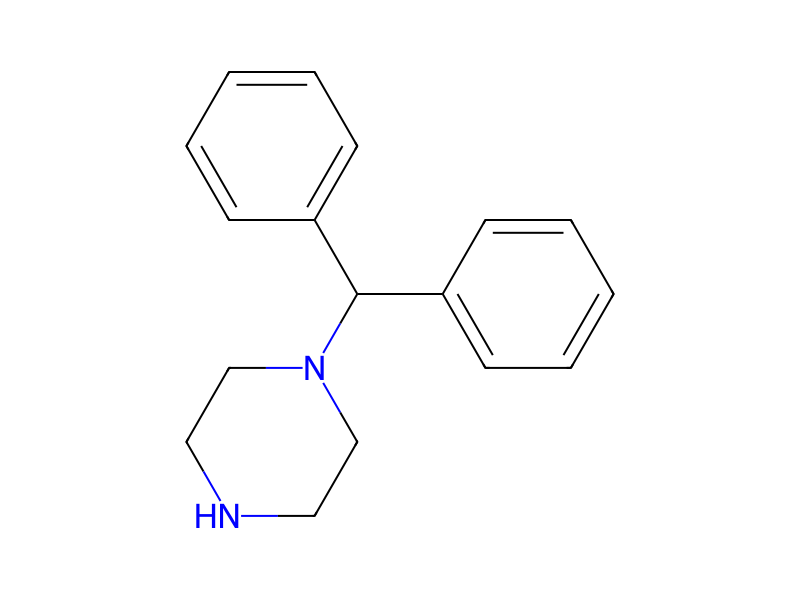
1-ベンズヒドリルピペラジン
Benzhydrylpiperazine
基本情報
- CAS
841-77-0- 標準SMILES
c1ccc(C(c2ccccc2)N2CCNCC2)cc1- InChIKey
NWVNXDKZIQLBNM-UHFFFAOYSA-N- 分子式
- C17H20N2
- 平均分子量
- 252.35 g/mol
- 単同位体質量
- 252.16264865
概要
RN given refers to parent cpd; structure in first source
名称と識別子
- 優先名称
- Benzhydrylpiperazine
- IUPAC
- 1-benzhydrylpiperazine
- 現地名
- 1-ベンズヒドリルピペラジン
- 英語名
- 1-Benzhydrylpiperazine
- 分子式
- C17H20N2
- 分子量
- 252.35
名称と別名
1-Benzhydrylpiperazine841-77-01-(Diphenylmethyl)piperazineBenzhydrylpiperazineNorcyclizine4-BenzhydrylpiperazineN-(Diphenylmethyl)piperazinePiperazine, 1-(diphenylmethyl)-NU6V5ZHD9PNSC-35536DTXSID80232968RefChem:166584
名称をさらに表示
ノルシクリジン1-ベンズヒドリルピペラジン1-ジフェニルメチルピペラジン1-(ジフェニルメチル)ピペラジン1-ベンズヒドロリルピペラジン1‐(ジフェニルメチル)ピペラジンNSC 35536AKOS NCG1-0108AKOS BBS-00003601TIMTEC-BB SBB003136Benzhydrol piperzineLABOTEST-BB LT00454383
DTXCID10155459212-667-7Diphenylmethylpiperazine1-Benzhydryl-piperazineN-BenzhydrylpiperazineNormethylcyclizineCinnarizine EP Impurity AMFCD00038379
データベース識別子
- CAS
841-77-0- PubChem CID
- 70048
- DTXSID
DTXSID80232968- ChEMBL
CHEMBL1490469- UNII
- NU6V5ZHD9P
- EC Number
- 212-667-7
- Nikkaji
- J29.024F
物性
構造計算による物性
- XLogP
- 2.8
- 極性表面積
- 15.3 Ų
- 水素結合供与体数
- 1
- 水素結合受容体数
- 2
- 回転可能結合数
- 3
- 重原子数
- 19
- 形式電荷
- 0
- 複雑度
- 230
実験および物理化学的性質
DrugsPharmaceuticals -> Metabolite of Cinnarizine
Solubility25 [ug/mL] (The mean of the results at pH 7.4)
物理化学的性質
- 融点
- 90 · 90-93 °C
- 沸点
- 185 °C/2mmHg · 185°C/2mmHg(lit.)
- 比重(密度)
- 1.0546 · 1.0546 (rough estimate)
- 蒸気圧
- 0.001 Pa · 0.001Pa at 20℃
- 屈折率
- 1.5794 · 1.5794 (estimate)
- 闪点
- 115 °C · 115 °C
- 貯蔵温度
- Keep in dark place,Sealed in dry,Room Temperature
- 溶解性
- メタノール(わずかに)
- 酸解離定数(Pka)
- 9.05 · 9.05±0.10(Predicted)
- 外見
- 結晶性粉末
- 色
- 白色~淡黄色
- 水溶解度
- 0.45 g/L · 0.45g/L(20℃)
- BRN
- 222773 · 222773
- InChI
- 1S/C17H20N2/c1-3-7-15(8-4-1)17(16-9-5-2-6-10-16)19-13-11-18-12-14-19/h1-10,17-18H,11-14H2
- InChIKey
- NWVNXDKZIQLBNM-UHFFFAOYSA-N
安全と法規制
安全情報は参考情報です。供給元の安全データシート(SDS)、適用法令、専門家による評価に代わるものではありません。
GHS分類
GHS Classification
This chemical does not meet GHS hazard criteria for 1.9% (1 of 52) of reports.
Warning
H302 (92.3%): Harmful if swallowed [Warning Acute toxicity, oral]
P261, P264, P264+P265, P270, P271, P280, P301+P317, P302+P352, P304+P340, P305+P351+P338, P317, P319, P321, P330, P332+P317, P337+P317, P362+P364, P403+P233, P405, and P501 (click each P-code to see the statement)
Aggregated GHS information provided per 52 reports by companies from 10 notifications to the ECHA C&L Inventory. Each notification may be associated with multiple companies.
危険有害性情報
Regulatory InformationREACH registered substance: 1-benzhydrylpiperazine (EC: 212-667-7)
Hazard Classes and CategoriesAcute Tox. 4 (92.3%)
安全データ
- F
- 34
- wgk
- 3
- rtecs
- TL6465000
- hs_code
- 29339900
- risk_code
- 22
- hazard_code
- Xn,Xi
- safety_code
- 22-24/25
- hazard_class
- IRRITANT
- Hazard Classifications
- Acute Tox. 3 OralAquatic Chronic 2Eye Dam. 1Repr. 2Skin Sens. 1ASTOT RE 1STOT SE 1
- ストレージクラス
- 6.1C - Combustible acute toxic Cat.3toxic compounds or compounds which causing chronic effects
化学と産業
薬理情報
Metabolism/Metabolites1-Benzhydrylpiperazine is a known human metabolite of cinnarizine.
応用分野
用途有機合成原料。
使用1-Benzhydrylpiperazine is an intermediate used in drug synthesis
一般的な説明1-(Diphenylmethyl)piperazine is an intermediate during drug synthesis. It has been reported to be formed during the oxidative metabolism of cinnarizine (CZ) [1-(diphenylmethyl)-4-(3-phenyl-2-propenyl)-piperazine] in rat liver microsomes. It reacts with quinone in acetonitrile, followed by oxidation with an alkaline potassium ferricyanide, to afford 4-amino-3,6-di(tert-butyl)-o-benzoquinones.
上流・下流製品情報
上流原料
下流製品
関連反応
331 件



化合物ノート
読み込み中…