ホームMCPワークベンチSkills
ホームワークベンチ通知マイページ
llms.txt · MCPガイドプライバシーポリシー · 利用規約 · サポートv1.8.0
  1. ホーム
  2. /化合物

4-ブロモビフェニル

4-Bromobiphenyl

HCID 7101
ノートを作成反応を作成見積依頼を出す
印刷プレビュー

データを補完しています。しばらくしてからページを更新すると最新の内容を表示できます

基本情報概要名称と識別子物性安全と法規制化学と産業関連反応化合物ノート
部分構造検索類似構造を探す

基本情報

CAS
92-66-0
標準SMILES
Brc1ccc(-c2ccccc2)cc1
InChIKey
PKJBWOWQJHHAHG-UHFFFAOYSA-N
分子式
C12H9Br
平均分子量
233.1 g/mol
単同位体質量
231.98876

概要

4-bromobiphenyl appears as colorless crystals. Insoluble in water. (NTP, 1992)

名称と識別子

優先名称
4-Bromobiphenyl
IUPAC
1-bromo-4-phenylbenzene
現地名
4-ブロモビフェニル
英語名
4-Bromobiphenyl
分子式
C12H9Br
分子量
233.1

名称と別名

4-BROMOBIPHENYL92-66-04-Bromo-1,1'-biphenylp-Bromobiphenyl1-bromo-4-phenylbenzene4-Bromodiphenylp-Bromodiphenyl4-Biphenyl bromide1,1'-Biphenyl, 4-bromo-p-PhenylbromobenzeneBiphenyl, 4-bromo-4-Biphenylyl bromide
名称をさらに表示
4-ブロモビフェニルビフェニル-4-イルブロミド4-ビフェニリルブロミドp-ブロモビフェニル(4-ビフェニリル)ブロミド4-ブロモ-1,1'-ビフェニル4'-ブロモ-1,1'-ビフェニル4-ブロモビフェニル 臭化物4-ブロモビフェニル標準液4ブロモ1,1’ビフェニル4-ブロモビフェニール4-ブロモジフェニル4‐ブロモビフェニル4‐ブロモビフェニル標準品4‐ブロモビフェニル標準液4-ブロモビフェニル (35ΜG/ML イソオクタン溶液)2-[4-[6-(メチルアミノ)ピリジン-3-イル]-1,3-ブタジエン-1-イル]ベンゾチアゾール-6-オール2-[4-[2-(メチルアミノ)ピリジン-5-イル]-1,3-ブタジエン-1-イル]ベンゾチアゾール-6-オール4-ブロモ-1,1′-ビフェニル4′-ブロモ-1,1′-ビフェニルpbb 3The broMine biphenyl1,1’-(biphenyl,-bromo-4-BROMOBIPHENYL PESTANAL, 250 MG4-Br-BPPBB NO 3
p-Biphenylyl bromidep-Phenylphenyl bromide(4-Bromophenyl)benzeneDTXSID4024640OE77OKH5BLNSC-406933DTXCID804640RefChem:98187

データベース識別子

CAS
92-66-0
PubChem CID
7101
DTXSID
DTXSID4024640
ChEMBL
CHEMBL1399688
UNII
OE77OKH5BL
EC Number
202-176-6
Nikkaji
J95.604J

物性

構造計算による物性補完中

XLogP
4.7
極性表面積
0 Ų
水素結合供与体数
0
水素結合受容体数
0
回転可能結合数
1
重原子数
13
形式電荷
0
複雑度
141

実験および物理化学的性質

PolymersOther Classes -> Halogenated Polyaromatics
SpringerMaterials Properties13C nuclear magnetic resonance spectrum
LogP4.96
Density0.9327 (NTP, 1992) - Less dense than water; will float
SolubilityInsoluble (NTP, 1992)
Flash Point290 °F (NTP, 1992)
Boiling Point590 °F at 760 mmHg (NTP, 1992)
Melting Point196.2 °F (NTP, 1992)
Physical Description · 2 件

4-bromobiphenyl appears as colorless crystals. Insoluble in water. (NTP, 1992)

Colorless solid; [CAMEO] White crystalline solid; [Sigma-Aldrich MSDS]

Collision Cross Section136.7 Ų [M]+ [CCS Type: TIMS, Method: calibration with PAHs]

物理化学的性質

安全と法規制

安全情報は参考情報です。供給元の安全データシート(SDS)、適用法令、専門家による評価に代わるものではありません。

GHS分類

GHS Classification · 5 件

This chemical does not meet GHS hazard criteria for 4% (2 of 50) of reports.

Danger

H302 (92%): Harmful if swallowed [Warning Acute toxicity, oral]

P261, P264, P264+P265, P270, P271, P273, P280, P301+P317, P302+P352, P304+P340, P305+P354+P338, P317, P319, P321, P330, P332+P317, P362+P364, P391, P403+P233, P405, and P501 (click each P-code to see the statement)

Aggregated GHS information provided per 50 reports by companies from 11 notifications to the ECHA C&L Inventory. Each notification may be associated with multiple companies.

危険有害性情報

Regulatory Information · 4 件

Regulation (EC) No 178/2002 (amended)

S - indicates a substance that is identified in a final Significant New Use Rule.

REACH registered substance: 4-bromobiphenyl (EC: 202-176-6)

Restricted substance: 4-bromobiphenyl

DOT LabelClass 9
Fire HazardsThis chemical is combustible. (NTP, 1992)
Health HazardsExcerpt from ERG Guide 171 [Substances (Low to Moderate Hazard)]:
Hazards SummaryAn irritant that may cause serious eye injury; Harmful by ingestion; [Sigma-Aldrich MSDS] See Polybrominated biphenyls.
Reactive GroupAryl Halides
Reactivity Profile4-BROMOBIPHENYL may be sensitive to light. This compound can react with oxidizing materials. (NTP, 1992)
Air and Water ReactionsInsoluble in water.

化学と産業

薬理情報

Metabolism/Metabolites · 1 件

PBBs can be absorbed via oral, inhalation, and dermal routes. Due to their lipophilic nature, PBBs, especially the highly brominated congeners, tend to accumulate in lipid-rich tissues such as the liver, adipose, skin, and breast milk. Certain PBB compounds are metabolized by the microsomal monooxygenase system catalyzed by cytochrome P-450 of the type induced by phenobarbital. The rate of metabolism may depends on the bromine substitution pattern. PBB congeners of low bromine content are transformed into hydroxylated derivatives that are predominately eliminated in the urine. Highly brominated congeners are either retained or excreted unchanged in the feces. (L628)

用途と製造

Uses · 2 件

Used in chemical synthesis; [NTP]

PBBs can be used as flame retardants and may be added to the plastics used to make products like computer monitors, televisions, textiles, and plastic foams to make them difficult to burn. However, the use of PBBs is banned or restricted in most areas due to their toxicity and persistence in the environment. (L628, L629)

General Manufacturing Information1,1'-Biphenyl, 4-bromo-: ACTIVE
応用分野 · 3 件

用途有機合成原料。

使用4-Bromobiphenyl is used as halogenated hydrocarbon and Intermediates of Liquid Crystals. It is also used in used in the synthesis of 4-biphenylthiolate.

一般的な説明Colorless crystals. Insoluble in water.

調製方法

純化方法Crystallise the biphenyl from abolute EtOH and dry it in vacuo.[Beilstein 5 IV 1819.]

上流・下流製品情報

関連反応

132 件
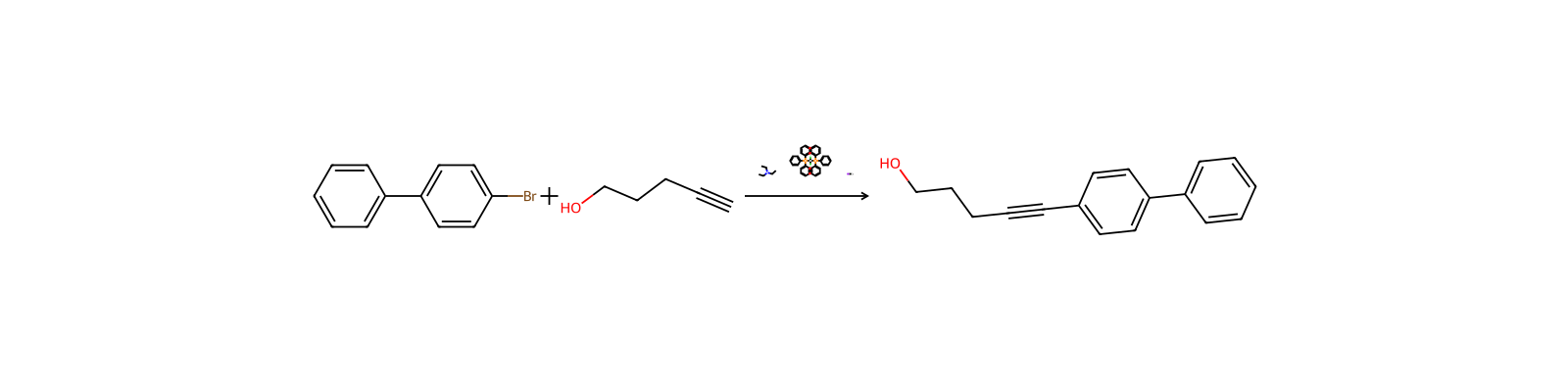
反応記録を作成
HRID 47177 の反応式
HRID 47177反応物としてuspto-grants-2004_03
HRID 84345 の反応式
HRID 84345反応物としてuspto-grants-2014_09
HRID 120089 の反応式
HRID 120089反応物としてTraining data from https://doi.org/10.1039/C8SC04228D (2/10)
HRID 120230 の反応式
HRID 120230反応物としてTraining data from https://doi.org/10.1039/C8SC04228D (2/10)
HRID 143268 の反応式
HRID 143268反応物としてTraining data from https://doi.org/10.1039/C8SC04228D (9/10)
HRID 174515 の反応式
HRID 174515反応物としてTraining data from https://doi.org/10.1039/C8SC04228D (9/10)
HRID 174858 の反応式
HRID 174858反応物としてTraining data from https://doi.org/10.1039/C8SC04228D (6/10)
HRID 251770 の反応式
HRID 251770反応物としてuspto-grants-2011_01
1 / 17 ページ

化合物ノート

読み込み中…

このページの内容基本情報概要名称と識別子物性安全と法規制化学と産業関連反応化合物ノート
その他の操作
ノートを作成反応を作成見積依頼を出す
融点
82 · 82-86 °C(lit.)
沸点
310 °C · 310 °C(lit.)
比重(密度)
0.9327 · 0.9327
屈折率
1.6565 · 1.6565 (estimate)
闪点
143 °C · 143 °C
貯蔵温度
Sealed in dry,Room Temperature
溶解性
1 g/10mL、無色透明~ごく微黄色 · ジオキサン:可溶1g/10mL、無色透明~ごく微黄色
外見
結晶フレーク
色
ほぼ白~わずかに黄色
水溶解度
不溶性
BRN
1907453 · 1907453
Henry's Law Constant
6 · 6.0×10-2 mol/(m3Pa) at 25℃, Zhang et al. (2010)
安定性
安定。酸化剤と相容れない。
InChI
1S/C12H9Br/c13-12-8-6-11(7-9-12)10-4-2-1-3-5-10/h1-9H
InChIKey
PKJBWOWQJHHAHG-UHFFFAOYSA-N
SMILES
Brc1ccc(cc1)-c2ccccc2
CAS データベース
92 · 92-66-0(CAS DataBase Reference)
NISTの化学物質情報
1 · 1,1'-Biphenyl, 4-bromo-(92-66-0)
EPAの化学物質情報
4 · 4-Bromobiphenyl (92-66-0)

化学的性質

化学的特性White powder

Hazard Classes and Categories
Acute Tox. 4 (92%)

安全と保護具

Fire FightingFires involving this material should be controlled using a dry chemical, carbon dioxide or Halon extinguisher. (NTP, 1992)
First Aid · 1 件

EYES: First check the victim for contact lenses and remove if present. Flush victim's eyes with water or normal saline solution for 20 to 30 minutes while simultaneously calling a hospital or poison control center. Do not put any ointments, oils, or medication in the victim's eyes without specific instructions from a physician. IMMEDIATELY transport the victim after flushing eyes to a hospital even if no symptoms (such as redness or irritation) develop.

Nonfire Spill Response · 1 件

SMALL SPILLS AND LEAKAGE: Should a spill occur while you are handling this chemical, FIRST REMOVE ALL SOURCES OF IGNITION, then you should dampen the solid spill material with ethanol and transfer the dampened material to a suitable container. Use absorbent paper dampened with ethanol to pick up any remaining material. Seal the absorbent paper, and any of your clothes, which may be contaminated, in a vapor-tight plastic bag for eventual disposal. Solvent wash all contaminated surfaces with ethanol followed by washing with a soap and water solution. Do not reenter the contaminated area until the Safety Officer (or other responsible person) has verified that the area has been properly cleaned.

Isolation and EvacuationExcerpt from ERG Guide 171 [Substances (Low to Moderate Hazard)]:
Minimum Risk LevelAcute Oral: 0.01 mg/kg/day (L134)
Personal Protective Equipment (PPE) · 1 件

RECOMMENDED RESPIRATOR: Where the neat test chemical is weighed and diluted, wear a NIOSH-approved half face respirator equipped with an organic vapor/acid gas cartridge (specific for organic vapors, HCl, acid gas and SO2) with a dust/mist filter. (NTP, 1992)

毒性情報

Treatment · 1 件

EYES: irrigate opened eyes for several minutes under running water. INGESTION: do not induce vomiting. Rinse mouth with water (never give anything by mouth to an unconscious person). Seek immediate medical advice. SKIN: should be treated immediately by rinsing the affected parts in cold running water for at least 15 minutes, followed by thorough washing with soap and water. If necessary, the person should shower and change contaminated clothing and shoes, and then must seek medical attention. INHALATION: supply fresh air. If required provide artificial respiration.

Health EffectsPBB exposure may cause weight loss, skin disorders (such as acne), nervous and immune systems effects, and effects on the liver, kidneys, and thyroid gland. (L628)
Exposure RoutesOral (L628) ; inhalation (L628) ; dermal (L628)
Toxicity Summary · 1 件

The exact mechanism of toxicty of PBBs varies depending on the specific congener. The predominant interaction is believed to involve the aryl hydrocarbon receptor (AhR). PBBs bind to and activate the AhR, which in turn initiates the transcriptional upregulation of a number of genes, affecting biochemical and endocrine pathways, cell cycle regulation, morphogenesis, oxidative stress response, and various other processes. This results in the numerous toxic responses characteristic of PBBs. Some of the known induced genes include the cytochrome P-450-dependent monooxygenases CYP1A1 and CYP1A2. (L628)

Signs and SymptomsSymptoms of PBB exposure may include nausea, abdominal pain, loss of appetite, joint pain, fatigue, and weakness. (L629)
Carcinogen Classification2A, probably carcinogenic to humans. (L135)

安全データ

wgk
3
tsca
TSCA listed
rtecs
DV1750100
ridadr
UN 3152 9/PG 2
hs_code
29036990
risk_code
36/37/38-50/53-41-37/38-22
化審法
(4)-18
安衛法
57,57-2
消防法
危-4-1-II
hazard_code
Xi,N,Xn
safety_code
22-24/25-37/39-26-61-60-39
hazard_class
IRRITANT
packing_group
Ⅲ
Hazard Classifications
Acute Tox. 4 OralAquatic Acute 1Eye Dam. 1Skin Irrit. 2STOT SE 3
ストレージクラス
11 - Combustible Solids

上流原料

PotassiuM iodide starch paビフェニルデキストリン4-ブロモアニリンTriphenylindium1-(4-ブロモフェニル)シクロヘキサノール4-ブロモフェニルボロン酸4-ブロモベンゼンジアゾニウムテトラフルオロボレート 臭化物フェニルトリブチルスタンナン1-ブロモ-4-ヨードベンゼンベンゼンジアゾニウム·テトラフルオロボラート

下流製品

1-(4'-ブロモ-1,1'-ビフェニル-4-イル)-3-フェニル-2-プロペン-1-オンブロマジオロン3-[3-(4'-ブロモ-1,1'-ビフェニル-4-イル)-1,2,3,4-テトラヒドロナフタレン-1-イル]-4-ヒドロキシクマリン4-ヨード-1,1'-ビフェニル4-ビフェニルボロン酸2-(4-ビフェニリル)アミノ-9,9-ジメチルフルオレン4-エチニル-4'-ペンチル-1,1'-ビフェニル4-フェニルベンゼンブタン酸4,4'-ジフェニルベンゾフェノン