ホームMCPワークベンチSkills
ホームワークベンチ通知マイページ
llms.txt · MCPガイドプライバシーポリシー · 利用規約 · サポートv1.8.0
  1. ホーム
  2. /化合物

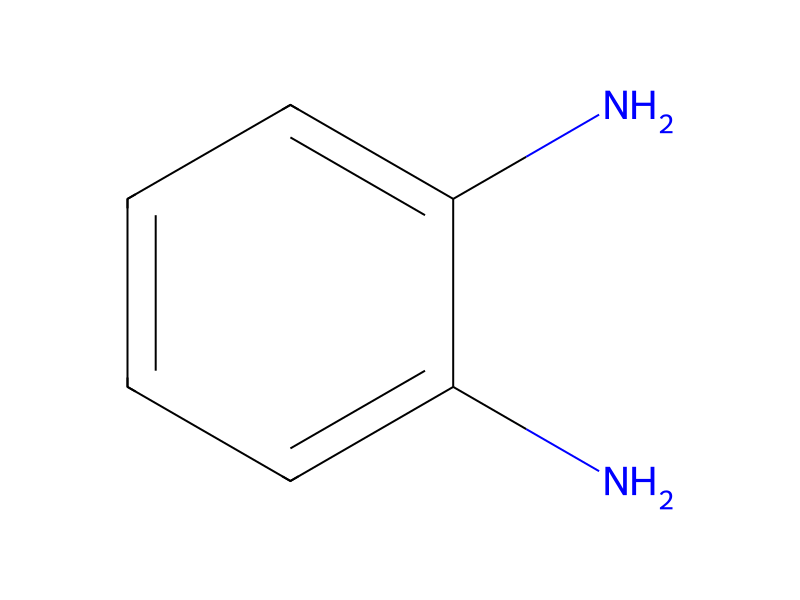
1,2-フェニレンジアミン

O-Phenylenediamine

HCID 7243
ノートを作成反応を作成見積依頼を出す
印刷プレビュー

データを補完しています。しばらくしてからページを更新すると最新の内容を表示できます
基本情報名称と識別子物性安全と法規制化学と産業関連反応化合物ノート
部分構造検索類似構造を探す

基本情報

CAS
95-54-5
標準SMILES
Nc1ccccc1N
InChIKey
GEYOCULIXLDCMW-UHFFFAOYSA-N
分子式
C6H8N2
平均分子量
108.14 g/mol
単同位体質量
108.06874826

名称と識別子

優先名称
O-Phenylenediamine
IUPAC
benzene-1,2-diamine
現地名
1,2-フェニレンジアミン
英語名
o-Phenylenediamine
分子式
C6H8N2
分子量
108.14

名称と別名

O-PHENYLENEDIAMINEbenzene-1,2-diamine95-54-51,2-Phenylenediamine1,2-Diaminobenzene2-Aminoaniline1,2-Benzenediamineo-DiaminobenzeneOrthamineo-BenzenediaminePODAortho-Phenylenediamine
名称をさらに表示
1,2-フェニレンジアミンo-フェニレンジアミン1,2-ベンゼンジアミンベンゼン-1,2-ジアミン1,2-ジアミノベンゼンo-ジアミノベンゼンC.I.オキシデーションベース162-アミノアニリン1,2-ベンゼンジアミノoフェニレンジアミン1,2-フェニレンジアミン [生化学用]O‐フェニレンジアミン1,2-フェニレンジアミン標準品フェニレンジアミンOPDAPhenylenediamineOPDORTHO-TOLUENEDIAMINE
C.I. Oxidation Base 162-Phenylene diamineo-AminoanilineEK 1700SQ 15500CI Oxidation Base 16C.I. 76010NSC 5354

データベース識別子

CAS
95-54-5
PubChem CID
7243
DTXSID
DTXSID3025881
ChEMBL
CHEMBL70582
ChEBI
CHEBI:34043
UNII
8B713N8Q0F
EC Number
202-430-6
Nikkaji
J3.954C

物性

構造計算による物性補完中

XLogP
0.1
極性表面積
52 Ų
水素結合供与体数
2
水素結合受容体数
2
回転可能結合数
0
重原子数
8
形式電荷
0
複雑度
62

実験および物理化学的性質

LogP · 2 件

log Kow = 0.15

0.15 (calculated)

Color/Form · 3 件

Brownish-yellow leaflets from water; plates from chloroform

Tan crystals or leaflets from water

White crystalline solid when pure

Solubility · 6 件

less than 1 mg/mL at 68 °F (NTP, 1992)

Because of ... limited solubility in cold water/o-phenylenediamine/ can be recrystalized from water

Freely soluble in alcohol, chloroform, ether

Soluble in water, ethyl ether, benzene, chloroform; very soluble in ethanol

In water, 4.07X10+4 mg/L at 35 °C

Solubility in water, g/100ml at 35 °C: 0.4

Flash Point · 4 件

313 °F (NFPA, 2010)

313 °F; 156 °C (Closed cup)

156 °C c.c.

313 °F

Boiling Point · 5 件

493 to 496 °F at 760 mmHg (NTP, 1992)

257 °C

256-258 °C

493-496 °F

257 °C @760 [mm Hg]

DecompositionWhen heated to decomp, it emits toxic fumes of /nitrogen oxides/.
Melting Point · 6 件

216 to 219 °F (NTP, 1992)

219 °F

安全と法規制

安全情報は参考情報です。供給元の安全データシート(SDS)、適用法令、専門家による評価に代わるものではありません。

GHS分類

GHS Classification · 6 件

Danger

H301: Toxic if swallowed [Danger Acute toxicity, oral];H312: Harmful in contact with skin [Warning Acute toxicity, dermal];H317: May cause an allergic skin reaction [Warning Sensitization, Skin];H319: Causes serious eye irritation [Warning Serious eye damage/eye irritation];H332: Harmful if inhaled [Warning Acute toxicity, inhalation];H341: Suspected of causing genetic defects [Warning Germ cell mutagenicity];H351: Suspected of causing cancer [Warning Carcinogenicity];H400: Very toxic to aquatic life [Warning Hazardous to the aquatic environment, acute hazard];H410: Very toxic to aquatic life with long lasting effects [Warning Hazardous to the aquatic environment, long-term hazard]

P203, P261, P264, P264+P265, P270, P271, P272, P273, P280, P301+P316, P302+P352, P304+P340, P305+P351+P338, P317, P318, P321, P330, P333+P317, P337+P317, P362+P364, P391, P405, and P501 (click each P-code to see the statement)

Danger

危険有害性情報

Regulatory Information · 6 件

Chemical: 1,2-Benzenediamine

Hazard Traits - Carcinogenicity;Authoritative List - IARC Carcinogens - 2B; Prop 65;Report - regardless of intended function of ingredient in the product

1,2-Benzenediamine is listed on the EPA's Chemical Data Reporting (CDR) system. Manufacturers and importers of 1,2-Benzenediamine are required to report information about their production and use of this chemical to the EPA under the Toxic Substances Control Act (TSCA). (40 eCFR Part 711)

Status: Active Update: 02-03-2022 https://echa.europa.eu/registration-dossier/-/registered-dossier/2001;Status: Active Update: 31-10-2012 https://echa.europa.eu/registration-dossier/-/registered-dossier/1268;Status: Active Update: 30-07-2010 https://echa.europa.eu/registration-dossier/-/registered-dossier/1399

1,2-Phenylenediamine: HSNO Approval: HSR003048 Approved with controls

The New Jersey Worker and Community Right to Know Act requires public and private employers to provide information about hazardous substances at their workplaces. (N.J.S.A. 34:5A-1 et. seq.)

化学と産業

薬理情報

Metabolism/MetabolitesO-phenylenediamine yields o-acetamidoaniline in yeast; yields o-quinone probably in tea. /From table/
Absorption, Distribution and Excretion · 1 件

A homologous series of hair dyes was selected for percutaneous absorption studies with excised human skin. The permeability constants obtained for the dyes were compared with octanol/water and skin membrane/water partition coefficients. The compounds examined were: p-phenylenediamine, o-phenylenediamine, 2-nitro-p-phenylenediamine, 2-amino-4-nitrophenol, 4-chloro-m-phenylenediamine, and 4-amino-2-nitrophenol. Skin absorption of the dyes was observed when they were applied in an aqueous solution. With one exception, the octanol/water partition coefficients were in the same rank order as the permeability constants. The determination of the partitioning of the hair dyes between water and either stratum corneum or epidermis was more complex. Preliminary stratum corneum/water partition studies resulted in values that were in the reverse order of skin permeation. When binding of the compounds to components of the membrane was saturated, the partition values more closely duplicated the rank order of permeability of the dyes. Prediction of percutaneous absorption of substances based on their partition coefficients may be confounded if these compounds are capable of binding to skin.

用途と製造

Uses · 6 件

Used as a chemical intermediate, analytical reagent, and photographic developer; [CHEMINFO]

Photographic Processing [Category: Other]

Hair-dye substance banned by the European Union (September 2007)

Manufacture of dyes, photographic developing agent, organic synthesis, laboratory reagent.

Used for the preparation of benzimidazole-derived agricultural fungicides such as benomyl; other fungicide uses include thiophanate methyl (Topsin), a turf fungicide and fuberidazole; in the preparation of a variety of benzimidazoles used as veterinarian anthelmintics.

Fluorescent indicator, pH range 3.1-4.4, green fluorescence-nonfluorescence

U.S. Imports · 2 件

関連反応

1,008 件
反応記録を作成
HRID 5734 の反応式
HRID 5734反応物としてuspto-grants-1993_09
HRID 5738 の反応式
HRID 5738反応物としてuspto-grants-1993_09
HRID 6431 の反応式
HRID 6431反応物としてuspto-grants-1993_09
HRID 7093 の反応式
HRID 7093反応物としてuspto-grants-2006_08
HRID 7094 の反応式
HRID 7094反応物としてuspto-grants-2006_08
HRID 9907 の反応式
HRID 9907反応物としてuspto-grants-2006_08
HRID 10691 の反応式
HRID 10691反応物としてuspto-grants-2006_08
HRID 10946 の反応式
HRID 10946反応物としてuspto-grants-2006_08
1 / 126 ページ

化合物ノート

読み込み中…

このページの内容基本情報名称と識別子物性安全と法規制化学と産業関連反応化合物ノート
その他の操作
ノートを作成反応を作成見積依頼を出す

102.1 °C

103-104 °C

216-219 °F

104 °C

Vapor DensityRelative vapor density (air = 1): 3.73
Vapor Pressure · 2 件

2.06X10⁻³ mm Hg at 25 °C

Vapor pressure, kPa at 20 °C: 0.0013

Physical Description · 5 件

1,2-phenylenediamine appears as colorless monoclinic crystals if pure; technical grade brownish-yellow crystals or a sandy brown solid. Used in manufacture of dyes, photography, organic synthesis.

Dry Powder; Liquid

Colorless to brownish-yellow solid that darkens on exposure to light and air; [CHEMINFO]

BROWN-TO-YELLOW CRYSTALS. TURNS DARK ON EXPOSURE TO LIGHT.

Colorless monoclinic crystals if pure; technical grade brownish-yellow crystals or a sandy brown solid.

Dissociation ConstantspKa1 = less than 2; pKa2 = 4.47 at 25 °C
Collision Cross Section129.1 Ų [M+H]+

物理化学的性質

融点
100 · 100-102 °C
沸点
256 · 256-258 °C
比重(密度)
1 · 1,27 g/cm3
蒸気密度
3.7 · 3.7 (vs air)
蒸気圧
0.01 mm · 0.01 mm Hg ( 25 °C)
屈折率
1.6339 · 1.6339 (estimate)
闪点
110 °C · 110°C
貯蔵温度
2 · 2-8°C
溶解性
2 O:1錠/10mL、無色透明 · H2O:1錠/10mL、無色透明
外見
タブレット
酸解離定数(Pka)
4.46 · 4.46(at 25℃)
色
ホワイトからオフホワイト
PH
7 · 7-8 (50g/l, H2O, 20℃)
爆発限界(explosive limit)
1.5 % · 1.5%(V)
水溶解度
0.1 g/100 · <0.1 g/100 mL で 20 ºC
Merck
14 · 14,7284
BRN
606074 · 606074
Henry's Law Constant
1.4 · 1.4×103 mol/(m3Pa) at 25℃, Duchowicz et al. (2020)
安定性
安定。強力な酸化剤とは相容れない。
主な用途
底面反射防止コーティング、半導体デバイス、毛髪染料、検出抗体、ウマ抗体基質、グルコース、ストレプトマイシン、ペニシリン、スルホンアミド、ニューログロビン、西洋ワサビペルオキシダーゼ基質
InChI
1S/C6H8N2/c7-5-3-1-2-4-6(5)8/h1-4H,7-8H2
InChIKey
GEYOCULIXLDCMW-UHFFFAOYSA-N
SMILES
Nc1ccccc1N
LogP
0.12 · 0.12-0.17 at 20-25℃ and pH7-8
CAS データベース
95 · 95-54-5(CAS DataBase Reference)
NISTの化学物質情報
1 · 1,2-Benzenediamine(95-54-5)
EPAの化学物質情報
1 · 1,2-Phenylenediamine (95-54-5)

化学的性質

化学的特性o-Phenylenediamine is a white to brownish crystalline substance that turns red upon exposure to air.

Other Safety Information
IMAP assessments - 1,2-Benzenediamine: Human health tier II assessment;Evaluation - Phenylenediamines
DOT LabelPoison
Fire Hazards · 2 件

Flash point data for this chemical are not available. It is probably combustible. (NTP, 1992)

Combustible. Gives off irritating or toxic fumes (or gases) in a fire. Finely dispersed particles form explosive mixtures in air.

Health Hazards · 1 件

SYMPTOMS: Symptoms of exposure to this chemical may include skin and eye irritation, headache, drowsiness, mental confusion and liver damage.;ACUTE/CHRONIC HAZARDS: When heated to decomposition this compound emits toxic fumes. It is highly toxic by inhalation and skin absorption. (NTP, 1992)

Hazards Summary · 1 件

At lethal concentrations, exposed animals have seizures and paralysis without anesthesia. [ChemIDplus] Methemoglobinemia is observed in acute animal studies. In subchronic studies, rats have anemia and elevated liver enzymes. Critical Effects are irritation; liver; blood; [ACGIH]

Reactive GroupAmines, Aromatic
EC ClassificationSymbol: T, N; R: 20/21-25-36-40-43-50/53-68; S: (1/2)-28-36/37-45-60-61; Note: C
UN ClassificationUN Hazard Class: 6.1; UN Pack Group: III
Special ReportsTSCA CHIPs present a preliminary assessment of 1,2-Benzenediamine's potential for injury to human health & the environment (available at EPA's TSCA Assistance Office: (202) 554-1404.
TSCA Requirements · 2 件

Pursuant to section 8(d) of TSCA, EPA promulgated a model Health and Safety Data Reporting Rule. The section 8(d) model rule requires manufacturers, importers, and processors of listed chemical substances and mixtures to submit to EPA copies and lists of unpublished health and safety studies. 1,2-Benzenediamine is included on this list. Effective date: 4/29/83; Sunset date: 4/29/93.

All persons who manufacture (including import or by-product manufacture) or process o -pda, or intend to manufacture or process ortho-phenylenediamine after the effective date of this rule to the end of the reimbursement period shall submit letters of intent to test, submit study plans, conduct tests, and submit data, or submit exemption applications as specified in paragraphs (c)(3), (d), and (e) of this section, subpart A of this part, and parts 790 and 792 of this chapter for single-phase rulemaking. Required testing: health efffects, chemical fate and environmental effects testing.

Reactivity Profile · 1 件

1,2-PHENYLENEDIAMINE a weak aromatic amine base neutralizes acids in exothermic reactions to form salts. May be incompatible with isocyanates, halogenated organics, peroxides, phenols (acidic), epoxides, anhydrides, and acid halides. Darkens on exposure to air (Roger Patrick, DuPont Engineer).

安全と保護具

Fire Fighting · 2 件

Fires involving this material can be controlled with a dry chemical, car bon dioxide or Halon extinguisher. (NTP, 1992)

Use water spray, powder.

First Aid Measures · 4 件

Fresh air, rest. Artificial respiration may be needed. Refer for medical attention.

Remove contaminated clothes. Rinse and then wash skin with water and soap.

First rinse with plenty of water for several minutes (remove contact lenses if easily possible), then refer for medical attention.

Rinse mouth. Give a slurry of activated charcoal in water to drink. Refer for medical attention .

First Aid · 1 件

EYES: First check the victim for contact lenses and remove if present. Flush victim's eyes with water or normal saline solution for 20 to 30 minutes while simultaneously calling a hospital or poison control center. Do not put any ointments, oils, or medication in the victim's eyes without specific instructions from a physician. IMMEDIATELY transport the victim after flushing eyes to a hospital even if no symptoms (such as redness or irritation) develop.;SKIN: IMMEDIATELY flood affected skin with water while removing and isolating all contaminated clothing. Gently wash all affected skin areas thoroughly with soap and water. If symptoms such as redness or irritation develop, IMMEDIATELY call a physician and be prepared to transport the victim to a hospital for treatment.;INHALATION: IMMEDIATELY leave the contaminated area; take deep breaths of fresh air. If symptoms (such as wheezing, coughing, shortness of breath, or burning in the mouth, throat, or chest) develop, call a physician and be prepared to transport the victim to a hospital. Provide proper respiratory protection to rescuers entering an unknown atmosphere. Whenever possible, Self-Contained Breathing Apparatus (SCBA) should be used; if not available, use a level of protection greater than or equal to that advised under Protective Clothing.;INGESTION: DO NOT INDUCE VOMITING. If the victim is conscious and not convulsing, give 1 or 2 glasses of water to dilute the chemical and IMMEDIATELY call a hospital or poison control center. Be prepared to transport the victim to a hospital if advised by a physician. If the victim is convulsing or unconscious, do not give anything by mouth, ensure that the victim's airway is open and lay the victim on his/her side with the head lower than the body. DO NOT INDUCE VOMITING. IMMEDIATELY transport the victim to a hospital. (NTP, 1992)

Safe StorageSeparated from food and feedstuffs. Well closed.
Fire Fighting ProceduresUse water spray, powder.
Storage ConditionsSeparated from food and feedstuffs. Well closed.
Cleanup Methods · 1 件

Spillage Disposal. Sweep spilled substance into covered containers. If appropriate, moisten first to prevent dusting. Carefully collect remainder. Then store and dispose of according to local regulations. Do not let this chemical enter the environment. Personal protection: particulate filter respirator adapted to the airborne concentration of the substance.

Nonfire Spill Response · 1 件

SMALL SPILLS AND LEAKAGE: Should a spill occur while you are handling this chemical, FIRST REMOVE ALL SOURCES OF IGNITION, then you should dampen the solid spill material with 60-70% ethanol and transfer the dampened material to a suitable container. Use absorbent paper dampened with 60-70% ethanol to pick up any remaining material. Seal the absorbent paper, and any of your clothes, which may be contaminated, in a vapor-tight plastic bag for eventual disposal. Solvent wash all contaminated surfaces with 60-70% ethanol followed by washing with a soap and water solution. Do not reenter the contaminated area until the Safety Officer (or other responsible person) has verified that the area has been properly cleaned.;STORAGE PRECAUTIONS: You should keep this material in a tightly closed container under an inert atmosphere, protect it from light, and store it at refrigerated temperatures. (NTP, 1992)

Disposal Methods · 2 件

SRP: The most favorable course of action is to use an alternative chemical product with less inherent propensity for occupational harm/injury/toxicity or environmental contamination. Recycle any unused portion of the material for its approved use or return it to the manufacturer or supplier. Ultimate disposal of the chemical must consider: the material's impact on air quality; potential migration in soil or water; effects on animal and plant life; and conformance with environmental and public health regulations.

Recommendable method: Incineration. (Peer-review conclusions of an IRPTC expert consultation (May 1985))

Spillage Disposal · 1 件

Personal protection: particulate filter respirator adapted to the airborne concentration of the substance. Do NOT let this chemical enter the environment. Sweep spilled substance into covered containers. If appropriate, moisten first to prevent dusting. Carefully collect remainder. Then store and dispose of according to local regulations.

Preventive MeasuresDo not eat, drink, or smoke during work. Wash hands before eating.
Isolation and Evacuation · 1 件

Excerpt from ERG Guide 153 [Substances - Toxic and/or Corrosive (Combustible)]:;IMMEDIATE PRECAUTIONARY MEASURE: Isolate spill or leak area in all directions for at least 50 meters (150 feet) for liquids and at least 25 meters (75 feet) for solids.;SPILL: Increase the immediate precautionary measure distance, in the downwind direction, as necessary.;FIRE: If tank, rail tank car or highway tank is involved in a fire, ISOLATE for 800 meters (1/2 mile) in all directions; also, consider initial evacuation for 800 meters (1/2 mile) in all directions. (ERG, 2024)

毒性情報

Ecotoxicity Values · 5 件

LC50; Species: Brachydanio rerio (Zebrafish); Concentration: 24 mg/L for 96 hr /Conditions of bioassay not specified/

LC100; Species: Brachydanio rerio (Zebrafish); Concentration: 33 mg/L for 96 hr /Conditions of bioassay not specified/

LC50; Species: Pimephales promelas (Fathead minnow); Concentration: 44 mg/L for 96 hr /Conditions of bioassay not specified/

LC50; Species: Pimephales promelas (Fathead minnow); Concentration: 271 mg/L for 96 hr /Conditions of bioassay not specified/

For more Ecotoxicity Values (Complete) data for O-PHENYLENEDIAMINE (6 total), please visit the HSDB record page.

Environmental Fate · 3 件

TERRESTRIAL FATE: Based on a classification scheme(1), an estimated Koc value of 34(SRC), determined from a structure estimation method(2), indicates that o-phenylenediamine is expected to have very high mobility in soil(SRC). However, aromatic amines are expected to bind strongly to humus or organic matter in soils due to the high reactivity of the aromatic amino group(3,4), suggesting that mobility may be much lower in some soils(SRC). Volatilization of o-phenylenediamine from moist soil surfaces is not expected to be an important fate process(SRC) given an estimated Henry's Law constant of 7.2X10⁻⁹ atm-cu m/mole(SRC), based upon its vapor pressure, 2.06X10⁻³ mm Hg(5), and water solubility, 4.04X10+4 mg/L(6). o-Phenylenediamine is not expected to volatilize from dry soil surfaces(SRC) based upon its vapor pressure(6). A 100% of total decomposition required greater than 64 days using a soil inoculum(7), suggesting that biodegradation is not an important environmental fate process in soil(SRC).

AQUATIC FATE: Based on a classification scheme(1), an estimated Koc value of 34(SRC), determined from a structure estimation method(2), indicates that o-phenylenediamine is not expected to adsorb to suspended solids and sediment(SRC). Volatilization of the neutral species from water surfaces is not expected(3) based upon an estimated Henry's Law constant of 7.2X10⁻⁹ atm-cu m/mole(SRC), derived from its vapor pressure, 1.06X10⁻³ mm Hg(4), and water solubility, 4.04X10+4 mg/L(5). The pKa values of <2 and 4.47(6) indicate o-phenylenediamine will exist partially in the cation form at pH values of 5 to 9 and therefore volatilization from water surfaces is not expected to be an important fate process(SRC). According to a classification scheme(7), an estimated BCF of 3(SRC),from its log Kow of 0.15(8) and a regression-derived equation(9), suggests the potential for bioconcentration in aquatic organisms is low(SRC). o-Phenylenediamine exhibited 33% removal after 5 days incubation using acclimated activated sludge inoculum(10), suggesting that biodegradation may be an important environmental fate process in water(SRC).

ATMOSPHERIC FATE: According to a model of gas/particle partitioning of semivolatile organic compounds in the atmosphere(1), o-phenylenediamine, which has a vapor pressure of 2.06X10⁻³ mm Hg at 25 °C(2), is expected to exist solely as a vapor in the ambient atmosphere. Vapor-phase o-phenylenediamine is degraded in the atmosphere by reaction with photochemically-produced hydroxyl radicals(SRC); the half-life for this reaction in air is estimated to be 0.7 hours(SRC), calculated from its rate constant of 1.8X10⁻¹⁰ cu cm/molecule-sec at 25 °C(SRC) that was derived using a structure estimation method(3). o-Phenylenediamine absorbs light at wavelengths >290 nm(4) and, therefore, may be susceptible to direct photolysis by sunlight(SRC).

Adverse Effects · 1 件

Occupational hepatotoxin - Secondary hepatotoxins: the potential for toxic effect in the occupational setting is based on cases of poisoning by human ingestion or animal experimentation.;Methemoglobinemia - The presence of increased methemoglobin in the blood; the compound is classified as secondary toxic effect;IARC Carcinogen - Class 3: Chemicals are not classifiable by the International Agency for Research on Cancer.;ACGIH Carcinogen - Confirmed Animal.

Exposure RoutesThe substance can be absorbed into the body by inhalation and by ingestion.
Ecotoxicity Excerpts · 3 件

/AQUATIC SPECIES/ The static acute toxicities and degradative rates of the unsubstituted phenylenediamines (pdas) varied significantly among the ortho, para and meta isomers. With fathead minnows, the nominal 96 hr LC50s were 0.06, 44 and 1,600 mg/L for p-pda, o-pda and m-pda, respectively. In daphnid tests, the nominal 48 hr EC50s were 0.28, 0.87 and 5.9 mg/L for p-pda, o-pda and m-pda, respectively. The nominal 96 hr EC50s in algae were 0.28, 0.16, and 2.4 mg/L for p-pda, o-pda and m-pda, respectively. With oxygenation, the times to reach 1/2 initial concentrations were 4 to 9 hr for p-pda, 650 to 1,100 hr for o-pda and 3,200 to 8,100 hr for m-pda. Results suggest that acute toxicities of pdas are related to their chemical reactivities (degradative rates) and that pdas may degrade rapidly under environmental conditions.

/OTHER TERRESTRIAL SPECIES/ ...The toxicity of 10 benzamines was tested by the well diffusion assay technique against 18 common bacterial species including the nitrogen-fixing bacterium Azotobacter vinelandii. ... o-Phenylenediamine was inhibitory to Escherichia coli, Klebsiella pnemoniae, Salmonella enteritidis, and Shigella sonnei. ... Because many of these organisms are common soil and aquatic bacteria, the accumulation of these benzamine compounds in the environment may have an adverse impact on soil biochemical activities.

/PLANTS/ Three isomers of the promutagen phenylenediamine at mM concentrations were plant-activated and induced mutation in stamen hairs of Tradescantia clone 4430. The rank order of the mutagenicity of the isomers was: o-phenylenediamine > m-phenylenediamine > p-phenylenediamine with corresponding mutagenic potencies of 5.60, 1.43, and 0.46 mutant stamen hair cells/mumole, respectively. Diethyldithiocarbamate (DEDTC) and ammonium meta-vanadate (vanadate) repressed the mutagenic activity of o-phenylenediamine (o-PDA) in intact plants. Based on inhibition kinetics and reaction rates, the mechanism of DEDTC antimutagenicity was attributed to the inhibition of peroxidases that are required in the plant activation of o-PDA to mutagenic product(s). Spectrophotometric measurements of equimolar concentrations of o-PDA and vanadate demonstrated that the antimutagenic property of vanadate was mainly due to its reactivity with o-PDA.

Signs and Symptoms · 4 件

Blue lips, fingernails and skin. Confusion. Convulsions. Dizziness. Headache. Nausea. Unconsciousness.

Redness.

Redness. Pain.

See Inhalation.

Ongoing Test Status · 1 件

The following link will take the user to the National Toxicology Program (NTP) Test Agent Search Results page, which tabulates all of the "Standard Toxicology & Carcinogenesis Studies", "Developmental Studies", and "Genetic Toxicity Studies" performed with this chemical. Clicking on the "Testing Status" link will take the user to the status (i.e., in review, in progress, in preparation, on test, completed, etc.) and results of all the studies that the NTP has done on this chemical.[Available from, as of November 6, 2012: http://ntp-apps.niehs.nih.gov/ntp_tox/index.cfm?fuseaction=ntpsearch.searchresults&searchterm=95-54-5]

ICSC Environmental DataThe substance is very toxic to aquatic organisms. It is strongly advised not to let the chemical enter into the environment.
Soil Adsorption/Mobility · 1 件

Using a structure estimation method based on molecular connectivity indices(1), the Koc of o-phenylenediamine can be estimated to be 34(SRC). According to a classification scheme(2), this estimated Koc value suggests that o-phenylenediamine is expected to have very high mobility in soil. However, aromatic amines are expected to bind strongly to humus or organic matter in soils due to the high reactivity of the aromatic amino group(3,4), suggesting that mobility may be much lower in some soils(SRC).

TSCA Test Submissions · 5 件

1,2-Benzenediamine (CAS # 95-54-5) was evaluated for eye irritation in 3 albino rabbits administered undiluted ocular instillations of 100 mg. The treated eyes remained unrinsed during post-instillation observation. Ocular irritation was maximal in all 3 rabbits 1 hour after treatment. A mean irritation score was 31.7/110. One rabbit remained unimproved at 72nd hour observation, developing corneal ulceration and vascularization by the 7th day, while Day 7 found complete resolution of all irritative signs in the other 2 treated rabbits. By 14th day observation period, one rabbit continued to show corneal vascularization and ulceration with slight conjunctival redness comprising an individual irritation score of 12/110 and a mean score (3 rabbits) of 4.0/110. Study investigators assigned a descriptive rating of "moderately irritating" to 1,2-benzenediamine.

o-Phenylenediamine (CAS # 95-54-5) was evaluated for oral neurotoxicity in Crl:CDBR rats (12/sex/group) administered single gavage doses of 0, 225, 450, and 900 mg/kg (10 mL/kg in methyl cellulose). Bodyweight, feed consumption, clinical signs, functional observational battery performance, fore- and hindlimb grip strength, foot splay and motor activity were assessed prior to treatment (baseline values), and at 1 hour, 24 hours, and 4 days post-treatment. Toxicity was demonstrated at all dose levels. High-dose rats, 2 males and 4 females were found dead prior to scheduled sacrifice and significant weight loss within one day of dosing was common to all treatment groups, persisting throughout Day 4. Significant reductions in feed consumption were pronounced initially, but transient in all but the high-dose group. Clinical signs were most severe 2-4 days after treatment and included initial discolored urine, abnormal respiration with gasping, congestion, and sneezing (450, 900 mg/kg), dose-related malaise, postural changes, palpebral closure, and decreased arousal. The functional observational battery, fore-, and hindlimb grip strength and foot splay assessments were not indicative of a neurotoxicity at any treatment level. Motor activity was significantly depressed following treatment in all treatment groups relative to control. Study investigators attributed these findings to a general condition of dose-related malaise and reported no evidence of specific toxic effects on the central nervous system.

Acute dermal toxicity was evaluated in single New Zealand female rabbits receiving one occluded application of o-phenylenediamine to abraded skin at dose levels of 300, 1000, or 3000 mg/kg body weight for 24 hours. Mortality was not observed in any animal at any dose level, and the LD50 was reported to be greater than 3000 mg/kg. Clinical signs of toxicity were not observed, and the test article was not irritating to rabbit skin. Gross necropsy did not reveal any evidence of pathological effects.

Acute inhalation toxicity was evaluated in 10 BR rats (5 male and 5 female) exposed to o-phenylene diamine vapor at a nominal concentration of 1340.0 mg/cu m for 4 hours. The atmosphere was generated by passing a stream of air through the test material in a gas wash bottle. Mortality was not observed in any animal during exposure or a 14 day observation period, and the LC50 was reported to be greater than 1340 mg/cu m. Clinical indications of toxicity were not observed, and necropsy of animals at 14 days did not reveal gross pathologic alterations.

Human Toxicity Excerpts · 2 件

/SIGNS AND SYMPTOMS/ Produces severe local reactions and systemic effects from percutaneous absorption and from ingestion. Local actions include severe dermatitis and urticaria; in the eye, chemosis, lacrimation, exophthalmos, ophthalmia, and even permanent blindness. Systemic actions include asthma, gastritis (regardless of portal of entry), rise in blood pressure, transudation into serous cavities, vertigo, tremors, convulsions and coma. ... The ortho isomer (diolene) is less toxic than the para (orsin). Neither is believed to be capable of inducing significant methemoglobinemia.

/GENOTOXICITY/ Chromosomal aberration tests that were performed ... in peripheral human lymphocytes were ... positive with metabolic activation.

Artificial Pollution Sources · 2 件

o-Phenylenediamine occurs as degradation product of thiophanate methyl & benomyl (benzimidazole fungicides).

o-Phenylenediamine's production and use as a chemical intermediate in the manufacture of dyes, photographic developing agent, organic synthesis, and as a laboratory reagent(1) may result in its release to the environment through various waste streams(SRC).

法規制情報

Regulatory Information · 6 件

Chemical: 1,2-Benzenediamine

Hazard Traits - Carcinogenicity;Authoritative List - IARC Carcinogens - 2B; Prop 65;Report - regardless of intended function of ingredient in the product

1,2-Benzenediamine is listed on the EPA's Chemical Data Reporting (CDR) system. Manufacturers and importers of 1,2-Benzenediamine are required to report information about their production and use of this chemical to the EPA under the Toxic Substances Control Act (TSCA). (40 eCFR Part 711)

Status: Active Update: 02-03-2022 https://echa.europa.eu/registration-dossier/-/registered-dossier/2001;Status: Active Update: 31-10-2012 https://echa.europa.eu/registration-dossier/-/registered-dossier/1268;Status: Active Update: 30-07-2010 https://echa.europa.eu/registration-dossier/-/registered-dossier/1399

1,2-Phenylenediamine: HSNO Approval: HSR003048 Approved with controls

The New Jersey Worker and Community Right to Know Act requires public and private employers to provide information about hazardous substances at their workplaces. (N.J.S.A. 34:5A-1 et. seq.)

TSCA Requirements · 2 件

Pursuant to section 8(d) of TSCA, EPA promulgated a model Health and Safety Data Reporting Rule. The section 8(d) model rule requires manufacturers, importers, and processors of listed chemical substances and mixtures to submit to EPA copies and lists of unpublished health and safety studies. 1,2-Benzenediamine is included on this list. Effective date: 4/29/83; Sunset date: 4/29/93.

All persons who manufacture (including import or by-product manufacture) or process o -pda, or intend to manufacture or process ortho-phenylenediamine after the effective date of this rule to the end of the reimbursement period shall submit letters of intent to test, submit study plans, conduct tests, and submit data, or submit exemption applications as specified in paragraphs (c)(3), (d), and (e) of this section, subpart A of this part, and parts 790 and 792 of this chapter for single-phase rulemaking. Required testing: health efffects, chemical fate and environmental effects testing.

安全データ

F
8-10-23
wgk
3
tsca
TSCA listed
rtecs
SS7875000
ridadr
UN 1673 (PHENYLENEDIAMINES (o-, m-, p-))
毒性
LD50 in rats (mg/kg): 1070 orally; 516 i.p., C. Burnett et al., J. Toxicol. Environ. Health 2, 657 (1977)
PRTR法
第一種指定化学物質
hs_code
29215119
risk_code
20/21-25-36-40-43-50/53-68
化審法
(3)-185 優先評価化学物質
安衛法
変異原性物質
hazard_code
T,N
safety_code
28-36/37-45-60-61-1/2
hazard_class
6.1
packing_group
III
毒劇物取締法
劇物
自然発火温度
540 °C
環境リスク評価
o-フェニレンジアミン(95-54-5)
Hazard Classifications
Acute Tox. 3 OralAcute Tox. 4 DermalAcute Tox. 4 InhalationAquatic Acute 1Aquatic Chronic 1Carc. 2Eye Irrit. 2Muta. 2Skin Sens. 1
ストレージクラス
6.1C - Combustible acute toxic Cat.3toxic compounds or compounds which causing chronic effects
有毒物質データの
95-54-5(Hazardous Substances Data)

(1974) 5.42X10+7 GRAMS (PRINCPL CUSTMS DISTS)

(1975) 7.28X10+7 GRAMS (PRINCPL CUSTMS DISTS)

U.S. Production · 6 件

2023: 1,000,000 - <5,000,000 lb;2022: 1,000,000 - <5,000,000 lb;2021: 1,000,000 - <5,000,000 lb;2020: 1,000,000 - <5,000,000 lb

(1972) PROBABLY GREATER THAN 1.36X10+6 GRAMS

(1975) PROBABLY GREATER THAN 1.36X10+6 GRAMS

1,2-Benzenediamine is listed as a High Production Volume (HPV) chemical (65FR81686). Chemicals listed as HPV were produced in or imported into the U.S. in >1 million pounds in 1990 and/or 1994. The HPV list is based on the 1990 Inventory Update Rule. (IUR) (40 CFR part 710 subpart B; 51FR21438).

Production volumes for non-confidential chemicals reported under the Inventory Update Rule.[Table#4277]

Production volume for non-confidential chemicals reported under the 2006 Inventory Update Rule. Chemical: 1,2-Benzenediamine. Aggregated National Production Volume: 1 to < 10 million pounds.

Industry UsesIntermediate
Methods of Manufacturing · 4 件

The principal route to o-phenylenediamine is by the reduction of 2-nitroaniline, which is produced by the amination of 2-chloronitrobenzene with ammonia. Hydrogenation can be achieved with a variety of reducing agents, such as iron powder, hydrazine, or hydrogen sulfide, but commercially it is performed catalytically in the liquid phase over a palladium catalyst.

AMMONOLYSIS FOLLOWED BY REDUCTION OF O-CHLORONITROBENZENE; REDUCTION OF O-NITROANILINE WITH SODIUM SULFIDE IN AN AUTOCLAVE

Made by reducing o-nitroaniline with Zn and NaOH.

Reduction of ortho-dinitrobenzene or nitroaniline with iron and hydrochloric acid. Method of purification: crystallization.

Formulations/PreparationsGrades: Technical; 99.0% minimum purity.
General Manufacturing Information · 2 件

All Other Chemical Product and Preparation Manufacturing

1,2-Benzenediamine: ACTIVE

応用分野 · 5 件

解説C6H4(NH2)2.ベンゼン環にアミノ基2個をもつ芳香族ジアミン.o-フェニレンジアミン,m-フェニレンジアミン,p-フェニレンジアミンの3種の異性体がある.いずれも有機合成の原料として,たとえば,染料合成の中間物としての用途が広い.

用途染料、酸化防止剤、写真用薬剤、ポリアミド線維、殺虫剤、薬品。

用途EIA法において、パーオキシダーゼ標識抗体、過酸化水素とともに用いる。

使用o-Phenylenediamine is an amino substituted benzene used in the manufacture of dyes. Potential use in sensitive immunosensor for cancer biomarker.Environmental toxin on US EPA Toxic Release Inventory list (TRI) list.

一般的な説明Colorless monoclinic crystals if pure; technical grade brownish-yellow crystals or a sandy brown solid. Used in manufacture of dyes, photography, organic synthesis.

調製方法 · 1 件

純化方法Crystallise the diamine from aqueous 1% sodium hydrosulfite (charcoal), wash it with ice-water and dry it in a vacuum desiccator, or sublime it in vacuo. It has been purified by recrystallisation from toluene and zone refined [Anson et al. J Am Chem Soc 108 6593 1986]. Purification by refluxing a CH2Cl2 solution containing charcoal is also carried out followed by evaporation and recrystallisation [Koola & Kochi J Org Chem 52 4545 1987], protect from light. The acetate has m 186o. [Beilstein 13 IV 38.]

上流・下流製品情報

上流原料

ジソジオスルフィド·9水和物硫化ナトリウム2-クロロニトロベンゼントリエチルアミン2-ニトロアニリンo-ジクロロベンゼン

下流製品

4-(キノキサリン-2-イル)フェノール2-(ヒドロキシメチル)ベンズイミダゾールキノキサリンシアノカルバミン酸メチル2-(a-Hydroxyethyl)benzimidazole(1-メチル-1H-ベンズイミダゾール-2-イル)メチルアミン2-(2-ピリジニル)-1H-ベンゾイミダゾールキノキサリン-2-カルボン酸ピラジン-2,3-ジカルボン酸無水物オキサトミド1H-ベンズイミダゾール-2-カルボン酸2'-アミノアセトアニリド2-キノキサリンチオールフェニルチオホスホン酸O-エチルO-(8-キノリル)オクスフェンダゾール1,10-フェナントロリン2-(2-フラニル)-1H-ベンゾイミダゾールSodium benzotriazole2-メチルベンゾイミダゾール1H-Benzoimidazole-2-thiolビスベンゾイミダゾ[2,1-b:1',2'-j]ベンゾ[lmn][3,8]フェナントロリン-6,9-ジオン/ビスベンゾイミダゾ[2,1-b:2',1'-i]ベンゾ[lmn][3,8]フェナントロリン-8,17-ジオン2-(ジクロロメチル)-1H-ベンゾイミダゾールdispersant BZS塩基性黄40Vat Brown B[1,2-フェニレンビス(イミノカルボノチオイル)]ビス(カルバミド酸)ジメチル2-キノキサリンカルボン酸エチル2,3-Dihydroxyquinoxaline-6-carboxylic acid3-メチルキノキサリン-2-オール7,14-ジヒドロキノキサリノ[2,3-b]フェナジンオメプラゾールベンダゾール4-ブロモ-2,1,3-ベンゾチアジアゾール2-メルカプトベンゾイミダゾール2-クロロ-3-メチルキノキサリン3-アミノフェナジン-2-オール1H-ベンズイミダゾール-2-カルボニルクロリド塩酸塩2-メチルキノキサリン2,3-フェナジンジアミンQuinoxaline-2,3-dicarboxylic acid

補足説明

定義ChEBI: A phenylenediamine in which the two amino groups are ortho to each other.

For more TSCA Test Submissions (Complete) data for O-PHENYLENEDIAMINE (8 total), please visit the HSDB record page.