

基本情報
- 標準SMILES
CCC(=O)CC- InChIKey
FDPIMTJIUBPUKL-UHFFFAOYSA-N- 分子式
- C5H10O
- 平均分子量
- 86.13 g/mol
- 単同位体質量
- 86.07316494
概要
Diethyl ketone appears as a clear colorless liquid with an acetone-like odor. Flash point 55 °F. Less dense than water. Vapors heavier than air.
名称と識別子
- 優先名称
- Ethyl ketone
- IUPAC
- pentan-3-one
- 現地名
- 3-ペンタノン
- 英語名
- 3-Pentanone
- 分子式
- C5H10O
- 分子量
- 86.13
名称と別名
3-PENTANONEPentan-3-oneDiethyl ketone96-22-0DimethylacetoneMethacetonePropioneMetacetoneEthyl ketoneDiethylcetoneDIETHYLKETONEPentanone-3
名称をさらに表示
3-ペンタノンジエチルケトンプロピオンジメチルアセトンメタセトンエチルエチルケトンメトアセトンペンタン-3-オン3ペンタノンジエチルケトン(3-ペンタノン)3‐ペンタノン3-ペンタノン REAGENTPLUS,≥99.0% (GC)エチルケトンDEK3-PentanonPentan-3-onketone,3-Pentanone
Ethyl propionylDTXSID60218209SLZ98M9NKNSC-8653DTXCID301820CHEBI:87755RefChem:95267202-490-3
データベース識別子
- CAS
96-22-0- PubChem CID
- 7288
- DTXSID
DTXSID6021820- ChEMBL
CHEMBL45315- ChEBI
CHEBI:87755- UNII
- 9SLZ98M9NK
- EC Number
- 202-490-3
- Nikkaji
- J1.260.154I、J4.718J
物性
構造計算による物性
- XLogP
- 0.9
- 極性表面積
- 17.1 Ų
- 水素結合供与体数
- 0
- 水素結合受容体数
- 1
- 回転可能結合数
- 2
- 重原子数
- 6
- 形式電荷
- 0
- 複雑度
- 41.9
実験および物理化学的性質
Chemical ClassesFlammable agents - 3rd degree
LipidsFatty Acyls [FA] -> Oxygenated hydrocarbons [FA12]
SolventsSolvents -> Ketones (<C12)
SpringerMaterials PropertiesSchoenflies notation
LogP
log Kow = 0.99
0.99
OdorAcetone odor
Density
0.8159 at 66.2 °F (USCG, 1999) - Less dense than water; will float
0.8098 g/cu cm at 25 °C
Relative density (water = 1): 0.81 (25 °C)
0.81
0.8159 @ 19°C
0.81
Flavoring AgentsEU Flavoring substances
Viscosity
0.444 mPa s at 25 °C
0.6 mm²/s
Color/FormColorless, mobile liquid
Solubility
5 % (NIOSH, 2024)
Solubility at 20 °C: 2.6 wt% water in 3-pentanone
Miscible with ethanol, ether; soluble in carbon tetrachloride
In water, 47,000 mg/L at 20 °C; 38,000 mg/L at 100 °C
In water, 4.589X10+4 mg/L at 25 °C
Solubility in water, g/100ml at 25 °C: 3,9 (soluble)
Flash Point
55 °F (USCG, 1999)
13 °C
13 °C (open cup)
13 °C o.c.
55 °F (open cup)
(oc) 55 °F
物理化学的性質
- 融点
- -42 °C · -42 °C (lit.)
- 沸点
- 101.5 °C · 101.5 °C (lit.)
- 比重(密度)
- 0.813 g/mL · 0.813 g/mL at 25 °C (lit.)
- 蒸気密度
- 3 · 3 (vs air)
- 蒸気圧
- 20 mm · 20 mm Hg ( 28 °C)
- 屈折率
- 20 · n20/D 1.392(lit.)
- 闪点
- 55 °F · 55 °F
- 貯蔵温度
- 30 °C · Store below +30°C.
- 溶解性
- 水: わずかに溶ける
- 外見
- 液体
- 色
- 無色透明
- PH
- 6.2 · 6.2 (50g/l, H2O, 20℃)
- 臭い (Odor)
- 0.1 %。エーテルアセトン · プロピレングリコール中0.10%。エーテルアセトン
- においのタイプ
- エーテル的な
- 由来生物
- synthetic
- 爆発限界(explosive limit)
- 1.6 · 1.6-7.7%(V)
- 水溶解度
- 50 g/L · 50g/L(20℃)
- 比熱容量
- 2.22 J/ · Cp(liquid): 2.22 J/(g·K), at 25℃
- Merck
- 14 · 14,3121
- BRN
- 635749 · 635749
- Henry's Law Constant
- 8.9 · 8.9×10-2 mol/(m3Pa) at 25℃, Brockbank (2013)
- Dielectric constant
- 17.3 · 17.3(14℃)
- 安定性
- 安定。とても燃えやすい。空気と爆発性混合物を容易に形成します。強塩基、還元剤、強酸化剤とは相容れない。
- 主な用途
- フレーバーそして香料
- 化粧品成分の機能
- 香料
- InChI
- 1S/C5H10O/c1-3-5(6)4-2/h3-4H2,1-2H3
- InChIKey
- FDPIMTJIUBPUKL-UHFFFAOYSA-N
- SMILES
- CCC(=O)CC
- LogP
- 0.85 at · 0.85 at 25℃
- CAS データベース
- 96 · 96-22-0(CAS DataBase Reference)
- NISTの化学物質情報
- 3 · 3-Pentanone(96-22-0)
- EPAの化学物質情報
- 3 · 3-Pentanone (96-22-0)
化学的性質
化学的特性3-Pentanone (also known as diethyl ketone) is a member of the class of compounds known as ketones. It is a colorless liquid ketone with an odor like that of acetone. It is soluble in about 25 parts water, but miscible with organic solvents.3-pentanone is an acetone and ethereal tasting compound and can be found in a number of food items such as strawberry guava, ceylon cinnamon, beech nut, and pak choy, which makes 3-pentanone a potential biomarker for the consumption of these food products.
安全と法規制
GHS分類
GHS Classification
Danger
H225: Highly Flammable liquid and vapor [Danger Flammable liquids]
P210, P233, P240, P241, P242, P243, P261, P271, P280, P303+P361+P353, P304+P340, P319, P370+P378, P403+P233, P403+P235, P405, and P501 (click each P-code to see the statement)
Danger
H225 (100%): Highly Flammable liquid and vapor [Danger Flammable liquids]
P210, P233, P240, P241, P242, P243, P261, P271, P280, P303+P361+P353, P304+P340, P319, P370+P378, P403+P233, P403+P235, P405, and P501 (click each P-code to see the statement)
危険有害性情報
Regulatory Information
Chemical: 3-Pentanone
Commission Regulation (EC) No 1565/2000 (Repealed by Com. Implementing Reg. (EU) No 872/2012)
3-Pentanone is listed on the EPA's Chemical Data Reporting (CDR) system. Manufacturers and importers of 3-Pentanone are required to report information about their production and use of this chemical to the EPA under the Toxic Substances Control Act (TSCA). (40 eCFR Part 711)
Status: Active Update: 04-03-2019 https://echa.europa.eu/registration-dossier/-/registered-dossier/2213
3-Pentanone: HSNO Approval: HSR001125 Approved with controls
The New Jersey Worker and Community Right to Know Act requires public and private employers to provide information about hazardous substances at their workplaces. (N.J.S.A. 34:5A-1 et. seq.)
DOT LabelFlammable Liquid
Fire Hazards
Excerpt from ERG Guide 127 [Flammable Liquids (Water-Miscible)]:
· HIGHLY FLAMMABLE: Will be easily ignited by heat, sparks or flames.
Highly flammable. Vapour/air mixtures are explosive.
Fire PotentialDangerous fire hazard when exposed to heat or flame ...
Health Hazards
Liquid causes eye burn. Vapor irritates eyes, nose and throat; can cause headache, dizziness, nausea, weakness, and loss of consciousness. (USCG, 1999)
· Inhalation or contact with material may irritate or burn skin and eyes.
Hazards Summary
A skin, eye, and respiratory tract irritant; [ICSC]; Can cause headache, dizziness, weakness, and loss of consciousness; [CAMEO]
The major hazards encountered in the use and handling of 3-pentanone stem from its toxicologic properties and flammability. Toxic by all routes (ie, inhalation, ingestion, and dermal contact), exposure to this colorless acetone-smelling liquid may occur from its use in organic syntheses. Effects from exposure may include contact burns to the skin and eyes, tachycardia, nausea, shortness of breath, headache, dizziness, fainting, coma and death. Both the OSHA PEL and the ACGIH TLV have been set at a TWA of 200 ppm. In activities or situations where over-exposure may occur, wear a self-contained breathing apparatus and chemical protective clothing. If contact should occur, immediately flush affected skin or eyes with running water for at least 15 minutes. Remove contaminated clothing and shoes at the site. 3-Pentanone may be easily ignited by heat, sparks, or flame (Flash point: 13 °C, open cup). Its heavier than air vapor and may travel to a source of ignition and flash back, or result in a build-up of explosive concentrations in enclosed spaces such as sewers. Also, containers may explode in the heat of a fire. 3-Pentanone fires may produce poisonous gases. Therefore, if a tank car or truck is involved in the fire, isolate the area for 1/2 mile in all directions. 3-Pentanone fires may be extinguished with dry chemical, CO2, Halon, standard or alcohol foam, and water spray or fog (solid streams of water may spread the fire). Fight the fire from as far a distance as possible and dike the fire control water. 3-Pentanone should be stored away from sources of ignition and oxidizing materials. 3-Pentanone may be shipped via air, rail, road, and water. Small spills of 3-pentanone may be taken up with sand or other noncombustible absorbent and placed into containers for later disposal. Before implementing land disposal of waste 3-pentanone, consult with environmental regulatory agencies for guidance.
DOT ID and Guide
1156 127
1156 127
Reactive GroupKetones
UN ClassificationUN Hazard Class: 3; UN Pack Group: II
Special ReportsEuropean Chemicals Bureau; IUCLID Dataset, 3-Pentanone (CAS # 99-22-0) Available from the Database Query page at: http://ecb.jrc.it/esis/esis.php as of November 16, 2007
TSCA Requirements
Section 8(a) of TSCA requires manufacturers of this chemical substance to report preliminary assessment information concerned with production, exposure, and use to EPA as cited in the preamble in 51 FR 41329. Effective date 9/29/2006, Reporting date 11/28/2006.
Pursuant to section 8(d) of TSCA, EPA promulgated a model Health and Safety Data Reporting Rule. The section 8(d) model rule requires manufacturers, importers, and processors of listed chemical substances and mixtures to submit to EPA copies and lists of unpublished health and safety studies. 3-Pentanone is included on this list. Effective date 9/29/2006, Sunset date 11/28/2006.
Reactivity AlertsHighly Flammable
安全と保護具
Fire Fighting
Excerpt from ERG Guide 127 [Flammable Liquids (Water-Miscible)]:
Use alcohol-resistant foam, powder, carbon dioxide. In case of fire: keep drums, etc., cool by spraying with water.
First Aid Measures
Fresh air, rest. Refer for medical attention.
Remove contaminated clothes. Rinse skin with plenty of water or shower.
First rinse with plenty of water for several minutes (remove contact lenses if easily possible), then refer for medical attention.
Rinse mouth.
Accidental Release Measures
· CALL 911. Then call emergency response telephone number on shipping paper. If shipping paper not available or no answer, refer to appropriate telephone number listed on the inside back cover.
· ELIMINATE all ignition sources (no smoking, flares, sparks or flames) from immediate area.
First Aid
Excerpt from NIOSH Pocket Guide for Diethyl ketone:
General First Aid:
(General first aid procedures)
Safe StorageFireproof. Well closed. Separated from oxidants. Ventilation along the floor. Store in an area without drain or sewer access.
Exposure Control and Personal Protection· Wear positive pressure self-contained breathing apparatus (SCBA).
Fire Fighting Procedures
In case of fire: keep drums, etc., cool by spraying with water. AFFF, alcohol-resistant foam, powder, carbon dioxide.
WATER MAY BE INEFFECTIVE FIGHTING FIRES WITH LOW FLASH POINT. ALCOHOL FOAM.
If material on fire or involved in fire: Do not extinquish fire unless flow can be stopped. Use water in flooding quantities as fog. Solid streams of water may spread fire. Cool all affected containers with flooding quantities of water. Apply water from as far a distance as possible. Use "alcohol" foam, dry chemical or carbon dioxide.
Storage Conditions
Diethyl ketone must be stored to avoid contact with oxidizing materials (such as peroxides, perchlorates, chlorates, permanganates, and nitrates) Since violent reactions may occur. Store in tightly closed containers in a cool, well ventilated area away from sources of heat. Sources of ignition such as smoking and open flames are prohibited where diethyl ketone is handled, used or stored in a manner that could create a potential fire or explosion hazard. Metal containers involving the transfer of 5 gallons or more of diethyl ketone should be grounded and bonded. Drums must be equipped with self-closing valves, pressure vacuum bungs, and flame arresters. Use only non-sparking tools and equipment, especially when opening and closing containers of diethyl ketone. Wherever this diethyl ketone is used, handled, manufactured, or stored, use explosion-proof electrical equipment and fittings.
Cleanup Methods
Evacuate and restrict persons not wearing protective equipment from area of spill or leak until cleanup is complete. Remove all ignition sources. Establish forced ventilation to keep levels below explosive limit. Absorb liquids in vermiculite, dry sand, earth, peat, carbon, or similar material and deposit in sealed containers. Keep this chemical out of a comfined space ... because of the possibility of an explosion ... It may be necessary to contain and dispose of this chemical as a hazardous waste. If material or contaminated runoff enters waterways, notify downstream users of potentially contaminated waters. Contact your Department of Environmental Protection or your regional office of the federal EPA for specific recommendations. If employees are required to clean up spills, they must be properly trained and equipped. OSHA 1910.120(q) may be applicable.
Nonfire Spill ResponseExcerpt from ERG Guide 127 [Flammable Liquids (Water-Miscible)]:
Disposal Methods
SRP: The most favorable course of action is to use an alternative chemical product with less inherent propensity for occupational exposure or environmental contamination. Recycle any unused portion of the material for its approved use or return it to the manufacturer or supplier. Ultimate disposal of the chemical must consider: the material's impact on air quality; potential migration in soil or water; effects on animal, aquatic, and plant life; and conformance with environmental and public health regulations.
Incineration /SRP: with effective emission controls/
Spillage Disposal
Evacuate danger area! Remove all ignition sources. Consult an expert! Personal protection: filter respirator for organic gases and vapours adapted to the airborne concentration of the substance. Ventilation. Collect leaking and spilled liquid in sealable metal (mild steel) containers as far as possible. Absorb remaining liquid in sand or inert absorbent. Then store and dispose of according to local regulations. Do NOT wash away into sewer.
毒性情報
Target OrgansEyes, skin, respiratory system
Ecotoxicity Values
LC50 Pimephales promelas (fathead minnow) 27-28 days old 1540 mg/L/96 hr (confidence limit: 1470-1600 mg/L) at 24.2 °C (hardness 46.2 mg/L calcium carbonate, pH 7.88) /Purity 98%; Conditions of bioassay not specified/
LC50 Scenedesmus subspicatus (algae) = >500 mg/L/72 hours /Conditions of bioassay not specified/
LC50 Carassius auratus (goldfish) 1200 mg/L for 24 hr /Conditions of bioassay not specified/
EC50; Species: Spirostomum ambiguum (Protozoa); Conditions: freshwater, static, 25 °C, pH > or =7.4, hardness 2.8 mg/L CaCO3; Concentration: 21.4 mmol/L for 24 hr; Effect: development, deformation
For more Ecotoxicity Values (Complete) data for 3-PENTANONE (7 total), please visit the HSDB record page.
Environmental Fate
TERRESTRIAL FATE: Based on a classification scheme(1), an estimated Koc value of 82(SRC), determined from a log Kow of 0.99(2) and a regression-derived equation(3), indicates that diethyl ketone is expected to have high mobility in soil(SRC). Volatilization of diethyl ketone from moist soil surfaces is expected to be an important fate process(SRC) given a Henry's Law constant of 5.0X10⁻⁵ atm-cu m/mole(4). Diethyl ketone is expected to volatilize from dry soil surfaces(SRC) based upon a vapor pressure of 37.7 mm Hg(5). Using an acclimated sewage inocula diethyl ketone reached 50.8%(6) and 38%(7) of the theoretical BOD over a 10 day incubation period, suggesting that biodegradation may be an important environmental fate process in soil(SRC).
AQUATIC FATE: Based on a classification scheme(1), an estimated Koc value of 82(SRC), determined from a log Kow of 0.99(2) and a regression-derived equation(3), indicates that diethyl ketone is not expected to adsorb to suspended solids and sediment(SRC). Volatilization from water surfaces is expected(3) based upon a Henry's Law constant of 5.0X10⁻⁵ atm-cu m/mole(4). Using this Henry's Law constant and an estimation method(3), volatilization half-lives for a model river and model lake are 19 hours and 8.6 days, respectively(SRC). According to a classification scheme(5), an estimated BCF of 3(SRC), from its log Kow(2) and a regression-derived equation(6), suggests the potential for bioconcentration in aquatic organisms is low(SRC). Using an acclimated sewage inocula diethyl ketone reached 50.8%(7) and 38%(8) of the theoretical BOD over a 10 day incubation period, suggesting that biodegradation may be an important environmental fate process in water(SRC).
ATMOSPHERIC FATE: According to a model of gas/particle partitioning of semivolatile organic compounds in the atmosphere(1), diethyl ketone, which has a vapor pressure of 37.7 mm Hg at 25 °C(2), is expected to exist solely as a vapor in the ambient atmosphere. Vapor-phase diethyl ketone is degraded in the atmosphere by reaction with photochemically-produced hydroxyl radicals(SRC); the half-life for this reaction in air is estimated to be 8 days(SRC), calculated from its rate constant of 2.0X10⁻¹² cu cm/molecule-sec at 25 °C(3). Diethyl ketone contains chromophores that absorb at wavelengths >290 nm and therefore may be susceptible to direct photolysis by sunlight(4).
Food Survey ValuesDiethyl ketone was identified, not quantified, in the volatiles of raw chicken breast(1), mutton, chicken and pork(2), kiwi(3,4), roasted earth almonds (Cyperus esculentus L.)(5) and nectarines(6).
Adverse EffectsNeurotoxin - Acute solvent syndrome
Exposure Routes
The substance can be absorbed into the body by inhalation of its vapour.
inhalation, ingestion, skin and/or eye contact
Ecotoxicity Excerpts
/AQUATIC SPECIES/ Affected fish (fathead minnow) /exposed to mean concentrations of 259-2300 mg/L/96 hr/ stopped schooling, came to water surface with pronounced operculation, then lost equilibrium prior to death.
/OTHER TERRESTRIAL SPECIES/ Ketones, incl 3-pentanone, were tested for their ability to release alarm pheromones in ants. The most active cmpd were of a size & geometry similar to 4-methyl-3-heptanone.
Plant Concentrations
Diethyl ketone is a volatile emitted from many plants including European birch, European larch, European fir, Scots pine, Siberian pine, evergreen Cyprus and northern white cedar(1). Diethyl ketone was emitted from rape during the blooming period at a rate of 0.65 and 1.09 ppbv during May 8 and 9, 1998(2). Diethyl ketone is also found in kiwi(3,4) and nectarines(5).
Signs and Symptoms
Cough. Shortness of breath.
Redness. Dry skin.
Redness. Pain.
irritation eyes, skin, mucous membrane, respiratory system; cough, sneezing
Effluent Concentrations
In a comprehensive survey of wastewater from 4000 industrial and publicly owned treatment works (POTWs) sponsored by the Effluent Guidelines Division of the USEPA, diethyl ketone was identified in discharges of the following industrial category (positive occurrences; median concn in ppb): nonferrous metals (1;26.7), ore mining (3;2.1), organics and plastics (1;47.3), plastics and synthetics (1; 2491.1), pulp and paper (1; 27.5)(1). The highest effluent concn was 2491.1 ppb in the plastics and synthetics industry(1). Diethyl ketone was identified, not quantified, in effluent from an advanced wastewater treatment plant in Lake Tahoe, CA(2). Diethyl ketone has been identified in automobile exhaust(3).
Soil Adsorption/Mobility
The Koc of diethyl ketone is estimated as 82(SRC), using a log Kow of 0.99(1) and a regression-derived equation(2). According to a classification scheme(3), this estimated Koc value suggests that diethyl ketone is expected to have high mobility in soil.
Natural Pollution Sources
Diethyl ketone is a volatile emitted from many plants and fruits including European birch, European larch, European fir, Scots pine, Siberian pine, evergreen cyprus and northern white cedar(1). Diethyl ketone is emitted from blooming rape(2) and is also found in kiwi(3,4) and nectarines(5).
法規制情報
TSCA Requirements
Section 8(a) of TSCA requires manufacturers of this chemical substance to report preliminary assessment information concerned with production, exposure, and use to EPA as cited in the preamble in 51 FR 41329. Effective date 9/29/2006, Reporting date 11/28/2006.
Pursuant to section 8(d) of TSCA, EPA promulgated a model Health and Safety Data Reporting Rule. The section 8(d) model rule requires manufacturers, importers, and processors of listed chemical substances and mixtures to submit to EPA copies and lists of unpublished health and safety studies. 3-Pentanone is included on this list. Effective date 9/29/2006, Sunset date 11/28/2006.
安全データ
- OEB
- A
- OEL
- TWA: 200 ppm (705 mg/m3)
- wgk
- 1
- tsca
- TSCA listed
- rtecs
- SA8050000
- ridadr
- UN 1156
- 毒性
- LD50 orally in rats: 2.1 g/kg, Smyth et al., Arch. Ind. Hyg. Occup. Med. 10, 61 (1954)
- hs_code
- 2914 19 90
- risk_code
- 11-37-66-67
- 化審法
- (2)-2474
- 安衛法
- 57,57-2
- 消防法
- 危-4-1-II
- hazard_code
- F,Xi
- safety_code
- 9-16-25-33
- hazard_class
- 3
- packing_group
- II
- 自然発火温度
- 845 °F
- Hazard Classifications
- Eye Irrit. 2Flam. Liq. 2STOT SE 3
- ストレージクラス
- 3 - Flammable liquids
- 有毒物質データの
- 96-22-0(Hazardous Substances Data)
化学と産業
用途と製造
Uses
Used as a paint solvent and in organic synthesis; [HSDB]
Painting (Solvents) [Category: Paint]
Medicine, organic synthesis.
... Solvent for paints and as a starting material for organic synthesis
U.S. Production
2023: 1,000,000 - <8,500,000 lb
Production volumes for non-confidential chemicals reported under the Inventory Update Rule. [Table#5349]
3-Pentanone is listed as a High Production Volume (HPV) chemical (65FR81686). Chemicals listed as HPV were produced in or imported into the U.S. in >1 million pounds in 1990 and/or 1994. The HPV list is based on the 1990 Inventory Update Rule. (IUR) (40 CFR part 710 subpart B; 51FR21438).
Industry UsesIntermediate
Methods of Manufacturing
By distilling sugar with an excess of lime.
When the hydroformylation reaction of ethylene takes place in an aq medium, diethyl ketone is obtained as the principal product ... .
3-Pentanone can be produced by catalytic ketonization of propionic acid over a thorium oxide or zirconium oxide catalyst at 350-380 °C.
Hydroformylation of ethylene in the presence of cobalt carbonyl complexes at 100 °C.
Formulations/PreparationsGrade: Technical
General Manufacturing Information
Computer and Electronic Product Manufacturing
3-Pentanone: ACTIVE
METHOD OF PURIFICATION: RECTIFICATION
応用分野
解説ジエチルケトン (diethyl ketone) とは、示性式CH3CH2COCH2CH3または(CH3CH2)2COで表される、有機化合物の一種です。 分子内にカルボニル基を一つ含み、ケトン類に分類されます。IUPAC命名法に倣った表記では3-ペンタノンとなります。CAS登録番号は96-22-0です。 常温では無色からわずかにうすい黄色の液体で、のような臭いがあります。分子量86.13、融点-42℃、沸点101℃ 、密度は0.816g/cm3 (19 ℃) です。 非プロトン性極性溶媒で、、、などの有機溶媒によく溶けます。また、水にも少しばかり溶解します。水への溶解度は、1.7g/100mL (20℃) です。慣用名には他に、メタセトン、プロピオン、メトアセトン、ジメチルアセトンなどの名称があります。
用途溶剤、有機合成原料。
用途医薬原料、有機合成原料 (化学工業日報社)
使用3-Pentanone is mainly used as a solvent in paint and a precursor to vitamin E. It is used as a reagent to synthesize ethyl 2-cyano-3,3-diethylacrylate by Knoevenagel condensation. It also shows anticonvulsant effect in several types of mouse seizure models. It serves as an intermediate in the manufacture of pharmaceuticals.
一般的な説明3-Pentanone is a clear colorless liquid with an acetone-like odor. Flash point 55°F. Less dense than water. Vapors heavier than air.
使用用途ジエチルケトンの主な用途は、医薬の原料や有機合成材料などです。 有機低分子化合物の合成などの分野で、溶剤として使用されることがあります。アセトンや (MEK) のほうが安価で危険性も低いため、ジエチルケトンが使用されることは比較的少ないとされてきました。 しかし、ジエチルケトンは、労働安全衛生法の有機溶剤中毒予防規則に非該当であることから、作業主任者の専任等の義務が免除されています。そのため、近年溶剤としての使用が拡大しています。
調製方法
純化方法Dry it with anhydrous CaSO4 or CuSO4, and distil from P2O5 under N2 or under reduced pressure. Further purification is by conversion to the semicarbazone (recrystallise to constant m 139o, from EtOH) which, after drying in vacuo over CaCl2 and paraffin wax, is refluxed for 30minutes with excess oxalic acid, then steam distilled and salted out with K2CO3. Dry with Na2SO4 and distil [Cowan et al. J Chem Soc 171 1940]. [Beilstein 1 IV 3279.]
上流・下流製品情報
上流原料
下流製品
補足説明
定義ChEBI: Pentan-3-one is a pentanone that is pentane carrying an oxo group at position 3. It has been isolated from Triatoma brasiliensis and Triatoma infestans. It has a role as an animal metabolite.
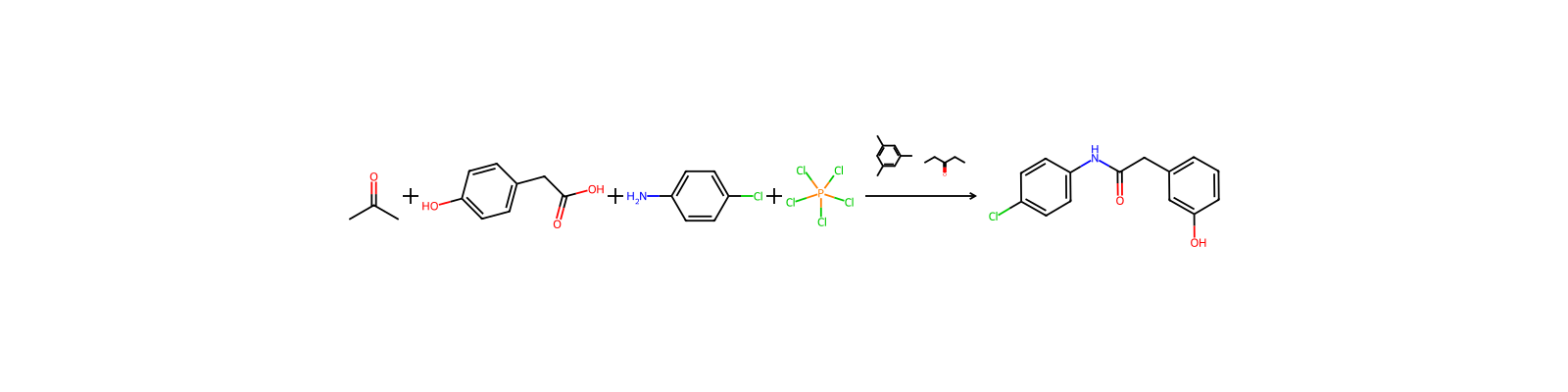
関連反応
356 件


関連ノート
読み込み中…