ホームMCPワークベンチSkills
ホームワークベンチ通知マイページ
llms.txt · MCPガイドプライバシーポリシー · 利用規約 · サポートv1.8.0
  1. ホーム
  2. /化合物

2-ブタノン オキシム

2-Butanone oxime

HCID 7292
ノートを作成反応を作成見積依頼を出す
印刷プレビュー

データを補完しています。しばらくしてからページを更新すると最新の内容を表示できます

基本情報概要名称と識別子物性安全と法規制化学と産業関連反応化合物ノート
部分構造検索類似構造を探す

基本情報

CAS
96-29-7
標準SMILES
CCC(C)=NO
InChIKey
WHIVNJATOVLWBW-UHFFFAOYSA-N
分子式
C4H9NO
平均分子量
87.12 g/mol
単同位体質量
87.06841391

概要

Methyl ethyl ketoxime is a clear colorless liquid with a musty odor. (NTP, 1992)

名称と識別子

優先名称
2-Butanone oxime
IUPAC
N-butan-2-ylidenehydroxylamine
現地名
2-ブタノン オキシム
英語名
2-Butanone oxime
分子式
C4H9NO
分子量
87.12

名称と別名

2-BUTANONE OXIMEmethylethyl ketoximeDTXSID1021821Ethyl-methylketonoximMEKODTXCID701821RefChem:90969151YGE935U996-29-7Methyl ethyl ketoxime2-Butanone, oximeButanone oxime
名称をさらに表示
2-ブタノン オキシムメチルエチルケトキシムMEK-オキシムエチルメチルケトンオキシムブタン-2-オン=オキシム2-ブタノンオキシムメチルエチルケトンオキシムエチルメチルケトキシムエチル(メチル)ケトンオキシム2-ブトキシムメチルエチルケトオキシムブタン2オン=オキシムエチルメチルケトオキシムメチルアルキル(C2~4)ケトオキシム2‐ブタノンオキシム2-ブタノン=オキシムN-(ブタン-2-イリデン)ヒドロキシルアミンEthyl methyl ketone oximeMETHYL ETHYL KETONE OXIMEExkin 2Methylethylketoxim(2E)-2-Butanone oximeSKINO
Ethyl methyl ketoximeMethylethylketoximebutan-2-one oxime2-Butanoneoxime2-ButoximePentan-2-one,oximeButan-2-one, oximeSkino No. 2

データベース識別子

CAS
96-29-7
PubChem CID
7292
DTXSID
DTXSID1021821
ChEMBL
CHEMBL3181847
EC Number
202-496-6

物性

構造計算による物性補完中

XLogP
0.7
極性表面積
32.6 Ų
水素結合供与体数
1
水素結合受容体数
2
回転可能結合数
1
重原子数
6
形式電荷
0
複雑度
58.6

実験および物理化学的性質

Chemical ClassesNitrogen Compounds -> Oximes
LogPlog Kow = 0.63
Density · 3 件

0.9232 at 68 °F (NTP, 1992) - Less dense than water; will float

0.9232 g/cu cm at 20 °C

0.923 @ 20°C

Color/Form · 2 件

Liquid

Colorless liquid

Solubility · 3 件

greater than or equal to 100 mg/mL at 72 °F (NTP, 1992)

In water, 100,000 mg/L at 25 °C

Soluble in chloroform; miscible with ethanol and ether

Flash Point138 °F (NTP, 1992)
Boiling Point · 3 件

306 °F at 760 mmHg (NTP, 1992)

152.5 °C

152 °C @760 [mm Hg]

DecompositionWhen heated to decomposition it emits toxic fumes of /oxides of nitrogen/.
Melting Point · 3 件

-21.1 °F (NTP, 1992)

-29.5 °C

-29.5 °C

Vapor Density

安全と法規制

安全情報は参考情報です。供給元の安全データシート(SDS)、適用法令、専門家による評価に代わるものではありません。

GHS分類

GHS Classification · 6 件

Danger

H301: Toxic if swallowed [Danger Acute toxicity, oral]

P203, P260, P261, P264, P264+P265, P270, P271, P272, P280, P301+P316, P302+P352, P304+P340, P305+P354+P338, P308+P316, P317, P318, P319, P321, P330, P332+P317, P333+P317, P362+P364, P403+P233, P405, and P501 (click each P-code to see the statement)

This chemical does not meet GHS hazard criteria for < 0.1% (2 of 4723) of reports.

Danger

H312 (> 99.9%): Harmful in contact with skin [Warning Acute toxicity, dermal]

危険有害性情報

Regulatory Information · 5 件

Chemical: 2-Butanone, oxime

Hazard Traits - Carcinogenicity

2-Butanone, oxime is listed on the EPA's Chemical Data Reporting (CDR) system. Manufacturers and importers of 2-Butanone, oxime are required to report information about their production and use of this chemical to the EPA under the Toxic Substances Control Act (TSCA). (40 eCFR Part 711)

Status: Active Update: 23-01-2023 https://echa.europa.eu/registration-dossier/-/registered-dossier/14908

2-Butanone, oxime: HSNO Approval: HSR001191 Approved with controls

Other Safety InformationEvaluation - 2-Butanone, oxime (MEKO)
DOT LabelFlammable Liquid
Fire HazardsThis chemical is combustible. (NTP, 1992)
Health HazardsSYMPTOMS: Symptoms of exposure to this compound may include slight eye and skin irritation. It may interfere with alcohol metabolism resulting in the formation of acetaldehyde, blotchy red marks, red eyes, tiredness and visible veins.
Hazards Summary · 1 件

A skin sensitizer; [Quick CPC] Dermal sensitization, hemolytic anemia, and CNS depression reported in animal studies; Hemolytic effects were seen in a 4-week inhalation study at 533 ppm, but not at 283 ppm; MEKO has been produced since 1958, and no adverse effects in workers have been reported; Painters using alkyd paints containing MEKO were exposed at levels <1-2 ppm; [AIHA] 8-hour exposure of 12 rats to saturated atmosphere caused no mortalities; Hematological changes (increased methemoglobin and reticulocytes and decreased hemoglobin) observed in 4-week inhalation study of rats at 400 ppm; In a 13-week oral neurotoxicity study of rats, transient neurobehavioral changes were observed immediately following administration, but reversed by the next day; No progressive long term neurotoxicity observed; [IUCLID]

化学と産業

薬理情報

Mechanism of Action · 2 件

Both oximes and hydroxylamine (HYAM) are compounds with known oxidative capacity. We tested in vitro whether acetaldoxime (AAO), cyclohexanone oxime (CHO), methyl ethyl ketoxime (MEKO) or HYAM affect haemoglobin oxidation (into HbFe3+), formation of thiobarbituric acid reactive substances (TBARS), and glutathione (GT) depletion in human haemolysate, erythrocytes or blood. All these parameters are known to be related to oxidative stress. Glutathione S-transferase (GST) activity was measured as it may be affected by oxygen radicals. All three oximes caused a low degree of HbFe3+ accumulation in erythrocytes. This was higher in haemolysates indicating that membrane transport may be limiting or that protective mechanisms within erythrocytes are more effective. HbFe3+ accumulation was lower for the oximes than for HYAM. AAO and HYAM caused TBARS formation in blood. For HYAM this was expected as free radicals are known to be generated during HbFe3+ formation. Free radical generation by AAO and HYAM in erythrocytes was confirmed by the inhibition of GST. For the other two oximes (CHO and MEKO) some special effects were found. CHO did inhibit erythrocyte GST while it did not cause TBARS formation. MEKO was the least potent oxime as it caused no TBARS formation, little HbFe3+ accumulation and little GST inhibition in erythrocytes. However, GT depletion was more pronounced for MEKO than for the other oximes, indicating that glutathione conjugation occurs. TBARS formation, GT depletion and GST modulation caused by the oximes and HYAM were also tested in rat hepatocytes. However, no effects were found in hepatocytes. This suggests that a factor present in erythrocytes is necessary for free radical formation. Studies with proposed metabolites of the oximes (i.e. cyclohexanone, acetaldehyde or methylethyl ketone) and addition of rat liver preparations to the erythrocyte incubations with oximes, suggest that metabolism is not a limiting factor in erythrocyte toxicity.

Acetoxime and methylethyl ketoxime (MEKO) are tumorigenic in rodents, inducing liver tumors in male animals. The mechanisms of tumorigenicity for these compounds are not well defined. Oxidation of the oximes to nitronates of secondary-nitroalkanes, which are mutagenic and tumorigenic in rodents, has been postulated to play a role in the bioactivation of ketoximes. In these experiments, we have compared the oxidation of acetoxime and methylethyl ketoxime to corresponding nitronates in liver microsomes from different species. The oximes were incubated with liver microsomes from mice, rats, and several human liver samples. After tautomeric equilibration and extraction with n-hexane, 2-nitropropane and 2-nitrobutane were quantitated by GC/MS-NCI (limit of detection of 250 fmol/injection volume). In liver microsomes, nitronate formation from MEKO and acetoxime was dependent on time, enzymatically active proteins, and the presence of NADPH. Nitronate formation was increased in liver microsomes of rats pretreated with inducers of cytochrome P450 and reduced in the presence of inhibitors (n-octylamine and diethyldithiocarbamate). Rates of oxidation of MEKO (Vmax) were 1.1 nmol/min/mg (mice), 0.5 nmol/min/mg (humans), and 0.1 nmol/min/mg (rats). In addition to nitronates, several minor metabolites were also enzymatically formed (two diastereoisomers of 3-nitro-2-butanol, 2-hydroxy-3-butanone oxime and 2-nitro-1-butanol). Acetoxime was also metabolized to the corresponding nitronate at rates approximately 50% of those observed with MEKO oxidation in the three species examined. 2-Nitro-1-propanol was identified as a minor product formed from acetoxime. No sex differences in the capacity to oxidize acetoxime and MEKO were observed in the species examined. The observed results show that formation of sec-nitronates from ketoximes occurs slowly, but is not the only pathway involved in the oxidative biotransformation of these compounds. Due to the lack of sex-specific oxidative metabolism, other metabolic pathways or mechanisms of tumorigenicity not involving bioactivation may be involved in the sex-specific tumorigenicity of ketoximes in rodents.

関連反応

17 件
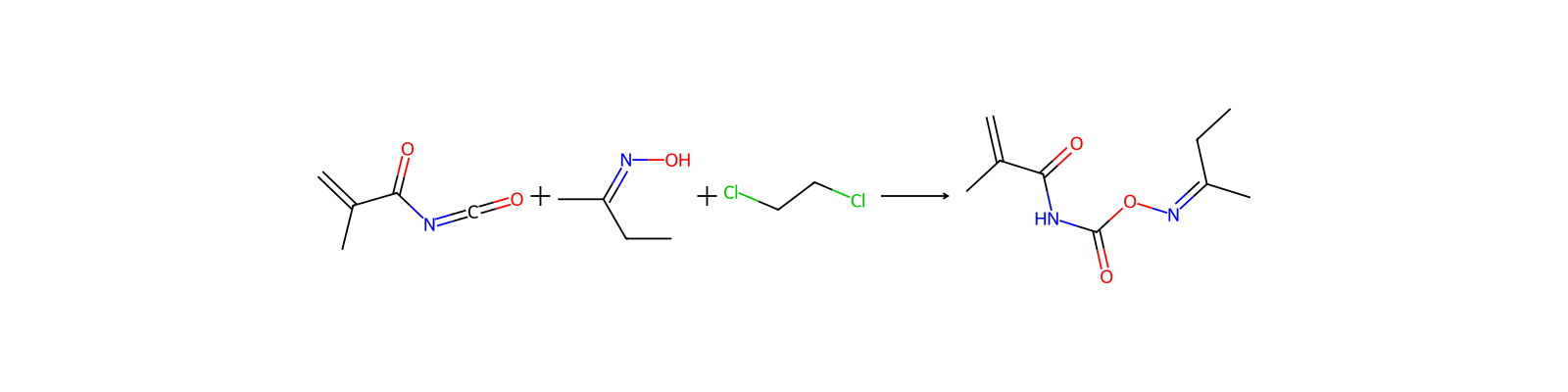
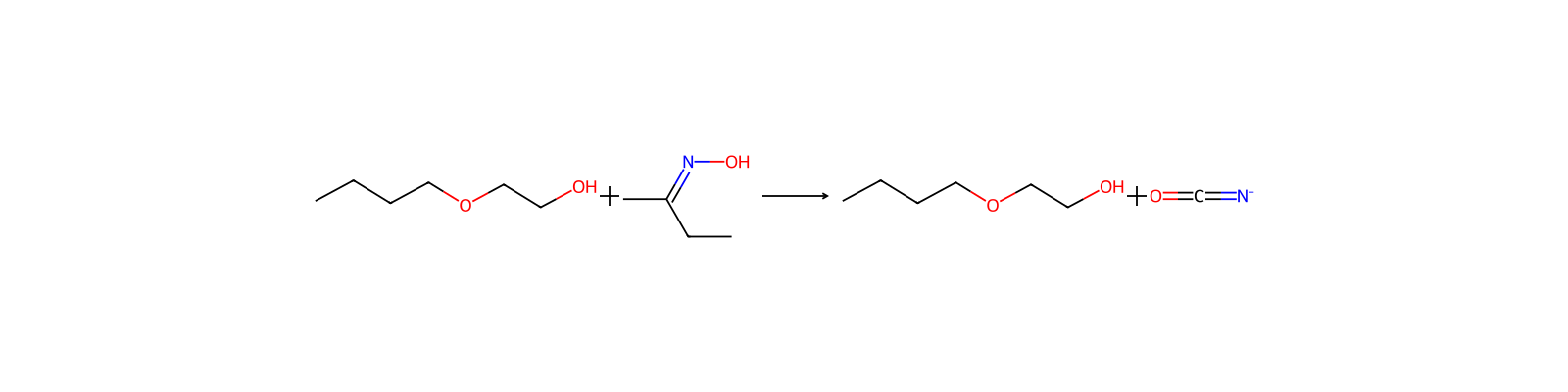
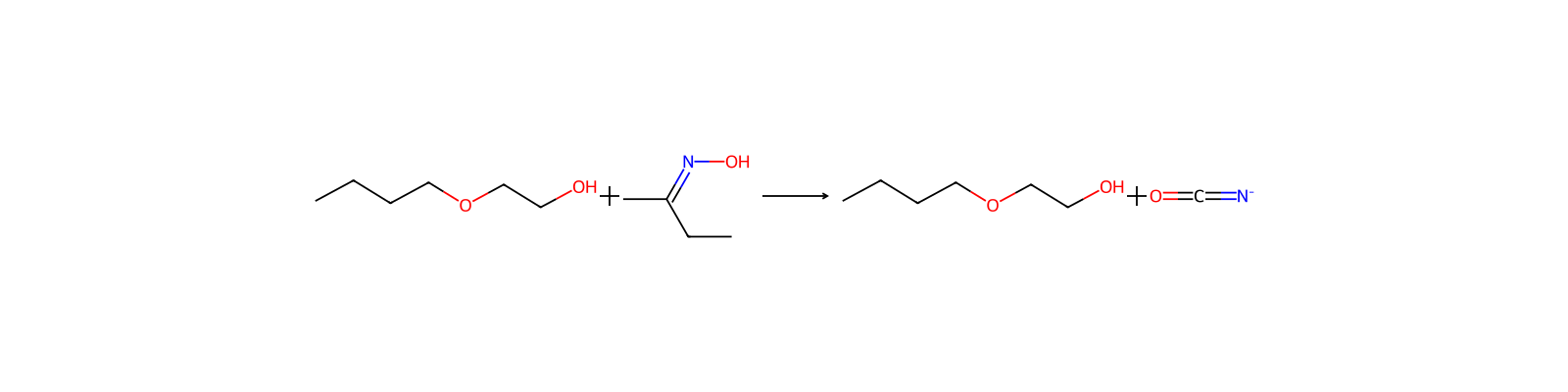
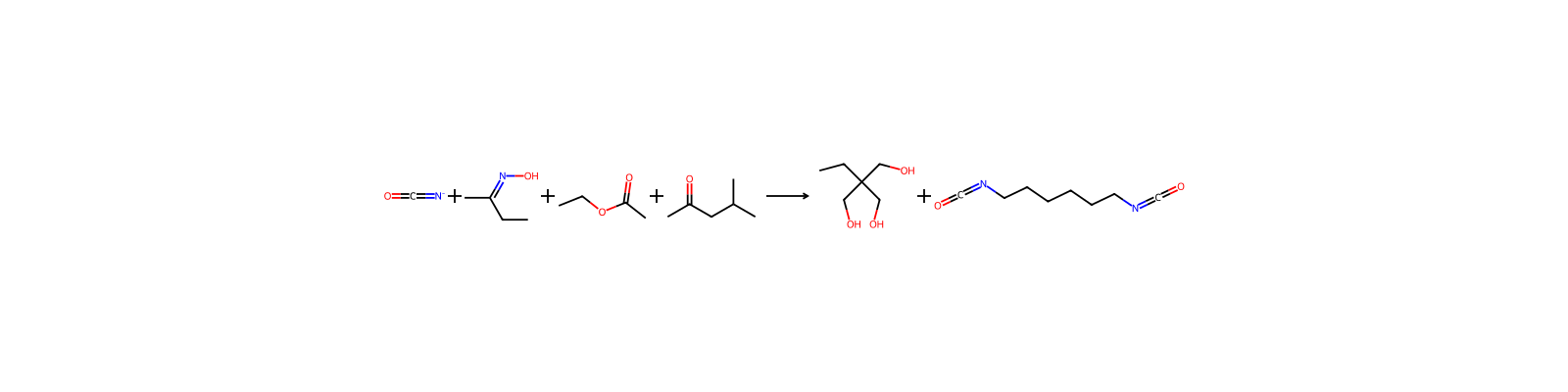
反応記録を作成
HRID 65293 の反応式
HRID 65293反応物としてuspto-grants-1986_09
HRID 953757 の反応式
HRID 953757反応物としてValidation data from https://doi.org/10.1039/C8SC04228D
HRID 1183230 の反応式
HRID 1183230反応物としてuspto-grants-2014_03
HRID 1277607 の反応式
HRID 1277607反応物としてuspto-grants-1981_07
HRID 1362771 の反応式
HRID 1362771反応物としてuspto-grants-2011_02
HRID 1362772 の反応式
HRID 1362772反応物としてuspto-grants-2011_02
HRID 1362773 の反応式
HRID 1362773反応物としてuspto-grants-2011_02
HRID 1656036 の反応式
HRID 1656036反応物としてuspto-grants-1993_10
1 / 3 ページ

化合物ノート

読み込み中…

このページの内容基本情報概要名称と識別子物性安全と法規制化学と産業関連反応化合物ノート
その他の操作
ノートを作成反応を作成見積依頼を出す
3 (NTP, 1992) - Heavier than air; will sink (Relative to Air)
Vapor Pressure · 4 件

22.6 mmHg at 73 °F ; 50.9 mmHg at 118 °F (NTP, 1992)

0.9 [mmHg]

VP: 7.6 mm Hg at 50 °C

1.06 mm Hg at 20 °C

Refractive IndexIndex of refraction = 1.4410 at 20 °C/D

物理化学的性質

融点
-30 °C · -30 °C
沸点
59 · 59-60 °C15 mm Hg(lit.)
比重(密度)
0.924 g/mL · 0.924 g/mL at 25 °C(lit.)
蒸気密度
3 · 3 (vs air)
蒸気圧
8 mm · <8 mm Hg ( 20 °C)
屈折率
20 · n20/D 1.442(lit.)
闪点
140 °F · 140 °F
溶解性
25 ℃で可溶100g/L · 水:25℃で可溶100g/L
外見
液体
酸解離定数(Pka)
1 · pK1:12.45 (25°C)
色
無色透明~淡黄色
臭い (Odor)
Musty odor
水溶解度
114 g/L · 114g/L(20℃)
BRN
1698241 · 1698241
Henry's Law Constant
8.1 · 8.1×100 mol/(m3Pa) at 25℃, HSDB (2015)
Dielectric constant
3.4 · 3.4(20℃)
安定性
安定。可燃性。強力な酸化剤とは相容れない。強酸と反応して爆発性物質を形成することがある。
InChIKey
WHIVNJATOVLWBW-SNAWJCMRSA-N
LogP
0.63 at · 0.63 at 25℃
CAS データベース
96 · 96-29-7(CAS DataBase Reference)
NISTの化学物質情報
2 · 2-Butanone, oxime(96-29-7)
EPAの化学物質情報
Methyl ethyl ketoxime (96-29-7)

化学的性質

化学的特性2-Butanone oxime is a colorless or light yellow oily transparent liquid that has strong complexation with metal ions and is volatile in the air. It can react with hydrochloric acid and sulfuric acid to form methyl ethyl ketone.

Reactive GroupOximes
TSCA Requirements · 2 件

Pursuant to section 8(d) of TSCA, EPA promulgated a model Health and Safety Data Reporting Rule. The section 8(d) model rule requires manufacturers, importers, and processors of listed chemical substances and mixtures to submit to EPA copies and lists of unpublished health and safety studies. 2-Butanone, oxime is included on this list. Effective date: 12/15/86; Sunset date: 12/19/95.

All persons who manufacture (including import) or process or intend to manufacture or process MEKO, including persons who manufacture or process or intend to manufacture or process MEKO as a byproduct, or who import or intend to import products which contain MEKO, after the date specified in paragraph (e) of this section to the end of the reimbursement period, shall submit letters of intent to conduct testing, submit study plans, conduct tests and submit data, or submit exemption applications, as specified in this section, subpart A of this part, and parts 790 and 792 of this chapter for single-phase rulemaking.Methyl ethyl ketoxime is included on this list. Required testing: health effect testing.

Reactivity AlertsHighly Flammable
Reactivity Profile · 1 件

METHYL ETHYL KETOXIME is sensitive to heat. Has exploded at least twice when heated in the presence of acidic impurities [Chem. Eng. News, 1974, 52(35), 3]. Reacts with oxidizing agents. Mixtures with strong acids may explode. Reacts with sulfuric acid to form an explosive product (NTP, 1992).

Air and Water ReactionsHighly flammable. Water soluble.
Hazard Classes and Categories · 6 件

Acute Tox. 4 (> 99.9%)

Acute toxicity (ingestion) - category 3

Acute toxicity (Oral) - Category 4

Hazardous to the aquatic environment (Acute) - Category 3

Acute toxicity (Oral) - Category 4

Carc. 1B

安全と保護具

Fire FightingFires involving this material can be controlled with a dry chemical, carbon dioxide or Halon extinguisher. A water spray may also be used. (NTP, 1992)
First Aid · 1 件

EYES: First check the victim for contact lenses and remove if present. Flush victim's eyes with water or normal saline solution for 20 to 30 minutes while simultaneously calling a hospital or poison control center. Do not put any ointments, oils, or medication in the victim's eyes without specific instructions from a physician. IMMEDIATELY transport the victim after flushing eyes to a hospital even if no symptoms (such as redness or irritation) develop.

Nonfire Spill Response · 1 件

SMALL SPILLS AND LEAKAGE: If you should spill this chemical, use absorbent paper to pick up all liquid spill material. Seal the absorbent paper, as well as any of your clothing which may be contaminated, in a vapor-tight plastic bag for eventual disposal. Wash any surfaces you may have contaminated with a soap and water solution. Do not reenter the contaminated area until the Safety Officer (or other responsible person) has verified that the area has been properly cleaned.

Disposal Methods · 1 件

SRP: The most favorable course of action is to use an alternative chemical product with less inherent propensity for occupational harm/injury/toxicity or environmental contamination. Recycle any unused portion of the material for its approved use or return it to the manufacturer or supplier. Ultimate disposal of the chemical must consider: the material's impact on air quality; potential migration in soil or water; effects on animal and plant life; and conformance with environmental and public health regulations.

Isolation and EvacuationExcerpt from ERG Guide 128 [Flammable Liquids (Water-Immiscible)]:
Protective Action Criteria (PAC) · 3 件

8.0 [ppm]

150 [ppm]

880 [ppm]

Personal Protective Equipment (PPE) · 1 件

RECOMMENDED RESPIRATOR: Where the neat test chemical is weighed and diluted, wear a NIOSH-approved half face respirator equipped with an organic vapor/acid gas cartridge (specific for organic vapors, HCl, acid gas and SO2) with a dust/mist filter. (NTP, 1992)

Other Standards Regulations and GuidelinesWorkplace Environmental Exposure Level (WEEL): 8-hr Time-weighted Average (TWA) 10 ppm, dermal sensitization.

毒性情報

Environmental Fate · 3 件

TERRESTRIAL FATE: Based on a classification scheme(1), an estimated Koc value of 116(SRC), determined from a structure estimation method(2), indicates that 2-butanone oxime is expected to have high mobility in soil(SRC). Volatilization of 2-butanone oxime from moist soil surfaces is expected to occur(SRC) given a an estimated Henry's Law constant of 1.22X10⁻⁶ atm-cu m/mole(SRC), estimated from its vapor pressure, 1.06 mm Hg at 20 °C(3), and water solubility, 1X10+5 mg/L(4). 2-Butanone oxime is expected to volatilize from dry soil surfaces based upon its vapor pressure(SRC). A 14-19.6% theoretical BOD over a 2-week period(5) and a 24.7% theoretical BOD over a 4-week period(6) using activated sludge in the Japanese MITI test(3,6) suggests that biodegradation may occur in soil(SRC). [

AQUATIC FATE: Based on a classification scheme(1), an estimated Koc value of 116(SRC), determined from a structure estimation method(2) indicates that 2-butanone oxime is not expected to adsorb to suspended solids and sediment(SRC). Volatilization from water surfaces is expected to occur(3) based upon an estimated Henry's Law constant of 1.22X10⁻⁶ atm-cu m/mole(SRC), derived from its vapor pressure, 1.06 mm Hg(4), and water solubility, 1X10+5 mg/L(5). Using this Henry's Law constant and an estimation method(3), volatilization half-lives for a model river and model lake are 28 and 208 days, respectively(SRC). According to a classification scheme(6), an observed BCF range of 0.5 to 5.8 in catfish over a 6-week test period(7), suggests the potential for bioconcentration in aquatic organisms is low. A 14-19.6% theoretical BOD over a 2-week period(8) and a 24.7% theoretical BOD over a 4-week period(7) using activated sludge in the Japanese MITI test(7-8) suggests that biodegradation may occur in water(SRC).

ATMOSPHERIC FATE: According to a model of gas/particle partitioning of semivolatile organic compounds in the atmosphere(1), 2-butanone oxime, which has a vapor pressure of 1.06 mm Hg at 20 °C(2) is expected to exist solely as a vapor in the ambient atmosphere. Vapor-phase 2-butanone oxime is degraded in the atmosphere by reaction with photochemically-produced hydroxyl radicals(SRC); the half-life for this reaction in air is estimated to be 11 days(SRC), calculated from its rate constant of 1.48X10⁻¹² cu cm/molecule-sec at 25 °C(SRC) that was derived using a structure estimation method(2).

Adverse EffectsNeurotoxin - Other CNS neurotoxin
Ongoing Test Status · 1 件

The following link will take the user to the National Toxicology Program (NTP) Test Agent Search Results page, which tabulates all of the "Standard Toxicology & Carcinogenesis Studies", "Developmental Studies", and "Genetic Toxicity Studies" performed with this chemical. Clicking on the "Testing Status" link will take the user to the status (i.e., in review, in progress, in preparation, on test, completed, etc.) and results of all the studies that the NTP has done on this chemical.[Available from, as of June 21, 2012: http://ntp-apps.niehs.nih.gov/ntp_tox/index.cfm?fuseaction=ntpsearch.searchresults&searchterm=96-29-7]

Soil Adsorption/Mobility · 1 件

Using a structure estimation method based on molecular connectivity indices(1), the Koc of 2-butanone oxime can be estimated to be 116(SRC). According to a classification scheme(2), this estimated Koc value suggests that 2-butanone oxime is expected to have high mobility in soil.

Artificial Pollution Sources · 1 件

2-Butanone oxime's production and use as an anti-skinning agent in paints and lacquers, as a blocking-agent for isocyanate in polyurethanes, and in the manufacture of oxime silanes for use as a crosslinking agent for silicone sealants(1) may result in its release to the environment through various waste streams(SRC).

Environmental Biodegradation · 1 件

AEROBIC: 2-Butanone oxime, present at 30 mg/L, reached 24.7% of its theoretical BOD in 4 weeks using an activated sludge inoculum at 100 mg/L in the Japanese MITI test(1). 2-Butanone oxime, present at 30 mg/L, reached 14-19.5% of its theoretical BOD in 2 weeks using an activated sludge inoculum at 100 mg/L in the Japanese MITI test(2).

Environmental BioconcentrationUsing 2-butanone oxime concentrations of 0.2 and 2.0 mg/L, a BCF range of 0.5 to 5.8 was measured in catfish over a 6-week exposure period(1).
Volatilization from Water/Soil · 1 件

The Henry's Law constant for 2-butanone oxime is estimated as 1.22X10⁻⁶ atm-cu m/mole(SRC) derived from its vapor pressure, 1.06 mm Hg at 20 °C(1), and water solubility, 1X10+5 mg/L(2). This Henry's Law constant indicates that 2-butanone oxime is expected to volatilize slowly from water surfaces(3). Based on this Henry's Law constant, the volatilization half-life from a model river (1 m deep, flowing 1 m/sec, wind velocity of 3 m/sec)(3) is estimated as 28 days(SRC). The volatilization half-life from a model lake (1 m deep, flowing 0.05 m/sec, wind velocity of 0.5 m/sec)(3) is estimated as 208 days(SRC). 2-Butanone oxime's Henry's Law constant indicates that volatilization from moist soil surfaces may occur(SRC). 2-Butanone oxime expected to volatilize from dry soil surfaces(SRC) based upon its vapor pressure(SRC). In two-week chamber studies using paints containing 2-butanone oxime, an average of 84% of the 2-butanone oxime in the paints initially was recovered in the volatile emissions(4).

Non-Human Toxicity Excerpts · 5 件

/LABORATORY ANIMALS: Subchronic or Prechronic Exposure/ Male CD-1 mice were exposed 6 hr/day, 5 days/wk, for 1, 2, 4, or 13 wk via whole-body inhalation exposures to MEKO vapor concentrations of 0, 3 +/- 0.1, 10 +/- 0.3, 30 +/- 1, or 100 +/- 2 ppm (10 mice/group/interval). Satellite animals were removed after 1, 2, 4, or 13 wk of exposure and allowed to recover for 4 or 13 wk (5 mice/group/interval). After termination, the nasal turbinates were evaluated microscopically, and cross-sectional nasal maps of the lesions were prepared. At the end of the 1-, 2-, 4-, and 13-wk exposure periods, degeneration of the olfactory epithelium lining the dorsal meatus was seen in the anterior region of the nasal cavity. In a few instances, the olfactory epithelium covering the tips of the nasoturbinal scrolls projecting into the dorsal region of the nasal cavity was also degenerated. Large areas of olfactory epithelium lying laterally and posteriorly were unaffected. In general, approximately 10% or less of the total olfactory tissue was affected. In several instances, the degenerated olfactory epithelium was reepithelialized by squamous/squamoid and/or respiratory types of epithelium. Degeneration, which was dose related in incidence and severity, was seen in mice exposed to 30 and 100 ppm after 1 wk of exposure and in several mice exposed to 10 ppm after 13 wk of exposure. The incidence and severity of the degeneration present after 1 wk of exposure did not increase with the longer exposures. The olfactory degeneration was reversible. Recovery was complete within 4 wk following exposures at 10 ppm and nearly complete within 13 wk after exposures at 30 and 100 ppm. A no-observed-effect level (NOEL) for the olfactory degeneration was considered to be 3 ppm.

/LABORATORY ANIMALS: Subchronic or Prechronic Exposure/ /Fischer 344/ rats were exposed by inhalation to MEKO vapor /for 3 hours a day, 5 days a week for 4 weeks at doses of 25, 100, and 400 ppm. Exposure levels were analyzed and particle size distribution measured. Ten animals/sex/group were used. At 100 ppm increased methemoglobin was observed in female rats. At 400 ppm significant alterations in most hematological parameters (increased methemoglobin, increased reticulocytes, increased platelets, increased MCW and MCH, increased total leucocytes and erythrocytes and MCHC) were observed for both male and female rats. At 400 ppm remarkable erythrocyte morphology included increased numbers of nucleated erythrocytes and polychromia, were seen in male and female rats. At 400 ppm increased absolute and relative organ weights of liver and spleen in males and females were seen.

/LABORATORY ANIMALS: Subchronic or Prechronic Exposure/ /Fischer 344 rats were dosed once daily by gavage for 28 days at doses of 0, 250, 500 mg/kg/day. Control animals (15/group) received distilled water (negative control), 0.5% methylcellulose (vehicle control) or clofibric acid, 250 mg/kg (positive control), at the same dose volume as administered to the treated animals. Under the conditions of this study, MEKO did not produce any significant hepatic peroxisome proliferation in the rate, as indicated by a lack of effect on palmitoyl-CoA oxidation and by electron microscopy. The potential responsiveness of the animals used in this study was confirmed by the marked induction of palmitoyl-CoA in the rats treated with clofibric acid. While MEKO was not a peroxisome proliferator in the rat, significant increase in the levels of hepatic glutathione (primarily reduced glutathione) were observed in rats given 250 and 500 mg/kg/day MEKO for 14 days. This lack of an effect after 7 days of dosing correlated with the hepatocellular hypertrophy which was seen microscopically after 14 and 28 but not 7 days of treatment.

Environmental Abiotic Degradation · 1 件

The rate constant for the vapor-phase reaction of 2-butanone oxime with photochemically-produced hydroxyl radicals has been estimated as 1.48X10⁻¹² cu cm/molecule-sec at 25 °C(SRC) using a structure estimation method(1). This corresponds to an atmospheric half-life of about 11 days at an atmospheric concentration of 5X10+5 hydroxyl radicals per cu cm(1).

Probable Routes of Human Exposure · 2 件

According to the 2006 TSCA Inventory Update Reporting data, the number of persons reasonably likely to be exposed in the industrial manufacturing, processing, and use of 2-butanone oxime is 1000 or greater; the data may be greatly underestimated(1).

NIOSH (NOES Survey 1981-1983) has statistically estimated that 313,185 workers (25,609 of these were female) were potentially exposed to 2-butanone oxime in the US(1). Occupational exposure to 2-butanone oxime may occur through inhalation and dermal contact with this compound at workplaces where 2-butanone oxime is produced or used(SRC). The U.S. Consumer Product Safety Commission's Chemicals in Products database lists 764 products that contain 2-butanone oxime (methyl ethyl ketoxime); all but 16 of these products are in the paints and coatings category; other products containing methyl ethyl ketoxime included a glass cleaner and a skin soap(2). The general population will exposed to 2-butanone oxime through inhalation of vapors and dermal contact from consumer products containing the compound (especially paints and coatings)(SRC).

Other Environmental Concentrations · 1 件

The mean concentration of 2-butanone oxime detected in three alkyd enamel paints purchased from retail outlet stores was 0.92, 2.93 and 1.34 mg/g respectively(1); in two-week chamber studies using these paints, an average of 84% of the 2-butanone oxime in the paints initially was recovered in the volatile emissions(1).

法規制情報

TSCA Requirements · 2 件

Pursuant to section 8(d) of TSCA, EPA promulgated a model Health and Safety Data Reporting Rule. The section 8(d) model rule requires manufacturers, importers, and processors of listed chemical substances and mixtures to submit to EPA copies and lists of unpublished health and safety studies. 2-Butanone, oxime is included on this list. Effective date: 12/15/86; Sunset date: 12/19/95.

All persons who manufacture (including import) or process or intend to manufacture or process MEKO, including persons who manufacture or process or intend to manufacture or process MEKO as a byproduct, or who import or intend to import products which contain MEKO, after the date specified in paragraph (e) of this section to the end of the reimbursement period, shall submit letters of intent to conduct testing, submit study plans, conduct tests and submit data, or submit exemption applications, as specified in this section, subpart A of this part, and parts 790 and 792 of this chapter for single-phase rulemaking.Methyl ethyl ketoxime is included on this list. Required testing: health effect testing.

安全データ

wgk
1
tsca
TSCA listed
rtecs
EL9275000
ridadr
UN 1993 3/PG 3
hs_code
29280090
risk_code
21-40-41-43-52/53-48/25
化審法
(2)-546
消防法
危-4-2-III
hazard_code
Xn,T
safety_code
13-23-26-36/37/39-61-45-36/37-25
hazard_class
3
packing_group
III
環境リスク評価
ブタン-2-オン=オキシム(96-29-7)
有毒物質データの
96-29-7(Hazardous Substances Data)
危険度評価(NFPA 704基準/消防庁データ)
火災[赤]=2
Metabolism/Metabolites · 2 件

The substance /2-butanone oxime/ can be metabolized in vivo in animals to 2-butanone and hydroxylamine.

...Methyl ethyl ketoxime is extensively metabolized and does not accumulate in tissues. Single gavage doses of 2.7, 27, or 270 mg/kg administered to rats were primarily converted to carbon dioxide, mostly in the first 24 hours after dosing. After intravenous administration, less radioactivity on a percentage basis was excreted as carbon dioxide than in the gavage study, and more of the administered dose was excreted in urine and as volatiles. Following dermal administration, significantly greater amounts of volatiles were excreted than after gavage or intravenous administration. The 270 mg/kg gavage dose may result in saturation of a metabolic pathway(s). There is some evidence that the ketoxime is metabolized to the ketone and, presumably, hydroxylamine...

Absorption, Distribution and Excretion · 3 件

Pregnant mice were administered a single oral dose of 14(C)-2 butanone oxime on day 14 of gestation. In addition, a male mouse was administered a single oral dose of (14)C-2-butanone oxime. It appears that the substance is rapidly absorbed via the oral route, and distributed intact through the body. Urine and bile contained significant activity throughout the study. Intestinal activity was minimal. This suggests that the substance is primarily excreted via the kidneys.

The disposition of 14(C)-methyl ethyl ketoxime (MEKO) was determined in the male F344 rat following oral, iv and dermal administration. Oral doses of 2.7, 27 and 270 mg/kg were primarily excreted as CO2 (71-49%) in decreasing percentage as the dose increased. Excretion in urine (13-26%) and as volatiles (5-18%) increased as the dose increased. Five to 6% of the dose remained in the major tissues after 72 hr. An iv dose of 2.7 mg/kg was also principally excreted as CO2 (48.8%) with excretion in urine and as expired volatiles accounting for 21.4 and 11.4%, respectively. About 7% of the administered radioactivity remained in the tissues after 72 hr. Following dermal administration, 13 and 26% of a 2.7 and 270 mg/kg dose, respectively, were absorbed. Volatilization from the dose site prior to placement in the metabolism cage may account for the low absorption. MEKO was biotransformed to at least five polar metabolites that could only be partially resolved by anion exchange chromatography. Incubation with glucuronidase, but not sulphatase, changed the urinary metabolic profile. Methyl ethyl ketone was a major component in the volatiles.

...Methyl ethyl ketoxime is extensively metabolized and does not accumulate in tissues. Single gavage doses of 2.7, 27, or 270 mg/kg administered to rats were primarily converted to carbon dioxide, mostly in the first 24 hours after dosing. After intravenous administration, less radioactivity on a percentage basis was excreted as carbon dioxide than in the gavage study, and more of the administered dose was excreted in urine and as volatiles. Following dermal administration, significantly greater amounts of volatiles were excreted than after gavage or intravenous administration. The 270 mg/kg gavage dose may result in saturation of a metabolic pathway(s). There is some evidence that the ketoxime is metabolized to the ketone and, presumably, hydroxylamine...

用途と製造

Uses · 6 件

Used as an anti-skinning agent in alkyd paints; Also used as a blocking agent (urethane polymers) and a corrosion inhibitor (boilers); [AIHA]

Painting (Pigments, Binders, and Biocides) [Category: Paint]

Antiskinning agent in lacquers.

2-Butanone oxime is widely used as a blocking agent in coatings such as isocyanate urethane coatings for wire and in magnetic tape coatings and resins

Catalyst, oxygen scavenger in steam generation, extraction of silver

Used primarily as an antiskinning agent in alkyd coating resins to prevent formation of a solid or gelatinous skin in the container.

U.S. Production · 4 件

2023: 2,500,000 - <4,000,000 lb

2-Butanone, oxime is listed as a High Production Volume (HPV) chemical (65FR81686). Chemicals listed as HPV were produced in or imported into the U.S. in >1 million pounds in 1990 and/or 1994. The HPV list is based on the 1990 Inventory Update Rule. (IUR) (40 CFR part 710 subpart B; 51FR21438).

Production volumes for non-confidential chemicals reported under the Inventory Update Rule.[Table#8032]

Production volume for non-confidential chemicals reported under the 2006 Inventory Update Rule. Chemical: 2-Butanone, oxime. Aggregated National Production Volume: 10 to < 50 million lbs.

Consumer UsesDeflocculant
Industry UsesDeflocculant
Household ProductsInformation on 222 consumer products that contain Methyl ethyl ketoxime in the following categories is provided:
General Manufacturing Information · 3 件

Machinery Manufacturing

2-Butanone, oxime: ACTIVE

The U.S. Consumer Product Safety Commission's Chemicals in Products database lists 764 products that contain 2-butanone oxime (methyl ethyl ketoxime); all but 16 of these products are in the paints and coatings category; other products containing methyl ethyl ketoxime included a glass cleaner and a skin soap.

応用分野 · 4 件

用途塗料の皮張り防止剤、シリコン樹脂の硬化剤およびウレタンのブロッキング剤

用途有機合成原料。

使用2-Butanone oxime was employed as reagent and solvent in the syntheses of ketoimine and 2,4-dipyridyl-1,3,5-triazapentadiene palladium(II) complexes. It was also used in the synthesis of novel acetaldiimine cobalt complex, [CoI2{((CH3CH2)(CH3)C=NO)2C(CH3)2}]. Methyl ethyl ketoxime is used primarily as an antiskinning agent in alkyd coating resins

一般的な説明Clear colorless liquid with a musty odor.

調製方法

製造方法2-Butanone oxime is obtained by the reaction of butanone and hydroxylamine hydrochloride. It can also be synthesized by the reaction between butanone and hydroxylamine sulfate.

合成方法2-ブタノールのCu-Zn触媒による気相脱水素

上流・下流製品情報

上流原料

アンモニア水塩酸ヒドロキシルアミン硫酸ヒドロキシルアミン2-chloro-2-nitroso-butanesec-ButylamineN-メチルプロピオンアミドN-エチルアセトアミド2-メチルブチルアミン

下流製品

硫酸ヒドロキシルアミン1H-Pyrrole,1-ethenyl-2,3-dimethyl-(9CI)(S)-(+)-sec-ブチルアミン

/LABORATORY ANIMALS: Subchronic or Prechronic Exposure/ In this study /Sprague-Dawley rats were administered butanone oxime by gavage at 25, 75, and 225 mg/kg/day 5 days a week for 13 weeks./ Ten animals/sex/group were used. No mortality occurred. Dose related effects on hematological parameters and effects on organ weights of spleen and liver, no neurological effects. The primary target of the substance is the blood system with hemolytic anemia and compensatory hematopoiesis. Also, extramedullary hemosiderosis (iron-accumulation) in the spleen was observed.

For more Non-Human Toxicity Excerpts (Complete) data for 2-Butanone oxime (9 total), please visit the HSDB record page.