ホームMCPワークベンチSkills
ホームワークベンチ通知マイページ
llms.txt · MCPガイドプライバシーポリシー · 利用規約 · サポートv1.8.0
  1. ホーム
  2. /化合物

エチレンカルボナート

Ethylene carbonate

HCID 7303
ノートを作成反応を作成見積依頼を出す
印刷プレビュー

データを補完しています。しばらくしてからページを更新すると最新の内容を表示できます

基本情報概要名称と識別子物性安全と法規制化学と産業関連反応化合物ノート
部分構造検索類似構造を探す

基本情報

CAS
96-49-1
標準SMILES
O=C1OCCO1
InChIKey
KMTRUDSVKNLOMY-UHFFFAOYSA-N
分子式
C3H4O3
平均分子量
88.06 g/mol
単同位体質量
88.01604399

概要

Ethylene carbonate is a carbonate ester.

名称と識別子

優先名称
Ethylene carbonate
IUPAC
1,3-dioxolan-2-one
現地名
エチレンカルボナート
英語名
Ethylene carbonate
分子式
C3H4O3
分子量
88.06

名称と別名

Ethylene carbonate1,3-DIOXOLAN-2-ONE96-49-1Glycol carbonateEthylene glycol carbonateDioxolone-2Cyclic ethylene carbonateEthylene carbonic acidCarbonic acid, cyclic ethylene esterEthylene glycol, cyclic carbonateEthylenester kyseliny uhliciteDTXSID2026600
名称をさらに表示
エチレンカルボナートジオキソロン21,3-ジオキソラン-2-オン2-オキソ-1,3-ジオキソラン環状エチレンカルボナートエチレンカーボネートエチレングリコールカルボナートグリコールカルボナート炭酸エチレンエチレンカボネトエチレンカ-ボネ-ト2オキソ1,3ジオキソラン1,3-ジオキソラン-2-オン[別名:エチレンカーボネート]エチレンカルボナート 炭酸エチレンECETHYLENE CARBONATE (EC)Ethylencarbonat1,3-dioxalan-2-oneEthyene CarbonateNSC 11801NSC 16568Texacar EC
RGJ96TB7R7JEFFSOL ECNSC-11801DTXCID806600RefChem:139127202-510-01,3-Dioxacyclopentan-2-one2-Oxo-1,3-dioxolane

データベース識別子

CAS
96-49-1
PubChem CID
7303
DTXSID
DTXSID2026600
ChEMBL
CHEMBL3181803
ChEBI
CHEBI:178725
UNII
RGJ96TB7R7
EC Number
202-510-0
Nikkaji
J360C

物性

構造計算による物性補完中

XLogP
0.3
極性表面積
35.5 Ų
水素結合供与体数
0
水素結合受容体数
3
回転可能結合数
0
重原子数
6
形式電荷
0
複雑度
60.4

実験および物理化学的性質

SolventsSolvents -> Other Solvents
CosmeticsSolvent
SpringerMaterials PropertiesCoriolis coupling
OdorOdorless
Density · 2 件

1.3214 at 39 °C

1.322 @ 40°C

Color/Form · 4 件

Monoclinic plates

Colorless solid or liquid

Solid at room temperature.

Colorless liquid or crystalline solid.

Solubility · 3 件

Soluble in water, alcohol, ether, and benzene

Miscible (40%) with water, alcohol, ethyl acetate, benzene, and chloroform; soluble in ether, n-butanol, and carbon tetrachloride.

Insoluble in gasoline and turpentine oil.

Flash Point · 2 件

143 °C

290 °F (143 °C) (Open Cup)

Boiling Point · 2 件

248 °C

248 °C @760 [mm Hg]

DecompositionWhen heated to decomposition it emits acrid smoke and irritating fumes.

安全と法規制

安全情報は参考情報です。供給元の安全データシート(SDS)、適用法令、専門家による評価に代わるものではありません。

GHS分類

GHS Classification · 5 件

This chemical does not meet GHS hazard criteria for 5.7% (31 of 543) of reports.

Warning

H302 (56.4%): Harmful if swallowed [Warning Acute toxicity, oral]

P260, P264, P264+P265, P270, P280, P301+P317, P302+P352, P305+P351+P338, P319, P321, P330, P332+P317, P337+P317, P362+P364, and P501 (click each P-code to see the statement)

Aggregated GHS information provided per 543 reports by companies from 21 notifications to the ECHA C&L Inventory. Each notification may be associated with multiple companies.

危険有害性情報

Regulatory Information · 5 件

Chemical: 1,3-Dioxolan-2-one

Council Directive (EEC) No 109/1989 (Repealed by Reg. EC No 1935/2004 (amended))

1,3-Dioxolan-2-one is listed on the EPA's Chemical Data Reporting (CDR) system. Manufacturers and importers of 1,3-Dioxolan-2-one are required to report information about their production and use of this chemical to the EPA under the Toxic Substances Control Act (TSCA). (40 eCFR Part 711)

Status: Active Update: 02-05-2023 https://echa.europa.eu/registration-dossier/-/registered-dossier/14909

Ethylene carbonate: Does not have an individual approval but may be used under an appropriate group standard

Fire PotentialCombustible when exposed to heat or flame; can react with oxidizing materials.
Hazards SummaryIrritating to eyes and skin; Systemic toxicity following ingestion is probably due to ethylene carbonate being converted into ethylene glycol; [HSDB] A severe eye irritant; [CHEMINFO] An irritant; [MSDSonline] See Ethylene glycol.
Atmospheric Standards · 1 件

This action promulgates standards of performance for equipment leaks of Volatile Organic Compounds (VOC) in the Synthetic Organic Chemical Manufacturing Industry (SOCMI). The intended effect of these standards is to require all newly constructed, modified, and reconstructed SOCMI process units to use the best demonstrated system of continuous emission reduction for equipment leaks of VOC, considering costs, non air quality health and environmental impact and energy requirements. Ethylene carbonate is produced, as an intermediate or a final product, by process units covered under this subpart.

化学と産業

薬理情報

Biological Half-Life · 1 件

Male Fischer-344-rats were given 200 mg/kg (14)C labeled ethylene-carbonate or 141 mg/kg radiolabeled ethylene-glycol by gavage. Ethylene-glycol was the only ethylene-carbonate metabolite detected. Peak blood ethylene-carbonate and ethylene-glycol concentrations in rats dosed with ethylene-carbonate were 0.028 and 2.3 umol/g, respectively. The respective half lives were 0.25 and 2 hours. The peak blood ethylene-glycol concentration in ethylene-glycol dosed rats was 1.1 umol/g. The half life was 3 hours.

用途と製造

Uses · 6 件

Used as a solvent for many polymers and resins, a plasticizer, and an intermediate for pharmaceuticals; Also used in the rubber and textile industries; [Hawley] Used as a solvent (surface coatings, plastics, polymers, resins, and lithium-ion battery electrolytes), reactive diluent (urethanes and epoxy resins), dye assistant, plasticizer, water scavenger, foundry sand binder, and chemical intermediate; [CHEMINFO]

Molding and Core Making [Category: Foundry]

Solvent for many polymers and resins, plasticizer, intermediate for pharmaceuticals, rubber chemicals, textile finishing agents, hydroxyethylations reactions.

...ethylene carbonate is a solvent of a number of polymeric materials and plasticizers.

...extensively used as solvents for aromatics, polymers, and saltlike compounds.

Solvent used industrially for /the/ wet spinning /process, which is one of 4 steps in the production of polyacrylonitrile fibers/.

ImpuritiesFractionally distilled ethylene carbonate three times in a column of single-turn glass helices under 3 torr. Analysis by NMR, VPC, and IR showed no detectable impurities.
U.S. Production2023: 25,000,000 - <40,000,000 lb
Consumer UsesSolvent
Industry UsesIon exchange agent
Methods of Manufacturing

関連反応

355 件
反応記録を作成
HRID 789 の反応式
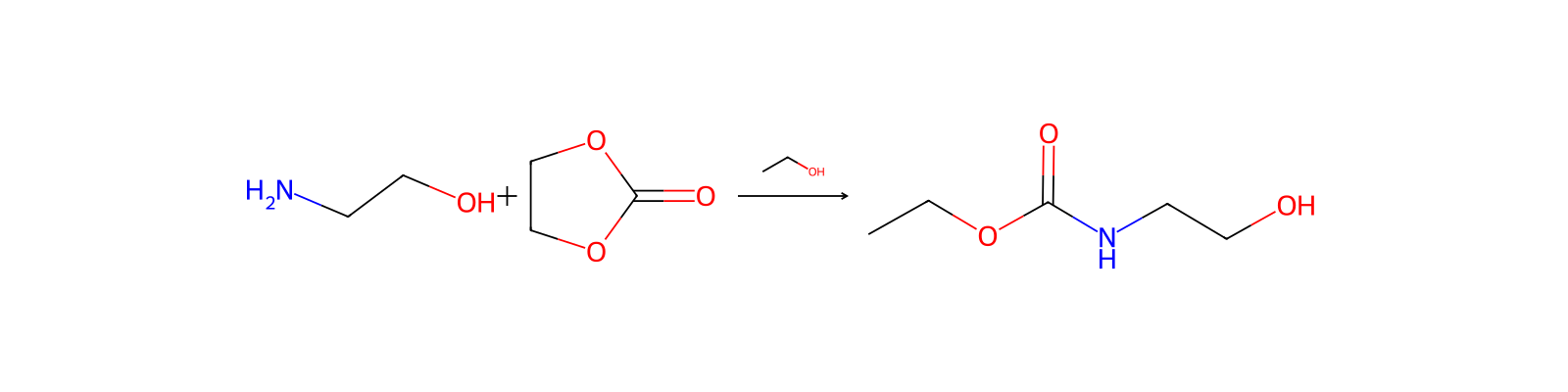
HRID 789反応物としてuspto-grants-1998_03
HRID 8345 の反応式
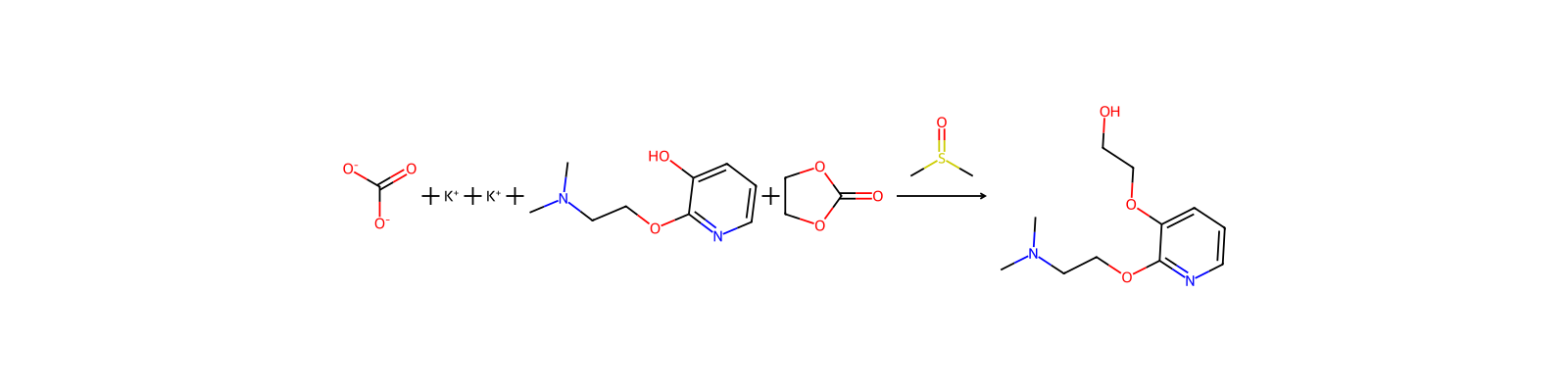
HRID 8345反応物としてuspto-grants-2006_08
HRID 36959 の反応式
HRID 36959反応物としてuspto-grants-1995_05
HRID 60633 の反応式
HRID 60633反応物としてuspto-grants-2016_09
HRID 75473 の反応式
HRID 75473触媒として反応物としてuspto-grants-2014_09
HRID 75475 の反応式
HRID 75475反応物としてuspto-grants-2014_09
HRID 133114 の反応式
HRID 133114反応物としてuspto-grants-2008_06
HRID 136053 の反応式
HRID 136053反応物としてTraining data from https://doi.org/10.1039/C8SC04228D (9/10)
1 / 45 ページ

化合物ノート

読み込み中…

このページの内容基本情報概要名称と識別子物性安全と法規制化学と産業関連反応化合物ノート
その他の操作
ノートを作成反応を作成見積依頼を出す
Melting Point · 2 件

36.4 °C

36.4 °C

Vapor Density3.04 (Air=1)

物理化学的性質

融点
35 · 35-38 °C(lit.)
沸点
243 · 243-244 °C740 mm Hg(lit.)
比重(密度)
1.321 g/mL · 1.321 g/mL at 25 °C(lit.)
蒸気密度
3.04 · 3.04 (vs air)
蒸気圧
0.02 mm · 0.02 mm Hg ( 36.4 °C)
屈折率
1.4199 · 1.4199
闪点
320 °F · 320 °F
貯蔵温度
30 °C · Store below +30°C.
溶解性
2 O: · H2O: 1M at20℃、透明、無色
外見
結晶性低融点固体
酸解離定数(Pka)
3.86 · 3.86[at 20 ℃]
色
白から黄色
比重
1.321 · 1.321
PH
7 · 7 (200g/l, H2O, 20℃)
臭い (Odor)
無臭
爆発限界(explosive limit)
3.6 · 3.6-16.1%(V)
水溶解度
214 g/L · 214g/L(20℃)
比熱容量
1.52 J/ · Cp(liquid): 1.52 J/(g·K), at 25℃
BRN
106249 · 106249
Henry's Law Constant
3.6 · 3.6×10-2 mol/(m3Pa) at 25℃, HSDB (2015)
Dielectric constant
69.4 · 69.4(91℃)
安定性
安定。強力な酸化剤、酸、塩基、還元剤とは相容れない。
化粧品成分の機能
溶媒
InChI
1S/C3H4O3/c4-3-5-1-2-6-3/h1-2H2
InChIKey
KMTRUDSVKNLOMY-UHFFFAOYSA-N
SMILES
O=C1OCCO1
LogP
0.11 at · 0.11 at 20℃
CAS データベース
96 · 96-49-1(CAS DataBase Reference)
NISTの化学物質情報
Ethylene carbonate(96-49-1)
EPAの化学物質情報
Ethylene carbonate (96-49-1)

化学的性質

化学的特性colourless crystals

化学性质エチレンオキシドとCOからエチレンカーボネートを製造し,メタノールとの反応によりエチレングリコールとDMCが得られる.

Hazard Classes and CategoriesAcute Tox. 4 (56.4%)
Skin, Eye, and Respiratory IrritationsA skin and eye irritant.
Critical Temperature and PressureCritical temperature: /533 °C/ 806.00 K; Critical pressure: 6.77X10+6 Pa
Hazardous Reactivities and IncompatibilitiesCombustible when exposed to heat or flame; can react with oxidizing materials.

安全と保護具

Disposal Methods · 1 件

SRP: At the time of review, criteria for land treatment or burial (sanitary landfill) disposal practices are subject to significant revision. Prior to implementing land disposal of waste residue (including waste sludge), consult with environmental regulatory agencies for guidance on acceptable disposal practices.

Preventive Measures · 1 件

SRP: The scientific literature for the use of contact lenses in industry is conflicting. The benefit or detrimental effects of wearing contact lenses depend not only upon the substance, but also on factors including the form of the substance, characteristics and duration of the exposure, the uses of other eye protection equipment, and the hygiene of the lenses. However, there may be individual substances whose irritating or corrosive properties are such that the wearing of contact lenses would be harmful to the eye. In those specific cases, contact lenses should not be worn. In any event, the usual eye protection equipment should be worn even when contact lenses are in place.

Protective Action Criteria (PAC) · 3 件

30 [mg/m3]

330 [mg/m3]

2000 [mg/m3]

毒性情報

Environmental Fate · 3 件

TERRESTRIALFATE: Based on a classification scheme(1), an estimated Koc value of 9.2(SRC), determined from a structure estimation method(2), indicates that ethylene carbonate is expected to have very high mobility in soil(SRC). Volatilization of ethylene carbonate from moist soil surfaces is expected to be an important fate process(SRC) given an estimated Henry's Law constant of 2.74X10⁻⁴ atm-cu m/mole(3,SRC), using a fragment constant estimation method(3), ethylene carbonate is not expected to volatilize from dry soil surfaces(SRC) based upon a vapor pressure of 9.80X10⁻³ mm Hg(4). Ethylene carbonate achieved 64.1 percent of its theoretical BOD using an activated sludge inoculum during a 2 week incubation period(5), suggesting biodegradation in soil will be an important environmental fate process(SRC).

AQUATIC FATE: Based on a classification scheme(1), an estimated Koc value of 9.2(SRC), determined from a structure estimation method(2), indicates that ethylene carbonate is not expected to adsorb to suspended solids and sediment in water(SRC). Volatilization from water surfaces is expected(3) based upon an estimated Henry's Law constant of 2.74X10⁻⁴ atm-cum/mole(4,SRC), developed using a fragment constant estimation method(4). Using this Henry's Law constant and an estimation method(3), volatilization half-lives for a model river and model lake are 3 and 110 hours, respectively(SRC). Ethylene carbonate achieved 64.1 percent of its theoretical BOD using an activated sludge inoculum during a 2 week incubation period(8), suggesting biodegradation in water will be an important process(SRC). Ethylene carbonate is expected to undergo hydrolysis due to the presence of hydrolyzable functional groups(3). According to a classification scheme(5), an estimated BCF of 3.2(SRC), from an estimated log Kow of -0.34(6) and a regression-derived equation(7), suggests the potential for bioconcentration in aquatic organisms is low.

ATMOSPHERIC FATE: According to a model of gas/particle partitioning of semivolatile organic compounds in the atmosphere(1), ethylene carbonate, which has a vapor pressure of 9.80X10⁻³ mm Hg at 25 °C(3), is expected to exist solely as a vapor in the ambient atmosphere. Vapor-phase ethylene carbonate is degraded in the atmosphere by reaction with photochemically-produced hydroxyl radicals(SRC); the half-life for this reaction in air is estimated to be 160 hours(SRC), calculated from its rate constant of 2.4X10⁻¹² cu cm/molecule-sec at 25 °C(2) determined using a structure estimation method(2). Ehtylene carbonate may also undergo direct photolysis in the environment since this compound contains a functional group that can absorb light >290 nm(4).

Adverse EffectsNeurotoxin - Acute solvent syndrome
Soil Adsorption/Mobility · 1 件

Using a structure estimation method based on molecular connectivity indices(1), the Koc for ethylene carbonate can be estimated to be 9.2(SRC). According to a classification scheme(2), this estimated Koc value suggests that ethylene carbonate is expected to have very high mobility in soil.

TSCA Test Submissions · 1 件

1,3-Dioxolan-2-one (Ethylene carbonate, CAS # 96-49-1) was evaluated for teratogenicity in 108 female Sprague-Dawley rats (27/group) orally administered doses of 0 (deionized water control), 750, 1500, and 3000 mg/kg/day on gestation days (GD) 6 through 15. Technical error accounted for solitary maternal lethalities in 1500 and 3000 mg/kg/day groups. Clinical signs of toxicity associated with treatment included post dose salivation (750, 1500, 3000 mg/kg/day), chromodacryorrhea (1500 mg/kg/day), dyspnea (1500, 3000 mg/kg/day), alopecia, decreased body tone, decreased activity and dyspnea (3000 mg/kg/day). Suppressed group mean body weight gain was biologically significant in dams of 3000 mg/kg doses, while food consumption appeared unaffected by treatment. Caesarian section and fetal analyses (at least 24-26 litters, 337-382 fetuses/group) on GD 20 revealed no statistically significant (p</= 0.05) departure from controls in fetal mortality, number of gravid animals per group, total number of implantation sites, viable fetuses, non-viable fetuses, early or late resorptions, corpora lutea, fetal sex distribution, or number and percentage of pre-implantation or post-implantation losses. Group mean fetal body weights were significantly depressed from dams of 1500 and 3000 mg/kg/day dose groups. Fetuses of high-dose (3000 mg/kg/day) dams also exhibited statistically significant increased incidence (10%) of external, soft tissue, and skeletal malformations relative to both current and historical controls. Specifically, increased ossification of the sternebrae 1-4 and non-ossification of the 6th sternebra (1500, 3000 mg/kg/day) and increased incidence of bipartite thoracic vertebra (3000 mg/kg/day) reached statistical significance; fetuses of 3000 mg/kg/day also exhibited an increased, but not statistically significant, incidence of bipartite lumbar vertebra.

Artificial Pollution Sources · 1 件

Ethylene carbonate's production and use as a solvent for many polymers and resins, plasticizer, intermediate for pharmaceuticals, rubber chemicals, textile finishing agents, and also in hydroxyethylation reactions(1) may result in its release to the environment through various waste streams(SRC).

Environmental BiodegradationAEROBIC: Ethylene carbonate, present at 100 mg/l, reached 64.1% of its theoretical BOD in 2 weeks using an activated sludge inoculum at 30 mg/l and the Japanese MITI test(1).
Environmental Bioconcentration · 1 件

An estimated BCF of 3.2 was calculated for ethylene carbonate(SRC), using an estimated log Kow of -0.34(1,SRC) and a regression-derived equation(2). According to a classification scheme(3), this BCF suggests the potential for bioconcentration in aquatic organisms is low.

Volatilization from Water/Soil · 1 件

The Henry's Law constant for ethylene carbonate is estimated as 2.74X10⁻⁴ atm-cu m/mole(SRC) using a fragment constant estimation method(1). This Henry's Law constant indicates that ethylene carbonate is expected to volatilize from water surfaces(2). Based on this Henry's Law constant, the volatilization half-life from a model river (1 m deep, flowing 1 m/sec, wind velocity of 3 m/sec)(2) is estimated as 3 hours(SRC). The volatilization half-life from a model lake (1 m deep, flowing 0.05 m/sec, wind velocity of 0.5 m/sec)(2) is estimated as 110 hours(SRC). ethylene carbonate's Henry's Law constant(1) indicates that volatilization from moist soil surfaces is expected to occur(SRC). Ethylene carbonate is not expected to volatilize from dry soil surfaces(SRC) based upon a vapor pressure of 9.80X10⁻³ mm Hg(3).

Non-Human Toxicity Excerpts · 2 件

The mechanism and disposition of ethylene-carbonate (96491) were studied in rats to determine if the toxicity of ethylene-carbonate could be the result of it being metabolized to ethylene-glycol. In-vitro, no ethylene-carbonate hydrolysis occurred. Male Fischer-344-rats were given 200 mg/kg (14)C labeled ethylene-carbonate or 141 mg/kg radiolabeled ethylene-glycol by gavage. In-vivo, ethylene-carbonate was rapidly metabolized, 60 percent of the dose being recovered as carbon-dioxide in the expired air and 27 percent in the urine after 3 hours. Approximately 90 percent of the ethylene-glycol dose was excreted in the expired air or urine after 24 hours. Ethylene-glycol was the only ethylene-carbonate metabolite detected. Peak blood ethylene-carbonate and ethylene-glycol concentrations in rats dosed with ethylene-carbonate were 0.028 and 2.3 umol/g, respectively. The respective halflives were 0.25 and 2 hours. The peak blood ethylene-glycol concentration in ethylene-glycol dosed rats was 1.1 umol/g. The half life was 3 hours. It was concluded that ethylene-carbonate is rapidly metabolized to ethylene-glycol in-vivo. The systemic toxicity following oral administration of ethylene-carbonate is probably due to its being converted into ethylene-glycol.

Moderately toxic by intraperitoneal route. Mildly toxic by ingestion.

Environmental Abiotic Degradation · 1 件

The rate constant for the vapor-phase reaction of ethylene carbonate with photochemically-produced hydroxyl radicals has been estimated as 2.4X10⁻¹² cu cm/molecule-sec at 25 °C(SRC) using a structure estimation method(1). This corresponds to an atmospheric half-life of about 160 hours at an atmospheric concentration of 5X10+5 hydroxyl radicals per cu cm(1). Ethylene carbonate is expected to undergo hydrolysis due to the presence of hydrolyzable functional groups(2). It may also undergo direct photolysis in the environment since this compound contains a functional group that can absorb light >290 nm(2).

Probable Routes of Human Exposure · 1 件

NIOSH (NOES Survey 1981-1983) has statistically estimated that 4,051 workers (573 of these are female) are potentially exposed to ethylene carbonate in the US(1). Occupational exposure to ethylene carbonate may occur through inhalation and dermal contact with this compound at workplaces where ethylene carbonate is produced or used(SRC).

Environmental Fate/Exposure Summary · 1 件

Ethylene carbonate's production and use as a solvent for many polymers and resins, plasticizer, intermediate for pharmaceuticals, rubber chemicals, textile finishing agents, and also in hydroxyethylation reactions, may result in its release to the environment through various waste streams. If released to air, a vapor pressure of 9.80X10⁻³ mm Hg at 25 °C indicates ethylene carbonate will exist solely as a vapor. Vapor-phase ethylene carbonate will be degraded in the atmosphere by reaction with photochemically-produced hydroxyl radicals; the half-life for this reaction in air is estimated to be 160 hours. It may also undergo direct photolysis in the environment since this compound contains a functional group that can absorb light >290 nm. If released to soil, ethylene carbonate is expected to have very high mobility based upon an estimated Koc of 9.2. Volatilization from moist soil surfaces is expected to be an important fate process based upon an estimated Henry's Law constant of 2.74X10⁻⁴ atm-cum/mole. Ethylene carbonate achieved 64.1 percent of its theoretical BOD using an activated sludge inoculum during a 2 week incubation period, in a single screening study. If released into water, ethylene carbonate is not expected to adsorb to suspended solids and sediment in water based upon the estimated Koc. Volatilization from water surfaces is expected to be an important fate process based upon this compound's estimated Henry's Law constant. Ethylene carbonate is expected to undergo hydrolysis due to the presence of hydrolyzable functional groups. An estimated BCF of 3.2 suggests the potential for bioconcentration in aquatic organisms is low. Occupational exposure to ethylene carbonate may occur through inhalation and dermal contact with this compound at workplaces where ethylene carbonate is produced or used. (SRC)

法規制情報

Atmospheric Standards · 1 件

This action promulgates standards of performance for equipment leaks of Volatile Organic Compounds (VOC) in the Synthetic Organic Chemical Manufacturing Industry (SOCMI). The intended effect of these standards is to require all newly constructed, modified, and reconstructed SOCMI process units to use the best demonstrated system of continuous emission reduction for equipment leaks of VOC, considering costs, non air quality health and environmental impact and energy requirements. Ethylene carbonate is produced, as an intermediate or a final product, by process units covered under this subpart.

安全データ

wgk
1
tsca
TSCA listed
rtecs
FF9550000
ridadr
UN 2265 3 / PGIII
毒性
LD50 orally in Rabbit: > 5000 mg/kg LD50 dermal Rabbit > 2000 mg/kg
hs_code
29209010
risk_code
36/37/38-41
化審法
(5)-523, (7)-737
hazard_code
Xi
safety_code
26-36-39
自然発火温度
465 °C
Hazard Classifications
Acute Tox. 4 OralEye Irrit. 2STOT RE 2 Oral
ストレージクラス
11 - Combustible Solids
有毒物質データの
96-49-1(Hazardous Substances Data)
· 5 件

Prepared from ethylene oxide by addition of carbon dioxide with ammonium or alkali metal salts as catalysts.

Interaction of ethylene glycol and phosgene.

Ethylene carbonate is commercially produced by the reaction of ethylene oxide and carbon dioxide at 190-200 °C and 80 atm using Et4NBr as a catalyst.

...by reacting equimolecular amounts of 1,2-ethanediol and phosgene in a closed tube at room temperature.

For more Methods of Manufacturing (Complete) data for 1,3-DIOXOLAN-2-ONE (7 total), please visit the HSDB record page.

Formulations/Preparations · 5 件

...purified ethylene carbonate for dielectric constant and dipole moment studies by fractional distillation at reduced pressure and fractional crystallizations from dry ethyl ether.

...studied a process for the continuous purification of cyclic ethylene carbonate by continuous crystallization in a column with thermal gradient; the product was 99.93%.

...purified a commercially available /ethylene carbonate/ by the zone refining method...

...purified ethylene carbonate...by a sequence of fractional freezings under a nitrogen atmosphere until a constant maximum freezing point was obtained.

...purified commercial ethylene carbonate...by distilling several times at 5 Torr.

Household ProductsInformation on 1 consumer products that contain Ethylene carbonate in the following categories is provided:
Use ClassificationCosmetics -> Solvent
General Manufacturing Information · 3 件

Transportation Equipment Manufacturing

1,3-Dioxolan-2-one: ACTIVE

When 12 yr old Muscat Bailey A grapevines in a greenhouse were sprayed with either 0.0016 M ethylene carbonate, 10 ppm diuron, 0.001 M Ca EDTA, 0.000015 M rutin, 0.001 M CaCO3, or 0.001 M K2CO3 on July 31, the proportion of berries with complete coloration on August 27 increased from 10% of the control to approx 40 with ethylene carbonate or diuron, approx 35 with Ca EDTA, 30 with rutin, and approx 20 with K2CO3 or CaCO3. Data on Kyoho grapes are also reported. Sugar content was not affected.

応用分野 · 5 件

解説炭酸エチレン(ethylene carbonate)とは、と炭酸との環状エステルです。 化学式はC3H4O3で、分子量は88.06です。 室温 (25 °C) では透明なのような固体ですが、融点が 34–37 °Cと低く、液体の状態では無色無臭です。 炭酸エチレンの合成法は数多く知られています。 その中で最もよく工業的に使用されている方法は、エチレングリコールととの反応による合成です。 しかし、近年、環境負荷の問題からホスゲンを用いない合成方法の研究が進んでいます。

用途高純度のエチレンカーボネートです。エチレンカーボネートは、高極性溶媒であり、電解質を大量に溶解できることから、リチウムイオン二次電池向け電解液の溶媒用途に主に使用されている他、高分子に対する溶解性が高い事から、剥離剤、洗浄剤としても使用されています。 当社製品は、低不純物、低水分と高い品質レベルにより、厳しい品質水準を要求される需要分野で高い評価を得ております。 リチウムイオン二次電池電解液 コンデンサー電解液 レジスト剥離剤 医薬品

用途有機合成原料。

使用Ethylene carbonate is an ester of ethylene glycol and carbonic acid. Ethylene carbonate is used as a polar solvent with a molecular dipole moment of 4.9 D, only 0.1 D lower than that of propylene carb onate. It can be used as a high permittivity component of electrolytes in lithium batteries.

使用用途炭酸エチレンの使用用途としては、有機溶媒としての利用が多く使用されています。 炭酸エチレンは高極性溶媒であり、電解質を大量に溶解することができます。 この性質を利用して、リチウムイオン二次電池向けの溶媒用途に主に使用されている他、高分子に対する溶解性が高い事から、剥離剤、洗浄剤としても使用されています。 炭酸エチレンは、近 年、高分子重合の優れた有機溶媒として工業的に用いられるようになってきています。 また、、エチレンイミン等と同様に、活性水素を有する化合物に対して開環付加反応、もしくは開環縮合反応を行って、高分子合成において興味ある有用な化合物を合成できることが報告され、一躍注目されるようになってきました。

調製方法 · 2 件

合成方法エチレンオキシドとCOの反応によって製造されている。

純化方法Dry 1,3-dioxolan-2-one over P2O5, then fractionally distil it at low or atmospheric pressure. Recrystallise it from dry Et2O (plates, m 36.5o, 38.5-40o was also reported). It is soluble in H2O. [Beilstein 19 II 135,19 III/IV 1556, 19/4 V 6.]

上流・下流製品情報

上流原料

3-(2-ヒドロキシエチル)オキサゾリジン-2-オンカルバミド酸2-ヒドロキシエチル2-オキサゾリドン

下流製品

炭酸 ジメチルエチレンスルフィドオクタデカフルオロオクタンCarbonic acid, 2-hydroxyethyl methyl ester2-フェノキシエタノール4-クロロ-2-オキソ-1,3-ジオキソランエチレングリコール炭酸ジイソブチル1,4-ベンゾジオキサンS-(2-ヒドロキシエチル)-L-システイン1,1,2,2-テトラメトキシエタンエチレングリコールモノドデシルエーテルN,N-ジブチル尿素アパベタロン

補足説明

定義本品は、次の化学式で表される有機化合物である。