ホームMCPSkillsワークベンチOpenChem
ホームワークベンチ通知マイページ
llms.txt · skill.md · MCPガイドプライバシーポリシー · 利用規約 · サポートv1.8.5
  1. ホーム
  2. /化合物

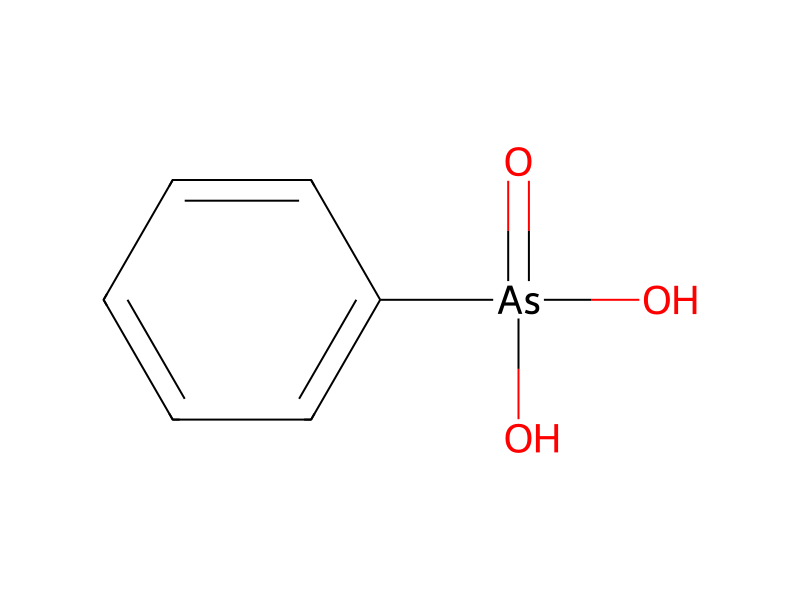
フェニルアルソン酸

Phenylarsonic Acid

HCID 7365
反応を作成
印刷

データを補完しています。しばらくしてからページを更新すると最新の内容を表示できます
基本情報概要名称と識別子物性安全と法規制化学と産業関連反応化合物ノート
部分構造検索類似構造を探す

基本情報

CAS
98-05-5
標準SMILES
O=[As](O)(O)c1ccccc1
InChIKey
LVKZSFMYNWRPJX-UHFFFAOYSA-N
分子式
C6H7AsO3
平均分子量
202.04 g/mol
単同位体質量
201.96111558

概要

Benzenearsonic acid is a colorless solid. Used as an analytical reagent for tin. (EPA, 1998)

名称と識別子

優先名称
Phenylarsonic Acid
IUPAC
phenylarsonic acid
現地名
フェニルアルソン酸
英語名
Phenylarsonic acid
分子式
C6H7AsO3
分子量
202.04

名称と別名

Phenylarsonic acidBENZENEARSONIC ACID98-05-5Monophenylarsonic acidKyselina benzenarsonovaDTXSID6059158AI3-1605057F9KU116MPhAsO(OH)2NSC-15566CHEBI:29851RefChem:117385
名称をさらに表示
フェニルアルソン酸フェニルジヒドロキシアルシンオキシドベンゼンアルゾン酸ベンゼンアルソンサンベンゼンアルソン酸モノフェニルアルソン酸フェニルアルソン酸, 98%NSC 15566ai3-16050[qr]Phenylarsonsurephenylarsenicacidphenyl-arsonicaciArsonicacid,phenyl-PhenylArsonicAcidLrPhenylArsonicAcidGr
DTXCID3049041202-631-9Arsonic acid, phenyl-Arsonic acid, As-phenyl-CHEMBL364571MFCD00002097C6H7AsO3Kyselina benzenarsonova [Czech]

データベース識別子

CAS
98-05-5
PubChem CID
7365
DTXSID
DTXSID6059158
ChEMBL
CHEMBL364571
ChEBI
CHEBI:29851
UNII
57F9KU116M
EC Number
202-631-9
Nikkaji
J73.249D

物性

構造計算による物性補完中

極性表面積
57.5 Ų
水素結合供与体数
2
水素結合受容体数
3
回転可能結合数
1
重原子数
10
形式電荷
0
複雑度
145

実験および物理化学的性質

Chemical ClassesMetals -> Arsenic Compounds, Organic
LogP · 2 件

log Kow= 0.06

0.03 (calculated) (calculated)

Density · 4 件

1.76 (EPA, 1998) - Denser than water; will sink

1.760 at 25 °C

Relative density (water = 1): 1.76

1.76 @25 °C

Color/FormCrystal powder
Solubility · 2 件

Sol in 40 parts water, 50 parts alcohol; insol in chloroform

Solubility in water: poor

Decomposition · 2 件

When heated to decomposition it emits toxic fumes of /arsenic/.

160 °C

Melting Point · 2 件

320 °F decomposes (EPA, 1998)

158 °C (with decomp)

Vapor Pressure0.00000111 [mmHg]
Physical Description · 3 件

Benzenearsonic acid is a colorless solid. Used as an analytical reagent for tin. (EPA, 1998)

Colorless solid with various forms; Poor solubility in water; [ICSC] White powder, soluble in water; [MSDSonline]

安全と法規制

安全情報は参考情報です。供給元の安全データシート(SDS)、適用法令、専門家による評価に代わるものではありません。

GHS分類

GHS Classification · 6 件

Danger

H301 (97.8%): Toxic if swallowed [Danger Acute toxicity, oral]

P261, P264, P270, P271, P273, P301+P316, P304+P340, P316, P321, P330, P391, P403+P233, P405, and P501 (click each P-code to see the statement)

Aggregated GHS information provided per 46 reports by companies from 4 notifications to the ECHA C&L Inventory. Each notification may be associated with multiple companies.

Danger

H301: Toxic if swallowed [Danger Acute toxicity, oral]

危険有害性情報

Regulatory Information · 4 件

Chemical: Arsonic acid, phenyl-

Restricted substance: Phenylarsonic acid

Phenylarsonic acid: Does not have an individual approval but may be used under an appropriate group standard

The New Jersey Worker and Community Right to Know Act requires public and private employers to provide information about hazardous substances at their workplaces. (N.J.S.A. 34:5A-1 et. seq.)

Other Safety InformationIMAP assessments - Organoarsenic compounds: Human health tier II assessment
DOT LabelPoison
Fire Hazards · 2 件

Benzenearsonic acid emits poisonous fumes of arsenic when heated to decomposition. (EPA, 1998)

Not combustible. Gives off irritating or toxic fumes (or gases) in a fire.

Health HazardsBenzenearsonic acid is a deadly poison. (Non-Specific -- Arsenic Compounds) Chronic exposure to arsenic compounds can cause dermatitis and digestive disorders. Renal damage may develop. (EPA, 1998)
Hazards Summary · 1 件

Can cause arsenic poisoning; [ICSC] Almost nothing is known regarding health effects of organic arsenic compounds in humans. Studies in animals show that some simple organic arsenic compounds are less toxic than inorganic forms. Ingestion of methyl and dimethyl compounds can cause diarrhea and damage to the kidneys. [ATSDR ToxProfiles] Toxic by ingestion; [Sax] Oral LDLo (rat) = 50 mg/kg; [RTECS] A skin, eye, and mucous membrane irritant; [MSDSonline] See Arsanilic acid.

化学と産業

薬理情報

Metabolism/Metabolites · 1 件

Arsenic is absorbed mainly by inhalation or ingestion, as to a lesser extent, dermal exposure. It is then distributed throughout the body, where it is reduced into arsenite if necessary, then methylated into monomethylarsenic (MMA) and dimethylarsenic acid (DMA) by arsenite methyltransferase. Arsenic and its metabolites are primarily excreted in the urine. Arsenic is known to induce the metal-binding protein metallothionein, which decreases the toxic effects of arsenic and other metals by binding them and making them biologically inactive, as well as acting as an antioxidant. (L20)

Absorption, Distribution and ExcretionWHEN GIVEN ORALLY, CONSIDERABLE PERCENTAGE IS EXCRETED IN FECES, INDICATING THAT PHENYLARSONIC COMPD ARE POORLY ABSORBED BY INTESTINAL TRACT. THAT PROP WHICH IS ABSORBED, HOWEVER IS APPARENTLY EXCRETED RAPIDLY BY THE KIDNEYS.

用途と製造

Uses · 4 件

Used as a reagent for tin and as a precipitant in niobium analysis; [HSDB]

Reagent for tin

As precipitant in niobium analysis

Not available.

Methods of ManufacturingReaction of the diazonium salt and sodium arsenite.
General Manufacturing InformationArsonic acid, As-phenyl-: ACTIVE
応用分野 · 4 件

解説benzenearsonic acid.C6H7AsO3(202.04).フェニルアルソン酸, 塩化ベンゼンジアゾニウムと三塩化ヒ素とから得られるテトラクロロ(フェニル)アルソランを加水分解すると合成される.無色の柱状晶.分解点158 ℃.pKa1 3.47,pKa2 8.48(水).水,エタノールに可溶,エーテルに不溶.亜鉛アマルガムと酸により還元されてフェニルアルシンになる.チタン,ジルコニウムなどの金属イオンと錯体を形成するので,分析用試薬として用いられる.森北出版「化学辞典(第2版)

用途Zr, Sn, Th, Nb, Ta, Biの分析試薬、有機合成原料。

使用Arsonic acids (arsonic acid, phenylarsonic acid, p-hydroxyphenylarsonic acid, arsanilic acid) react with the tetravalent metals of group IV of the periodic system to give water-insoluble complexes of composition MA2 . The composition of the precipitates is not exactly stoichiometric, and hence the precipitates are not suitable for direct gravimetric analysis. Instead, the precipitates are transformed by ignition to the corresponding metal oxides and weighed as such. The main advantage of the application of these reagents is the possibility offered of the selective determination of zirconium(IV), hafnium(IV) and titanium(IV) in the presence of many other metals, such as zinc, manganese, nickel, cobalt, aluminium, copper, calcium, magnesium and chromium. In practice they are utilized most frequently for the determination of zirconium. In strong mineral acidic media phenylarsonic acid forms water-insoluble precipitates with zirconium and hafnium only. In highly concentrated acetic acid solution the thorium phenylarsonate complex is also precipitated, which makes possible the separation of thorium from rare earth metals. The procedure gives satisfactory results in the presence of alkaline earth metals, iron, aluminium, manganese, cobalt, nickel, copper, zinc and bismuth.

関連反応

0 件
反応記録を作成
関連する反応はまだありません

化合物ノート

このページの内容基本情報概要名称と識別子物性安全と法規制化学と産業関連反応化合物ノート

COLOURLESS SOLID IN VARIOUS FORMS.

Dissociation ConstantspKa= 8.48 in water at 25 °C

物理化学的性質

融点
160 °C · 160 °C
沸点
66 °C · 66 °C(Press: 1 Torr)
比重(密度)
1 · 1,76 g/cm3
溶解性
3.2 %、エタノールで · 水で 3.2%、エタノールで 15.5%。
酸解離定数(Pka)
2 · pK2: 8.48(+1) (22°C)
外見
粉
色
白い
比重
1.76 · 1.76
水溶解度
31.6 g/L · 31.6g/L(28℃)
Merck
14 · 14,1067
CAS データベース
98 · 98-05-5(CAS DataBase Reference)
EPAの化学物質情報
Benzenearsonic acid (98-05-5)

化学的性質

化学的特性white to slightly yellow crystalline powder

Reactive GroupAcids, Weak
EC ClassificationSymbol: T, N; R: 23/25-50/53; S: (1/2)-20/21-28-45-60-61; Note: A
UN ClassificationUN Hazard Class: 6.1; UN Pack Group: III
FIFRA Requirements · 2 件

If material involved in fire: Extinguish fire using agent suitable for type of surrounding fire. (Material itself does not burn or burns with difficulty.) Use water in flooding quantities as fog. Use foam, dry chemical, or carbon dioxide. /Arsenical cmpd, liquid, NOS/

If material involved in fire: Extinguish fire using agent suitable for type of surrounding fire. (Material itself does not burn or burns with difficulty.) Use water in flooding quantities as fog. Use foam, dry chemical, or carbon dioxide. /Arsenical cmpd, solid, NOS/

OSHA StandardsPermissible Exposure Limit: Table Z-1 8-Hr Time Weighted Avg: 0.5 mg/cu m. /Arsenic, organic cmpd (as As)/
Reactivity ProfileBenzenearsonic acid emits poisonous fumes of arsenic when heated to decomposition. [EPA, 1998].

安全と保護具

Fire Fighting · 2 件

(Non-Specific -- Arsenical Compound, Solid, n.o.s.) Use water in flooding quantities as fog. Avoid breathing dusts and fumes; keep upwind; wear self-contained breathing apparatus.

In case of fire in the surroundings, use appropriate extinguishing media.

First Aid Measures · 3 件

Fresh air, rest. Refer for medical attention.

Remove contaminated clothes. Rinse skin with plenty of water or shower. Refer for medical attention .

Rinse with plenty of water for several minutes (remove contact lenses if easily possible). Refer for medical attention.

First AidWarning: Effects usually appear within 30 minutes of exposure but may be delayed for several hours. Caution is advised.
Safe StorageSeparated from food and feedstuffs. Dry.
Nonfire Spill Response(Non-Specific -- Arsenic Compound, Solid, n.o.s.) Keep unnecessary people away; isolate hazard area and deny entry. Stay upwind; keep out of low areas. Do not touch spilled material; stop leak if you can do it without risk.
Disposal Methods · 1 件

SRP: At the time of review, criteria for land treatment or burial (sanitary landfill) disposal practices are subject to significant revision. Prior to implementing land disposal of waste residue (including waste sludge), consult with environmental regulatory agencies for guidance on acceptable disposal practices.

Spillage Disposal · 1 件

Personal protection: complete protective clothing including self-contained breathing apparatus. Do NOT wash away into sewer. Sweep spilled substance into covered sealable containers. Carefully collect remainder. Then store and dispose of according to local regulations.

Isolation and EvacuationExcerpt from ERG Guide 151 [Substances - Toxic (Non-Combustible)]:
Eye PreventionWear safety goggles or eye protection in combination with breathing protection.
Inhalation RiskEvaporation at 20 °C is negligible; a harmful concentration of airborne particles can, however, be reached quickly when dispersed, especially if powdered.
Skin PreventionProtective gloves. Protective clothing.
Minimum Risk LevelAcute Oral: 0.005 mg/kg/day (L134) Chronic Oral: 0.0003 mg/kg/day (L134) Chronic Inhalation: 0.01 mg/m3 (L134)

毒性情報

Treatment · 1 件

Arsenic poisoning can be treated by chelation therapy, using chelating agents such as dimercaprol, EDTA or DMSA. Charcoal tablets may also be used for less severe cases. In addition, maintaining a diet high in sulfur helps eliminate arsenic from the body. (L20)

Health EffectsArsenic poisoning can lead to death from multi-system organ failure, probably from necrotic cell death, not apoptosis. Arsenic is also a known carcinogen, esepcially in skin, liver, bladder and lung cancers. (T1, L20)
Exposure Routes · 2 件

The substance can be absorbed into the body by inhalation and by ingestion.

Oral (L2) ; inhalation (L2); dermal (L2)

Toxicity Summary · 1 件

Arsenic and its metabolites disrupt ATP production through several mechanisms. At the level of the citric acid cycle, arsenic inhibits pyruvate dehydrogenase and by competing with phosphate it uncouples oxidative phosphorylation, thus inhibiting energy-linked reduction of NAD+, mitochondrial respiration, and ATP synthesis. Hydrogen peroxide production is also increased, which might form reactive oxygen species and oxidative stress. Arsenic's carginogenicity is influenced by the arsenical binding of tubulin, which results in aneuploidy, polyploidy and mitotic arrests. The binding of other arsenic protein targets may also cause altered DNA repair enzyme activity, altered DNA methylation patterns and cell proliferation. (T1, A17)

Signs and Symptoms · 4 件

Abdominal pain. Confusion. Diarrhoea. Dizziness. Drowsiness. Headache. Vomiting. Incoordination. Paralysis. Symptoms may be delayed.

Further see Inhalation.

Abdominal pain. Confusion. Diarrhoea. Dizziness. Dullness. Headache. Vomiting. Incoordination. Muscle paralysis. Further see Inhalation.

Exposure to lower levels of arsenic can cause nausea and vomiting, decreased production of red and white blood cells, abnormal heart rhythm, damage to blood vessels, and a sensation of burn (T1).

Human Toxicity ExcerptsToxic by ingestion.
Carcinogen Classification3, not classifiable as to its carcinogenicity to humans. (L135)
Non-Human Toxicity ExcerptsACUTE CLINICAL SIGNS AFTER EXPOSURE TO HIGH LEVELS OF PHENYLARSONIC COMPD INCL INCOORDINATION, INABILITY TO CONTROL BODY & LIMB MOVEMENTS, & ATAXIA. AFTER FEW DAYS, SWINE & POULTRY MAY BECOME PARALYZED. ERYTHEMA IN WHITE SKINNED ANIMALS.
Toxicity DataLD50: 270 ug/kg (Oral, Mouse) (T14) LD50: 16 mg/kg (Intravenous, Rabbit) (T14)
Non-Human Toxicity Values · 2 件

LD50 Mouse oral 270 ug/kg

LD50 Rabbit iv 16 mg/kg

法規制情報

FIFRA Requirements · 2 件

If material involved in fire: Extinguish fire using agent suitable for type of surrounding fire. (Material itself does not burn or burns with difficulty.) Use water in flooding quantities as fog. Use foam, dry chemical, or carbon dioxide. /Arsenical cmpd, liquid, NOS/

If material involved in fire: Extinguish fire using agent suitable for type of surrounding fire. (Material itself does not burn or burns with difficulty.) Use water in flooding quantities as fog. Use foam, dry chemical, or carbon dioxide. /Arsenical cmpd, solid, NOS/

Atmospheric Standards · 3 件

(a) The owner or operator of an existing glass melting furnace subject to the provisions of this subpart shall comply with either paragraph (a)(1) or (a)(2) of this section ... (1) Uncontrolled total arsenic emissions from the glass melting furnace shall be less than 2.5 Mg (2.7 ton) per year, or ... (2) Total arsenic emissions from glass melting furnace shall be conveyed to a control device and reduced by at least 85%. /Total arsenic/

(b) The owner or operator of a new or modified glass melting furnace subject to the provisions of this subpart shall comply with either paragraph (b)(1) or (b)(2) of this section ... (1) Uncontrolled total arsenic emissions from the glass melting furnace shall be less than 0.4 Mg (0.44 ton) per year, or ... (2) Total arsenic emissions from glass melting furnace shall be conveyed to a control device and reduced by at least 85%. /Total arsenic/

The owner or operator of each copper converter subject to the provisions of this subpart shall reduce inorganic arsenic emissions to the atmosphere by meeting the following design, equipment, work practice, and operational requirements: (1) Install, operate, and maintain a secondary hood system on each copper converter. Each secondary hood system shall consist of a hood enclosure, air curtain fan(s), exhaust system fan(s), and ductwork that conveys the captured emission to a control device ... (2) Optimize the capture of secondary inorganic arsenic emission by operating the copper converter and secondary hood systems at all times ... . /Inorganic arsenic/

CERCLA Reportable Quantities · 1 件

Releases of CERCLA hazardous substances are subject to the release reporting requirement of CERCLA section 103, codified at 40 CFR part 302, in addition to the requirements of 40 CFR part 355. Benzenearsonic acid is an extremely hazardous substance (EHS) subject to reporting requirements when stored in amounts in excess of its threshold planning quantity (TPQ) of 10 or 10,000 lbs. Extremely hazardous substances that are solids are subject to either of two threshold planning quantities ... The lower quantity applies only if the solid exists in powdered for and has a particle size less than 100 microns; or is handled in solution or in molten form; or meets the criteria for a National Fire Protection Association (NFPA) rating of 2, 3 or 4 for reactivity. If the solid does not meet any of these criteria, it is subject to the upper ... threshold planning quantity ... .

Clean Water Act Requirements · 3 件

Toxic pollutant designated pursuant to section 307(a)(1) of the Federal Water Pollution Control Act and is subject to effluent limitations. /Arsenic & cmpd/

For the maximum protection of human health from the potential carcinogenic effects due to exposure of arsenic through ingestion of contaminated water & contaminated aquatic organisms, the ambient water concn should be zero based on the nonthreshold assumption for this chemical. However, zero level may not be attainable at the present time. Therefore, the levels which may result in incremental increase of cancer risk over the lifetime are estimated at 1X10⁻⁵, 1X10⁻⁶, & 1X10⁻⁷. The corresponding criteria are 22 ng/l, 2.2 ng/l, & .22 ng/l, respectively .... For consumption of aquatic organisms only, excluding consumption of water, the levels are 175 ng/ml, 17.5 ng/l, & 1.75 ng/l, respectively. /Arsenic/

D004; A solid waste containing arsenic may or may not become characterized as a hazardous waste when subjected to the Toxicity Characteristic Leaching Procedure listed in 40 CFR 261.24, and if so characterized, must be managed as a hazardous waste.

State Drinking Water Guidelines · 2 件

(AZ) ARIZONA 10 ug/L /Arsenic/

(CT) CONNECTICUT 10 ug/l /Arsenic/

Federal Drinking Water Standards10 ug/l /Arsenic/

安全データ

tsca
TSCA listed
rtecs
CY3150000
ridadr
3280
毒性
LDLo orl-rat: 50 mg/kg JPETAB 93,287,48
hs_code
29310099
risk_code
50/53-23/25
安衛法
特化則 特定化学物質(管理第2類)
hazard_code
N-T
safety_code
61-60-45-28A-20/21
hazard_class
6.1
packing_group
III
毒劇物取締法
毒物
有毒物質データの
98-05-5(Hazardous Substances Data)

一般的な説明Colorless solid. Used as an analytical reagent for tin.

調製方法 · 1 件

純化方法Crystallise it from H2O (3mL/g) between 90o and 0o. Alternatively dissolve 600g of the acid in 500mL of boiling H2O, add 20g of Norite, filter hot, cool, filter off the crystals and dry them. On heating at ~154-160o it is converted to the anhydride. [Bullard & Dickery Org Synth Coll Vol II 494 1943, for the 4-nitro derivative see Ruddy & Starkey Org Synth Coll Vol III 665 1955, Beilstein 16 H 868, 16 I 448, 16 II 457, 16 III 1057, 16 IV 1183.]

上流・下流製品情報

上流原料

亜ひ酸

下流製品

フェニルアルシン オキシド