4,4'-ジ-tert-ブチルビフェニル
4,4'-Bis(1,1-dimethylethyl)-1,1'-biphenyl
データを補完しています。しばらくしてからページを更新すると最新の内容を表示できます

基本情報
- CAS
1625-91-8- 標準SMILES
CC(C)(C)c1ccc(-c2ccc(C(C)(C)C)cc2)cc1- InChIKey
CDKCEZNPAYWORX-UHFFFAOYSA-N- 分子式
- C20H26
- 平均分子量
- 266.4 g/mol
- 単同位体質量
- 266.20345083
概要
used in ammonia-free reductions
名称と識別子
- 優先名称
- 4,4'-Bis(1,1-dimethylethyl)-1,1'-biphenyl
- IUPAC
- 1-tert-butyl-4-(4-tert-butylphenyl)benzene
- 現地名
- 4,4'-ジ-tert-ブチルビフェニル
- 英語名
- 4,4'-Di-tert-butylbiphenyl
- 分子式
- C20H26
- 分子量
- 266.42
名称と別名
1625-91-84,4'-di-tert-Butylbiphenyl4,4'-Di-tert-butyl-1,1'-biphenylDTXSID404819343DA8ZRT2NDTXCID50281684,4'-Bis(1,1-dimethylethyl)-1,1'-biphenylDBB biphenyl cpdDTBB cpdRefChem:506592216-615-41-tert-butyl-4-(4-tert-butylphenyl)benzene
名称をさらに表示
4,4'-ジ-tert-ブチルビフェニル4,4'-ジ-tert-ブチル-1,1'-ビフェニル4,4'-ジtert-ブチルビフェニル4,4'-ジ(tert-ブチル)ビフェニル4,4′-ジ-TERT-ブチルビフェニル4,4′‐ジ‐TERT‐ブチルビフェニル4,4'-ジ-T-ブチルビフェニル4,4'-ジ-tert-ブチルビフェニル, 99%4,4′-ジ(tert-ブチル)ビフェニル4,4′-ジtert-ブチルビフェニル4,4′-ジ-tert-ブチル-1,1′-ビフェニル4,4′-Bis(1,1-dimethylethyl)-1,1′-biphenyl4,4'-Di-tert-butyLTIMTEC-BB SBB0078124,4'-Di-t-butylbiphenyl, 99+%4,4'-Di-tert-butylbiphenyl>4,4'-Bis(tert-butyl)-biphenyl
4,4'-di-t-Butylbiphenyl1,1'-Biphenyl, 4,4'-bis(1,1-dimethylethyl)-C20H26MFCD000088341-(tert-butyl)-4-[4-(tert-butyl)phenyl]benzeneEINECS 216-615-44,4'-di-tert-butyl biphenyl4,4/'-Di-tert-Butylbiphenyl
データベース識別子
- CAS
1625-91-8- PubChem CID
- 74195
- DTXSID
DTXSID4048193- ChEMBL
CHEMBL3187007- UNII
- 43DA8ZRT2N
- EC Number
- 216-615-4
- Nikkaji
- J80.265D
物性
構造計算による物性補完中
- XLogP
- 7.7
- 極性表面積
- 0 Ų
- 水素結合供与体数
- 0
- 水素結合受容体数
- 0
- 回転可能結合数
- 3
- 重原子数
- 20
- 形式電荷
- 0
- 複雑度
- 253
物理化学的性質
- 融点
- 126 · 126-130 °C(lit.)
- 沸点
- 190 · 190-192 °C13 mm Hg(lit.)
- 比重(密度)
- 0.9463 · 0.9463 (estimate)
- 屈折率
- 1.5928 · 1.5928 (estimate)
- 闪点
- 190 · 190-192°C/13mm
- 貯蔵温度
- Sealed in dry,Room Temperature
- 溶解性
- 0.1 g/mL、透明 · ジオキサン: 0.1 g/mL、透明
- 外見
- 結晶性粉末
- 色
- 薄黄色~黄橙色
- BRN
- 2095855 · 2095855
- InChI
- InChI=1S/C20H26/c1-19(2,3)17-11-7-15(8-12-17)16-9-13-18(14-10-16)20(4,5)6/h7-14H,1-6H3
- InChIKey
- CDKCEZNPAYWORX-UHFFFAOYSA-N
- SMILES
- C1(C2=CC=C(C(C)(C)C)C=C2)=CC=C(C(C)(C)C)C=C1
- CAS データベース
- 1625 · 1625-91-8(CAS DataBase Reference)
- NISTの化学物質情報
- 4 · 4,4'-Di-tert-butylbiphenyl(1625-91-8)
化学的性質
化学的特性Powder
安全と法規制
安全情報は参考情報です。供給元の安全データシート(SDS)、適用法令、専門家による評価に代わるものではありません。
GHS分類
GHS Classification
Warning
H315 (100%): Causes skin irritation [Warning Skin corrosion/irritation]
P261, P264, P264+P265, P271, P280, P302+P352, P304+P340, P305+P351+P338, P319, P321, P332+P317, P337+P317, P362+P364, P403+P233, P405, and P501 (click each P-code to see the statement)
The GHS information provided by 1 company from 1 notification to the ECHA C&L Inventory.
危険有害性情報
Hazard Classes and CategoriesSkin Irrit. 2 (100%)
安全データ
- wgk
- 3
- hs_code
- 29029090
- safety_code
- 22-24/25
- ストレージクラス
- 11 - Combustible Solids
化学と産業
応用分野
用途有機合成原料。
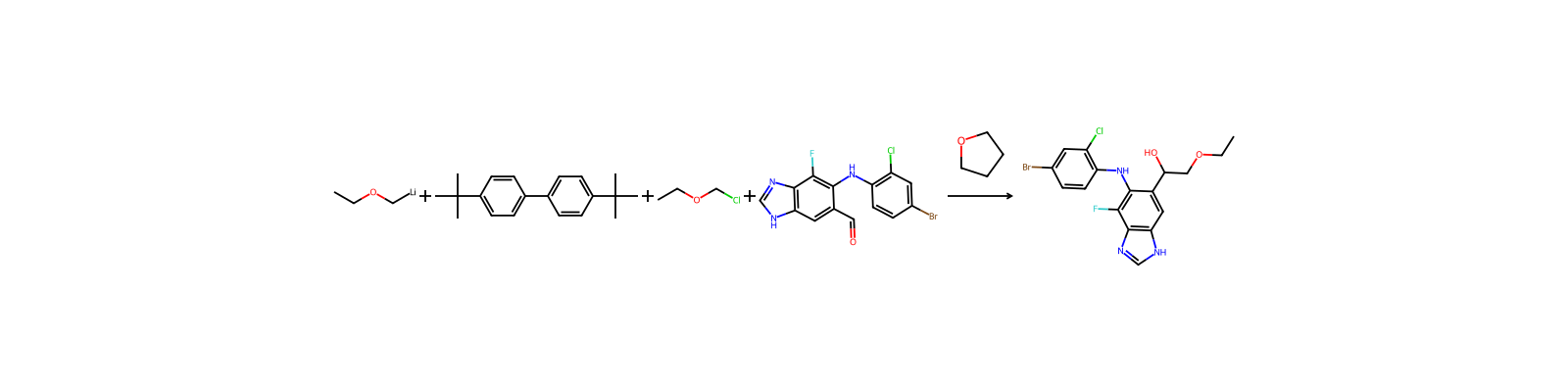
使用It is used in the generation of 1,2-di(lithiomethyl)benzene. It is found to accept electrons from Li metal to give a radical anion which is highly effective in the conversion of alkyl halides to alkyllithiums. 4,4-Di-tert-butylbiphenyl is used in production of homoallylic amine derivatives. It is also used in the preparation of lithium di-tert-butylbiphenylide, a radical anion, superior to sodium or lithium naphthalenides for metalation reactions. Along with lithium, 4,4-Di-tert-butylbiphenyl catalyzes; reaction of chloromethyl ethyl ether and different carbonyl compounds to yield corresponding hydroxyethers and reductive opening of N-phenylazetidine.
一般的な説明4,4′-Di-tert-butylbiphenyl along with lithium catalyzes:reaction of chloromethyl ethyl ether and different carbonyl compounds to yield corresponding hydroxyethersreductive opening of N-phenylazetidine
上流・下流製品情報
上流原料
下流製品
関連反応
9,529 件


化合物ノート
読み込み中…