
4'-クロロアセトフェノン
P-Chloroacetophenone
データを補完しています。しばらくしてからページを更新すると最新の内容を表示できます

基本情報
- CAS
99-91-2- 標準SMILES
CC(=O)c1ccc(Cl)cc1- InChIKey
BUZYGTVTZYSBCU-UHFFFAOYSA-N- 分子式
- C8H7ClO
- 平均分子量
- 154.59 g/mol
- 単同位体質量
- 154.01854252
概要
P-chloroacetophenone is an organic molecular entity.
名称と識別子
- 優先名称
- P-Chloroacetophenone
- IUPAC
- 1-(4-chlorophenyl)ethanone
- 現地名
- 4'-クロロアセトフェノン
- 英語名
- 4'-Chloroacetophenone
- 分子式
- C8H7ClO
- 分子量
- 154.59
名称と別名
4'-Chloroacetophenone99-91-21-(4-Chlorophenyl)ethanone4-ChloroacetophenoneP-CHLOROACETOPHENONEEthanone, 1-(4-chlorophenyl)-1-(4-Chlorophenyl)Ethan-1-OneUSAF DO-11-(4-Chlorophenyl)-ethanoneMethyl p-chlorophenyl ketonep-Chlorophenyl methyl ketoneZV4A71K303
名称をさらに表示
4'-クロロアセトフェノン1-(4-クロロフェニル)アセトアルデヒドメチル(4-クロロフェニル)ケトン1-クロロ-4-アセチルベンゼン(4-クロロフェニル)(メチル)ケトンp-クロロアセトフェノンメチル(p-クロロフェニル)ケトン1-(4-クロロフェニル)エタノン4-アセチルフェニルクロリド1-アセチル-4-クロロベンゼン4'-クロロ-アセトフェノンメチル4-クロロフェニルケトン4-アセチル-1-クロロベンゼン1-[4-クロロフェニル]エタノンpクロロアセトフェノン4'-クロロアセトフェノン 塩化物パラ‐クロロアセトフェノンP‐クロロアセトフェノン4′-クロロアセトフェノンp-クロロ-α-メチルベンズアルデヒド1-(4-chlorophenyl)-ethanonethanone,1-(4-chlorophenyl)-[qr]usafdo-1AKOS 90577usafdo-1[qr]p-chlorophenoneAKOS BBS-00003217
NSC-6115DTXSID1052668RefChem:169294DTXCID2031241202-800-74-AcetylchlorobenzeneAcetophenone, 4'-chloro-p-Chloracetophenone
データベース識別子
- CAS
99-91-2- PubChem CID
- 7467
- DTXSID
DTXSID1052668- ChEMBL
CHEMBL608419- ChEBI
CHEBI:230611- UNII
- ZV4A71K303
- EC Number
- 202-800-7
- Nikkaji
- J38.176D
物性
構造計算による物性補完中
- XLogP
- 2.3
- 極性表面積
- 17.1 Ų
- 水素結合供与体数
- 0
- 水素結合受容体数
- 1
- 回転可能結合数
- 1
- 重原子数
- 10
- 形式電荷
- 0
- 複雑度
- 125
実験および物理化学的性質
Chemical ClassesOther Classes -> Aromatic Ketones, Halogenated
SpringerMaterials Properties13C nuclear magnetic resonance spectrum
LogP
log Kow= 2.32 (experimental)
2.35
Density1.1922 @ 20 °C/4 °C
Color/FormLIQUID
SolubilityPRACTICALLY INSOL IN WATER; MISCIBLE WITH ALC, ETHER
Boiling Point237 °C
Melting Point20-21 °C
Vapor Pressure0.12 [mmHg]
Refractive IndexINDEX OF REFRACTION: 1.5550 @ 20 °C/D
Physical DescriptionLiquid; [Merck Index] Colorless liquid; [MSDSonline]
物理化学的性質
- 融点
- 14 · 14-18 °C (lit.)
- 沸点
- 232 °C · 232 °C (lit.)
- 比重(密度)
- 1.192 g/mL · 1.192 g/mL at 25 °C (lit.)
- 蒸気圧
- 8 mm · 8 mm Hg ( 90 °C)
- 屈折率
- 20 · n20/D 1.554(lit.)
- 闪点
- 194 °F · 194 °F
- 貯蔵温度
- Sealed in dry,Room Temperature
- 溶解性
- 111 mg/l · 111mg/l(遅分解)
- 外見
- 融解後の液体
- 色
- 無色透明~黄色
- 臭い (Odor)
- 100 %で。甘くマイルドなアセトフェノン干し草 · 100.00%で。甘くマイルドなアセトフェノン干し草
- においのタイプ
- 花柄
- 水溶解度
- 111 mg/L · 111mg/L(25℃)
- Merck
- 14 · 14,2116
- BRN
- 386014 · 386014
- InChI
- 1S/C8H7ClO/c1-6(10)7-2-4-8(9)5-3-7/h2-5H,1H3
- InChIKey
- BUZYGTVTZYSBCU-UHFFFAOYSA-N
- SMILES
- CC(=O)c1ccc(Cl)cc1
- LogP
- 2.32 at · 2.32 at 20℃
- CAS データベース
- 99 · 99-91-2(CAS DataBase Reference)
- NISTの化学物質情報
- 1 · Ethanone, 1-(4-chlorophenyl)-(99-91-2)
- EPAの化学物質情報
- 4 · 4'-Chloroacetophenone (99-91-2)
化学的性質
化学的特性clear colourless to yellowish liquid after melting
安全と法規制
安全情報は参考情報です。供給元の安全データシート(SDS)、適用法令、専門家による評価に代わるものではありません。
GHS分類
GHS Classification
This chemical does not meet GHS hazard criteria for 0.5% (1 of 216) of reports.
Danger
H302 (86.1%): Harmful if swallowed [Warning Acute toxicity, oral]
P260, P261, P264, P264+P265, P270, P271, P273, P280, P284, P301+P317, P302+P352, P304+P340, P305+P351+P338, P305+P354+P338, P316, P317, P319, P320, P321, P330, P332+P317, P337+P317, P362+P364, P403+P233, P405, and P501 (click each P-code to see the statement)
Aggregated GHS information provided per 216 reports by companies from 14 notifications to the ECHA C&L Inventory. Each notification may be associated with multiple companies.
Warning
危険有害性情報
Regulatory Information
Chemical: Ethanone, 1-(4-chlorophenyl)-
Status: Active Update: 17-04-2018 https://echa.europa.eu/registration-dossier/-/registered-dossier/21493
4'-Chloroacetophenone: Does not have an individual approval but may be used under an appropriate group standard
Hazards SummaryHighly irritating to eyes; [Merck Index] May cause allergic contact dermatitis; [HSDB] An irritant; Effects in high-dose animal studies include lacrimation and acute pulmonary edema; [MSDSonline] See alpha-Chloroacetophenone.
DOT Emergency Guidelines
/GUIDE 153: SUBSTANCES - TOXIC AND/OR CORROSIVE (COMBUSTIBLE)/ Health: TOXIC; inhalation, ingestion, or skin contact with material may cause severe injury or death. Contact with molten substance may cause severe burns to skin and eyes. Avoid any skin contact. Effects of contact or inhalation may be delayed. Fire may produce irritating, corrosive and/or toxic gases. Runoff from fire control or dilution water may be corrosive and/or toxic and cause pollution. /Chloroacetophenone; Chloroacetophenone, liquid; Chloroacetophenone, solid/
/GUIDE 153: SUBSTANCES - TOXIC AND/OR CORROSIVE (COMBUSTIBLE)/ Fire or Explosion: Combustible material: may burn but does not ignite readily. When heated, vapors may form explosive mixtures with air: indoors, outdoors, and sewers explosion hazards. Those substances designated with a "P" may polymerize explosively when heated or involved in a fire. Contact with metals may evolve flammable hydrogen gas. Containers may explode when heated. Runoff may pollute waterways. Substance may be transported in a molten form. /Chloroacetophenone; Chloroacetophenone, liquid; Chloroacetophenone, solid/
/GUIDE 153: SUBSTANCES - TOXIC AND/OR CORROSIVE (COMBUSTIBLE)/ Public Safety: CALL Emergency Response Telephone Number ... . As an immediate precautionary measure, isolate spill or leak area in all directions for at least 50 meters (150 feet) for liquids and at least 25 meters (75 feet) for solids. Keep unauthorized personnel away. Stay upwind. Keep out of low areas. Ventilate enclosed areas. /Chloroacetophenone; Chloroacetophenone, liquid; Chloroacetophenone, solid/
/GUIDE 153: SUBSTANCES - TOXIC AND/OR CORROSIVE (COMBUSTIBLE)/ Protective Clothing: Wear positive pressure self-contained breathing apparatus (SCBA). Wear chemical protective clothing that is specifically recommended by the manufacturer. It may provide little or no thermal protection. Structural firefighters' protective clothing provides limited protection in fire situations ONLY; it is not effective in spill situations where direct contact with the substance is possible. /Chloroacetophenone; Chloroacetophenone, liquid; Chloroacetophenone, solid/
For more DOT Emergency Guidelines (Complete) data for P-CHLOROACETOPHENONE (8 total), please visit the HSDB record page.
Hazard Classes and Categories
Acute Tox. 4 (86.1%)
Acute toxicity (Oral) - Category 4
Flammable liquids - Category 4
Shipment Methods and Regulations
No person may /transport,/ offer or accept a hazardous material for transportation in commerce unless that person is registered in conformance ... and the hazardous material is properly classed, described, packaged, marked, labeled, and in condition for shipment as required or authorized by ... /the hazardous materials regulations (49 CFR 171-177)./
The International Air Transport Association (IATA) Dangerous Goods Regulations are published by the IATA Dangerous Goods Board pursuant to IATA Resolutions 618 and 619 and constitute a manual of industry carrier regulations to be followed by all IATA Member airlines when transporting hazardous materials.
The International Maritime Dangerous Goods Code lays down basic principles for transporting hazardous chemicals. Detailed recommendations for individual substances and a number of recommendations for good practice are included in the classes dealing with such substances. A general index of technical names has also been compiled. This index should always be consulted when attempting to locate the appropriate procedures to be used when shipping any substance or article.
Shipping Name/ Number DOT/UN/NA/IMO
UN 1697; Chloroacetophenone
IMO 6.1; Chloroacetophenone
Skin, Eye, and Respiratory IrritationsHIGHLY IRRITATING TO EYES, MUCOUS MEMBRANES.
安全と保護具
Disposal Methods
The following wastewater treatment technologies have been investigated for acetophenone: concentration process: activated carbon. /Acetophenone/
The following wastewater treatment technologies have been investigated for acetophenone: concentration process: resin adsorption. /Acetophenone/
Preventive Measures
SRP: The scientific literature for the use of contact lenses in industry is conflicting. The benefit or detrimental effects of wearing contact lenses depend not only upon the substance, but also on factors including the form of the substance, characteristics and duration of the exposure, the uses of other eye protection equipment, and the hygiene of the lenses. However, there may be individual substances whose irritating or corrosive properties are such that the wearing of contact lenses would be harmful to the eye. In those specific cases, contact lenses should not be worn. In any event, the usual eye protection equipment should be worn even when contact lenses are in place.
毒性情報
Environmental Fate
TERRESTRIAL FATE: If released to soil, an estimated soil adsorption coefficient for p-chloroacetophenone of 436 obtained from an experimental log octanol/water partition coefficient of 2.32(1) and an appropriate regression equation(2), indicates that it will display moderate mobility in soil(3). An estimated Henry's Law constant of 9.3X10⁻⁴ atm cu-m/mole at 25 °C(4,SRC) indicates that p-chloroacetophenone will rapidly volatilize from moist soil to the atmosphere(SRC). An estimated vapor pressure of 0.51 mm Hg at 25 °C(1-2,4,SRC) indicates that p-chloroacetophenone will only slowly volatilize from dry soil to the atmosphere(SRC).
AQUATIC FATE: If released to water, p-chloroacetophenone is expected to rapidly volatilize to the atmosphere. Based on an estimated Henry's Law constant of 9.3X10⁻⁴ atm cu-m/mole at 25 °C(1,SRC), the estimated half-life for volatilization of p-chloroacetophenone from a model river 1 m deep flowing at 1 m/sec with a wind speed of 3 m/sec is 4.8 hrs(2,SRC). A bioconcentration factor of 34 estimated from an experimental log octanol/water partition coefficient of 2.32(3) using an appropriate regression equation(2) indicates that p-chloroacetophenone will not bioconcentrate in fish and aquatic organisms(SRC). An estimated soil adsorption coefficient of 436(2-3,SRC) indicates that it may weakly adsorb to sediment and suspended organic matter(SRC).
ATMOSPHERIC FATE: If released to the atmosphere, an estimated rate constant for the gas-phase reaction of p-chloroacetophenone with photochemically produced hydroxyl radicals of 1.16X10⁻¹² cu-cm/ molec sec(1,SRC) translates to an atmospheric half-life of 13.8 days using an average atmospheric hydroxyl radical concn of 5X10+5 molec/cu-cm(1,SRC).
Adverse EffectsSkin Sensitizer - An agent that can induce an allergic reaction in the skin.
Effluent Concentrations
p-Chloroacetophenone was qualitatively detected in advanced wastewater treatment effluent samples obtained from Pomona, CA, 1974(1). It was detected in the emissions of a improperly regulated kerosene space heater, but not properly adjusted ones, at a rate of 40 ng/kJ(2).
Soil Adsorption/Mobility
Based on an experimental log octanol/water partition coefficient of 2.32(1) a soil adsorption coefficient of 436 can be calculated for p-chloroacetophenone using an appropriate regression equation(2,SRC). This value indicates that it will display moderate mobility in soil(3).
安全データ
- wgk
- 3
- tsca
- TSCA listed
- rtecs
- KM5600000
- ridadr
- UN 3416 6.1/PG 2
- hs_code
- 29147090
- risk_code
- 22-26-37/38-41-36/37/38-36/37
- 化審法
- (3)-1241
- 消防法
- 危-4-3-III
- hazard_code
- T+,Xn
- safety_code
- 26-28-36/37/39-45-28A-36
- hazard_class
- 6.1
- packing_group
- II
- Hazard Classifications
- Acute Tox. 4 OralEye Irrit. 2STOT SE 3
- ストレージクラス
- 6.1A - Combustible acute toxic Cat. 1 and 2very toxic hazardous materials
- 有毒物質データの
- 99-91-2(Hazardous Substances Data)
化学と産業
薬理情報
Metabolism/MetabolitesP-CHLOROACETOPHENONE YIELDS IN RABBITS 1-(P-CHLOROPHENYL)ETHANOL. /FROM TABLE/
用途と製造
Uses
Used as a chemical intermediate for pharmaceuticals; [HSDB]
CHEM INT FOR PHARMACEUTICALS
U.S. Production(1975) PROBABLY GREATER THAN 4.54X10+5 G
Methods of ManufacturingREACTION OF CHLOROBENZENE AND ACETIC ANHYDRIDE CATALYZED BY ALUMINUM CHLORIDE, AND SEPARATION OF ISOMERS.
General Manufacturing InformationEthanone, 1-(4-chlorophenyl)-: ACTIVE
応用分野
用途医薬品の中間体
用途有機合成原料。
使用Chloroacetophenone is used as a tear gas for riot control and as a kind of chemical mace against small groups or individuals
上流・下流製品情報
上流原料
下流製品
補足説明
定義ChEBI: P-chloroacetophenone is an organic molecular entity.
関連反応
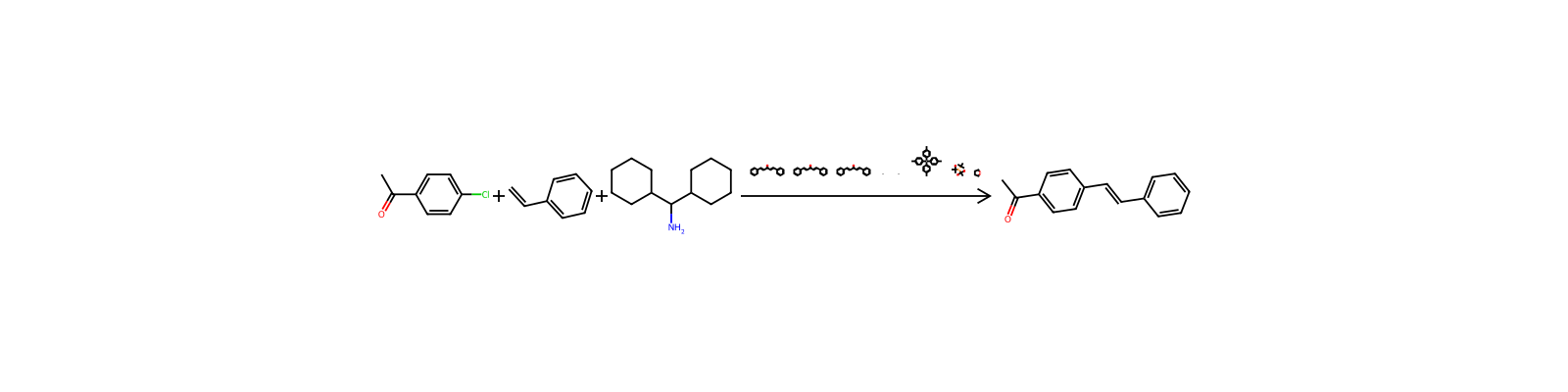
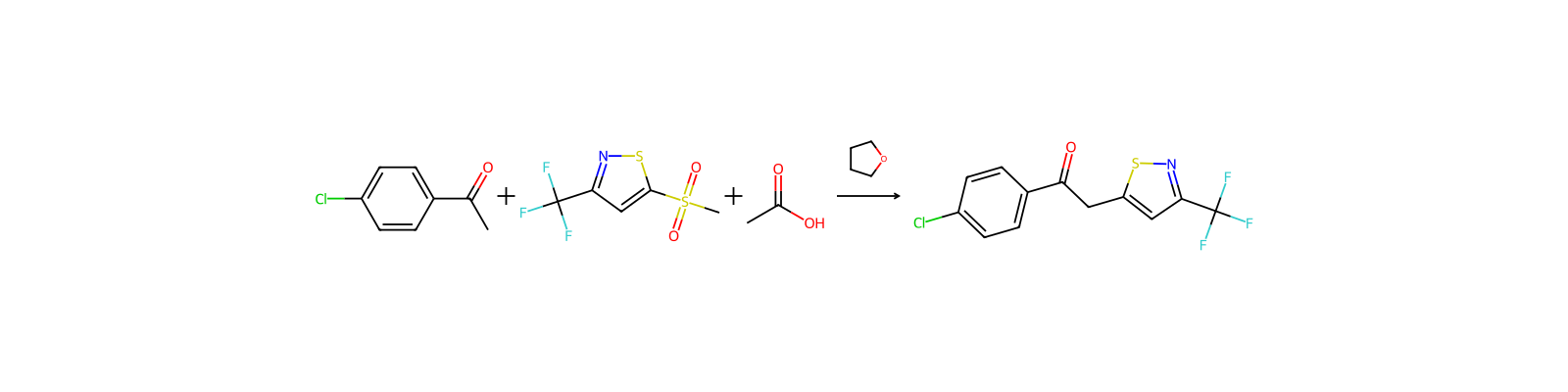
254 件




化合物ノート
読み込み中…