ホームMCPワークベンチSkills
ホームワークベンチ通知マイページ
llms.txt · MCPガイドプライバシーポリシー · 利用規約 · サポートv1.8.0
  1. ホーム
  2. /化合物

4-ニトロアニリン

4-Nitroaniline

HCID 7475
ノートを作成反応を作成見積依頼を出す
印刷プレビュー

データを補完しています。しばらくしてからページを更新すると最新の内容を表示できます

基本情報概要名称と識別子物性安全と法規制化学と産業関連反応化合物ノート
部分構造検索類似構造を探す

基本情報

CAS
100-01-6
標準SMILES
Nc1ccc([N+](=O)[O-])cc1
InChIKey
TYMLOMAKGOJONV-UHFFFAOYSA-N
分子式
C6H6N2O2
平均分子量
138.12 g/mol
単同位体質量
138.04292743

概要

P-nitroaniline, [solid] is a yellow solid with a mild odor. Sinks in water. (USCG, 1999)

名称と識別子

優先名称
4-Nitroaniline
IUPAC
4-nitroaniline
現地名
4-ニトロアニリン
英語名
4-Nitroaniline
分子式
C6H6N2O2
分子量
138.12

名称と別名

4-NITROANILINEp-Nitroaniline100-01-64-Nitrobenzenaminep-Nitranilinep-Aminonitrobenzenep-Nitrophenylamine1-Amino-4-nitrobenzene4-NitranilineBenzenamine, 4-nitro-Developer PAniline, 4-nitro-
名称をさらに表示
4-ニトロアニリンファーストレッド2Gベース4-ニトロ-1-ベンゼンアミンC.I.デベロッパー174-ニトロベンゼンアミン4-ニトロフェニルアミン(4-ニトロフェニル)アミンC.I.アゾイックジアゾコンポーネント37(ベース)4-ニトロベンゼン-1-アミンアゾイックDC37(ベース)デベロッパーPN-オキシラト-N-オキソ-4-アミノフェニルアミニウム1-アミノ-4-ニトロベンゼンファーストレッドPベースp-ニトロアニリン1-ニトロ-4-アミノベンゼンファーストレッドベースGGファーストレッドベース2Jpニトロアニリン4-ニトロアニリン標準品PNAPARA NITRO ANILINEP-nitroanilide4-Nitro-phenylamine4-Nitroanired2gbase
Fast Red P BaseAniline, p-nitro-Fast Red Base GGFast Red 2G BaseFast Red Base 2Jpara-NitroanilineAzoamine Red ZHNitrazol CF extra

データベース識別子

CAS
100-01-6
PubChem CID
7475
DTXSID
DTXSID8020961
ChEMBL
CHEMBL14282
ChEBI
CHEBI:17064
UNII
1MRQ0QZG7G
EC Number
202-810-1
Nikkaji
J4.000B

物性

構造計算による物性補完中

XLogP
1.4
極性表面積
71.8 Ų
水素結合供与体数
1
水素結合受容体数
3
回転可能結合数
0
重原子数
10
形式電荷
0
複雑度
124

実験および物理化学的性質

Chemical Classes · 3 件

Nitrogen Compounds -> Nitroanilines

Mutagens

Textile

pHpH = 6.7
SpringerMaterials Properties13C nuclear magnetic resonance spectrum
LogP · 3 件

log Kow = 1.39

2.66

1.46

Odor · 3 件

Faint ammonia; slightly pungent

Odorless

Slight ammonia-like odor.

TasteBurning sweet taste
Density · 6 件

1.44 at 68 °F (USCG, 1999) - Denser than water; will sink

1.424 at 20 °C/4 °C

1.4 g/cm³

1.42

1.424 @ 20°C

1.42

Color/Form · 3 件

Pale yellow monoclinic crystals from water

Bright yellow powder

Bright yellow, crystalline powder.

Solubility · 6 件

less than 0.1 mg/mL at 70 °F (NTP, 1992)

Very soluble in methanol; soluble in ethanol, ether, acetone, chloroform, toluene; slightly soluble in benzene, deuterated DMSO

安全と法規制

安全情報は参考情報です。供給元の安全データシート(SDS)、適用法令、専門家による評価に代わるものではありません。

GHS分類

GHS Classification · 6 件

Danger

H301: Toxic if swallowed [Danger Acute toxicity, oral]

P260, P261, P262, P264, P270, P271, P273, P280, P301+P316, P302+P352, P304+P340, P316, P319, P321, P330, P361+P364, P403+P233, P405, and P501 (click each P-code to see the statement)

Danger

H301+H311+H331 (36.1%): Toxic if swallowed, in contact with skin or if inhaled [Danger Acute toxicity, oral; acute toxicity, dermal; acute toxicity, inhalation]

P260, P261, P262, P264, P270, P271, P273, P280, P301+P316, P302+P352, P304+P340, P316, P319, P321, P330, P361+P364, P403+P233, P405, and P501 (click each P-code to see the statement)

危険有害性情報

Regulatory Information · 6 件

Chemical: Benzenamine, 4-nitro-

Regulation (EC) No 1831/2003 (amended)

Benzenamine, 4-nitro- is listed on the EPA's Chemical Data Reporting (CDR) system. Manufacturers and importers of Benzenamine, 4-nitro- are required to report information about their production and use of this chemical to the EPA under the Toxic Substances Control Act (TSCA). (40 eCFR Part 711)

T - indicates a substance that is the subject of a final TSCA section 4 test rule.

Status: Active Update: 22-08-2018 https://echa.europa.eu/registration-dossier/-/registered-dossier/5825

4-Nitroaniline: Does not have an individual approval but may be used under an appropriate group standard

Other Safety InformationIMAP assessments - Benzenamine, 4-nitro-: Human health tier II assessment
DOT LabelPoison
Fire Hazards · 2 件

Special Hazards of Combustion Products: Toxic oxides of nitrogen may form in fire.

Combustible. Many reactions may cause fire or explosion. Finely dispersed particles form explosive mixtures in air.

Fire Potential · 3 件

化学と産業

薬理情報

Mechanism of Action · 2 件

... To assess further the role of the 4-substituent in methaemoglobinaemia, the toxicity of a series of 4-substituted aniline derivatives was also studied. Of the anilines studied, 4-nitroaniline caused the most methemoglobin (36.5 +/- 8.0%), while aniline caused the least (0.3 +/- 0.5%). Overall, there was a significant correlation (r2 = 0.83) between the hemotoxicity and the Hammett constant, sigma(p), suggesting that it is the electron-withdrawing properties of the substituent that influence the methemoglobin formation. ...

The relative mutagenic activities of aminoanilines have been attempted to be related to parameters reflecting potential for n-hydroxylation and stability of the arylnitrenium ions. Both chloro and the nitro groups deactivate the amine group to n-hydroxylation and the ring to epoxidation, & no active products from cytochrome p450 would be predicted. The activity of the nitro derivatives is presumed to be due to transformation of the nitro group itself to an active mutagenic species by other enzyme systems. /Aminoanilines/

Biological Half-LifeThe whole-body half-life of p-nitroaniline was approximately 1 hr.
Metabolism/Metabolites · 4 件

Given orally or ip in doses of 20-40 mg/kg in rats, analysis of 24-hr urine samples showed that 4-nitroaniline was excreted partly unchanged & also as 4-phenylenediamine & 2-amino-5-nitrophenol...

The principal rat liver microsomal metabolite of 4-nitroaniline was isolated by high performance liquid chromatography and characterized as 2-amino-5-nitrophenol. Pretreatment of rats with phenobarbital and 3-methylcholanthrene increased the rate of conversion of 4-nitroaniline to 2-amino-5-nitrophenol by 2- and 4-fold, respectively.

The metabolism of radiolabeled dinitrobenzene isomers was compared in hepatocytes and hepatic subcellular fractions isolated from male rats. Under aerobic conditions, reduction was the major metabolic pathway for m-dinitrobenzene and p-dinitrobenzene in hepatocytes with m-nitroaniline and p-nitroaniline accounting for 74.0 and 81.0% respectively, of the radioactivity present after a 30-minute incubation. The major metabolite of o-nitrobenzene in similar incubations was S-(2-nitrophenyl)glutathione which represented 48.1% of the total radioactivity. o-Nitroaniline accounted for 29.5% of the radioactivity.

14(C) p-nitroaniline was rapidly cleared by metabolism to 9 metabolites which were excreted primarily in the urine and to a lesser extent in the feces. Most (56%) of the urinary radioactivity was in the form of sulfate conjugates of 2 metabolites of p-nitroaniline.

関連反応

397 件
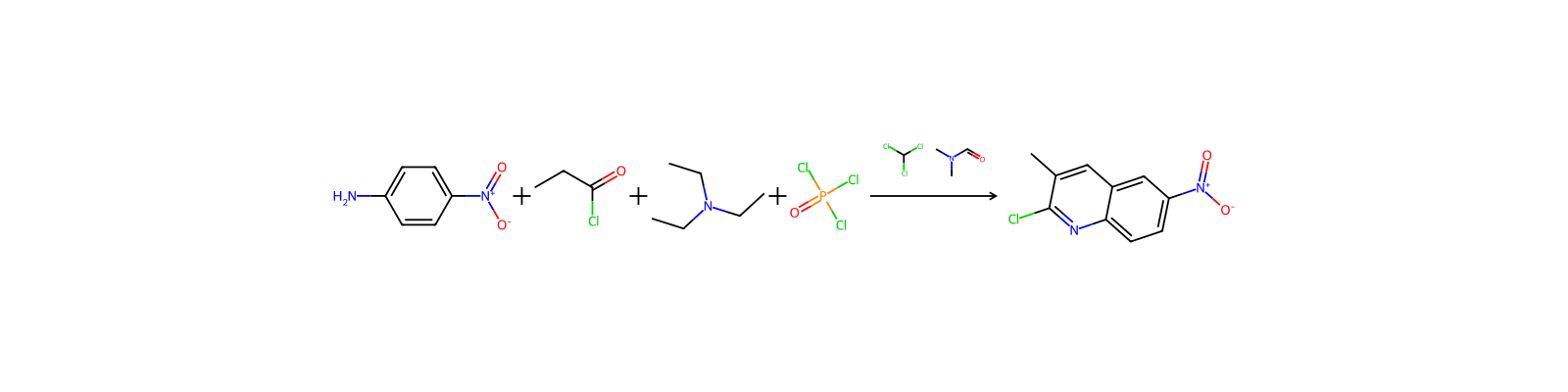
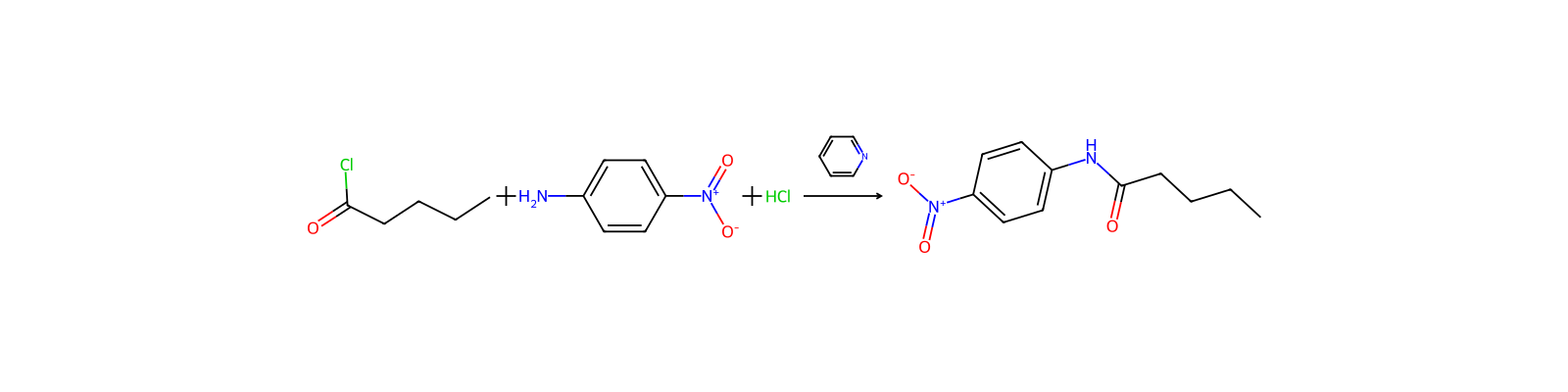
反応記録を作成
HRID 5676 の反応式
HRID 5676反応物としてuspto-grants-1993_09
HRID 6804 の反応式
HRID 6804反応物としてuspto-grants-2006_08
HRID 9918 の反応式
HRID 9918反応物としてuspto-grants-2006_08
HRID 24801 の反応式
HRID 24801反応物としてuspto-grants-2005_02
HRID 28604 の反応式
HRID 28604反応物としてuspto-grants-2008_09
HRID 37312 の反応式
HRID 37312反応物としてuspto-grants-1995_05
HRID 37614 の反応式
HRID 37614反応物としてuspto-grants-1995_05
HRID 46496 の反応式
HRID 46496反応物としてuspto-grants-1979_11
1 / 50 ページ

化合物ノート

読み込み中…

このページの内容基本情報概要名称と識別子物性安全と法規制化学と産業関連反応化合物ノート
その他の操作
ノートを作成反応を作成見積依頼を出す

1 g/45 mL boiling water; 1 g/25 mL alcohol; 1 g/30 mL ether

0.08 g/100 g water at 18.5 °C.

In water, 390 ppm at 20 °C

For more Solubility (Complete) data for 4-NITROANILINE (7 total), please visit the HSDB record page.

CorrosivityWill attack some forms of plastics, coatings, and rubber.
Flash Point · 6 件

390 °F (NTP, 1992)

199 °C

329 °F (OPEN CUP) (MOLTEN SOLID)

199 °C (closed cup)

199 °C

390 °F

Human DrugsPharmaceuticals

物理化学的性質

融点
147 °C · 147 °C
沸点
332 °C · 332 °C
比重(密度)
1 · 1,437 g/cm3
蒸気密度
4.77 · 4.77 (vs air)
蒸気圧
1.33 hPa · 1.33 hPa (142 °C)
屈折率
1.6465 · 1.6465 (estimate)
闪点
329 °F · 329 °F
貯蔵温度
30 °C · Store below +30°C.
溶解性
25 mg/mL、やや濁り、黄色~茶黄色 · エタノール:可溶25mg/mL、やや濁り、黄色~茶黄色
酸解離定数(Pka)
1 · 1(at 25℃)
外見
結晶性
色
黄色
比重
1.437 · 1.437
臭い (Odor)
アンモニア臭
水溶解度
0.8 g/L · 0.8g/L(20℃)
比熱容量
1.21 J/ · Cp(crystal): 1.21 J/(g·K), at 25℃
Merck
14 · 14,6584
BRN
508690 · 508690
Henry's Law Constant
1.15 x · 1.15 x 10-9 atmm3/mol at 25 °C (thermodynamic method-GC/UV spectrophotometry, Altschuh et al., 1999)
Dielectric constant
56.3 · 56.3(160.0℃)
安定性
安定。水酸化ナトリウム、強力な酸化剤、強力な還元剤とは相容れない。一部のプラスチック、ゴム、コーティングを腐食させる可能性があります。開始剤の存在下で爆発的に分解する可能性があります。湿気に敏感。光や空気に敏感な場合があります。
InChI
1S/C6H6N2O2/c7-5-1-3-6(4-2-5)8(9)10/h1-4H,7H2
InChIKey
TYMLOMAKGOJONV-UHFFFAOYSA-N
SMILES
Nc1ccc(cc1)[N+]([O-])=O
LogP
1.2 at · 1.2 at 30℃
CAS データベース
100 · 100-01-6(CAS DataBase Reference)
NISTの化学物質情報
p-Nitroaniline(100-01-6)
EPAの化学物質情報
p-Nitroaniline (100-01-6)

化学的性質

化学的特性Yellow fine crystals

Combustible when exposed to heat or flame.

COMBUSTIBLE. IN PRESENCE OF MOISTURE CAUSES NITRATION OF ORG MATERIALS & MAY RESULT IN SPONTANEOUS IGNITION.

Process errors led to discharge of copious amt of nitrous fumes into glass reinforced plastic ventilation duct above diazotization vessel. On 2 occasions fires were caused in the duct by vigorous reaction of the dinitrogen tetraoxide with nitroaniline dusts in the duct.

Health Hazards · 1 件

Inhalation or ingestion causes headache, drowsiness, shortness of breath, nausea, methemoglobinemia, and unconsciousness; fingernails, lips, and ears become bluish; prolonged and excessive exposures may also cause liver damage. Contact with eyes causes irritation and possible corneal damage. Contact with skin causes irritation; continued exposure may cause same symptoms as inhalation or ingestion. (USCG, 1999)

Hazards Summary · 1 件

Can cause severe methemoglobinemia in the workplace; Chronic exposure can cause anemia, jaundice, and liver injury; Listed in a table of Industrial Chemicals for Which Methemoglobin Formation is the Principal Cause of Toxicity; [ACGIH] A mild eye irritant; May induce methemoglobinemia; [ICSC]

DOT ID and Guide1661 153
Reactive GroupNitro, Nitroso, Nitrate, and Nitrite Compounds, Organic
EC ClassificationSymbol: T; R: 23/24/25-33-52/53; S: (1/2)-28-36/37-45-61; Note: C
UN ClassificationUN Hazard Class: 6.1; UN Pack Group: II
Special Reports · 4 件

European Chemicals Bureau; IUCLID Dataset, 4-Nitroaniline (CAS # 100-01-6). Summary of information provided to the EU by the European chemical industry as of 2000.

Rickert DE; Toxicity of Nitroaromatic Compounds 1-295 Hemisphere Publising Corp (1985). Papers presented in 1982, cover: occurrence and uses of nitroaromatic compounds in industry; carcinogenicity, mutagenicity and teratogenicity of the compounds; interaction of the compounds with DNA; sex, strain and species differences in rodent response to nitrobenzene; mammalian and bacterial metabolism of nitroaromatics; skin penetration; absence fo reduced fertility among chemical plant workers exposed to dinitrotoluene and toluene G diamine; subclinical effects of trinitrotoluene; risk assessment.

Santodonato J et al; Monographs on Human Exposure to Chemicals in the Workplace: Nitroanilines 1-26 (1985). This report summarizes and evaluates toxicologic information relevant to an occupational hazard assessment of nitroanilines, including chemical and physical properties, production and use, extent of occupational exposure, pharmacokinetics, animal carcinogenicity and mutagenicity, and epidemiological studies.

x[DHHS/NTP; Toxicology & Carcinogenesis Studies of p-Nitroaniline in B6C3F1 Mice (Gavage Studies) Technical Report Series No. 418 (1993) NIH Publication No. 93-3149]

安全と保護具

Fire Fighting · 2 件

Fire Extinguishing Agents: Water, foam, dry chemical or carbon dioxide (USCG, 1999)

Use water spray, powder, foam, carbon dioxide. In case of fire: keep drums, etc., cool by spraying with water. Combat fire from a sheltered position.

First Aid Measures · 4 件

Fresh air, rest. Artificial respiration may be needed. Refer for medical attention.

Remove contaminated clothes. Rinse skin with plenty of water or shower. Refer for medical attention .

First rinse with plenty of water for several minutes (remove contact lenses if easily possible), then refer for medical attention.

Induce vomiting (ONLY IN CONSCIOUS PERSONS!). Refer for medical attention .

First Aid · 2 件

EYES: First check the victim for contact lenses and remove if present. Flush victim's eyes with water or normal saline solution for 20 to 30 minutes while simultaneously calling a hospital or poison control center. Do not put any ointments, oils, or medication in the victim's eyes without specific instructions from a physician. IMMEDIATELY transport the victim after flushing eyes to a hospital even if no symptoms (such as redness or irritation) develop.

(General first aid procedures)

Safe StorageSeparated from strong acids, strong oxidants, combustible substances, reducing agents and food and feedstuffs. Dry.
Exposure Control and Personal ProtectionBiological Exposure Indices (BEI) [ACGIH] - Methemoglobin in blood = 1.5% of hemoglobin during or at end of shift. [ACGIH]
Fire Fighting Procedures · 3 件

This chemical is a combustible solid. Use dry chemical, carbon dioxide, water spray, or alcohol foam extinguishers. Poisonous gases including sulfur dioxide and nitrogen oxides are produced in fire. If material or contaminated runoff enters waterways, notify downstream users of potentially contaminated waters. Notify local health and fire officials and pollution control agencies. From a secure, explosion-proof location, use water spray to cool exposed containers. If cooling streams are ineffective (venting sound increases in volume and pitch, tank discolors, or shows any signs of deforming), withdraw immediately to a secure position. If employees are expected to fight fires, they must be trained and equipped in OSHA 1910.156.

If material on fire or involved in fire: Extinguish fire using agent suitable for type of surrounding fire (Material itself does not burn or burns with difficulty.) Use water in flooding quantities as fog. Use water foam, dry chemical, or carbon dioxide. /Nitroanilines/

Wear positive pressure self-contained breathing apparatus when fighting fires involving this material. /Nitroanilines/

Storage ConditionsStore in a cool, dry, well-ventilated location. Separate from acids, oxidizing materials, & reducing agents.
Cleanup Methods · 3 件

1. Ventilate area of spill. 2. For small quantities, sweep onto paper or other suitable material, place in an appropriate container & burn in a safe place (such as a fume hood). Large quantities may be reclaimed; however, if this is not practical, dissolve in a flammable solvent (such as alcohol) & atomize in a suitable combustion chamber equipped with an appropriate effluent gas cleaning device.

Evacuate and restrict persons not wearing protective equipment from area of spill or leak until cleanup is complete. Remove all ignition sources. Use HEPA vacuum or wet method to reduce dust during clean-up. Do not dry sweep. Collect powdered material in the most convenient and safe manner and deposit in sealed containers. Ventilate area after clean-up is complete. It may be necessary to contain and dispose of this chemical as a hazardous waste. If material or contaminated runoff enters waterways, notify downstream users of potentially contaminated waters. Contact your Department of Environmental Protection or your regional office of the federal EPA for specific recommendations. If employees are required to clean up spills, they must be properly trained and equipped. OSHA 1910.120(q) may be applicable.

Effectiveness of purification of p-nitroaniline waste water contaminants was increased by using pseudomonas fluorescens 5/7 in aerating purifiers with the addition of nutrient salts in waste waters.

Nonfire Spill Response · 1 件

SMALL SPILLS AND LEAKAGE: Should a spill occur while you are handling this chemical, FIRST REMOVE ALL SOURCES OF IGNITION, then you should dampen the solid spill material with 60-70% ethanol and transfer the dampened material to a suitable container. Use absorbent paper dampened with 60-70% ethanol to pick up any remaining material. Seal the absorbent paper, and any of your clothes, which may be contaminated, in a vapor-tight plastic bag for eventual disposal. Solvent wash all contaminated surfaces with 60-70% ethanol followed by washing with a soap and water solution. Do not reenter the contaminated area until the Safety Officer (or other responsible person) has verified that the area has been properly cleaned.

Disposal Methods · 3 件

Generators of waste (equal to or greater than 100 kg/mo) containing this contaminant, EPA hazardous waste number P077, must conform with USEPA regulations in storage, transportation, treatment and disposal of waste.

Incineration (1800 °F, 2.0 seconds method) with scrubbing for NOx abatement. ...

A good candidate for rotary kiln incineration at a temperature range of 820 to 1,600 °C and residence times of seconds for liquids and gases, and hours for solids. A good candidate for fluidized bed incineration at a temperature range of 450 to 980 °C and residence times of seconds for liquids and gases, and longer for solids.

Spillage Disposal · 1 件

Personal protection: particulate filter respirator adapted to the airborne concentration of the substance. Do NOT let this chemical enter the environment. Sweep spilled substance into covered containers. If appropriate, moisten first to prevent dusting. Wash away remainder with plenty of water.

Preventive Measures · 5 件

Employees should wash immediately with soap when skin is wet or contaminated & daily at the end of each work shift. Work clothing should be changed daily if ... contaminated. Remove non-impervious clothing immediately if wet or contaminated. Provide emergency showers.

SRP: The scientific literature for the use of contact lenses in industry is conflicting. The benefit or detrimental effects of wearing contact lenses depend not only upon the substance, but also on factors including the form of the substance, characteristics and duration of the exposure, the uses of other eye protection equipment, and the hygiene of the lenses. However, there may be individual substances whose irritating or corrosive properties are such that the wearing of contact lenses would be harmful to the eye. In those specific cases, contact lenses should not be worn. In any event, the usual eye protection equipment should be worn even when contact lenses are in place.

Ample ventilation of work area or with piped air respirator. Extreme sanitary and clean work area and of the personnel is necessary.

Eating and smoking should not be permitted in areas where liquid 4-nitroaniline is handled, processed, or stored.

For more Preventive Measures (Complete) data for 4-NITROANILINE (15 total), please visit the HSDB record page.

毒性情報

Target Organsrespiratory system, blood, heart, liver
Ecotoxicity Values · 5 件

EC50 Chlorella vulgaris (Algae) 350.14 mg/L/6 hr; biomass.

LC50 Leuciscus idus (/Orfe/) 35 mg/L/48 hr; static, freshwater.

LC50; Species: Danio rerio (Zebra danio, age 3 months, weight 200-350 mg); Conditions: freshwater, renewal, 26.5 °C, pH 8.6, dissolved oxygen 85%; Concentration: 908 umol/L for 96 hr

LC50; Species: Daphnia magna (Water flea age < or =24 hr); Conditions: freshwater, static, 20-22 °C, pH 7.6-7.7, hardness 16 dH; Concentration: 24 mg/L for 24 hr

For more Ecotoxicity Values (Complete) data for 4-NITROANILINE (10 total), please visit the HSDB record page.

Environmental Fate · 3 件

TERRESTRIAL FATE: Based on a classification scheme(1), Koc values of 54-87(2-6), indicate that 4-nitroaniline is expected to have high mobility in soil(SRC). However, anilines are expected to bind strongly to humus or organic matter in soils due to the high reactivity of the aromatic amino group(7,8), suggesting that mobility may be much lower in some soils(SRC).Volatilization of 4-nitroaniline from moist soil surfaces is not expected to be an important fate process(SRC) given a Henry's Law constant of 1.26X10⁻⁹ atm-cu m/mole(9). 4-Nitroaniline is not expected to volatilize from dry soil surfaces(SRC) based upon a vapor pressure of 3.2X10⁻⁶ mm Hg(10). A 0% theoretical biodegradation using the Japanese MITI test(11) indicates that biodegradtion is not an important environmental fate process in soil(SRC).

AQUATIC FATE: Based on a classification scheme(1), Koc values of 54-87(2-6), indicate that 4-nitroaniline is not expected to adsorb to suspended solids and sediment(SRC). Volatilization from water surfaces is not expected(7) based upon a Henry's Law constant of 1.26X10⁻⁹ atm-cu m/mole(8). 4-Nitroaniline is not expected to undergo hydrolysis in the environment due to the lack of functional groups that hydrolyze under environmental conditions(9). Aromatic amines react relatively rapidly in natural water with photochemically produced oxidants such as hydroxyl radicals and alkoxy radicals(9); half-lives of aniline are on the order of 30 hr of sunlight for hydroxyl radicals and 19 hr of sunlight for peroxy radicals(9); reactions with 4-nitroaniline are likely to be somewhat slower due to the presence of the nitro function(SRC). According to a classification scheme(9), BCF values of <10(10,11) suggest bioconcentration in aquatic organisms is low(SRC). A biodegradation rate of 0.025/h in river water giving a half-life of 31 hours(12) suggests that biodegradation is not an important environmental fate process in water(SRC).

ATMOSPHERIC FATE: According to a model of gas/particle partitioning of semivolatile organic compounds in the atmosphere(1), 4-nitroaniline, which has a vapor pressure of 3.2X10⁻⁶ mm Hg at 25 °C(2), will exist in both the vapor and particulate phases in the ambient atmosphere. Vapor-phase 4-nitroaniline is degraded in the atmosphere by reaction with photochemically-produced hydroxyl radicals(SRC); the half-life for this reaction in air is estimated to be 29 hours(SRC), calculated from its rate constant of 1.3X10⁻¹¹ cu cm/molecule-sec at 25 °C(SRC) that was derived using a structure estimation method(3). Particulate-phase 4-nitroaniline may be removed from the air by wet or dry deposition(SRC). 4-Nitroaniline does absorb light at wavelengths >290 nm(4) and therefore may be susceptible to direct photolysis by sunlight(SRC).

Adverse EffectsOccupational hepatotoxin - Secondary hepatotoxins: the potential for toxic effect in the occupational setting is based on cases of poisoning by human ingestion or animal experimentation.
Exposure Routes · 2 件

The substance can be absorbed into the body by inhalation of its vapour, through the skin and by ingestion.

inhalation, skin absorption, ingestion, skin and/or eye contact

Ecotoxicity Excerpts · 2 件

/AQUATIC SPECIES/ The LC50 (96 hr) values and the bioconcentration factors (BCF) for nine anilines (aniline; 2-, 3-, 4-chloroaniline; 2-, 3-, 4-nitroaniline; 2,4- and 3,4-dichloroaniline) in the zebrafish (Brachydanio rerio) were determined. Biotransformation products of anilines in the zebrafish were analyzed by HPLC. The aim of the investigations was to find relationships between accumulation/elimination/metabolism and toxicity on the one hand and between chemical structure and biotransformation on the other. ... A good correlation of log BCF and of log Pow with log LC50 /was found/. This concurs with the assumption that the internal dose determines the toxicological effect. All anilines investigated, with the exception of 2- and 4-nitroaniline, were transformed into the corresponding acetanilides. The toxicity of the compounds was not altered by biotransformation. ...

/OTHER TERRESTRIAL SPECIES/ Benzamines are the major aromatic amines used in industry and can also be released from azo dyes, which are widely used in the textile, paper-making, and food industries. The toxicity of 10 benzamines was tested by the well diffusion assay technique against 18 common bacterial species including the nitrogen-fixing bacterium Azotobacter vinelandii. p-Phenylenediamine was found to be inhibitory to the growth of Aeromonas hydrophila and Pseudomonas fluorescens. o-Phenylenediamine was inhibitory to Escherichia coli, Klebsiella pnemoniae, Salmonella enteritidis, and Shigella sonnei. 2,5-Diaminotoluene was inhibitory to the growth of P. fluorescens and Streptococcus mitis. The growth of A. vinelandii was inhibited by p-phenylenediamine and 2,5-diaminotoluene in the well diffusion assay. p-Nitroaniline was also found to be inhibitory to the growth of A. vinelandii in Burk's nitrogen-free medium. The nitrogenase activity of A. vinelandii was inhibited by p-phenylenediamine, 2,5-diaminotoluene, p-nitroaniline, 2-nitro-p-phenylenediamine, 3-nitro-o-phenylenediamine, and 4-nitro-o-phenylenediamine. Because many of these organisms are common soil and aquatic bacteria, the accumulation of these benzamine compounds in the environment may have an adverse impact on soil biochemical activities.

Signs and Symptoms · 5 件

Blue lips, fingernails and skin. Headache. Dizziness. Nausea. Confusion. Convulsions. Laboured breathing. Unconsciousness.

MAY BE ABSORBED! Further see Inhalation.

Redness. Pain.

Further see Inhalation.

irritation nose, throat; cyanosis, ataxia; tachycardia, tachypnea; dyspnea (breathing difficulty); irritability; vomiting, diarrhea; convulsions; resp arrest; anemia; methemoglobinemia; jaundice

Ongoing Test Status · 1 件

The following link will take the user to the National Toxicology Program (NTP) Test Agent Search Results page, which tabulates all of the "Standard Toxicology & Carcinogenesis Studies", "Developmental Studies", and "Genetic Toxicity Studies" performed with this chemical. Clicking on the "Testing Status" link will take the user to the status (i.e., in review, in progress, in preparation, on test, completed, etc.) and results of all the studies that the NTP has done on this chemical. [http://ntp-apps.niehs.nih.gov/ntp_tox/index.cfm?fuseaction=ntpsearch.searchresults&searchterm=100-01-6]

Effluent Concentrations · 1 件

Raw wastewater collected from a US dye manufacturing plant on the Black River, South Carolina in July 1976 contained 270 ppb nitroaniline (isomers unspecified); the final treated effluent contained no detectable levels of nitroaniline(1). 4-Nitroaniline was qualitatively detected in a stack effluent from a hazardous waste incinerator(2). 4-Nitroaniline has been detected in waste landfill leachates from various locations throughout the United States, however, concentrations were not given(3). 4-Nitroaniline was tested in tire leachate water form tires used as artificial reefs in canals but not detected at a detection limit of 1.0 ug/L(4).

ICSC Environmental DataThe substance is harmful to aquatic organisms.
Medical Surveillance · 3 件

Whole Blood (chemical/metabolite) Methemoglobin; Complete Blood Count; Liver Function Tests

Consider the points of attack (blood, heart, lungs and liver) in preplacement and periodic physical examinations.

Routine checking of lips, tongue and nail beds of exposed personnel for signs of cyanosis. /Protect/ from exposure those individuals with anemia, cardiovascular or pulmonary diseases.

Soil Adsorption/Mobility · 1 件

4-Nitroaniline has measured log Koc values of 1.78(1) and 1.88(2) and log Kom values of 1.49(3) and 1.64(4). These values correspond to Koc values of 60, 76, 54 and 75, respectively. 4-Nitroaniline has also been observed to have a Koc of 87(5). According to a classification scheme(6), these Koc values suggest that 4-nitroaniline is expected to have high mobility in soil. 4-Nitroaniline was found to have a Kd value of 13.5 L/kg in homoionic K+ Montmorillonite type soil(7). However, anilines are expected to bind strongly to humus or organic matter in soils due to the high reactivity of the aromatic amino group(8,9), suggesting that mobility may be much lower in some soils(SRC). 4-Nitroaniline had small and scattered amounts of irreversible binding over a 20 hour experiment(10).

法規制情報

RCRA Requirements · 1 件

P077; As stipulated in 40 CFR 261.33, when p-Nitroaniline, as a commercial chemical product or manufacturing chemical intermediate or an off-specification commercial chemical product or a manufacturing chemical intermediate, becomes a waste, it must be managed according to federal and/or state hazardous waste regulations. Also defined as a hazardous waste is any container or inner liner used to hold this waste or any residue, contaminated soil, water, or other debris resulting from the cleanup of a spill, into water or on dry land, of this waste. Generators of small quantities of this waste may qualify for partial exclusion from hazardous waste regulations (40 CFR 261.5(e)).

TSCA Requirements · 1 件

Pursuant to section 8(d) of TSCA, EPA promulgated a model Health and Safety Data Reporting Rule. The section 8(d) model rule requires manufacturers, importers, and processors of listed chemical substances and mixtures to submit to EPA copies and lists of unpublished health and safety studies. p-Nitroaniline is included on this list. Effective date 3/11/94; Sunset date 6/30/98.

Atmospheric Standards · 1 件

This action promulgates standards of performance for equipment leaks of Volatile Organic Compounds (VOC) in the Synthetic Organic Chemical Manufacturing Industry (SOCMI). The intended effect of these standards is to require all newly constructed, modified, and reconstructed SOCMI process units to use the best demonstrated system of continuous emission reduction for equipment leaks of VOC, considering costs, non air quality health and environmental impact and energy requirements. p-Nitroaniline is produced, as an intermediate or a final product, by process units covered under this subpart.

CERCLA Reportable Quantities · 1 件

Persons in charge of vessels or facilities are required to notify the National Response Center (NRC) immediately, when there is a release of this designated hazardous substance, in an amount equal to or greater than its reportable quantity of 5000 lb or 2270 kg. The toll free number of the NRC is (800) 424-8802. The rule for determining when notification is required is stated in 40 CFR 302.4 (section IV. D.3.b).

安全データ

F
8
OEB
B
OEL
TWA: 3 mg/m3 [skin]
wgk
2
IDLA
300 mg/m3
tsca
TSCA listed
rtecs
BY7000000
ridadr
UN 1661 (NITROANILINES (o-, m-, p-))
毒性
Acute LD50 for wild birds 75 mg/kg, guinea pigs 450 mg/kg, mice 810 mg/kg, quail 1,000 mg/kg, rats 750 mg/kg (quoted, RTECS, 1985).
hs_code
29214210
risk_code
23/24/25-33-52/53-39/23/24/25-11
化審法
(3)-392
安衛法
57,57-2
hazard_code
T,F
hazard_note
Toxic
safety_code
28-36/37-45-61-28A-16-1/2-7
hazard_class
6.1
packing_group
II
自然発火温度
500 °C
Hazard Classifications
Acute Tox. 3 DermalAcute Tox. 3 InhalationAcute Tox. 3 OralAquatic Chronic 3STOT RE 2
ストレージクラス
6.1A - Combustible acute toxic Cat. 1 and 2very toxic hazardous materials
有毒物質データの
100-01-6(Hazardous Substances Data)
危険度評価(NFPA 704基準/消防庁データ)
人的[青]=1 火災[赤]=1
Absorption, Distribution and Excretion · 4 件

It is absorbed through the skin.

... Absorbed ... by inhalation of dust or vapor.

The disposition of 14(C)-labeled p-nitroaniline was studied in male rats following oral or iv admin. The clearance of 14(C) p-nitroaniline-derived radioactivity from various tissues was rapid and followed a 2-component decay curve. The whole-body half-life of p-nitroaniline was approximately 1 hr. Within 3 days, clearance of p-nitroaniline-derived radioactivity from the body was almost complete. 14(C) p-nitroaniline was rapidly cleared by metabolism to 9 metabolites which were excreted primarily in the urine and to a lesser extent in the feces. Most (56%) of the urinary radioactivity was in the form of sulfate conjugates of 2 metabolites of p-nitroaniline.

The percutaneous absorption of nitrobenzene, p-nitroaniline, 2,4-dinitrochlorobenzene, 2-nitro-p-phenylenediamine, and 4-amino-2-nitrophenol was studied in vivo and in vitro. The compounds were applied to shaved abdominal skins of Rhesus-monkeys at a concentration of 4 ug/sq cm. Five day urine samples were collected and analyzed for the compounds. Radiolabeled nitrobenzene, p-nitroaniline, 2-4-dinitrochlorobenzene, 2-nitro-p-phenylenediamine, or 4-amino-2-nitrophenol were applied to excised human skin at a dose of 4 ug/sq cm using a diffusion cell technique. Penetration of radioactivity through the skin was monitored for the next 24 hours. The compounds rapidly penetrated excised human skin, the greatest penetration occurring in the first 2 hours after exposure. The ability of the compounds to penetrate human skin ranked in decreasing order of permeability and corrected for evaporation was 4-amino-2-nitrophenol, nitrobenzene, p-nitroaniline, 2,4-dinitrochlorobenzene, and 2-nitro-p-phenylenediamine. The corresponding rank for penetration of monkey skin was 4-amino-2-nitrophenol, p-nitroaniline, 2,4-dinitrochlorobenzene, 2-nitro-p-phenylenediamine, and nitrobenzene.

用途と製造

Uses · 6 件

Used in the production of dyes, antioxidants, gasoline gum inhibitors, and corrosion inhibitors; [ACGIH]

p-Nitroaniline is used as an intermediate in the manufacture of dyes, antioxidants, pharmaceuticals, and pesticides.

MEDICATION (VET)

CHEM INT FOR ANTIOXIDANTS, DYES, PIGMENTS, GASOLINE GUM INHIBITORS

Dye intermediate, especially for p-nitraniline red ...

For more Uses (Complete) data for 4-NITROANILINE (6 total), please visit the HSDB record page.

ImpuritiesA CO-PRODUCT OF THE GAMMA-GLUTAMYL TRANSPEPTIDASE REACTION IS GLUTAMYLGLYCYLGLYCINE.
U.S. Imports · 3 件

(1972) 1.1X10+7 G (PRINCPL CUSTMS DISTS)

(1975) 1.23X10+9 G

(1983) 5.72X1O+8 g

U.S. Production · 5 件

2023: 250,000 - <400,000 lb

(1973) 4.77X10+9 G (DEMAND EST)

(1975) 3.93X10+9 G

Production volumes for non-confidential chemicals reported under the Inventory Update Rule. [Table#2903]

Benzenamine, 4-nitro- is listed as a High Production Volume (HPV) chemical (65FR81686). Chemicals listed as HPV were produced in or imported into the U.S. in >1 million pounds in 1990 and/or 1994. The HPV list is based on the 1990 Inventory Update Rule. (IUR) (40 CFR part 710 subpart B; 51FR21438).

Consumption Patterns40% AS AN INT FOR ANTIOXIDANTS; 20% AS AN INT FOR GASOLINE GUM INHIBITORS; 20% AS AN INT FOR DYES & PIGMENTS; 7% IN PHARMACEUTICAL & VETERINARY USE; 13% IN MISC APPLICATIONS(1968).
Industry UsesIntermediate
Methods of Manufacturing · 4 件

AMMONOLYSIS OF P-NITROCHLOROBENZENE; OR BY NITRATION OF ACETANILIDE FOLLOWED BY HYDROLYSIS.

FROM ACETANILIDE; ... BY SCHMIDT REACTION.

PREPARED FROM THE REACTION OF GAMMA-GLUTAMYL-P-NITROANILIDE WITH GAMMA-GLUTAMYL TRANSPEPTIDASE.

Batchwise amination of 4-chloronitrobenzene is carried out at 195 °C (4.5 MPa) in a process similar to that for 2-nitroaniline. In the alternative continuous process, molten 4-chloronitrobenzene and 40% ammonia liquor in a molar ratio of 1:17 are pumped at 20 MPa through a steel reaction coil held at 237-240 °C by oil bath heating. Inflow is controlled to give a contact time of ca. 10 min, and outflow is directed into an expansion chamber with a tangential flow of hot water to give, in quantitative yield, a suspension of product that is readily isolated and washed.

Use ClassificationPharmaceuticals
General Manufacturing Information · 2 件

All Other Basic Organic Chemical Manufacturing

Benzenamine, 4-nitro-: ACTIVE

応用分野 · 3 件

用途アゾ染料?アゾイック染料の中間物、ダイアミンブラックHW、ダイレクトグリーンB、チアゾールエローR、クロムプリンティングオレンジR、ラピッドファストレッドBB及びP-フェニレンジアミンの製造原料

使用4-Nitroaniline is used in the synthesis of photorefractive polymers, as novel chromophores in analytical study. As well, due to the absorption spectrum associated with 4-Nitroaniline, it is used to de termine catechol derivatives in syntheses.

一般的な説明Yellow solid with a mild odor. Sinks in water.

調製方法

純化方法It also crystallises from acetone. It is freed from o-and m-isomers by zone melting and sublimation. [Beilstein 12 IV 1613.]

上流・下流製品情報

上流原料

2-ベンゾイルアセトアニリド4-クロロニトロベンゼン水和物アンモニア

下流製品

3-[エチル(4'-ニトロアゾベンゼン-4-イル)アミノ]プロピオノニトリル6-アミノ-3-[[4-[(4-アミノフェニル)アゾ]-2-メトキシ-5-メチルフェニル]アゾ]-4-ヒドロキシ-2-ナフタレンスルホン酸ナトリウムアシッドブラック1アムサクリン4-アミノ-3-[(4-アミノフェニル)アゾ]-5-ヒドロキシ-6-(フェニルアゾ)-2,7-ナフタレンジスルホン酸二ナトリウム1-(4-ニトロフェニル)-3-(3-ピリジルメチル)尿素DIRECT FAST BLACK Gイソシアン酸4-ニトロフェニルミケトンポリエステルスカーレットBRSF3-Chloro-6-nitroquinolineC.I.ダイレクトグリーン264-[[2,4-ジアミノ-5-[(3-ソジオスルホフェニル)アゾ]フェニル]アゾ]-2-[[2,6-ジヒドロキシ-3-[(4-ニトロフェニル)アゾ]フェニル]アゾ]ベンゼンスルホン酸ナトリウムFast Black Base LS1,4-ジニトロベンゼンカジオンホロンスカーレットS-BWFLシリアスイエローGC4-(4-ニトロフェニルアゾ)-3-メチル-N,N-ビス(2-ヒドロキシエチル)アニリン4-アミノ-3,6-ビス[[4-[(2,4-ジアミノフェニル)アゾ]フェニル]アゾ]-5-ヒドロキシナフタレン-2,7-ジスルホン酸二ナトリウムN-[5-[ビス[2-(アセチルオキシ)エチル]アミノ]-2-[(2-クロロ-4-ニトロフェニル)アゾ]フェニル]プロパンアミドジスパースジアゾブラックDN-(4-アミノフェニル)-4,6-ジメチル-2-ピリミジンアミン4-[[2-メトキシ-4-[(4-ニトロフェニル)アゾ]フェニル]アゾ]フェノール3-[[2-(ベンゾイルオキシ)エチル][4-[(4-ニトロフェニル)アゾ]フェニル]アミノ]プロパンニトリル4-アミノ-6-[4-[[4-(2,4-ジアミノフェニルアゾ)フェニル]アミノスルホニル]フェニルアゾ]-5-ヒドロキシ-3-(4-ニトロフェニルアゾ)-2,7-ナフタレンジスルホン酸二カリウムDisperse Orange 37Disperse Scarlet SE-RN-BOC-L-leucylglycyl-arginine-p-nitroanilide hydrochloride3-Chloroquinolin-6-amineN-(4-Nitrophenyl)-4,6-dimethyl-2-pyrimidinamine6-アミノキノリン酢酸2-[(2-シアノエチル)[4-[(4-ニトロフェニル)アゾ]フェニル]アミノ]エチルDirect Green 89N-[2-[(2-ブロモ-6-シアノ-4-ニトロフェニル)アゾ]-5-(ジエチルアミノ)フェニル]プロパンアミドCatonic Dark Yellow 2RLN-[4-[(2-クロロ-4-ニトロフェニル)アゾ]フェニル]-N-(2-シアノエチル)-β-アラニンメチル2-ブロモ-4-ニトロアニリン2,5-ジメトキシ-4-[(4-ニトロフェニル)アゾ]ベンゼンジアゾニウムC.I.アシッドブラウン116[2-[ethyl[4-[(4-nitrophenyl)azo]phenyl]amino]ethyl]trimethylammonium chloride

補足説明

定義ChEBI: A nitroaniline carrying a nitro group at position 4.