
4-ニトロベンジル クロリド
4-Nitrobenzyl chloride
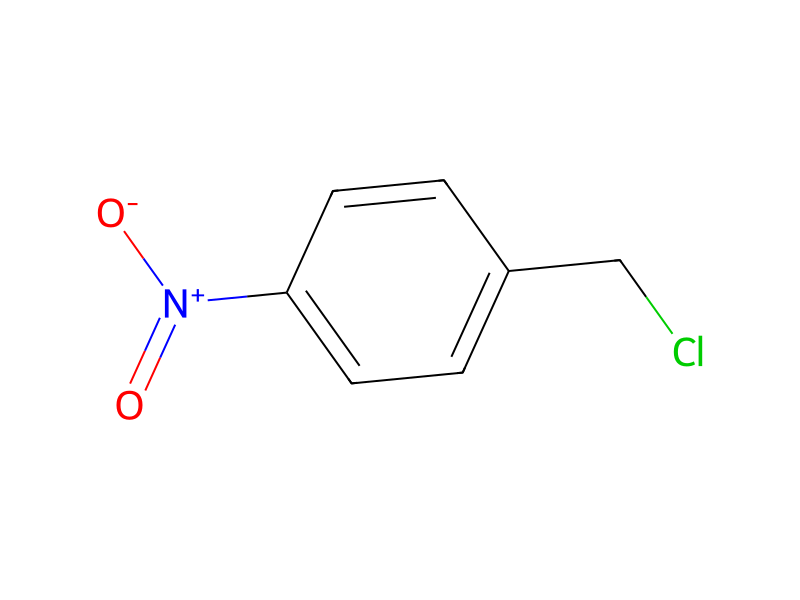
基本情報
- CAS
100-14-1- 標準SMILES
O=[N+]([O-])c1ccc(CCl)cc1- InChIKey
KGCNHWXDPDPSBV-UHFFFAOYSA-N- 分子式
- C7H6ClNO2
- 平均分子量
- 171.58 g/mol
- 単同位体質量
- 171.00870611
概要
Benzene, 1-(chloromethyl)-4-nitro- is a solid. (EPA, 1998)
名称と識別子
- 優先名称
- 4-Nitrobenzyl chloride
- IUPAC
- 1-(chloromethyl)-4-nitrobenzene
- 現地名
- 4-ニトロベンジル クロリド
- 英語名
- 4-Nitrobenzyl chloride
- 分子式
- C7H6ClNO2
- 分子量
- 171.58
名称と別名
4-Nitrobenzyl chloride100-14-11-(Chloromethyl)-4-nitrobenzenep-Nitrobenzyl chlorideBenzene, 1-(chloromethyl)-4-nitro-alpha-Chloro-p-nitrotoluenep-(Chloromethyl)nitrobenzene4-(Chloromethyl)nitrobenzeneDTXSID40257454-nitrophenylmethyl chlorideToluene, alpha-chloro-p-nitro-3BLD9LVT3X
名称をさらに表示
4-ニトロベンジル クロリド1-(クロロメチル)-4-ニトロベンゼン4-(クロロメチル)-1-ニトロベンゼン4-ニトロ-1-(クロロメチル)ベンゼン1-ニトロ-4-(クロロメチル)ベンゼンp-ニトロベンジルクロリド4-ニトロベンジルクロリドα-クロロ-p-ニトロトルエン1-クロロメチル-4-ニトロベンゼンα-クロロ-4-ニトロトルエン4-ニトロベンジルクロライド塩化P-ニトロベンジル1‐(クロロメチル)‐4‐ニトロベンゼンΑ‐クロロ‐P‐ニトロトルエン塩化4-ニトロベンジルp-nitrochlorideAKOS BBS-00003951NitrochlorobenzylNitrobenzylchlorideNitrobenzyl chloridà-chloro-4-nitrotolueneα-Chloro-4-nitrotoluene
BENZENE, 1-CHLOROMETHYL-4-NITRO-NSC-9803DTXCID105745CHEBI:87406para-nitrobenzyl chlorideRefChem:525941202-822-7alpha-Chloro-4-nitrotoluene
データベース識別子
- CAS
100-14-1- PubChem CID
- 7482
- DTXSID
DTXSID4025745- ChEMBL
CHEMBL176410- ChEBI
CHEBI:87406- UNII
- 3BLD9LVT3X
- EC Number
- 202-822-7
- Nikkaji
- J4.978F
物性
構造計算による物性
- XLogP
- 2.5
- 極性表面積
- 45.8 Ų
- 水素結合供与体数
- 0
- 水素結合受容体数
- 2
- 回転可能結合数
- 1
- 重原子数
- 11
- 形式電荷
- 0
- 複雑度
- 138
実験および物理化学的性質
Chemical ClassesNitrogen Compounds -> Nitros, Aromatic
SpringerMaterials PropertiesDensity
Density1.5647 (NTP, 1992) - Denser than water; will sink
Color/FormPlates or needles from alcohol
Solubility
Insoluble (NTP, 1992)
Sol in alcohol, ether, acetone, benzene
Boiling Point230 °C @760 [mm Hg]
Melting Point
159.8 °F (EPA, 1998)
71 °C
71 °C
Vapor Pressure0.05 [mm Hg] @25 °C
Refractive IndexIndex of refraction: 1.5647 at 62 °C
Physical Description
Benzene, 1-(chloromethyl)-4-nitro- is a solid. (EPA, 1998)
Plates or needles from alcohol; [HSDB]
Other Experimental PropertiesUV: 6794 (Sadtler Research Laboratories Spectral Collection) /Benzyl chloride, 2-nitro/
安全と法規制
安全情報は参考情報です。供給元の安全データシート(SDS)、適用法令、専門家による評価に代わるものではありません。
GHS分類
GHS Classification
Danger
H302 (100%): Harmful if swallowed [Warning Acute toxicity, oral]
P260, P264, P270, P280, P301+P317, P301+P330+P331, P302+P361+P354, P304+P340, P305+P354+P338, P316, P321, P330, P363, P405, and P501 (click each P-code to see the statement)
Aggregated GHS information provided per 48 reports by companies from 5 notifications to the ECHA C&L Inventory. Each notification may be associated with multiple companies.
Warning
H302: Harmful if swallowed [Warning Acute toxicity, oral]
危険有害性情報
Regulatory Information4-Nitrobenzyl chloride: Does not have an individual approval but may be used under an appropriate group standard
DOT LabelCorrosive
Fire HazardsIncompatible with sodium hydroxide. (EPA, 1998)
Health HazardsPoisonous if swallowed or dust is inhaled. (EPA, 1998)
Hazards SummaryPoisonous by ingestion and inhalation; [CAMEO] Corrosive; Causes burns; A lachrymator; May cause pneumonitis and pulmonary edema after inhalation of high concentrations; [MSDSonline]
Reactive GroupHalogenated Organic Compounds
Reactivity Profile
Incompatible with sodium hydroxide. [EPA, 1998]. A halogenated aromatic nitro compound. Aromatic nitro compounds range from slight to strong oxidizing agents. If mixed with reducing agents, including hydrides, sulfides and nitrides, they may begin a vigorous reaction that culminates in a detonation. The aromatic nitro compounds may explode in the presence of a base such as sodium hydroxide or potassium hydroxide even in the presence of water or organic solvents. The explosive tendencies of aromatic nitro compounds are increased by the presence of multiple nitro groups.
化学と産業
薬理情報
Metabolism/Metabolites4-nitrobenzyl chloride has known human metabolites that include 4-nitrobenzyl-glutathione and S-(4-Nitrobenzyl)glutathione.
用途と製造
U.S. Exports(1987) No Data
U.S. Imports(1987) No Data
U.S. Production(1987) No Data
General Manufacturing InformationBenzene, 1-(chloromethyl)-4-nitro-: ACTIVE
応用分野
用途有機合成原料 (NITE総合検索 (ACCESS ON JAN. 2011)
使用4-Nitrobenzyl chloride was used to prepare unsymmetrically N,N′-bis(substituted) 4,13-diaza-18-crown-6-ether derivatives.
一般的な説明Solid.
調製方法
Chlorination of 4-nitrotoluene at 190 ℃ without catalyst gives 4-Nitrobenzyl chloride. The alternative process of nitration of benzylchloride coproduces 2-nitrobenzyl chloride and requires a difficult separation stage.
純化方法Crystallise the chloride from CCl4, dry diethyl ether, or n-heptane, and dry it under vacuum. IRRITANT.[Beilstein 5 IV 856.]
上流・下流製品情報
下流製品
関連反応
145 件


化合物ノート
読み込み中…