ホームMCPワークベンチSkills
ホームワークベンチ通知マイページ
llms.txt · MCPガイドプライバシーポリシー · 利用規約 · サポートv1.8.0
  1. ホーム
  2. /化合物

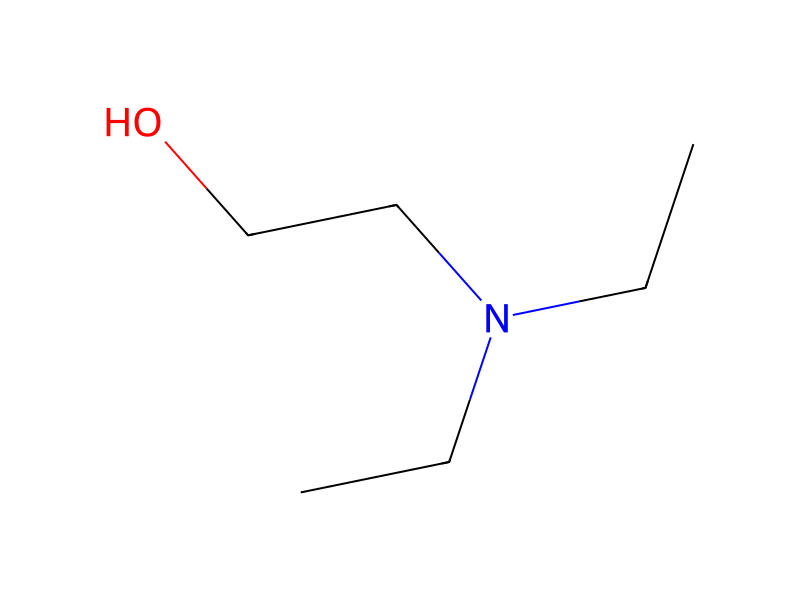
2-ジエチルアミノエタノール

Diethylethanolamine
HCID 7497
ノートを作成反応を作成見積依頼を出す
印刷プレビュー
基本情報概要名称と識別子物性安全と法規制化学と産業関連反応化合物ノート
部分構造検索類似構造を探す

基本情報

CAS
100-37-8
標準SMILES
CCN(CC)CCO
InChIKey
BFSVOASYOCHEOV-UHFFFAOYSA-N
分子式
C6H15NO
平均分子量
117.19 g/mol
単同位体質量
117.1153641

概要

2-diethylaminoethanol appears as a colorless liquid. Flash point 103-140 °F. Less dense than water. Vapors heavier than air. Produces toxic oxides of nitrogen during combustion. Causes burns to the skin, eyes and mucous membranes.

名称と識別子

優先名称
Diethylethanolamine
IUPAC
2-(diethylamino)ethanol
現地名
2-ジエチルアミノエタノール
英語名
Diethylaminoethanol
分子式
C6H15NO
分子量
117.19

名称と別名

2-(Diethylamino)ethanol2-Diethylaminoethanol100-37-8DIETHYLAMINOETHANOLDEAEDiethylethanolamine2-(Diethylamino)Ethan-1-OlN,N-Diethyl-2-aminoethanol(Diethylamino)ethanolEthanol, 2-(diethylamino)-DiethylmonoethanolamineDiethyl(2-hydroxyethyl)amine
名称をさらに表示
2-ジエチルアミノエタノール2-ヒドロキシエチルジエチルアミンデヒダサル2-(ジエチルアミノ)エタノール2-(N,N-ジエチルアミノ)エタノールデハイダサルジエチルエタノールアミンN,N-ジエチルエタノールアミンN,N-ジエチルエタノルアミンN,Nジエチルエタノルアミン(2-ヒドロキシエチル)ジエチルアミン2‐(ジエチルアミノ)エタノール2‐ジエチルアミノエタノール2 - ジエチルアミノエタノール2-(ジエチルアミノ)エタノ-ルDEEAN,N-DIETHYLETHANOLAMINE1-(diethylamino)ethanolN,N-DiethylaminoethanolDehydasalRotec A.O.
2-Hydroxytriethylamine(2-Hydroxyethyl)diethylaminePennad 1502-(N,N-Diethylamino)ethanolDiaethylaminoaethanolN,N-Diethylmonoethanolaminebeta-DiethylaminoethanolN,N-Diethyl-2-hydroxyethylamine

データベース識別子

CAS
100-37-8
PubChem CID
7497
DTXSID
DTXSID5021837
ChEMBL
CHEMBL1183
ChEBI
CHEBI:52153
UNII
S6DL4M053U
EC Number
202-845-2
Nikkaji
J4.982D

物性

構造計算による物性

XLogP
0.3
極性表面積
23.5 Ų
水素結合供与体数
1
水素結合受容体数
2
回転可能結合数
4
重原子数
8
形式電荷
0
複雑度
43.8

実験および物理化学的性質

Chemical Classes · 3 件

Nitrogen Compounds -> Ethanolamines

Flammable agents - 2nd degree

Industrial compound

SpringerMaterials PropertiesBoiling point
LogP · 2 件

0.46

0.31

Odor · 2 件

NAUSEATING ODOR

Nauseating, ammonia-like odor.

Food AdditivesBOILER WATER ADDITIVE -> FDA Substance added to food
Density · 6 件

0.8921 at 77 °F (USCG, 1999) - Less dense than water; will float

0.8921 @ 20 °C/4 °C

Relative density (water = 1): 0.88

0.89

0.8851 @ 20°C

0.89

Viscosity5 mPa-s at 20 °C
Color/Form · 2 件

COLORLESS LIQUID

Colorless liquid.

Solubility · 5 件

Very soluble (NTP, 1992)

SOL IN ALL PROPORTIONS IN WATER; SOL IN ALC, ETHER, ACETONE, BENZENE, PETROLEUM ETHER

1000000 mg/L @ 25 °C (exp)

Solubility in water: miscible

安全と法規制

安全情報は参考情報です。供給元の安全データシート(SDS)、適用法令、専門家による評価に代わるものではありません。

GHS分類

GHS Classification · 6 件

Danger

H226: Flammable liquid and vapor [Warning Flammable liquids]

P210, P233, P240, P241, P242, P243, P260, P261, P264, P270, P271, P280, P301+P317, P301+P330+P331, P302+P352, P302+P361+P354, P303+P361+P353, P304+P340, P305+P354+P338, P316, P317, P321, P330, P362+P364, P363, P370+P378, P403+P235, P405, and P501 (click each P-code to see the statement)

Danger

H226 (100%): Flammable liquid and vapor [Warning Flammable liquids]

P210, P233, P234, P240, P241, P242, P243, P260, P261, P262, P264, P264+P265, P270, P271, P280, P301+P317, P301+P330+P331, P302+P352, P302+P361+P354, P303+P361+P353, P304+P340, P305+P354+P338, P316, P317, P319, P321, P330, P361+P364, P362+P364, P363, P370+P378, P390, P403+P233, P403+P235, P405, P406, and P501 (click each P-code to see the statement)

危険有害性情報

Regulatory Information · 5 件

Chemical: Ethanol, 2-(diethylamino)-

Ethanol, 2-(diethylamino)- is listed on the EPA's Chemical Data Reporting (CDR) system. Manufacturers and importers of Ethanol, 2-(diethylamino)- are required to report information about their production and use of this chemical to the EPA under the Toxic Substances Control Act (TSCA). (40 eCFR Part 711)

REACH registered substance: 2-diethylaminoethanol (EC: 202-845-2)

2-Diethylaminoethanol: Does not have an individual approval but may be used under an appropriate group standard

The New Jersey Worker and Community Right to Know Act requires public and private employers to provide information about hazardous substances at their workplaces. (N.J.S.A. 34:5A-1 et. seq.)

Other Safety InformationIMAP assessments - Ethanol, 2-(diethylamino)-: Human health tier II assessment
DOT LabelCorrosive Flammable Liquid
Fire Hazards · 3 件

Special Hazards of Combustion Products: Toxic and irritating gases may be generated.

化学と産業

薬理情報

Biological Half-LifeThe biological half-life is 3.5 hr ... .
Metabolism/MetabolitesCHRONIC ORAL ADMIN ... TO RATS RESULTS IN LIVER ACCUM OF UP TO 60% OF THE DRUG. ... METABOLITES PRODUCED WERE DIETHYLAMINOETHANOL N-OXIDE, DIETHYLAMINOACETIC ACID & ETHYLAMINOETHANOL ... .
MeSH Pharmacological Classification · 1 件

Anti-inflammatory agents that are non-steroidal in nature. In addition to anti-inflammatory actions, they have analgesic, antipyretic, and platelet-inhibitory actions. They act by blocking the synthesis of prostaglandins by inhibiting cyclooxygenase, which converts arachidonic acid to cyclic endoperoxides, precursors of prostaglandins. Inhibition of prostaglandin synthesis accounts for their analgesic, antipyretic, and platelet-inhibitory actions; other mechanisms may contribute to their anti-inflammatory effects.

Absorption, Distribution and Excretion · 2 件

ORALLY ADMIN TO RATS, WAS MAINLY EXCRETED VIA KIDNEYS. ELIMINATED WITHIN FIRST 24 HR. AFTER 48 HR EXCRETED INDEPENDENTLY OF DOSE. AFTER 40 DAYS STILL BEING ELIMINATED. UP TO 60% ACCUMULATED IN LIVER. CNS & SPINAL CORD SHOWED HIGHEST CONCN AFTER 7 DAYS.

The absorption of 2-diethylaminoethanol (administered orally as 2-diethylaminoethanol acid malate or 'Cerebrol') in healthy adult rats is very rapid, reaching a peak plasma level in 30 min. The biological half-life is 3.5 hr with 39% of the excreted product appearing in the urine after 48 hr.

Cellular LocationsCytoplasm

用途と製造

Uses · 6 件

Used as an isocyanate curing agent; [Sullivan, Table 34-2, p. 471] Used as a chemical intermediate for pharmaceuticals, cosmetics, flocculants, emulsifiers, surface coatings, and other organic chemicals (in the chemical, agricultural, plastics, paper, and leather industries); [HSDB]

Pulp and Paper Processing [Category: Industry]

関連反応

111 件
反応記録を作成
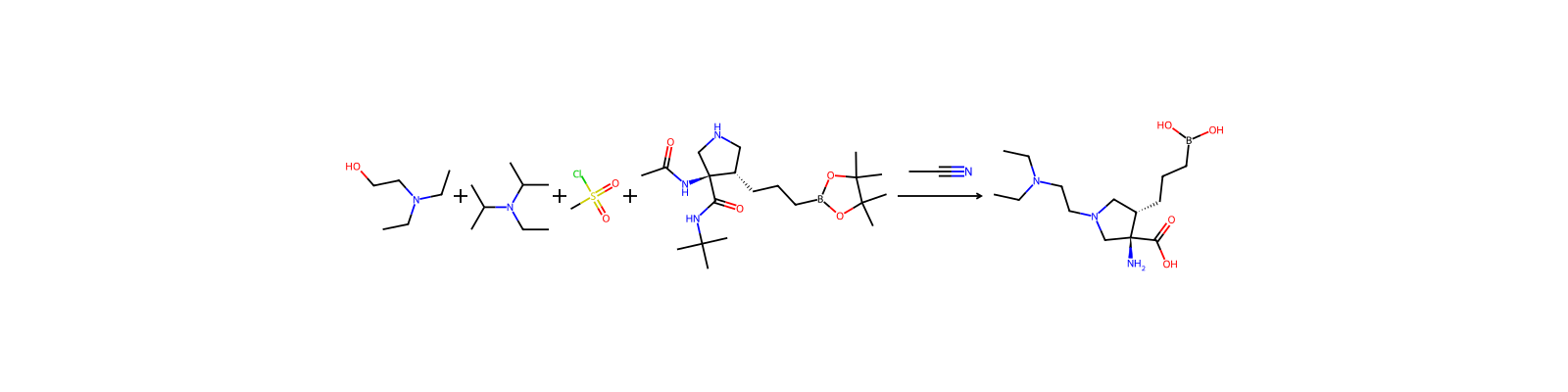
HRID 5511 の反応式
HRID 5511反応物としてuspto-grants-1993_09
HRID 15060 の反応式
HRID 15060反応物としてuspto-grants-2010_06
HRID 33724 の反応式
HRID 33724反応物としてuspto-grants-2008_09
HRID 61380 の反応式
HRID 61380反応物としてuspto-grants-2016_09
HRID 66798 の反応式
HRID 66798反応物としてuspto-grants-1982_08
HRID 132970 の反応式
HRID 132970反応物としてuspto-grants-2008_06
HRID 153820 の反応式
HRID 153820反応物としてTraining data from https://doi.org/10.1039/C8SC04228D (9/10)
HRID 170416 の反応式
HRID 170416反応物としてTraining data from https://doi.org/10.1039/C8SC04228D (9/10)
1 / 14 ページ

化合物ノート

読み込み中…

このページの内容基本情報概要名称と識別子物性安全と法規制化学と産業関連反応化合物ノート
その他の操作
ノートを作成反応を作成見積依頼を出す

Miscible

Flash Point · 6 件

140 °F (NTP, 1992)

49 °C

140 °F (OPEN CUP)

125 °F (closed cup)

52 °C c.c.

140 °F

Boiling Point · 6 件

325 °F at 760 mmHg (NTP, 1992)

163 °C @ 760 MM HG

163.00 °C. @ 760.00 mm Hg

163 °C

325 °F

162 °C @760 [mm Hg]

DecompositionWhen heated to decomposition it emits toxic fumes of /nitrogen oxides/.

物理化学的性質

融点
-70 °C · -70 °C
沸点
161 °C · 161 °C (lit.)
比重(密度)
0.884 g/mL · 0.884 g/mL at 25 °C (lit.)
蒸気密度
4.04 · 4.04 (vs air)
蒸気圧
1 mm · 1 mm Hg ( 20 °C)
屈折率
20 · n20/D 1.441(lit.)
闪点
120 °F · 120 °F
貯蔵温度
30 °C · Store below +30°C.
溶解性
溶ける
外見
結晶性粉末
酸解離定数(Pka)
14.74 · 14.74±0.10(Predicted)
色
白色~淡黄色
臭い (Odor)
特徴的なアンモニア臭
PH
11.5 · 11.5 (100g/l, H2O, 20℃)
爆発限界(explosive limit)
0.7 % · 0.7%(V)
水溶解度
溶ける
凝固点
-70 ℃ · -70℃
Merck
14 · 14,3112
BRN
741863 · 741863
Henry's Law Constant
5.9 · 5.9×100 mol/(m3Pa) at 25℃, Du et al. (2017)
安定性
安定。可燃性。強力な酸化剤、酸とは相容れない。湿気に敏感。吸湿性。
化粧品成分の機能
バッファリング
InChI
1S/C6H15NO/c1-3-7(4-2)5-6-8/h8H,3-6H2,1-2H3
InChIKey
BFSVOASYOCHEOV-UHFFFAOYSA-N
SMILES
N(CCO)(CC)CC
LogP
0.21 at · 0.21 at 23℃
表面張力
27.99 mN/m · 27.99mN/m at 293.15K
CAS データベース
100 · 100-37-8(CAS DataBase Reference)
NISTの化学物質情報
2 · Ethanol, 2-(diethylamino)-(100-37-8)
EPAの化学物質情報
Diethylaminoethanol (100-37-8)

化学的性質

化学的特性Colorless liquid with a nauseating, weak, ammonia odor; hygroscopic; very soluble in water; soluble in alcohol, ether acetone, benzene, and petroleum ether.

· Flammable/combustible material.

Flammable. Gives off irritating or toxic fumes (or gases) in a fire. Above 52 °C explosive vapour/air mixtures may be formed.

Fire PotentialFlammable; moderate fire hazard
Health Hazards · 2 件

INHALATION: Irritation of mucous membranes. EYES: Corrosive, causes intense pain. SKIN: Severe irritation. May cause allergic skin reaction. INGESTION: Gastrointestinal irritation. (USCG, 1999)

· May cause toxic effects if inhaled or ingested.

Hazards Summary · 1 件

Corrosive to skin; [Quick CPC] Possible cause of asthma; [Reference #1] Causes upper and lower respiratory tract irritation; Rats show signs of upper respiratory irritation with exposures above 120 mg/m3; [NIOSH Criteria Document] May cause allergic contact dermatitis; [CAMEO] Corrosive to the eyes; [ICSC]

DOT ID and Guide · 2 件

2686 132

2686 132

Reactive GroupAlcohols and Polyols
EC ClassificationSymbol: C; R: 10-20/21/22-34; S: (1/2)-25-26-36/37/39-45
UN ClassificationUN Hazard Class: 8; UN Subsidiary Risks: 3; UN Pack Group: II
OSHA StandardsPermissible Exposure Limit: Table Z-1 8-hr Time-Weighted Avg: 10 ppm (50 mg/cu m). Skin Designation.

安全と保護具

Fire Fighting · 2 件

Excerpt from ERG Guide 132 [Flammable Liquids - Corrosive]:

Use water spray, powder, alcohol-resistant foam, carbon dioxide. In case of fire: keep drums, etc., cool by spraying with water.

First Aid Measures · 4 件

Fresh air, rest. Artificial respiration may be needed. Refer for medical attention.

Remove contaminated clothes. Rinse skin with plenty of water or shower. Refer for medical attention .

First rinse with plenty of water for several minutes (remove contact lenses if easily possible), then refer for medical attention.

Rinse mouth. Give one or two glasses of water to drink. Do NOT induce vomiting. Refer for medical attention .

Accidental Release Measures · 2 件

· CALL 911. Then call emergency response telephone number on shipping paper. If shipping paper not available or no answer, refer to appropriate telephone number listed on the inside back cover.

· ELIMINATE all ignition sources (no smoking, flares, sparks or flames) from immediate area.

First Aid · 3 件

EYES: First check the victim for contact lenses and remove if present. Flush victim's eyes with water or normal saline solution for 20 to 30 minutes while simultaneously calling a hospital or poison control center. Do not put any ointments, oils, or medication in the victim's eyes without specific instructions from a physician. IMMEDIATELY transport the victim after flushing eyes to a hospital even if no symptoms (such as redness or irritation) develop.

General First Aid:

(General first aid procedures)

Safe StorageFireproof. Separated from strong oxidants and strong acids. Cool. Dry.
Exposure Control and Personal Protection · 2 件

· Wear positive pressure self-contained breathing apparatus (SCBA).

2.0 [ppm] (Ceiling = 5 ppm)[German Research Foundation (DFG)]

Fire Fighting Procedures · 2 件

Wear goggles, self-contained breathing apparatus and rubber overclothing (including gloves).

If material on fire or involved in fire: Do not extinguish fire unless flow can be stopped. Use water in flooding quantities as fog. Solid streams of water may be ineffective. Cool all affected containers with flooding quantities of water. Apply water from as far a distance as possible. Use "alcohol" foam, carbon dioxide or dry chemical.

Cleanup Methods · 2 件

Overspread sufficient sodium bisulfate and sprinkle water. Drain into the sewer with abundant water.

1. Remove all ignition sources. 2. Ventilate area of spill or leak. 3. For small quantities, absorb on paper towels. Evaporate in a safe place (such as a fume hood). Allow sufficient time for evaporating vapors to completely clear the hood ductwork. Burn the paper in a suitable location away from combustible materials. Large quantities can be reclaimed or collected and atomized in a suitable combustion chamber equipped with an appropriate effluent gas cleaning device. Diethylaminoethanol should not be allowed to enter a confined space, such as a sewer, because of the possibility of an explosion. Sewers designed to preclude the formation of explosive concentrations of diethylaminoethanol vapors are permitted.

Nonfire Spill ResponseExcerpt from ERG Guide 132 [Flammable Liquids - Corrosive]:
Disposal Methods · 2 件

SRP: At the time of review, criteria for land treatment or burial (sanitary landfill) disposal practices are subject to significant revision. Prior to implementing land disposal of waste residue (including waste sludge), consult with environmental regulatory agencies for guidance on acceptable disposal practices.

Drain into the sewer with abundant water. (a) Dissolve in a combustible solvent such as alcohols, etc. Burn in an open furnace by igniting from a safe distance with the utmost care or sprinkle into the fire chamber of the furnace with afterburner and scrubber. (b) Pour into sodium bisulfate in a large evaporating dish. Sprinkle water and neutralize. Drain into the sewer with sufficient water.

Spillage Disposal · 1 件

Personal protection: filter respirator for organic gases and vapours adapted to the airborne concentration of the substance. Collect leaking and spilled liquid in sealable containers as far as possible. Wash away remainder with plenty of water.

Preventive Measures · 5 件

SRP: The scientific literature for the use of contact lenses in industry is conflicting. The benefit or detrimental effects of wearing contact lenses depend not only upon the substance, but also on factors including the form of the substance, characteristics and duration of the exposure, the uses of other eye protection equipment, and the hygiene of the lenses. However, there may be individual substances whose irritating or corrosive properties are such that the wearing of contact lenses would be harmful to the eye. In those specific cases, contact lenses should not be worn. In any event, the usual eye protection equipment should be worn even when contact lenses are in place.

The worker should immediately wash the skin when it becomes contaminated.

Work clothing that becomes wet or significantly contaminated should be removed or replaced.

If material not on fire and not involved in fire: Keep sparks, flames, and other sources of ignition away. Build dikes to contain flow as necessary. Use water spray to knock-down vapors.

For more Preventive Measures (Complete) data for DIETHYLAMINOETHANOL (6 total), please visit the HSDB record page.

毒性情報

Target OrgansEyes, skin, respiratory system
Ecotoxicity Values · 1 件

LC50 Pimephales promelas (fathead minnow) 1780 mg/l/96 hr (95% confidence limit 1660-1920 mg/l), flow-through bioassay with measured concentrations, 24.9 °C, dissolved oxygen 6.5 mg/l, hardness 40.8 mg/l calcium carbonate, alkalinity 40.9 mg/l calcium carbonate, and pH 7.70

Adverse EffectsDermatotoxin - Skin burns.
Exposure Routes · 2 件

The substance can be absorbed into the body by inhalation, through the skin and by ingestion.

inhalation, skin absorption, ingestion, skin and/or eye contact

Signs and Symptoms · 5 件

Cough. Nausea. Sore throat. Vomiting. Dizziness.

MAY BE ABSORBED! Redness. Pain.

Redness. Pain. Blurred vision.

Abdominal pain. Diarrhoea.

irritation eyes, skin, respiratory system; nausea, vomiting

Medical Surveillance · 1 件

Employees should be screened for history of certain medical conditions which might place the employee at increased risk from diethylaminoethanol exposure. /These are/ chronic respiratory disease ... skin disease ... /and/ eye disease. ... Any employee developing the above-listed conditions should be referred for further medical examination.

Human Toxicity Excerpts · 5 件

/Diethylaminoethanol/ can also produce nausea and vomiting.

An attempt by a laboratory worker to remove animals from an inhalation chamber containing approx 100 ppm resulted in nausea and vomiting within 5 min after a fleeting exposure; no irritation of the eyes or throat was noted during this brief exposure. Other persons in the same room also complained of a nauseating odor but showed no ill effects.

Environmental samples were analyzed for diethylaminoethanol at the Johnson Museum, Cornell University, Ithaca, New York in January 1983. The survey was requested by the 40 employees because of eye irritation and dermatitis. Diethylaminoethanol was used to humidify the air in the museum. Air samples and bulk samples were analyzed for diethylaminoethanol. Medical interviews were conducted. Of the 14 samples taken, only 2 had detectable amounts of diethylaminoethanol. The two concentrations were 0.05 and 0.04 mg/cu m. This was below the OSHA standard of 50 mg/cu m. The two bulk samples contained about 30 mg per square meter of exposed area. A total of 46% of the employees complained of eye irritation, 37% complained of skin irritation, and 17% complained of headache, nose and throat irritation, or dizziness. Six females reported gynecological problems. /It was/ concluded that contact with surfaces coated with condensed diethylaminoethanol may be responsible for some of the irritant effects. It is recommended that diethylaminoethanol be wiped from surfaces, or the use of diethylaminoethanol be discontinued.

In response to a request from a management representative an evaluation was made of an outbreak of illness at a /electronics manufacturing plant/ located in Cincinnati, Ohio. The company manufactured electrical circuit boards and electrical equipment for the commercial and defense industries. In September of 1988 two boilers were prepared for operation by adding corrosion inhibitinq chemicals, diethylaminoethanol and cyclohexylamine. Steam produced by the boilers was used for humidity in the work area. Symptoms consistent with acute toxic effects of diethylaminoethanol and cyclohexylamine were noted in 65 of the employees. These included nausea, dizziness, vomiting, and eye, nose, and throat irritation. A significantly higher risk of having several symptoms was noted among the employees in the areas humidified with boiler steam than among employees in the nonboiler steam humidified areas. Employee exposures to metals from solder fumes and methyl-ethyl-ketone were all below established-limits. There was friable asbestos insulation exposed on one boiler. /It was/ concluded that the exposures to the two corrosion inhibiting chemica1s were responsible for the workers' symptoms.

On March 23, 1981, the National Institute for Occupational Safety and Health (NIOSH) received a request for a Health Hazard Evaluation from Boehring Ingelheim, Ltd, Ridgefield, Connecticut. The request stated that approximately 15 employees in the office support area of a production building had been experiencing rashes since the beginning of March 1981. Environmental samplinq did not reveal any diethylaminoethanol in air samples. However, results of sampling suggested the presence of a conjugated amine which possesses acidic properties. The specific agent could not be identified. Skin examinations revealed an irritant-type rash on the exposed areas of the face neck and hands. The distribution of the rash was consistent with and suggestive of a phototoxic skin reaction. Both the environmental and medical evaluations indicated the source of the dermatitis to be the air-handling system. However, no specific etiologic agent has been identified. The information in the body of the fu11 report suggests that a condensation or reaction product of diethylaminoethanol was likely responsible for the reported symptoms.

Non-Human Toxicity Excerpts · 5 件

... EYE INJURY FROM THE FLUID /IS/ VERY SEVERE IN RABBIT FROM 0.005 ML UNDILUTED, SEVERE FROM 15% OR MORE IN GLYCOL & NOT SEVERE FROM 5% IN GLYCOL.

... REPEATED, DAILY INHALATION EXPOSURES OF RATS @ 500 PPM (+ OR -10%) REVEALED MARKED EYE & NASAL IRRITATION ON THE FIRST EXPOSURE DAY. MILD TREMORS OF THE HEAD & FORELEGS CONTINUED THROUGHOUT THE 5-DAY EXPOSURE PERIOD. CORNEAL OPACITY WAS OBSERVABLE IN A NUMBER OF THE RATS BY THE THIRD DAY, & BY THE FIFTH EXPOSURE 4 OF 20 ANIMALS HAD DIED. ALL ANIMALS LOST 40 TO 80 G. AUTOPSY SHOWED ACUTE PURULENT BRONCHITIS, AND BRONCHOPNEUMONIA BUT NO OTHER ORGAN INVOLVEMENT.

... EXPOSURES @ 200 PPM (+ OR - 5%) RESULTED IN WEIGHT LOSS & EVENTUAL DEATH OF 7 OF THE 50 RATS EXPOSED BY ONE MONTH. BRONCHOPNEUMONIA WAS APPARENT CAUSE OF DEATH. AT THE END OF THREE MONTHS, APPARENT ADAPTATION OCCURRED, AS NO CLINICAL VARIABLES THAT WERE MEASURED DIFFERED FROM THE CONTROLS; SIMILAR FINDINGS WERE MADE AT THE END OF SIX MONTHS. HISTOPATHOLOGIC EXAMINATION REVEALED THAT CONTROL AND EXPOSED ANIMAL TISSUES WERE NOT SIGNIFICANTLY DIFFERENT.

DIETHYLAMINOETHANOL BLOCKED IMPULSE CONDUCTION IN FROG SCIATIC NERVES, BUT HAD NO LOCAL ANESTHETIC EFFECT ON RABBIT CORNEA.

For more Non-Human Toxicity Excerpts (Complete) data for DIETHYLAMINOETHANOL (13 total), please visit the HSDB record page.

Populations at Special Risk · 1 件

In persons with impaired pulmonary function, especially those with obstructive airway diseases, the breathing of diethylaminoethanol might cause exacerbation of symptoms due to its irritant properties. ... Persons with pre-existing skin disorders may be more susceptible to the effects of this agent. ... Those with pre-existing eye problems may be at increased risk from exposure.

Toxicity DataLCLo (rat) = 4,500 mg/m3/4H
Non-Human Toxicity Values · 5 件

LD50 Rabbit skin 1,260 mg/kg

LD50 Guinea pig skin 1,000 mg/kg

LD50 Rat oral 1,300 mg/kg

LD50 Rat ip 1,220 mg/kg

For more Non-Human Toxicity Values (Complete) data for DIETHYLAMINOETHANOL (7 total), please visit the HSDB record page.

安全データ

OEB
A
OEL
TWA: 10 ppm (50 mg/m3) [skin]
wgk
1
IDLA
100 ppm
tsca
TSCA listed
rtecs
KK5075000
ridadr
UN 2686
毒性
LD50 orally in Rabbit: 1300 mg/kg LD50 dermal Rabbit 1109 mg/kg
PRTR法
第一種指定化学物質
hs_code
29221985
risk_code
10-20/21/22-34
化審法
(2)-297, (2)-353
安衛法
57,57-2
消防法
危-4-2-III
hazard_code
C
safety_code
25-26-36/37/39-45
hazard_class
8
packing_group
II
毒劇物取締法
劇物
自然発火温度
270 °C
Hazard Classifications
Acute Tox. 3 DermalAcute Tox. 3 InhalationAcute Tox. 4 OralFlam. Liq. 3Skin Corr. 1B
ストレージクラス
3 - Flammable liquids
有毒物質データの
100-37-8(Hazardous Substances Data)
危険度評価(NFPA 704基準/消防庁データ)
人的[青]=4 火災[赤]=2

MFR OF EMULSIFYING AGENTS AND SPECIAL SOAPS

CHEM INT FOR PETROLEUM & GAS PROCESSING CHEMS, COSMETICS, SURFACE COATINGS, TEXTILES & FIBERS, PROCAINE, CHLOROQUINE

WATER-SOL SALTS; FATTY ACID DERIVATIVES; TEXTILES SOFTNERS; PHARMACEUTICALS; ANTIRUST COMPOSITIONS; EMULSIFYING AGENTS IN ACID MEDIA; DERIVATIVES CONTAINING TERTIARY AMINE GROUPS; CURING AGENT FOR RESINS

Intermediate in production of pharmaceuticals, crop protection agents, and flocculants. Preparation of chemicals for the paper and leather industries; production of plastics.

U.S. Production2023: 10,000,000 - <50,000,000 lb
Consumption PatternsAnnual worldwide demand is more than 1,000 tons
Consumer UsesNot Known or Reasonably Ascertainable
Industry UsesIntermediate
Methods of Manufacturing · 2 件

... BY ACTION OF ETHYLENE CHLOROHYDRIN ON DIETHYLAMINE

... BY ACTION OF ETHYLENE OXIDE ON DIETHYLAMINE

Formulations/Preparations · 3 件

National Starch and Chemical Liquid Grade

GRADE: TECHNICAL

Specification: 99% min purity

Household ProductsInformation on 26 consumer products that contain 2-Diethylaminoethanol in the following categories is provided:
General Manufacturing Information · 2 件

Utilities

Ethanol, 2-(diethylamino)-: ACTIVE

応用分野 · 4 件

用途抗ヒスタミン剤、抗マラリヤ剤

用途均染剤(繊維用)及び????化剤(紙加工用)の合成原料、医薬品原料、乳化剤(????添加用)、防錆剤。

使用Water-soluble salts; textile softeners; antirust formulations; fatty acid derivatives; pharmaceuticals; curing agent for resins; emulsifying agents in acid media; organic synthesis.

一般的な説明A colorless liquid. Flash point 103-140°F. Less dense than water . Vapors heavier than air. Produces toxic oxides of nitrogen during combustion. Causes burns to the skin, eyes and mucous membranes.

調製方法 · 1 件

2-Diethylaminoethanol (DEAE) is a tertiary amine produced by reaction of ethylene oxide or ethylene chlorhydrin and diethylamine (RTECS 1988). Itokazu (1987) has modified this process for manufacture of DEAE without eventual discoloration. Production in this country exceeds 2866 pounds per year (HSDB 1988).

上流・下流製品情報

上流原料

ジエチルアミン2-クロロエタノール

下流製品

オキシブプロカイン塩酸塩2-(ジエチルアミノ)エチルクロリド塩酸塩メタクリル酸2-(ジエチルアミノ)エチル2-diethylaminoethyl 4-nitrobenzoateエタンシラートpolyurethane adhesive 691シュウ酸ナフロニル2-(2-ジエチルアミノエトキシ)エタノールナフチドロフリル1-フェニル-1-シクロペンタンカルボン酸2-(ジエチルアミノ)エチルプロカイン2,2-ジフェニル吉草酸2-(ジエチルアミノ)エチルオチロニウムブロミド3-オキソ-2-[2-(ジエチルアミノ)エチル]酪酸エチルα-[4-[2-(ジエチルアミノ)エトキシ]フェニル]-α-フェニルベンゼンエタノール2-(ジエチルアミノ)エチルブロミド臭化水素酸塩プロペン酸2-(ジエチルアミノ)エチル2-(ジエチルアミノ)エタン-1-チオール
補足説明 · 2 件

定義本品は、次の化学式で表されるアミン誘導体である。

定義ChEBI: 2-diethylaminoethanol is a member of the class of ethanolamines that is aminoethanol in which the hydrogens of the amino group are replaced by ethyl groups. It is a member of ethanolamines, a tertiary amino compound and a primary alcohol. It derives from an ethanolamine. It derives from a hydride of a triethylamine.