ホームMCPワークベンチSkills
ホームワークベンチ通知マイページ
llms.txt · MCPガイドプライバシーポリシー · 利用規約 · サポートv1.8.0
  1. ホーム
  2. /化合物

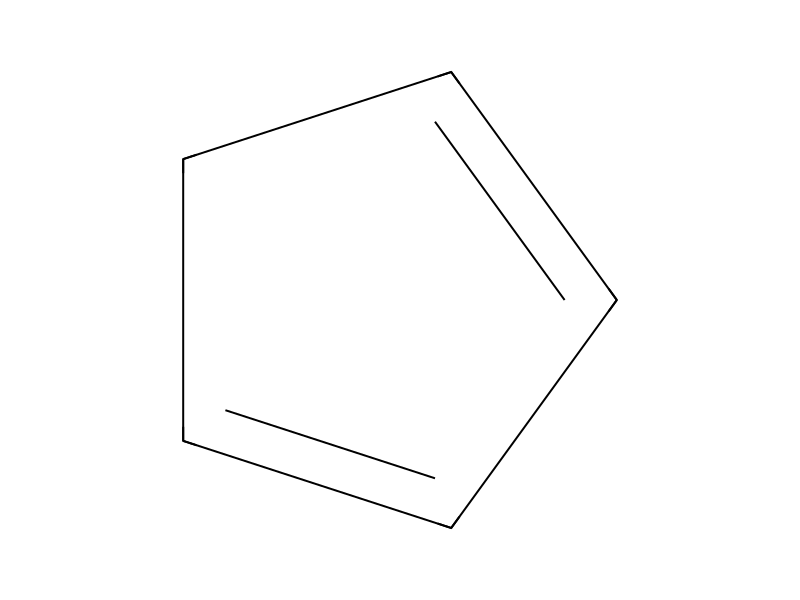
シクロペンタジエン

Cyclopentadiene

HCID 7612
ノートを作成反応を作成見積依頼を出す
印刷プレビュー

データを補完しています。しばらくしてからページを更新すると最新の内容を表示できます
基本情報概要名称と識別子物性安全と法規制化学と産業関連反応化合物ノート
部分構造検索類似構造を探す

基本情報

CAS
542-92-7
標準SMILES
C1=CCC=C1
InChIKey
ZSWFCLXCOIISFI-UHFFFAOYSA-N
分子式
C5H6
平均分子量
66.1 g/mol
単同位体質量
66.04695019

概要

Cyclopentadiene is a colorless liquid with an irritating, terpene-like odor. Bp: 42.5 °C; Flash point: 77 °F. Density: 0.805 g cm-3.

名称と識別子

優先名称
Cyclopentadiene
IUPAC
cyclopenta-1,3-diene
現地名
シクロペンタジエン
英語名
1,3-Cyclopentadiene
分子式
C5H6
分子量
66.1

名称と別名

Cyclopentadiene1,3-CYCLOPENTADIENEcyclopenta-1,3-diene542-92-7PyropentylenePentoleR-PentineDTXSID00271915DFH9434HFDTXCID007191CHEBI:30664RefChem:5721
名称をさらに表示
ペントール1,3-シクロペンタジエンシクロペンタ-1,3-ジエンピロペンチレン2,4-シクロペンタジエンR-ペンチン1,3シクロペンタジエンシクロペンタジエンJACS-542-92-72,4-Cyclopentadiene1,3-Cyclopentadiene542-92-7 Cyclopentadiene1,3-Cyclopentadiene 542-92-7 Cyclopentadiene
208-835-426912-33-4HSDB 2514EINECS 208-835-4cyclopentadienUNII-5DFH9434HFcyclo pentadienecyclo-pentadiene

データベース識別子

CAS
542-92-7
PubChem CID
7612
DTXSID
DTXSID0027191
ChEMBL
CHEMBL3188826
ChEBI
CHEBI:30664
UNII
5DFH9434HF
EC Number
208-835-4
Nikkaji
J1.603I

物性

構造計算による物性補完中

XLogP
1.8
極性表面積
0 Ų
水素結合供与体数
0
水素結合受容体数
0
回転可能結合数
0
重原子数
5
形式電荷
0
複雑度
58.1

実験および物理化学的性質

Chemical Classes · 2 件

Other Classes -> Aliphatics, Unsaturated

Flammable agents - 3rd degree

SpringerMaterials PropertiesCoriolis coupling
Odor · 2 件

MONOMERIC FORM HAS TERPENE ODOR IN VAPOR STATE

Irritating terpene-like odor

Density · 5 件

0.8 (NIOSH, 2024) - Less dense than water; will float

0.8021 g/cu cm at 20 °C

Relative density (water = 1): 0.8

0.80

0.80

Color/FormColorless liquid
Solubility · 6 件

Insoluble (NIOSH, 2024)

In water, 1,800 mg/L at 25 °C

Miscible with carbon tetrachloride; soluble in carbon disulfide, aniline, acetic acid, liquid petrolatum

Soluble in acetone; miscible with ethanol, ethyl ether, benzene

Solubility in water: insoluble

Insoluble

Flash Point · 6 件

77 °F (NIOSH, 2024)

77 °F

77 °F (OPEN CUP)

-20 °C

77 °F (open cup)

(oc) 77 °F

Boiling Point · 5 件

安全と法規制

安全情報は参考情報です。供給元の安全データシート(SDS)、適用法令、専門家による評価に代わるものではありません。

GHS分類

GHS Classification · 6 件

Danger

H225 (28.2%): Highly Flammable liquid and vapor [Danger Flammable liquids]

P210, P233, P240, P241, P242, P243, P261, P262, P264, P264+P265, P270, P271, P280, P301+P316, P302+P352, P303+P361+P353, P304+P340, P305+P351+P338, P316, P317, P319, P321, P330, P332+P317, P337+P317, P361+P364, P362+P364, P370+P378, P403+P233, P403+P235, P405, and P501 (click each P-code to see the statement)

Aggregated GHS information provided per 372 reports by companies from 9 notifications to the ECHA C&L Inventory. Each notification may be associated with multiple companies.

Danger

H225: Highly Flammable liquid and vapor [Danger Flammable liquids]

危険有害性情報

Regulatory Information · 6 件

Chemical: 1,3-Cyclopentadiene

1,3-Cyclopentadiene is listed on the EPA's Chemical Data Reporting (CDR) system. Manufacturers and importers of 1,3-Cyclopentadiene are required to report information about their production and use of this chemical to the EPA under the Toxic Substances Control Act (TSCA). (40 eCFR Part 711)

SP - indicates a substance that is identified in a proposed Significant New Use Rule.

Status: Active Update: 27-04-2023 https://echa.europa.eu/registration-dossier/-/registered-dossier/34854

Cyclopentadiene: Does not have an individual approval but may be used under an appropriate group standard

The New Jersey Worker and Community Right to Know Act requires public and private employers to provide information about hazardous substances at their workplaces. (N.J.S.A. 34:5A-1 et. seq.)

DOT LabelFlammable Liquid
Fire Hazards · 2 件

Excerpt from ERG Guide 128 [Flammable Liquids (Water-Immiscible)]:

Flammable. Above 25 °C explosive vapour/air mixtures may be formed. Risk of fire and explosion on contact with incompatible substances. See Chemical Dangers.

Fire Potential

化学と産業

薬理情報

Absorption, Distribution and Excretion · 2 件

Routes of Entry: Inhalation, ingestion, skin and/or eye contact.

The substance can be absorbed into the body by inhalation.

用途と製造

Uses · 3 件

Used in resin manufacturing and other organic syntheses; [ACGIH]

Manufacturing resins; in organic synthesis as the diene in Diels-Alder reaction producing sesquiterpenes, synthetic alkaloids, camphors.

Starting material for synthetic prostaglandins; chlorinated insecticides; formation of sandwich compounds by chelation, for example, cyclopentadienyl iron dicarbonyl dimer.

U.S. Production · 6 件

2023: 1,000,000 - <5,000,000 lb

(1984) 4.39X10+10 g

1,3-Cyclopentadiene is listed as a High Production Volume (HPV) chemical (65FR81686). Chemicals listed as HPV were produced in or imported into the U.S. in >1 million pounds in 1990 and/or 1994. The HPV list is based on the 1990 Inventory Update Rule. (IUR) (40 CFR part 710 subpart B; 51FR21438).

Production volumes for non-confidential chemicals reported under the Inventory Update Rule.[Table#3936]

Production volume for non-confidential chemicals reported under the 2006 Inventory Update Rule. Chemical: 1,3-Cyclopentadiene. Aggregated National Production Volume: 1 to < 10 million pounds.

Non-confidential 2014 Chemical Data Reporting (CDR) information on the production and use of chemicals manufactured or imported into the United States. Chemical: 1,3-Cyclopentadiene. National Production Volume: 510,714 lb/yr.

Consumption PatternsHydrocarbon resin systems, 50%; Unsaturated polyester resins, 27%; EPDM elastomers, 13%; Miscellaneous, including chemical synthesis, flame retardants, pesticides and agricultural chemicals, 10% (1984)
Consumer UsesIntermediate
Industry UsesMonomers

関連反応

356 件
反応記録を作成
HRID 3619 の反応式
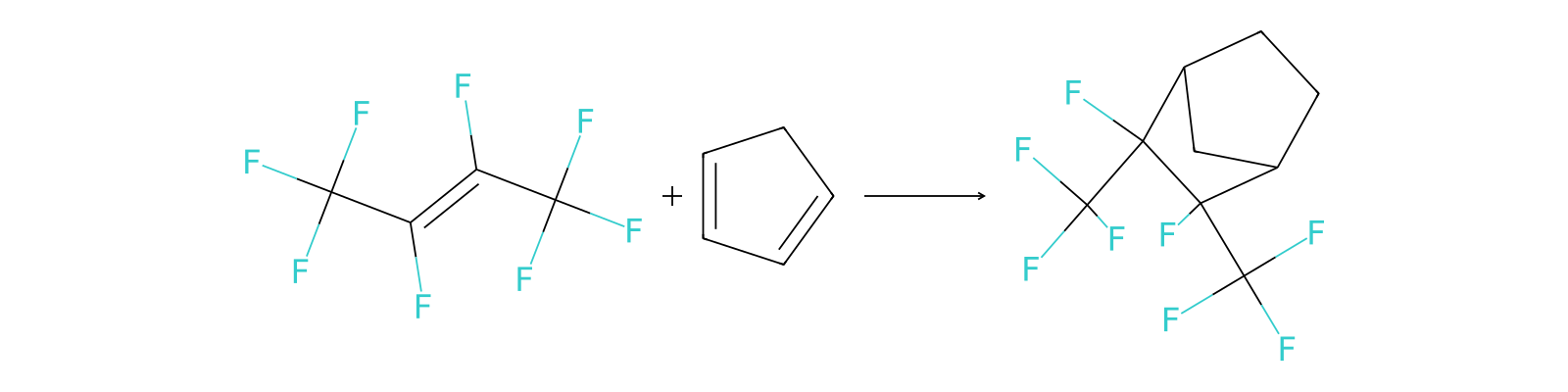
HRID 3619反応物としてuspto-grants-1998_03
HRID 27054 の反応式
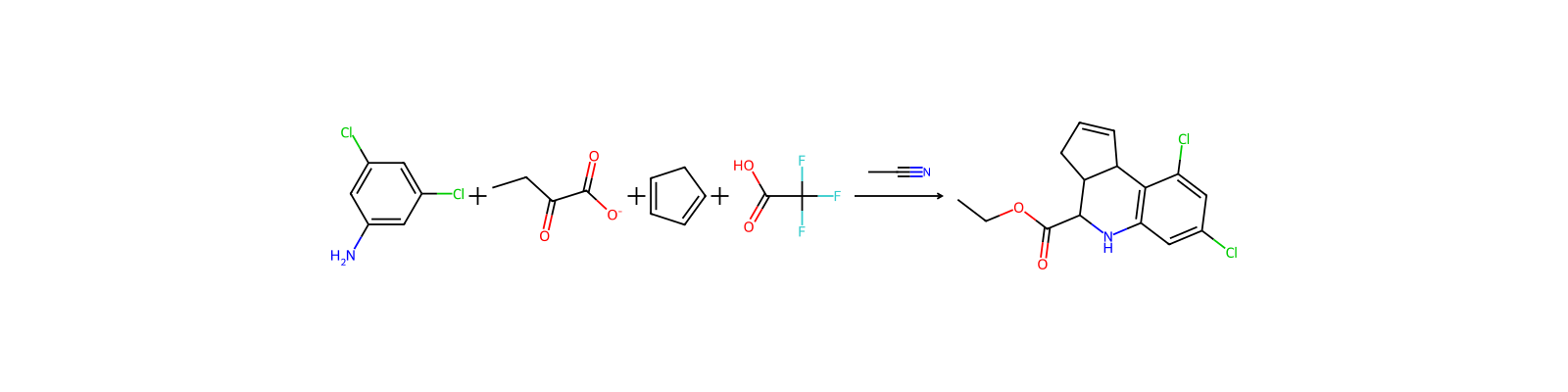
HRID 27054反応物としてuspto-grants-1980_09
HRID 27055 の反応式
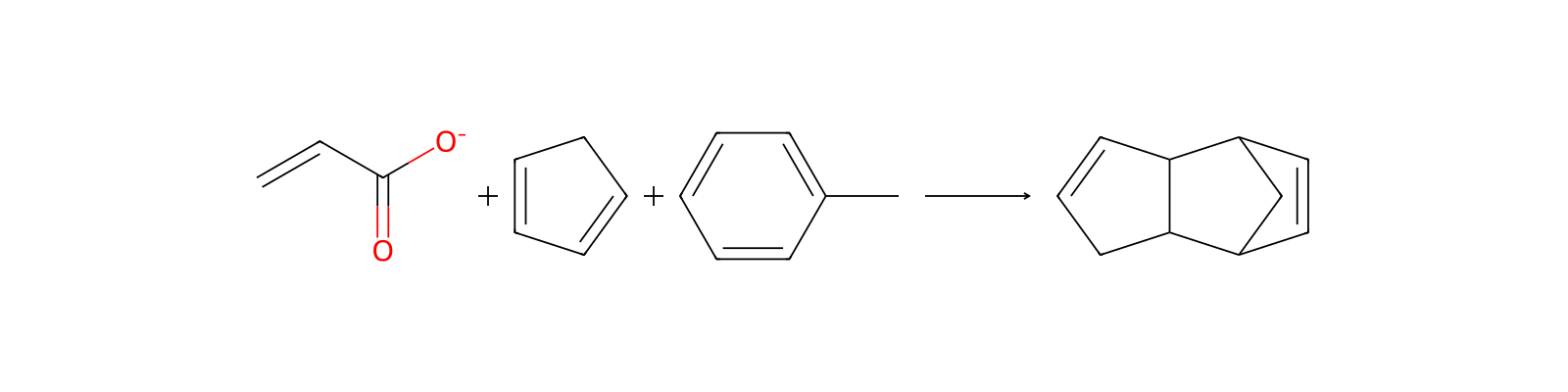
HRID 27055反応物としてuspto-grants-1980_09
HRID 47361 の反応式
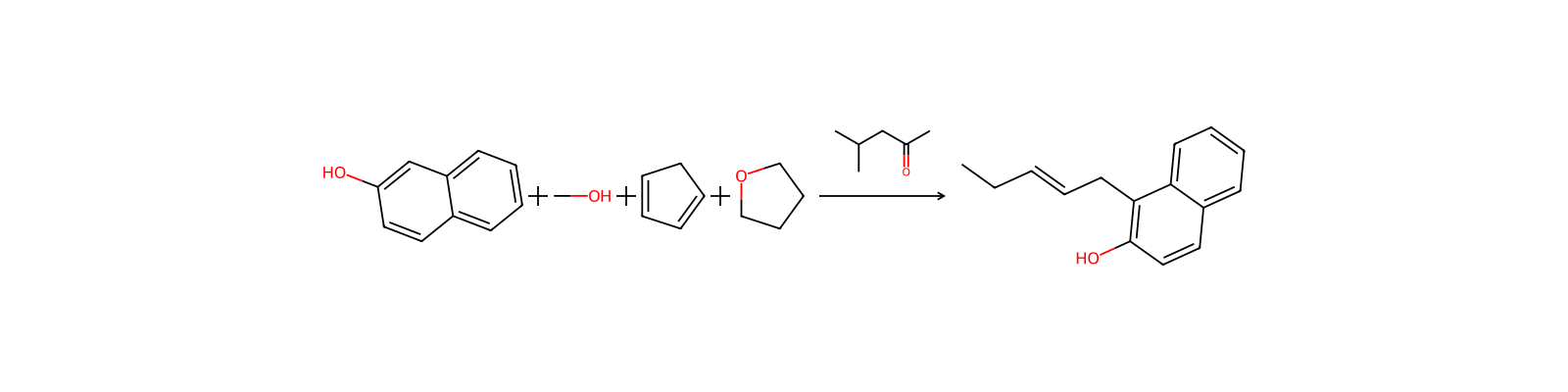
HRID 47361反応物としてuspto-grants-2004_03
HRID 47363 の反応式
HRID 47363反応物としてuspto-grants-2004_03
HRID 50132 の反応式
HRID 50132反応物としてuspto-grants-2004_03
HRID 51171 の反応式
HRID 51171反応物としてuspto-grants-2004_03
HRID 51519 の反応式
HRID 51519反応物としてuspto-grants-2004_03
1 / 45 ページ

化合物ノート

読み込み中…

このページの内容基本情報概要名称と識別子物性安全と法規制化学と産業関連反応化合物ノート
その他の操作
ノートを作成反応を作成見積依頼を出す

107 °F at 760 mmHg (NIOSH, 2024)

41 °C

41.5-42.0 °C

107 °F

107 °F

Decomposition · 2 件

When heated to decomposition it emits acrid smoke and irritating fumes.

It decomposes violently at high temperatures and pressures.

Melting Point · 5 件

-121 °F (NIOSH, 2024)

-95.54 °C

-85 °C

-121 °F

-121 °F

Vapor Density · 2 件

(AIR= 1) AT BOILING POINT OF CYCLOPENTADIENE 2.3

Relative vapor density (air = 1): 2.3

Odor Threshold · 2 件

Odor Threshold Low: 1.8 [ppm]

Low Threshold= 5.0 mg/cu m; High threshold= 5.0 mg/cu m.

物理化学的性質

融点
-85 °; · -85°; mp 32.5°
沸点
760 · bp760 41.5-42.0°
比重(密度)
40 · d40 0.8235; d410 0.8131; d420 0.8021; d425 0.7966; d430 0.7914
蒸気圧
381 at · 381 at 20.6 °C, 735 at 40.6 °C, 1,380 at 60.9 °C (Stoeck and Roscher, 1977)
屈折率
16 · nD16 1.44632
溶解性
アセトン、ベンゼン、四塩化炭素、エーテルと混和します。酢酸、アニリン、二硫化炭素に可溶 (Windholz et al., 1983)。
酸解離定数(Pka)
16 · 16(at 25℃)
外見
無色の液体
水溶解度
10.3 mM、25°C · 10.3 mM、25°C (振とうフラスコ-UV 分光光度法、Streitwieser および Nebenzahl、1976)
Henry's Law Constant
5.1 at · 5.1 at 25 °C (approximate - calculated from water solubility and vapor pressure)
安定性
室温で安定で、酸化剤、酸、その他多くの化合物と相溶しません。密閉型酸素貯蔵庫。
InChI
InChI=1S/C5H6/c1-2-4-5-3-1/h1-4H,5H2
InChIKey
ZSWFCLXCOIISFI-UHFFFAOYSA-N
SMILES
C1C=CC=C1
EPAの化学物質情報
Cyclopentadiene (542-92-7)

化学的性質

化学的特性1,3-Cyclopentadiene is a colorless liquid that dimerizes easily in the presence of peroxides and trichloroacetic acid to a colorless solid.

化学性质沸点41℃の揮発性液体であるが,室温付近で容易に二量化し,沸点170℃のジシクロペンタジエン(DCPD)として存在する。

A dangerous fire hazard when exposed to heat or flame.
Health HazardsExcerpt from NIOSH Pocket Guide for Cyclopentadiene:
Hazards Summary · 1 件

Cyclopentadiene causes narcosis and liver injury in animal experiments. It has an irritating odor that is objectionable to workers. [ACGIH, 1987] A skin, eye, and respiratory tract irritant; [ICSC]TLV and Documentation withdrawn; . . . Since cyclopentadiene (CPD) dimerizes into DCPD [Dicyclopentadiene], we recommended using the TLV for DCPD if CPD is of concern. There is little information available on the toxicity of CPD. [ACGIH, 2019] See Dicyclopentadiene.

Reactive GroupHydrocarbons, Aliphatic Unsaturated
UN ClassificationUN Hazard Class: 3; UN Pack Group: III
TSCA Requirements · 2 件

Section 8(a) of TSCA requires manufacturers of this chemical substance to report preliminary assessment information concerned with production, exposure, and use to EPA as cited in the preamble in 51 FR 41329. Effective date: 8/4/95; Reporting date: 10/3/95.

Pursuant to section 8(d) of TSCA, EPA promulgated a model Health and Safety Data Reporting Rule. The section 8(d) model rule requires manufacturers, importers, and processors of listed chemical substances and mixtures to submit to EPA copies and lists of unpublished health and safety studies. Cyclopentadiene is included on this list. Effective date: 8/4/95; Sunset date: 6/30/98.

Reactivity AlertsHighly Flammable
OSHA StandardsPermissible Exposure Limit: Table Z-1 8-hr Time Weighted Avg: 75 ppm (200 mg/cu m).
Reactivity Profile · 1 件

CYCLOPENTADIENE is incompatible with strong oxidizing agents. Ignites on contact with oxygen (O2) and ozone (O3). Explodes on contact with fuming nitric acid or a mixture of sulfuric acid and nitrogen tetroxide. Reacts vigorously on contact with potassium hydroxide and other strong bases. Mixtures with air are explosive. Presents a moderate explosion hazard when exposed to heat or flame. Decomposes violently at high temperature and pressure. May form explosive peroxides in storage. Undergoes a spontaneous dimerization at room temperature to give DICYCLOPENTADIENE (C10H12, CAS No: 77-73-6), which is a low-melting solid (melting point: 32.5 °C). The reaction is strongly exothermic (Hazardous Chemicals Desk Reference, p. 360 (1987)), but occurs sufficiently slowly that cyclopentadiene can be said to be stable at room temperature. The dimerization accounts for the partial or complete solidification of liquid cyclopentadiene in storage. Polymerization occurs more rapidly and extensively at higher temperatures. When heated to 180-200 °C, cyclopentadiene gives polycyclopentadiene, a white waxy solid. Stronger heating breaks down polycyclopentadiene and re-generates the monomeric cyclopentadiene as a vapor. The vapor decomposes violently at higher temperatures and pressures.

安全と保護具

Fire Fighting · 2 件

Excerpt from ERG Guide 128 [Flammable Liquids (Water-Immiscible)]:

Use powder, foam, carbon dioxide. In case of fire: keep drums, etc., cool by spraying with water.

First Aid Measures · 4 件

Fresh air, rest. Refer for medical attention.

Remove contaminated clothes. Rinse and then wash skin with water and soap.

First rinse with plenty of water for several minutes (remove contact lenses if easily possible), then refer for medical attention.

Rinse mouth. Seek medical attention if you feel unwell.

First Aid · 2 件

Excerpt from NIOSH Pocket Guide for Cyclopentadiene:

(General first aid procedures)

Safe StorageFireproof. Store only if stabilized. Cooled. Separated from incompatible materials. See Chemical Dangers.
Firefighting HazardsThe vapor is heavier than air ... A harmful contamination of the air can be reached rather quickly on evaporation of this substance at 20 °C.
Fire Fighting Procedures · 2 件

Powder, aqueous film-forming foams (AFFF), foam, carbon dioxide ... Keep drums, etc, cool by spraying with water.

Dry chemical, carbon dioxide, foam

Storage Conditions · 3 件

A harmful contamination of the air can be reached rather quickly on evaporation of this substance at 20 °C.

Fireproof. Separated from strong oxidants, strong acids, potassium hydroxide. Cooled. Store only if stabilized.

Monomer may largely be prevented from dimerizing by storage at -80 °C or below.

Cleanup Methods · 2 件

Collect leaking and spilled liquid in sealable containers as far as possible. Absorb remaining liquid in sand or inert absorbent and remove to safe place (extra personal protection: self-contained breathing apparatus).

1. Remove ... ignition sources. 2. Ventilate area of spill. ... 3. For small quantity, allow material to dimerize, collect on paper or other material. Evaporate in safe place (such as fume hood). Allow sufficient time for evaporating vapors to completely clear hood ductwork. Burn paper in suitable location. ... 3. Large quantities may be reclaimed or dissolved in appropriate solvent & atomized in suitable combustion chamber. ... Should not be allowed to enter confined space, such as sewer, because of possibility of an explosion.

Nonfire Spill ResponseExcerpt from ERG Guide 128 [Flammable Liquids (Water-Immiscible)]:
Disposal Methods · 3 件

SRP: The most favorable course of action is to use an alternative chemical product with less inherent propensity for occupational harm/injury/toxicity or environmental contamination. Recycle any unused portion of the material for its approved use or return it to the manufacturer or supplier. Ultimate disposal of the chemical must consider: the material's impact on air quality; potential migration in soil or water; effects on animal and plant life; and conformance with environmental and public health regulations.

SRP: Wastewater from contaminant suppression, cleaning of protective clothing/equipment, or contaminated sites should be contained and evaluated for subject chemical or decomposition product concentrations. Concentrations shall be lower than applicable environmental discharge or disposal criteria. Alternatively, pretreatment and/or discharge to a permitted wastewater treatment facility is acceptable only after review by the governing authority and assurance that "pass through" violations will not occur. Due consideration shall be given to remediation worker exposure (inhalation, dermal and ingestion) as well as fate during treatment, transfer and disposal. If it is not practicable to manage the chemical in this fashion, it must be evaluated in accordance with EPA 40 CFR Part 261, specifically Subpart B, in order to determine the appropriate local, state and federal requirements for disposal.

Incineration

Spillage Disposal · 1 件

Evacuate danger area! Remove all ignition sources. Consult an expert! Personal protection: self-contained breathing apparatus. Collect leaking liquid in sealable containers. Absorb remaining liquid in sand or inert absorbent. Then store and dispose of according to local regulations.

Preventive Measures · 5 件

SRP: The scientific literature for the use of contact lenses by industrial workers is inconsistent. The benefits or detrimental effects of wearing contact lenses depend not only upon the substance, but also on factors including the form of the substance, characteristics and duration of the exposure, the uses of other eye protection equipment, and the hygiene of the lenses. However, there may be individual substances whose irritating or corrosive properties are such that the wearing of contact lenses would be harmful to the eye. In those specific cases, contact lenses should not be worn. In any event, the usual eye protection equipment should be worn even when contact lenses are in place.

SRP: Contaminated protective clothing should be segregated in a manner such that there is no direct personal contact by personnel who handle, dispose, or clean the clothing. The completeness of the cleaning procedures should be considered before the decontaminated protective clothing is returned for reuse by the workers. Contaminated clothing should not be taken home at the end of shift, but should remain at employee's place of work for cleaning.

SRP: Local exhaust ventilation should be applied wherever there is an incidence of point source emissions or dispersion of regulated contaminants in the work area. Ventilation control of the contaminant as close to its point of generation is both the most economical and safest method to minimize personnel exposure to airborne contaminants. Ensure that the local ventilation moves the contaminant away from the worker.

The worker should immediately wash the skin when it becomes contaminated.

For more Preventive Measures (Complete) data for 1,3-CYCLOPENTADIENE (7 total), please visit the HSDB record page.

毒性情報

InteractionsAn added stabilizer or inhibitor can influence the toxicological properties of this substance.
Target OrgansEyes, respiratory system
Environmental Fate · 3 件

TERRESTRIAL FATE: Based on a classification scheme(1), an estimated Koc value of 80(SRC), determined from a structure estimation method(2), indicates that 1,3-cyclopentadiene is expected to have high mobility in soil(SRC). Volatilization of 1,3-cyclopentadiene from moist soil surfaces is expected to be an important fate process(SRC) given an estimated Henry's Law constant of 2.1X10⁻² atm-cu m/mole(SRC), based upon its vapor pressure, 435 mm Hg(3), and water solubility, 1800 mg/L(4). 1,3-Cyclopentadiene is expected to volatilize from dry soil surfaces(SRC) based upon its vapor pressure(3). Biodegradation data in soil were not available(SRC, 2014).

AQUATIC FATE: Based on a classification scheme(1), an estimated Koc value of 80(SRC), determined from a structure estimation method(2), indicates that 1,3-cyclopentadiene is not expected to adsorb to suspended solids and sediment(SRC). Volatilization from water surfaces is expected(3) based upon an estimated Henry's Law constant of 2.1X10⁻² atm-cu m/mole(SRC), derived from its vapor pressure, 435 mm Hg(4), and water solubility, 1800 mg/L(5). Using this Henry's Law constant and an estimation method(3), volatilization half-lives for a model river and model lake are 2.4 hours and 3.2 days, respectively(SRC). Olefins, as a general class, are susceptible to reaction with photochemically-produced hydroxyl radicals and singlet oxygen in natural waters(6). Half-lives are typically on the order of 13-14 days for olefins reacting with hydroxyl radicals and 40 days for cyclic olefins reacting with singlet oxygen(6). According to a classification scheme(7), an estimated BCF of 14(SRC), from an estimated log Kow of 2.25(2) and a regression-derived equation(2), suggests the potential for bioconcentration in aquatic organisms is low(SRC). 1,3-Cyclopentadiene is not expected to undergo hydrolysis in the environment due to the lack of functional groups that hydrolyze under environmental conditions(3). Biodegradation data in water were not available(SRC, 2014).

ATMOSPHERIC FATE: According to a model of gas/particle partitioning of semivolatile organic compounds in the atmosphere(1), 1,3-cyclopentadiene, which has a vapor pressure of 435 mm Hg at 25 °C(2), is expected to exist solely as a vapor in the ambient atmosphere. Vapor-phase 1,3-cyclopentadiene is degraded in the atmosphere by reaction with photochemically-produced hydroxyl radicals(SRC); the half-life for this reaction in air is estimated to be 2.5 hours(SRC), calculated from its rate constant of 1.4X10⁻¹⁰ cu cm/molecule-sec at 25 °C(SRC) that was derived using a structure estimation method(3). Vapor-phase 1,3-cyclopentadiene is also degraded by reaction with ozone(SRC); the half-life for this reaction is estimated to be 52 minutes(SRC), calculated from its rate constant of 3.2X10⁻¹⁶ cu cm/molecule-sec at 25 °C(SRC) that was derived using a structure estimation method(3). Reaction of 1,3-cyclopentadiene with nitrate radicals in the night time atmosphere may also be a relevant removal mechanism(4).

Adverse EffectsNeurotoxin - Acute solvent syndrome
Exposure Routes · 2 件

The substance can be absorbed into the body by inhalation.

inhalation, ingestion, skin and/or eye contact

Toxicity Summary · 1 件

IDENTIFICATION AND USE: 1,3-Cyclopentadiene is a colorless liquid with an unpleasant odor. It is used as a starter compound in the manufacturing of resins and in organic synthesis as a starting material for synthetic prostaglandins, chlorinated insecticides, and formation of sandwich compounds by chelation. HUMAN EXPOSURE AND TOXICITY: Human exposure may occur during the manufacturing process. Short term exposure: exposure can irritate the eyes, skin, and respiratory tract. Skin contact causes a burning sensation and rash. Long term exposure: exposure may damage the liver and kidneys. Exposure can cause a skin allergy to develop. If allergy develops, even low exposures may cause symptoms. No further human studies could be located. ANIMAL STUDIES: Exposure to 1,3-Cyclopentadiene vapors produce CNS depression in the frog in 10 minutes, with a complete recovery in 70 minutes. In rats, 35 repeated daily 7-hour exposures to cyclopentadiene during a period of 53 days at an average concentration of 500 ppm resulted in mild injury to both liver and kidneys described as centrilobular, cloudy swelling of liver cells and cloudy vacuolization of renal tubular epithelium. In contrast, repeated daily exposures at 250 ppm produced no effects in rabbits, rats, guinea pigs, and dogs. In rabbits, subcutaneous injection of 3 cc was a CNS depressing dose with fatal convulsions; however, injections of 0.5 to 1.0 cc did not induce CNS depression. Signs and symptoms during CNS depression included primary motor unrest and a decreased intermittent respiration rate prior to death. The liquid caused marked local irritation, exudates in the pleural and peritoneal cavities, and hyperemia of the kidneys.

Signs and Symptoms · 5 件

Cough. Sore throat.

Redness.

Redness. Pain.

Nausea. Vomiting.

irritation eyes, nose

Effluent Concentrations · 2 件

1,3-Cyclopentadiene was detected in the concentration range of 10-100 ug/L, in one out of 63 effluents from US industries(1). 1,3-Cyclopentadiene has been detected in stack emissions from waste incineration(2), and in emissions from polymer manufacture, polymer combustion, and biomass combustion(3). 1,3-Cyclopentadiene was reported in the atmosphere near an oil fire at 0.061 mg/cu m(4). Median concentrations in fireplace smoke of 1,3-cyclopentadiene were measured in mg/kg dry fuel used: 29.39 from soft wood, 35.05 from hard wood and synthetic wood 0.93; and measured from hard wood burned in wood stoves at 80.90(5). In the production of vertically aligned multi-walled carbon nanotubes, 1,3-cyclopentadiene emissions from the pre-heat step were 4.7 ppmV at 690 °C to 17.6 ppmV at 1040 °C(6).

1,3-Cyclopentadiene emissions from three types of fuel were found at 0.003% in average gasoline, 0.002% in EPA certified gasoline and at 0% in 85% methanol gasoline(1). Four-stroke lawn mower studies showed 0.21% of total emissions where 1,3-cyclopentadiene with regular gasoline and 0.16% with reformulated gasoline(2). Single cylinder engines found 1,3-cyclopentadiene emissions present only when using 1-hexene fuel and a 50/50 by volume mixture of n-hexane/toluene for fuel(3). 1,3-Cyclopentadiene had an annual minimum emission from automobiles of 0.412 ppm from 5,094 vehicles and maximum of 1.206 ppm from 6,600 vehicles(4).

Medical SurveillanceIf symptoms develop or overexposure is suspected, the following may be useful: liver and kidney function tests. Evaluation by a a qualified allergist, including careful exposure history and special testing, may help diagnose skin allergy.
Soil Adsorption/Mobility · 1 件

Using a structure estimation method based on molecular connectivity indices(1), the Koc of 1,3-cyclopentadiene can be estimated to be 80(SRC). According to a classification scheme(2), this estimated Koc value suggests that 1,3-cyclopentadiene is expected to have high mobility in soil.

Human Toxicity Excerpts · 3 件

/SIGNS AND SYMPTOMS/ Short Term Exposure: Exposure can irritate the eyes, skin, and respiratory tract. Skin contact causes a burning sensation and rash.

/SIGNS AND SYMPTOMS/ Human sensory response was distinctly unfavorable at both 250 and 500 ppm cyclopentadiene in terms of irritating, objectionable odor.

/SIGNS AND SYMPTOMS/ Long Term Exposure: Exposure may damage the liver and kidneys. Exposure can cause a skin allergy to develop. If allergy develops, even low exposures may cause symptoms.

Artificial Pollution Sources · 1 件

1,3-Cyclopentadiene's production and use as a starting material for synthetic prostaglandins, for chlorinated insecticides, and the formation of sandwich compounds by chelation, for example, cyclopentadienyl iron dicarbonyl dimer(1), may result in its release to the environment through various waste streams(SRC).

法規制情報

TSCA Requirements · 2 件

Section 8(a) of TSCA requires manufacturers of this chemical substance to report preliminary assessment information concerned with production, exposure, and use to EPA as cited in the preamble in 51 FR 41329. Effective date: 8/4/95; Reporting date: 10/3/95.

Pursuant to section 8(d) of TSCA, EPA promulgated a model Health and Safety Data Reporting Rule. The section 8(d) model rule requires manufacturers, importers, and processors of listed chemical substances and mixtures to submit to EPA copies and lists of unpublished health and safety studies. Cyclopentadiene is included on this list. Effective date: 8/4/95; Sunset date: 6/30/98.

安全データ

OEB
A
OEL
TWA: 75 ppm (200 mg/m3)
IDLA
750 ppm
tsca
TSCA listed
ridadr
1993
毒性
LD50 of dimer orally in rats: 0.82 g/kg (Smyth)
化審法
一般化学物質
hazard_class
3.2
packing_group
III
有毒物質データの
542-92-7(Hazardous Substances Data)
Methods of Manufacturing · 2 件

Obtained from the distillates produced in carbonization of coal, especially from the foreruns of coke-oven light oil; ... process involving the liquefaction of coke-oven gas; ... obtained during the cracking of petroleum hydrocarbons.

... The C5 fraction of pyrolysis gasoline contains ca. 25 wt% cyclopentadiene with approximately equal proportions of isoprene and of n-pentane, along with other C5 hydrocarbons. From the C5 fraction, cyclopentadiene can be isolated. ... In the first step, cyclopentadiene is dimerized to give dicyclopentadiene by heat soaking the entire C5 fraction, either at normal pressure and 30 - 100 °C over 5 - 24 hr or at elevated pressure and 140 - 150 °C. In the second step, the remaining components of the original C5 fraction, which have boiling points of 28 - 50 °C, are distilled overhead, and crude dicyclopentadiene (bp 172.8 °C) is obtained in 85 - 90% purity at the bottom of the column. In the third step, the crude dicyclopentadiene is monomerized, either in the liquid phase at 170 - 200 °C or in the gas phase at 300 - 400 °C in the presence of diluents such as steam, hydrogen, nitrogen, or methane, to give cyclopentadiene in ca. 95% purity. Cyclopentadiene can be further purified by sequential dimerizations under carefully controlled slow heat soaking and subsequent monomerizations. This procedure largely avoids the codimerization of cyclopentadiene with residual unsaturated C5 impurities, allowing the latter to be removed from dicyclopentadiene by stripping.

Formulations/PreparationsHigh purity commercial form is supplied as a dimer, dicyclopentadiene
General Manufacturing Information · 3 件

Petroleum Refineries

1,3-Cyclopentadiene: ACTIVE

/The dimer/ ... is a more convenient form in which to handle cyclopentadiene, and is easily depolymerized by distilling at atmospheric pressure. /Cyclopentadiene dimer/

応用分野 · 3 件

解説シクロペンタジエン,無色の液体.融点-85 ℃,沸点41 ℃.d1540.8048.n20D1.4440.プロトンが引き抜かれて生成するシクロペンタジエニドイオンは,芳香族性を示す.シクロペンタジエンはディールス-アルダー反応の共役ジエンとして有機合成に広く用いられるほか,一群のシクロペンタジエニル錯体が知られている.工業的用途としては,エチレンプロピレンゴムの第三成分エチリデンノルボルネンの合成,農薬原料などがあり,またジシクロペンタジエンから誘導される化学製品が,近年,種々開発され,新しい石油化学工業分野を広げつつある.森北出版「化学辞典(第2版)

使用manufacture of resins; in organic synthesis as the diene in the Diels-Alder reaction producing sesquiterpenes, synthetic alkaloids, camphors.

一般的な説明1,3-Cyclopentadiene is a colorless liquid with an irritating, terpene-like odor. Bp: 42.5°C; Flash point: 77°F. Density: 0.805 g cm-3.

調製方法 · 3 件

This compound occurs in the C6–C8 petroleum distillation fraction, and in coke oven light oil fractions. It is produced by dehydrogenation of cyclopentadiene or monomerization of its dimer.

合成方法ナフサ分解のC5留分として生成する。CPDは,その二量化,分解反応の容易さを利用し,DCPDとして他のC5留分と分離した後に分解されて得られる。

純化方法Dry the diene with Mg(ClO4)2 and distil it rapidly as it dimerises readily at room temperature. It should be used immediately or stored in a Dry Ice or an ice-salt bath. HIGHLY FLAMMABLE. [Moffett Org Synth Coll Vol IV 238 1963.] Cyclopentadiene Dimer (4,7-methano-3a,4,7,7a-tetrahydroindene) has [77-73-6], M 132.3, m 33o, b 170o/atm, and d2 5 0.986; add ~0.05% of 2,6-di-tert-butyl-4-methylphenol as stabilizer. Cyclopentadiene is prepared when required by de-polymerising the technical grade dimer by heating it carefully under a fractionating column [Wilkinson Org Synth Coll Vol IV 467 1963], as described by Moffett (above reference), or by adding the dimer at a steady rate onto mineral oil heated at 240-270o (Korach et al. Org Synth 42 50 1962). [Beilstein 5 II 391.]

上流・下流製品情報

上流原料

Motor benzolジシクロペンタジエンlight benzolPacked towerコールタールナフサ1,3-ペンタジエン1,4-ペンタジエンシクロペンテンシクロペンタン

下流製品

metallocene catalyst(1R,1β,4β)-2-アザビシクロ[2.2.1]ヘプタ-5-エン-3-オンtitanium(zirconium)dialkyl endo-silicon cyclopentadiethyl tert-butylamine5-エチリデン-2-ノルボルネンフェロセン1α,2α,4β,5,6,7β,8,8-オクタクロロ-2,3,3aα,4,7,7aα-ヘキサヒドロ-4,7-メタノ-1H-インデンMETHYL A YCLOPENTYLMANDELATE1-Methyl-3-(a-cyclopentylmandeloyloxy)pyrrolidinehydrochloride5-ノルボルネン-2,3-ジカルボン酸無水物りん酸7-クロロビシクロ[3.2.0]ヘプタ-2,6-ジエン-6-イルジメチルオラキンドクス2-クロロ-5-(クロロメチル)ピリジンヘキサクロロシクロペンタジエンN-フェニル-N'-(1,2,3-チアジアゾール-5-イル)尿素ジシクロペンタジエンジチオりん酸O,O-ジメチルS-[(5-メトキシ-2-オキソ-1,3,4-チアジアゾール-3(2H)-イル)メチル]1-メチル-1,3-シクロペンタジエン6,7,8,9,10,10-ヘキサクロロ-1,5,5a,6,9,9a-ヘキサヒドロ-6,9-メタノ-2,4,3-ベンゾジオキサチエピン3-オキシド1,5-ペンタンジオールBasic Yellow 24ジルコノセンクロリドヒドリドシクロペンテンシクロペンタンビペリデンマロチラートCatonic Dark Yellow 2RL2-アザビシクロ[2.2.1]ヘプタ-5-エン-3-オン1,2,3,4-tetrachlorocyclopentane
補足説明 · 1 件

定義A cyclic hydrocarbon made by cracking petroleum. The molecules have a five-membered ring containing two carbon- carbon double bonds and one CH2 group. It forms the negative cyclopentadienyl ionC5H5-, present in sandwich compounds, such as ferrocene.