

基本情報
- 標準SMILES
c1ccc2sc(SN3CCOCC3)nc2c1- InChIKey
MHKLKWCYGIBEQF-UHFFFAOYSA-N- 分子式
- C11H12N2OS2
- 平均分子量
- 252.4 g/mol
- 単同位体質量
- 252.039105
概要
Morpholinylmercaptobenzothiazole is a Standardized Chemical Allergen. The physiologic effect of morpholinylmercaptobenzothiazole is by means of Increased Histamine Release and Cell-mediated Immunity.
名称と識別子
- 優先名称
- 2-(4-Morpholino)thiobenzothiazole
- IUPAC
- 4-(1,3-benzothiazol-2-ylsulfanyl)morpholine
- 現地名
- 2-(モルホリノチオ)ベンゾチアゾール
- 英語名
- 2-(Morpholinothio)benzothiazole
- 分子式
- C11H12N2OS2
- 分子量
- 252.36
名称と別名
102-77-22-(Morpholinothio)benzothiazoleSantocure MORMorpholinylmercaptobenzothiazoleSulfenax MORVulcafor BSMVulkacit MOZNOBS SpecialUsaf cy-7Accel NSMeramide M4-(1,3-benzothiazol-2-ylsulfanyl)morpholine
名称をさらに表示
2-(モルホリノチオ)ベンゾチアゾールサントクールMOR4-[(ベンゾチアゾール-2-イル)チオ]モルホリン(2-ベンゾチアゾリル)モルホリノスルフィドモルホリノ(ベンゾチアゾール-2-イル)スルフィドスルフェンアミドM2-(4-モルホリニルチオ)ベンゾチアゾールアマックスN,N-(オキシジエチレン)-2-ベンゾチアゾールスルフェンアミドN,N-オキシジエチレン-2-ベンゾチアゾールスルフェンアミドN,N-(3-オキサペンタン-1,5-ジイル)-2-ベンゾチアゾールスルフェンアミド2-(4-モルホリノチオ)ベンゾチアゾール2(モルホリノチオ)ベンゾチアゾルN-オキシジエチレン-2-ベンゾチアゾールスルフェンアミドN-オキシジエチレンベンゾチアゾリルスルフェンアミド2‐(モルホリノチオ)ベンゾチアゾール2-(モルホリン-4-イルスルファニル)-1,3-ベンゾチアゾールN,N-[オキシビス(エチレン)]ベンゾチアゾール-2-スルフェンアミドMBSOBSNOBSOMTSOBTSMORPHOLINOTHIOBENZOTHIAZOLEN-Oxydiethyl-2-benzthiazolsulfenamidRubber Accelerator NOBS/N-Oxydiethylent-2-benzothiazole sulfenamide
2-(4-Morpholinylthio)benzothiazoleBenzothiazole, 2-(4-morpholinylthio)-Delac MOR2-(4-Morpholinothio)benzothiazoleVulcafor SSM2-(4-Morpholinylmercapto)benzothiazoleCure-rite OBTSMorpholine, 4-(2-benzothiazolylthio)-
データベース識別子
- CAS
102-77-2- PubChem CID
- 7619
- DTXSID
DTXSID0021096- ChEMBL
CHEMBL1530581- UNII
- VCD7623F3K
- EC Number
- 203-052-4
- Nikkaji
- J3.600E
物性
構造計算による物性
- XLogP
- 2.7
- 極性表面積
- 78.9 Ų
- 水素結合供与体数
- 0
- 水素結合受容体数
- 5
- 回転可能結合数
- 2
- 重原子数
- 16
- 形式電荷
- 0
- 複雑度
- 236
実験および物理化学的性質
PolymersPlastics & Rubber -> Rubber Additives
SpringerMaterials PropertiesFusion temperature
OdorSWEET ODOR
Density1.34 @ 25 °C
Color/Form
BUFF TO BROWN FLAKES
TAN-COLORED POWDER
SolubilityINSOL IN WATER, SOL IN BENZENE, ACETONE, METHANOL
Flash Point188 °C
DecompositionWHEN HEATED TO DECOMPOSITION, IT EMITS HIGHLY TOXIC FUMES OF SO(X) & NO(X).
Melting Point80 °C
Food Contact SubstancesFCS -> FDA Inventory of Food Contact Substances Listed in 21 CFR
Physical Description
Large Crystals; Large Crystals; Other Solid; Dry Powder
Tan to brown solid with a sweet odor; [HSDB] Pale granules or flakes; [MSDSonline]
物理化学的性質
- 融点
- 78 · 78-80°C
- 沸点
- 413.1 · 413.1±55.0 °C(Predicted)
- 比重(密度)
- 1.34 · 1.34-1.40
- 蒸気圧
- 0.001 Pa · 0.001Pa at 25℃
- 屈折率
- 1.565 · 1.5650 (estimate)
- 貯蔵温度
- 2 · Sealed in dry,2-8°C
- 溶解性
- アセトン(微量、加熱、超音波処理)、クロロホルム(微量)
- 酸解離定数(Pka)
- 1.05 · 1.05±0.10(Predicted)
- 外見
- 個体
- 色
- 白色~淡黄色
- 臭い (Odor)
- ブラウンにバフ。フレーク、甘い匂い
- 由来生物
- rabbit
- LogP
- 3.4 at · 3.4 at 25℃ and pH7
- CAS データベース
- 102 · 102-77-2(CAS DataBase Reference)
- NISTの化学物質情報
- 4 · Morpholine, 4-(2-benzothiazolylthio)-(102-77-2)
- EPAの化学物質情報
- 2 · Benzothiazole, 2-(4-morpholinylthio)- (102-77-2)
化学的性質
化学的特性Buff to brown flakes; sweet odor. Insoluble in water; solublein benzene, acetone, methanol.
安全と法規制
GHS分類
GHS Classification
Warning
H315: Causes skin irritation [Warning Skin corrosion/irritation]
P261, P264, P264+P265, P272, P273, P280, P302+P352, P305+P351+P338, P321, P332+P317, P333+P317, P337+P317, P362+P364, P391, and P501 (click each P-code to see the statement)
Warning
H315 (100%): Causes skin irritation [Warning Skin corrosion/irritation]
P261, P264, P264+P265, P272, P273, P280, P302+P352, P305+P351+P338, P321, P332+P317, P333+P317, P337+P317, P362+P364, P391, and P501 (click each P-code to see the statement)
危険有害性情報
Regulatory Information
Chemical: Morpholine, 4-(2-benzothiazolylthio)-
Benzothiazole, 2-(4-morpholinylthio)- is listed on the EPA's Chemical Data Reporting (CDR) system. Manufacturers and importers of Benzothiazole, 2-(4-morpholinylthio)- are required to report information about their production and use of this chemical to the EPA under the Toxic Substances Control Act (TSCA). (40 eCFR Part 711)
REACH registered substance: 2-(morpholinothio)benzothiazole (EC: 203-052-4)
2-Benzothiazolylsulfenyl morpholine: Does not have an individual approval but may be used under an appropriate group standard
Hazards Summary
May cause skin sensitization; [CHEMINFO] Danger of skin sensitization; [MAK] A skin and eye irritant; May cause skin sensitization; [eChemPortal: ESIS] A mild skin and eye irritant; May cause skin sensitization; [MSDSonline] It causes delayed-type skin sensitization; A case of immediate-type hypersensitivity was reported in a dental assistant; [Kanerva, p. 1818] See Mercaptobenzothiazole.
Hazard Classes and Categories
Skin Irrit. 2 (100%)
Eye irritation - category 2
Serious eye damage/eye irritation - Category 2
Skin Irrit. 2
安全と保護具
Storage Conditions
MATERIALS WHICH ARE TOXIC AS STORED OR WHICH CAN DECOMPOSE INTO TOXIC COMPONENTS...SHOULD BE STORED IN A COOL WELL-VENTILATED PLACE, OUT OF DIRECT RAYS OF THE SUN, AWAY FROM AREAS OF HIGH FIRE HAZARD, AND SHOULD BE PERIODICALLY INSPECTED... INCOMPATIBLE MATERIALS SHOULD BE ISOLATED...
Disposal Methods
SRP: At the time of review, criteria for land treatment or burial (sanitary landfill) disposal practices are subject to significant revision. Prior to implementing land disposal of waste residue (including waste sludge), consult with environmental regulatory agencies for guidance on acceptable disposal practices.
毒性情報
Adverse EffectsSkin Sensitizer - An agent that can induce an allergic reaction in the skin.
TSCA Test Submissions
The ability of N-oxydiethylene-2-benzothiazyl sulfenamide (OBTS) to induce morphological transformation was evaluated in the Balb/3T3 mouse cell line (Cell Transformation Assay). Based on preliminary toxicity determinations (exposure time = 72hrs), OBTS was tested at concentrations of 0.05, 0.20, 2.0, 15.0 or 35.0ug/ml resulting in a range of approximately 80% to 48% survival (estimated graphically). OBTS produced significantly greater transformation frequencies (p < 0.01) over the applied concentration range of 0.2ug/ml to 35.0ug/ml relative to the solvent control (DMSO).
The ability of 2-(morpholinothio)benzothiazolesulfenamide (OBTS) to induce morphological transformation was evaluated in the Balb/3T3 mouse cell line (Cell Transformation Assay). Three samples of the test material were employed. Based on preliminary toxicity determinations (exposure time = 72hrs), all three assays of OBTS were conducted at concentrations ranging from 0.75 to 30ug/ml, resulting in approximately 95% to 20% survival. None of the treatments produced significantly greater transformation frequencies relative to the solvent control (DMSO).
2-(Morpholinothio)benzothiazole sulfenamide (OBTS; purified 4X by crystallization) was examined for mutagenic activity in Salmonella typhimurium strains TA1535, TA1537, TA1538, TA98, TA100, with and without metabolic activation provided by Aroclor-induced rat liver S9 fraction. The test article was not mutagenic to Salmonella tester strains in the plate preincubation assay at concentrations ranging from 0 to 2500 ug/plate under activated or non-activated conditions. Cytotoxicity to Salmonella strains was reported at the high doses in activated and non-activated assays.
The frequency of forward mutations was determined at the TK locus of the mouse lymphoma L5178Y cell line exposed in vitro to N-oxydiethylene-2-benzothiazyl sulfenamide (OBTS). The test article was administered at concentrations ranging from 0.195 to 50 ug/ml in the presence and absence of metabolic activation provided by Aroclor-induced rat liver S9 fraction. In the absence of activation a mutagenic effect was observed at concentrations greater than 10 ug/ml, levels at which OBTS was observed to be highly cytotoxic. In the presence of activation mutagenicity was observed at moderate to highly toxic treatment levels in the 3.13 to 40.0 ug/ml range.
For more TSCA Test Submissions (Complete) data for 2-(4-MORPHOLINOTHIOBENZOTHIAZOLE (12 total), please visit the HSDB record page.
Non-Human Toxicity Excerpts
The skin sensitization potentials of morpholine, 2-mercaptobenzothiazole (MBT) and their derivatives, 4,4'-dithiomorpholine (DTDM) and morpholinyl-mercaptobenzothiazole (MMBT) were examined using male Hartley albino guinea pigs. Preparations of 0.5, 2, 5 and 10% were used to determine the threshold irritation concn of each compound on the skin with 0.1 g of each applied on gauze pads of 1.5 sq cm dimensions. Materials were removed after 24 hr and readings taken at 1, 24, 48 hr after removal. For sensitization studies the animals were exposed to about 0.1 g of each cmpd in a concn of 5% of the amount needed to produce minimal intensity erythema from the irritant test. Test materials were removed after 24 hr. The procedure was repeated 3 times/wk for 2 wk. Two wk after the final induction, the challenge test was preformed. The left flank of the test animals was shaved, and 0.1, 0.5 and 2% dose preparations of each induction cmpd were applied. Materials were removed after 24 hr and readings taken at 1, 24 and 48 hr and 7 days after removal. Cross sensitization studies were also performed. The sensitization potential was greatest for DTDM, with MMBT being the next strongest. MBT was also a sensitizer, but morpholine not. The intensity and percent of reactions to challenge depended on the concn of the test cmpd. A variety of cross sensitization reactions occurred suggesting that the morpholine ring alone was not able to induce sensitization; on association with a disulfide bond, it became a strong sensitizing agent. The sensitization potential of MBT appeared directly related to the sulfhydryl functional group in the benzothiazole.
安全データ
- wgk
- WGK 3
- tsca
- TSCA listed
- rtecs
- DL5950000
- ridadr
- 3077
- 毒性
- LD50 orl-rat: 1980 mg/kg IPSTB3 3,93,76
- hs_code
- 29342000
- risk_code
- 22-51/53-43-36/38
- 化審法
- (5)-897
- hazard_code
- Xi,N
- safety_code
- 20/21-36-61-37-26-24-24/25
- hazard_class
- 9
- packing_group
- III
- ストレージクラス
- 11 - Combustible Solids
- 有毒物質データの
- 102-77-2(Hazardous Substances Data)
化学と産業
薬理情報
FDA Pharmacological Classification
VCD7623F3K
MORPHOLINYLMERCAPTOBENZOTHIAZOLE
Established Pharmacologic Class [EPC] - Standardized Chemical Allergen
Physiologic Effects [PE] - Increased Histamine Release
Physiologic Effects [PE] - Cell-mediated Immunity
Chemical Structure [CS] - Allergens
用途と製造
Uses
Used as a delayed-action vulcanization accelerator; [HSDB] Occupational exposures occur among machinists (corrosion inhibitors) and pottery workers (releasing fluids); [Kanerva, p. 1818]
Metal Machining [Category: Heat or Machine]
Delayed action vulcanization accelerator.
U.S. Exports
(1972) No Data
(1975) No Data
U.S. Imports
(1972) No Data
(1975) 9.09X10+7 GRAMS (PRINCPL CUSTMS DISTS)
U.S. Production
2023: 1,000,000 - <2,500,000 lb
(1972) PROBABLY GREATER THAN 1.36X10+6 GRAMS
(1975) PROBABLY GREATER THAN 1.36X10+6 GRAMS
>900 kg in 1979
Consumption PatternsESSENTIALLY 100% AS ACCELERATOR FOR RUBBER VULCANIZATION
Consumer UsesPolymerization promoter
Industry UsesPolymerization promoter
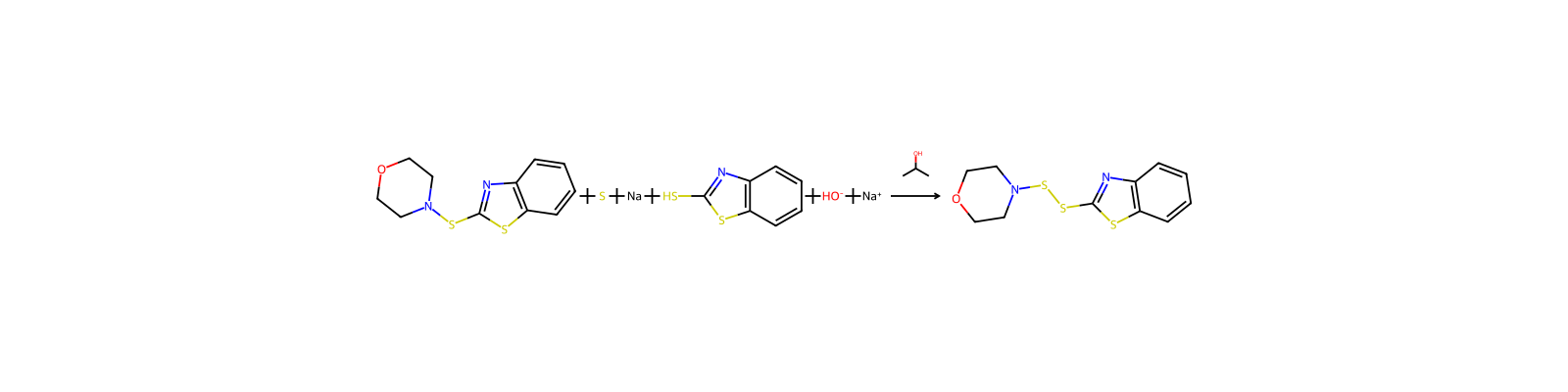
Methods of ManufacturingREACTION OF 2-BENZOTHIAZOLESULFENYL CHLORIDE WITH MORPHOLINE
General Manufacturing Information
Rubber Product Manufacturing
Benzothiazole, 2-(4-morpholinylthio)-: ACTIVE
応用分野
用途有機ゴム薬品(加硫促進剤)。
用途ゴムの加硫促進剤
説明This rubber vulcanization accelerator is used as a chemical in the rubber industry, especially in the production of synthetic rubber articles. Is contained in the "mercapto mix". As a corrosion inhibitor, it can be found in cutting fluids or in releasing fluids in the pottery industry. It induces mainly delayed-type hypersensitivity, but a case of immediate-type hypersensitivity was reported in a dental assistant.
使用Delayed-action vulcanization accelerator.
上流・下流製品情報
上流原料
下流製品
サプライヤー50 社
梯希爱(上海)化成工业发展有限公司021-67121386 · [email protected]
郑州阿尔法化工有限公司+86-18530059196 · [email protected]
上海阿拉丁生化科技股份有限公司400-6206333 13167063860 · [email protected]
上海麦克林生化科技股份有限公司021-50706066 15221275939 · [email protected]
武汉欣扬瑞和化学科技有限公司153-07155313 15307155313 · [email protected]
上海毕得医药科技股份有限公司400-1647117 13681763483 · [email protected]
Dayang Chem (Hangzhou) Co.,Ltd.+86-0571-88938639 17705817739 · [email protected]
毕佳索(上海毕得医药科技股份有限公司)400-6005915 · [email protected]
上海迈瑞尔生化科技有限公司4006356688 18621169109 · [email protected]
江苏普乐司生物科技有限公司0513-66017706 18551496367 · [email protected]
湖北威德利化学试剂有限公司17771473825 13385289472 · [email protected]
河南英田生物科技有限公司0370-4053511; 18339993703 · [email protected]
太原市瑞和丰科贸有限公司+86 351 7031519 · [email protected]
安耐吉化学&3A(安徽泽升科技股份有限公司)400-0056266 · [email protected]
湖北兴琰新材料科技有限公司13129948835 · [email protected]
Cangzhou Wanyou New Material Technology Co.,Ltd18631714998 · [email protected]
Pure Chemistry Scientific Inc.001-857-928-2050 or 1-888-588-9418 · [email protected]
上海泰坦科技股份有限公司400-6009262 15618770481 · [email protected]
湖北广奥生物科技有限公司027-02702759223056 18162699093 · [email protected]
孝感深远化工有限公司15527621225; 15527621225 · [email protected]
唐山默内德贸易有限公司0315-8309571 15633399667 · [email protected]
玛雅试剂+86 (573) 82222445 (0)18006601000 452520369 · [email protected]
天津希恩思生化科技有限公司400 638 7771 · [email protected]
湖南汇百侍生物科技有限公司0731-85526065 13308475853 · [email protected]
江苏艾康生物医药研发有限公司025-66113011 13913916777 · [email protected]
TCI AMERICA800-4238616 · [email protected]
TOKYO CHEMICAL INDUSTRY CO., LTD.03-36680489 · [email protected]
TCI Europe320-37350700 · [email protected]
武汉卡诺斯科技有限公司153-37111468 15337111468 · [email protected]
越林试剂021-62960152 · [email protected]
武汉普洛夫生物科技有限公司17612776928 · [email protected]
湖北隆信化工实业有限公司15271551270 · [email protected]
烟台东方化学有限公司+86 532 68629711 137 8060 5697 · [email protected]
杭州杰恒化工有限公司0571-87396432 · [email protected]
池州凯隆进出口贸易有限公司[email protected]
TargetMol中国(陶术生物)021-021-33632979 15002134094 · [email protected]
上海陶术生物科技股份有限公司+1-781-999-5354; +1-00000000000 · [email protected]
九鼎化学(上海)科技有限公司4009209199 · [email protected]
Ring Specialty Chemicals Inc.+1 416 493 6870 · [email protected]
上海谱振生物科技有限公司4001650900 13817534909 · [email protected]
厦门志信化学有限公司+86-5922680277 +86-13806087780 · [email protected]
广东翁江化学试剂有限公司0751-2886766 13927870850 · [email protected]
上海珈得尔化学技术有限公司021-4007787-550 400-7787-550 · [email protected]
湖北源梦生物科技有限公司027-68897569 18120462897 · [email protected]
成都润泽本土化工有限公司028-88469284 18000562381 · [email protected]
上海岚克医药科技发展有限公司0086-21-58956006
上海源叶生物科技有限公司13636370518 · [email protected]
武汉市承天精细化工有限公司18164098996 · [email protected]
湖北齐飞医药化工有限公司027-59322506 18071128681 · [email protected]
武汉克米克生物医药技术有限公司027-13163388153 13163388153 · [email protected]
関連反応
4 件


関連ノート
読み込み中…