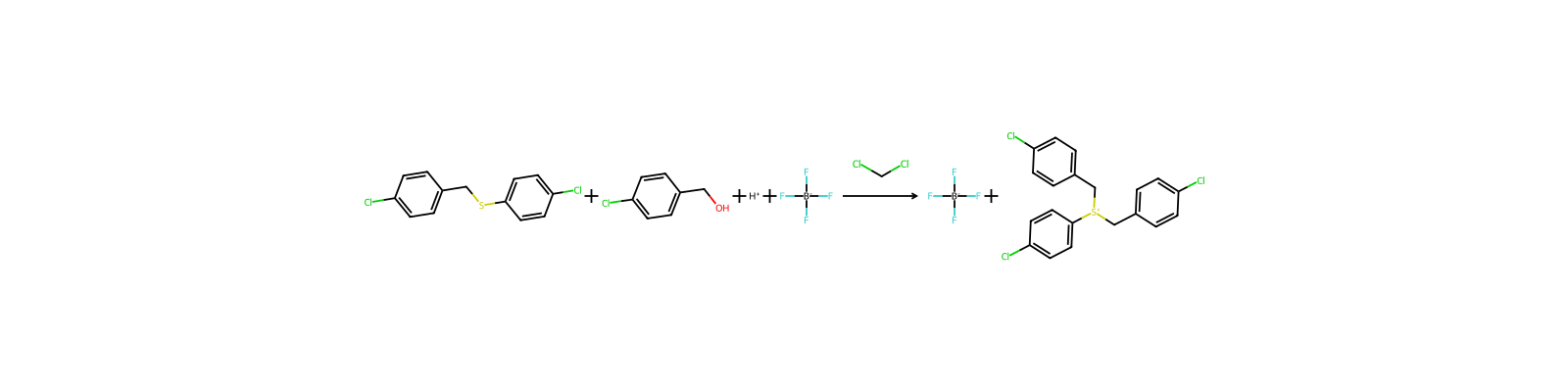

基本情報
- 標準SMILES
Clc1ccc(CSc2ccc(Cl)cc2)cc1- InChIKey
ZHLKXBJTJHRTTE-UHFFFAOYSA-N- 分子式
- C13H10Cl2S
- 平均分子量
- 269.2 g/mol
- 単同位体質量
- 267.98802668
概要
Chlorobenside is an organic sulfide.
名称と識別子
- 優先名称
- Chlorbenside
- IUPAC
- 1-chloro-4-[(4-chlorophenyl)methylsulfanyl]benzene
- 現地名
- 4-[[(4-クロロフェニル)チオ]メチル]-1-クロロベンゼン
- 英語名
- CHLORBENSIDE
- 分子式
- C13H10Cl2S
- 分子量
- 269.19
名称と別名
CHLORBENSIDE103-17-3ChlorbensidChlorsulphacideMitoxChlorbenxideChlorbenzideChloroparacideChlorparacideChlorosulfacideChloracidChloorbenzide
名称をさらに表示
1-クロロ-4-[[(4-クロロフェニル)メチル]チオ]ベンゼン4-[[(4-クロロフェニル)チオ]メチル]-1-クロロベンゼンクロルスルファシドp-クロロベンジル(p-クロロフェニル)スルフィドクロロスルファシドクロロシドクロロベンシドクロルベンシドクロルパラシドクロラシドミトックスメトックス4-クロロフェニル4-クロロベンジルスルフィドクロロパラシドレドンクロルベンサイド標準品クロルベンシド標準品CS_N-11423-100MG_クロルベンシドクロルベンシド STANDARDクロルベンシド Standard, 100 µg/mL in MeOHhrs860RD 2195MITOX(R)Chlorocident20,696Chlorocide
Chloracidep,p'-Dichlorodiphenyl sulfidep-Chlorobenzyl p-chlorophenyl sulfideHRS 860CP 20p-Chlorobenzyl p-chlorophenyl sulphide4-Chlorobenzyl 4-Chlorophenyl sulfideSulfide, p-chlorobenzyl p-chlorophenyl
データベース識別子
- CAS
103-17-3- PubChem CID
- 7639
- DTXSID
DTXSID1041766- ChEBI
CHEBI:34625- UNII
- FLR6R453DD
- EC Number
- 203-084-9
- Nikkaji
- J66.347F
物性
構造計算による物性
- XLogP
- 5.2
- 極性表面積
- 25.3 Ų
- 水素結合供与体数
- 0
- 水素結合受容体数
- 1
- 回転可能結合数
- 3
- 重原子数
- 16
- 形式電荷
- 0
- 複雑度
- 194
実験および物理化学的性質
SpringerMaterials PropertiesFusion temperature
Pesticides
Agrochemicals -> Pesticide active substances
Active substance -> EU Pesticides database: Not approved
Pesticides -> Organochlorine Pesticides
Density1.4210 @ 25 °C/4 °C
Color/Form
Crystals
Colorless
Solubility
About 2.9 percent in ethanol; 5-7.5 percent in kerosene; soluble in acetone, benzene, toluene, xylene, petroleum ether.
Less than 1:5000 in water
CorrosivityNon-corrosive
Boiling Point83-84 °C at 0.0024 mm Hg
DecompositionWhen heated to decomposition it emits toxic fumes of /hydrogen chloride/ and /sulfur oxides/.
Melting Point75-76 °C
Vapor Pressure
0.0000178 [mmHg]
1.21X10⁻⁵ mm Hg at 30 °C
Henry's Law ConstantHenry's Law constant = 6.96X10⁻⁶ atm-cu m/mol at 25 °C /Estimated/
Physical DescriptionSolid with an odor like almonds; [Hawley] Colorless solid; [HSDB]
物理化学的性質
- 融点
- 75 · 75-76°
- 沸点
- 83 · 83-84 °C(Press: 0.0024 Torr)
- 比重(密度)
- 425 · d425 1.4210
- 貯蔵温度
- 0 · 0-6°C
- BRN
- 2505694 · 2505694
- 主な用途
- 農業環境
- InChI
- 1S/C13H10Cl2S/c14-11-3-1-10(2-4-11)9-16-13-7-5-12(15)6-8-13/h1-8H,9H2
- InChIKey
- ZHLKXBJTJHRTTE-UHFFFAOYSA-N
- SMILES
- Clc1ccc(CSc2ccc(Cl)cc2)cc1
- CAS データベース
- 103 · 103-17-3
- EPAの化学物質情報
- Chlorbenside (103-17-3)
安全と法規制
GHS分類
GHS Classification
This chemical does not meet GHS hazard criteria for 7.1% (3 of 42) of reports.
Warning
H302 (92.9%): Harmful if swallowed [Warning Acute toxicity, oral]
P264, P270, P301+P317, P330, and P501 (click each P-code to see the statement)
Aggregated GHS information provided per 42 reports by companies from 2 notifications to the ECHA C&L Inventory.
危険有害性情報
Hazards SummaryA skin irritant; [Hawley] A mild skin and eye irritant; May be absorbed through skin; [HSDB] May cause irritation; [MSDSonline]
Special ReportsFAO/WHO; Evaluation of the Toxicity of Pesticide Residues in Food: Chlorbenside (1965). Available from: http://www.inchem.org/documents/jmpr/jmpmono/v065pr08.htm as of July 13, 2004.
Hazard Classes and CategoriesAcute Tox. 4 (92.9%)
Standard Transportation Number
49 216 72; Organochlorine pesticide (compounds and preparations), solid (poison b) insecticides, nec, other, than agricultural).
49 216 73; Organochlorine pesticide (compounds and preparations), solid (poison b) insecticides, agricultural, nec, other than liquid).
Shipment Methods and Regulations
No person may /transport,/ offer or accept a hazardous material for transportation in commerce unless that person is registered in conformance ... and the hazardous material is properly classed, described, packaged, marked, labeled, and in condition for shipment as required or authorized by ... /the hazardous materials regulations (49 CFR 171-177)./
The International Air Transport Association (IATA) Dangerous Goods Regulations are published by the IATA Dangerous Goods Board pursuant to IATA Resolutions 618 and 619 and constitute a manual of industry carrier regulations to be followed by all IATA Member airlines when transporting hazardous materials.
The International Maritime Dangerous Goods Code lays down basic principles for transporting hazardous chemicals. Detailed recommendations for individual substances and a number of recommendations for good practice are included in the classes dealing with such substances. A general index of technical names has also been compiled. This index should always be consulted when attempting to locate the appropriate procedures to be used when shipping any substance or article.
Shipping Name/ Number DOT/UN/NA/IMO
UN 2761; Organochlorine pesticides, solid, toxic, not otherwise specified (compounds & preparations)
UN 2762; Organochlorine pesticides, liquid, flammable, toxic, not otherwise specified, flashpoint less than 23 °C (compounds & preparation)
UN 2995; Organochlorine pesticides, liquid, toxic, flammable, not otherwise specified, flashpoint 23 °C or more
UN 2996; Organochlorine pesticides, liquid, toxic, not otherwise specified
For more Shipping Name/ Number DOT/UN/NA/IMO (Complete) data for CHLORBENSIDE (6 total), please visit the HSDB record page.
Skin, Eye, and Respiratory IrritationsSlight irritant action on skin & eyes.
Hazardous Reactivities and IncompatibilitiesResistant to acid and alkaline hydrolysis. Strong oxidizing agents convert it to the corresponding sulfoxide and sulfone.
安全と保護具
Fire Fighting Procedures
If material on fire or involved in fire: Extinguish fire using agent suitable for type of surrounding fire (material itself does not burn or burns with difficulty). Use water in flooding quantities as fog. Use "alcohol" foam, carbon dioxide, or dry chemical. Wear self-contained breathing apparatus when fighting fires involving this material. /Organochlorine pesticide, solid, nos (compounds and preparations) (agricultural insecticides, nec, other than liquid)/
If material on fire or involved in fire: Do not extinguish fire unless flow can be stopped. Use water in flooding quantities as fog. Solid streams of water may be ineffective. Cool all affected containers with flooding quantities of water. Apply water from as far a distance as possible. Use "alcohol" foam, dry chemical or carbon dioxide. /Organochlorine pesticide, liquid/
If material on fire or involved in fire: Extinguish fire using agent suitable for type of surrounding fire. (Material itself does not burn or burns with difficulty.) Use water in flooding quantities as fog. Use "alcohol" foam, dry chemical or carbon dioxide. /Organochlorine pesticides, solid, toxic/
Cleanup Methods
In case of damage to, or leaking from containers of the material, contact the pesticide safety team network. Telephone; (800) 424-9300. /Organochlorine pesticide, liquid (compounds and preparations) (insecticides, other than agricultural, nec)/
Environmental considerations: Water spill: Use natural barriers or oil spill control booms to limit spill travel. Use natural deep water pockets, excavated lagoons, or sand bag barriers to trap material at bottom. Remove trapped material with suction hoses. /Organochlorine pesticide, solid, toxic/
Environmental considerations: Land spill: Dig a pit, pond, lagoon, holding area to contain liquid or solid material. /SRP: If time permits, pits, ponds, lagoons, soak holes, or holding areas should be sealed with an impermeable flexible membrane liner./ Cover solids with a plastic sheet to prevent dissolving in rain or fire fighting water. Dike surface flow using solid, sand bags, foamed polyurethane, or foamed concrete. /Organochlorine pesticide, solid, toxic/
Environmental considerations: Air spill: Apply water spray or mist to knock down vapors. /Organochlorine pesticide, liquid/
For more Cleanup Methods (Complete) data for CHLORBENSIDE (6 total), please visit the HSDB record page.
Disposal Methods
SRP: The most favorable course of action is to use an alternative chemical product with less inherent propensity for occupational exposure or environmental contamination. Recycle any unused portion of the material for its approved use or return it to the manufacturer or supplier. Ultimate disposal of the chemical must consider: the material's impact on air quality; potential migration in soil or water; effects on animal, aquatic, and plant life; and conformance with environmental and public health regulations.
Organic Pesticides Disposal (except organic mercury, lead, cadmium, and arsenic compounds): Compounds should be disposed of in a pesticide incinerator at a temperature/dwell combination that will completely destroy the pesticide. Emissions from such incineration must meet the standards of the Clean Air Act of 1970; any liquids, sludges, or solid residues generated must be disposed of so as to meet Federal, State, and local pollution control requirements. (Municipal solid waste incinerators may be used for this procedure, if they meet all the necessary requirements and operations are supervised properly.) /Organic pesticide/
If incineration facilities are unavailable for a particular organic or metallo-organic pesticide (except organic mercury, lead, cadmium, and arsenic compounds), additional disposal methods include, soil injection, chemical degradation, burial (in a designated landfill), or well injection. However, persons considering the chemical degradation method should contact EPA's Regional Administrator ... prior to attempting disposal, while the well injection method should only be considered after all reasonable alternative measures have been explored and found to be less satisfactory in terms of environmental protection. If the above approved disposal methods are unavailable, temporary storage of organic and metallo-organic pesticides (except organic mercury, lead, cadmium and arsenic compounds), may be undertaken. /Organic or metallo-organic pesticide/
Group I Containers: Combustible containers from organic or metallo-organic pesticides (except organic mercury, lead, cadmium, or arsenic compounds) should be disposed of in pesticide incinerators or in specified landfill sites. /Organic or metallo-organic pesticides/
For more Disposal Methods (Complete) data for CHLORBENSIDE (6 total), please visit the HSDB record page.
Preventive Measures
SRP: The scientific literature for the use of contact lenses in industry is conflicting. The benefit or detrimental effects of wearing contact lenses depend not only upon the substance, but also on factors including the form of the substance, characteristics and duration of the exposure, the uses of other eye protection equipment, and the hygiene of the lenses. However, there may be individual substances whose irritating or corrosive properties are such that the wearing of contact lenses would be harmful to the eye. In those specific cases, contact lenses should not be worn. In any event, the usual eye protection equipment should be worn even when contact lenses are in place.
Avoid contact with eyes & skin. Do not inhale dust & spray mists.
If the material is not on fire and not involved in a fire: Keep sparks, flames, and other sources of ignition away. Keep material out of water sources and sewers. Build dikes to contain flow as necessary. Use water spray to knock down vapors. Personnel protection: Avoid breathing vapors. Keep upwind. ... Do not handle broken packages without protective equipment. /Organochlorine pesticide, liquid, (compounds and preparations) (insecticides, other than agricultural, nec)/
Personnel protection: Avoid breathing dusts, and fumes from burning material. Keep upwind. ...Do not handle broken packages unless wearing appropriate personal protective equipment. Wash away any material which may have contacted the body with copious amounts of water or soap and water. Wear positive pressure self-contained breathing apparatus when fighting fires involving this material. If contact with the material anticipated, wear appropriate chemical protective clothing. /Organochlorine pesticides, solid, toxic/
For more Preventive Measures (Complete) data for CHLORBENSIDE (7 total), please visit the HSDB record page.
Personal Protective Equipment (PPE)
If the material is not on fire and not involved in a fire: Wear boots, protective gloves, and goggles. /Organochlorine pesticide, liquid, (compounds and preparations) (insecticides, other than agricultural, nec)/
Personnel protection: ... Wear appropriate chemical protective gloves, boots and goggles. .... /Organochlorine pesticide, liquid; Organochlorine pesticide, solid, toxic/
毒性情報
Adverse EffectsOther Poison - Organochlorine
Ecotoxicity Excerpts
/AQUATIC SPECIES/ ... Several moderately hydrophobic pesticides including DCPA or dacthal, chlorbenside, pentachlorophenol, and CDEC or sulfallate do inhibit dye efflux from gill cells indicating that they are substrates or inhibitors, but the more hydrophobic xenobiotics DDT, DDD, DDE, and Aroclor 1254 do not, indicating that they are not substrates.
Human Toxicity Excerpts
/SIGNS AND SYMPTOMS/ May be irritating to skin.
/OTHER TOXICITY INFORMATION/ Organochlorine pesticide can cause illness by inhalation, skin absorption, and/or ingestion. /Organochlorine pesticide, liquid, (compounds and preparations) (insecticides, other than agricultural, nec)/
Non-Human Toxicity Excerpts
/LABORATORY ANIMALS: Subchronic or Prechronic Exposure/ Several small groups of rats, each consisting of 2 males and 2 females, were given daily oral doses of chlorbenside in aqueous acacia suspensions for 3 to 4 weeks at dose levels up to 10,000 mg/kg bw. Doses were administered by stomach-tube. Doses of 5000 mg/kg bw and over were subdivided in 2 half-doses daily. The only systemic effect of the 10,000 mg/kg bw daily dose was the liver enlargement. There were mild cellular changes in the liver, consisting of vacuolation of the lobular cells. The increase in liver-weight occurred at all doses, and was graded according to dose. The reduction of growth occurred only on doses of 5000 mg/kg bw and above, and the vacuolation of liver cells was marked at the highest dose level of 10,000 mg/kg bw daily. Additional experiments in rats showed that the major part of the liver hypertrophy occurs in the first few weeks of feeding chlorbenside and continued feeding after this point has little further effect. The liver hypertrophy is reversible, and the liver-weight returns nearly to normal within two weeks of stopping treatment.
/LABORATORY ANIMALS: Subchronic or Prechronic Exposure/ Each of 3 pure samples (sulfide, sulfoxide, sulfone) was given daily by stomach tube to a group of 10 male mice at a dose of 1000 mg/kg bw 6 times a week for 14 days (12 doses total): enlargement of the liver was observed and a few deaths occurred. /4-Chlorobenzyl 4-chlorophenyl sulfide, sulfoxide, sulfone/
/LABORATORY ANIMALS: Chronic Exposure or Carcinogenicity/ Continuous administration to rats at a level of over 1500 ppm in the diet is needed before histopathological changes can be seen. Large amount given over a long period lead to fatty infiltration and enlargement of the liver.
/LABORATORY ANIMALS: Chronic Exposure or Carcinogenicity/ Rats tolerate 10 g/kg daily for 3 wk or feeding with diet containing 1000 ppm for 2 yr. Dogs tolerate 5 mg/kg/day for 1 yr without observable effects.
For more Non-Human Toxicity Excerpts (Complete) data for CHLORBENSIDE (9 total), please visit the HSDB record page.
Probable Routes of Human ExposureMost organochlorine pesticides are efficiently absorbed from the gut and through the skin. /Organochlorines/
Antidote and Emergency Treatment
Treatment is symptomatic and supportive. Oils should not be used as either cathartics or dermal cleansing agents, as they increase absorption. Gastric lavage and use of activated charcoal and sodium sulfate are indicated for ingestion. If dermal exposure occurred, contaminated clothes should be removed, and the skin should be thoroughly cleansed with soap and water. Management of seizures in both children and adults is with Valium or phenobarbital. Respiratory depression and even respiratory arrest, especially with concomitant use of Valium and phenobarbital in children, may occur. These drugs preferably should be used only in critical care areas where emergency endotracheal intubation can be performed. /It is recommended/ that epinephrine not be utilized in patients with organochlorine poisoning, as the organochlorines induce myocardial irritability and ventricular arrhythmias may occur. However, dopamine may be necessary in the event of hypotension unresponsive to fluid administration, and epinephrine may be necessary in the event of cardiopulmonary arrest. /Organochlorine insecticides/
Persons exceptionally exposed to organochlorine pesticides by any route should be observed for sensory disturbances, incoordination, speech slurring, mental aberrations, and involuntary motor activity that would warn of imminent convulsions. If convulsions occur, place the victim in the left lateral decubitus position with the head down. Move away furniture or other solid objects that may be a source of injury. If jaw movements are violent, place padded tongue blades between the teeth to protect the tongue. Whenever possible, remove dentures and other removable dental work. Aspirate oral and pharyngeal secretions, and, when possible, insert an oropharyngeal airway to maintain an open passage unobstructed by the tongue. Minimize noise and any manipulation of the patient that may trigger seizure activity. Administer oxygen by mask. Maintain pulmonary gas exchange by mechanically assisted ventilation whenever respiration is depressed. /Solid organochlorine insecticides/
Acceptable Daily Intakes
MAXIMAL ACCEPTABLE DAILY INTAKE OF CHLORBENSIDE: 0.01 MG/KG
FAO/WHO acceptable daily intake for chlorbenside is 0.01 mg/kg/day. /From table/
Non-Human Toxicity Values
LD50 Mouse oral >3000 mg/kg bw /from table/
LD50 Mouse oral >10,000 mg/kg bw /technical product; from table/
LD50 Rat oral >10,000 mg/kg bw /technical product; from table/
LD50 Rat oral 2000 mg/kg
安全データ
- wgk
- 3
- rtecs
- WQ2975000
- 毒性
- LD50 oral in rat: 2gm/kg
- risk_code
- 22
- hazard_code
- Xn
- Hazard Classifications
- Acute Tox. 4 Oral
- ストレージクラス
- 11 - Combustible Solids
- 有毒物質データの
- 103-17-3(Hazardous Substances Data)
化学と産業
薬理情報
Mechanism of Action
In adequate dosage, /organochlorines/ interfere with axonic transmission of nerve impulses and, therefore, disrupt the function of the nervous system, principally that of the brain. This results in behavioral changes, sensory and equilibrium disturbances, involuntary muscle activity, and depression of vital centers, particularly those controlling respiration. /Organochlorines/
Metabolism/MetabolitesIn warm-blooded species, eliminated /in urine/ as a glucuronic acid conjugate.
Absorption, Distribution and Excretion
In varying degrees, organochlorines are absorbed from the gut and also by the lung and across the skin. /Soild Organochlorines/
After 13 weeks of feeding at a 10-ppm dose level there was no appreciable chlorbenside in any tissue of the rats except fat and possibly liver. At 100 ppm there were measurable concentrations in liver, kidney and fat but not in the blood or brain; whilst at 1000 ppm there were measurable concentrations in all organs, although the amount in the blood was barely detectable. The greatest amount of chlorbenside found in any one animal was 184 ug in a whole rat which had received the highest dose level of 1000 ppm. This was about one fiftieth of the daily intake. The total body load fell to about one sixth within 2 weeks of stopping treatment.
Rabbits were given chlorbenside orally in a dose of about 300 mg/kg body-weight and the excretion of sulfide (chlorbenside), sulfoxide and sulfone in urine and feces was followed. 97.4% of the dose was recovered unchanged from the feces, and traces of sulfoxide were present in the urine
用途と製造
Uses
Used as acaricide (especially for eggs and larvae) in fruits, ornamentals, and nursery stock; [HSDB]
No longer registered as a pesticide for use in the US; [HSDB]
Farming (Pesticides) [Category: Industry]
For chlorbenside (USEPA/OPP Pesticide Code: 017401) there are 0 labels match. /SRP: Not registered for current use in the U.S., but approved pesticide uses may change periodically and so federal, state and local authorities must be consulted for currently approved uses./
Acaracide, especially for the control of eggs and larvae of red spider mites.
... Good ovicidal & larvicidal properties. ... Control of most varieties of spider mites, particularly in the pre-blossom stage in fruit cultivation & on ornamentals & nursery stock. /SRP: Former Use/
U.S. Production1983 US production: 76,140,000 lb /Cyclic insecticides and rodenticides/
Methods of ManufacturingChlorbenside is made by the reaction of p-chlorophenyl mercaptan and p-chlorobenzyl chloride.
Formulations/Preparations
20% wettable powder; 20% miscible oil (emulsifiable concn); 10.6% vaporizing soln.
Grade: Technical
Elimite
Orthocide
For more Formulations/Preparations (Complete) data for CHLORBENSIDE (15 total), please visit the HSDB record page.
General Manufacturing Information
The WHO Recommended Classification of Pesticides by Hazard identifies Chlorbenside (technical grade) as an active ingredient believed to be obsolete or discontinued for use as a pesticide.
... Technical product contains about 90% p,p'-isomer, 5% o,p'-isomer, and 2.5% m,p'-isomer.
... Little insecticidal activity. ... Compatible with other plant-protection products in the appropriate types of formulation.
応用分野
使用Chlorbenside is a acaricide, especially for the control of eggs and larvae of red spider mites.
上流・下流製品情報
下流製品
サプライヤー21 社
梯希爱(上海)化工贸易有限公司021-61109150 · [email protected]
湖北魏氏化学试剂股份有限公司027-59102966 18717199209 · [email protected]
上海艾梯西生物科技有限公司18721763493
上海毕楷科技有限公司18516304666
珠海奥博凯生物医药技术有限公司400-0628126 · [email protected]
上海湄水化工科技有限公司021-60549325 18616193163
天津阿尔塔科技有限公司022-6537-8550 15522853686 · [email protected]
上海陶术生物科技股份有限公司+1-781-999-5354; +1-00000000000 · [email protected]
安耐吉化学&3A(安徽泽升科技股份有限公司)400-0056266 · [email protected]
陕西缔都医药化工有限公司029-029-81120477 17792793610 · [email protected]
上海颖心实验室设备有限公司021-021-59178156 15300768757 · [email protected]
深圳市丽晶生化科技有限公司0755-85201366 18938635012 · [email protected]
厦门盈融达化工有限公司+86-0592-6210733 · [email protected]
深圳聚合生化科技有限公司+86-400-002-6226 · [email protected]
上海安谱实验科技股份有限公司18502138905 · [email protected]
上海杰股生物科技有限公司021-51698675 · [email protected]
北京百灵威科技有限公司18210857532 18210857532 · [email protected]
TargetMol中国(陶术生物)15002134094 · [email protected]
江苏艾康生物医药研发有限公司025-58859352 18651614124 · [email protected]
上海鼓臣生物技术有限公司021-34675735 19147740836 · [email protected]
Shaanxi Dideu Medichem Co. Ltd+86-17392712779 · [email protected]
補足説明
定義Generic name for an agricultural toxicant.
関連反応
3 件


関連ノート
読み込み中…