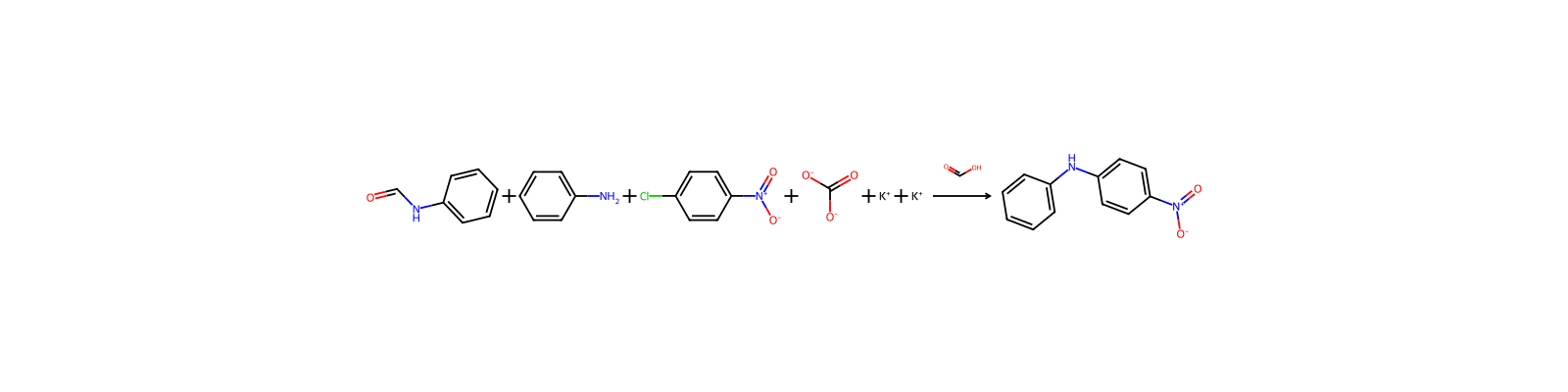
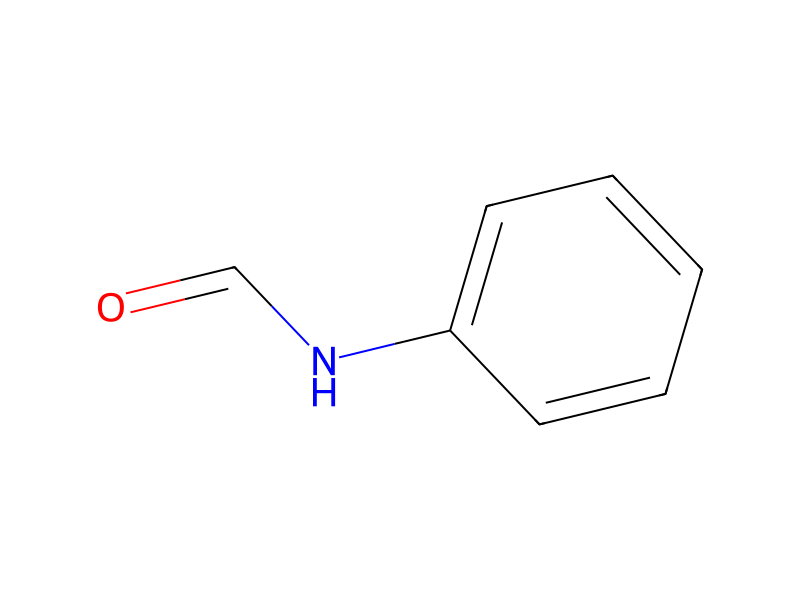
基本情報
- 標準SMILES
O=CNc1ccccc1- InChIKey
DYDNPESBYVVLBO-UHFFFAOYSA-N- 分子式
- C7H7NO
- 平均分子量
- 121.14 g/mol
- 単同位体質量
- 121.05276384
概要
Formanilide is a white crystalline solid. (NTP, 1992)
名称と識別子
- 優先名称
- Formanilide
- IUPAC
- N-phenylformamide
- 現地名
- ホルムアニリド
- 英語名
- FORMANILIDE
- 分子式
- C7H7NO
- 分子量
- 121.14
名称と別名
FormanilideN-PHENYLFORMAMIDE103-70-8N-FormylanilinePhenyl formamideFormylanilineCarbanilaldehydeFormamidobenzeneAniline, N-formyl-DTXSID30253382805XEA9CLNSC-8862
名称をさらに表示
ホルムアニリドN-フェニルホルムアミドホルマニリドアニリノホルムアルデヒドN-ホルミルアニリン(フェニルアミノ)ホルムアルデヒドカルバニルアルデヒドAnilinoformaldehydeNSC 8862NSC 203239FormamilideFORMANILINE
DTXCID205338CHEBI:42416RefChem:830993203-136-0Formamide, N-phenyl-N-phenyl-formamidephenylformamideMFCD00003276
データベース識別子
- CAS
103-70-8- PubChem CID
- 7671
- DTXSID
DTXSID3025338- ChEMBL
CHEMBL1232659- ChEBI
CHEBI:42416- UNII
- 2805XEA9CL
- EC Number
- 203-136-0
- Nikkaji
- J28.435A
物性
構造計算による物性
- XLogP
- 1.2
- 極性表面積
- 29.1 Ų
- 水素結合供与体数
- 1
- 水素結合受容体数
- 1
- 回転可能結合数
- 1
- 重原子数
- 9
- 形式電荷
- 0
- 複雑度
- 86.9
実験および物理化学的性質
Chemical ClassesNitrogen Compounds -> Other Aromatics (Nitrogen)
SpringerMaterials Properties15N nuclear magnetic resonance spectrum
LogP
log Kow= 1.15
1.2
Density
1.144 at 68 °F (NTP, 1992) - Denser than water; will sink
1.186 @ 50 °C
Viscosity1.65 mN/s/m @ 20 °C
Color/FormWhite crystals
Solubility
10 to 50 mg/mL at 77 °F (NTP, 1992)
> 10% in benzene; > 10% in ether; > 10% ethanol
In water, 28.6 g/l @ 25 °C; 25.4 g/l @ 20 °C
Flash Pointgreater than 235 °F (NTP, 1992)
Boiling Point
520 °F at 760 mmHg (NTP, 1992)
271 °C
DecompositionWhen heated to decomposition it emits toxic fumes of /nitrogen oxides/.
Melting Point
115.9 to 117.5 °F (NTP, 1992)
46.6-47.5 °C
Vapor Pressure
0.00357 [mmHg]
3.57X10⁻³ mm Hg @ 25 °C
物理化学的性質
- 融点
- 46 · 46-48 °C(lit.)
- 沸点
- 166 °C14 · 166 °C14 mm Hg(lit.)
- 比重(密度)
- 1.144 g/mL · 1.144 g/mL at 25 °C(lit.)
- 屈折率
- 1.5908 · 1.5908 (estimate)
- 闪点
- 230 °F · >230 °F
- 貯蔵温度
- 2 · Sealed in dry,2-8°C
- 溶解性
- 20 ℃で25.4g/L · 水:20℃で25.4g/L
- 外見
- クリスタル
- 酸解離定数(Pka)
- 15 · 15.00±0.70(Predicted)
- 比重
- 1.144 · 1.144
- 色
- 白色~淡灰ベージュ
- 水溶解度
- 25.4 g/L · water: soluble 25.4g/L at20°Cwater: soluble 28.6g/L at25°C
- Merck
- 14 · 14,4238
- BRN
- 906934 · 906934
- Henry's Law Constant
- 1.2 · 1.2×103 mol/(m3Pa) at 25℃, HSDB (2015)
- 安定性
- 安定。可燃性。強力な酸化剤とは相容れない。
- InChI
- 1S/C7H7NO/c9-6-8-7-4-2-1-3-5-7/h1-6H,(H,8,9)
- InChIKey
- DYDNPESBYVVLBO-UHFFFAOYSA-N
- SMILES
- O=CNc1ccccc1
- CAS データベース
- 103 · 103-70-8(CAS DataBase Reference)
- EPAの化学物質情報
- Formanilide (103-70-8)
化学的性質
化学的特性white or light yellow crystals or powder
安全と法規制
GHS分類
GHS Classification
This chemical does not meet GHS hazard criteria for 37.5% (3 of 8) of reports.
Warning
H302 (62.5%): Harmful if swallowed [Warning Acute toxicity, oral]
P264, P270, P301+P317, P330, and P501 (click each P-code to see the statement)
Aggregated GHS information provided per 8 reports by companies from 3 notifications to the ECHA C&L Inventory.
危険有害性情報
Fire HazardsThis chemical is probably combustible. (NTP, 1992)
Health HazardsSYMPTOMS: Exposure to this chemical may cause cyanosis, headache, dizziness, confusion, decreased blood pressure, convulsions and coma. (NTP, 1992)
Hazards SummaryEmergency treatment: Symptomatic drug ingestion; [HSDB] Causes somnolence, muscle weakness, and respiratory stimulation in intravenous lethal-dose studies of dogs; [RTECS] May cause irritation; [Alfa Aesar MSDS] See N-Methylformamide.
Reactive GroupAmides and Imides
Reactivity Profile
FORMANILIDE is an amide. Amides/imides react with azo and diazo compounds to generate toxic gases. Flammable gases are formed by the reaction of organic amides/imides with strong reducing agents. Amides are very weak bases (weaker than water). Imides are less basic yet and in fact react with strong bases to form salts. That is, they can react as acids. Mixing amides with dehydrating agents such as P2O5 or SOCl2 generates the corresponding nitrile. The combustion of these compounds generates mixed oxides of nitrogen (NOx).
Air and Water ReactionsThis chemical may be sensitive to prolonged exposure to air. (NTP, 1992). Soluble in water.
Toxic Combustion ProductsWhen heated to decomposition it emits toxic fumes of /nitrogen oxides/.
Hazard Classes and CategoriesAcute Tox. 4 (62.5%)
安全と保護具
Fire FightingFires involving this chemical can be controlled with a dry chemical, carbon dioxide, foam or Halon extinguisher. (NTP, 1992)
First Aid
EYES: First check the victim for contact lenses and remove if present. Flush victim's eyes with water or normal saline solution for 20 to 30 minutes while simultaneously calling a hospital or poison control center. Do not put any ointments, oils, or medication in the victim's eyes without specific instructions from a physician. IMMEDIATELY transport the victim after flushing eyes to a hospital even if no symptoms (such as redness or irritation) develop.
Nonfire Spill Response
SMALL SPILLS AND LEAKAGE: If you should spill this chemical, use absorbent paper to pick up all liquid spill material. Seal the absorbent paper, as well as any of your clothing which may be contaminated, in a vapor-tight plastic bag for eventual disposal. Wash any surfaces you may have contaminated with a strong soap and water solution. Do not reenter the contaminated area until the Safety Officer (or other responsible person) has verified that the area has been properly cleaned.
Disposal Methods
SRP: At the time of review, criteria for land treatment or burial (sanitary landfill) disposal practices are subject to significant revision. Prior to implementing land disposal of waste residue (including waste sludge), consult with environmental regulatory agencies for guidance on acceptable disposal practices.
Personal Protective Equipment (PPE)
RECOMMENDED RESPIRATOR: Where the neat test chemical is weighed and diluted, wear a NIOSH-approved half face respirator equipped with an organic vapor/acid gas cartridge (specific for organic vapors, HCl, acid gas and SO2) with a dust/mist filter. (NTP, 1992)
毒性情報
Environmental Fate
TERRESTRIAL FATE: Based on a classification scheme(1), an estimated Koc value of 100(SRC), determined from an measured log Kow of 1.15(2) and a regression-derived equation(3), indicates that N- phenylformamide is expected to have high mobility in soil(SRC). Volatilization of N-phenylformamide from moist soil surfaces is not expected to be an important fate process(SRC) given an estimated Henry's Law constant of 8.45X10⁻⁹ atm-cu m/mole(SRC), using a fragment constant estimation method(4). N-Phenylformamide is not expected to volatilize from dry soil surfaces(SRC) based upon a vapor pressure of 3.57X10⁻³ mm Hg(5). N-Phenylformamide, present at 20 mg/l in water, eliminated 100% of dissolved organic carbon in 4 weeks using the modified OECD screening test(6). Therefore, this compound may biodegrade in soil(SRC).
AQUATIC FATE: Based on a classification scheme(1), an estimated Koc value of 100(SRC), determined from a log Kow of 1.15(2) and a regression-derived equation(3), indicates that N-phenylformamide is not expected to adsorb to suspended solids and sediment(SRC). Volatilization from water surfaces is not expected(3) based upon an estimated Henry's Law constant of 8.45X10⁻⁹ atm-cu m/mole(SRC), developed using a fragment constant estimation method(4). According to a classification scheme(5), an estimated BCF of 2(SRC), from its log Kow(2) and a regression-derived equation(6), suggests the potential for bioconcentration in aquatic organisms is low(SRC). N-Phenylformamide is expected to undergo slow chemical hydrolysis(7). The hydrolysis half-life in water at 55 °C and pH 5-9 has been estimated to be on the order of 29-146 days(7). N-Phenylformamide, present at 20 mg/l, eliminated 100% of dissolved organic carbon in 4 weeks using the modified OECD screening test(8). Therefore, this compound is expected to biodegrade in the environment(SRC).
ATMOSPHERIC FATE: According to a model of gas/particle partitioning of semivolatile organic compounds in the atmosphere(1), N-phenylformamide, which has a vapor pressure of 3.57X10⁻³ mm Hg at 25 °C(2), is expected to exist solely as a vapor in the ambient atmosphere(SRC). Vapor-phase N-phenylformamide is degraded in the atmosphere by reaction with photochemically-produced hydroxyl radicals(SRC); the half-life for this reaction in air is estimated to be 9 hours(SRC), calculated from its rate constant of 43X10-12 cu cm/molecule-sec at 25 °C(SRC) determined using a structure estimation method(3).
Effluent ConcentrationsN-Phenylformamide has been detected, but not quantified, in US wastewater treatment effluent(1).
Soil Adsorption/Mobility
The Koc of N-phenylformamide is estimated as 100(SRC), using a log Kow of 1.15(1) and a regression-derived equation(2). According to a classification scheme(3), this estimated Koc value suggests that N-phenylformamide is expected to have high mobility in soil(SRC).
Artificial Pollution Sources
N-Phenylformamide's production and use as a feedstock for chemical synthesis(1) may result in its release to the environment through various waste streams(SRC). N-Phenylformamide's production and former use as an analgesic and antipyretic(2) may have resulted in its release to the environment through various waste streams(SRC). N-Phenylformamide has been detected, but not quantified, in US wastewater treatment effluent(3).
Environmental BiodegradationAEROBIC: In a modified OECD screening test with N-phenylformamide, present at 20 mg/l, 100% of dissolved organic carbon was removed in 4 weeks(1). Therefore, this compound is expected to biodegrade in the environment(SRC).
Environmental Bioconcentration
An estimated BCF of 2 was calculated for N-phenylformamide(SRC), using a log Kow of 1.15(1) and a regression-derived equation(2). According to a classification scheme(3), this BCF suggests the potential for bioconcentration in aquatic organisms is low(SRC).
Volatilization from Water/Soil
The Henry's Law constant for N-phenylformamide is estimated as 8.45X10⁻⁹ atm-cu m/mole(SRC) using a fragment constant estimation method(1). This Henry's Law constant indicates that N-phenylformamide is expected to be essentially nonvolatile from water surfaces(2). N-Phenylformamide is not expected to volatilize from dry soil surfaces(SRC) based upon a vapor pressure of 3.57X10⁻³ mm Hg(3).
Non-Human Toxicity ExcerptsPoison by ingestion & intravenous routes.
Environmental Abiotic Degradation
The rate constant for the vapor-phase reaction of N- phenylformamide with photochemically-produced hydroxyl radicals has been estimated as 43X10-12 cu cm/molecule-sec at 25 °C(SRC) using a structure estimation method(1). This corresponds to an atmospheric half-life of about 9 hours at an atmospheric concentration of 5X10+5 hydroxyl radicals per cu cm(1). N-Phenylformamide is expected to undergo slow chemical hydrolysis(2). The hydrolysis half-life in water at 55 °C and pH 5-9 has been estimated to be on the order of 29-146 days(2).
Probable Routes of Human ExposureOccupational exposure to N-phenylformamide may have occurred through inhalation and dermal contact with this compound at workplaces where N- phenylformamide was produced or used. (SRC)
Environmental Fate/Exposure Summary
N-Phenylformamide's production and use as a feedstock for chemical synthesis may result in its release to the environment through various waste streams. N-Phenylformamide's production and former use as an analgesic and antipyretic may have resulted in its release to the environment through various waste streams. If released to air, a vapor pressure of 3.57X10⁻³ mm Hg at 25 °C indicates N-phenylformamide will exist solely as a vapor in the ambient atmosphere. Vapor-phase N-phenylformamide will be degraded in the atmosphere by reaction with photochemically-produced hydroxyl radicals; the half-life for this reaction in air is estimated to be 9 hours. If released to soil, N-phenylformamide is expected to have high mobility based upon an estimated Koc of 100. Volatilization from moist soil surfaces is not expected to be an important fate process based upon an estimated Henry's Law constant of 8.45X10⁻⁹ atm-cu m/mole. If released into water, N-phenylformamide is not expected to adsorb to suspended solids and sediment based upon the estimated Koc. N-Phenylformamide, present at 20 mg/l in water, eliminated 100% of dissolved organic carbon in 4 weeks using the modified OECD screening test. Therefore, this compound may be expected to biodegrade in the environment. Volatilization from water surfaces is not expected to be an important fate process based upon this compound's estimated Henry's Law constant. An estimated BCF of 2 suggests the potential for bioconcentration in aquatic organisms is low. N-Phenylformamide is expected to undergo slow chemical hydrolysis; its hydrolysis half-life in water ranges from 29-146 days. Occupational exposure to N-phenylformamide may have occurred through inhalation and dermal contact with this compound at workplaces where N-phenylformamide was produced or used. (SRC)
安全データ
- F
- 8
- wgk
- 2
- tsca
- TSCA listed
- rtecs
- BY1780000
- hs_code
- 29242990
- risk_code
- 22
- safety_code
- 22-24/25
- ストレージクラス
- 11 - Combustible Solids
- 有毒物質データの
- 103-70-8(Hazardous Substances Data)
化学と産業
薬理情報
Metabolism/Metabolites
AGMENELLUM QUADRUPLICATUM STRAIN PR-6 & OSCILLATORIA SPECIES STRAIN JCM GROWN PHOTOAUTOTROPHICALLY IN PRESENCE OF ANILINE METABOLIZED ANILINE TO FORMANILIDE.
JERINA, DM, DALY, JW & WITKOP, B; BIOCHEMISTRY 10, (l971) YIELDS N-(P-HYDROXYPHENYL)FORMAMIDE IN LIVER: /FROM TABLE/
用途と製造
Uses
Used for chemical synthesis and formerly as a local anesthetic, analgesic, and antipyretic; [HSDB]
Feedstock for chemical synthesis
Analgesic and antipyretic
MEDICATION
Methods of ManufacturingReview on methods of preparation: de Jonge et al, Rec Trav Chim 75, 5 (1956).
General Manufacturing InformationFormamide, N-phenyl-: ACTIVE
応用分野
用途有機合成原料。
使用Formanilide was used to study the zero electron kinetic energy(ZEKE) spectra of cis- and trans-formanilide. It was used to investigate the gas-phase structures of the two isomers of the trans-formanilide-water complex by two-colour (1+1′) resonance enhanced multiphoton ionisation (REMPI) and ZEKE spectroscopy.
一般的な説明White crystalline solid.
調製方法
純化方法Crystallise formanilide from Et2O (m 45.3o), Et2O/pet ether (m 46o), pet ether (m 47.6o), ligroin/xylene, or distil it preferably under reduced pressure. [Beilstein 12 H 230, 12 II 135, 12 III 453.]
上流・下流製品情報
下流製品
サプライヤー50 社
陕西凯尔凯医药科技有限公司029-2148545164 17392779578 · [email protected]
国药集团化学试剂有限公司86-21-63210123 · [email protected]
梯希爱(上海)化成工业发展有限公司021-67121386 · [email protected]
上海阿拉丁生化科技股份有限公司400-6206333 13167063860 · [email protected]
湖南韵邦生物科技股份有限公司85561037 15386497078 · [email protected]
湖北万得化工有限公司15377098680 15377098680 · [email protected]
毕佳索(上海毕得医药科技股份有限公司)400-6005915 · [email protected]
上海麦克林生化科技股份有限公司021-50706066 15221275939 · [email protected]
温州共赢化学有限公司+86-0086-577-64498589 +86-15355981851 · [email protected]
Dayang Chem (Hangzhou) Co.,Ltd.+86-0571-88938639 17705817739 · [email protected]
浙江珲达生物科技有限公司0571-89903022 18679456698 · [email protected]
郑州鸿晟医药科技有限公司0371-55695890 15637198702 · [email protected]
山东利腾生物科技有限公司+86-18663721413 +86-15552573001 · [email protected]
上海迈瑞尔生化科技有限公司4006356688 18621169109 · [email protected]
北京索莱宝科技有限公司010-50973130 17801761073 · [email protected]
上海辅欣医药科技有限公司+86-021-021-50872116 · [email protected]
阿法埃莎(中国)化学有限公司400-6106006 · [email protected]
安耐吉化学&3A(安徽泽升科技股份有限公司)400-0056266 · [email protected]
上海瀚鸿科技股份有限公司021-54306202 13764082696 · [email protected]
山东李比希生物医药科技有限公司17866677155 · [email protected]
上海钰康生物科技有限公司+86-18930848214 +86-021-56762820 · [email protected]
烟台正信新材料科技有限公司13854547682 13854547682 · [email protected]
湖北微斯汀科技有限公司027-61182895 13367240285 · [email protected]
山东李比希生物医药科技有限公司15318973357; 15318973357 · [email protected]
山东西亚化学有限公司13355009207 13355009207 · [email protected]
广东大小化工有限公司1866-171603 18666171603 · [email protected]
玛雅试剂+86 (573) 82222445 (0)18006601000 452520369 · [email protected]
天津希恩思生化科技有限公司400 638 7771 · [email protected]
北京泰亚杰科技有限公司021-33690831-8001 13552411790;18616022633 · [email protected]
TargetMol 中国(陶术生物)400-821-0310 15002144251 · [email protected]
艾科试剂4008-755-333 18080918076 · [email protected]
上海思域化工科技有限公司86-21-34053660 · [email protected]
赛默飞世尔科技(中国)有限公司800-810-5118 · [email protected]
北京伊诺凯科技有限公司400-810-7969 010-59572699 · [email protected]
上海健超生物科技有限公司150-2103-5486 18017383231 · [email protected]
TCI AMERICA800-4238616 · [email protected]
TOKYO CHEMICAL INDUSTRY CO., LTD.03-36680489 · [email protected]
TCI Europe320-37350700 · [email protected]
武汉卡诺斯科技有限公司153-37111468 15337111468 · [email protected]
北京环宇世纪化学科技有限公司hysj_bj.com
上海将来实业股份有限公司400-0066400 13621662912 · [email protected]
上海将来实业股份有限公司021-61552785 · [email protected]
安徽科迪达化工有限公司0554-2106669 · [email protected]
成都零六生物科技有限公司400-1166-196 13458535857 · [email protected]
北京福源坊科技有限公司010-57903446 15869909019 · [email protected]
阳谷荣科商贸有限公司15863541132 · [email protected]
康迪斯化工(湖北)有限公司13125172151 · [email protected]
青岛海智微元生物科技有限公司18317699790 18317699790 · [email protected]
普善实业(陕西)有限公司029-81310890 18165209495 · [email protected]
Sigma-Aldrich西格玛奥德里奇(上海)贸易有限公司021-61415566 800-8193336 · [email protected]
補足説明
定義ChEBI: A member of the class of formamides that is formamide in which one of the amino hydrogens is replaced by a phenyl group.
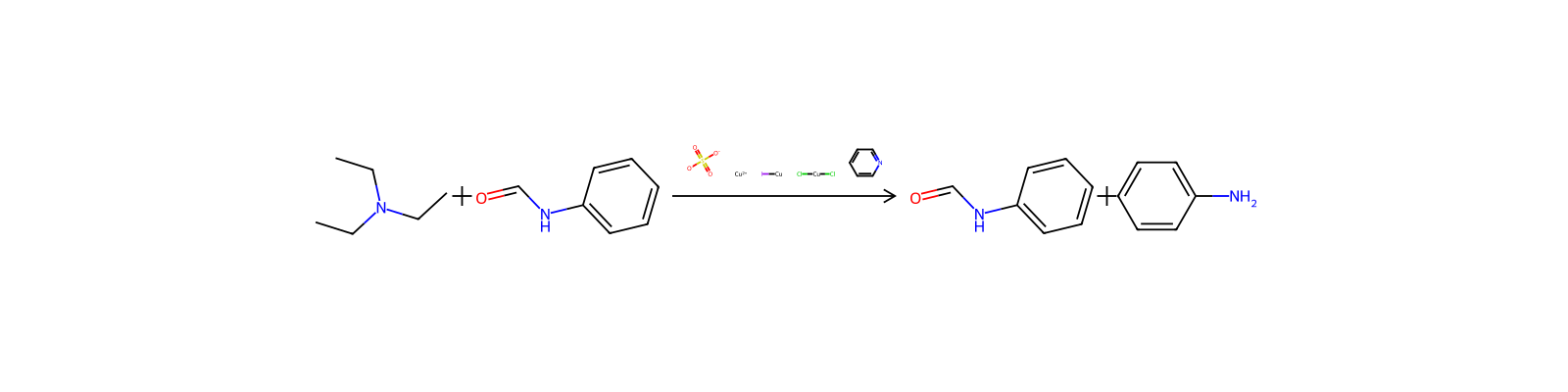
関連反応
75 件


関連ノート
読み込み中…