
N,N-ジメチルベンジルアミン
N,N-Dimethylbenzylamine
データを補完しています。しばらくしてからページを更新すると最新の内容を表示できます
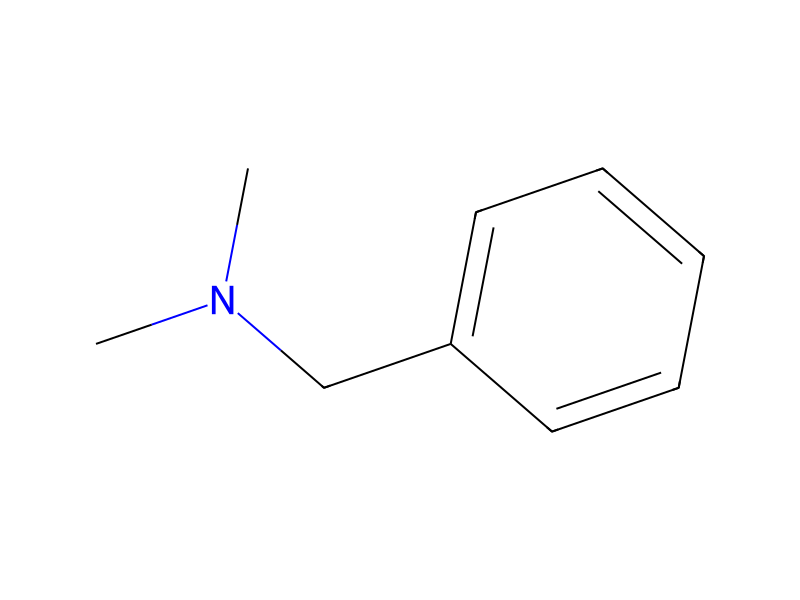
基本情報
- CAS
103-83-3- 標準SMILES
CN(C)Cc1ccccc1- InChIKey
XXBDWLFCJWSEKW-UHFFFAOYSA-N- 分子式
- C9H13N
- 平均分子量
- 135.21 g/mol
- 単同位体質量
- 135.10479942
概要
Benzyldimethylamine appears as a colorless to light yellow liquid with an aromatic odor. Slightly less dense than water and slightly soluble in water. Corrosive to skin, eyes and mucous membranes. Slightly toxic by ingestion, skin absorption and inhalation. Used in the manufacture of adhesives and other chemicals.
名称と識別子
- 優先名称
- N,N-Dimethylbenzylamine
- IUPAC
- N,N-dimethyl-1-phenylmethanamine
- 現地名
- N,N-ジメチルベンジルアミン
- 英語名
- N,N-Dimethylbenzylamine
- 分子式
- C9H13N
- 分子量
- 135.21
名称と別名
N,N-DIMETHYLBENZYLAMINE103-83-3BenzyldimethylamineN-BenzyldimethylamineBDMABenzenemethanamine, N,N-dimethyl-Benzyl-N,N-dimethylamineN,N-DimethylbenzenemethanamineBenzylamine, N,N-dimethyl-N-(Phenylmethyl)dimethylamineAraldite accelerator 062N,N-Dimethyl-N-benzylamine
名称をさらに表示
N,N-ジメチルベンジルアミンN,N-ジメチル-α-フェニルメタンアミンジメチルベンジルアミン1-[(ジメチルアミノ)メチル]ベンゼンN,N-ジメチルフェニルメタンアミン(ジメチルアミノメチル)ベンゼンN,N-ジメチルベンゼンメタンアミン[(ジメチルアミノ)メチル]ベンゼンスミン2015N-ベンジルジメチルアミンベンジルジメチルアミンNベンジルジメチルアミンベンンジルジメチルアミンN,N‐ジメチルベンジルアミンN,N- ジメチルベンジルアミンベンジルジメチルアミン, research gradeN,N-DiMethyl-1-phenylMethanaMineN,N-DIETHYLBENZYLAMINEDabco BDMAN,N-Dimethyl(phenyl)methanamineBENZYLDIETHYLAMINEN-BENZYLDIETHYLAMINEN-Dimethylbenzylamine
Sumine 2015N-Benzyl-N,N-dimethylamineDTXSID8021854TYP7AXQ1YJNSC-5342DTXCID801854RefChem:822589203-149-1
データベース識別子
- CAS
103-83-3、28262-13-7- PubChem CID
- 7681
- DTXSID
DTXSID8021854- ChEMBL
CHEMBL45591- ChEBI
CHEBI:231275- UNII
- TYP7AXQ1YJ
- EC Number
- 203-149-1
- Nikkaji
- J36.099F
物性
構造計算による物性補完中
- XLogP
- 2
- 極性表面積
- 3.2 Ų
- 水素結合供与体数
- 0
- 水素結合受容体数
- 1
- 回転可能結合数
- 2
- 重原子数
- 10
- 形式電荷
- 0
- 複雑度
- 82.7
実験および物理化学的性質
Chemical Classes
Nitrogen Compounds -> Amines, Aromatic
Corrosives
SpringerMaterials Properties15N nuclear magnetic resonance spectrum
LogP
1.91
1.91
Density
0.915 at 50 °F (USCG, 1999) - Less dense than water; will float
Relative density (water = 1): 0.9
0.915 @ 10°C
SolubilitySolubility in water, g/100ml: 1.2 (moderate)
Flash Point
140 °F
57 °C o.c.
Boiling Point
357.8 °F at 760 mmHg (USCG, 1999)
180 °C
181 °C @760 [mm Hg]
Melting Point
-103 °F (USCG, 1999)
-75 °C
Vapor Pressure0.58 [mmHg]
Physical Description
Benzyldimethylamine appears as a colorless to light yellow liquid with an aromatic odor. Slightly less dense than water and slightly soluble in water. Corrosive to skin, eyes and mucous membranes. Slightly toxic by ingestion, skin absorption and inhalation. Used in the manufacture of adhesives and other chemicals.
安全と法規制
安全情報は参考情報です。供給元の安全データシート(SDS)、適用法令、専門家による評価に代わるものではありません。
GHS分類
GHS Classification
Danger
H226: Flammable liquid and vapor [Warning Flammable liquids]
P210, P233, P240, P241, P242, P243, P260, P261, P264, P270, P271, P273, P280, P301+P317, P301+P330+P331, P302+P352, P302+P361+P354, P303+P361+P353, P304+P340, P305+P354+P338, P316, P317, P321, P330, P362+P364, P363, P370+P378, P403+P235, P405, and P501 (click each P-code to see the statement)
This chemical does not meet GHS hazard criteria for 0.1% (1 of 850) of reports.
Danger
H226 (99.8%): Flammable liquid and vapor [Warning Flammable liquids]
危険有害性情報
Regulatory Information
Chemical: Benzenemethanamine, N,N-dimethyl-
Benzenemethanamine, N,N-dimethyl- is listed on the EPA's Chemical Data Reporting (CDR) system. Manufacturers and importers of Benzenemethanamine, N,N-dimethyl- are required to report information about their production and use of this chemical to the EPA under the Toxic Substances Control Act (TSCA). (40 eCFR Part 711)
REACH registered substance: Benzyldimethylamine (EC: 203-149-1)
Benzyldimethylamine: Does not have an individual approval but may be used under an appropriate group standard
The New Jersey Worker and Community Right to Know Act requires public and private employers to provide information about hazardous substances at their workplaces. (N.J.S.A. 34:5A-1 et. seq.)
Other Safety InformationEvaluation - Chemicals that are unlikely to require further regulation to manage risks to human health
DOT LabelCorrosive Flammable Liquid
Fire Hazards
Special Hazards of Combustion Products: Toxic vapors are generated when heated. (USCG, 1999)
· Flammable/combustible material.
Flammable. Gives off irritating or toxic fumes (or gases) in a fire. Above 57 °C explosive vapour/air mixtures may be formed.
化学と産業
用途と製造
Uses
Used as a curing agent for epoxy resins; [Kanerva, p. 566] Used to manufacture adhesives and other chemicals; [CAMEO]
Plastic Composites Manufacturing [Category: Industry]
U.S. Production2023: 700,000 - <850,000 lb
Consumer UsesCatalyst
Industry UsesCatalyst
Household ProductsInformation on 1 consumer products that contain Benzyldimethylamine in the following categories is provided:
General Manufacturing Information
Miscellaneous Manufacturing
Benzenemethanamine, N,N-dimethyl-: ACTIVE
応用分野
用途各種合成原料
使用N,N-Dimethylbenzylamine was used in the synthesis of bis[(N,N-dimethylamino)benzyl] selenide. It has been used as catalyst during curing reaction of formulations of diglycidyl ether of bisphenol A and tetrahydrophthalic anhydride. It undergoes directed ortho metalation with butyl lithium. It reacts with methyl iodide to get ammonium salt, which is used as phase transfer catalysts. Further, it is used as a catalyst for the formation of polyurethane foams and epoxy resins.
一般的な説明Benzyldimethylamine appears as a colorless to light yellow liquid with an aromatic odor. Slightly less dense than water and slightly soluble in water. Corrosive to skin, eyes and mucous membranes. Slightly toxic by ingestion, skin absorption and inhalation. Used in the manufacture of adhesives; dehydrohalogenating catalyst; corrosion inhibitor; acid neutralizer; potting compounds; cellulose modifier and quaternary ammonium compounds.
調製方法
関連反応
88 件


化合物ノート
読み込み中…