
イソシアン酸 4-クロロフェニル
4-Chlorophenyl Isocyanate
データを補完しています。しばらくしてからページを更新すると最新の内容を表示できます
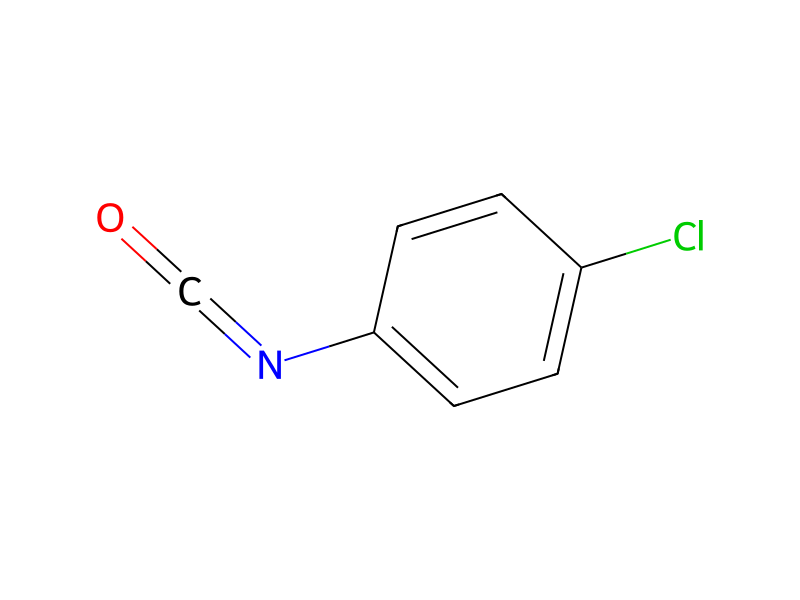
基本情報
- CAS
104-12-1- 標準SMILES
O=C=Nc1ccc(Cl)cc1- InChIKey
ADAKRBAJFHTIEW-UHFFFAOYSA-N- 分子式
- C7H4ClNO
- 平均分子量
- 153.56 g/mol
- 単同位体質量
- 152.99814143
概要
P-chlorophenyl isocyanate appears as colorless to yellow liquid or crystals. Used as an intermediate in pesticide and pharmaceutical manufacture.
名称と識別子
- 優先名称
- 4-Chlorophenyl Isocyanate
- IUPAC
- 1-chloro-4-isocyanatobenzene
- 現地名
- イソシアン酸 4-クロロフェニル
- 英語名
- 4-Chlorophenyl isocyanate
- 分子式
- C7H4ClNO
- 分子量
- 153.57
名称と別名
4-Chlorophenyl isocyanate104-12-11-Chloro-4-isocyanatobenzenep-Chlorophenyl isocyanateBenzene, 1-chloro-4-isocyanato-4-Chloroisocyanatobenzenepara-Chlorophenyl isocyanate4-Chlorophenylisocyanatep-ChlorfenylisokyanatISOCYANIC ACID, P-CHLOROPHENYL ESTERp-Chlorfenylisokyanat [Czech]NSC 76589
名称をさらに表示
イソシアン酸 4-クロロフェニル(4-クロロフェニル)イソシアナートp-クロロフェニルイソシアナート4-クロロフェニルイソシアナートイソシアン酸p-クロロフェニルイソシアン酸パラクロロフェニルエステルイソシアン酸4-クロロフェニルp-クロロフェニルイソシアネートイソシアン酸4‐クロロフェニルイソシアン酸4-クロロフェニル, 98%PCPI4-Chlorphenylisocyanate4-ISOCYANATO CHLOROBENZENEPARA CHLOROPHENYL ISOCYANATEpcic4-Chlorophenyl isocy4-Chlorphenylisocyanat
DTXSID7040732HSDB 1331EINECS 203-176-9W46XL60WI8NSC-76589DTXCID5020732EC 203-176-9P-CHLORFENYLISOKYANAT (CZECH)
データベース識別子
- CAS
104-12-1- PubChem CID
- 7693
- DTXSID
DTXSID7040732- ChEMBL
CHEMBL1865294- UNII
- W46XL60WI8
- EC Number
- 203-176-9
- Nikkaji
- J30.180I
物性
構造計算による物性補完中
- XLogP
- 3.3
- 極性表面積
- 29.4 Ų
- 水素結合供与体数
- 0
- 水素結合受容体数
- 2
- 回転可能結合数
- 1
- 重原子数
- 10
- 形式電荷
- 0
- 複雑度
- 146
実験および物理化学的性質
Chemical ClassesToxic Gases & Vapors -> Monoisocyanates
SpringerMaterials Properties15N nuclear magnetic resonance spectrum
DensityDensity: 1.25 g/cu cm at 40 °C
Color/Form
Colorless to slightly yellow liquid or crystals
White solid or crystals
SolubilitySoluble in organic solvents
Flash Point
110 °C
230 °F
Boiling Point
204 °C
BP: 116 °C at 45 mm Hg
DecompositionWhen heated to decomposition it emits toxic fumes of /hydrogen chloride, hydrogen cyanide and nitrogen oxides/.
Melting Point31.3 °C
Vapor Pressure
95.4 [mmHg]
VP: 95.4 mm Hg at 20 °C
19.4 mm Hg at 25 °C (extrapolated)
Refractive IndexIndex of refraction: 1.5543 at 40 °C/D
Physical Description
P-chlorophenyl isocyanate appears as colorless to yellow liquid or crystals. Used as an intermediate in pesticide and pharmaceutical manufacture.
Colorless to yellow liquid or white solid; [Hawley] White crystalline solid; mp = 29-31 deg C; [MSDSonline]
物理化学的性質
- 融点
- 26 · 26-29 °C (lit.)
- 沸点
- 203 · 203-204 °C (lit.)
- 比重(密度)
- 1.2 g/mL · 1.2 g/mL at 25 °C (lit.)
- 蒸気圧
- 30 Pa · 30Pa at 20℃
- 屈折率
- 20 · n20/D 1.5618(lit.)
- 闪点
- 230 °F · >230 °F
- 貯蔵温度
- 2 · 2-8°C
- 溶解性
- Chloroform (Slightly)
- 外見
- 結晶性固体
- 色
- 白から黄色
- 臭い (Odor)
- 鋭い刺激臭
- 水溶解度
- 分解する
- BRN
- 386235 · 386235
- Henry's Law Constant
- 5.7 · 5.7×10-2 mol/(m3Pa) at 25℃, Zhang et al. (2010)
- InChI
- 1S/C7H4ClNO/c8-6-1-3-7(4-2-6)9-5-10/h1-4H
- InChIKey
- ADAKRBAJFHTIEW-UHFFFAOYSA-N
- SMILES
- Clc1ccc(cc1)N=C=O
- LogP
- 3.12 at · 3.12 at 22℃
- CAS データベース
- 104 · 104-12-1(CAS DataBase Reference)
- NISTの化学物質情報
- 1 · Benzene, 1-chloro-4-isocyanato-(104-12-1)
- EPAの化学物質情報
- p-Chlorophenyl isocyanate (104-12-1)
化学的性質
化学的特性white to yellow crystalline solid
安全と法規制
安全情報は参考情報です。供給元の安全データシート(SDS)、適用法令、専門家による評価に代わるものではありません。
GHS分類
GHS Classification
Danger
H302: Harmful if swallowed [Warning Acute toxicity, oral]
P233, P260, P261, P264, P264+P265, P270, P271, P273, P280, P284, P301+P317, P302+P352, P304+P340, P305+P354+P338, P316, P317, P319, P320, P321, P330, P332+P317, P342+P316, P362+P364, P391, P403, P403+P233, P405, and P501 (click each P-code to see the statement)
Danger
H301 (32.6%): Toxic if swallowed [Danger Acute toxicity, oral]
P233, P260, P261, P264, P264+P265, P270, P271, P273, P280, P284, P301+P316, P301+P317, P302+P352, P304+P340, P305+P354+P338, P316, P317, P319, P320, P321, P330, P332+P317, P342+P316, P362+P364, P391, P403, P403+P233, P405, and P501 (click each P-code to see the statement)
危険有害性情報
Regulatory Information
Hazard Traits - Respiratory Toxicity
Status: Active Update: 03-12-2015 https://echa.europa.eu/registration-dossier/-/registered-dossier/1148
4-Chlorophenyl isocyanate: Does not have an individual approval but may be used under an appropriate group standard
DOT LabelPoison
Fire HazardsExcerpt from ERG Guide 156 [Substances - Toxic and/or Corrosive (Combustible / Water-Sensitive)]:
Fire PotentialA flammable liquid when exposed to heat or flame.
Health HazardsExcerpt from ERG Guide 156 [Substances - Toxic and/or Corrosive (Combustible / Water-Sensitive)]:
Hazards Summary
A strong irritant of the skin and eyes; [Hawley] An irritant; May cause lacrimation and serious injury to eyes; May cause respiratory sensitization after prolonged contact; [MSDSonline] Could be carcinogenic for man but not conclusive because of insufficient data (3B); [MAK] See MONOISOCYANATES.
Reactive GroupIsocyanates and Isothiocyanates
TSCA Requirements
Section 8(a) of TSCA requires manufacturers of this chemical substance to report preliminary assessment information concerned with production, exposure, and use to EPA as cited in the preamble in 51 FR 41329. Effective date: 10/29/90; Reporting date: 12/27/90.
Pursuant to section 8(d) of TSCA, EPA promulgated a model Health and Safety Data Reporting Rule. The section 8(d) model rule requires manufacturers, importers, and processors of listed chemical substances and mixtures to submit to EPA copies and lists of unpublished health and safety studies. Benzene, 1-chloro-4-isocyanato- is included on this list. Effective date: 10/29/90; Sunset date: 6/30/98.
Reactivity Profile
Isocyanates and thioisocyanates are incompatible with many classes of compounds, reacting exothermically to release toxic gases. Reactions with amines, aldehydes, alcohols, alkali metals, ketones, mercaptans, strong oxidizers, hydrides, phenols, and peroxides can cause vigorous releases of heat. Acids and bases initiate polymerization reactions in these materials. Some isocyanates react with water to form amines and liberate carbon dioxide. Base-catalysed reactions of isocyanates with alcohols should be carried out in inert solvents. Such reactions in the absence of solvents often occur with explosive violence, [Wischmeyer(1969)].
Air and Water ReactionsNo rapid reaction with air. No rapid reaction with water.
Hazard Classes and Categories
Acute Tox. 3 (32.6%)
Specific target organ toxicity (single exposure) - category 3
Acute Tox. 2 *
Explosive Limits and PotentialCan explode on distillation.
安全と保護具
Fire FightingExcerpt from ERG Guide 156 [Substances - Toxic and/or Corrosive (Combustible / Water-Sensitive)]:
First AidExcerpt from ERG Guide 156 [Substances - Toxic and/or Corrosive (Combustible / Water-Sensitive)]:
Fire Fighting ProceduresWhere there is a fire involving isocyanates, carbon dioxide or powder extinguishers must be employed. Firemen must be equipped with self-contained breathing apparatus. /Isocyanates/
Storage Conditions
Isocyanates are transported in railroad tank cars, tank trucks, tanks in ships, containers, and drums. They are stored in steel tanks and processed in steel equipment. For long-term storage stainless steel is recommended. To avoid contamination by atmospheric moisture, a dry air or inert gas blanket is essential. /Isocyanates/
Cleanup Methods
Decontamination of spilled isocyanates and disposal of isocyanate waste are best conducted by using aqueous ammonia (3-8% concentrated ammonia solution in 90-95% water with 0.2-5% liquid detergent) or aqueous sodium carbonate (5-10% sodium carbonate in 90-95% water and 0.2-5% liquid detergent). An alcoholic solution (50% ethanol, isopropyl alcohol, or butanol; 45% water; and 5% concentrated ammonia) may be preferred because of the low miscibility of isocyanates with water. /Isocyanates/
Nonfire Spill ResponseExcerpt from ERG Guide 156 [Substances - Toxic and/or Corrosive (Combustible / Water-Sensitive)]:
Disposal Methods
SRP: The most favorable course of action is to use an alternative chemical product with less inherent propensity for occupational harm/injury/toxicity or environmental contamination. Recycle any unused portion of the material for its approved use or return it to the manufacturer or supplier. Ultimate disposal of the chemical must consider: the material's impact on air quality; potential migration in soil or water; effects on animal and plant life; and conformance with environmental and public health regulations.
SRP: Wastewater from contaminant suppression, cleaning of protective clothing/equipment, or contaminated sites should be contained and evaluated for subject chemical or decomposition product concentrations. Concentrations shall be lower than applicable environmental discharge or disposal criteria. Alternatively, pretreatment and/or discharge to a permitted wastewater treatment facility is acceptable only after review by the governing authority and assurance that "pass through" violations will not occur. Due consideration shall be given to remediation worker exposure (inhalation, dermal and ingestion) as well as fate during treatment, transfer and disposal. If it is not practicable to manage the chemical in this fashion, it must be evaluated in accordance with EPA 40 CFR Part 261, specifically Subpart B, in order to determine the appropriate local, state and federal requirements for disposal.
毒性情報
Environmental Fate
TERRESTRIAL FATE: Isocyanates hydrolyze readily(1), suggesting that adsorption of 4-chlorophenyl isocyanate is not expected to be an important fate process in moist soil(SRC). 4-Chlorophenyl isocyanate is expected to volatilize from dry soil surfaces(SRC) based upon a vapor pressure of 0.194 mm Hg at 25 °C(4). Biodegradation data in soil were not available(SRC, 2012).
AQUATIC FATE: Isocyanates hydrolyze rapidly(1), indicating that adsorption to sediments, volatilization from water and moist soil and bioconcentration of 4-chlorophenyl isocyanate are not expected to be important environmental fate processes(SRC). Biodegradation data in water were not available(SRC, 2012).
ATMOSPHERIC FATE: According to a model of gas/particle partitioning of semivolatile organic compounds in the atmosphere(1), 4-chlorophenyl isocyanate, which has a vapor pressure of 0.194 mm Hg at 25 °C(2), is expected to exist solely as a vapor in the ambient atmosphere. Vapor-phase 4-chlorophenyl isocyanate is degraded in the atmosphere by reaction with photochemically-produced hydroxyl radicals(SRC); the half-life for this reaction in air is estimated to be 7 days(SRC), calculated from its rate constant of 1.5X10⁻¹² cu cm/molecule-sec at 25 °C(SRC) that was derived using a structure estimation method(3). 4-Chlorophenyl isocyanate does not contain chromophores that absorb at wavelengths >290 nm(4), and therefore is not expected to be susceptible to direct photolysis by sunlight(SRC).
Adverse EffectsLacrimator (Lachrymator) - A substance that irritates the eyes and induces the flow of tears.
Toxicity Summary
IDENTIFICATION AND USE: 4-Chlorophenyl isocyanate is colorless to slightly yellow liquid or crystals. It can also exist as a white solid or crystalline material. It is soluble in water and organic solvents. It is used as a chemical intermediate for pharmaceuticals, herbicides and pesticides. HUMAN EXPOSURE AND TOXICITY: Acute effects include airway irritation, cough, dyspnea, asthma, sensitization, and reduced pulmonary function. Occupational asthma was detected in workers exposed to isocyanates. Isocyanates may cause dermatitis when contacting the skin and vapors are highly irritating to the mucous membranes of the eyes nose and throat. Exposure to isocyanates may produce gastrointestinal symptoms. Occupational exposure may occur through inhalation of dust and dermal contact.
Soil Adsorption/MobilityIsocyanates hydrolyze readily in water(1). Therefore, adsorption of 4-chlorophenyl isocyanate is not expected to be an important environmental fate process(SRC).
法規制情報
TSCA Requirements
Section 8(a) of TSCA requires manufacturers of this chemical substance to report preliminary assessment information concerned with production, exposure, and use to EPA as cited in the preamble in 51 FR 41329. Effective date: 10/29/90; Reporting date: 12/27/90.
Pursuant to section 8(d) of TSCA, EPA promulgated a model Health and Safety Data Reporting Rule. The section 8(d) model rule requires manufacturers, importers, and processors of listed chemical substances and mixtures to submit to EPA copies and lists of unpublished health and safety studies. Benzene, 1-chloro-4-isocyanato- is included on this list. Effective date: 10/29/90; Sunset date: 6/30/98.
安全データ
- F
- 10-19-21
- wgk
- 3
- tsca
- TSCA listed
- rtecs
- NQ8575000
- ridadr
- UN 2811 6.1/PG 2
- 毒性
- mammal (species unspecified),LC50,inhalation,53mg/m3 (53mg/m3),Gigiena Truda i Professional'nye Zabolevaniya. Labor Hygiene and Occupational Diseases. Vol. 11(4), Pg. 23, 1967.
- hs_code
- 29291090
- risk_code
- 25-26-37/38-41-42-52/53
- hazard_code
- T+,T,C
- hazard_note
- Toxic/Corrosive/Lachrymatory/Moisture Sensitive
- safety_code
- 23-26-28-36/37/39-45-61-38-37/39-28A-22
- hazard_class
- 6.1
- packing_group
- II
- Hazard Classifications
- Acute Tox. 2 InhalationAcute Tox. 3 OralAquatic Acute 1Aquatic Chronic 1Eye Dam. 1Resp. Sens. 1Skin Irrit. 2STOT SE 3
- ストレージクラス
- 6.1A - Combustible acute toxic Cat. 1 and 2very toxic hazardous materials
- 有毒物質データの
- 104-12-1(Hazardous Substances Data)
化学と産業
用途と製造
Uses
Used to produce pharmaceuticals and pesticides; [Hawley]
Chemical intermediate for pharmaceuticals, herbicides, and pesticides.
U.S. Imports(1972) 5.7X10+7 GRAMS (PRINCPL CUSTMS DISTS)
U.S. Production
(1972) PROBABLY GREATER THAN 4.54X10+5 GRAMS
(1975) PROBABLY GREATER THAN 4.54X10+5 GRAMS
Production volumes for non-confidential chemicals reported under the Inventory Update Rule. [Table#3106]
Consumption Patterns100% AS CHEM INT FOR UREA HERBICIDES (1976)
Methods of ManufacturingREACTION OF PARA-CHLOROANILINE WITH ANHYDROUS HYDROGEN CHLORIDE AND PHOSGENE
General Manufacturing Information
Benzene, 1-chloro-4-isocyanato-: ACTIVE
PHOTOPRODUCTS OBTAINED FROM IRRIDATION OF 1-(4-CHLOROPHENYL)-3-2,6-DICHLOROBENZOYL)UREA & 1-(4-CHLOROPHENYL)-3-(2,6-DIFLUOROBENZYL)UREA IN METHANOL WAS IDENTIFIED AS PARA-CHLOROPHENYL ISOCYANATE.
応用分野
使用4-Chlorophenyl isocyanate is used in the preparation of isothiocyanates. Aryl isocyanates undergo [2+2] cycloaddition reactions with dihydrofuran to give bicyclic -lactams in high yield.
一般的な説明Colorless to yellow liquid or crystals. Used as an intermediate in pesticide and pharmaceutical manufacture.
調製方法
純化方法Purify the isocyanate by recrystallisation from pet ether (b 30-40o) or better by fractional distillation. TOXIC irritant. [Beilstein 12 H 616, 12 III 1376, 12 IV 1213.]
上流・下流製品情報
上流原料
下流製品
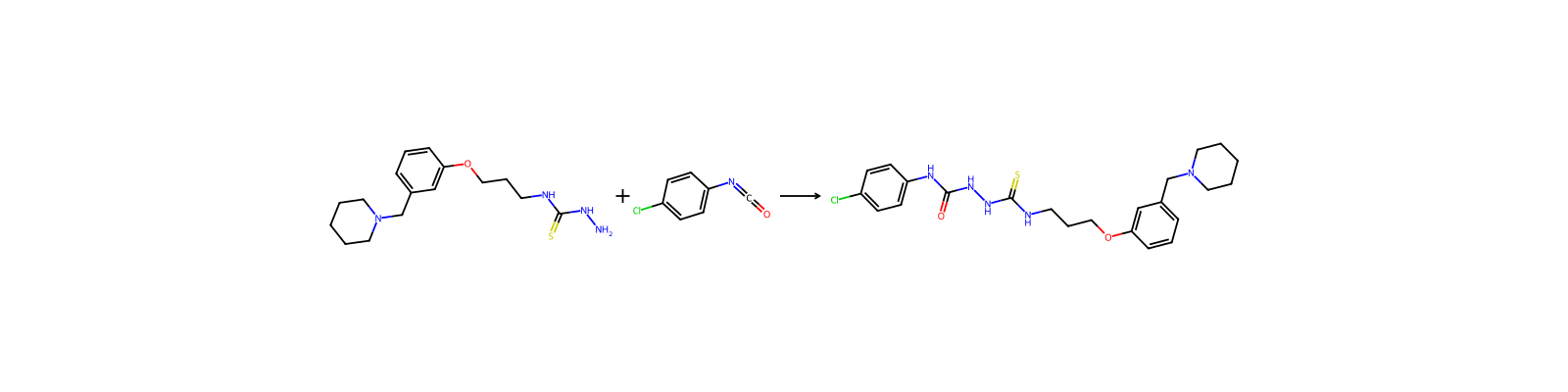
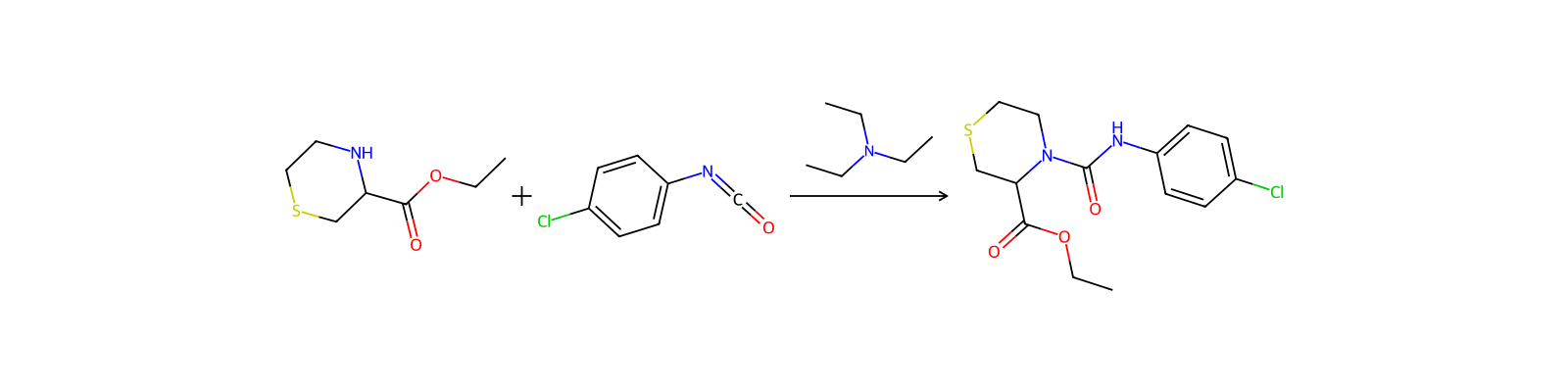
関連反応
584 件



化合物ノート
読み込み中…